• The Wrathbreakers have visited the Lambent Cays and met the Gull, from whom they received some further clues about the secret activities of the Deep Cult. They had considered traveling from Pearl Reach to Jasper at the Southernmost tip of the Lambent Cays, but something happened to change their plans. Itzel had placed a folded letter in the crate that contained the Eye of the Dead God, which they had left back at the Bones under Krotos’s care. This letter was written with the magical ink the party had obtained in Estona, intended to find the Rock Spider’s hidden base. This ink would immediately alert her to the opening of the letter, and tell her the location at which the letter had been opened. By sliding the letter into the gap between the crate and its lid Itzel had set it to open if anyone opened the crate itself, immediately alerting her that someone had interfered with their artifact. On the 26th of Raining, just as they were exploring the labyrinth beneath the Pearl Monastery, Itzel received an alert that the crate had been opened – someone on the Bones had interfered with their artifact. The next morning they set off for the Bones.

    Raiding Krotos’s Lair

    They arrived at the Bones three days later, Bao Tap exerting his maximum magical power to push the Stirge as fast as possible. With them came Leneus and his crew, with Leneus primed to help them infiltrate Krotos’s lair. Leneus, of course, did not know that they planned to kill him – and probably his crew – as soon as the deed was done, and happily helped them to develop a plan to infiltrate the lair.

    They came by two methods, with Itzel and Ella creeping in through a smuggling tunnel while Xu and Bao Tap used Leneus’s help to come through the main door. Here Xu and Bao Tap were able to easily kill the guards, since they were not expecting trouble from Leneus, and secured the entrance while Itzel and Ella moved further into the building. They found some keys in a cabinet, and used them to lock doors to prevent guards from moving freely to the battle zone. Most of the guards died in the sleeping area, burnt alive in their beds by Itzel, but they locked the entrances to make sure any survivors could not stumble through to help Krotos. Then they moved to the command section of the lair, and ambushed Krotos and his lieutenant in a training room in the depths of the lair.

    The outsider

    The fight did not start well. Although they had the advantage of surprise, Krotos and his gang were quick-witted and resourceful. Krotos was able to fire a shot from his bow before the Wrathbreakers could close distance, and they were not able to properly contain the single squad of bandits in the room, who were able to fire off more shots before they could be engaged. Someone noticed that there was a woman lurking behind their crate, which was on the far side of the room with the lid off, but at first no one paid her any mind, busy as they were with Krotos. Krotos fought like a dervish, rushing straight to engage Xu and attacking him with a greatsword that sang of magic. Every blow from that sword was like a strike by Anyara’s golem, and Xu was immediately pressed. Krotos also shrugged off damage from missile weapons and melee strikes, so that Ella’s normally pinpoint strikes did little damage, and he was able to beat Xu back with destructive swings of that sword. Meanwhile his lieutenant engaged Bao Tap and his gang of thugs sniped from the back of the training room.

    After a short time the woman behind the crate stood up and reached into the crate, touching the eye and whispering strange words. Itzel felt the sudden swell of the strange magic that imbued the scrolls they had found in Anyara’s room – magic none of them recognized – and the crate began to give off a sickly glow. Ella fired her crossbow at the woman, hitting her with a powerful and crushing blow to the hip, but the blow was so terrible that blood spurted into the crate and the woman sagged forward, immobilized, leaning over the Eye of the Dead God. Itzel tried to levitate her but for some reason her magic failed. Meanwhile Xu and Bao Tap were trapped in battle with the indomitable Krotos and his loyal deputy, and could not rush to separate the woman from whatever ritual she was performing. After another brief and intense attempt to stop her, the woman cut her wrist and raised her voice in song, dripping blood on the eye. The wall behind her – a wall made of the ancient Bones of the behemoth that the lair had been carved into – began to warp and twist, shimmering before their eyes and radiating intense waves of the strange, alien magic.

    Then the wall split open, revealing a kind of window into another world. The window was misty and clouded, but in the distance they could see a wide landscape of cracked, parched desert, marked with the dark lines of canyons or dry creek beds, shadowed with dust storms and punctuated with columns of smoke rising from what looked like giant funeral pyres. A heavy sky of thick grey clouds loomed low over this landscape, flickering with the lurid light of blood-red lightning flashing and writhing in the clouds. They heard the distant sound of voices raised alternately in wails of agony and chorals of exaltation, and a horrible smell of rotting bodies, blood and smoke overwhelmed them.

    Then a huge beast reached through the rent in the wall, tore it opened, and stepped through. The beast was over four metres tall, humanoid with dark leathery skin and huge, bat-like wings sprouting from a spined back. Its head was half-human and half-lizard, festooned with goats horns and open in a scream of rage. In one taloned hand it held a long, coiled whip of fire and in the other a massive sword. As it stepped through the gap behind it snapped shut, returning to the blank line of wall, and the woman died in ecstasy.

    They quailed before it. It turned to Xu and in the human language roared, “Come back to me, slave!” He was overwhelmed with a numbing tide of exhaustion and nearly collapsed, but somehow resist the beast’s will to dominate. Bao Tap attempted to call forth a giant beast of nature to fight it, but failed. Itzel fired a bolt of pure brilliant light at it, and did some damage, which simply incensed it – it struck her with its whip. Xu had finally killed Krotos, but had to take a moment to drinking a healing potion and recover his breath. Bao Tap called forth an earthquake, which rendered the ground beneath the demon so unstable that it fell over, caught its sword in a crack in the earth and could not remove it. Then a wave of fear rolled out from it, and Bao Tap panicked and ran[2]. His earthquake had done its job, however – the rest of the Wrathbreakers stood back and poured missiles and spells into the body of the creature until, with a final scream of rage, it died. At the moment of its death it crumbled to dust and in a cacophony of screams and cries and a rolling cloud of stinking mist its body disappeared.

    They stood victorious – but over what? What had been unleashed by the Eye of the Dead God, how had it taught Krotos’s Astrologer the power to do so, and what realm had they just seen? What was this Outsider? And what forces moved outside their world, clawing at the fabric of reality? Why did the Deep Cult want this magic? Dark forces were moving in the world, hurtling towards a confrontation as the stars moved peacefully in the sky towards some dark alignment. The Wrathbreakers needed to discover the secrets of the deepfolk’s past, the stars and the artifacts the Deep Cult sought, before the walls between the worlds were torn asunder and the Archipelago became the hunting ground of more of these beasts.

    They needed to head to Dalepo, and find the ancient Deepfolk observatory. Perhaps there they would find answers…

    Technical notes on the lair raid

    Because my PCs are now extremely powerful, minor battles with minions and low-tier rivals have basically a pre-determined outcome, and are of little purpose except to deliver a minor critical and a few points of strain to one or two of the characters [1]. These parts of adventures have become a bit of a drag, actually, and mean we spend an hour rolling dice when we all know what is going to happen at the end. So instead I gave the players a choice of two rolls to determine how they got into the lair and disabled, distracted or enlisted the minions and lower level rivals of the lair. They could choose melee, deception, charm, stealth or coercion, and each option would have a (secret) hidden difficulty, with (secret) payoffs and risks, and the level of success determining how many minion squads they eliminated. Then we made a kind of shared story about how they got to the final battle, and only actually handled the final battle round by round. Because the PCs had enlisted Leneus’s help they guessed that the deception skill check would be easiest, so they went with deception and stealth. They actually didn’t roll so well, which meant that when they go to the final battle they got the chance at surprise (vigilance checks for initiative) but no free round of attacks (had they failed both rolls they would have been met with an absolutely withering hail of missile fire when they entered the location of the final battle).

    For other GMs who are struggling to balance the nitty gritty of Genesys combat with time and fun for high-powered characters, I recommend playing around with this method (and/or mixing it with progress trackers) to build stories from these raids. I actually thought of trying to do it Blades in the Dark style (like a series of flashbacks) but I haven’t actually GM’d BitD yet, and don’t want to risk an entirely new system mixing in for even one session.

    Also for this adventure I used a space station map for the lair, which is a network of tunnels in the docks section of the Bones, so mostly underwater. That was a little jarring for the players but they are used to my inability to do anything artistic and rolled with it nicely – one player annotated the map live on roll20, while everyone else chuckled amiably. I really wish I could do art.

    A note on criticals, strain and monster abilities

    There are some effects and criticals which prevent monsters from using their free manoeuvre, or immobilize them (meaning they can’t use manoeuvres), or prevent them from voluntarily incurring strain to activate abilities. These criticals absolutely wreck powerful adversaries, because they stop them using the full suite of abilities at their disposal. The beast, on the ground and unable to move (according to the rules) could not use manoeuvres, so could not summon allies or teleport. In the past I have had enemy wizards take criticals that prevent them taking strain to activate abilities – this kills wizards, basically[3]. So when designing powerful enemies I recommend you give them a free action that can do something, a powerful ability that does not require strain, and a powerful ability that does not require a manoeuvre. That way they only become completely useless if they are staggered, immobilized <em>and</em> unable to take strain, and should still at least have one free action they can use for something.

    Also I backed myself into a corner here by giving the adversaries a type of magic which cannot heal, so they can’t cure any of these crits and neither can their friends. Sucks to be evil!


    fn1: This would not be the case were we playing Coriolis, which has much simpler rules for minions, has fast and furious fights, and is always deadly. Were we playing Coriolis even players who had gained XP continuously for 48 sessions would still be cautious of minions.

    fn2: I always forget to do the fear first. This battle would have been a disaster if I had remembered to do fear as soon as the thing arrived. But I try not to take back my mistakes.

    fn3: This also happened to Itzel once but she’s an elf so she deserved it

  • #southlandssowhite

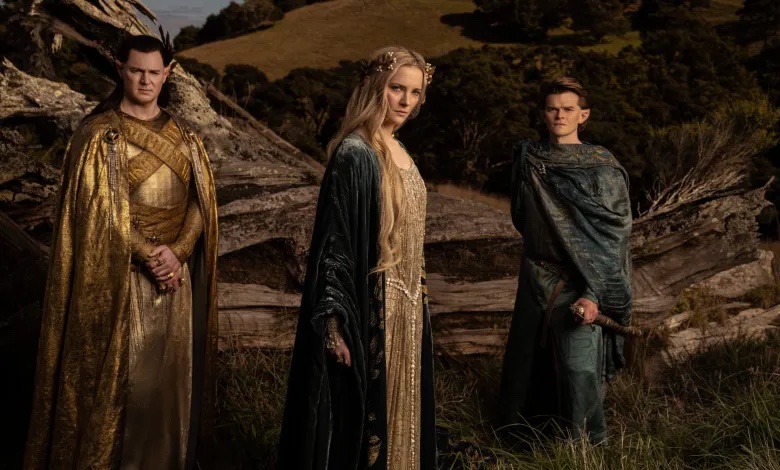
    Having spent a lot of time writing about Tolkien and racism on here, and having watched fanboys consistently misread Tolkien’s novels in various ways to justify their racist and anti-semitic imagery, I was looking forward to the inevitable backlash at the new Amazon Prime show, the Rings of Power. Being a big Tolkien fan, I was also very interested in seeing the Second Age of Middle-Earth given a big budget cinematic treatment. I have watched the first two episodes, and here are my opinions so far.

    The setting is confusing

    I know it’s meant to be set in the Second Age, but I don’t think it tells us that, and I don’t think it has done a lot of work establishing a timeline or a sense of the sheer scale of the time over which these events happen. There is no indication (that I recall) that the Trees of Valinor were destroyed in a different Age, or how long it was between the destruction of the Trees and Galadriel’s efforts in Middle-Earth (it also breezes over the kinslaying and exactly what Gally was doing there, but that’s probably for the best). They don’t really even give any clear indication that elves live forever, or of how old Galadriel is. That’s cool, we don’t need tons of exposition, but I think overall it makes the whole setting a little confusing to the uninitiated. This isn’t helped by having three seemingly unconnected stories take place at once in three very different places. I don’t mind, and it’s nice to have a story told without an infodump at the beginning, but I wonder if this is going to come back to bite them later on.

    There is pointless conflict

    The bit where Galadriel goes almost back to Valinor and then jumps off the boat is dumb and pointless. Yes yes we need to know she is confused and uncertain about whether to stay in Middle-Earth and fight, but sending her all the way across the ocean – especially after we have panned over the map and now how vast that ocean is – is just pointless. Now she has to swim all the way back, which you and I (being among the elite of fandom) know it is possible for an elf to do, but which lots of viewers will just think is dumb. Anyway she is just going to end up on a floating shipwreck where she learns about an orc raid on a community. All of this could have been done on the road to the Grey Havens: she could have changed her mind halfway through, run away into the forest, met the dodgy dude, learnt about his orc issue. Why put it right over near Valinor? This kind of pointless conflict doesn’t advance anything, it just serves to distract us and present a main character with a set of circumstances (looking dumb, swimming across a whole ocean, panicking under worm-attack, having to be rescued) that undermine the character traits so far assembled for her (smart, resolute, brave). I hate it when writers put this kind of pointless conflict into stories. I think we’re going to see more of it too – the rock smashing contest between Durin and Elrond was another example of five minutes of my life I’ll never get back, and it just serves to undermine Durin as a resolute leader. Durin! Also it makes him seem petty and emotional. This kind of pointless conflict almost always makes the characters involved look shallow, petty, indecisive or stupid and usually undermines them to no great end. Drop it!

    It’s slow but sumptuous

    I like the settings and the scenery, I thought Khazad Dum (and especially Durin’s house) was a really nice vision of dwarven life, and there are lots of grand shots and sweeping beauty. I’m hoping for a grand, expansive view of Middle Earth that takes us to places we’ve never seen before, and I’m hoping for it to do so with some sensitivity to the peoples and lives we may not have seen at all or only peripherally in Tolkien’s story. We’re already seeing things in Rhovanion, which gets largely overlooked in the Lord of the Rings, and “the Southlands” (the bordern of Harad) which is just a nest of bad guys in the stories we all know and love. Seeing things from the perspective of Harfoots or the descendants of Sauron’s servants in Harad adds a bit of richness and depth to Tolkien’s world – a post-colonial interpretation, if you will – and takes us to places we haven’t seen before. I’m looking forward to seeing the creation of Mordor, and I expect that the Rohirrim are going to be really cool if we go there. I hope we see a bit of Harad! So I don’t mind if it’s a little slow, if it shows us some of those things.

    But showing us these other sides of Middle Earth – the poor descendants of the humans who fought for Sauron, the survivors of Orc raids, the Harfoots – and attempting to reimagine Tolkien’s world a little has unfortunately opened up an opportunity for the Tolkien Fanboys to align with anti-“woke” culture and outright fascists, to start a seething wall of outrage over the use of non-white actors. So let’s look a little at the central issue that has come up so far – the decisions about race in the show.

    The Tolkien and Race Debate Goes Mainstream

    The producers have decided to cast non-white actors in all possible races in the show, so we have black actors playing elves, dwarves, and hobbits and the only Orc we have seen so far was white. There’s also apparently some scandal over the decision to show female orcs and dwarves.

    First of all I want to say that it is absolutely true that having non-white elves, dwarves or humans is completely throwing out Tolkien’s idea. He wrote these books with a strong racial essentialist ideology, and it was an iron clad rule of his world that darker=more evil. The humans who fought for Sauron were called “dark men” and were created without a sense of good, orcs were dark-skinned and created evil, and Sauron’s primary allies in the human world were black-skinned humans from Harad, or yellow-skinned Easterlings. The Dunlendings were also dark skinned and their colour was even in their name. This isn’t something that’s up for debate as far as I’m concerned: Tolkien wrote this way intentionally, and having a black-skinned elf is a complete rejection of the aesthetic of his races, and the ideology underlying it.

    I also think it’s a good thing. This part of Tolkien’s work is explicitly, clearly racist and he says so himself. By having non-white “good” races the producers have rejected the racist ideology underlying the world, and that’s good. For anyone who isn’t familiar with Tolkien’s work and watches it for the first time, it’s not even noticeable – having non-white characters in lead roles or as good guys is becoming increasingly common and in a modern cinematic context dominated by superheroes it’s completely normal. The only people it could possibly annoy are people who are deeply invested in Tolkien’s specific aesthetic linkage between skin colour and morality. These people have ganged together with the fascists and online nazis who see LoTR as a text book for their bullshit racist opinions and are review-bombing it on all the major sites, but they’re wrong and we should proudly tell them they’re wrong. They aren’t wrong about what a change this decision is, but they are wrong about why it matters.

    The only problems I can see with this decision to cast non-white actors is that it weakens the distinction between races, in the sense that we can’t tell what makes elves different to humans visually. They don’t even appear to be a different height and they certainly aren’t more beautiful. This is going to mean that unless the writers <em>show</em> us somehow that elves are different to humans – through their super human feats, resistance to cold, etc – the viewer will find it hard to believe that they’re actually not just a weird type of human. This is already a problem with the Harfoots, who until the Stranger appears are not easily conceived of as super short. I don’t think this is going to be a big challenge, but other than this minor detail I think the decision to cast non-white actors in non-human/non-orc racial roles is good. Yes, it’s a break with Tolkien’s original intent and yes, that is a good thing, and we should say so. Middle-earth cleansed of its stupid racial essentialist ideology is better than Middle-earth with it.

    Conclusion

    I’m not convinced this show is going to be good, I think it could be a little slow and perhaps a bit weak, but it has a lot of potential and I’ll be watching with interest to see how they change the original world building. The decisions they have made so far have been positive interpretations of, or outright changes to, the original work. Let’s give them some time and see what kind of magic they can build up in this world – and ignore the racist losers who want us to slavishly worship a racist 1930s ideal.

  • Update [2023/12/6]: This is number 2 in a series of posts, and the original post in this series is getting a lot of attention, so I thought I’d link the entire series of posts together for those reading, so that they can follow the entire journey down memory lane. Here are the other posts:


    A while ago I wrote about re-reading Marion Zimmer Bradley’s famous Arthurian re-telling, The Mists of Avalon, in the light of the revelations about her paedophilia and abuse of her own (and others’) children. The Mists of Avalon was a big inspiration to me when I was very young (perhaps about the age of 14 or 15, I don’t recall) and introduced me to the entire canon of pagan/new age re-imagining of ancient British history, concepts of the conflict between christianity and earlier religions and how it affected our culture, as well as leading me to an entire world of eco-feminist and neo-pagan ideology. But it’s hard to believe that Marion Zimmer Bradely (MZB)’s paedophilia and general nastiness couldn’t have shown through in her book, so I decided to re-read it and find out what it is like when viewed as an adult. I’m also interested in how its feminism presents to adults, and how to interpret it given all the additional theory and philosophy that has been developed since she wrote. Obviously I’m not a feminist, but I think if something is obvious sexist, pro-paedophile or just generally immoral one should be able to say so, and nothing is sacred (certainly not on this blog!), so let’s see.

    In the first installment I identified some pretty terrible themes and some pretty horrible elements to the story, and since then I have started Book 2, which is just … well, it’s phenomenally boring. So I got side-tracked reading The Atlan Saga by Jane Gaskell. It’s really incredibly to compare these two writers, who were roughly contemporaries and both made their names reimagining ancient stories from a female perspective. Quite apart from anything else, Gaskell is a much better and more interesting writer, with a much more engaging and entertaining writing style, but her stories also have much more happening in them. Book 2 of The Mists of Avalon is basically a bunch of women sitting in rooms talking about who is going to get pregnant, and long scenes of Gwenhwyfar and Lancelet not fucking. It’s deeply tedious. But there are a few things going on in it that are worth exploring.

    Marion Zimmer Bradley Hates Women

    The first thing that really stands out in Book 2, and that is repeated over and over until you can’t escape it, is that MZB really holds women in contempt. All the women in the story except Morgaine and Viviane are either boring, stupid, incurious broodmares, or nasty bullies. They are also inactive, sitting around waiting for things to happen to them, and have very shallow, poorly-developed characters. We learn a lot about Lancelet, Arthur and Merlin, and secondary characters like Cai, Balan or Kevin get a fair amount of attention and detail. They also get to do things – they go to war, they ride horses, they fall off horses, they help women to escape from swamps, they make jokes and lead soldiers and stuff. In contrast we learn almost nothing about any of the women of the court beyond Morgaine and Gwenhwyfar, and Gwenhwyfar in particular is portrayed as a weak and terrible character. She has agorophobia, she has longed for Lancelet for no reason since the moment she met him, she is a submissive wife full of worries and doubts and she is unable to have children. Thanks to MZB’s rather awful habit of giving us insight into the thoughts of all the major female characters we get to learn about Gwenhwyfar’s inner life and it’s all self-doubt, self-criticism and fear. She is an unpleasant character, weak and stupid and scared. The only woman in this book with any pride or capacity for action is Morgaine, who is also a highly judgmental and unpleasant person.

    The rest of the women are just stupid lumps who sit around spinning and idly exchanging gossip. Morgaine’s contempt for them is shown most clearly in the spinning scene in chapter 7, where she asks herself “do these women think of nothing but marriage?” and the narrative voice (which alternates between a neutral voice and the viewpoint of the major characters without much clarity) describes how they gossip about morning sickness and marriage and scandal, and she ends up falling into a trance that ends in a vision of blood and the entire gathering scattering. It is also in this scene that Gwenhwyfar is reduced to tears by another woman simply mentioning the ability to have children, and now I’m 100 pages into book 2 and this is seriously the most interesting thing that has happened. It is 8 chapters devoted to the dull, humdrum boredom of women’s lives. Women are boring, sitting around doing nothing, while the men are interesting, and the men take action.

    The anti-feminist tone

    Now, this might be interesting and insightful if it were told from some kind of perspective which attempted to build an alternative world out of the women’s boredom, or to explore it as a prison or a source of stifled creativity, or some other perspective which enabled us to understand that this cloistered women’s life into which Morgaine and Gwenhwyfar have been entrapped is still important or a source of some secret value, or at least enabled us to understand that these women could and should aspire for more, that their secrets and hopes and goals are stifled and they have greater dreams and goals. But we never get shown this. Instead we get regular, dismissive descriptions of women and women’s lives, contempt for the women who are victimized by this world, the women attacking each other, and occasional statements reinforcing the status quo from the main female characters.

    For example, at the beginning of Book 2 Morgaine is hiding in the household of King Lot, some Scottish arsehole, who is a famous lecher. While Morgaine is in labour Lot’s wife returns to the main hall, where Lot is sexually assaulting one of her maids. This is what we get:

    Lot sat watching, one of Morgause’s younger waiting-women on his lap and his hand playing casually with her breasts; as Morgause came in, the woman looked up apprehensively and started to slide from his knees, but Morgause shrugged. “Stay where you are; we have no need of you among the midwives, and tonight at least I shall be with my kinswoman and have no leisure to argue with you over a place in his bed. Tomorrow it might be another matter.

    This is a good example of MZB’s contempt for the female characters in her stories, and also for how she establishes the right of men to do what they want in this world. This girl has no choice in what her king does to her and everyone knows it, the fault is entirely Lot’s, but the queen blames her anyway and the narrative structure of the entire scene makes no effort to establish the helplessness of the girl or the power structures at play which set the women against each other. Basically if Lot victimizes a girl she’s a slut; she deserved it; if she gets caught by his wife well then woebetide her. This is very conservative writing about sex and power.

    In case one doubts, there are other points in the story where major characters make clear that there is an order to the world, and that order has men active and on top and women at the bottom. For example in chapter 5 Igraine gives us this little speech about the order of things:

    Among the Tribes, indeed, the stronger women fought at the side of the men – there had been, of old, a battle-college kept by women – but from the beginning of civilization it had been the work of men to hunt for food and to keep off invaders from the hearth-fire where their pregnant women and little children and old folk were sheltered; and the the work of women to keep that hearth safe for them.

    There is no sense here of disapproval or of desire for change – just a statement of fact about the world that is, followed by a little religious theory (which I don’t quote here) about how the binding of King and Queen symbolized this natural order of things. This is the voice of one of the major characters giving form to the story, with no push-back against it at all. And in case this isn’t clear, a little later Morgaine herself outlines her view of the role of feminism in this world:

    And why should it be for the King to give me, as if I were one of his horses or dogs? Morgaine wondered, but shrugged; she had lived long in Avalon, she forgot at times that the Romans had made this the common law, that women were the chattels of their menfolk. The world had changed and there was no point in rebelling against what could not be altered.

    Remember, this is supposed to be a feminist re-telling of the Arthurian legend. There’s your feminism there: the central female character of the book saying that the world had changed to make women chattel, and there was no point fighting against it. Note too that this rumination of Morgaine’s is followed by a discussion of building the Round Table, and philosophizing about whether the war with the Saxons will ever end takes up more space in the text than Morgaine’s brief, single paragraph about not bothering to change the world and just accepting her role as chattel.

    I really don’t understand how this book got its reputation as a feminist tale.

    Extremely conservative views of sex

    A final, super weird thing that has happened in my journey through Book 2 is the strange sex scene between Lancelet and Morgaine, in which Morgaine lays out an extremely regressive and old-fashioned view about sex. Remember that Morgaine is the closest we have to a main character or narrative voice in this story, and as far as I can tell we’re meant to sympathize with or at least engage with her character – she is an unpleasant, judgmental, selfish piece of work, but as far as I can tell she’s the person the story is meant to be about, so I think we’re supposed to at least understand her and take her voice as the authoritative tone of the story. So she creeps away from the room she shares with Elaine (one of the character-less waiting-women of this boring story) to find Lancelet. They sneak away to an orchard where they start to have sex. Morgaine knows Lancelet really loves Gwenhwyfar (we’ve had multiple chapters of Lancet and Gwenhwyfar making eyes at each other and only Morgaine noticing for some reason), but she wants to fuck him anyway. But Lancelet won’t fuck her! He won’t “hurt or dishonour” her, and so they proceed to have a long period of sexual play that she seems to really enjoy – she writes that “her body cried out for the pleasure he gave her” – but she gets really angry that they aren’t fucking. She says

    What of the flow of life between their two bodies, male and female, the tides of the Goddess rising and compelling them? Somehow it seemed to her that he was stemming that tide, that he was making her love for him a mockery and a game, a pretense. And he did not seem to mind, it seemed to him that this was the way it should be, so that they were both pleasured … as if nothing mattered but their bodies, that there was no greater joining with all of life. To the priestess, reared in Avalon and attuned to the greater tides of life and eternity, this careful, sensuous, deliberate lovemaking seemed almost blasphemy, a refusal to give themselves up to the will of the Goddess.

    This is just a lot of words to say that sex should be for procreation only, and anything except fucking is bad. There’s no space in this conception of sex for lesbianism, for example, and if your religion tells you that “careful, sensuous, deliberate lovemaking” is “almost blasphemous” … well, your religion is nasty.

    But this is the main character, whose religion is meant to be in contrast to christianity, and everyone presents this story about how the pagan worldview was better and freer and the sadness of losing it … I’m sure we’re meant to understand Morgaine as a tragic representative of a lost world that was better for women, presented as a reimagining of the old stories from a feminist perspective.

    But to me it just seems like an incredibly cramped and narrow vision of sex, presented by an unpleasant and judgmental woman who hates all other women, in a story that presents women as weak and characterless, in a world where only men matter.

    I don’t think that’s feminism.

    Conclusion

    I don’t know how I managed to finish Book 2 when I was young, it’s so boring and so relentlessly negative. But it was the 1980s, I was at school, there was nothing else to do, I guess I read a lot and reading countless pages of whinging women spinning was more interesting than hanging out with my family, so fair enough. But what about the adults who talked about MZB’s work as a feminist retelling of the Arthurian legends? It’s not constructing any kind of better world, and it certainly isn’t presenting to us a world where women are equal to men that was torn away by christianity. I don’t understand why the critics and writers of that time held it up in that way. Were they so desperate for women’s representation in fantasy and science fiction that they were willing to sell this as a feminist story rather than a nasty tale of boring women sniping at each other while men fight and build kingdoms? Was feminism so under-developed at that time that stories about women spinning while they wait for their men to come home from the war were considered to be somehow enlightening or revealing of some deep inner spirit of women? I don’t understand how the books got so much critical acclaim.

    It could be that things change in Book 3, Morgaine turns vengeful against this world and tries to change it, but in truth I’m not sure if I can persevere with this project – I have 10 more chapters of Book 2 to wade through and there’s no sign of anything happening soon. I want to understand the books that contributed to modern fantasy, and this series was very influential, but I don’t know how much longer I can stomach the court of King Arthur in this supposed feminist re-envisioning of it. It’s not very nice, and everyone in this story is awful. If you have any alternative perspective on this, I hope to hear in comments. Otherwise, stay tuned, maybe after a few more months I’ll have managed to struggle onward to the point where something actually happens …

    Addendum

    If you appreciate my views on science fiction and fantasy writing, please head over to Royal Road to read my fiction.

  • The Wrathbreakers have encountered parasites on the open seas on the western edge of the Archipelago, and also some monsters. Having killed the monsters, they decided to also kill the bandits who they are working with, but first they must travel to the Lambent Cays to meet the Gull, and find out what this mysterious dwarf knew about the Ashentide and the activities of deepfolk in the southern Spine Mountains. Can they hold their wrath under control until their work in the Lambent Cays is done?

    A serendipitous offer

    With 12 crew from the Stirge, two survivors from the Wages of Sin and the four Wrathbreakers themselves, captain Leneus realized that he could scratch together enough crew to sail both ships to the Lambent Cays provided the weather remained fine and he could put Bao Tap on one of the ships and himself on the other. He called the Wrathbreakers to his cabin and put this suggestion to them, followed by another, grimmer idea: if they would stick with him back to the Bones after their task in Lambent Cays was complete, he proposed that they help him destroy his boss Krotos and take over Krotos’s criminal enterprise. In exchange he offered to let them keep the Wages of Sin. “I’ll throw in a crew to get you as far as Hadun, and you can even keep the boy,” he added, “Provided you return him relatively intact when his family have paid their debts. Don’t worry, you’ll be bored of him by the time they do, it’ll be no skin off your back.”

    Given that the Wrathbreakers had already agreed quietly together that they would murder Krotos and break up his criminal enterprise when they returned to the Bones, and had been planning to murder Leneus on their way to the Lambent Cays as the first instalment of their plan, his suggestion seemed ideal. He and his little crew of flotsam could help them to surprise Krotos and kill him, and hopefully during the battle a few of them would be killed by Krotos’s men. Then they just needed to clean up Leneus with the same treacherous moves he had shown himself willing to deploy on his own boss. For once, they really did have an effective plan! They agreed to his scheme, and the following morning Bao Tap and Ella joined seven crew on the Wages of Sin, to help sail it to the Cays.

    Pearl Reach

    The Lambent Cays are a string of small islands to the west west north of the Bones, which are situated on a wide shelf that forms a shallow sea surrounded by deeper ocean. The islands are all between 10 and 30km apart from each other in a chain, and each island is about 1-5km across. Most of them are uninhabited, but five of have small monasteries on them.

    The islands are surrounded by sprawling coral reefs, which can extend up to several kilometres offshore and which glow during the night with phosphorescent light. This means that the islands are only approached at night, because the gaps between the reefs are clearly visible as pathways of shadow between the phosphorescent light of the reefs. The coral glows with a different colour depending on the position of the island in the chain. The waters of the northernmost islands glow a rich, dark bluish-purple, while the seas around the southernmost islands are flooded with a vivid red.

    The five inhabited islands are called:

    • Indigo Haven
    • Cerulean Gardens
    • Pearl Reach
    • Amber Inlet
    • Jasper

    The Gull lived in the central island, Pearl Reach. The reefs around Pearl Reach extend several kms from the island itself, and are a brilliant flickering mixture of silver white and green. The channel to the harbour is an arc of darkness that spirals through this cloud of light, twice circling the island before finally opening to a small bay on its eastern side.

    The island itself has a small port inside this natural bay, surrounded by cliffs. There is a small town here, called Pearl, which is a little back from the sea by the side of a small stream. Boats anchor in the bay and ferry in passengers and goods in small ship’s boats. The bay is lined with a smooth, clean beach of white sand. The town has a population of about 200, all support workers for the monastery.

    The rest of the island is formed from the slope of the hill that hulks around the bay. The hill is about 100m high at the top of the cliffs overlooking the bay, but then sweeps back up to about 500m high, an old volcanic peak. It then reaches in a smooth slope down to the sea, falling over a distance of about 4km. The rear half of the island has two other small towns, of 200-300 people each, which support rice farms, sheep herding and fishing. The Wrathbreakers did not see these settlements as they sailed into the island, because they had to circle the island at night, sailing carefully through the wide, dark channel that cut between the reefs in a steady spiral towards the bay, Bao Tap and Leneus concentrating on the wind to ensure the ship stayed steady, the sailors rowing carefully and concentrating on the steering. All about them the sea glowed a deep, rich mixture of whites and greens so that they felt they were sailing through star-glowing clouds rather than water.

    Finally they reached the bay, and the crew visibly relaxed as they broke free of the channel between the reefs, leaving the silvery water behind them and sailing into the secluded, lapping shallows in front of the town. Ahead of them they could hear the gentle susurration of waves on the beach, and see a line of lights where the town sat a little back from the shore.

    The Gull’s Secrets

    They found a hostel near the shore and collapsed into the first decent sleep in 10 days, freed of sailing responsibilities, the noise of the bandit crew fussing on deck, or the constant unsettling swaying of the ship. In the morning they headed up the cliff face to the monastery, to find the Gull.

    The monastery, they learned, is a complex of caves set into the top of the cliff, with visitors rooms, chapels, galleries and accommodation in the airy, open network of rooms with windows overlooking the sea and laboratories, libraries and workshops buried in the depths of the mountain. Somewhere above this, slightly inland and higher up the hillside beyond the cliffs, they were told there was an ancient forest called the Sacred Grove, which acted as a kind of seed bank and repository of all the ancient herbal and natural resources the dwarves used in their seasteads. Although the origin of the dwarves was a secret kept from humans (or perhaps a mystery to even the dwarves themselves) one rumour held that they had sailed to the Archipelago from the west, beyond the maps, and the Lambent Cays had been their first stopping point. Here, before they spread out to settle seasteads all across the western and southern oceans, millenia before they formed their first settlements on the Isle of Teseran, they laid in a stock of their most precious magical and medical plants, and left a devoted priesthood to husband the grove in perpetuity. Now thousands of years old, the grove was a seedstock for the entire dwarven realm. If a seastead on the Sahakan Ocean suffered some catastrophe and lost some of its most precious herbals, it could send word to Pearl Reach. The guardians of the Grove would procure a cutting, bulb, spore or seed or shoot from the Grove and send it with all due care to the supplicant, restoring their ability to grow all the most important things they needed. It was also said that these guardians regularly harvested the magical and medicinal plants of the grove and worked to make potions and potent magic items which would be distributed to seasteads and ship’s captains as they were needed. Particularly on the Sahakan and Dorato Oceans, these magical items and the full range of apothecary goods and trinkets were essential for dwarven stormcallers to protect their seasteads from storms, leviathans, pirates and all the mysteries of the ancient seas.

    And, upon retiring from adventuring, the Gull had joined the guardians, to spend the rest of her days in quiet gardening and arcanery.

    They met her in a pleasantly furnished and comfortable viewing gallery with fine views over the bay and the flickering reefs, and she led them to her personal study. This was a smaller, cozy room with a balcony protruding from the cliff face, notes scattered around, some plant cuttings on a bench and pencil sketches on the walls. They sat down to talk in comfortable chairs around a coffee table, taking coffee and sweets. She was a lean woman tending to middle age, with scars of dark magic on her neck and cheek and a calm, detached manner. They told her about the deaths of her fellow Ashentide members Gerald and Verbere, and a little about how they had helped Siladan in Estona.

    In return she told them again the story of the final adventure of the Ashentide, of how they had to abandon Ash’s body and did not know if she had been brought back as undead by the deepfolk. She remembered that they had stumbled on a small squad of deepfolk carrying the box of elven documents, and they had fought hard to defend them. She remembered that after they retreated from the deepfolk camp they had checked the documents but it had all been gibberish to her. Many of the pages, she recalled, looked like the diary of a madman, with strangely chaotic writing in many different sizes and styles, lists and diagrams and doodles that made no sense. She tried copying them but could not easily capture the sense of the writing, and gave up quickly. After that the group retreated to Estona and broke up there. When they parted they left the documents with Siladan, who seemed most interested in them.

    The Gull told them she still had a box of mementoes from her time with the Ashentide, and they were welcome to take the afternoon to go through it while she worked. They searched the box and found little of interest, but between two sheets of paper with attempted sketches of the elven documents they found a note, written in deepfolk. The sketches had stuck together with damp or some light glue, perhaps an accident of the work environment at the time, and the Gull guessed the note had been between them. Looking at it now, many years later, she guessed it had been amongst the elven documents, and had fallen amongst her sketches at some point. She could not read it, of course, but the Wrathbreakers could. It read as follows.

    Master

    These notes are old, and make no sense. You curse me with their interpretation. This language is filthy when spoken by the sane from amongst the Tree Scum, but this is madness, one crazy man’s notes on his dreams.

    They raise a question for me though. You say these writings are old. The mad fool who penned this dross implies that the Seven Children of Rage did not exist until the beasts who walk beneath the sun (may they all be reaved from this land) arrived.

    We cannot know. But I have heard rumours of an ancient observatory from before The Awakening, somewhere in the region the beasts call Darepo (may the seas around that peninsula swallow them whole). Of course it is lost to us. If its records survive, they will have the truth of it.

    Bid me not journey there, I would never again walk under the sun. There must once have been a road there under the earth, but it is lost to memory.

    Who would journey all that way for simple rumours? Unlike you, I care not for the stars we abandoned, but only for the beauty of the still darkness beneath the earth, and the consolations of rage.

    WRATHCHILD!

    So, the Wrathbreakers surmised, the deepfolk had once long ago had an observatory on the Cape of Darepo, and had abandoned it at about the time that humans arrived on earth – which is what they suspected The Awakening referred to. Why would people who live under the ground have an observatory? Simple curiosity? Furthermore, the Seven Children of Rage was a reference to the seven stars that must align soon, at which point the Deep Cult’s secret goals might be realized. Yet this letter – taken from amongst the elven documents – suggested that these stars had not existed before humans arrived. How was this possible? And how could this information be in elven documents, which were apparently the raging of a madman? What mad elf had written these documents and how had they been lost to the elves and recovered by deepfolk?

    The Wrathbreakers would find out. They planned to return to the island of Hadun through Alpon, and to get there they had to pass through the Cape of Darepo. They would find this observatory and loot its ancient books, learn why the Deepfolk had an observatory there and why they had abandoned it, and uncover whatever secrets it held – no matter what the cost.

    But first they had to slaughter Krotos the dwarven gangster, break up his evil gang, and take back the Eye of a Dead God, which currently slept in the darkness of a cellar in the millenium-aged bones of an ancient leviathan. They bid the Gull good day, and turned their faces to the sea…

  • I wrote a comment under this post at the left-wing academic blog, Crooked Timber, and it was deleted during pre-approval. This has been happening a lot recently, so this time I saved it and present it here, with some additional discussion below:

    I guess JohnQ hasn’t heard of the insect apocalypse, or thinks it’s a good thing. It’s weird he thinks that pesticide use is down since he supports GMOs that are specifically intended to allow increased use of herbicides. There isn’t any evidence that their use is going down anyway, this is just wishful thinking. Furthermore, dismissing deforestation in low-income countries as due to “the need for firewood” is really something else. Did you really mean to reduce the entire structure of post-colonial appropriation of ecosystem services in poor countries to “they use too much firewood”??

    There is a democratic pathway out of this disaster but enabling it requires choices that aren’t easy reading for the liberal left. That pathway was on clear display in the UK between 2015-2019, and the response of the liberal left was to move heaven and earth to destroy it – first by the action of Starmer and his clique of class traitors in undermining the 2017 election, and then when that failed to dislodge radical democracy from the labour party, enlisting the entire liberal left elite (from octopus Cohen in the Guardian to various enablers in the US blogosphere) to destroy the project with a fake campaign of “anti-semitism”, which allowed an actual anti-semite to win a crushing victory for capital in 2019 and usher in the greatest impoverishment of the British working class in generations. A simple search of past posts at CT will show where its liberal left members stood on this – one of them continued to support Starmer after the revelations of his treachery. 

    If we want a democratic path out of this we are going to need the liberal left to accept that their ideas have failed, and the campaign to deradicalize leftism in western democracies has hollowed it out and led to a 30-year long string of defeats, while the right has consistently grown more and more radical. This is going to involve throwing away some of the most cherished ideas of the centrists and the liberal left, like “free speech” and “british values” and also it’s going to require recognizing that liberalism has always served as the intellectual and political handmaiden of fascism. It’s going to require a proper commitment to decolonization, recognition that the western left has been complicit in the colonial project, and along with that a far greater tolerance of “authoritarian” and “illiberal” regimes, along with a recognition that the entire concept of “authoritarian” is an empty nonsense intended to hold back national liberation and progressive movements.  This is going to require recognition that fascism is an entirely western political movement that is constantly at risk of returning, it wasn’t put to bed at the end of world war 2 and it is our duty as leftists to oppose it everywhere and stridently. This means fantasies like those sometimes put forward here and elsewhere that Trump wasn’t special, or that Ukraine is a liberal democracy, need to be ruthlessly dealt with. We don’t have time for liberal wet dreams anymore. 

    This is also going to require that the liberal left and its elite allies in media, academia and politics recognize some hard truths about their own disconnection from the realities of political struggle. This can start with a recognition that the entire discipline of economics is a failed joke that exists solely to support the propagandistic needs of capital. We can follow that with a hard look at exactly which political and organizing principles much of the western left has thrown out because of the taint of leftism associated with them rather than any real intellectual or ideological problem with them – e.g. nationalization, which should absolutely be at the centre of every political program in the west, proudly and with force, along with unionism. Pacifism – both locally and internationally – needs to go in the bin. The idea that we can sell out some small parts of our movement to win hearts and minds in “the mainstream” needs to go – trans women is the current vogue for under-bussing in the UK, but they’ve already thrown the entire cis female community in the US under the bus so they can slightly increase their chances of winning a couple of milquetoast senate seats. It’s going to require that the elite left and its remaining institutions – the Guardian, the left wing university departments and organizations that remain – recognize that all the best ideas and action are in the gritty, embarrassing corners of our society, amongst environmentalists and uncool allotment-working grandpas and not the suits and spivs of the Blairite movement.

    It’s also going to require a return to the cynicism about western media, intelligence and military sources that we had before and after the Iraq war. They’re lying to you – about everything. This means that you need to reject all their narratives, not just the ones that are politically convenient. This is going to mean asking some hard questions about your own complicity in the ridiculous, facile, and openly far right propaganda campaigns of the past 10 years that too many liberals have supported. That means being full-throated in support of Palestine, putting a Yemen flag in your Twitter profile pic in place of the blue-and-yellow, and listening to the voices of ordinary people in low and middle income countries, not whatever fashionable cipher or white representative the western media have currently chosen to parade about.

    I don’t see any of this happening anytime soon, and we’re running out of time. If we don’t re-energize a real left there will be no democracy of any kind within a decade, and no pathway – democratic or not – out of this ecological crisis. But as a first step to that rejuvenation it would be nice to see it start with a few mea culpas here.

    The collapse of Crooked Timber (CT) over the past 7 years from a relatively well-subscribed, combative and intellectually engaged blog to a liberal vanity project that serves primarily to recycle Economist talking points and American mainstream propaganda is a microcosm for the collapse of left-liberal thought in the west more generally. The liberal order has completely failed, and while right-wing liberals have largely accepted this and shifted so far to the right that they’re indistinguishable from the fascists who are going to eat them, there remains a rump of “centrists” and leftist liberals who haven’t got the message yet, and somehow think that a political system of moderate leftist democracy with mildly regulated capitalism, coupled to the “rules-based international order” is going to save us from the catastrophes that are coming. It isn’t, and while these left-liberals fiddle with electoral politics through the machinery of empty suits like Starmer’s labour, vapid clown shows like the Liberal Democrats, or hollowed out fund-raising machines like the US Democratic Party, the world is shambling faster and faster towards the inevitable mid-game crisis of full-blown environmental collapse coupled with the demise of late-stage capitalism. The material conditions in which democratic countries attempt to manage their politics are not getting any easier from here, and from now until we find a radical solution to our problems every year of your life is going to be the best year of the rest of it. In the face of this we can see what left liberals and their scammy political parties are doing: nothing, coupled with useless propaganda.

    So it is that on the same day that the Uvalde mass shooting occurred Matt Yglesias tweeted out some pro-American bullshit about how America is the greatest country on earth; or on the same month that we learnt about Keir Starmer’s treachery the authors at CT were admitting they voted for him as leader and would do so again; or in another week of multi-thousand COVID deaths in the USA the democrat-appointed leader of the CDC’s covid response proudly stated that he wanted to privatize vaccine provision and testing as soon as possible; or as we learn as many as two thirds of Britons face fuel poverty this winter the Starmer-led “Labour” party refuses to consider nationalizing the bandits that are driving the British population into poverty. We have resource economists like John Quiggin of CT still breezily confident that technology plus free markets will avert climate change disaster even as half of the world is struggling to deal with actually-existing climate change disaster – and dismissing deforestation in poor countries as “too much firewood” (see above my point about leftists having to grapple with their role in the colonial project!)

    Ordinary people can see this and are voting with their feet. The UK Labour party recently revealed it lost some 90,000 members after its betrayal of Corbyn and is now millions of pounds in the red, which puts it even more in hock to the corporate donors who wanted Corbyn out. UK unions are considering removing funding from that same party while a wave of strikes rolls across the country, and union leaders demand Labour return to its roots, but Starmer bans his frontbench from being seen near them. The gulf between the beliefs and aspirations of left-liberal public intellectuals, political leaders and organizations grows wider and wider, while the political leadership that represents this political tendency tries to convince itself that it can assemble winning electoral coalitions from the shrinking number of ordinary people who can still convince themselves that this is working – in the face of obvious evidence that it isn’t, and can’t, and most people know it.

    The political endpoint of this will be fascism. We can see it in the USA, where this tendency is at its most advanced: ordinary voters have checked out in the face of the Democratic party’s ridiculous oblivious optimism, refusing to engage with either the party itself or the ballot box, as the Republican party carefully and consistently dismantles democracy everywhere it can. There is some hope that the Democratic Party – on the back of a wave of cruelty unleashed on women by the outlawing of abortion – will recover a bare majority of seats in the Senate this Autumn (though they may lose the House!) but no sign that they’ll do anything remotely useful with them, because they value the “institutions” of liberalism far more than the actual political goals they claim to pursue. After they fail to capitalize on even that small gain (or can’t, if they lose the House), and with their liberal blindness paralyzing them in 2024, what hope that they will retain the White House or that they will survive the fascist uprising that follows a Dem victory? And what hope that in the face of Starmer’s prevarications in the UK, the Tories will lose the next election? We can already see that the strategy for UK Labour is going to be a continued rightward shift, that will fail to satisfy anyone and alienate everyone who cares about our future, while the Tories continue to advocate openly fascist ideas. In order to prevent climate disaster we need an active, strong and committed left wing political leadership in every major western economy within the next 5 to 10 years, even sooner in the case of the USA, but we’re going to see nothing short of fascism.

    This is the end of the liberal project. It’s not going to win anything anymore, and when it does it will achieve nothing of any good anyway, because there is nothing left within its ideology that is able to stand up to the pressures of these times. We need a return to radical leftist democratic parties, or there will be no democracy left. So no, CT, there is no democratic pathway to civilization survival, until we all give up on the petty little daydreams of liberalism and return to a real left-wing politics that prioritizes the needs of ordinary people over glib liberal shibboleths.

    UPDATE (2022/8/25): There is some doubt being expressed in comments as to whether this is a real issue outside of some anonymous commenters on CT, so I present here a screenshot of a tweet from Andrew Harrop, general secretary of the Fabian Society, an important left-wing organization in the UK that forms the intellectual underpinnings of the labour party there. It is a simple, categorial dismissal of a bill strike in the UK, not on the basis that it wouldn’t work, but that it is simply too radical for ordinary British people. There are serious concerns being expressed by some left-wing people about the dangers of acting on the Enough is Enough campaign’s suggestions, but that is not Harrop’s concern. No, his concern is that a payment strike is “far left” politics that ordinary British people wouldn’t be able to support. See how far British left-wing politics has been enervated by this kind of liberal drivel!

  • The Wrathbreakers are traveling the Outriders looking for the retired dwarven adventurer known as the Gull. They visited a seastead called the Bones, where they learnt that she is living in a remote island chain called the Lambent Cays, but were told that it is not possible for non-dwarves to visit those islands, so they made an arrangement with a local gangster called Krotos to find a missing ship of his in exchange for illicit passage to the Lambent Cays. They soon found the ship, floating abandoned just next to a vast, dead crab. Now they prepare to board the ship.

    The sole survivor

    The ship, the Wages of Sin, was anchored in the small bay formed by the dead crab’s enormous foreclaws, sitting stably moored against the chitin of one gigantic pincer. They took a ship’s boat to the vessel, accompanied by the Stirge‘s first mate, Severn, and used boarding grapples to climb up the side onto the silent deck. There were hints of damage and a battle on the ship’s deck – a smashed siderail that must be new, and stains on the deck that would normally have been scrubbed away. They could see no signs of any presence on the boat until Itzel noticed someone in the shadow of the doorway to the quarter deck, at the rear of the ship. She called to the person but they disappeared into the interior of the ship.

    The center of the ship had a single deck cover with steps leading down to the hold. Ella and Xu took those stairs into the silent hold while Itzel, Bao Tap and Severn moved to the quarterdeck. The hold was a small living space, with hammocks, seating areas and rest areas, that had been overturned by battle. Ornaments and basic cabin parts had been smashed and thrown over, and there was blood and mess everywhere. A single body lay decomposing on the stairs, and they had to throw the body down the stairs to enter the room, leaving smears of rotten meat and gore all down the stairs and into the room. There was no one in the room, so they searched it carefully while they waited for the others to search the stern of the ship.

    In the quarter deck Itzel and Bao Tap found a small map room and a small dining room, with a small and comfortable captain’s cabin behind it. They wanted to search the map room but Severn discouraged them, instead strongly encouraging them to search downstairs. They took narrow spiral steps down to a small kitchen-galley, where they found a freshly-baked naan and still-warm naan oven – someone was here. In an alcove behind the crew wash area they found a single, small door, which opened into a tiny cell. The door had been smashed outward, but the room was deserted. As they searched it someone dashed out behind them, running into the hold, where Ella and Xu tackled him to the ground. They had found the ship’s sole survivor.

    His name was Eletus, a thin slip of a dwarven man just recently matured to adulthood. He had rich brown skin, green eyes and a long, loose crop of lustrous black hair. He was thin and scared-looking but otherwise unhurt. Severn told them all that this was the “treasure” that Krotos had sent them to secure, and their mission was complete. They took him back to the Stirge, and in the presence of Krotos asked him what had happened.

    Two kinds of parasite

    Eletus had been locked in his cell when the Wages of Sin arrived at the strange crab/island, and did not have a clear view of any of the events that followed, but he was sure that on the first night after the ship moored at the claw of the dead crab it was attacked by a horde of beasts of some kind. He heard sounds of battle and screaming, that ended with the screams of crew members being dragged away from the ship. Some he thought had died on the ship, but he remembered cowering in his cell listening to the desperate cries of the crew becoming fainter with distance and then disappearing altogether. At first he thought that perhaps the crew had won, and the cries were the sound of them driving the monsters off, but by morning they had not returned. Realizing he was alone on the ship, Eletus began trying to break out of his cell. He pried and banged at the door all day, but at nightfall he heard strange sounds around the ship and realized the beasts were returning. He fell silent and listened as they scuttled around the ship, searching every nook and cranny for survivors. Then he heard horrid sounds of feasting as they ate the dead they had left behind. In the morning when all was quiet he began again, and after another day and night finally managed to break out of the cell. He stole water and food and returned to the cell, hiding there as the beasts again searched the ship. After that they did not return, and the ship was his to live on as he wanted. But every night he returned to the cell, just in case they returned.

    Once they had heard his story, captain Leneus and first mate Severn ordered Eletus locked in their own ship’s cell, and announced that the Wrathbreakers needed to enter the crab to see if they could rescue any of the crew of the Wages of Sin. They guessed that the crew had been stolen from the ship as food, and that there might still be a few members alive in the beasts’ larder. The Wrathbreakers had contracted to protect the ship, and so this was their responsibility. The Wrathbreakers agreed, but insisted Severn come with them. They retired to their cabin to prepare, but while they were there Bao Tap cast a spell on one of the ship’s rats and attached a note to it. He sent the rat scuttling through the secret ratways of the ship to the prison cell, where it would deliver the note – and a pencil – to Eletus. The note simply asked “Why were you a prisoner on the Wages of Sin?”

    Eletus’s answer was as they suspected: “My family owe Krotos a lot of money, and he likes young men.”

    So, they had contracted to work with human traffickers, and were now expected to help in the trafficking, in exchange for passage to the Lambent Cays. They decided that this was not going to happen. Leneus and Severn would need to die, and the crew of the Stirge be pressed into service of the Wrathbreakers. When they raided the parasite lair, Severn would die. Then, once the Stirge reached Lambent Cays, Leneus would follow. They would then commandeer the Stirge, return to the Bones, and destroy Krotos and his entire organization. With this decision made, they set off to attack the parasites.

    They walked along the claw to the point where it joined the body of the crab, and from there climbed along layers of shell and cartilage until they reached the opening of the crab’s body. Here its mouth, eyes and other soft parts had collapsed and been consumed by birds and seabeasts until nothing was left except a huge hole opening into the innards of the beast, which had also been mostly consumed. Fragments of shell and huge thick filaments of cartilage held the sea back in many areas, though sometimes waves washed over the top of this barrier and then sloshed out again through gaps in the shell, carrying remnants of the crab’s inner body with them. Sunlight streamed through the huge hole into the cavernous interior, revealing a huge and now mostly-empty space, the soft and spongey floor pock-marked with rock pools and areas of drier ground, and great hanging filaments of tendon and cartilage separating the space into dimly-lit chambers.

    They picked their way into this stinking, rotting space, doing their best to cover their mouths against the stench of sea water and rotten crabmeat, and looked for the place they thought the beasts most likely to be hidden. It seemed obvious: in the middle of this great, vaulted cathedral of rot they could see a series of huge interlinked chambers, their walls made of the same semi-translucent tendon-like structures that hung from the ceiling and kept the sea out of the hall. They guessed the beasts were hiding in there.

    They were not wrong: as they approached, a horde of huge, scuttling, slimy, insecto-cephalopod things came swarming out, sliding and crawling over the rotten spongey ground towards them. Each was the size of a huge dog, with 10 many-segmented legs like a sea-louse, and a central slimy, semi-solid body like a kind of squid. Their wide, toothed mouths were surrounded by bristle-like feelers, and they seemed almost eyeless. They swarmed over the party, four or five of them latching onto a single person, and battle was joined.

    These beasts were numerous, but easily killed. However, once they swarmed over one of the Wrathbreakers they could not be beaten off with swords, but needed only magic or brutal hand-to-hand combat to dislodge. The party made short work of the first wave, only to be attacked by another; and as this wave attacked they also saw two much larger, terrifying beasts, each the size of a horse or larger, detach themselves from hiding places in the chambers and join the battle. They were similar to their smaller fellows, but lashed about with huge spiked tentacles, and spat acid. Behind them came the Queen, a many-legged, tentacled monstrosity the size of an elephant.

    The battle was vicious but ended quickly with the destruction of the Queen. In the last moments of the battle Itzel struck Severn with an acid bolt, which made his sudden death appear as if one of the beasts had struck him with its spit. They left him to dissolve amongst the remains of parasites and rotten crab-meat and entered the chambers. Here they found the bodies of most of the crew, bound to the ground with some kind of gelid substance and riddled with holes. They had obviously been impregnated with eggs, which had hatched and eaten their way out. The Wrathbreakers could see the larval progeny sleeping in nets of the same substance slung above the chambers, slowly metamorphosing into the parasitic hordes they had killed outside. They found two crew members still living, dehydrated and starved and bound up to a wall, waiting their turn to be impregnated. Once they had confirmed that these two had not been impregnated, they freed them and returned to the ship. On the way they extracted a promise from these two to do exactly what they were ordered to do. Of course these two sailors’ gratitude was so great that they immediately agreed to be bound to the Wrathbreakers’ service.

    They returned to the Stirge, and began making plans for exactly how and when they would kill the captain and hijack the ship. They would have to kill all the parasites, those that nested within dwarven society as well as within the rotten shells of crabs…

  • The Wrathbreakers have secured the Eye of a Dead God, and now they have a list of artifacts that the deepcult is searching for. Though they do not know why the deepcult seeks these strange and disturbing items, they at least now know what they are seeking. They decided to take the Eye of the Dead God to the Reliquary in Alpon, on the assumption that once there it would be far from its original location, protected, and difficult for the deepfolk to locate. To further complicate the search, they decided to take it there by way of the dwarven region known as the Outriders, and to spend some time looking for the only other surviving member of the Ashentide, the dwarven stormcaller known as The Gull.

    The Bones

    Although the town they were staying in was small they were in luck, and after a few days were able to obtain passage on a ship called the Wanderer, that was visiting the largest seastead in the Outriders, a place called The Bones. The Wanderer was a small, tough, weathered looking dwarven Cog, with a mixed crew of dwarves, humans and elves. The captain was a middle-aged, extremely tall, extremely thin elf called Antazel, and the first mate was a Changeling called Stalker. Once they were out to sea Stalker transformed to his natural form, which was disturbing to a group of adventurers who were increasingly coming to view Changelings with fear and distrust. Nonetheless, despite his dour manner Stalker seemed much-loved by the crew of the Wanderer, who seemed to all intents and purposes like a tightly knit and warm group, with no secrets or enmities.

    The Wanderer delivered them safely to the Bones. As they approached the seastead they came to a strange region of large, regular waves, breaking in the open ocean in a perfect arc pattern that stretched for kilometres to both sides of the boat. In the distance they could see small ships floating in the water near the waves, and dwarves surfing the waves on solid wooden longboards. Captain Antazel explained that the Bones was surrounded by a region of supernatural calm, induced by generations of stormcallers working constantly to protect the community from storms and extreme weather, and this zone of calm at its edge acted like a kind of reef. Here the waves from the deep ocean broke smoothly and regularly against the magical wards surrounding the Bones, and on clear, calm days they presented a perfect surf break. Young dwarves would come here and surf at the edges of their community, resting on wooden buoys that marked out the edges of the Bones’s calm zone in between breaks.

    They passed close to one of these breaks, to watch the dwarves surfing, and then resumed their journey westward to the Bones. They arrived an hour later, sailing into the strangest community the Wrathbreakers had ever seen[1].

    The Bones was a seastead built in the skeleton of a huge sea creature. A kilometre long and rising a hundred metres above the water, the skeleton’s fin-bones sank 200m deep below the waves, and the bones of its spine and a strange keel structure in its chest stabilized it beneath the water. Its largest veretbra was 100m across and 50m high, and its skull was 100m in diameter. Submerged beneath the water were two huge swim bladders, each 250m long and 50m deep, made of a strange transparent membrane that allowed light in, and which had been turned into huge parks. Wooden homes had been built on and between the vertebrae of the beast, and chambers and tunnels carved within them. The Wanderer docked on the partially submerged bones of the beast’s giant tail, and the Wrathbreakers disembarked into this strange dwarven floating city made of bone.

    Antazel told them that the Wanderer would travel from here to the cape of Darepo, where it would deliver dwarven manufactured goods, before returning via the Bones to the Moran Kei Peninsula, carrying wheat or wood or buffalo meat. The Wanderer would leave in a few days and they would have to find their own onward transport, or wait months for its return.

    This suited them fine – they had things to do. Once they had settled they asked around about the Gull, and were able to learn that she was now living in a place called the Lambent Cays, an island chain much further west from the Bones. They tried to investigate further, but it was made clear to them that humans were not allowed at the Lambent Cays, and they should stop asking questions if they wanted to remain welcome on the Bones.

    The Stirge and the Crab

    The Wrathbreakers were not so easily discouraged. They found an area of the Bones where gangsters and smugglers plied their trade, and asked around. Sure enough, after a day a dwarf called Krotos approached them with a deal: he had a ship that needed guards to perform a mission, and that ship would take them to the Cays “in an emergency” if they would do the mission for him.

    Of course they agreed. The mission was simple: a ship of his called The Wages of Sin had gone missing, and he suspected foul play. It had been on a shady mission, and something might have gone wrong. They were to sail on a ship of his called the Stirge to find it, to kill anyone who had interfered with it, and to retrieve his cargo. Their orders were clear: kill the people they were told to kill, and don’t kill the people they were told not to kill.

    Of course they agreed, and the next day found themselves shipping out on a grim, vicious little ship with a grim, vicious crew of little men, headed west south west. They traveled for a week before they entered a strange miasma, a weird area of rotten smells and stench. In the distance to the north they could see a disturbance in air and sea. Thinking it might be a floundering ship they headed north, and soon arrived at a strange, small island, perhaps a kilometre across, that was covered in rotting marine plants and surrounded by a fine film of scum in the water. A feeding frenzy of birds, fish, sharks and cetaceans was busy in the water, and the whole area stank of death. They rowed a ship to the island and walked up to its highest central point, about 40m above sea level. From here they could see all around, and ahead of them on the far side of the island they could see a small ship moored in a chain of tiny islands just offshore from the main island. This, the sailors told them, was The Wages of Sin.

    They headed down to the bay and walked through the stinking water between the small islands, which formed a kind of causeway. As they approached the ship they turned to look back, and it became clear what had happened: the island was actually a giant crab, its shell a kilometre across, and the promonotry on which they stood was one of its extended claws. It must have died weeks ago and most of its rotting meat had been consumed, but the last dregs of its remaining rotting body parts were seeping into the water and being consumed. Under the shell they could see a huge cave in which surf boomed; this must once have been the face and soft parts of the crab, now rotted and gnawed away to reveal a huge, yawning chamber of dead meat and carapace.

    They turned back to the moored ship. No one hailed them and there were no signs of life. The crew were either dead, lost or in hiding. They had found a ghost ship moored to the corpse of a gargantuan crab.

    The Wrathbreakers shrugged, and prepared to board…


    fn1: I have a schematic but it’s so embarrassingly bad I won’t put it on the web.

  • GM note

    Square brackets are editorial additions to explain things that might not make sense to the players or the PCs, or to clarify details about the way that deepfolk write.

    Ritualistic declarations of rage or honour are presented in round brackets. In the original letter these appear to have been written in a different colour, possibly due to having been carefully written using blood.


    The letter

    [Date]: 79th day of the year 1012

    Wrathchild!

    Vengeance until the sands of time lay waste to all of existence!

    We have learnt that our kinfolk beneath the Great Island have made an obscene connection with the beasts who walk beneath the sun (may they be cursed to eternity). They have foolishly revealed the secrets of our magic to the beasts (may their soulless bodies be crushed in the depths of the ocean), and now work together on some fool’s errand.

    No compact with the beasts (may their cities lie in ruin beneath our wrath) has ever been tried before, and I do not believe it can come to any good end. They are a jinx upon the earth and always have been, for all above and below the line of day [Deepfolk word for the surface of the earth].  We should not work with them; we should smash their bones and scatter them in the earth as we would our own heretics. Nonetheless, our kinfolk on the Great Island work with the beasts (may the marrow of their bones feed the vilest worms of the earth) to some secret end they do not share with us.

    Though we cannot know their plan, word has reached us from spies (whose self-sacrifice was valiant and worthy!) that they seek seven ancient items for some purpose. These items:

    • Fragment of a fallen moon [the pictogram reads as a ball that circles the world we live on, but you can make no sense of it] (location unknown)
    • Rib of the first of the beasts (our kinfolk have this already)
    • Eye of a dead god
    • Fragments of a dragon egg (this must be on Kaen where the lizard rules!)
    • The ghost of the first beastchild (may all their foul progeny be born with open fists) (location unknown)
    • A fragment of death’s shadow (location unknown)
    • The embers of the beasts’ first fire (may they all perish in fire!) (it is rumoured they seek this in Gon)

    Does not the third of these artifacts sound familiar to you? Is it not what our ancestors (may their souls rest forever in a world yet untainted by the beasts) uncovered and buried again in the Small Sea. If we have this thing then we can stand between our kinfolk on the Great Island and their plans! Our spies learnt that whatever this secret plan is, it hinges on a deadline connected to the circling of the stars, and in particular the Seven Children of Rage, and if they do not obtain the artifacts within the next year they will be forced to wait 1000 years for the next alignment of the Children of Rage. So it is that, should we obtain this artifact soon, they will be forced to reveal their plans to us, and welcome us into their conspiracy.

    So! I command you to dig up this Eye that has been buried, being cautious of its powers and risks, and bring it back to me. Take a small but powerful force to guard the camp, lest any beasts (may their soulless bodies never find ease) stumble upon you. Our lives here have been secret from the beasts for generations (may they know no more generations after this, filthy wretches!), and though this mission is pressing, I do not wish our presence under this land to become known to them, so be merciless in your defense of our secrets.

    Make haste, and secure this thing before our kinfolk and their beast allies (rot in the earth, oh filth!) learn of its location.

    Do not fail me, Wrathchild!

    [Marked with a seal in blood, the icon of the Poison Eye clan]

  • The Wrathbreakers have crushed a deepfolk raiding party and scattered its remnants across the lands south of the Fanurae Inland Sea. Now they rest in the ruins of the deepfolk camp, and investigate its mission in this area.

    Securing the site

    The Wrathbreakers were badly injured, exhausted and running low on supplies and luck. They did not have the energy or the time to chase down every escaped deepfolk worker and kill them before they could return to their lair and raise the alarm, but they guessed it would take days for the deepfolk to receive the message that the camp had been destroyed, gather a sufficient force and return. They first decided to secure the area, using a combination of their nature lore, magic and skullduggery.

    They searched the area and found a dry creek near the dig site itself, where once beavers had made a dam. The beavers were long gone and the lodge empty, but for some reason now the creek and dam itself were dry, the water long drained away and the base of the streambed overgrown with bushes and small trees. They used the abandoned dam as the base for their own camp, setting a fire in the base of the dam and piling cut brush outside the dam for extra cover. Here, hidden from view from all around, they could sleep and recover in relative safety. While the rest of the team worked on this, Itzel moved around the destroyed camp site, setting alarm spells to warn them if any deepfolk should try to sneak towards them. Then, having secured the area, they rested a little, and prepared to dig.

    Sending for help

    The deepfolk had established a worksite here, with some dozens of deepfolk labourers working in some kind of dig or construction near the shore. The Wrathbreakers wanted to uncover this site but guessed they would need workers, and it would take at least two weeks to travel back to Kei, gather workers, and return. So instead Itzel used her teleportation magic to travel instantly back to Kei on the same day that they completed the defenses of the camp site. She returned some hours later, carrying a supply of potions of healing and with the news that a gang of workers with some guards would travel north and could be expected to reach them in seven days.

    In the meantime they would have to stay here, searching for food in the surrounding forest and trying to uncover the dig site themselves. They did not know if the work gang and reinforcements would arrive before the deepfolk attempted to recover the site, so they decided to set to work themselves, using magic and sheer brute force, to try to complete the work at the dig site.

    The Poison Eye Clan

    Having secured the campsite and set up a basic plan, the Wrathbreakers began searching the loot from the battle for clues about the deepfolk they had killed and their plans for the site. Mostly they found trash and useless deepfolk trinkets, but amongst the dead goblin shaman’s belongings they found a letter, which seemed to indicate the squad’s mission. Of course it was written in the deepfolk language, but by now Itzel and Ella had begun to develop some familiarity with this tongue, and so over the next few days, in between working at the dig site, they slowly decoded it. From this letter they learnt that:

    • The deepfolk clan they had been fighting was called the Poison Eye clan, and it had been hiding beneath the western isles for hundreds of years, having given humans the impression it had been driven extinct
    • The Poison Eye clan’s leader had learnt that deepfolk clans on the main island of Hadun had begun working with humans, and that this information was being kept secret from the Poison Eye clan
    • The Poison Eye clan leader did not believe working with humans was a good idea, and wanted to either undermine the actions of its mainland brethren, or find some way to be invited into their conspiracy
    • The mainland deepfolk were looking for 7 powerful artifacts, for some purpose. Spies had provided the Poison Eye clan leader with a list, and one of the items was obviously an item that the Poison Eye clan knew about on Fanurae, a thing called “The Eye of a Dead God”
    • These items needed to be gathered within a certain timeframe, as they needed to be in the deepfolk’s possession before the alignment of a constellation the deepfolk call the “Seven Children of Rage”; if not obtained by this time, the deepfolk would have to wait another 1000 years to achieve whatever their purpose was
    • The Poison Eye clan leader wanted to obtain this eye before the mainland deepfolk learnt where it was, so that it could be used as leverage to get in on the mainland deepfolk’s plan

    The letter also held some clues about the location of the other seven artifacts, and suggested very strongly that the white object that the Wrathbreakers had found in the Valley of Gon was something called the “fragment of a fallen moon” (though none of them could understand what a moon might be, even though the pictogram describing it suggested what it might be).

    They kept the letter, and hastened to dig up the worksite.

    The Eye of a Dead God

    Over the next five days they alternated between resting, attempting to dig out the worksite, scouring the land around for food, and decoding the letter. They were able to recover some wounds and heal some of their wounds, and although they had to rely on their dwindling supplies on some days they were also able to gather local foods to supplement their rations on others.

    The worksite was a hole dug into the ground, protected from the elements by a covering of rough-hewn wood and secured from the sea by wooden hoardings. The deepfolk had attempted to destroy it with explosives before they fled, and for the first two days the Wrathbreakers had to dig out the collapsed parts of the site, combining Bao Tap’s earth magic with Xu’s muscle. Now that the month of Rain had begun the site was constantly inundated with the first downpourings of the season, which seeped into the mud and made the work difficult and unpleasant. They also suspected that the inland sea would begin to rise – despite its name it was simply a very large freshwater lake, and the constant rain was likely to swell the rivers feeding into it over the next weeks – so they had to do some work shoring up the defenses against flood from the seaward side. Nonetheless, by the fifth day they had managed to uncover a large box, perhaps 3m long and 2m in width and height. With the combination of Xu’s strength, Bao Tap’s earth magic and Itzel’s levitation magic they were able to drag the box forth and bring it onto dry land.

    They opened it immediately, of course, and after dragging away a covering of rotted straw and mud they uncovered the box’s contents: a huge, unblinking eye, squeezed into the box and packed around with mud. It had a slightly rotten smell but it had not rotted, and although they thought it must be dead there was something in its unblinking stare that suggested it was not fully gone. It also exuded an intense aura of the new magic that Itzel had discovered on the scrolls in Anyara’s bedroom, and which had corrupted the Beast of the Bones. Truly, they suspected, this thing must be the eye of an enormous, long-dead cephalopod deity of some kind.

    After they had cleared the box Bao Tap tried to touch the eye. He was immediately drawn into a nightmare of darkness, chaos, blood and vast powers urgently seeking him from some other dimension. He tried to maintain his grip on the eye, to plunge in and learn its secrets, but he lacked the courage, and pulled his hands away before he could learn anything of its terrible secrets. Nonetheless, in its death it maintained some baleful outward-looking rage, and its power was even then too much for mortals, after untold time buried dead in the earth.

    By now they had been here five days, and they began to fear that the deepfolk would return for them soon. With the work done early, before the workers from Kei could reach them, they decided to decamp and retreat back towards Kei. They would meet the expedition on the way, and gain some safety in numbers. Itzel established a levitation spell on the box to lighten the load and they set off, dragging the box over the dry ground of the land south of the Fanurae Inland sea, heading back to Kei. What unseemly horror did they drag back to civilization? And what could they do with this thing, now that it was in their possession?

    And what were the deepfolk trying to do? What ghastly ritual did they have planned with the Eye of a Dead God, when the Seven Children of Rage came into alignment? What evil would be unleashed on the world if the Wrathbreakers failed to guard this monstrous scraping of a god’s flesh?

  • The Wrathbreakers were attacked by a large force of deepfolk as they approached what they thought was a human camp and worksite by the Farunae Inland Sea. Itzel and Bao Tap were captured during the battle and Xu and Ella forced to flee. Now Itzel and Bao Tap need to escape from the camp before they become breakfast.

    The Goblin’s conversation

    Itzel and Bao Tap woke after several hours of unconsciousness. They were completely naked, all their magic items and weapons gone, their hands bound behind their backs, legs tied, and gagged so they could not speak. They lay their for a while recovering their wits, and then heard people approaching their tent. Outside, they heard one deepfolk giving another orders.

    Fortunately Itzel had spent time studying and now understood a little deepfolk. She was able to eavesdrop a little, and so learnt that they were not to be eaten, but to be “used” in a few days. She also learnt that the camp’s forces had been badly depleted in the battle. They also learnt that the deepfolk had looted their magic items and had determined that the strange white ceramic-like plate they had picked up in the Valley of Gon was of great value and had to be returned soon to the deepfolk’s underground kingdom. They decided to wait a little, recover some of their fatigue, and see what happened in the camp. They assumed that the deepfolk knew they were magic users, and had bound and gagged them to prevent them using magic. However, it was unlikely that the deepfolk knew that both Itzel and Bao Tap had been given regenerated arms by the healer Aragan in Kei, and these arms granted them the special talent of needing no free hands to cast magic. So any time they wanted they could use magic, but without their items and heavily exhausted by the battle, they thought it might be wise to wait and see what happened. As they lay there waiting a goblin captain strolled into the room, yelled abuse at them, and sat calmly on a chair on the far side of the room, axe in hand, to act as their guard. Truly their situation was desperate.

    Xu and Ella return

    While they waited Ella and Xu had retreated to the edge of the forest, where they spent an hour recovering their strength and taking the last of their healing potions. Xu was injured but not seriously, and Ella was relatively unharmed but exhausted and stressed. Even though night had fallen by the time they finished resting they decided not to risk waiting longer, in case their friends were scheduled to be on the evening’s menu, and headed back towards the camp.

    They moved carefully and quietly, but with Xu in his armour and the deepfolk operating at night they soon stumbled onto a group of scouts. They emerged into a dimly lit stretch of open ground to find the goblin shaman they had fought earlier, accompanied by a squad of strange, lizardlike humanoids they had never seen before, and the reanimated corpses of some of their earlier deepfolk casualties. Ella hid in a sniper position as Xu rushed forward to engage. He was immediately struck with a storm of spit by the lizardlike creatures, which penetrated his armour and staggered him so that he could not attack. Reeling from the acidic blast of the poison dripping in his eyes, all he could do was defend himself as the zombies attacked him, clubbing him slowly into insensibility.

    As Xu collapsed under a horde of slow and inexorable attackers Ella opened fire on the goblin shaman, killing him with a single shot. She then took her sole invisibility potion, and slipped away to the deepfolk camp, leaving Xu to fight the lizard creatures and zombies.

    Reunited

    Ella slipped invisible into the camp and searched quickly until she found the tent where Itzel and Bao Tap were hiding. Near this tent there was a small open pavilion in which the surviving Grigg scouts – just 8 – were settling down to rest. She slipped into the prison tent, drifting in in such a way as to make it seem like the tent flap had simply stirred with the wind. Then, without much pause to think, she shot the goblin with her crossbow. The bolt hit him in the shoulder, shattering his arm and pinning him to the chair. Suddenly revealed, Ella began working to free Itzel and Bao Tap. The battle began.

    The goblin’s screaming woke everyone and drew the remaining forces in the camp. From a nearby tent the Ogre champion emerged to fight, along with two goblin captains. The Grigg scouts roused from their rest, but following the goblin captain’s orders they moved to the edge of the camp to stop anyone else coming in. The Ogre champion charged to the tent and ripped it out of the ground, revealing a naked but free Itzel and Bao Tap, and Ella trying to put distance between herself and her enemies. Bao Tap summoned another nature’s champion. More of the lizardlike creatures joined the battle, and things were looking dangerous for a few seconds until Xu emerged from the forest, having successfully defeated the lizard creatures and zombies, and joined the battle. With Xu there to turn the tide they were able to escape, and fled into the forest.

    Cleaning up

    They rested for the remainder of the night and in the morning, when Itzel flew into the air with a telescope to spy on the camp, they saw that the remaining deepfolk forces were breaking camp and preparing to leave. No doubt with their leaders dead and a single goblin champion remaining, they had decided it was best to flee the scene before their attackers returned. The Wrathbreakers decided to ambush them, and moved quickly to a stream to the west of the camp. They set up an ambush, Bao Tap using his magic to dig a channel in the stream and Xu and Ella positioning themselves for battle. Itzel hovered above the scene, and they prepared.

    The ambush was savage and effective. Bao Tap’s nature’s champion attacked the goblin champion when it slid into the trap they had dug in the stream, and while it was occupied they killed the remaining deepfolk fighters quickly and without mercy. The large group of non-combatant deepfolk broke and fled, abandoning all the camp gear and scattering into the forest.

    The Wrathbreakers gathered up what they could and returned to the abandoned campsite. They were badly hurt, exhausted and at the end of their strength, but they had prevailed. Now they simply needed to try to understand why they had been forced to this battle – what were deepfolk doing here, and what dark secrets had they been searching for in that worksite?