The PCs have destroyed the Nekatra guards protecting the Dabaran hacker, Livan, and are ready to ransack his apartments and capture him. The roster for today’s mission:
Adam, gunner and acting captain
Clementine, technologist
Siladan Hatshepsut, archaeologist and data djinn
Saqr, pilot and mystic
Al Hamra, captain and droid (with mystic powers)
Dr. Banu Delecta, medic
Kaarlina, mystic
First they began investigating the large warehouse room where they killed the nekatra, ignoring the stench of burnt fur and blood. They found nothing of interest in the cargo space but in a neighbouring storage room they found a collection of electronic equipment, and buried amongst it a box full of data chips with the names of important local figures tagged on them: The Grand Vizier, Inspector Aluf, and so on. They inserted one into their tabula, and Siladan was about to begin his data djinn work to decode it when a speaker in the corner of the room crackled to life and Livan spoke to them. He asked them not to take his data chips, and offered to cut a deal with them if they would return him the chips. After a very short negotiation he invited them upstairs to his living space.
They moved cautiously out of the room and into the hallway, where a previously locked door opened to reveal an elevator. They took the elevator up to the second level of the old abandoned ice hauler, into a small and messy kitchen. The centre of the kitchen held a large circular table, and on the far side of it a tall, thin, rangy-looking man sat in a chair with his legs on the table, an accelerator pistol pointing at them. He gestured to them to sit, and they cautiously joined him at the table.
The negotiation that followed was simple and effective. Livan revealed to them that Samina’s Corsairs were his most rewarding and most demanding clients, and he did not like working with them. He also thought they were very dangerous, but he was willing to cut a deal with the PCs in order to secure the return of his data chips, which were his insurance policy for his work on Atuta; if he lost them he would need to move or begin his entire career all over again. The PCs, seeing a chance to learn all they needed without any dirty work, agreed to return him the chips if he would tell them all he could about the Corsairs, and also scrub the registry of all their stolen ships. He agreed to both, and had refreshed the registry of their stolen ships in a matter of minutes. He then told them what he knew of the Corsairs:
Samina herself must be a powerful mystic, or at least had some mystic power
A mystic barrier of some kind protected the Corsairs’ home base from being found, so ships would pass it by without ever knowing it was there
No one on a Corsair ship knew how to pass through the barrier. Instead they visited Hamurabi portal station and met someone called the Oracle who then guided them through the barrier
The Oracle must have some mystic power, or perhaps carried some token or symbol that helped pass through the barrier
The Corsairs were run like a cult, and were fanatically loyal
There were perhaps 60 soldiers remaining in the Corsair base after the damage the PCs had already done to them
The Corsair base was rumoured to have a resident fleet of attack ships to defend it if ever the barrier is breached
There are perhaps 3 remaining Corsair ships that are used for travel across the Horizon, between portals
Livan also told them that he routinely dealt with three agents, who visited him occasionally. The most recent visit was from an agent in a ship called the Haymarket Massacre. Saqr asked him if he had video footage of that man approaching his home, and indeed Livan did. He shared this with Saqr. They asked after a few other details, and agreed to part ways in peace. Livan was sure their trouble with the Corsairs would soon get them killed, and doubted he would ever have to see them again.
They returned to their luxury quarters far from Livan’s rundown old freighter, and decided to take this time in Atuta to prepare themselves for the biggest action yet of their campaign. With their ships now officially registered as theirs they were finally in a position to upgrade them, and now they were in one of the largest shipbuilding spaceports in the Horizon. They took a month here, resting and recuperating from their many injuries, while the Beast of Burden was repaired and the Judgment of the Dancer upgraded with more modules and weapons. They also modified the Grace of the Icons to increase its armaments and prepare it for war. For a month they took in the airs of Atuta, enjoyed its thriving souks and bustling cantinas, and wound down from months of constant combat.
Then, a month later, on the day of the Founding, as they were relaxing in their quarters and preparing to return to their ship, Saqr took it upon himself to use his mystic powers to see if he could find Livan’s contact, and to scry upon him. He took his support cat Orange to his lap, made himself comfortable in his cushion room, played the video Livan had sent him and sunk into a mystic trance.
He found the contact easily enough, though in a bizarre place. His mystic powers told him that the contact was not in Hamura, but at a location far from any star, in the centre of the Dabaran Circle, a place light years from the nearest portal and not connected to any star. Had the Corsairs found a hidden portal!? He tried to investigate further using his scrying powers, but here everything went wrong: his mystic powers failed him, and a huge shadow of darkness passed over him as he fled the scene of his scrying. As he tried to draw his powers back into himself the great shadow followed him, and the Dark between the stars broke into his room.
It manifested as four huge, ghostly hounds, one in each corner of the room, which immediately broke into a great howl that almost tore Saqr’s spirit from his bones. Then they attacked him.
These were the infamous Hounds of Tirides. Fortunately their howl alerted the rest of the group, who were able to quickly come to Saqr’s aid, charging into the room unarmoured and with only the gear they could quickly grab to try and save him from the swarming Dark. This battle was nearly deadly: the Hounds had some mystic power to shift in time and space when attacked so that they took no damage, and every time one of them howled it tore at their souls. Within moments Saqr was a gibbering heap on the ground, Siladan was unconscious with his face torn off, and the rest of the group had nerves so frayed they felt they must flee. But they perservered, and finally through a mess of gunfire and mercurium they were able to cut the beasts down and send them back to the Dark from whence they came. Dr. Delecta and Adam between them dragged Saqr back from his catatonia, and as they recovered from the battle he explained the strange thing he had seen.
They realized now that some great and dark power was invested in the Corsairs. When they killed Samina it would not just be a dangerous bandit nest that they destroyed, but some sinister force from the Dark. They must prepare themselves for a bitter battle not just against human cruelty, but against the Dark itself …
A note on darkness points: My players have been pretty liberal in giving me darkness points, because failure has consequences in this game so they often reroll, especially with knowledge or observation checks where failure can be misleading. So when the Hounds of Tirides materialized they had given me 13 darkness points, and for the first few rounds they gave me a few more. This enabled me to liberally spend darkness points avoiding damage and using the horrible howl power of the Hounds, which causes 2 MP damage every time it happens. By the end of the battle it was clear to the players that if they gave me even one darkness point I would be able to use the howl again, and probably render half the crew catatonic (they were all pretty low on mental points by then, and most of the fighters don’t have a lot, maybe 6 or 7). So they had to fight the last part of the battle unable to pray for any rolls, with two of the crew down and desperate to beat the dogs before another person took a serious critical. It would have just required one or two more howls, or one serious critical on a fighter, for the battle to turn from a hard fight to a TPK. Darkness points can be very dangerous when the GM has a lot of them!
Our heroes have finally captured the First Horizon pirate base Zarra’s End, freed its captives and liberated the women and children who had been cowering in its bowels. Now after a little investigation they plan to fly on to Dabaran, to find the Hacker Livan who works for Samina’s Corsairs. The endgame is coming …
For this session we again have a full complement:
Adam, gunner and acting captain
Oliver Greenstar, colonist
Clementine, technologist
Siladan Hatshepsut, archaeologist and data djinn
Saqr, pilot and mystic
Al Hamra, captain and droid (with mystic powers)
Dr. Banu Delecta, medic
Kaarlina, mystic
They have now learned the secrets of the strange society that had been built here, hanging in the Dark beyond Rigel’s ion storms, and had obtained a complete copy of the available data on the First Horizon that was still stored on the pirate base. They planned to sell this to the highest bidder when they arrived Dabaran, along with the location of the Zarra’s End, which they would sell off for scrap. They interviewed the three pirate doctors who had been responsible for installing and repairing cybergoggles on blind children, but soon lost interest and spaced all three. They showed no mercy to the people responsible for the horrors they had found here. They also discovered that one of the women on the ship, Clementine, was not blind, and had been born somehow immune to the disease that overwhelmed everyone on the ship, and had spent the last 15 years pretending to be blind as she taught herself mechanics and technology. With her help they were able to learn their way around Zarra’s End and unpick more of its secrets, and in return they took her and her infant child onto the Beast of Burden as new crew.
With that they flew on to Dabaran, negotiating the portals at Rigel without incidence and arriving just two days later at the starport of Atuta, home of the Dabaran shipbuilders. Here they relaxed, finding accommodation in an old passenger freighter near the outer docks of the huge spaceport and taking time to explore the wonders of this strange complex of jumbled together debris. They visited Atuta itself, the Unbroken, the original ship that the Shipbuilders had used to come to Dabaran, and wandered the huge, silent spaces of its central dome. They joined the people of Dabaran in their strange, austere prayers to the Messenger, and wandered the shipyards and warehouses of the spaceport’s huge, sprawling docks. After a few days of rest they organized repairs and small improvements on their ship, began negotiating bigger work, and set about looking for the hacker Livan.
They found him easily enough. Of course they had a friend in the port, a trader who knew the ins and outs of its myriad dockyards and slums, and he was able to direct them to a small, disused ice freighter, packed in amongst other tenements on the far side of the station. He was fairly sure that the hacker was holed up there, and they simply had to pay him a visit.
They did, taking a long series of ramshackle fliers and public shuttles and long vacuum-tube trains to a transport hub far from the centre of the spaceport. Here they found a long corridor carved out of the spine of an old class V ice hauler, stretching away into the distance and dotted with docking stations to individual tenement-ships and crumbling mini-habitats. At the 77th door they found their man, a docking station opening to an old ice hauler. They opened it easily enough and slipped inside.
They did not have to explore for long before they found themselves in the darkened cargo hold of the old hauler, peering into a shadowy mess of crates and workbenches and machinery. As they cautiously entered the room someone threw a grenade in their midst, which exploded with a loud but harmless whump, and then the nekatra attacked: four big, scary, frenzied monsters, all claws and anger, slamming into them from the shadows with unbridled ferocity. The team had fought nekatra before but not these: these were legion nekatra, ex-military grade beasts, bigger and much stronger than the ones they had fought before, fast and full of rage. Nonetheless, the group made short work of them, dodging the worst of their attacks and cutting through them with mercurium, thermal blasts and vicious heavy melee weapons. Once they had beaten down the nekatra they pinned down their gangmaster too, and finally Siladan sliced his spine through with a monosword, and the battle was done.
They stood amongst the wreckage of the room, suffused with the stink of burning hair and the tang of too much nekatra blood, thinking thankfully at last they had made it through a battle where the blood was mostly their own, and then wondering – how rich and connected was this hacker, that he could afford to keep four legion nekatra as his personal bodyguard? Someone had connections, and wasn’t afraid to use them to guard his stuff. They looked at each, adjusted their armour, grunted, and paid it no mind. Where were his connections now, in the darkness of the hold? Nothing but cooling flesh. He would talk! They looked upward, to the residence deck of the ice hauler, and prepared to march up to get their answers…
Since just over a week ago we have begun to see reports of changes to figures on deaths due to COVID-19 in many countries. The changes typically lead to upward revision of the death figures, and usually this seems to occur either because the daily reporting of deaths has not incorporated deaths occurring outside of hospitals, or because national organizations are catching up on deaths that are not due to COVID-19 and discovering large changes in non-COVID death patterns. For example, on 17th April we started to see reports that Wuhan city had increased its death count by about 50%, and today we find the BMJ reporting that deaths in care homes in the UK have increased rapidly. Of course as soon as China revises its figures we see accusations of cover-ups, and no doubt people are also wondering if the institutions in some hard-affected countries are competent enough to accurately report death figures. So in this post I want to explain a little about how these mortality data are collected, how deaths are reported, why figures can be suddenly revised, and what some of the data we’re seeing means, using British data revisions as an example.
How death data is collected
For people living in high-income countries it may come as something of a surprise to learn that vital registration systems – the systems that record births and deaths – are not actually very sophisticated or high-tech, and that for many countries they do not exist at all. In high-income countries these systems are often legacy systems, based on a network of paper-based reporting that is still quite far behind the needs of modern information-hungry media, and many countries have no such systems in place: the WHO estimates that 2/3 of all deaths that occur every year are not recorded in any registration system. In a pandemic like this, where media organizations want to report daily death numbers, the traditional systems in place to register deaths often cannot keep up.
Typically a vital registration system takes some time to update. After someone dies a doctor has to assign a cause of death, which in many cases will be recorded on a piece of paper that has to then be input into a computer system and slowly passed up a chain to a central authority, where it will be checked and certain data cleaning activities undertaken. In many cases the doctor’s original cause of death recording doesn’t make sense, so some checks have to be conducted to make sure that things are working. Then whatever the doctor wrote down has to be converted into a standardized cause of death (under the International Classification of Diseases) and entered into a database by its code, along with whatever local codings (for place of death, geocoding, etc) that the national jurisdiction calls for. Figure 1 (taken from the UN Stats handbook) shows the stages of the flow of vital registration.
Figure 1: Flow of data through the vital registration system
Many countries lack some or all stages of this process: for example, China still does not have a complete vital registration system, and mortality estimates are based on sample surveys outside of major cities[1]. In many countries deaths occurring in different locations may be processed at very different speeds, with death in prison, homes or elderly care facilities being reported much more slowly than in hospitals, and rural hospitals or smaller clinics reporting more slowly than major regional or teaching hospitals. When people want to know rapidly how many people are dying in a fast-evolving situation it is unlikely that we will get complete mortality estimates, and usually the only data that the health service can aggregate quickly is data on in-hospital deaths. It can take weeks, months or even a full year to obtain a full, accurate snapshot of mortality figures across the entire community. As an example, this Kaiser Foundation report on care-home deaths due to COVID-19 in the USA makes clear that there are very large differences in how completely death data is collected between states in the US, and differences in how rapidly that data is reported. Oregon, for example, presents fairly comprehensive data on cases and mortality in residents and staff, but only on a weekly basis. But 55% of deaths reported in Oregon occurred in care facilities, which likely means that the death data in Oregon is delayed by a week and there will likely be revisions to earlier totals that slip by in the rush to report information.
When media report daily deaths, what they are really doing is taking data in a relatively raw form from the first orange box (“Health services”) in figure 1, before a proper civil registration and vital statistics quality control process has been implemented. Then, subsequently, national statistical authorities release the actual figures, which can be much larger than those initial estimates, and require some large and rather embarrassing changes to the numbers. This is particularly likely if – as in the UK – care homes are understaffed and use primarily unskilled labour. During a pandemic that targets elderly people, those facilities are likely to be way too busy to process mortality data in the timely fashion the media demand!
How deaths are recorded
Another important part of the puzzle is how deaths are actually recorded. Death statistics are recorded in three different forms: the direct cause of death, which actually made the person die; contributing causes of death, which may have helped them along the line; and the underlying cause of death, which is the real reason they died. This is a matter of medicine and biology, not always easily determined: for example diabetes might be the underlying cause of death, there may have been a contributing factor from pneumonia, and the direct cause may have been some kind of organ failure. You can see this process in action in the example blue forms provided by the CDC. When a death is finally reported by the government the underlying cause will be reported, not the contributing cause; but in the case of a major pandemic we may have good reason to think that the death would not have happened without the contribution of COVID-19. Furthermore, deaths are certified by doctors, and there is not necessarily a common agreement on when something is underlying, direct or contributing, and death certificates can be notoriously low quality. This creates problems for assessments of mortality patterns generally, but it is particularly important when giving rapid assessments of mortality due to a disease that we still don’t properly understand, since a judgment about whether something contributed to or was the underlying cause of death requires a basic understanding of how that cause works. This can lead to repeated reassessments of numbers of deaths, as doctors change their understanding of how the disease kills and what comorbidities might be vulnerable to the disease.
When you see a change in mortality figures it will be because of either or both of these problems. It could arise because a new source of causes of death has finally been cleaned and added to the data; it could be that a computer system had to be updated to allow daily death records to include COVID-19; or it could be because experts decided that certain events that had previously seemed independent of COVID-19 were actually related; or it could be because the government decided to include (or exclude!) deaths where COVID-19 was a contributing (rather than underlying) cause of death.
Another possible reason for changes in death figures, and a very serious one, is that the daily figures media received were those on deaths due to confirmed COVID-19, which are accurate and precise, but that after a few weeks the statutory authorities realized that there had been a huge increase in non-COVID deaths due to pressure on the health system, and started recording those too. This is what has started to happen in Europe, and this is what we will examine using the UK as our base.
Sudden huge increase in mortality in the UK
The Office of National Statistics has finally been able to compile, clean and release the data on all causes of death in the UK over the past few weeks, and the findings are stark. In week 16 of this year (11-17 April) there were 22,351 deaths in the UK. This is 11,854 more deaths than the five year average for that week. Basically, the number of deaths in the UK in that week doubled. There were 8,756 deaths due to COVID-19 in that week, which suggests about 3,000 deaths occurred due to non-COVID causes, an excess mortality rate of about 30%. So in one week in April, the number of deaths in the UK doubled, and only 70% of those excess deaths were due to COVID-19: the other 30% were other causes which, I think it’s safe to assume, occurred because of pressure on the health system.
This ONS report also notes that for the whole year so far there have been 22,000 or so excess deaths compared to the five year average, an increase of about 10%. COVID-19 has been in full force in the UK for just 3-4 weeks, and it has already increased the year-to-date mortality rate by 10%. That was based on figures that are already basically two weeks old, so we can expect that with 3-4 more weeks of deaths still to come, the year-to-date mortality rate will increase even more – but we won’t know for a few more weeks because of the delay in reporting at-home deaths. Figure 2 (taken from the ONS report) shows this in stark relief.
Figure 2: Weekly mortality figures for the UK
I hope those lines in Figure 2 make very clear that COVID-19 is not “just flu” and that its impact on the UK population has been staggering. Had the government pursued its foolish “herd immunity” strategy things would have been much, much worse.
I hope this two-week-after-the-fact revision will help my reader(s) to understand that the adjustments that were made to Wuhan’s mortality figures 10 days ago are not unusual or evidence of any kind of cover up: it’s natural that a health system that is struggling to deal with a sudden massive surge in hospitalizations and deaths, and which already does not have a well-functioning mortality registration system, is going to miss some deaths on the initial pass, and is going to need a bit of time to collect all the data and make it available in a comprehensive format. Over the next few weeks we will see this happening in a lot of health systems, and additional components of COVID-19 mortality will become clearer as time passes. This does not reflect incompetence or dishonesty, just the efforts of a system that was designed for slow, annual stocktake-type processes to adapt to a rapidly-changing pandemic situation.
This also means that we should expect that the figures we see now are not the final toll of this virus. Whatever numbers we’re seeing now from the USA, for example, we should expect to grow considerably once the CDC has had the chance to compile all the separate, confusing sources of data and put together a comprehensive report.
And when they do that, it’s going to be bad. Very, very bad. This disease is very dangerous, and without major action on the part of every country it is going to exact a terrible toll.
Stay home and stay safe, people!
fn1: Like all things in China, this is changing rapidly, and the quality of mortality statistics regularly improving. The linked article is from 2015 and is probably already out of date.
There is a lot of pressure at present for the expansion of testing for COVID-19 to enable better understanding of the spread of the virus and possibly to help with reopening of the economy. Random population surveys have also been conducted in many countries, with a recent antibody survey in California, for example, finding 50 times more people infected than official estimates report. The WHO recognizes testing as a key part of the coronavirus response, and some countries are beginning to discuss the idea of “immunity passports”, in which people are given an antibody test and enabled to return to work if they test positive to antibodies and are well (since this indicates that they have been infected and gained immunity). The WHO advises against this approach because there is no evidence yet that people who have experienced COVID-19 and recovered are actually immune. But in addition to this virological concern, there is a larger, statistical concern about COVID-19 tests (especially antibody tests) and the consequence of widespread use of these tests as a policy guide: how reliable are they, and what are the consequences of deploying poor-quality tests?
My reader(s) may be familiar with my post on the use of Bayesian statistics to assess the impact of anti-trans bathroom laws on natal women. This study found that, since being transgender is a very low prevalence phenomenon, if we tried to actually enforce birth-gender bathroom laws almost everyone we kicked out of a woman’s toilet would actually be a cis woman. This is a consequence of Bayes’ Law, which basically tells us that when a condition has very low prevalence, any attempt to test for that condition will largely produce false positives unless the test is a very very accurate test. This applies to any attempt to discriminate between two classes of things (e.g. trans women vs. natal women, or coronavirus vs. no coronavirus). It is a universal mathematical theory, and there is no escaping it.
So what happens with testing for coronavirus. There are a couple of possible policies that can be enacted based on the result of testing:
People testing positive are isolated from the rest of the community in special hospitals or accommodation, to be treated and managed until they recover
People testing positive self-isolated and all their potential contacts are traced and tested, self-isolating as necessary
People testing negative are allowed to return to ordinary life, working and traveling as normal
People testing positive to antibodies with no illness are issued an “immunity passport” and allowed to take up essential work
Health workers testing negative are allowed to return to hospital
Obviously, depending on the policy, mistakes in testing can have significant consequences. This is why the WHO has quite strict diagnostic criteria for the use of testing, which requires multiple tests at different specified time points with rules about test comparison and cautionary notes about low-prevalence areas[1]. Now that some antibody tests have achieved marketing status, I thought I would do a few brief calculations using Bayes’ rule to see how good they are and what the consequences will be. In particular let’s consider policy options 1, 3 and 4. I found a list of antibody tests currently being marketed or used in the USA here, and information on one PCR test, from Quantivirus. I assumed a testing program applied to a million people, and for each test under this program I calculated the following information:
The number of people testing positive and the number who are actually negative
The proportion of positive tests that are actually positive
The number of people testing negative and the number who are actually positive
The estimated prevalence of COVID-19 obtained from each of these tests
I used the current number of cases in the USA on 24th April (870,000), multiplied by 10 to include asymptomatic/untested cases and a US population of 330 million to estimate the true prevalence of coronavirus in USA at 2.6%. Note that with 2.6% prevalence the true situation is 26,000 cases of COVID-19 and 974,000 people negative. I then compared the estimated prevalence for each test against this. Here are the results
Beckton-Dickinson/Biomedomics Covid-19 IgM/IgG Rapid Test
This test has 88.7% sensitivity and 90.6% specificity, and has been given emergency use authorization by the FDA. If used to test a million people in the context of disease prevalence of 2.6%, we would find the following results:
114,906 people testing positive of whom 91,521 are actually negative
Only 20.4% of tests positive
885,903 people testing negative, of whom 2,979 are positive
An estimated coronavirus prevalence of 11.4%
This would mean that under policy 1 (isolation of all positive cases) we would probably increase prevalence by a factor of 5, since 80% of the people we put into isolation with positive cases would be negative (and would then be infected). If we followed policy 3 or 4, we would be releasing 2,979 people into the community to work, get on trains etc., and infect others. We would also recalculate the case fatality rate of the virus to be 50 times lower than the actual observed estimate, because we had observed deaths among 870,000 cases (prevalence 0.26%) but were now dividing the confirmed deaths by a prevalence of 11.4%. This would make us think the disease is not much worse than influenza, while we were spreading it to five times as many people. Not good! Curing that epidemic is going to need a lot of bleach injections.
Cellex qSars-CoV-2 IgG/IgM Cassette Rapid Test
This test has also received emergency use authorization, and has 93.8% sensitivity and 95.6% specificity, which sounds good (very big numbers! Almost as good as Trump’s approval rating!) But if used to test 1,000,000 Americans with prevalence of 2.6% it still performs very poorly:
67,569 people testing positive of whom 42840 are actually negative
Only 36.5% of tests positive
932,430 people testing negative, of whom 1,635 are positive
An estimated coronavirus prevalence of 6.8%
This is still completely terrible. Isolating all the positive people (policy 1) would likely increase prevalence by a factor of 3, and we would allow 1,635 people to run around infecting others blithely assuming they were negative. Not a good outcome.
CTK Biotech OnSite Covid-19 IgG/IgM Rapid Test
This test has not yet received emergency use authorization, but has 96.9% sensitivity and 99.4% specificity. With this test:
31,338 people test positive of whom 5,841 are actually negative
About 81% of tests are actually positive
968,611 people test negative, of whom 817 are positive
An estimated coronavirus prevalence of 3.1%
This is much better – most people testing positive are actually positive, we aren’t releasing so many people into the wild to infect others, and our prevalence estimate is close to the true prevalence. But it still means a lot of people are being given incorrect information about their status, and are taking risks as a result.
Conclusion
Even slightly inaccurate tests have terrible consequences in epidemiology. As testing expands the ability to conduct it carefully and thoroughly – with multiple tests, sequenced tests, and clinical confirmation – drops, and the impact of even small imperfections in the testing regime grows rapidly. In the case of a highly contagious virus like COVID19 this can be catastrophic. It will expose uninfected people to increased risk of infection through hospitalization or isolation alongside positives, and if used for immunity passports significantly raises the risk of positive people returning to work in places where they can infect others. In comparison to widespread testing with low-quality tests, non-pharmaceutical interventions (e.g. lockdowns and social distancing) are far more effective, cheaper and less dangerous. It is very important that in our desire to reopen economies and restart our social lives we do not rush to use unreliable tests that will increase, rather than reduce, the risk to the community of social interactions. While testing early and often is a good, strong policy for this pandemic, this is only true when testing is conducted rigorously and using good quality tests, and not used recklessly to end social interventions that, while painful, are guaranteed to work.
fn1: It’s almost as if they know what they’re doing, and we should listen to them!
Our heroes have ambushed the First Horizon attack fleet and destroyed it, and now head into the First Horizon base, a ruined troop carrier called Zarra’s End. The roster for this mission[1]:
Adam, gunner and acting captain
Oliver Greenstar, colonist
Reiko Ando, deckhand and swordwoman
Siladan Hatshepsut, archaeologist and data djinn
Saqr, pilot and mystic
Al Hamra, captain and droid (with mystic powers)
Dr. Banu Delecta, medic
Kaarlina, mystic
They flew to the Zarra’s End on a stolen spaceship, finding themselves drifting towards a poorly-lit, badly scarred 300m long block of grey steel, unattractive and undecorated with none of the commitment to aesthetics and iconic devotion beloved of starship designers in the Third Horizon, a simple streak of grey metal hanging in the darkness. It was so old, battered and poorly lit that from a distance it could almost appear to be a derelict, only a few faint winking lights visible from afar, but as they drew closer they realized that this was because the ship had almost no windows except for a few public viewing galleries, and these were poorly lit. They drifted into the ship’s hangar, faking loss of communications as they approached, and once they were in the ship they executed a very simple plan: they walked out of the loading bay doors and started shooting everyone they saw.
In the hangar this turned out to be two teams of four soldiers, led by hardened men in strong First Horizon armour. These men attacked them from two positions, and somehow during the fight Kaarlina and Dr. Delecta found themselves trapped in the hangar control room, fighting an automated defense system that Kaarlina somehow accidentally activated. They cleaned this fight up reasonably quickly, but not before Reiko Ando was seriously injured and the entire ship alerted to their presence.
Once they had killed those men they thought to activate their proximity sensor, and identified the rest of their enemies: 9 more men clustered around a stairwell a deck below, and 5 men in the bridge ahead of them. They decided to lay a trap for the 5 men on the bridge, embedding a breaching charge on the door to the hangar bay, and then to go down and kill the 9 downstairs, but unfortunately as they were preparing the booby trap the 9 men downstairs came up to get them. The ensuing battle was a hot-fought and vicious affair, which looked at one point as if it was slipping away from the PCs when the 5 men from the bridge slipped past the breaching charge trap and joined the fray, making the odds very uneven. They prevailed with heavy application of Adam’s machine gun, and judicious use of Kaarlina’s mystic powers to deactivate the soldiers’ cybergoggles and reduce them to blubbering piles of panic. However, as they were killing off the last few soldiers a single injured captain managed to slip away into the bridge and open the hangar bay door, ejecting everyone who wasn’t tied down into space…
… Somehow they all survived this catastrophe[2], except Reiko Ando, who was struck in the head by flying debris and blown out into space with a crushed skull. They all managed to somehow regather in decompression shelters or their spaceship’s raiding bay until it was safe to emerge, killed the last resister and set about exploring the ship. Reiko Ando was lost to the dark between the stars, spinning out of control into the vast emptiness of Rigel system, her life valiantly spent saving the captives and slaves of the Zarra’s End.
On the ship they captured the doctors who installed cybergoggles, and learnt much about the ship’s operation. Investigating one of the soldiers, they also discovered – through a combination of Saqr’s Mystical powers and Dr. Delecta’s medical skill – that the disease which rendered the occupants of the Zarra’s End blind was a strange mystic power drawn from the Dark between the stars and present throughout the system. This disease rendered people blind, but it also infected their soul with mystical poison, rendering them docile and terrified. However, if the blindness effect were countered by installing cybergoggles, this docility and terror was reveresed and became irrational, often uncontrollable rage. This explained the strange behavior they had seen on the videos of the Donald J Trump Jr 3rd, and also the behavior of their captives and the way soldiers collapsed into terrified foetal lumps when their goggles were rendered inactive by Kaarlina’s mystic powers. It seemed that undoubtedly the First Horizon was just as bad as they had always been taught to believe, but that this crew was even worse under the influence of this strange disease.
They also learnt from their captives the history of the Zarra’s End. During the final battles of the portal war there was a small engagement in the Rigel system, where a fleet of First Horizon ships heading to Dabaran to escape the Horizon were ambushed by a larger fleet. During the battle the remaining First Horizon ships fled through the portals to Dabaran and were chased by their attackers, but the Zarra’s End was hit by heavy fire and had her main reactors and drives blown out. She and all the ships that lacked portal transit capacity were left stranded in the system, unnoticed in the heat of battle and left to drift. In a heroic effort of engineering they managed to seal off the damaged and leaking areas, regain power in the emergency reactor, and establish the Zarra’s End as a base for all the survivors of the battle. But with their drives and stasis pods destroyed, and lacking the materials or technology to build more stasis pods, they were trapped in the system. Expecting to be hunted down they hid and turned to piracy for the first few years, stealing material from passing ships to restore parts of their ship and feed themselves. However after a few years they all began to go blind and, lacking any knowledge of the reason, the doctors on the Zarra’s End started building cybergoggles, starting of course with the leadership and the soldiers. This sealed their fate, since they began to become rage-filled violent thugs, and any chance of surrender or peace was lost. Over the ensuing centuries a new society grew, based on capturing prisoners from passing ships, using them for slavery and breeding, and raising the children in a violent society of blindness, rage and authoritarian piracy.
From the belowdecks of the Zarra’s End the PCs rescued a number of blind women; some captives from passing ships who, though traumatized, were still alive and still not completely affected by the disease; and some technicians and support staff with poor-quality goggles. Now they hung in space, proud possessors of a shattered and useless troop carrier and a large number of irrational, blind captives. What would they do? And how many of them must they space?
fn1: Now the whole world is in lockdown no one has any reason not to play, and al Hamra’s player is currently locked down in some plague-infested foreign shore so able to join remotely, and a colleague of Saqr’s player was asked to join to relieve her boredom. So beyond a full house! And hard to manage on roll20, which is where these two sessions were conducted …
I have just had a knee reconstruction and have spent the last 6 days wallowing in self-pity in a hospital bed in Tokyo, completing the last (I hope) uglinesses of three months of body horror (report to come). With little else to do I have resorted to Netflix, and of course I have watched Tiger King. So far I have just finished episode 5 (I was distracted by The Innocence Files, which I strongly recommend), but by the end of Episode 5 I was convinced that the main character of Tiger King, Joe Exotic, is very similar to Trump, and his public and political reception in America is an example of why Trump was not an isolated phenomenon. Americans, I think, have a problem with people with narcissistic personality disorders – too many Americans admire them – and are way too easily fooled by conmen. Here, I will explain why I think Joe Exotic is similar to Trump and what his public reception says about Trump’s rise.
First some basic background. Tiger King is a documentary about these super weird Americans who keep big cats as pets and money-machines, in these weird and horribly shitty rural zoos that should be closed down with extreme prejudice. The story is that it was meant to be a doco about one particularly weird and flamboyant member of this strange society, Joe Exotic, but during the making of the doco Joe tried to get a rival killed and so the whole thing spiraled out of control. I haven’t got to that bit yet, but everything leading up to is pretty disturbing. The main character is Joe Exotic, a gay gun-toting zoo owner from Oklahoma who has two husbands (not legally I guess?), both of whom are straight, and has a menagerie of something like 220 lions and tigers that he shows off to the public in flamboyant performances. He makes a lot of his money from cub petting, in which he takes newborn cubs (before the mother can lick them!) and allows customers to snuggle and play with them, until they reach about 12 weeks old, after which he dumps them in the zoo with the rest of the adults, where they become mostly just a financial burden (so he killed them or trafficked them). His opponent is a woman called Carole Baskin who runs a (rather dubious looking!) animal sanctuary for abused big cats, and has spent years trying to shut down Joe’s operation, including using a sneaky (according to the doco!) copyright trick to force him massively into debt. Rumour has it that Baskin killed her first husband and fed him to a tiger, information the doco does very little to dispute even though it seems pretty obvious that her husband was up to something shonky in Costa Rica and probably got himself killed down there. There are a few other tiger owners – one called Antle who has a sex cult and another who is a dodgy former criminal – and there is a ragtag crew of people who work for Joe Exotic and go to enormous lengths for him (one of these, who apparently was misgendered in the doco, lost an arm to a tiger and kept working for Joe). In his little menagerie-kingdom Joe keeps a lot of guns and explosives (he is clearly not one of those super-rare “responsible gun owners” that his libertarian political campaign manager would have us believe is the norm), meth and pot, and a lot of boys toys. In general Joe treats the tigers badly, and his relationship with his cats is emotionally very hot and cold and is basically transactional. They make him money, and he plays with them, but he doesn’t trust them and he doesn’t particularly seem to respect them.
It should be added that this documentary is really not very objective and although it’s great viewing, as a documentary it’s shit. It obviously has taken Joe Exotic’s side (at least in the first 5 episodes) and doesn’t show much objectivity about its subject at all.
So how is Joe like Trump? Let us count the ways:
He has the same personality disorders: He obviously has narcissistic, antisocial and borderline personality disorders, just like Trump, or as some might put it he has the Dark Triad. His relationships are entirely transactional (he basically buys his straight boyfriend with meth) and everything is all about him. This is most clearly seen at the funeral for his second husband, which he makes all about himself, and the subsequent marriage to his new boyfriend within two months, which he uses to humiliate and break his dead husband’s mother. It’s visible in the way he treats his animals, his insatiable need for fame, the way he treats his staff, and the way every emotion he ever shows is clearly and obviously a performance. He can never be wrong, nothing is ever his fault, and the whole world is out to get him.
He is deeply misogynist: The videos he makes of Carole Baskin are really shocking, and he cannot control himself when he is talking about her. Even when he is running a political campaign he is making campaign videos calling her a bitch and a whore, and on his youtube channel he put videos of her as a sex doll being face-fucked with dildos, and being fed to his cats. He has the same reaction to a woman challenging him as Trump does to female journalists.
He is messy and disorganized and terrible with money: Just like Trump, he is incapable of running or organizing anything, and only gets anything done because a group of strangely loyal misfits jump at his every order and do everything he wants, even when everything he wants is constantly contradictory and changing. He also obviously can barely keep the farm afloat, where a better manager would turn it into a cash-making machine. Whatever money he does get he squanders on bullshit, like meth and trucks for his straight husbands or guns and ammo. This is no clearer than in the stupid brace he wears on his knee for much of the series – he obviously has not got health insurance and hasn’t paid for it for his staff (likely the real reason Saffer chose to have his damaged arm amputated – with no health insurance he could not pay for the reconstruction surgery). He would rather flamboyantly suffer than buy one less truck a year for one of his husbands and pay for health insurance for himself, let alone his crew.
He has dodgy mob connections: He obviously has access to a regular supply of meth, and is able to traffick lions and tigers however he wants, and in the first (?) episode we see him cozying up to a drug dealer who is so shady it’s hard to believe. Not only does he have these dodgy criminal connections, but he also obviously admires them – and they obviously see him as an easy mark.
He is an easy mark: Like most of the senior figures in the GOP, while he is running a long con on his friends, associates and supporters, Joe Exotic is also easily being conned by others. He got done like a dinner by the Kirkham guy, and when Jeff Lowe gets to him he is so easily tricked into giving up control of everything. Trump is the same – this is why he is owned by Russia. The biggest con-artists are also the biggest marks.
He has no interest in truth: He is a classic bullshitter, just like Trump. Whatever he says is true, and if he contradicts himself two days in a row it doesn’t matter because he does not recognize the difference between truth and lies. Words don’t work for him as they do for us.
So of course, just like Trump he runs for political office. First of all he tries the presidential campaign but then failing that he runs for Governor of Oklahoma, with a libertarian (idiot) for a campaign manager and a platform of low regulation. His platform and campaign imagery are so Trumpian – there’s even a scene where he tells some shlubb that if he is elected there will be “someone as broke as you” in charge, trying to market himself as a man of the people. Unlike Trump he doesn’t win, but he does get 18% of the vote. And when people are interviewed about why they will vote for him they give exactly the same reasons as people give for Trump: he’s just like us, he tells it as it is, he’s not politically correct and that’s good, etc. The interviews with his supporters could have just as easily have been at a Trump rally.
Furthermore, his chief enemy (in business, not politics) is so obviously identifiable as a Hillary Clinton-like figure: an older white woman with a real set of goals, who is methodical and prepared and speaks clearly and with intent, who every single media outlet seems to have described with the same adjectives as Clinton – desperate to be liked, unlikable, untrustworthy, etc.
This is the enduring puzzle of American politics. How could an obvious fraud, grifter, gangster, womanizing rapist psychopath like Trump be popular in America? We see the same thing with Joe Exotic: in a Morning Consult poll of 400 viewers of the show he had the second-highest favorability ratings and Carole Baskin had the lowest, and her husband the second lowest – below a libertard gun nut, a tiger-killing narcissist, his meth-head husband, another tiger trader with five “wives” in a sex cult, a rich fraud from Vegas who uses tigers to fuck models (or at least put their pictures on instagram), and another tiger trader who wishes he could learn how to “control women” the way the sex cult dude does. How do Americans judge older white women on a mission to be at the bottom of this pile?
I previously described the Trump campaign as similar to WWF, a giant fraud that all its fans know is a fraud but love anyway. Tiger King is another insight into this strange cultural phenomenon that seems to be unique to America, where people fall easily for frauds and gangsters and love them even after their obvious shonkiness is revealed. There is nothing authentic or real about Joe Exotic – he is a narcissistic, manipulative and vicious bastard who uses people for his own ends, and has never shown a true part of himself in his life – but despite the rest of the world watching this doco and recognizing this immediately, somehow to Americans he is authentic and serious in a way that a softly-spoken older white woman can never be.
America has a problem with grifters, psychopaths and narcissistic frauds. Too many Americans cannot understand when they’re being taken for a ride, and too many Americans enjoy being fleeced. This is the essence of Republican politics – it’s a giant con job played on people who are eager to be fleeced by men the rest of the world would not consider fit to lick our boots. It’s terrifying, and if Americans can’t break out of this strange fugue state and start understanding the way they’re being conned, their country is done for.
The novel coronavirus (COVID-19) continues to spread globally, and at this point in its progress very few high-income countries have escaped its grip. On a per-capita basis Spain has 38 times the rate of infection of China, the US 10 times and Australia 3 times, but plucky Japan has only 0.3 times the infection rate of China. Until now the rate of growth has been low, with only tens of cases per day being recorded over much of February and March, but since last week the alarm has been sounding, and the government is beginning to worry. We had our first lockdown on the weekend, a voluntary two days of 自粛 in which everyone was supposed to stay inside, and this week discussion of lockdown began. This is because the previous week was a bright, sunny weekend with the cherry blossoms blooming, and all of Tokyo turned out to see them despite the Governor’s request for everyone to be cautious. Over the two weeks leading up to that weekend, and for perhaps two days afterwards, the train system returned to normal and Tokyo was being its normal bustling, busy uncaring self. But then on the week after that event the numbers began to climb, and now the government is worried as it begins to watch the numbers slide out of control. I am also now hearing for the first time stories of doctors having to find alternative ICU beds for COVID patients – still not a huge deal, because any one hospital does not have a large supply, but enough cases are now appearing to force doctors to seek empty hospitals elsewhere.
It is possible to see the effect of this party atmosphere in the data, and it offers a strong example of how important social distancing is. Using the data from the Johns Hopkins Coronavirus tracker (and making a few tiny adjustments for missing data in their downloadable file), I obtained and plotted the number of new cases each day, shown in Figure 1 below. Here the x axis is the number of days since the first infection was identified, and the y-axis is the number of new cases. Day 70 is the 1st April. The red line is a basic lowess smooth, not a fancy model.
Figure 1: Daily new cases by time since the first case
It is clear from this figure that things changed perhaps a week ago. New case numbers were up and down a lot but generally clustered together, representing slow growth, but since about a week ago the gaps between each dot are growing, and more dots are above than below the line. This is cause for concern.
However, it is worth remembering that each day the total number of cases is increasing, which means also that if you add the same number of new cases on any day, it will have a proportionately smaller effect on the total. We can estimate this by calculating the percentage change each day due to the new cases added on that day. So for example if there are 10 cases in total and 10 new cases are detected we see a 100% change; but 10 new cases with 100 existing cases will lead to only a 10% change. From this we can calculate the daily doubling time: the time required for the number of cases to double if we keep adding cases at the same percentage increase that we saw today. So, for example, if there are 100 cases on day 9 and on day 10 there are 10 more cases, the percentage change is 10%, and from that I can estimate that the number of cases will double after 7.2 days if that 10% daily change continues. This gives a natural estimate of the rate at which the disease is growing, adjusting for its current size. Figure 2 shows the doubling time each day for Tokyo, again with the number of days since the first infection on the x-axis. I have trimmed the doubling time at 20 days, so a few early points are missing because they had unrealistically high doubling times, and added a lowess smooth to make the overall pattern stand out. The vertical red line corresponds with Friday March 20th, a national holiday and the first day of the long weekend where everyone went cherry blossom viewing.
Figure 2: Daily time required for case numbers to double in Japan
Since the infection hit Japan the doubling time has been growing slowly, so that in February it would take almost two weeks for the number of cases to double. The doubling time dropped in March[1], which was also the time that the government began putting in its first social distancing guidelines (probably about late February); work events were being canceled or postponed by early March, probably in response to government concern about the growing number of cases, and this appears after two weeks to have worked, bringing the doubling times back up to more than two weeks. And that was when the sunny weather came and everyone went to hanami, marked on the red line, at which point the doubling time dropped like a stone. Back in the middle of March we were seeing between 10 and 40 cases a day, slow changes; but then after that weekend the number of cases exploded, to 100 or 200 a day, pretty much 4-6 days after the long weekend started. The following weekend was when the government demanded everyone stay in, and the city shut up shop; but we won’t begin to see the effect of those measures until tomorrow or this weekend, and right now the number of new cases is still hovering around 200 a day.
It’s worth noting that not all of these cases are community transmission. About 10% are without symptoms, and another 20% are having symptoms confirmed (probably because they’re very mild), which indicates the effectiveness of contact tracing in tracking down asymptomatic contacts. A lot of these cases are foreigners (something like 20-25%), and this is likely because they’re residents returning from overseas, and likely identified during quarantine/self-isolation (so not especially risky to the community). But still, even 70% of 200 is a lot of cases.
It’s instructive to compare this doubling time with some heavily-affected countries. Figure 3 shows the smoothed doubling times for Japan, the US, Italy and Australia. It has the same axes, but I have dropped the data points for clarity (I make no promises about the quality of these hideous smooths). The legend shows which country has which colour. Italy and Australia start slightly later in this data because their first imported case was not at day 0.
Figure 3: Doubling times for four affected countries
As you can see, Italy’s doubling time was almost daily in the first week of its epidemic, but has been climbing rapidly since they introduce social distancing. Australia’s doubling time was consistently a week, but began to increase in the last two weeks as people locked in. The US tracked Japan for a couple of weeks and then took a nose dive, so that at one point the daily doubling time was 3 days. Italy provides a really instructive example of the power of social distancing, which was introduced in some areas on February 28th and nationally in increasingly serious steps from 1st March to 9th March. Figure 4 shows Italy’s doubling time over the epidemic.
Figure 4: Doubling time for Italy
It is very clear that as measures stepped up the doubling time gradually increased. In this figure day 40 is the first of March, the first day that national measures were announced. Despite this, we can see from Figure 3 that it took Italy about a month and a half from the first case to slow the spread enough that further doubling might take a week, and early inaction meant that a month of intensely aggressive measures were needed to slow the epidemic, at huge cost.
It is my hope that Japan’s early measures, and aggressive investigation of clusters at the beginning of the outbreak, will mean that we don’t need to go into a month-long lockdown. But if Japan’s population – and especially Tokyo’s – don’t take it seriously now, this week and this weekend, Tokyo will go the same way as London and Italy. It’s time for Tokyo to make a two week sacrifice for its own good. Let’s hope we can do it!
fn1: Which the smooth doesn’t show, by the way, it’s an awful smooth and I couldn’t improve it by fiddling with the bandwidth[2]
fn2: A better model would be a slowly increasing straight line with a peak at the hanami event and then a rapid drop, but I couldn’t get that to work and gave up[3].
Two of their attackers have escaped, one has been reduced to shards of metal, and one lies paralyzed in space, Siladan’s data pulse still wreaking havoc in its systems and preventing it from escape or attack. They transferred all their fighters to the Beast of Burden and moved in to board the incapacitated vessel.
Onboard the Donald J Trump Jr 3rd
They drew close and attached their docking station, though it did not connect cleanly because the seal on their target was of a strange and unorthodox design, that did not fit their docking seal. Siladan fit a breaching charge and they blew the door open and prepared to enter.
Inside was a small open area, covering the majority of the space inside the ship, containing only four standing steel barricades set at even spaces in the room. Soldiers lay in wait behind these barricades, ready to open fire on anyone who entered. Unfortunately for the men waiting inside, Adam was carrying the group’s machine gun, and laid down an immediate barrage of bullets that decimated the crew. Siladan and Reiko charged forward under Oliver’s covering fire, and although some of them suffered light wounds, they were able to break into the room and close to melee range. Most of their enemies were firing vulcan carbines, which they used ineffectually to attempt to drive the fighters back, but one was using a strange energy weapon that seemed to fire a highly-focused and extremely dangerous laser. They had never seen this before, but after a couple of seconds of brutal and one-sided hand-to-hand combat its owner lay gurgling on the floor, the gun in Adam’s competent hands.
The rest of the ship consisted of just two small ready rooms that led from the docking area to the bridge. In the bridge they found two crew in their seats, dead, and a large and precise series of holes cut in the hull by the Beast of Burden‘s accelerator cannon. There was no atmosphere in the bridge, and when they entered they found a man hiding under a desk. They dragged him out, and when they did so they somehow broke a seal of duct tape on his exo suit, causing it to leak air. As he panicked they dragged him back into the ready room, sealed the door against the de-atmosphered bridge, and forced him to surrender. They had the ship, and a prisoner.
The Loser’s Flag
The ship yielded nothing interesting. It was an entirely functional, plainly dressed and frankly very primitive looking fighting vessel, with no decorations but for a picture of a strange orange-skinned fat man in one room, and a cross with a strangely sexualized semi-naked man crucified on it in another. They thought it might be a strangely perverted figure of one of the icons, but they could find no sign that anyone here was religious at all, and their prisoner obviously did not speak their language fluently. The only other icon they found was a strange flag, with many stars on it. It made no sense though, because it did not have enough stars to represent the Third Horizon, and too many for just this system. No one could remember how many stars were in the Dabaran circle, so it was a mystery to them. Stranger still, every crew member of the ship had replaced their natural eyes with poorly-made and rough-looking cybernetic goggles, which protruded from their skull and made them look like barbarians. Medical scans of the bodies revealed no other cyberwear – just the complete replacement of their visual system with these poorly-crafted cyber-eyes.
They attempted to loot the ship’s Exo suits but they were old, run down and heavily-repaired, and not worth much. When they investigated the dead pilot and gunner they found that they had died when the atmosphere exited the ship – their exo suits were not impermeable, and they had died of suffocation as the air drained out. This ship was obviously very old, very run down, and was running on tape and stitches. These pirates had not expected serious opposition, and had been flying in a vessel that was obviously not much longer going to be able to hold out the Dark.
The First Horizon
They tried to get their captive to show them where the ship’s data core was, but they could only learn that the ship had no data core, only separate partial data storage for each position on the ship. Worse still, their captive’s position was Data Djinn (though he called it “SIGINT Ops”), but he had to interact with the ship’s computer using a keyboard. They gave up on electronic information and resorted to interrogating the captured crewman.
This data djinn’s name was Alex “The Q”, and he was cooperative with their interrogation after a few threats. He first warned them that his mother ship would come back for him and then they would be in deep trouble, but after that he was happy to speak. They learnt that he and his fellows were the remnants of a First Horizon fleet that had been trapped in Rigel at the end of the portal wars some 200 years ago. They were based on a troopship called Zarra’s End, and at the last moments of a retreat in this system its drive systems and main reactor, as well as its stasis pods, had been destroyed by heavy fire. Unable to move, it and its complement of support ships had been abandoned by the last scattered survivors of the First Horizon’s fleet, and had been left to die in the Dark of the outer reaches of Rigel. They survived, however, and since then they had become pirates in this system. They used the ships they looted to repair their own ships, but would not take on any of their victims’ technology, and had no way to repair their own stasis beds and no technological skills to transfer stasis pods from the ships they captured. They had been stranded here for more than a century, building a pirate society in the barely-functioning remains of the Zarra’s End.
Further investigation revealed that the society on Zarra’s End was an unpleasant and abhorrent system of heirarchies and slavery. Alex “The Q” told them that the system they lived in had infected them with a strange, incurable and inherited disease, Deneb’s Blindness Disease, which caused anyone in the system to go blind after 6-8 years. So all children born in the pirate enclave had cybereyes fitted at about this age, and grew up with only electronic sight. There were not enough cyber-eyes to go around, however, and the skill to make and repair them was limited, so they recycled eyes and newly-made eyes were often not very good quality. The men who received the best eyes became warriors, while the men with poorer eyes became support staff and servants. Women received no eyes, grew up blind, and were confined to a small area of the ship. People captured from other ships were used for slave labour until they went blind, then spaced.
Adam had been planning to recommend they take this ship and leave, but when he heard that he decided that they needed to destroy these pirates. They would not take their time sending information about them to the Legion. They would go and kill them all, and free their prisoners.
Strange Manners from Strange Horizons
Something they noticed about Alex “The Q” was that he had very erratic behavior that made him very difficult to talk to. He alternated been explosions of extreme and violent rage and sudden desperate craven spasms of sorrow and despair. He would cower and beg and cry, then bristle up and scream and fight, until someone punched him enough to put him in his place. Sometimes he would become sullen and unresponsive, as if wracked by depression and angst. From these episodes of depression he would inevitably explode in spite and rage, before cowering and sniveling to his new captors. His behavior was incomprehensible and erratic, and they could not fathom how he could be this way.
On a hunch Saqr accessed the video recordings from the Donald J Trump Jr 3rd‘s last few days, hoping to see the face of someone who had stayed behind on the Zarra’s End before the ship left on its pirate mission. If Saqr could see one person who was not currently on board the ship, he would be able to use his mystic powers to find the Zarra’s End’s location. Unfortunately, however, the video recordings from the ship’s internal cameras only went back two days, and no new faces were visible on it. But the footage did show Saqr a wild panorama of violence, bullying and hatred. The pirate leader would regularly beat and castigate his inferiors, forcing them to cower and beg and hitting them with impunity; and they would then enact the same violence on those next down the ladder of the heirarchy. The entire crew lived in terror of each other, on the edge of constant violence, acting barely civilized and obviously only uniting in the appreciation of violence towards others. Something was very wrong with this pirate community – either it was a strange and desperately evil cult, or something had gone very awry in its military code. Was all of the First Horizon like this, completely overrun with authoritarian violence? No wonder the Firstcome had fled, and no wonder they had fought a war with the First Horizon and sealed the portals. No one wanted a society like this a mere portal’s jump away.
No matter. They would exterminate this nest of hold-outs, free their prisoners, and end the menace in Rigel.
The ambush
Alex “The Q” spoke a strange language that they could not decipher and could not hope to trust him to use, so they decided to lay a trap for the rest of the fleet from the Zarra’s End. They asked the passenger ship Plainsong – the original targets of the pirates’ violence – to again send out their distress signal, and lay in wait for the incoming ships of the Zarra’s End, their ship disguised in stealth mode.
They did not have to wait long. Soon a large contingent of fighting ships approached, which Alex “The Q” identified as:
The Twin Towers
Constitution 231
The Kentucky Derby
The New York Minute
On the Road
The Michelle Malkin
and a larger ship, the raider Belle of the South 142. As they approached the Plainsong’s emergency beacon the PCs’ entire fleet – the Beast of Burden, the Judgment of the Dancer, and the No Satisfaction – closed the jaws of their trap.
This battle was vicious, and when it began there was no guarantee that they would prevail. Fortunately their first shots disabled the Belle of the South‘s drives, and as it drifted by useless they were able to decimate the remaining smaller ships in the fleet, returning through the debris cloud to tear apart the larger ship as it repaired its drives and returned to the battle. Within a few minutes of springing the trap they had eliminated the entire pirate fleet, and were ready to attack the Zarra’s End.
They piled into the Donald J Trump Jr 3rd‘s boarding area, loaded up their weapons, and headed towards the Zarra’s End, faking battle damage and ready to attack. These barbarians from the First Horizon would be dead soon, and whatever horrors they had brought with them would be lost in the Dark between the stars. No mercy for slavers, and no kindness towards their ancient enemies: they were ready to do what had to be done.
Conspiracy theories about Japan’s approach to the coronavirus (COVID-19) are beginning to spread online, as people find it very difficult to believe that the country still has only 1000 cases of the virus even though it has not been testing a great deal. This has led to suggestions that Japan is covering up the true number of cases, and the epidemic is out of control in Tokyo.
This isn’t true: Japan has actually tested quite a lot of people, the epidemic is not out of control here as it is in so many other countries, there is no cover up, and what is happening in Japan is an example of what can be achieved with careful, early interventions. I will explain this here a little.
What is Japan’s epidemic situation?
According to the Ministry of Health, Labour and Welfare there were 1193 confirmed cases of COVID-19 on 25th March, of whom 272 had recovered, 43 had died and 57 required ventilator support. Japan’s first death from COVID-19 occurred on 13th February, about 41 days ago, a lot earlier than in other countries such as Germany (15 days ago), Italy (34 days ago) or the USA (25 days ago). For a disease as infectious as this one, these small differences in number of days should lead to huge differences in case numbers: Japan has had 16 days more than the USA to see this epidemic grow, but on day 9 the USA had only 645 cases – now it has 64,661 cases. It is obviously mystifying to many people that the US could see a 100-fold increase in the number of cases in the same time period that Japan saw only a two-fold increase. The obvious suspicion is that since Japan hasn’t tested that many cases, they must be hiding something. There are two reasons this theory doesn’t work: 1) Japan is actually testing more than people recognize and 2) you would definitely be able to tell if there was a 50-fold undercount of cases.
What is Japan’s testing situation?
Testing data can be obtained here. Japan has tested about 22,000 people, of whom 1193 have been confirmed positive. In contrast Germany has tested 167,000 and the UK has tested 65,000. This certainly seems like a lot of missed tests in Japan, but it is worth bearing in mind that the number of tests per positive person is actually about the same in these countries: 18.4 per positive in Japan, 19.7 per positive in the UK, and 25.5 per positive in Germany. In South Korea the number is unusual: 350,000 tests for about 9,000 cases, or 38.9 tests per positive case, but South Korea was dealing with a unique situation where a particular population group was known to be at risk (the weird religious group) and an aggressive testing policy could be targeted based on a social identity. In other countries the number of tests has approximately mapped the scale of the epidemic. This strangely stable ratio of tests to positive patients arises from the limitations on the test: it can only work on people who currently have the virus (it’s a PCR test) and it is expensive and still limited, so population-level testing cannot yet be conducted, and if done partially would miss cases. Basically every country is using passive case-finding to identify the disease, and only using the test where the symptoms suggest it, in order to conserve tests and avoid the social consequences (isolation and clinic shutdowns) associated with false positives. Japan is doing no differently here than Germany or the UK, it’s just that there are less people with symptoms, and less people to test as a result.
It’s worth noting that Japan set up a call centre for people with COVID-19 concerns on the 28th January, and since the middle of February it has been receiving about 3000 calls a day (also, somewhat cutely, 0-2 faxes per day: don’t ever change, Japan!), so there have been about 150,000 calls over the period of testing. In a country of 120 million this doesn’t seem to be a sign of a massively out of control epidemic. I can’t find statistics on the NHS 111 line but there are many stories out there about how it is congested with calls.
Why is Japan following this policy?
There are several levels of testing that can be conducted for any disease, ranging from population screening (seen in breast cancer programs) through voluntary testing (seen in HIV prevention programs), active case finding (where community health organizations target particular groups known to be at risk of a disease, usually used for TB) to passive case finding, which is used in almost all non-fatal sexually transmitted infections, influenza, and other infectious diseases. Screening is usually only conducted if the disease course can be changed by early detection. Passive case finding is useful when there is no identifiable group to target, or the disease prevalence is low so the chance of a positive test is low, or the test is rare/expensive/invasive. In this case the test is still restricted in availability, and the disease prevalence is low so you need to use a lot of tests to find one case. This is complicated in the case of COVID-19 by the possibility that the testing process itself will infect the tester, and so it’s better not to go charging out into the community exposing testers to large amounts of potentially infected people. South Korea conducted a kind of active case finding program, but that is because they knew where to look.
In this sense Japan’s policy is really no different to that in other countries. Japan has focused its efforts up until now on finding cases through cluster investigation: a lot of cases in Japan up until recently have arisen from cluster’s connected to specific events, and finding the people connected to these clusters and isolating them is super important. A single live music event in Osaka, for example, was responsible for 48 cases (about 5% of all the cases in Japan!), and had those cases not been tracked they would have turned into a huge outbreak. You can see the effect of this cluster approach in the statistics: often new cases (particularly in rural Japan) are asymptomatic, which indicates they were caught as part of a contact tracing effort; and even today with 40 new cases in Tokyo about half have a known contact already, which suggests they were tracked down (or their contacts will be). Quite a few cases are also imported: 5 of today’s 40, for example, have an overseas travel history. Focusing on clusters means targeting testing at people who need it, which avoids clogging up testing facilities and ensures that the test follow up is good quality.
Another reason for Japan’s low number of tests is its basic advice to people with suspected COVID-19. The advice from the government to citizens and medical institutions alike is: don’t come in for a consultation unless you have a fever >37.5C and coughing/chest tightness for at least 4 days (unless you’re pregnant or otherwise at risk). Until then you should self-isolate and avoid travel. This advice is super important in Tokyo, where most people travel by public transport, and ensures sick people aren’t infecting others on the train, and it avoids over-burdening health facilities with people who just have a cold. Two of my role-playing group have gone through this process; one went to the doctor after 4 days and was diagnosed with a cold based on x-ray and influenza tests, and the other self-isolated until her symptoms faded after 3 days. We’ll never know if she is immune to the virus now, but it doesn’t matter because she wasn’t at risk and she did not infect anyone else by getting on a train. Given that a lot of cases in Italy are now being reported as hospital-acquired, this is good advice – but it also leads to the use of less tests.
So how do we know the size of Japan’s epidemic?
If we aren’t testing, how do we know what’s happening? First, we can assume given the ratio of positive results to tests is the same as in other countries that the process is working the same way here, and less tests are needed because less people have the virus. Second, though, we can look at the state of hospital emergency and intensive care wards, and make a judgment about the epidemic from the burden those wards are facing. In New York, for example, we now have horrifying accounts of emergency wards overflowing with cases and doctors working without breaks as their hospitals become basically COVID zones. In Italy new triage guidelines are being released for rationing ventilators. I am sure that is not happening (yet) in Japan, for two reasons: I work with doctors at a major hospital, and I am regularly visiting that hospital for medical care.
I have worked in and around hospitals for my whole career, doing data management and research, including in Japan, and I am familiar with how a hospital feels when it is working well and when it isn’t. You can tell from the way the doctors and nurses are working, the state of the physical environment, and what they complain about when they talk to you during your work day, whether they are struggling. Doctors are often wrong about epidemiology but they have an eye for when things are changing in their case load, and when they talk to you about it you can tell if things are going wrong. I don’t get that impression from my day job, or from any of my research colleagues from other hospitals here. There is not yet any pressure on emergency or intensive care services. I also receive the circulars for the medical staff in my work email, and so I can see how they are preparing for a surge that has not yet happened (today for example I received reassuring news about the stockpile of emergency equipment that my hospital has, the kind of news that would probably make an American very angry at how ill-prepared their system was). It’s not complacency or a lack of care: the wave just hasn’t hit yet.
The second reason I know this is that I have had to visit a lot of different parts of this hospital for medical care for my stupid knee, which I dislocated at kickboxing four weeks ago and have subsequently discovered has been missing some major components for the past 30 years. I only discovered this through multiple x-rays, MRIs, and CT scans (which I guess Aussie doctors didn’t feel I deserved over the first 30 years of my life!) As we all know, X-rays play a very important role in COVID-19 care since they enable doctors to see what kind of damage is going on. There is no way I would have sat just 10 minutes in the x-ray queue, watching orthopaedic patients hobble in and out calmly, if my hospital were overrun with COVID patients – I would probably be sent off to an external private provider or forced to wait all day. There’s also no way the CT scanner would be available for me to use 15 minutes before my appointment.
Unless Japanese people are uniquely able to resist this virus, the surge isn’t here yet, which means the epidemic is still in its infancy here – but that may all be about to change.
Japan’s prevention policy and what is coming soon
Japan has avoided major lockdowns yet, because it acted early and sensibly in light of warnings from China. The Japanese government listened to China, sent help early on, and paid careful attention to what was happening. The first advice from the Ministry of Health, Labour and Welfare was sent early – probably in early February – and the first restrictions on public behavior were instituted probably two weeks after the first death in mid February. My work events were being canceled by the end of February, and instructions were being disseminated throughout Japan to avoid large events. New advice about self isolation was issued early, and the National Institute of Infectious Diseases began its epidemiological investigations early. Japanese companies already have seasonal flu policies in place, and it is quite common for people to self-isolate if they have influenza, and those who don’t self-isolate will wear masks and behave responsibly with their disease. Japan is also not a touchy-feely huggy kind of country, and bowing is the standard greeting. In contrast, the UK was still considering what to do about large events in early March, and hand-shaking was still being discussed. It’s incredible that the day before the UK experienced its first coronavirus death, when Italy was starting to go pear-shaped, and in light of China’s experience, the British government still had no opinion on large events or shaking hands, one of the most disgustingly unhygienic ways you can greet someone.
This early action has served Japan well – even though it at no point closed its border to China! – but it may not be enough. Yesterday there were 40 new cases in Tokyo and 95 new cases in the whole country, and the Tokyo governor asked people to stay inside all weekend and not travel at all unless it was an emergency. There has been general uproar that a large kickboxing event (K1) was held on Sunday, and also consternation at the large numbers of people still going to parks and gardens for ohanami (it’s the season). If counter-measures aren’t stepped up it’s likely that Japan will lose a grip on this. It’s my expectation that by next weekend the Ministry of Health, Labour and Welfare will announce a lockdown, at least of the major cities, and an extended closure of restaurants and bars (to be clear, I have no inside knowledge of this – it’s just my judgment). The 40 cases we saw in Tokyo today were at least partly a result of last weekend’s ohanami madness, and we won’t know the effect of a weekend shutdown until next week, so my guess is the government will increase the restrictions next weekend. Given the small number of cases at present and the slow daily growth they probably only need to maintain a couple of weeks’ shutdown, not the extended horror we have seen in some cities, but my guess it is coming. If the Japanese government does what it’s very good at and dithers, expect Tokyo to become a zombie survival game show within a month. But so far the Japanese response has been measured and careful and effective, so I hope they will continue this and will get this right.
A note on conspiracy theories and racism
It’s worth recognizing that the European and Anglosphere countries (except perhaps for New Zealand) had two months’ warning of what was coming, they watched everything that was happening in China and they basically ignored it. Even Boris Johnson’s rapid turnabout on his irresponsible and inhumane “herd immunity” policy wasn’t driven by the clear knowledge available to the whole world from China; he waited until some white dudes at the University for Killing People and Stealing their Shit had had time to update their model with the Italian experience before he realized what a disaster he was unleashing. It seems that no one in the west at any point considered Chinese experience, Chinese struggle or Chinese lives worth anything, and ignored all the warnings they were being given until it was too late. Japan, on the other hand, listened to China and bought itself a month of slow growth as a result.
The conspiracy theories you see online about China and Japan are grown in the same fertile racist soil as the European policy mistakes. There is a long-standing image of Asians as shifty, untrustworthy, authoritarian and narcissistic, and that is exactly the racist image that drives these conspiracy theories. It’s not possible for white people to imagine that Asians could be doing something better than them, so they simply imagine that Asians are lying and covering up the truth. Inscrutable, untrustworthy and impenetrable societies are hiding the numbers and pretending everything’s okay for their own nefarious ends (or to “save face”).
Needless to say, it’s all bullshit. There is no conspiracy, and nobody is covering anything up. Asia is just doing it better, and the west needs to start listening to what’s happened over here, if they want to escape this with any of their grandparents alive.
The 2019 novel coronavirus (COVID-19) has now escaped China and taken a firm grip on the rest of the world, with Italy in a complete lockdown, most of Europe shuttered and the UK and the US spaffing their response up a wall. A few weeks ago I wrote a short post assessing the case fatality rate of the disease and assessing whether it is a global threat, and I think now is time to write an update on the virus. In this post I will address the mortality rate, some ways of looking at the total disease burden, discuss its infectiousness, and talk about what might be coming if we don’t get a grip on this. In the past few weeks I have been working with Chinese collaborators on this virus so I am going to take the unusual step of referencing some of my meat life work, though as always I won’t name collaborators, so as to avoid their names being associated with a blog that sometimes involves human sacrifice.
As always, what COVID-19 is doing can be understood in terms of infectious disease epidemiology and the mathematics that underlies it, but only to the extent that we have good quality data. Fortunately we now do have some decent data, so we can begin to make some strong judgments – and the conclusions we will draw are not pretty.
How deadly is this disease?
The deadliness of an infectious disease can be assessed in terms of its case fatality ratio (CFR), which is the proportion of affected cases who die. In my last post I estimated the CFR for COVID-19 to be about 0.4% (uncertainty range 0.22 – 1.7%), and suggested it was between 2 and 10 times as deadly as influenza. The official CFR in China has hovered around 2%, but we know that many mild cases were not diagnosed, and the true CFR must be lower. Since then, however, the Diamond Princess cruise ship hove into view, was quarantined off Yokohama, and carefully monitored. This is a very serendipitous event (for those not on the ship, obviously) since it means we have a complete case record – every case on that ship was diagnosed, symptomatic or not. On that ship we saw 700 people infected and 7 deaths, so a CFR of 1%. I used a simple Bayesian method to use that confirmed mortality rate, updated by the deaths in China, to estimate the under reporting rate in China to be at least 50%, work which is currently available as a preprint at the WHO’s COVID-19 preprint archive. I think a decent estimate of the under reporting rate is 90%, indicating that there are 10 times as many cases as are being reported, and the true CFR is therefore 10 times lower. That puts the CFR in China at 0.2%, or probably twice as deadly as the seasonal flu. However, we also have data from South Korea, where an extensive testing regime was put in place, that suggests a CFR more in the range of 1%.
It’s worth noting that the CFR depends on the age distribution of affected people, and the age distribution in the cruise ship was skewed to very old. This suggests that in a younger population the CFR would be lower. There is also likely to be a differential rate of underreporting, with probably a lower percentage of children being reported than elderly people. It is noteworthy that only 1% of confirmed cases in China were children, which is very different to influenza. As quarantine measures get harsher and health systems struggle, it is likely that people will choose to risk not reporting their virus, and this will lead to over estimates of mortality and underestimates of total cases. But it certainly appears this disease is at least twice as dangerous as influenza.
CFRs also seem to be very different in the west, where testing coverage has been poor in some countries. Today California reported 675 cases and 16 deaths, 2.5 times the CFR rate on the Diamond Princess in probably a younger population. Until countries like the US and UK expand their testing, we won’t know exactly how bad it is in those countries but we should expect a large number of infected people to die.
On the internet and in some opinion pieces, and from the mouths of some conservative politicians, you will hear people say that it “only” kills 1% of people and so you don’t need to worry too much. This is highly misleading, because it does not take into account that in a normal year less than 1% of the population dies, and a disease that kills 1% of people will double your nation’s total death rate if it is allowed to spread uncontrolled. It is important to understand what the background risk is before you assess small numbers as “low risk”!
What is the burden of the disease?
The CFR tells you how likely an affected person is to die, but an important question is what is the burden of the disease? Burden means the total number of patients who need to be hospitalized, and the final mortality rate as a proportion of the population. While the CFR tells us what to expect for those infected, estimates of burden tell us what society can expect this disease to do.
First, let us establish a simple baseline: Japan, with 120 million people, experiences 1 million deaths a year. This is the burden of mortality in a peaceful, well-functioning society with a standard pattern of infectious disease and an elderly population. We can apply this approximately to other countries to see what is going on, on the safe assumption that any estimates we get will be conservative estimates because Japan has one of the highest mortality rates in the world[1]. Consider Wuhan, population 12 million. It should expect 100,000 deaths a year, or about 8,000 a month. Over two months it experienced about 3000 COVID-19 deaths, when it should have seen about 15,000 deaths normally. So the virus caused about 20% excess mortality. This is a very large excess mortality. Now consider Italy, which has seen 3500 deaths in about one month. Italy has a population of 60 million so should see 500,000 deaths a year, or about 40,000 a month. So it has seen about 10% excess mortality. However, those 3500 deaths have been clustered in just the Northern region, which likely only has a population similar to Wuhan – so more likely it has seen 40% excess mortality. That is a very high burden, which is reflected in obituaries in the affected towns.
Reports are also beginning to spread on both social media and in the news about the impact on hospitals in Italy and the US. In particular in Northern Italy, doctors are having to make very hard decisions about access to equipment, with new guidance likening the situation to medical decisions made after disasters. Something like 5% of affected people in Wuhan needed to be admitted to intensive care, and it appears that the symptoms of COVID-19 last longer than influenza. It also appears that mortality rates are high, and there are already predictions that Italy will run out of intensive care facilities rapidly. The situation in northern Italy is probably exacerbated by the age of the population and the rapid growth of the disease there, but it shows that there is a lot of potential for this virus to rapidly overwhelm health systems, and when it does you can expect mortality rates to sky-rocket.
This is why the UK government talked about “flattening the curve”, because even if the same total number of people are affected, the more slowly they are affected the less risk that the care system breaks down. This is particularly true in systems like the US, where hospitals maintain lean operating structures, or the UK where the health system has been stripped of all its resources by years of Tory mismanagement.
Who does it affect?
The first Chinese study of the epidemiology of this disease suggested that the mortality rate increases steeply, from 0% in children to 15% in the very elderly. It also suggested that only a very small number of confirmed cases are young people, but this is likely due to underreporting. This excellent medium post uses data from an Italian media report to compare the age distribution of cases in Italy with those in South Korea, and shows that in South Korea 30% of cases were in people aged 20-29, versus just 4% in Italy. This discrepancy arises because South Korea did extensive population-level testing, while Italy is just doing testing in severe cases (or was, at the time the report was written). Most of those young people will experience COVID-19 as a simple influenza-like illness, rather than the devastating respiratory disease that affects elderly people, and if we standardize the Chinese CFR to this Korean population we would likely see it drop from 2% to 1%, as the Koreans are experiencing. This South Korean age distribution contains some important information:
The disease does not seem to affect children much, and doesn’t harm them, which is good
Young people aged 20-39 are likely to be very efficient carriers and spreaders of the disease
Elderly people are at lower risk of getting the disease than younger people but for them it is very dangerous
This makes very clear the importance of social distancing and lockdowns for preventing the spread of the disease. Those young people will be spreading it to each other and their family members, while not feeling that it is very bad. If you saturate that young population with messages that people are overreacting and that there is not a serious risk and that “only” the elderly and the sick will die, you will spread this disease very effectively to their parents and grandparents – who will die.
It’s worth noting that a small proportion of those young people do experience severe symptoms and require hospitalization and ventilation. In health workers in China there was a death rate among health workers of about 0.2%, and we could probably take that as the likely CFR in young people with good access to care. If the disease spreads fast enough and overwhelms health systems, we can expect to see not insignificant mortality in people aged 20-39, as their access to intensive care breaks down. This is especially likely in populations with high prevalence of asthma (Australia) or diabetes (the US and the UK) or smoking (Italy, and some parts of eastern Europe). So it is not at this stage a good idea for young people to be complacent about their own risk, and if you have any sense of social solidarity you should be being very careful about the risk you pose to others.
How fast does it spread?
The speed at which an infectious disease spreads can be summarized by two numbers: the generation time and the basic reproduction number (R0). Generation time is the time it takes for symptoms to appear in a second case after infection by the first case, and the basic reproduction number is the number of additional cases that will be caused by one infection. For influenza the generation time is typically 2-4 days, while for COVID-19 it is probably 4-6 days. The basic reproduction number of influenza is between 1.3 – 1.5, while the initial estimates for COVID-19 were 2.5, meaning that each case of COVID-19 will affect 2.5 people. Unfortunately I think these early estimates were very wrong, and my own research suggests the number is more likely between 4 and 5. This means that each case will infect 4-5 other cases before it resolves. This is a very fast-spreading disease, much more effective at spreading than influenza, and this high R0 explains why it was able to suddenly explode in Italy and the US. A disease with an R0 over 2 is scary and requires special efforts to control.
Those early estimates of R0 at 2 to 2.5 had a significant negative impact on assessment of the global threat of this disease. I believe they led the scientific community to be slightly complacent, and to think that the disease would be relatively easy to contain and would not be as destructive as it has become. In my research our figures for projected infection numbers show clearly that these models with lower R0 simply cannot predict the future trend of the virus – they undershoot it significantly and fit the epidemic curve poorly. Sadly governments are still acting on the basis of these estimates: the UK government’s estimate that the disease will stop spreading once 60% of people are affected is based on an R0 of 2.5, when an R0 of 4 suggests 75% of people need to be infected. An early R0 estimate of 4 would have rung alarm bells throughout the world, and would have been much more consistent with the disaster we saw unfolding in Hubei. Fortunately the Chinese medical establishment were not so complacent, and worked hard to buy the world time to prepare for this virus’s escape. Sadly many western countries did not take advantage of that extra month, and are paying the price now as they see what this disease really is like.
Because this disease is so highly infectious, special measures are needed to contain it. For a mildly dangerous disease with an R0 of 1.3 (like influenza), vaccination of the very vulnerable and sensible social distancing among infected people is sufficient to contain it without major economic disruption. Above 2, however, things get dicey, and at 4 we need to consider major measures – social distancing, canceling mass gatherings, quarantining affected individuals and cities, and travel restrictions. This is everything that China did in the second month of the outbreak once they understood what they were dealing with, and is also the key to South Korea, Japan and Singapore’s success. Because some western governments did not take this seriously, they are now going to have to take extreme measures to stop this.
How many people will be infected?
The total proportion of the population that will be affected is called the final size of the epidemic, and there is an equation linking the final size to the basic reproduction number. This equation tells us that for influenza probably 40% of the population will be affected, but it also tells us that for epidemics with basic reproduction number over 2 basically the entire population will be affected. In the case of Japan that will mean 120 million people affected with a mortality rate of probably 0.4% (assuming the health care system handles such a ridiculous scenario), or about 500,000 deaths – 50% of the total number of deaths that occur in one year. The Great East Japan Earthquake and tsunami killed 16,000 people and was considered a major disaster. It’s also worth considering that those 500,000 deaths would probably occur over 3-4 months, so over the time period they would be equivalent to probably doubling or tripling the normal mortality rate. That is a catastrophe by any measure, and although at the end of the epidemic “only” half a percent of the population will be dead, the entire population will be traumatized by it.
For a virus of this epidemicity with this kind of fatality rate, we need to take extreme measures to control it, and we need to take it very seriously as soon as it arrives in our communities. This virus cannot be contained by business as usual.
Essential supplies ready
What’s going on in Japan?
The number of cases and deaths in Japan remains quite small, and there has been some discussion overseas that Japan’s response has been poor and it is hiding the true extent of the problem. I don’t think this is entirely correct. Japan introduced basic counter-measures early on, when China was struggling and well before other countries, including cancelling events, delaying the start of the school year, introducing screening at airports and testing at designated facilities, working from home and staggering commuter trips to reduce crowding on trains. For example, work events I was planning to attend were cancelled 2-3 weeks ago, and many meetings moved online back then. Japan has a long history of hygiene measures during winter, and influenza strategies are in place at most major companies to reduce infection risk. Most museums, aquariums and shopping malls have always had hand sanitizer at the entrance, and Japan has an excellent network of public toilets that make hand washing easy. Many Japanese have always maintained a practice of hand-washing and gargling upon returning home from any outside trip, and mask wearing is quite common. Japan’s health system also has a fair amount of excess capacity, so it is in a position to handle the initial cases, isolate them and manage them. This has meant that the growth of the epidemic was slow here and well contained, although it was a little out of control in Hokkaido, where the governor declared a state of emergency (now ended). It is true that many cases are not being tested – hospitals do not recommend mild cases to attend for treatment, but to stay home and self isolate, and it is likely that mild cases will not be tested – but this is not a cover-up situation, rather an attempt to ration tests (which are not being fully utilized at the moment). There are not yet reports of emergency rooms or hospitals being overwhelmed, and things are going quite smoothly. I expect at some point the government will need to introduce stricter laws, but because of that early intervention with basic measures the epidemic appears to be under control here.
My self-isolation plan was kind of forced on me at the end of February, because I dislocated my kneecap at kickboxing in a sadly age-related way, will probably require reconstruction surgery, and am spending a lot of time trapped at home as a result. Actually that was the day that everyone else was panic buying toilet paper and so I was stuck at home with a dwindling supply of the stuff until my friends stepped up. I think most people in Japan have reduced their social activities (probably not as much as me!), and are spending less time in gatherings and events (almost of all which are canceled now), and so through that reduction in contacts plus aggressive contact tracing, the disease is largely controlled here.
Is the world over-reacting?
No. You will have heard no doubt various conservatives on Fox news and in some print outlets complaining about how the world has over-reacted and we should all be just going to the pub, perhaps you’ve seen some Twitter bullshit where a MAGA person proudly declares that they ate out in a crowded restaurant and they’ll do whatever they want because Freedumb. Those people are stupid and you shouldn’t trust them. This virus spreads easily and kills easily, and if it gets a stranglehold on your health system it will be an order of magnitude more deadly than it is right now. If you live in a sensible country (i.e. not the UK or the USA) your government will have consulted with experts and developed a plan and you should follow their recommendations and guidelines, because they have a sense of what is coming down the pipeline and what you need to do to stop it. Do the minimum you are asked to do, and perhaps prepare for being asked to do more. Don’t panic buy, but if you feel like strict isolation is coming you should start laying in supplies. Trust your friends and neighbours to help you, and don’t assume your government is bullshitting you (unless you’re in the UK or the USA, obviously). This is serious, and needs to be taken seriously.
When HIV hit the world our need to wear a condom was presented to us as a self-preserving mechanism. If you choose to circumcise your baby boy you’re probably doing so as a service to future him, not to all the women or men he might spread STIs to. But this virus isn’t like HIV. Your responsibility here isn’t to yourself, it’s to the older, frailer and less healthy members of your community who are going to die – and die horribly, I might add, suffocating with a tube in their throat after days of awful, stifled struggle – if this disease is allowed to spread. We all need to work together to protect the more vulnerable members of our community, and if we don’t react now we will lose a lot of the older people we grew up with and love.
So let’s all hunker down and get rid of this virus together!
fn1: This is a weird and counter-intuitive aspect of demography. Japan has the longest life expectancy in the world’s healthiest population, and one of the world’s highest mortality rates. Iraq, in contrast, would see half as many deaths in a normal year (without American, ah, visitors). This is because healthy populations grow old, and then die in huge numbers.

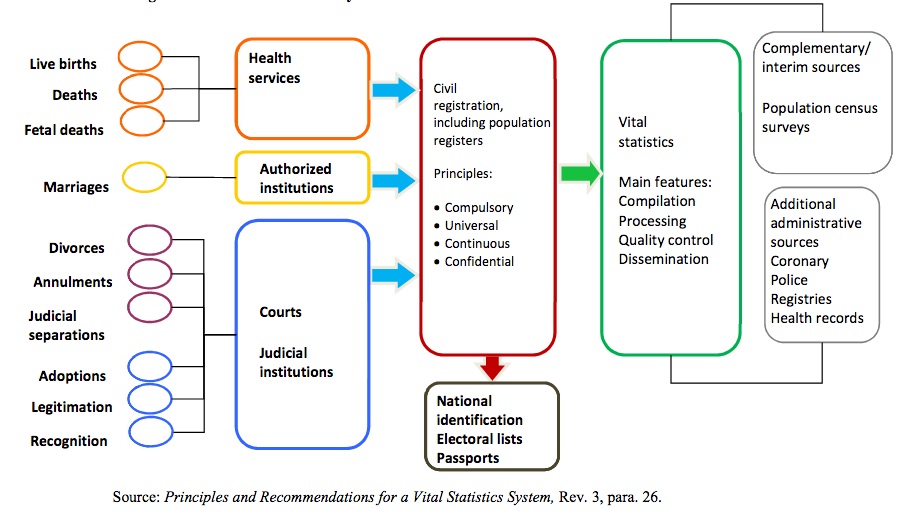
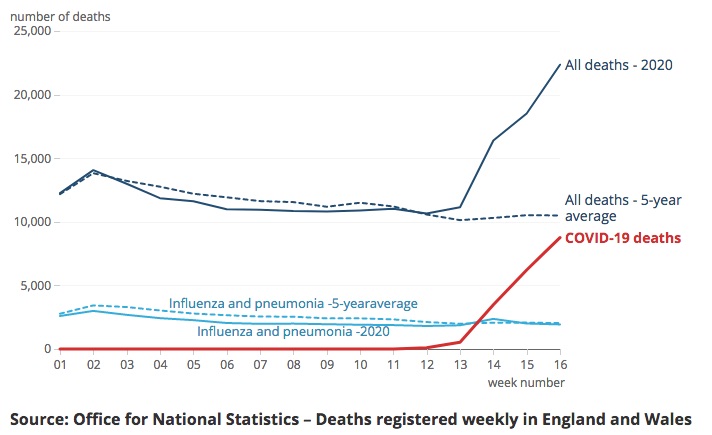

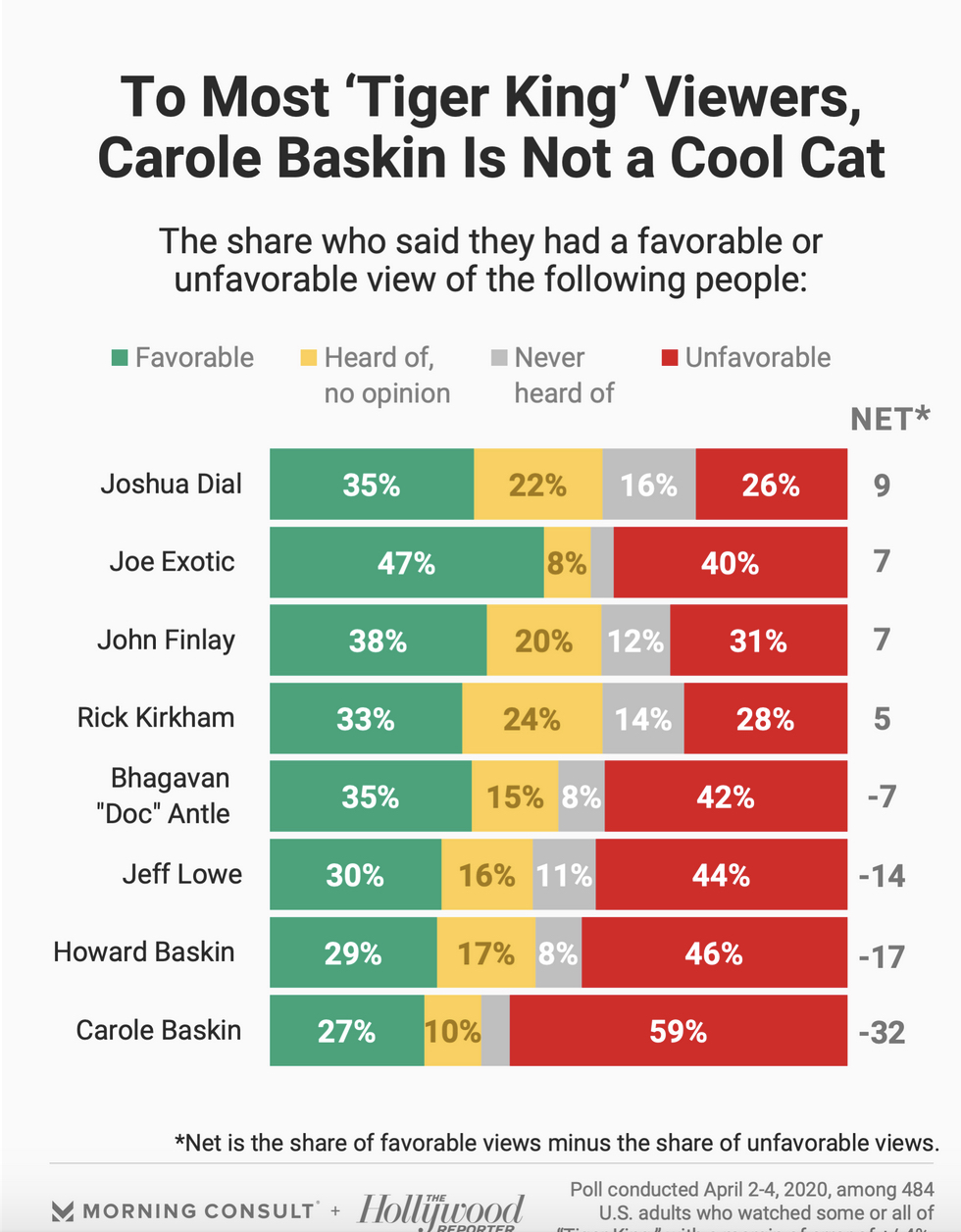
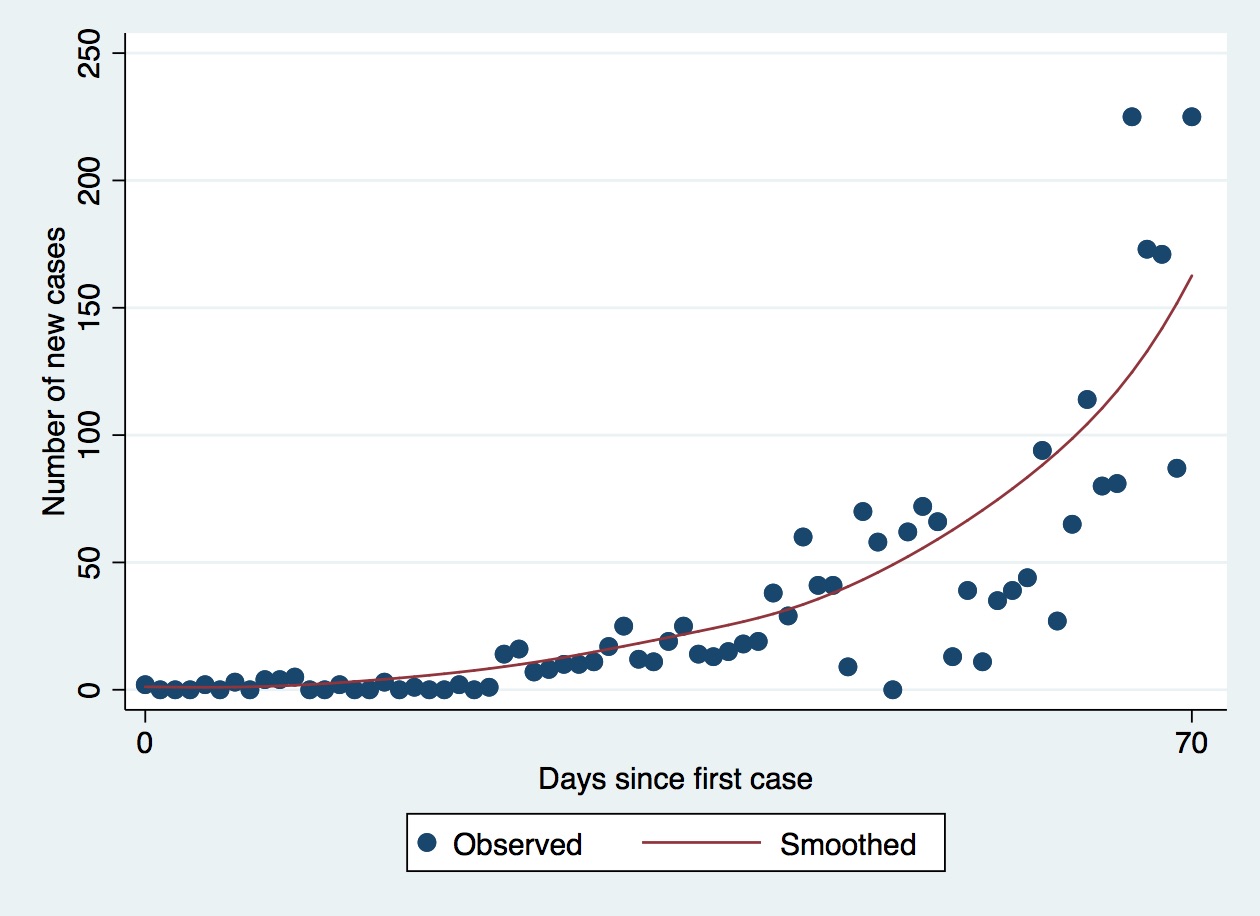
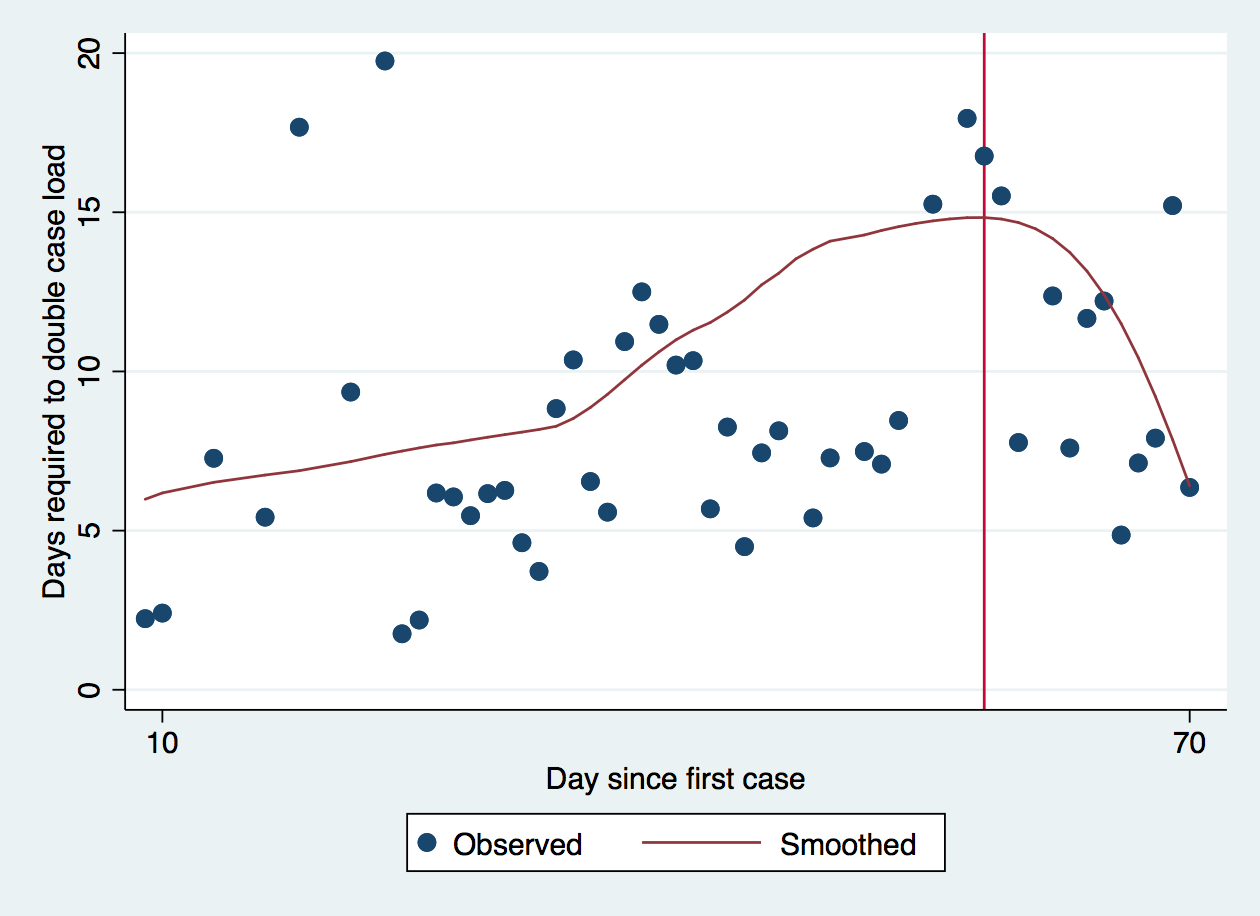
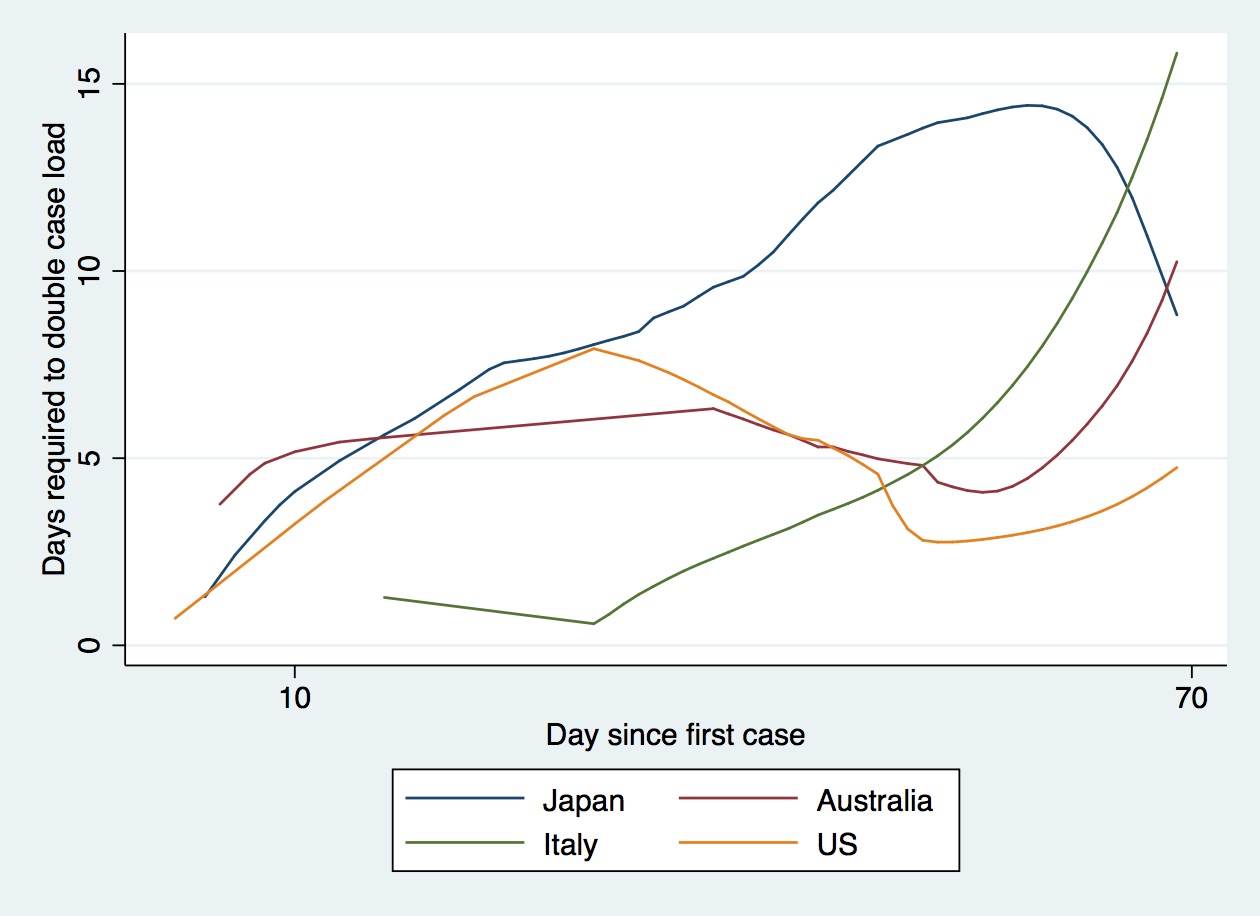
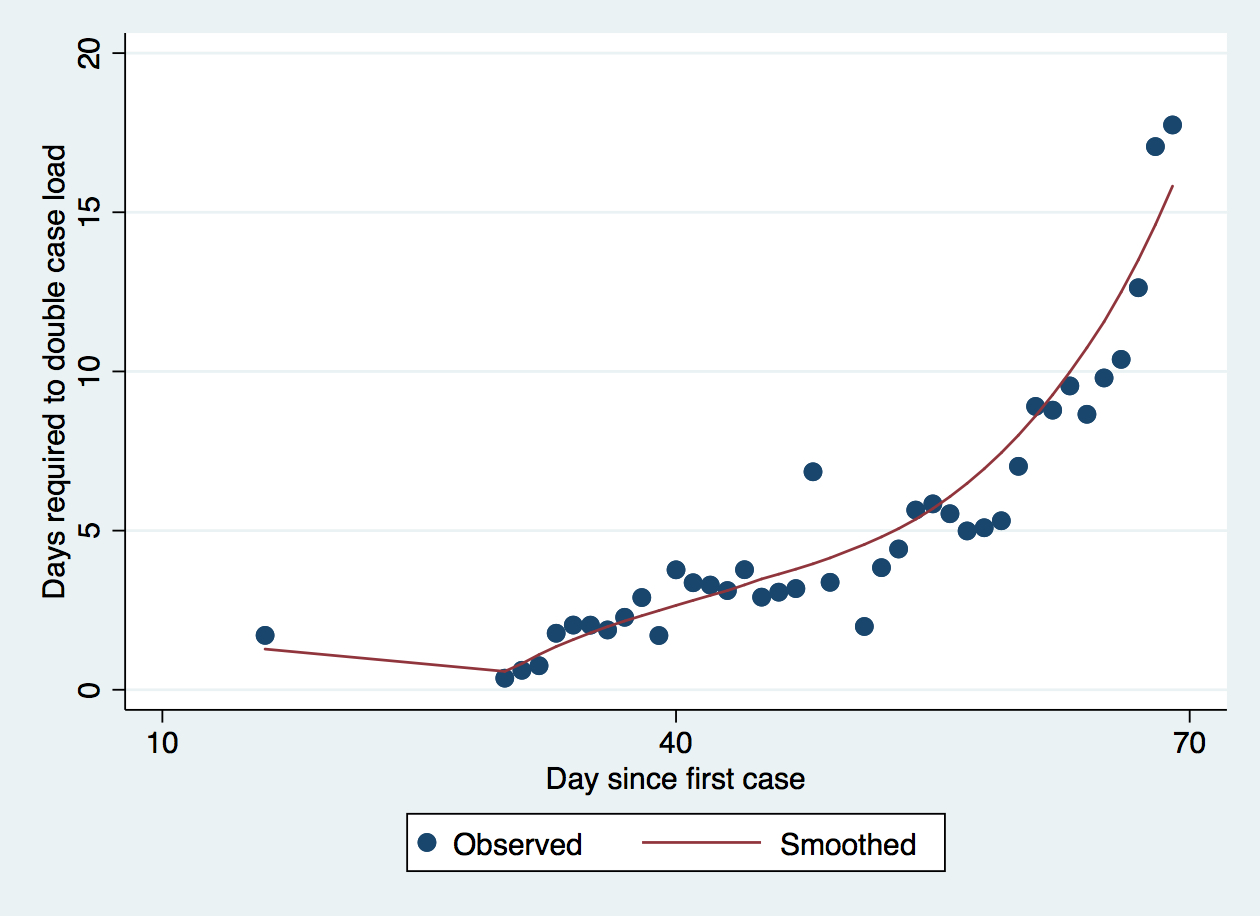


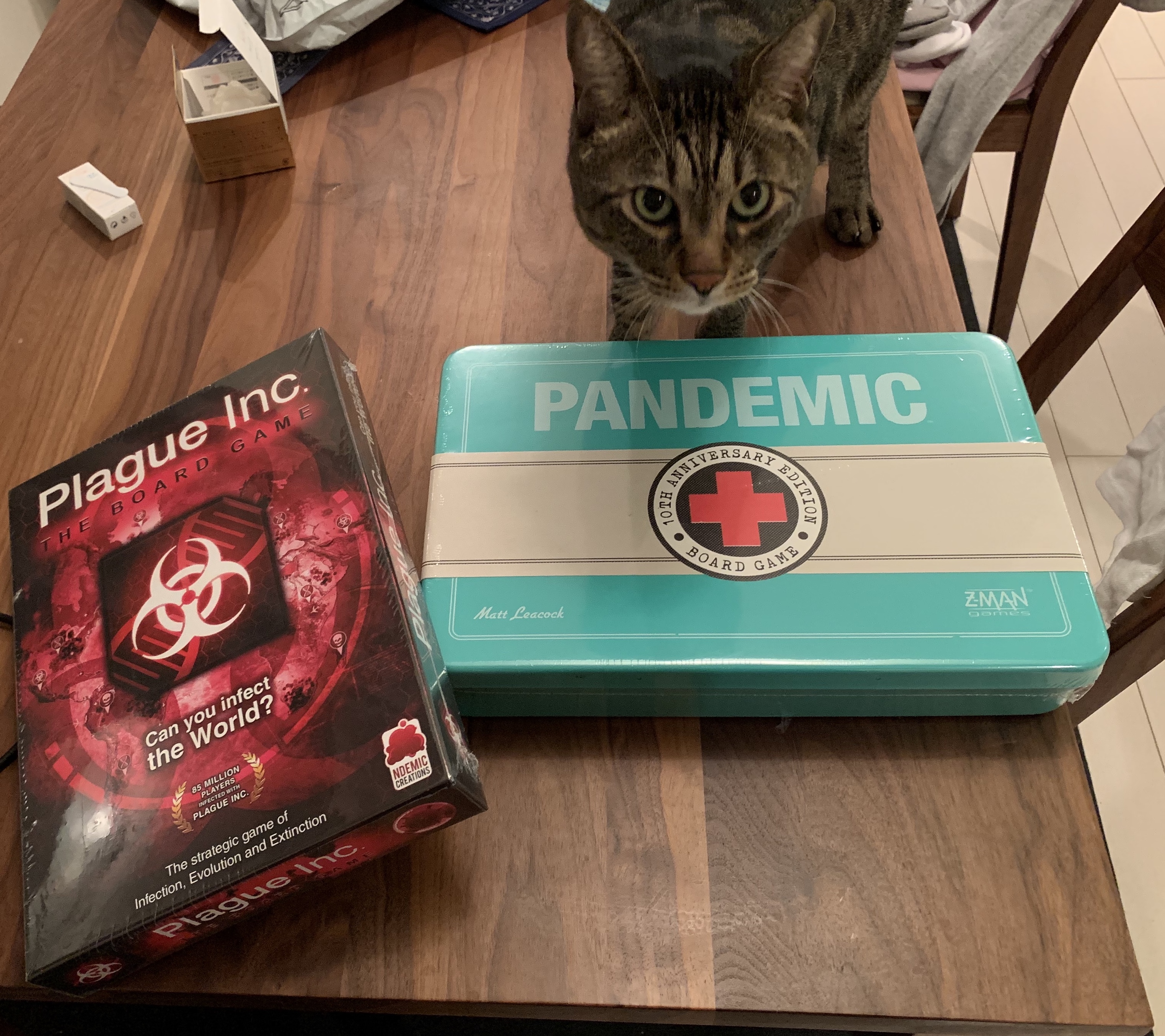
 Compromise and Conceit