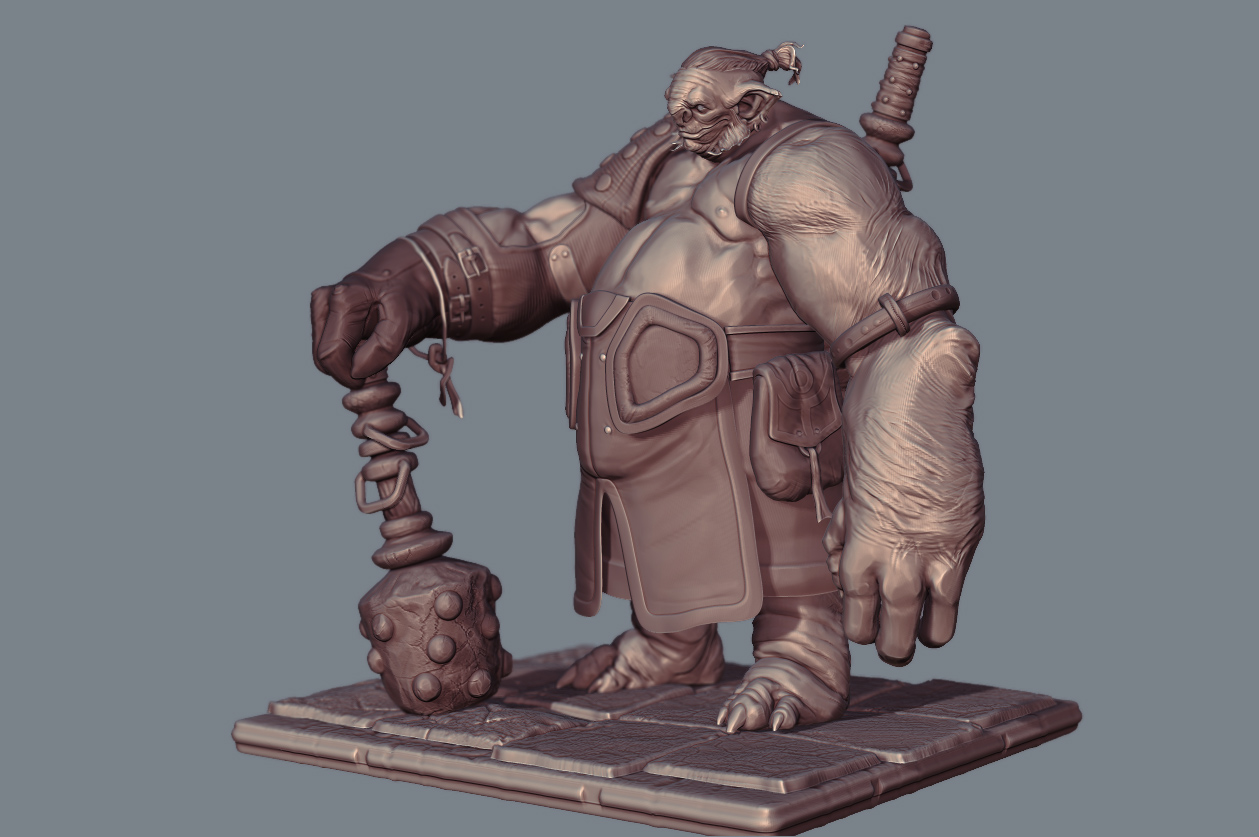
• Brom Barca at the docks
    Brom Barca at the docks

    There are secrets in Separation City, but our heroes cannot plumb their depths from the confines of that small town – they must at some point follow the clues they have toward Heavenbalm and Store. Though they could stay a little longer to explore Separation City for further clues, our heroes now find themselves in possession of items of deep evil – a fragment of warpstone and a vile book of darkness – that they must take to Heavenbalm soon, before the essences of chaos should corrupt someone anew. They must also find a powerful priest who has some special blessings, that their minds can be put at ease from the horrors they have seen in these past months. With this in mind they decided to temporarily take their leave of Separation City, and head northwest to Heavenbalm. There they would destroy the evil items they had gathered, find ease in Sigmar’s peace, and investigate – probably brutally – the associates of the wizard they just recently vanquished in the crypts of Separation City.

    Before they left though, our group of adventurers decided who would stay in Separation City, and who would venture forth. The journey to Heavenbalm is some 7 days in good weather, and knowing our party’s penchant for getting side-tracked in the war against evil, it seemed wise to expect the same band of adventurers would be together for some time. The newly-formed band included two new adventurers, once again introduced to the party by their patron, Baroness von Jungfreud. Four stalwart souls elected to leave the dubious sanctuary of Separation City:

    • Gregor Thornton, the witch-hunter who carried the evil items
    • Azahi, the dwarven troll-slayer, who would set out with the party in a covered wagon, so great was the affliction of his insanity
    • Brom Barca, human pit-fighter, a veritable giant of a man on a quest to find the only pit-fighter who ever beat him (and that through treachery)
    • Leticia, elven sword-master, of mysterious purpose as are all of her kind

    Brom and Leticia were introduced to the party by von Jungfreud, and it was at this final meeting that the PCs were able to learn some things about her and her husband’s past that might in future help them to understand the importance of Separation City.

    Meeting with Baroness von Jungfreud

    With the spring weather becoming finer and warmer after the closing of the wattle-viewing season, Baroness von Jungfreud invited our heroes for a small party on her private yacht, perhaps also to do a little whale watching. With the sun glinting on the still waters of Separation Bay, a gentle breeze blowing through the canopied deck of her pretty little yacht, Baroness von Jungfreud treated our heroes to a fine repast of roasted meats, raw fish eaten fresh-landed and still dancing on the plate, bowls of preserved lilly-pillies, and rice wine in capacious quantities. As they ate and drank she freely answered all their questions, and the PCs learnt many things about her and her dead husband Mattix’s past:

    • Mattix was heir to a farming demesne in the sunlit highlands between Store and Heavenbalm. It was inland, on the slopes of Realmsight Mountain, in an area of rich forests and rice farms, and he stood to live a long, boring and healthy life taxing the local farmers
    • He never gave a clear reason for the move, except that he thought there were better prospects in Separation City – to do with trade between Dwarves, the Palace Cape and also opening up the inland
    • It was Mattix who set about establishing the Dwarven trading post and community. He employed a Dwarven architect, Archaex, to help build the ship spire and the associated underground storage and power source. He may still have the plans to it, and certainly still has the communications with the Dwarf amongst his personal possessions
    • Mattix had contacts in Store and Heavenbalm
    • Occasionally Mattix visited Store, always without the Baroness, and she thinks that he maybe had a lover there.

    By the end of the meal they had come to understand that Mattix von Jungfreud had some plans involving the dwarves, and to know more about his past they would need to find this Dwarven architect Archaex. Baroness von Jungfreud, the dutiful wife and society socialite, gave no indication that she had any knowledge of whatever secrets his plans contained. They would need to investigate his lover, and his contact Archaex, to learn more.

    But first, they needed to find solace and redemption at Heavenbalm, so they took their leave of Baroness von Jungfreud and headed into the hills

    Bushrangers!
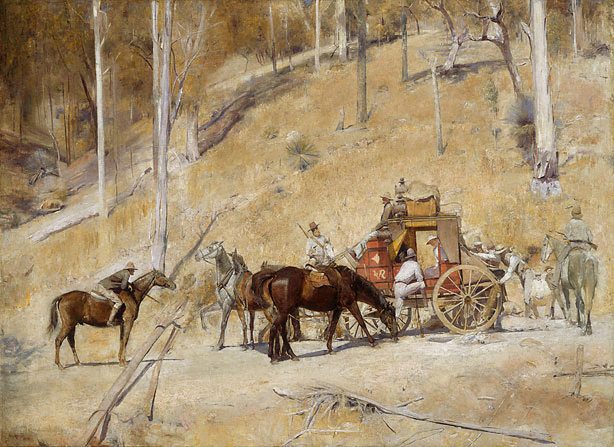
    Springing the trap
    Springing the trap

    Their journey would take them through Steamline Spa – about two days’ journey from Separation City – and then on to Heavenbalm, another three days’ journey beyond that. The roads in spring were easily passable and smooth, so they took with them a wagon, holding their travel supplies and their dwarf, inchoate with crawling terrors after the undead near feasted on him. The first day of their journey was uneventful, but on the second day they came upon a strange and sinister tableaux. At this point the road parted around a small satoyama, with the main road continuing to the northwest but a small, disused trail cutting left from the road to ascend the satoyama in switchbacks. A crumbling and fading shrine gate on this smaller road pointed to a disused shrine in the heart of the satoyama, but the switchbacks were overgrown and obviously unused. To the left of the road and behind them were loose and scrubby eucalypt forest; to their right, open land leading to a small stream, which was surrounded by reeds and thick grasses. In the junction of the road, where the smaller path split from the main road, lay a fallen horse and rider, both clearly dead. The PCs stopped their wagon and horses and approached the bodies to investigate, leaving their dwarf rambling to himself in the wagon. They tried to see where the body had come from, how long it was dead, and what killed it, but none of them had any facility with medicine, and perhaps the bright sun had already begun its hideous work on the corpse. Brom Barca noticed, however, that the horse’s saddlebags seemed full of coin, and all three of our heroes descended with glee upon the corpse.

    It was as they began to tear open these saddlebags that the bushrangers sprung their trap. Small squads of archers appeared simultaneously from the streamside, the forest behind the wagon, and the switchbacks on the satoyama. Each squad had three archers and a leader: a wizard on the hillside, some thug with a long rifle in the trees, and a sword-armed maniac in the stream. Caught on all sides in a hail of gunfire, our party had to act fast. Gregor moved to the edge of the path and opened fire upon those attacking from the stream; Brom Barca hauled his huge body up the switchbacks of the satoyama, charging through loose scrub and undergrowth with roaring, frenzied abandon; Leticia moved to engage the archers from the forest as they dropped their crossbows and charged to close combat.

    Things did not go well at first, though. Brom Barca was caught in entangling vines by the wizard’s magic; Leticia was forced to cut and run in the face of superior numbers; and Gregor found himself sorely pressed and beaten back by the force of his enemies. As Leticia ran she was cut down with arrows, but the archers left her to deal with Brom Barca, who soon hauled himself from his entanglement and slew the offending wizard, spattering his fellows with gore and causing them to flee. Gregor, it seemed, would be surrounded and cut down like a dog, but the sounds of battle roused Azahi from his insanity and, stumbling from the wagon, he engaged Leticia’s foes before they could reach Gregor. This gave Brom Barca time to return to the fray, and soon the tide turned: all the bushrangers died like pigs at a slaughterhouse, Brom Barca laughing with joy as their blood spattered his apron and smeared his face, and Gregor pale-faced and grim with the dark job of stabbing, smashing and shooting. Then the job was done, Leticia rescued from a bad fate, the dwarf Azahi regaining enough poise to return to future battles, and Brom Barca bloodied, joyous with the thrill of murder done righteously.

    They chased the remaining few bandits to the abandoned shrine, where they found them taking cover behind a wagon at the entrance, firing down the path at the party. Brom Barca cared not for the sting of bolts, though, and charged forward, his huge bulk hitting the wagon with such force that it overturned, splintering, and crushed the last three men beneath it. Then it was a simple job of jumping on the wagon, driving its splintered axle and wheel-frames into the pinned and desperate bandits until they writhed no more, and their blood consecrated the entry of the shrine: a bloody and frenzied chozubachi this. Once Brom Barca had spilt the blood on his hands and face, he entered the shrine to see if anyone else dared worship at the altar of death; but none were there. So they looted the bandits temple, and continued on their way to Steamline Spa.

    The murderer of the caldera

    When they reached Steamline Spa they handed in evidence of the dead bandits, and found accomodation in a fine hotel near the central lake. They were soon approached by an elder of the town, Merschak the steward, who asked them to attend to a delicate matter: a murderer called Otto Mercads, last son of a noble house, had returned to Steamline Spa and begun his horrific killings again. So far no one in the town knew except Merschak and the local lord, and they wanted some out-of-towners with a good reputation to go and find Mercads, and bring him back alive. Once caught, Merschak wanted the PCs to escort Otto to Heavenbalm, where he would again be locked up in a secure place far from harm – being a scion of a wealthy family, he could not be subjected to the rough justice of commoners, but would be locked away from the rest of the world for good. For finding him and taking him to Heavenbalm, the PCs would be paid 5 gold each.

    The PCs agreed, and said they would seek out Otto the next morning. His victim had been found on the slopes of Mount Steamline, and it seemed likely he was hiding in the caldera; they must travel up the mountain the next day and find him. So bid, they agreed to the deal, and settled down for a pleasant and restful sleep, free of dreams and worries …

    (Picture credit: the image of Brom Barca is by Guilherme Formenti)

  • In case anyone hasn’t noticed, the Philippines was just hit by a monster storm that killed more than 1000 people. It’s likely that this is going to be the third year in a row that the Philippines experiences a new record-setting disaster, and this is also probably the fourth biggest storm on record anywhere in the world. Of course, others have noted that certain infamous denialists are trying to pretend that this is just a normal storm, but only idiots would believe such crap. The world has changed. In this same year Australia has had record bushfires occurring earlier than ever before; Japan has suffered at least two moretsu (extremely violent) typhoons, one of which was generally described as “never previously recorded”; Japan’s summer was excessively intense; Japan’s cherry blossom viewing season was delayed by heat; and the Southern hemisphere had the hottest year on record. Britain also had its second strongest storm in 100 years, and Somalia experienced its worst ever cyclone simultaneously with typhoon Haiyan. Natural disasters from storms, flood and fire are coming thick and fast, and every year sees a new record in at least one and often more than one of these dimensions. It’s time to recognize that we aren’t in Kansas anymore.

    Scientists, of course, want to proceed steadily without jumping ahead of the evidence. For example, the current thinking in science is that the arctic won’t be ice free for a long time (probably not till 2050, I think) because that is what the theory and models tell us; but the evidence is pointing at 2020 by the latest, and the consequences of extreme arctic melt (such as occurred in 2012) for North Atlantic countries are serious. This year Britain had to import wheat for the first time (Kelloggs stopped producing Shredded Wheat!) because of rain-related crop failures. Hurricane Sandy’s extreme damage was directly related to the arctic ice melt – everyone knows it, but science isn’t able to prove it, so we have to just pretend that yet another extreme weather event was just random variation. Yet nothing about what happened in Sandy or Haiyan matches our understanding of normality – I am quite familiar with tsunami damage and the pictures I am seeing on TV of the wake of Haiyan look to me exactly like the northeast coast of Japan. No typhoon has done that in the last 30 years, and our instincts tell us this. We need to recognize this: the climate has jumped the shark, and science isn’t keeping up.

    On the other side of the coin, economists and political scientists are used to the measured rhetoric of equilibrium, and they don’t have a language or a culture that is able to accept what is happening, because what is happening is disequilibrium. Economists are still labouring under the impression that the changes that are coming – and the changes that are happening now – can be expressed in percentages of GDP and the cold calculus that applies to growth in ordinary times. They can’t. Today 8 people died in a riot at a rice factory, because the destruction in the central Philippines is so complete that millions of people are going without food, and desperation is their watchword. The calculus of mainstream economics is not geared up for looting, for the destruction of cities, for life on the edge. And that is where increasingly people are being driven. Economics hasn’t come to terms with the concept of ecosystem services – it’s too far outside the selfish, consumerist culture of economics to make sense – but this is where we’re at. Our ecosystem has turned against us. Which means we’re fucked. Does George Mason University’s economics faculty have a department of We’re Fucked? No, which is why they’re still churning out plagiarized shit about how climate change is all wrong and stuff. Economists still think this is a problem that can be dealt with using the numerical analysis of small changes: Nicholas Stern on the one hand with his arcane trade-offs and debates about discount rates, and the Lomborg’s of the world on the other hand with their ideas about balancing the future costs of adaptation with the current costs of mitigation, and angels dancing on the heads of pins that are buried in the debris of Leyte Island.

    No, we’ve entered a new era: the Anthropocene. The era of We’re Fucked. We need to develop a new politics, a politics of Getting Unfucked, and we need it now, not 10 years from now when the baby boomers have finally chuffed off to the next plane and stopped complaining about ineffectual carbon taxes. We need to get desperate, and we need to do it now.

    This is going to mean some radical changes. For starters, and most importantly, every developed nation needs to ban coal. Set a deadline: five years from now, anyone who owns a coal-fired power station is done for. Get rid of them. And while we’re at it the main providers of coal need to stop. Australia needs to declare: we ain’t selling no more, 2018 is it. Sorry kids, but your dope dealer is planning to retire. Canada needs to do the same. And this decision shouldn’t be enforced with pathetic halfway measures like taxes. We need to ban that shit, before the planet decides to ban us. What’s going on in Germany – closing nuclear plants and falling back on coal and gas – is absolutely criminal. Let’s not beat around the bush about this. Anyone in Germany who supports this kind of ecocide should get on a plane right now, fuck off to Tacloban, get on their knees in the salty dirt and say “I’m sorry, but your family died because I’m stupid.” There is nowhere on this earth where coal is a good idea, but a country with power and choices like Germany is absolutely behaving like an international criminal in choosing to go back to this poison. Anyone who supports such a move should be ashamed of themselves. Ten years from now people with such views will be being locked up, mark my words.

    We also need to give up on the idea that solar and wind are our short-term saviours. Long-term, yes, they are the siznich. But right now, we have a grid that is developed for baseload generators in centralized locations, and we need to recognize that. So we need to go nuclear. It’s the simple, clean, safe alternative to coal. Every country with a major energy economy needs to shift to a world war 2 style war economy of energy, and replace its existing plants with nuclear. Don’t fuck around with new technologies, because we’re heading into a disaster zone. We have perfectly good nuclear plant designs now, so let’s get them up and running. With robust oversight and good monitoring agencies they’ll be fine. Sure, there’ll be accidents, but the reality is that nuclear power is not that dangerous. It kills a crap-ton less people than coal and it’s easy to live in areas with nuclear fallout. It’s not so easy to live in areas that are too hot to grow food, too stormy to build, or too flooded to stay. And – sorry, country folks – if you build nuclear plants in the country, the accidents really don’t affect many people.

    Some people say that nuclear is too expensive, it needs heavy subsidies, but who cares? Home owners in Australia get $35 billion a year in state subsidies, and no one would dare interfere in such a sacrosanct subsidy. Why not give another 35 billion to an industry that might save us from destruction? Why quibble? And if you’re going to quibble about the cost of nuclear, then fuck, let’s make this clear: remove all state subsidies to all industries, and let them fight each other to the death. Don’t want to do that? Then stop pretending the electricity market is free of distortions, stop pretending it’s somehow above politics, and above all stop pretending it’s not going to destroy us all if we don’t interfere.

    Since the Kyoto protocol was first signed in nineteen fucking whatever, people – well, economists anyway – have been trying to pretend that we can solve the global warming problem through market mechanisms. Well here we are 20 years later, and fate’s duck is crapping on our eiderdown. We don’t have a functioning market mechanism that will prevent diddly squat, and we have ascended beyond diddly squat to epic storms that wipe out cities, fires that threaten whole communities, homicidal heat and wholesale changes to the way we live. It’s time to recognize that the market has had its chance, and every oily fucker, grafter and spiv who had any chance to get in the way has spoilt the opportunity. So let’s drop the pretense and get serious. We need to move to legislative and political solutions to the most serious environmental problem the world has ever faced. Scientists and economists need to take a back seat to eco-fascists and hard-arsed decision makers. Ban coal, bring on the nukes, and let’s fix this problem the old-fashioned way – through the cold, hard application of power.

  • 4匹の怪しいもの
    4匹の怪しいもの


    2週前に、いつものTRPGメンバーと一緒、ついに初めてのソードワールドをやってみました!いつものグループは普通に英語でTRPGを行うが、今回、マレーシアの女の子のメンバーのCちゃん(22歳)が、初めてのマスターをしてみたくて、日本人の友達の3人を誘って、英語と日本語と両方でゲームを行おうとした。今回のゲームは、外国人5人、日本人3人が参加した。外国人の中では、2人が完璧な日本語が話せて、私とそのあと2人の日本語初心者がいた。日本人は皆英語があまり話さなかった。Cちゃんは、なんでも話したり読んだりできますから、大丈夫だった。日本人の3人は、初めてTRPGをして、初めて私たちの怪しい外人プレイヤーと会った。怖いじゃない?

    ゲームの準備をしたときに、いつものグループのプレイヤーが、「タビット同士グループ」をやろうと決めた。ソードワールドを考えるなら、「タビット!」だと思いつけるから。日本人の新しいメンバーは2人人間、1人ルーンフォークとして参加した。ゲーム日の前に、いつものメンバーは少しだけFacebook でセッションを行ったから、準備がすでにできた。

    キャラクター

    私のキャラクターはタビットの魔術師・フェンサーだった。名前は、Booze (ブーズ)だった。魔術師は2レベル、フェンサーは1レベルだった。他のキャラクターは:

    • キナコ、人間(キャリアーは内緒)
    • そば、ルーンフォーク(スカウトか忍びタイプ)
    • らーめん、人間(なにかのプリースト)
    • ナットー、タビット魔動機師
    • うどん、タビット魔動機師
    • たこ、タビット(グラプラーみたいなタイプ)

    このゲームのプレイヤーの文化は、お互いにキャラクターシートを見せないから、詳しくない。

    私のキャラクターの経歴は:

    • 本来と異なる性別として育てられた
    • 大失恋したことがある
    • 歳の離れた友人がいた

    (全部はサイコロで決められた)。経歴表を基づいて、このタビットは男性として育てられた年下男性と恋愛が大好きな女性だと決めた。歳の離れた「友人」は大失恋の過去の恋人だと決めた。分かれた理由は。。。年差のため、恋愛が違法だった。。。

    さすがに、このタビット同士グループは怪しい。。。

    冒険背景

    私たち怪しいタビット4匹がある町(「ドーミ」という村だと思う)に使命をもらった。簡単に、カボチャ祭りに使われるカボチャを村まで持って行く使命だった。それは、無事にできたが、町に入ったとたんに日本人のメンバーの3人のキャラクターと会った。 その3人と一緒に、村長と使命の第2次ステージについて話した。最近、この村のオジーちゃんの3人が行方不明になった。この3人は昔に冒険者で、村を悪魔に予防してくれたから、村長の心配はその悪魔との関係の悪い者が来たようだ。特に、昔の冒険者のグループの中にいたナイトメアの冒険者が裏切りして、悪魔の見方になったから、そのナイトメアとの関係だと考えていた。私たちー4匹の怪しいタビットと3人の人間の冒険者ーがその悪魔がいた遺跡に行って、調べて欲しい。

    行ってきます!

    魔法的な牛達とウサギ

    遺跡は森の中にあるから、森に入った。タビット達がすぐ、第六感で危ないものの近さを感じた。後ろ足を踏み鳴らしながら、グループに報告した。ルーンフォークが前へこっそり歩いて行って、危険なところを覘いた。

    森の中の空き地には、牛達がいた。1匹は、普通の牛ではなく、普通より大きくてエラそうな首輪がついている魔法的な牛だった。危なそう!通るために、この魔法牛を扱わないといけなかった。

    奇襲を計画した。グループのメンバーが道で待って、ルーンフォークが森の中の空き地で顔を出した。牛が見て、ルーンフォークを戦おうとしたときに、ルーンフォークが逃げた。グループに戻して、魔法牛が見えるようになるから、皆が牛を戦った。

    ちょっと失敗したけど。。。普通の牛の5匹が追いかけて、その牛も戦闘できる普通のない牛だった!グループの7人は牛6匹に対して攻撃しなきゃ!

    この戦闘がうまくいけなかった。牛達が丈夫な敵から、すぐキャラクターのHPが失われた。私のタビットは真吾魔法使いから、「スリープ」という呪文があって、それを魔法牛にかけた。運が良くて、魔法牛が抵抗判定を失敗して、寝るようになった。そして、他のキャルクターが牛3匹を殺せて、残りの3匹が逃げた。ぎりぎりに生存した!それで進んだ。

    悪魔との解決

    遺跡に入って、すぐ悪魔呼び出し状態を見つけた。昔のグループのナイトメアとプリースト3人が魔法公式で悪魔を呼び出し中だった。タビット4匹が近づいたら、光っている魔法的な線につながられて、公式に絡まれていた。どうすればいいかを考えるときに、ゴーストみたいな子供が現れた。この子供が、Facebookで行われた冒険準備セッションに、タビット3匹が出会った子供。昔のグループとの関係があるが、私と人間のメンバーの3人は初めて会った。

    この子供が私達に報告した:「ここでは、何もできないから、悪魔が現れる前に逃げて!」って言った。

    怪しいタビットの4匹は、お互いを見て、少しだけ考えて。。。逃げちゃった。人間のメンバーもすぐ逃げちゃった。逃げながら、遺跡が潰れそうになった。もっと一生懸命逃げちゃうと、ギリギリに遺跡から出られたとたんに、遺跡が潰れた。悪魔もプリーストもナイトメアもゴースト子供、皆遺跡に生き埋めになった。

    ホッとして、帰った。

    2つの言語で初心者とのゲームに関する

    このセッションは、長くなくても、色々な初めてのことだった。Cちゃんの初めてのマスターの経験で、Cちゃんの友達3人の初めてのゲームだった。そして、私にとって、初めての2つの言語のゲームだった。この間、別府に住んだときに、何回も日本語でゲームをやったことがあるが、英語と日本語のチャンプルゲームはやったことがない。それは、特にいい点はないと思う。言語での交換は、ゲームに影響はなかった。時々、日本語があまり話せないメンバーと英語が話せないメンバーとの通訳したが、普通の会話と同じように流れたから、とくにクセはなかった。そして、日本人の3人の初心者は、普通の初心者みたいでした。。。多分、外国人の初心者よりshyだったからもう少し遅めにゲームの流れになれたが、いつもの通りにすぐなれて楽しく参加してくれた。

    ソードワールドの経験

    これは私の初めてのソードワールドの冒険だった。簡単で習いやすいシステムだから、早く流れるゲームのようだ。少しD&Dの味だけど、D&Dより危なくてシンプルな感じだ。冒険者レベル2のタビットキャラクターは少し異ならないけど、それは種族の選択のせいだと思う(タビットに合うキャリアーが少ないから)。基本的に面白かった。日本の一番有名なゲームは、楽しくて面白かった。またやりたいが、次回は二つの言語でやらなくてもいいと思います。ソードワールドの市民さん達は、気をつけて!4匹の怪しいタビットがきま〜す!

  • Last weekend the Guardian had an interesting article about the New College for the Humanities, some dodgy knock-off rich-kids proto-university in the UK, land of inequality. Apparently it’s being run by someone left-wing, so we have to take it seriously even though it charges 18,000 pounds a year (twice the cost of Oxford) for a humanities education. For my reader(s) who is not familiar with this issue, the college was set up by A.C Grayling (apparently a lefty, apparently a philosopher). His college has a bunch of famous professors like Richard Dawkins and Niall Ferguson (who lectures precisely two classes a year) and offers the following quality of service:

    Every week, [Jamie] goes to 14 hours of lectures and has one hour-long group tutorial, with three students and one tutor, and one hour-long individual tutorial. “We’re expected to do between three and four hours personal study a day. We write a minimum of an essay a week. It is a full-on education. We are being educated actively.”

    Let me tell you something, “Jamie”: you’re being ripped off. I did a physics degree, and in first year I had 32 contact hours a week, and at least two assignments. Included in that is my first year English course, so I had to read a novel a week (sometimes Shakespeare) and attend a one hour-long group tutorial, with about 5 students and one tutor. I had three hours of laboratory a week, which (obviously) required special equipment. You can rest assured I didn’t pay 18k pounds a year – actually in 2012 pounds I paid about 1000. Are you sure, “Jamie,” that you’re getting value for money? Incidentally, I was lectured by Paul Davies, so I guess I got famous lecturers for my 1k. What do you think, “Jamie”? Are you doing better for having chosen the New College of the Humanities over some dodgy red-brick or an ex-teacher’s college?

    Despite this, the article makes the environment sound fairly good, and certainly it seems like the lecturers and tutors are generally attentive. But the cost keeps being raised, and I can see why – not only is it a lot of money, but there are a lot of people in Britain (i.e. most British people) who really aren’t very wealthy, and for whom 54,000 is completely out of their range (especially since everyone is culturally expected to be up to their eyeballs in housing debt). Now, I’m sympathetic to the argument that poor people choose not to go into debt for education for cultural, rather than financial reasons – they’ll take on huge debt for a dodgy housing investment, that they wouldn’t take on for a reliable education investment, for example – but still, 18000 pounds is pretty damn steep. So I was interested to read AC Grayling’s response to the cost issue. And what did this famous left-wing philosopher say?

    “The downside of being educated at someone else’s expense is that you may not value it,” he says. “You may regard it as an entitlement. Unless you are acutely aware of the opportunity that is being offered to you, you may be rather cavalier about it. [You] might not be quite so keen to suck the marrow from it.”

    Statements like this leave me simultaneously angry, sick, disappointed and confused. First, let’s make one thing clear: no one in Grayling’s college is being educated at their own expense. No one at the age of 19 – people who have never worked – can afford 18k a year. They’re all being educated at someone else’s expense. Of course, in this case it’s their parents’ expense, but why should that matter? Certainly when I was at university I met a wide variety of people being educated at their parents’ expense, and I can assure you that they were “not quite so keen to suck the marrow from it.” But this was not what Grayling is thinking of when he said this – so much is clear from the context. He was clearly thinking of people being subsidized by the state.

    And this is why his statement leaves me angry, sick, disappointed and confused: why is there a difference between the state paying and your own parents paying?

    It makes me angry because there are a lot of people out there who are desperate for an education but can’t afford it, and if someone else paid they would snap up the chance. One of my players is from the Dominican Republic, and he finds it amazing that in Japan there are still people who don’t really care about the education they are receiving, because in the Dominican Republic an education is a difficult and precious thing to get and so many people who want it will never get it. Yet somehow Grayling – advanced philosopher that he is – thinks that all those people out there hungering for an education can’t really properly value it because if they did get it would be through someone else’s largesse, thus suddenly their desire is sapped.

    It makes me sick because I am one of those people. Abandoned by my parents at 17, with no money and no prospects, I was funded through my education by the state. I appreciated every single fucking minute of it, thank you very much, and I shat all over my private-school educated, parent-funded friends. I fought my way into university, I studied hard, and I loved it. I still remember in first year my private-school-educated “colleagues” openly challenging my high school grades because they didn’t believe a pleb like me could have done so well. Fuck you, you rich fuckers. I beat you every step of the way. Not only was I better than you, but I understood the value of the benefits I was getting from the government. I knew exactly what my “free” education was worth. But here we have some famous, apparently left-wing philosopher recycling this crap about how because the state paid for my education, I didn’t value it? That makes me sick.

    It disappoints me because it shows how far the understanding of welfarism and inequality has fallen in the UK – once a beacon of thought on these issues – if supposedly left wing philosophers are spouting this claptrap. What chance have we of addressing the serious inequality issues in the UK if serious educators seriously believe that anyone who is funded by the state to support their education is going to be inherently inferior in attitude to someone who is funded by their parents? What hope for redistributive justice in such an environment?

    Finally, it confuses me because, as someone whose parents never helped him out, I can’t understand why receiving fat scads of cash from your parents is okay but getting the same cash from the government is poisonous for your character. I don’t deny the right of parents to pay for their kids’ education, or the fundamental rightness of people supporting their own children, flows of capital through families etc. That’s all fine. But the idea that a person’s character and attitude towards self-improvement (represented, in this instance, by education) should be somehow reduced by being supported by a soix-distant patron, rather than a family member, is just confusing. I mean, it’s all free moolah, right? How come one is character-endangering and one is not? I have never, ever been able to understand this, and I think I’ve never been able to understand it because it is bullshit.

    An interesting aspect of our culture is that we make these cultural assertions about how weak and inferior rich kids who receive gifts from their parents really are, but we make policy that benefits those people and encourages that act. So we refer to rich kids as “spoilt princesses,” “trust fund babies,” etc.; but we make policy that is explicitly designed to benefit these people and we make philosophy (apparently) that values their personal achievements more highly, even when those personal achievements were bought not earnt. For example, in Australia everyone can take a university debt; but rich kids’ parents can pay up front, in which case they get a 15% discount. So rich people get exactly the same education as poor people, but pay 15% less for it. So on the one hand society is laughing at these kids for being supported by the mummy bank, but on the other hand society is guaranteeing that those kids and their rich parents pay less for the same product. And then those poor people are meant to thank their all-powerful masters for their beneficence? Or maybe we’re supposed to accept these crumbs of wisdom from people like Grayling, who tells me that even though I paid 20% more than my neighbour for exactly the same product, I value it less because the government, rather than my rich daddy, dropped the money in my lap.

    What can I say to this logic? Fuck you, AC Grayling, and your “philosophy.” I didn’t go to your top quality university, but I think I can detect bullshit a lot more easily than you can. But I guess, sitting in your room labeled “Master” after a life of success, you don’t really care how much your bullshit smells to people like me, do you? Is there a word for a philosophy like that?


  • Yesterday I GM’d a session of Warhammer 3rd Edition (WFRP 3), the next instalment in the Steamlands Campaign, but this time due to a lack of space and the ongoing fragmentation of my card collection I decided to implement some of the ideas I’ve been working on to simplify WFRP 3. Today we used the following:

    • Drop all active defenses and basic melee combat cards
    • Drop all more complex action cards that don’t involve a unique benefit: so e.g. Thunderous Blow is out, but Riposte is kept (since it gives a second attack)
    • Calculate combat difficulty from attributes, instead of using “one challenge die plus defense” rules
    • Allow players to use all their talent cards, not just the slotted ones
    • Make exhaustable talents a once-per-encounter phenomenon (most encounters being less than 5 rounds anyway)
    • Enhance fortune points: they now add expertise rather than fortune dice
    • Allow the expenditure of fatigue to gain bonus fortune dice
    • Fortune and misfortune dice cancel before rolling, to simplify dice pools
    • Number of successes on a melee attack acts as a damage bonus
    • Critical cards are for fluff only: all criticals are simply a +1 difficulty (i.e. one misfortune die) per critical suffered
    • Enemies also suffer criticals

    Two players made new PCs for this session, so they selected only action cards that give an identifiable non-attack effect in combat. Cards selected were:

    • Riposte, which enables a free melee attack in response to a missed attack
    • Counterblow, which does the same for someone blocking
    • Twin pistols, which I now treat as a special ability (it has no recharge): add one challenge die to the dice pool to attack with two pistols
    • Who’s next? Which gives allies additional attacks or enables a cleave-like attack after killing someone
    • Berzerker Rage, which should be fairly obvious
    • Combat focus, which gives the user a bonus on attack rolls (not damage)

    These cards enable the players to have more freedom to act and special benefits in combat, rather than simply making them do more damage or adding conditions as after-effects of successful attacks.

    The result of this was a faster, more dynamic combat scene. The revised rules encouraged use of fortune points and fatigue, and made managing fatigue more crucial; big dice pools enable greater damage (there is no 3-success limit to damage as occurs on the cards), so in one case I think the biggest warrior did 17 points of damage (and one enemy bandit nearly did the same). The combat was over in four rounds but was just as dangerous: all three PCs were critically injured, one was unconscious and one incurred a temporary insanity. The whole battle – between three PCs and 12 enemies in an ambush from three directions, with one group fleeing and having to be chased – took just one hour (or maybe less) and everyone was able to stay focused through the whole thing. Managing enemies was much easier for me, since I didn’t have to worry about cards and the like. There was no faffing at the end of rounds, as I think only two cards (Berzerker Rage and Combat Focus) needed to have recharge tokens removed, and there was no fussing with talent cards or active defenses. Calculating hit targets was easy – players just tell me their attribute and defense score – and converting misfortune dice into challenge dice (at two-for-one rates) reduced dice pool sizes. The increased numbers of challenge dice also increased the number of chaos stars, so at last someone’s black powder weapon blew up[1].

    I think the revised rules will also make enemies slightly more dangerous if they have attributes much bigger than the PCs, which means forces will be more evenly matched. For example, one bandit had a strength of 5 that he could use to defend with, which in the revised rules means 2 challenge dice and one misfortune die added to the dice pool. For an attacker with strength less than 5 this is going to be a tough target, and in fact in order to kill this guy the players had to use fatigue and fortune points to bolster attacks. Under the standard rules this guy would have been no more difficult to hit than any of his minions, and making him harder to hit would require me faffing with a variety of action cards.

    Although I’m not fully assured of its effect on game balance, I like the effect of simplification on combat flow. I’m thinking of dropping armour-based defense scores too (making armour provide only soak values) to further simplify the combat resolution task. I’m also watching the revised collection of action cards to see if they’re worth the effort. But as a first attempt at speeding up and streamlining WFRP 3, the changes seem to have worked, and rescued the game from being crushed under the weight of its own innovations.

    fn1: actually now I think about it, in the standard rules it is almost impossible for a black powder weapon to blow up. Most are Unreliable 2, which means you need two chaos stars to blow them, but chaos stars only occur on challenge dice and in most ranged combat situations you will only ever throw one challenge die. The standard rules make the difficulty of a ranged combat attack 1 challenge die + 1 misfortune per point of defense, so unless you’re using a card with additional challenge dice (of which there are few) you will never bow up your weapon.

  • Earlier this year I posted a prediction of the minimum arctic sea ice extent, in which I used a simple regression model to predict the average September extent. My final conclusion:

    My final estimate for sea ice extent in September 2013 is 4.69 million square kilometres (95% CI: 4.06 – 5.32 million square kilometres).

    On October 3rd the National Snow and Ice Data Center (NSIDC) released their estimate of the September extent, which was 5.35 million square kilometres. The linked blog post gives a nice description of the main reasons why the extent recovered, and some of the competing influences on the extent this year. It also explains some of the Antarctic extent’s record gains.

    The final extent for September was just 0.03 million square kilometres outside of my 95% confidence interval, or 0.05 square kilometres outside my estimate as posted on the SEARCH September Sea Ice Outlook competition. This means that I only just missed including the observed value in my confidence interval. My prediction in July was 4th closest to the true value, beaten by NOAA, NSIDC themselves, and Barthelemy et al. It was the second closest estimate based on statistical estimation, and was beaten by two model-based estimates. My estimate was also the closest amongst all those that didn’t include the true value in their 95% confidence intervals. The lowest estimate was from Neven’s Arctic Sea Ice Blog, which just goes to show that crowd-sourced estimates aren’t necessarily the best. Watts Up With That were very close to me in June and August (they didn’t submit in July) at 4.8 million km2, but they didn’t give a confidence interval. I think this is the first time in the annual SIO competition that WUWT have come close to the mark, which just goes to show that eternal optimism has its value.

    I’m pretty happy with my prediction. I originally planned to do it for the August submission adding July sea ice temperatures, and I think that would have probably bumped up my prediction a little closer to the true value. I also considered doing an ensemble model, using a wide range of different statistical models and averaging the results after incorporating more covariates. I think next year I will try to be more systematic, and submit a prediction for every month using a range of modeling techniques. The key point of my model is that it accurately predicted a very large rebound from the 2012 minimum based on just a few key variables selected without much systematic basis. I think I can do better next year!

  • Obamacare has been in place for barely a week, and already the medical journals are publishing editorials and opinion about it. The New England Journal of Medicine (NEJM) is particularly interested in health finance reform in America, and has been publishing a lot of speculative material on the Affordable Care Act (ACA) for a long time now, but this week it has three editorials in the same issue all discussing various specific aspects of the challenge of funding healthcare in the USA. These three editorials serve to show how complex health financing policy is, how hard it is to iron out all the flaws in any system, and how much reform is still needed in the USA. To the extent that it’s possible to characterize the editorial policies of a peer-reviewed medical journal, I think it’s safe to say that the NEJM is broadly supportive of health system reform in the USA, and supportive of Obamacare but probably generally hoping for better. Certainly articles about America’s reform journey over the past few years, along with research into specific aspects of health system challenges in the USA, have been getting a big run in the NEJM.

    The first of the editorials, The ACA and High-Deductible Insurance, describes an unexpected (to me) and unfortunate side-effect of the ACA: the introduction of new, cheap insurance plans with very high deductibles of up to $10,000 per patient. The NEJM describes these policies as “blunt instruments” and suggests they are the fault of Congress focusing on market-based cost controls. These high-deductible cheap plans are necessary because the ACA will mandate all Americans must have a form of health insurance, but many individuals not able to get employer-funded plans will simply not be able to afford standard plans, so they will need to buy cheap high-deductible plans. The editorial points out the potential costs of this and gives a fairly strong judgment of its worth at a population level when it says:

    previously uninsured people might effectively become underinsured, and their aggregate health and economic outcomes might not improve substantially. The United States seems destined for a “bronze” health insurance system that could create financial burdens high enough to cause adverse outcomes in vulnerable populations.

    Their argument in support of this is that there is some evidence that high-deductible plans discourage use of discretionary and essential health care, which means that basically a group of working poor are being forced to take up a product (health insurance) that they can’t afford to use and that is essentially just going to act as a safety net for extreme emergencies only. The editorial also points out that there isn’t actually much research on high deductible plans and their effects, and the USA is about to embark on a big experiment with these instruments. My view, of course, is that the American people are being sold short by the politicians’ naive distrust of socialized solutions, and its refusal to properly fund this essential service: so instead of having a properly run and well-subsidized single-payer system for all the working poor (i.e. an expansion of medicare/medicaid to cover a very large part of the population) the govt has opted to force those poor people to fork out for a very poor quality product. I guess given the shenanigans in the House and Senate over the past two weeks, no one should be surprised.

    The editorial suggests an interesting, almost libertarian solution: that employers should facilitate payments into health savings accounts (HSAs) for these working poor. HSAs get favourable tax treatment and could basically be used to cover the deductible part of the health care plans, reducing their negative effects on healthcare access. But reading the list of recommendations in the editorial, it seems to me that they are all very poor attempts at putting lipstick on a pig, which either end up costing the working poor more, or falling back on vague and hopeful benefits from poorly-researched policy ideas. I don’t blame the authors, because I guess that’s what you are left scrabbling to do when you are dealing with a political class as timid and out of touch as that of the USA.

    The second article, finely entitled The Thousand-Dollar Pap Smear, describes some of the crazy ways in which the US health financing system works to drive up costs. This article has a very well-crafted introduction, which first points out that the physician author has actually seen bills of $600 or $1000 for a mere pap smear, and then links the cost of smears to the broad sweep of cervical cancer protection in the modern world:

    Cervical-cancer screening is one of the 20th century’s true public health successes. The incidence of a disease that once caused more deaths among American women than any other form of cancer has decreased dramatically since the introduction of routine Pap smears in the 1970s. In the modern era, most deaths due to cervical cancer occur among women who have never been screened or who have gone decades without screening. One of the main factors in helping to conquer this once-dreaded disease has been the availability of a cheap, effective screening test that can detect disease early, while it’s still very treatable. Yet increasingly, in my roles as the chief medical officer of a community health center and as a family doctor seeing patients in that system, I hear from women who are choosing to skip their screenings because of skyrocketing costs.

    She then describes how it is possible for a pap smear to cost $1000, and it’s a pretty embarrassing process. Part of the blame for this lies with physicians and part with the pathology companies, who have developed new and cunning ways to ensure that the physician orders, by default, tests that are not needed. They use systems of defaults and check boxes, and do their best to keep the actual pricing opaque:

    Costly tests that once would have required physicians to submit multiple collection vials and specimens can now be ordered with the Pap smear simply by clicking a single box in the electronic medical record. Nothing at any point along the way alerts either the clinician or the patient to the high costs of these tests or to the fact that there is little medical evidence to suggest that they are useful for most patients.

    The author compares this behavior to that of pharmaceutical companies. It’s also an example of how little control ordinary patients have over health prices, and how invulnerable the system is to individuals’ price negotiations. In many cases, the women receiving the smear don’t know what tests are being done – they just assume it’s the pap smear they asked for or had recommended to them – and are shocked when they receive the bill. The risk from this is that women won’t undergo the pap smear, because they can’t control the price they end up paying. As we will see in the next article, negotiating over price is difficult.

    As a final parting shot, the author points out something that is genuinely amazing about the US system, and which makes it even harder to argue for the benefits of price control through individuals negotiating with their doctor:

    The final step in creating these astronomical bills for women without health insurance is that some laboratories charge uninsured women vastly inflated amounts, while offering insurers steep discounts from these “usual fees.” Although some laboratories offer discounts to uninsured patients, others do not, leading to the phenomenon well documented in other areas of medicine in which the uninsured pay premium rates, often having to set up multiyear payment plans for services for which a health maintenance organization would have paid a fraction of the charges.

    This has always struck me as crazy, but seems to be  a common problem in the USA: prices are not fixed by the cost of providing the service, but are based on what the company is able to gouge from the patient. In the case of uninsured women, women relying on HSAs, or women obtaining insurance from a private, individually purchased (rather than workplace or group-purchased) insurance plan, they have no group negotiating power, and the laboratories simply charge them more because they can. The same bill sent to a health insurance company would be sent back with a sneer – or wouldn’t be sent because the company had negotiated a bulk rate – but for a woman negotiating alone, the price is fixed as high as possible. Most ordinary consumers of healthcare are unlikely to even realize they are being gouged, let alone have the power to negotiate.

    The final editorial ties this together with a discussion of the similarities between out-of-pocket payments and treatment side-effects. This article points out the high cost of out-of-pocket payments in the USA, and gives some hideous examples:

    The Center for American Progress has estimated that in Massachusetts, out-of-pocket costs for breast-cancer treatment are as high as $55,250 for women with high-deductible insurance plans; the out-of-pocket costs of managing uncomplicated diabetes amount to more than $4,000 per year; and out-of-pocket costs can approach $40,000 per year for a patient with a myocardial infarction requiring hospitalization.

    Some of these out-of-pocket costs are above the median income of the USA, so there is no way that the majority of the population are going to be covering them from petty cash – you’re looking at years of savings, remortgaging houses, or other distress financing, to cover diseases that are common in the life course. And these costs are being paid by people with insurance plans – they have already paid into some kind of risk pooling mechanism before they wear these costs. In research in developing nations, we refer to these effects as “financial catastrophe due to out-of-pocket payments” and “distress financing related to healthcare costs,” and most developing nations are working on universal health coverage plans to try and eliminate these payments. Yet Obamacare intends to do nothing about this aspect of the system: the working poor in the USA will be able to afford nothing better than these high-deductible plans. The article suggests that physicians should start including discussion of out-of-pocket costs in their routine discussion of the risks and benefits of the treatment, and gives several reasons for this, some of them directly related to health. These include:

    • Patients often don’t raise the costs initially, but bad experiences with costs may lead them to reject subsequent treatment suggestions, avoiding essential care before they know what it will cost (or because they can’t trust the cost, in the case of the $1000 pap smear)
    • Patients who know the costs in advance can prepare, and avoid the worst forms of distress financing
    • Often there are cheaper alternatives to the standard treatment, or special plans (research projects, government support) that can be used to reduce the burden of payment; discussion of these issues upfront can help patients to choose a care package they can afford

    I’m really surprised that in a society with as much upfront payment and as much fear and concern about health costs as USA (and where health costs are so high!), physicians don’t routinely talk about this in the consultation. I remember my local dentist here in Tokyo had a tick box on the registration form when I first visited that asked if I wanted to only receive treatments fully funded by my insurance plan. Surely US doctors should be doing this? But apparently, despite years of debate about health financing, it’s not routine in the clinical visit. The editorial also points out that there is a real lack of information, so often even clinicians can’t work out clearly how much a procedure will cost (see, again, the $1000 pap smear); some States have even passed special laws to help with this! How is it possible to be an informed consumer if a) the person providing the service is reluctant to talk about the price, b) the person providing the service controls all knowledge about alternative products, and c) the person providing the service can’t tell you how much it will cost? For people on high deductible plans, this minefield of price negotiations is going to come straight from their pockets. It’s fairly obvious that in this situation many people would forego care before they even know its price – it turns a visit to the doctor into a kind of gambling game, with only negative outcomes. Who wants that?

    My guess is that this issue is going to come to the fore over the next few years as millions of people enrol in health insurance that can’t help them. The Democrats now own Obamacare, and the way they have set it up means that they now also own all the problems that the private market presents to the millions of people who will begin to experience it for the first time. I guess this means that sometime in the next few years we will see a concerted attack on high deductible plans. That is going to be impossible though, unless the government is willing to engage in a bit of socialist interference in the market. If they don’t, will Obamacare deliver benefits worth the huge political battle it took to implement? And if they do, will the USA be able to present a largely free market solution to the challenge of universal health coverage? My guess is that the answer to both of those questions will be “no,” and the USA will either continue to struggle with a broken system, or finally bite the bullet and go for a full universal health system. Sadly, probably, the broken system will prevail.

    Still, at least since this morning’s vote on the debt ceiling we at least get to see how the story ends. I’m glad I’m not part of the narrative, though!

  • Continuing my series of posts about the unnecessary complexity of Warhammer 3rd Edition (WFRP3) combat and skill resolution, today I want to focus on the construction of dice pools in combat. I have already shown that action cards may not provide much benefit in combat, and I have also explored an alternative method for setting skill difficulty, and today I want to explore the possibility that the combat system involves unnecessarily complex dice pools with limited value.

    The standard method for handling defense in WFRP3 is divided into two parts: action cards add 1-2 black or purple dice to the dice pool, armour adds one black die per point of defense, and the attacker can add fortune dice through the use of talents, fate points and other types of enhancement. Furthermore, the basic difficulty of all attacks is 1 challenge die, with some cards having additional challenge and/or misfortune dice. Thus a starting warrior with strength of 4, one point of training, 1 fortune die on strength and a talent that gives an additional fortune die will have a basic attacking pool of 4 blue, 1 yellow, 2 white; against a target defending (+1 misfortune) and wearing lightish armour (+2 defense) the final dice pool will be: 4 blue, 1 yellow, 2 white, 3 black, 1 purple. The number of black and white dice can get quite ridiculous at higher levels: it’s quite possible that an action card will add 2 black, the defender will chuck in 2 black from cunning points, and the attacker will then throw in 2 or 3 whites from blessings, fate points and other situational benefits.

    My question is whether all these extra white and black dice can be just cancelled out, so that the dice pool ends up with the final number of excess black/white dice. This would be particularly useful for higher levels and more complex fights, and hints at a language of skill challenges that is much simpler to express. To explore this possibility, I simulated 10,000 attacks with a basic melee weapon for a fighter of strength 3-6, and checked the average damage and success rates, using two different methods of dice pool construction. In one method, black and white dice were added to the pool and rolled together; in the other, only the net number of dice was added. For all attacks the defender was assumed to be defending actively, with 2 points of armour defense (total defense 3); the attacker had 2 fortune dice. I assumed a total soak of 0 so that I could calculate pre-soak average damage, and used a hand weapon to calculate damage. Table 1 shows the mean damage delivered and the chance of success for both methods of calculating the dice pool, for the four strength values.

    Table 1: Outcomes from two dice pool construction methods, basic Melee Attack

    Strength Success probability Mean damage
      All dice Excess dice All dice Excess dice
    3 0.51 0.52 4.50 4.50
    4 0.63 0.65 6.30 6.40
    5 0.72 0.75 8.14 8.43
    6 0.80 0.84 10.09 10.46

    It should be fairly clear that there is very little difference between the two methods, and that even at very high strengths the difference in damage is minimal (less than 0.5 wounds on average). The same differences in probability of success would also apply to probability of observing at least one boon (since boons and banes cancel on black/white dice in equal measure with success/failures).

    Repairing combat hit probabilities

    Note also the huge increase in chance of hitting as strength increases – and this is without adding additional training or reckless/conservative dice. In reality a strength 6 fighter will have additional training and fortune dice, and will be close to a 100% chance of hitting in combat against someone with a standard defense card and armour. This high probability of hitting is also independent of the target’s physical characteristics: the only way a standard PC can up their defense is to get better action cards and to buy better armour. In WFRP3 the only skill check that is largely independent of the target’s attributes is the key attacking check!

    I think this could be fixed easily by making the difficulty of hitting a target dependent on their physical attributes. We can introduce a simple language for converting difficulty into dice pools, and generate difficulties as follows:

    Target difficulty=attribute+defense-total fortune

    This can then be converted into dice pools by dividing by 2; the result is the number of challenge dice, and the remainder the number of misfortune dice. For combat, the base attribute can be agility and people can swap this for toughness or strength if they have a suitable talent and they are carrying a shield and heavy armour (toughness) or a weapon (strength).

    In combat, for a person with agility 3 this is equates to the same difficulty as would occur in the standard system when they have the dodge action card. A person with agility 1 would actually be easier to hit than in the current system, but such people basically don’t exist. A fighter with agility 4 would be as hard to hit as a fighter with advanced dodge in the current system. This would be particularly liberating for the GM, since he or she could essentially dispense with tracking aggression and cunning, as well as defense cards for everyone. Although the increasing difficulty of attacks would mean combat took more rounds, the reduction in management (of cards, recharge and dice pools) would significantly speed up each round.

    This change would also put magic and combat on a more equal footing. Many magic attacks are challenged by the target’s attribute, which means that in general their difficulty is likely to be higher than 1 challenge die. Since magic often does less damage than combat attacks, this significantly reduces its effectiveness.

    With these considerations I think I have now developed a rounded idea of how WFRP3 can be simplified into a streamlined high fantasy system. Now I simply need to put it all together in order to start using it.

  • Today’s Guardian has some new notes on the ongoing scandal that is the British education system. This time it’s a new OECD report ranking countries by numeracy and literacy, and the United Kingdom has fallen near the bottom. Worse still, the study finds that on average 16-24 year old Britons perform worse on both numeracy and literacy than do 16-55 year olds – that is, educational achievement has gone backwards in recent times. The depth of failure is also astounding:

    a quarter of adults in England have maths skills no better than a 10-year-old, a conclusion that also prompted a political row in which the Conservatives attacked Labour’s record in government.

    That means an estimated 8.5 million adults are only able to manage one-step tasks in arithmetic, sorting numbers or reading graphs. The same body also concluded that one in six adults could only just decipher sentences and read a paragraph of text – the literacy level of a child in their final year of primary education.

    This is a pretty disturbing indictment of the British education system. The rankings also show it is under-performing relative to other English-speaking nations, with Australia and Canada out-performing the UK on every measure and the US close behind the UK. South Korea is top in numeracy and Japan top in literacy, which finding is particularly staggering given that literacy in Japanese requires a huge commitment of time and effort just to learn the vocabulary in comparison with English. The UK government is trying to blame Labour, pointing out that a 24 year old tested by this report would have spent their entire education under Labour, but I think that’s a little simplistic – education systems are slow to shift, and education methods, infrastructure and workforce obviously have legacy affects that would strongly influence outcomes long after the government that set them has disappeared into the trash bin of history. The Guardian is taking a more nuanced approach, attempting to understand what it is about education policy in Japan that makes Japanese students so good. It makes the good and obviously alarming point about differences in attitude towards education between the countries:

    Japanese senior high school teachers, and their pupils, are often incredulous when they learn that 16- to 18-year-olds in England can drop maths and literature and study just three A-level subjects of their choice.

    Add me to the ranks of the incredulous. When I was finishing high school you had to do five subjects. What else would be reasonable? And to the best of my knowledge I could only drop maths in my final year, and had to do one science and one humanities amongst my five subjects. What do English students do with their time?

    This article, however, also brings up the common criticism of Japan’s education system – in fact it brings it up twice – and presents this criticism as some kind of counter-balance to the system’s strong focus on rote learning and hard work. The article states:

    Japan’s state education system is often criticised for quashing original thought among pupils in favour of rote learning, and for placing an emphasis on theory rather than practical skills …
    The stress on memorising information and passing exams, which begins in primary school and continues through to senior high, has been blamed for stifling critical, independent thought

    This is a personal bug bear of mine, and something I find really frustrating about western coverage of Japan in particular and of Asia generally, for two reasons: it exaggerates the extent to which western students learn “critical thought” and it valorizes western “critical thought” as something that somehow counter-balances ignorance, or has some kind of value separate from the basic knowledge and skills required to inform critical analysis.

    In terms of exaggeration, I remember growing up in the Australian school system, entering university, and interacting with peers during that period, and I can’t say that between us we had a shred of critical thought. We all failed essays at university and had to be taught a whole bunch of things about analysis and critical thinking skills, and university tutors in the humanities will often talk about how the students they get in first year are just repeating rote what they learnt from parents and peers. So the idea that western schools are a haven of critical thinking strikes me as a little exaggerated. Yes, high school students in the west spend more time spouting their opinions in essays than Japanese students, but so what? I’m sure that lots of British students have spent time in the library photocopying their arsehole, but that doesn’t mean they’re good at art.

    But more importantly – and the reason this annoys me – critical thinking is a complete waste of time, and can even be counter-productive, if it is alloyed with ignorance and an inability to read. Let’s review the facts about one in six adults in the UK, who could “only just read a paragraph of text.” Why don’t we slap down the IPCC summary for policy makers in front of one of these adults and ask them to critically analyse it. Are they going to produce an analysis with any critical value, no matter how well they learnt to spray their opinions at school? I don’t think so – especially if they have maths skills no better than a 10-year-old. Perhaps it might be better if these adults were first able to understand the IPCC summary, before they embarked on a critique. Indeed, it might be better if these adults refrained from criticizing things they can’t read, because if you don’t understand something it’s likely your critical thinking about it is going to be of little value. You cannot present “independent, critical thought” as a boon independent of the skills that underlie basic comprehension, because one depends on the other. This isn’t to say that both can’t be taught in school, but it’s clear that the UK and US are not doing that. If you teach “critical thought” without teaching the skills it depends on, what you are actually teaching is rhetoric: the ability to bend facts to support your pre-conceived ideological goals. That this is taught in UK schools is not a positive thing.

    Critical, independent thinking is not actually a hallmark of western culture: spouting opinions is. If we are such good critical independent thinkers, how come we got lied into a war in Iraq, participated in the massive con that was the housing bubble and the GFC, still haven’t come up with a solution to global warming, and managed to wage the biggest and most disastrous war in human history (WW2). Is it possible that what we see is a virtue is actually a flaw? Or, more likely, we aren’t doing it at all? After all, the land of limited independent thought, Japan, has a low crime rate, high employment, little inequality, and has a strong opposition to engaging in any form of war. They have an economy much larger than their population would be expected to have, exert a significant positive influence in the world, and make all the stuff you use even though they have no resources to speak of. Perhaps an education system that doesn’t focus on “independent, critical thinking” is more beneficial to society than one that does? Or perhaps the West is so full of its own opinions that it mistakes ranting for thinking?

    This article’s platitudes about critical thought might go down well with educated British readers, but to me they’re just another example of the standard rhetorical footwork employed by journalists about Japan: on the one hand, a weak and stereotypical assessment of Japanese as conformist; and on the other, a triumphalist reassurance that westerners are all free-thinking individuals. Both of these two steps in the movement are wrong, and the underlying assumptions about the value of critical thinking to a functioning society, as well as the facts about how prepared western school leavers are to engage in such thought processes are also deeply flawed. A little more nuance would be nice.

    Also of passing interest in this debate that the UK will now have with itself over its education policies is the role of inequality, and the relative benefits of development compared to birthrates in preparing for the future. How can the education levels of young adults in the UK be going backwards at the same time as average GCSE scores are going up? One answer, readily deployed by conservatives, is “grade inflation.” The other answer is inequality: that if you looked into the background of that “one in six adults” you would find they were much more likely to be poor and from certain areas. Japan, of course, has very little inequality compared to the US and the UK, and Australia and Canada are much more equal than the US and the UK. Interesting how the rankings seem to reflect the inequality within these countries. Also, if one in six of your young adults lack basic literacy and one in four of your adults lack basic numeracy, I think it’s safe to say that you have a problem with your workforce, and no industrialized, developed nation can hope to maintain its economic and cultural development with this kind of lack of investment in its workforce. Although England has a higher birthrate than Japan or South Korea, which country has the larger number of suitable new entrants to its workforce? Who is better placed to maintain a high-skilled pool of workers? The UK with something like 20% of its workers incapable of even basic office duties, or Japan and South Korea? Maintaining birth rates is not the be-all and end-all of maintaining a sustainable social order, especially if a large minority of all those born are going to grow up to be completely unable to contribute to the economy. British policy-makers need to be looking at the long-term implications of their education and industrial strategies (such as they have any) if they want to maintain anything resembling the quality of life that modern industrialized economies have come to expect.

    Perhaps they could start by reassessing what they consider to be educational priorities, and trying to look beyond party-political point-scoring. “It’s Labour’s fault” is hardly a sterling example of the “critical thought” that UK policy-makers supposedly learnt at school. But then, maybe it’s an alternative when you don’t have the skills to read the report …

  • Following my analysis of success probabilities in Warhammer 3rd Edition (WFRP3) my next task is to analyze some of the major action cards, and identify whether fiddling with action cards brings any particular benefit to the game beyond different names for attacks. Before I do, I should note that there are only really a few different kinds of action cards:

    • cards which appear to do more damage (like Thunderous Blow and Troll-feller Strike), usually with extra risk
    • cards which enable the PC to use a different skill to attack with (e.g. Chink in the Armour, Nimble Strike), sometimes with less damage
    • cards which induce some kind of combat-beneficial circumstance (e.g. Cut and Run) or cause an ongoing condition (Cruel Strike)

    I think the second type of card are obviously worth having, since they enable PCs with poor combat traits to occasionally engage in melee attacks. The last kind of card may also be valuable, depending on the benefit they give the player or the condition they induce; but often the benefit is small or could be easily handled by sensible GMing (e.g. disengage for free). I think many of the effects given in these cards could probably be made available to PCs as talents with no loss of complexity or great unbalancing of the system. For example, Chink in the Armour enables a PC to use their Observation skill to attack. We could probably make this a talent available to a wizard if they want to spend the experience points on it, but it would be unlikely to unbalance the wizard class – no wizard can slug it out for more than a round in melee combat against anything nastier than an orc, and giving them the ability to use their observation skill to attack isn’t going to help if they can’t defend and don’t have armour or toughness worth speaking of.

    My question is whether the first kind of card – the ones that supposedly enable fighters to do extra damage with savage attacks – is worth using. I investigated this by simulating 10000 implementations of the Basic Melee Attack and the Thunderous Blow action cards, for fighters with strength scores ranging from 3 to 6, in both reckless and conservative stance (one deep). I chose Thunderous Blow because it has side effects (fatigue) and (at least in reckless stance) is potentially savage, enabling the fighter to double their weapon damage if they roll well.

    For all simulations in both stances for both cards I calculated the probability of successfully hitting and the average damage done (for all hits, not just successful hits). I then expressed the difference between the cards in two ways:

    • The Odds Ratio of a successful hit for the Basic Melee Attack relative to the Thunderous Blow card; that is, the odds of hitting with basic melee divided by the odds for the Thunderous Blow. This should be greater than 1, since the Thunderous Blow card is slightly more difficult
    • The difference in mean damage done between the two attacks; negative means the Basic Melee did less average damage, positive means more

    For all attacks the fighter had a great weapon (7 damage), one fortune die and one rank of training; and the enemy had defense of 2, soak of 6; and was assumed to be parrying (+1 defense). Fatigues were calculated but are not shown here.

    For all attribute scores (ranging from 3 to 6), the odds ratio of a successful hit was almost exactly 1 in reckless stance, and only slightly below 1 (usually between 0.9 and 0.95) for conservative stance. This indicates that the basic melee attack is basically just as likely to hit as the Thunderous Blow, though the Thunderous Blow supposedly does more damage. Figure 1 shows the difference in mean damage for reckless stance (black line) and conservative stance (red line). This means that in reckless stance Thunderous Blow does more damage (negative difference) on average, while in conservative stance it actually does less damage.

    BasicMelee vs ThunderousBlow

    It is clear that the difference in damage in reckless stance is not great, and the benefit of hitting slightly more often in conservative stance does not make up for its weaker damage. In reckless stance the difference in damage across attribute values is not large, and probably not worth the risk of extra fatigues that are inevitably incurred in this stance with this card.

    This analysis suggests that the fluff and crunch of having an extra combat card doesn’t deliver much benefit to the player. This card can be deployed once every three rounds for an extra 0.6 – 0.8 wounds of damage, at the risk of extra fatigue; or for less damage and the risk of delay in conservative stance. Is it worth spending an xp point on? As an alternative, this fighter could have spent that 1 xp to get this action card on either a fortune die for an attribute; an advanced parry card; an extra wound; or a talent that would deliver a constant and significant benefit in combat (talent cards can be pretty good). This card also requires you to give up a shield (it requires a two-handed weapon); it’s likely the benefits would be even smaller for similarly “reckless” and “beneficial” cards that applied to a one handed weapon.

    This result is an example of several problems that I think arise from action cards:

    • They constrain the GM’s creativity: in responding to the rich range of options provided by the dice pool system, the GM is able to come up with all sorts of interesting outcomes (these are hinted at on page 55 of the player’s handbook); however, the cards tie the outcome of dice rolls to strict effects that really in the end could just be summarized as “+1 damage” or “you get a free manoeuvre.” Thus a lot of effort goes into building dice pools for limited benefit
    • They are unbalanced and unrated: most combat action cards have no rating but, for example, the Rapid Fire card is awesomely vicious – you can kill a great many PCs with that card – while the Thunderous Blow card does an extra point or two of damage and the two weapon cards are weak. Combat action cards need to be rated like magic cards, but they aren’t; and many are just fancy names on a small amount of additional damage
    • They squeeze out talents: a PC can hold as many cards as they want, but can only slot two talents at a time. So players have to choose action cards of limited benefit, while missing out on talent cards that could really reward them

    I think then that a better solution would be to give each character class a small number of usable actions, probably support action, that are deployed more like spells; for example the thief could have “assess the situation” which is actually really effective; while the fighter could have some kind of leadership or defense card. Then all other benefits gained with increasing xp could be expressed as talents that reflect bonuses, outcomes and new success lines that the PC can deploy in normal rolls. There could then be a system in which fighters are able to take a fatigue to add a fortune die whenever they want to any attack; and similar benefits for other classes in other ways. This would make PC management simpler without significantly affecting the total level of violence that any one PC was able to direct during battle. It would also remove the complexity of recharge tokens, and make character management enormously simpler. This can all be achieved by stripping WFRP3 down to a system like the (related) Star Wars system.

    As it stands, WFRP3 has very poor management of difficulty levels and bad probability distributions, and the cards aren’t much value. I still really like the dice system, but I think the way difficulty is conceived and the probabilities of success that derive from this, as well as the action card system, could be significantly improved. From here I am going to begin developing methods to improve these aspects of the game.