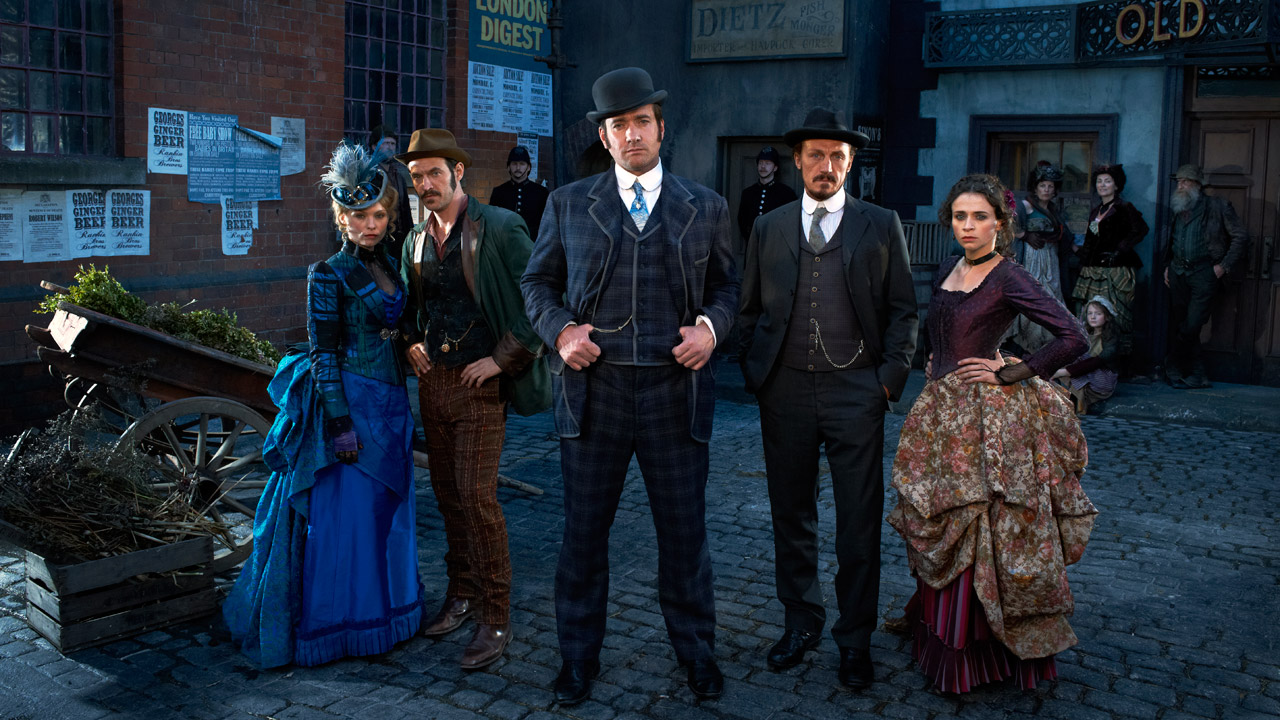
The two inevitabilities in life: death and centripetal force
Iain M. Banks is dying: having seen off threats from militaristic empires and proto-gods, his galaxy-spanning, anarchist semi-utopian Culture has less than a year to live because of cancer. This marks the sad end of a great science fiction career, and a well-respected fiction writer.
My first encounter with Banks was his first Culture novel, Consider Phlebas, which re-invigorated space opera for me. His Culture novels contain a combination of elements which, though present individually in other writer’s work, for me coalesce beautifully in his best science fiction. He takes the standard space opera tropes of technology-as-magic to its logical conclusion of post-scarcity economics, and is not scared to consider the full social and cultural ramifications of such a political culture. Simultaneously, he is willing to take on seriously the prospect of artificial intelligences (“Minds”) being vastly superior in capacity to humans, as close to gods as a physical object can be, and takes seriously the task of crafting stories in which many of the protagonists have close to godlike power. He also overlays his novels with a subtle political commentary, not usually overtly preaching in any direction and not necessarily coming to strong moral or political conclusions. His work is, in this sense, genuinely speculative, and a welcome addition to the canon.
He also invents great Ship names.
Iain Banks’s fiction novels are a stranger and more diverse affair, ranging from thrillers like Complicity to the semi-fantastic dreamscapes of The Bridge. His first fiction novel, The Wasp Factory (also the first of his fiction novels that I read) gained strong reactions, but I think is generally well-regarded. At the time perhaps his career prospects didn’t look good, though, because it was a radically weird work. At the Crooked Timber thread on Iain Banks they report this review from the Irish Times:
It is a sick, sick world when the confidence and investment of an astute firm of publishers is justified by a work of unparalleled depravity. There is no denying the bizarre fertility of the author’s imagination: his brilliant dialogue, his cruel humour, his repellent inventiveness. The majority of the literate public, however, will be relieved that only reviewers are obliged to look at any of it.
I guess his fiction is not as universally admired as his sci-fi, and certainly some of it I found uninteresting (I think I read the Crow Road and didn’t enjoy it at all). I think he has also attracted some attention for his politics: in real life he is a staunch leftist in the Scottish tradition (more Burns and Adam Smith than Marx or Mills), liberal or anarchist in leaning and strongly critical of the major political movements in British life. Like another great leftist in science fiction, though, when his works are political they stand as a challenge to his own side of politics as much as his opponents, and his utopianism has more to say about the limits of anarchist political thought than it has criticism of modern conservativism. Compared to China Mieville I think he is more willing to put his politics forward in his work, but he does so sutbly and with a nice alloy of cynicism and realism that prevents it from being preachy. In fact, the most political book of his I’ve read, Dead Air, is more of a cynical cry for help than a screed, and the only other strongly leftist character in his books is an unhinged murderer (from memory).
So, it’s a sad day for science fiction as Iain M. Banks retires from the public eye to put his affairs in order. Let’s hope that he has a strong legacy, and his work remains influential for some time to come. It’s just a shame that he will Sublime before the Culture does …
We here highly resolve that these dead shall not have died in vain
Historians often struggle to come to grips with the more pathological eras of human history. The holocaust, world war 1, Stalin’s terror and the history of slavery are terrifying periods that are difficult for ordinary people to grasp. Why did people do these things? How did whole populations get caught up in frantic social movements with such a destructive and chaotic bent? Usually, balanced and reasonable historians attempt to explain these movements through a mixture of social, economic and institutional phenomena, with varying amounts of great man theory and good or bad luck thrown into the mix. But ultimately, somewhere along the line, historical theory often loses grip on that most simple of facts: that all historical movements depend in the end on individuals to enact them, and these individuals sometimes have to do terrible things. Though it is a terrible work of scholarship, Goldhagen’s Hitler’s Willing Executioners at least attempts to grapple with this vexing problem when, describing the events at Babi Yar, Goldhagen personalizes the actions of the policemen, and asks the reader to imagine what these men must have been thinking when they marched children to their deaths. But in general, somewhere in historical scholarship there must be some gap of understanding, between the grand social and economic movements that produced a pathology, and the willingness of ordinary people to execute that pathology.
A vivid example of this situation is the problem of slavery in the USA, and the war that brought its end. Scholars may characterize the conflicting forces driving this movement – economic, cultural, historical, geographic – and they can describe with some certainty the opinions and goals of the people involved in the fateful decision to go to war, but they still in the end cannot explain the simple personal fact of slavery in a way we can comprehend. How is it that an ordinary human being – similar, one assumes, in fundamental disposition to my own gentle reader(s) – can go to bed happy, dream of happy things, then wake up, step outside, and reduce another perfectly ordinary human being to a state of complete and humiliating servitude? What was that man thinking when he purchased another human being as chattel, and beat them if they refused to cooperate in their own subjugation? And then, when the rest of the world had made it clear that the trade would have to end, what were these men thinking when they decided that it were better to go to war rather than give up this obvious immorality? And why did ordinary men agree to join such a fight, and kill other ordinary men, over something so simply and obviously wrong as the right to get up in the morning and use another human being as if they were an animal?
Many explanations have been given for slavery and its acceptance, but to me they are fundamentally implausible because they fail to connect the broad social and cultural forces claimed to underlie the slave state with those intimately personal moments of cruelty and brutality that link an ordinary human being and his slave. Any such explanation must necessarily be fanciful and involve a reasonable degree of magical thinking: how can the economic forces of the tobacco plantation change the mind of the plantation owner so that he cannot see the humanity of his victim? There is no explanation for this in modern historical thought, and as such all extant theories of the reasons for slavery seem to me fundamentally implausible.
Last night, however, I watched a documentary that finally presented a plausible explanation for this whole era of American history: Vampires. Abraham Lincoln Vampire Hunter offers the first, and I think we can all agree, the most reasonable explanation for slavery yet contrived: the slave holders were not human. They were vampires, and they built a massive slave empire so that they could feed. While other recent films have presented a shabby depiction of Abraham Lincoln as an ordinary man, compromised by the (unexplained) mores of his time and forced to barter over the freedom of millions, in this documentary we see a more nuanced view of our hero, as a great man of unbending will on a heroic mission to use his super-powers against the forces of darkness. I ask you, which is more believable? Could the man who wrote those speeches have been a shabby compromiser, or a secret demon-slayer?
This documentary helps us to understand many things about the civil war. It shows us that white Southerners were not racists of some fantastic creed, but themselves victims of inhuman monsters. It also helps us to understand how such an abominable slave empire could have been established: no humans, with their simple morality, were involved, but instead the whole edifice was constructed by undead. We also see some insight into why Americans take this civil war so seriously. Where previously I had thought it strange that Americans treated this period of their history with so much importance, given it is so terribly embarrassing to have had to go to war in order to simply abolish an institution that the rest of the world already knew was so thoroughly wrong. But in fact, this war really was a titanic battle between the forces of good and evil, and though not all Americans will tell you about the Vampire aspect, they obviously have some sense of it, and thus are justly proud of the efforts of Americans to win and then recover from that cataclysmic struggle. Finally, this movie also helps to answer a question that has long vexed me about British politics. We all know that Tony Blair is a vampire, but many doubt their own sense of his deep and unrelenting evil because they ask themselves, “how can a vampire be abroad in daylight?” This movie answers that question, simply: sunscreen. Vampires use a special sunscreen, which is why Tony Blair always looks so heavily made up. Other objections to his undead nature (“a vampire could not possibly succeed in the labor party because it has neither the fortitude nor the appropriate level of deviousness” or “why did he become PM of England instead of America”) are either easily answered from the record (“Tony Blair is a devious bastard”) or are also answered by this documentary (“he was kicked out of the USA by Abraham Lincoln and he is mighty pissed about it”). So this documentary doesn’t teach us about only America, but also shows us some important insights into why things went so wrong in the UK. I strongly recommend this documentary as a way of better understanding the true nature of the undead who live amongst us.
As an aside, the documentary is also very entertaining, tells the story clearly and simply without confusion, and has such good footage from the battles of the time that you could almost believe it was made in a film studio. It is an entertaining and enlightening look at a very important part of American history, and has given me a newfound respect for Abraham Lincoln. Others may complain that it excuses white racism of the era, or reduces history to the story of one great man, but I think those criticisms fail to adequately take into account one important fact: Vampires. So if you want to learn more about the evil that threatened America, or you want to reassess the evidence for Lincoln’s greatness, I strongly recommend this documentary.
Continuing my thoughts on developing a simplified version of Warhammer Fantasy Roleplay 3 based on the Fantasy Flight Games Star Wars system, in this post I will present some suggestions for simplifying the magic system. It is likely that my suggestions for magic will tend to over-power magicians, because that’s exactly what I like in a system…
Introduction
Magic in the simplified WFRP system should be based on strain, rather than magic points, and will use a simplified spell system in which wizards choose three or four ladders of spell types. Each ladder has a first, second and third rank spell, approximately equivalent to the spells in the cards currently available through the WFRP3 set. Spells are cast using a spellcraft skill check, with difficulty determined by the rank of the spell and the attribute of a target. Spells will have a strain cost, and will incur additional strain from rolling banes. Spell casters also have a talent tree (as in the case of the rogue) but will have to purchase spells using development and experience points.
Spell-casting and strain
All PCs will start with a strain score equal to 8+WP. Strain is incurred through failed combat actions, and can be recovered after battles through discipline checks, and then through rest. When a spell is cast it costs 2+Rank strain; so a rank 1 spell costs 3 strain. Each additional bane rolled on the spell check incurs an additional point of strain; chaos stars incur an additional point of strain + a miscast card. Thus the average level 1 wizard with strain of 12 can safely expect to cast 3 spells in one battle; the 4th spell will carry a risk of being rendered incapable of further action.
If a spell takes a human target, the difficulty of casting the spell is set by the target attribute (usually WP, but this can vary); the spell incurs an additional misfortune die per rank above 1. If the spell has no human target, the difficulty is set by the rank: one misfortune die at rank 1, and then an additional challenge die for every rank above 1.
Spell types and effects
The basic role of spells in WFRP3 is to apply conditions to targets, or to damage them. This is easily represented through revised spell descriptions in simplified warhammer. A simple approach is to set the damage done by a spell at 2+Spell Rank+ Int. Conditions can be more diverse than those described by the cards in WFRP3. For example, a rank 1 spell can apply one misfortune die to checks with one attribute; a rank 2 spell can apply this misfortune die to all physical or all mental actions; a rank 2 spell could alternatively apply one challenge die; and rank 3 spells could apply two challenge dice or a combination of effects. Duration can be the caster’s intelligence, with modifications available from the talent tree. Other enhancement options could be damage modifiers in combat (e.g. +1 dmg per rank), stance dice enhancements, soak and defense modifiers, and other aspects of conditions (manoeuvre restrictions, changes in critical states). These effects will vary according to the ladder down which the spell steps, and don’t necessarily even need to have spell names – every player could make up their own spell names for their particular set of effects.
Table 1 shows an example of the key spell ladders and the effects that might be contained in differing ranks of one ladder.
Table 1: Example spell ladders
Class
Order Equivalent
Effects
Elemental Fury
Aqshy
Elemental damage attacks
Elemental Body
Aqshy
Elemental melee enhancements (defenses, damage)
Elemental Mind
Aqshy
Enhancements to social checks, reckless stance dice, bravery
Celestial luck
Celestial
Force target rerolls, improve luck, regain fortune points
Celestial movement
Celestial
Fast movement, flight, teleportation
Illusion Stealth
Grey Order
Shadows, Hide in plain sight, Invisibility
Shadow Damage
Grey Order
Conditions affecting int, willpower, control enemy
Shadow Transformation
Grey order
Fear, disguise, doppelganger
Shadow Body
Grey order
Defence effects, become insubstantial
Alchemy
Gold order
Damage machines, transform items, enchant items
Alchemical Enhancement
Gold order
Improve soak, improve int based checks, improve defence
Necromantic Protection
Amethyst
Prevent damage; prevent criticals; prevent death
Necromantic Perception
Amethyst
Detect living/dead; enhance int-based checks; speak with dead
Necromantic Attack
Amethyst
Cause fear; cause damage
Transformation
Amber
Change shape (wolf, crow, bear)
Wild Combat
Amber
Enhance damage; cause damage
Each ladder should have its own general spell effects, determined using a willpower check, that last WP in rounds during combat, or WP in minutes out of combat. Spell effects out of combat should last WP in minutes, with an extension to hours by increasing the challenge.
Wizard talent tree
The Wizard talent tree is shown in Figure 1. The extra strain talent can be taken multiple times. This talent tree doesn’t allow any option to increase duration of spells, which may be something that could be changed.
Figure 1: Wizard talent tree
Alternative: spell-less magic
It would be fairly easy to categorize most magical effects in terms of conditions, damage and their equivalents, and to use an entirely spell-free magic system in which magic has a difficulty value and causes strain as the total of number of failures + number of banes. In this case magic would be equivalent to just a different and more interesting range of ways of doing skill checks. It would probably require a simple table of difficulties (comparing, e.g. applying one misfortune die to a single ability score vs. all ability scores vs. granting a target one additional reckless die, or a training die, and so on). This would lead to a very flexible and interesting magic system that gave magicians the ability to directly affect dice pools and character traits in complex and interesting ways. It could be worth a session to try out…
The people of the Steamlands view faith in a practical light, preferring mostly to avoid the attention of the greater powers in the hope of a peaceful life. That there are Gods and magic imbuing the entire land is a fact unquestioned; the utility of loyal service to them is noted; but the ultimate benefits of fealty are weak, and questionable. This is because the gods of the Steamlands divide into two bitterly opposed factions: the uncaring, capricious and probably not-even-sentient gods of the main churches, whose beneficence is limited to their closest servants; and the malicious gods of Chaos, who offer greater but uncertain rewards to those sick enough to join with them, in exchange for a life of secrecy and pain.
The gods of the main churches are universally accepted as real, but to show faith gains nothing. Even to their closest followers they offer no eternal salvation or redemption. Their teachings offer no hope for a better future, no life beyond death, no reward for goodness and no benefits to casual faith. Those who attend church regularly to offer their prayers to these gods are given no promise that the gods will attend to their needs. The ordinary citizens of the Steamlands are simply told that ruin follows from a neglect of fealty, and expected to believe in all the main gods, and accord them respect, for no better reason than the fear of floods and earthquakes that are visited upon unbelievers. Only those who dedicate their lives to service of a single church gain any benefit from their faith: for these select few, temporal power can be gained through the power to cast benedictions and to have prayers answered. For the rest, faith and worship are reflexive acts, practised to avoid the wrath of unfeeling and unsentimental elder powers rather than out of love for or hope of a greater good on this world or any other. All followers of the main gods of the churches will live out their short, nasty lives in pain and suffering, eased only by the occasional ministrations of the Shallyans, and when they have served out their allotted mortal term will be coiled up into the earth, to return to the worms and the darkness. The best hope for ordinary mortals in the Steamlands is to live their lives unnoticed by church, god or secular powers, to avoid major mishaps (or to be tended by the Shallyans when they occur) and to die with dignity, hopefully not in too much pain, and hopefully surrounded by loved ones. Thus do the gods promise that all humans are equal.
The Chaos gods whisper in the ears of some arrogant or cruel folk that they can rise above this tawdry cycle, and offer commensurate benefits. There is no ever-lasting life in Chaos, but the Chaos gods do promise a longer life, possibly much longer than any human can hope for naturally, great temporal power to aid their followers in pursuing whatever corrupt material goals they desire, and freedom from disease and pain not through the humble ministrations of healers, but through the domination and ultimate subjugation of the human condition: in short, long life and the ability to ignore or control disease, pain and terror. Those who serve the gods of Chaos well do not go to some dark and horrific hell, as is often threatened by the preachers of Sigmar: they die peacefully and return to the earth as do all mortals, all their cruel deeds and corruption unpunished forever. However, very few of the followers of the Chaos gods live long enough to gain this reward, because the Chaos churches function on hatred, cruelty and treachery. Those who first enter the church are pawns for their more powerful brethren, used horribly and treated cruelly so that only the strongest and bravest survive. Those who fail to rise to the early challenges of entry into these creeds of darkness die soon, and horribly, or are cast out to suffer the flames of the established churches. Those few who succeed in rising above the level of initiate are then able to inflict the same cruelty they experienced on others, and to use their followers as they see fit. But for those who reach these higher echelons of the Chaos church, a more dangerous fate awaits. For though the Chaos gods reward their longest-lived and most faithful followers with peace after a long life, they punish those who fail them terribly. Leaders of chaos cults or disease sects who fail to achieve the tasks they are given, who are revealed and captured by the churches, or who betray their cult, are given the worst punishment of all: their souls are thrown into hell, and tortured until the Chaos gods tire of them. Some scholars contend that it is only through this punishment that the Chaos gods are able to generate the supernatural power they need to reward their followers, since they have been cut off from whatever godhead underlies the powers of the gods of the main churches. Others contend that so long as there is pain, suffering and treachery in the world of ordinary mortals, the Chaos gods will always have supernatural power to bestow on those they seduce away from the path of righteousness. Whatever the truth of it, the reality of the Chaos cults is always the same: the new entrants are abused and used as their elders see fit, but those same elders must always succeed, lest they be fed into the great and terrible cauldron of punishment that the gods of Chaos reserve for their own kind. Should they avoid an early death and conduct themselves well in the service of their gods, however, servants of Chaos can hope to live long lives blessed with temporal power and fanatical followers who will do their every bidding.
This is the choice that faces ordinary mortals in the Steamlands: thankless piety to uncaring, capricious gods who offer them no sanctuary from the bitterness of ordinary life; or a brutal struggle to gain the favour of dark gods through fell deeds, in the small hope of extending their mortality beyond that of their kin, and slaking their lusts on the weak and the innocent. The preachers of the main churches contend that humanity is weak and morally frail, and this is why the majority of ordinary people show a cynical view of the churches and offer only the weakest semblance of piety. But the truth is that neither the gods of the main churches or the Gods of chaos offer any reason for mortals to respect them, and none to love them. For the majority of the residents of the Steamlands the presence of immortal powers is a curse, the churches a bane, their promises empty and their threats vexing. It is in this spirit that the people greet their preachers – is it any wonder, then, that the Chaos cults always seem to spring up anew, no matter how hard good folk try to destroy them?
When we left our heroes, they had just entered combat with the Cavalcade of Ruin. They were joined almost immediately by a dwarf of dubious intent, Colonel Cornelius Lodestone XIX of the Glass Hills (15th Assistant to the Grand Artificer) (2nd Class Airship Pilot in His Majesty’s Royal Air Corps, Group 5, Wyvern Squadron, Azure Wing) (Field Agent 85A , Hazardous Delvings Department, Section 6)… Colonel Falconfox to his friends … This short and generally not very useful man appeared at the window of the Healer’s Hospice almost as soon as battle was joined, firing his loud but largely useless black powder pistols into the fray. Fortunately the party had another, much more effective dwarf to aid them, the indomitable Azahi the Trollslayer, and though the battle was tough they ultimately prevailed.
The battle was a raucous affair. Azahi took the Plaguebearer – the great, fat, rotting ogrish figure – front and centre, and while he slugged it out with this ham-fisted and abhorrent creature the elven Scout, Laren, and the wizard attempted to deal with the Chaos sorcerer and his marauders. This didn’t work out so well for the party: Laren found herself inflicted with three diseases, and the wizard suffered two diseases before he was knocked unconscious under a bevy of critical injuries. Laren the elf managed to distract the Chaos sorcerer’s Nurglings from battle through judicious application of a well-cooked kidney pie, freeing her up to concentrate on the sorcerer himself. The initiate attempted to aid Azahi to little avail, but finally Azahi crushed the Plaguebearer and they managed to overcome the sorcerer. The surviving Chaos marauder fled, but was cut down by the newcomer Dwarf; and after a few minutes of chaos and slimy, bloody confusion the party managed to destroy the Nurglings. The poxy cavalcade threatening Separation City had been vanquished!
Though they were largely too sick to stay upright for long, the party searched the bodies of their foes. They discovered nothing of value, but they did discover a large object wrapped in cloth. Upon unwrapping it, they found that the cavalcade had brought with them to the healer’s hospice the body of a mutant. Though they couldn’t be sure, their suspicion was that the cavalcade of Ruin intended to install the mutant in the empty hospice, so as to imply that the Healers had been attempting to cure a mutant. Throughout the Steamlands, mutants are killed on sight, being servants of Chaos; but there are rumours – never confirmed – that some healers are so zealous in their pursuit of Shallya’s mercy that they will even try to heal mutants. By placing the corpse in the Healer’s hospice, the cavalcade of Nurgle would have been able to discredit Separation City’s healers and give strength to an old rumour. This would have guaranteed that the town’s healers were burnt at the stake, and freed up the town for the forces of Nurgle to infest. Fortunately, our heroes had defeated this nefarious plot.
They searched the cavalcade’s caravan and captured their remaining servants, but got nothing useful except more diseases. Finally, exhausted and afflicted, the party returned to their tavern and collapsed in a pox-ridden heap, to await the accolades they deserved – and some healing.
The healers returned after two days, and the party received all the healing they needed; but with the healers came Madam von Jungfreud, who after some perfunctory apologies for her mistakes demanded that the PCs should head off into the wilderness to find the leader of the cult of Nurgle, and destroy it. Our heroes, being in possession of certain letters to the doctor, were fairly sure that the leader of the cult was not located anywhere near Separation City. However, they realized that the plague afflicting the lands around Separation City must have some cause, so they set off the following day to find – and destroy – whatever outpost of Nurgle had afflicted the lands west of Separation City.
On the evening of the first day of walking, the party came to Monkey Mountain. This mountain holds a community of creatures somewhat like primitive humans, who cannot speak any language humans know but are peacable enough to be able to communicate and trade with local farmers. When our heroes reached it they soon found themselves accosted by an enraged Monkey Man, who was clearly also very, very sick. The Initiate calmed the Monkey Man by gestured signals indicating he could help, and the Monkey Man led them to his community on Monkey Mountain.
Sadly, the Monkey Man’s tribe were dead – all but about 10 of them. They had died of some kind of plague. Familiar by now with the machinations of the cult of Nurgle, the party soon found a bag of pus secreted at the source of the Monkey Mountain’s streams, and identified here the cause of the clan’s disease. Noting also a pile of goods obtained from recent trade with the nearby farmers, they guessed that the Monkey Men had been used as the locus of disease throughout the area. Though subsequently the party found other streams with the same contamination, it was obvious that the Monkey Men had been infected en masse as a source of disease for the farmers in the area. The Initiate identified that the disease disseminated here was ghoulpox, and since the party had cures for the ghoulpox, obtained from the doctor in Separation City, they were soon able to cure the few surviving Monkey Men. This cure, unfortunately, renders its victims suggestible; so when they left the Mountain the party had secured themselves a force of 11 loyal Monkey Man followers …
They passed on through the ravaged farmlands west of Separation City. For two days, they found nothing but occasional sources of infection, but in the evening of the second day they stumbled upon something new …
By now they had passed beyond the farmland around Separation City and were passing though typical highland forest: silent stands of eucalyptus forest, eerily silent but for the occasional lone cry of unnamed birds. Near evening, they heard a new and strange sound over the silence of the forest, like a huge swarm of insects; and over the subtle lemonbalm scent of eucalypts came the strong stench of ordure, as if they were nearing a military encampment. Thinking they might have stumbled on the military mission that left Separation City a few weeks earlier, they headed to the source of the smell …
… and found a horrific site. They entered a small clearing, at the centre of which was an onsen of medium warmth. Floating in the middle of the onsen was a strange construction, consisting of two canoes, one upturned over the other and the pair locked together. Trapped within them was the body of a man, and about him thronged a huge horde of stinging, biting and parasitic insects. They had stumbled on a scaphism – someone was being tortured by means of the boats. Drawing the boats into the edge of the onsen, the PCs were assailed by a terrible smell. The wizard used his spell The Howler Wind to disperse the insects, revealing beneath a sight to horrify even a Dwarven graverobber such as Colonel Falconfox: beneath the cowl of insects was Separation City’s priest of Sigmar, reduced to a moaning and suppurating mess, all his skin punctured and ruined by insects. Worms swam in his eyes, and ran down the streaks of vomit that smeared his cheeks; the stench that came off him was horrific to mortal men, and his arms pulsated with larvae and grubs soon to hatch. He had been tortured most foully, and his last delerious days were upon him.
The priest opened his cracked lips to reveal a swollen, insect-infested tongue. He begged the party not to kill him, and told them that every morning at dawn two cultists came to his pool, and these two cultists had a key to the tower. The PCs saw their chance: they set the priest adrift on the water again, and laid a trap for the cultists.
The following morning two cultists came to the water, and were duly caught. Azahi, showing no patience with them, dragged one down to the water. He drew in the boat, smothered the priest to death against his (feeble, human) will, and tore him from the boats. Then he picked up the cultist and told him, “you go in the boats, or you die quickly.”
These cultists were no fools – they knew that when caught, a cultist of Nurgle can choose only the manner, not the fact of their demise. This one quickly sprang to his own defense, and offered to tell the PCs all they needed to know.
The other one went in the boats.
The PCs then headed up the hill in the direction the cultists had come, soon finding themselves facing a small tower. The graverobber approached under stealth but was seen and attacked by a wizard in the tower. The elf and the wizard approached the tower disguised as cultists, and were hailed as friends with the warning “rush to the door, someone waits to ambush you.” This they did, but the wizard’s ice spell failed and their plans to invade the lower room quickly were ruined. Nonetheless, they soon bested the guards at the lower level of the tower. They then spent several minutes faffing around casting various spells while they tried to discern magically whether there was a trapdoor in through the roof; finally, learning there was, the elf and the initiate began climbing the outside of the tower. Once they were well on their way, the remaining residents of the higher regions of the tower charged down to attack the remnants of the party: Azahi the trollslayer, Captain Falconfox and the wizard found themselves fighting three plague-zombies, a shaman and a powerful wizard. This latter was the Plague Captain: a chap in a suit bearing a pipe, who surrounded himself in evil magics and attempted to cripple his enemies with disease and corruption.
After a brief and brutal battle our heroes won the day, and finally the disease cult were eliminated. Searching the tower, they found a map of a part of the catacombs beneath the town of Store, and a key – evidence, perhaps, that they could use to pursue the ultimate leader of this cult of horrors. It was clear that they had not captured the final leader of this branch of Nurgle’s cult, but they had saved Separation City from a host of terrors, and found clues as to the ultimate leadership of this cult.
Satisfied, they returned to Separation City. Would they pursue a crusade against the cult of Nurgle, or return to their onsen to enjoy a quiet life? Only time will tell …
Today it was 26C in Tokyo, and we had our first taste of this year’s yellow dust, the strange and nasty pollution that tends to drift over Japan from China during spring and summer. Today’s was the worst I have ever seen in 5 years in Japan – the above photograph, taken from my ground floor balcony, shows the sky at about 3pm today, just after the cloud reached us. Apparently in Matsue, in Western Japan, visibility was down to 5 km. In case this seems like a strange thing to care about, let me assure you this “weather” is not pleasant: it causes sneezing, eye irritation, headaches and drowsiness in many people when it is at its worst, and I think some towns in Kyushu issued alerts that would cause some people to stay inside (especially those with respiratory problems). The US army monitors this phenomenon in Korea and issues regular warnings. Of particular recent concern is the increasing concentration of what the Japanese call “PM2.5,” very small particles of pollutants of size less than 2.5 microns, which seem to arise from industrial pollution and smog, and have specific associated health concerns. According to the Global Burden of Disease 2010, Ambient PM Pollution is the 4th biggest cause of lost disability-adjusted life years in China, and ranks much higher as a cause of years of life lost than of years of disability. By way of comparison it is ranked 16 in Australia and 10 in the USA.
Some part of the yellow dust problem is natural, due to sandstorms in the interior of China, but in the past 10 years the problem has become worse and its health effects more significant. No doubt part of the concern about its health effects arises from greater awareness, but there is also a confluence of factors at work in China that create the problem: desertification, soil erosion and pollution, and industrial pollution due primarily to coal power and transport. It’s becoming increasingly clear that as China develops, it needs to make a shift away from coal power and personal transportation, and it needs to do it soon. No matter how bad the yellow dust is in Japan, it has become very bad in China, and concern is growing about the seriousness of its health and economic effects.
This puts China on the horns of a dilemma. Development is essential to the improvement of human health, but the path China has taken to development, and the rapidity of its industrial and economic growth, are seriously affecting environmental quality. It’s possible that China is the canary in the coalmine of western development, and may be the first country to find its economic goals running up against its environmental constraints – and this despite a rapid slowing in population growth. China is going to have to start finding ways to reverse desertification, soil erosion, and particulate pollution, because it cannot afford to continue losing marginal farmland, degrading the quality of its farmland, and basing its industrial and urban growth on highly-polluting fossil fuels.
This raises the possibility that China needs to introduce a carbon tax (or better still, a carbon-pricing system) for reasons largely unrelated to global warming. A carbon pricing system with options for purchasing offsets, linked into the EU market, would potentially encourage reforestation and reductions/reversals in the rate of desertification; it would also provide economic incentives for investments in non-fossil fuel-based energy sources, probably nuclear for the long term and renewables for the short term. The government, by selling off permits, would be able to raise money to help manage the infrastructure and health needs of the poorest rural areas most in need of immediate development. These effects are important even without considering the potential huge benefits for the world from China slowing its CO2 emissions. I notice I’m not alone in this idea; Rabett Run has a post outlining the same environmental issues, and suggesting that there are many direct economic and social benefits of such a system.
This is not just of practical importance to China, but it’s rhetorically a very useful thing to note: that a lot of carbon sources (and most especially coal) have huge negative health and social consequences in their own right; raising the cost of using them and finding financial incentives to prevent or reverse deforestation is of huge benefit for a lot more reasons than just preventing runaway climate change. It would be cute indeed if China’s immediate economic and environmental problems became the cause of strong action to prevent climate change; on the other hand, it would be very sad if the focus on the AGW aspects of carbon pricing – which are a shared international burden rather than a national responsibility – led China’s decision makers to miss the other vital environmental problems it can address. Especially if failure to address those other environmental problems caused China’s economic growth and social liberalization to stall or fall backwards.
If any country is going to run up against environmental limits to growth, it is China; and if China can avoid that challenge, and the social and health problems it will cause, then there is great hope for the future of the planet. So let’s hope the Chinese can come to terms with their growing environmental challenges as adroitly as they have dealt with some of their others … and if their efforts to tackle those problems will benefit the rest of the world too.
This week a student and I published an article in PLOS ONE examining the relationship between healthcare-related expenditure and financial catastrophe in Bangladesh. Because PLOS ONE is an open access journal it is possible to read the entire article free online, here. Our study was a statistical analysis of data from a probability-sampled survey of households in Rajshahi, an urban area in Northwest Bangladesh. We collected data on their self-reported illness, household consumption and healthcare-related payments, and used it to estimate the prevalence and risks of financial catastrophe.
Bangladesh doesn’t really have any effective risk-pooling mechanisms, and a large portion of all health financing is derived from direct payments by individuals, usually referred to as out-of-pocket (OOP) payments. The lack of risk-pooling mechanisms mean that households with limited savings are at risk of financial catastrophe from unexpected healthcare costs, and may have to use a wide range of quite unpleasant coping mechanisms to deal with the costs. Our research project aimed to identify the drivers of costs, factors associated with financial catastrophe, and the coping mechanisms used to deal with high costs.
These kinds of research projects have a lot of challenges, and are necessarily flawed as a result. In low-income nations like Bangladesh it is difficult to assess wealth directly, since households often obtain income in kind or through bartering or intensive production (family gardens, etc); and often official income is not declared in order to avoid taxes or other costs. This is usually dealt with through assessing household consumption, rather than income, adjusting for fixed and productive assets. It’s also difficult to assess illness, which is usually done through self-report, and obviously also medical expenses can be hard to keep track of. There is an extensive body of literature on how to deal with those problems though, and we used mostly quite standard methods to handle them. Despite the obvious limitations in such a survey, I think this one presents fairly robust results.
We found a high prevalence of financial catastrophe, with an average of 11% of household consumption spent on healthcare and 9% of households facing financial catastrophe under our definition. Financial catastrophe was much more likely in the poorest households, even though these households spent considerably less on healthcare, and financial catastrophe was also associated with inpatient service use. Chronic illness was associated with higher OOP payments. Bangladesh is currently passing through the “epidemiological transition,” in which chronic non-communicable disease (NCD) prevalence is rising, but infectious diseases remain a significant problem, so the finding that chronic illness is associated with increased OOP payments is concerning: with a baseline proportion of their income already consumed by such illnesses, households will be less able to adapt to unexpected sudden illness or injury, both of which are relatively common in low-income countries compared to high-income countries.
Our findings suggest that Bangladesh needs to move rapidly to implement and scale-up risk-pooling mechanisms; deal with problems in public facilities that mean they don’t seem to be protective against financial catastrophe even though they are ostensibly free or heavily-subsidized; and prioritize NCDs in its health policy agenda. We’re currently conducting more research on disease-specific costs, coping mechanisms, and other aspects of the health-financing challenges facing Bangladesh. Other countries in Asia are moving towards universal health coverage (UHC) and Bangladesh lags some of them; but with care, a little reform, and some coordinated action to target NCDs, there’s no reason that despite its poverty Bangladesh can’t follow in the footsteps of other countries like Vietnam in reducing risk of financial catastrophe and improving healthcare access for the poorest members of its population.
As an aside, 9% is a very high prevalence of financial catastrophe, but I’d be interested to see how it compared with the USA (which also doesn’t have widespread and effective risk-pooling mechanisms). I don’t think the research is done the same way for US systems as in low-income countries, but there appears to be some evidence that financial catastrophe can be high, at least amongst the poor. For example, this New England Journal of Medicine article suggests that Medicare provides limited protection against financial catastrophe, and shows figures indicating that 4% of recipients pay >$5,000 on medical expenses in any one year, which would probably qualify them for financial catastrophe (since most Medicare users have low incomes). I would be interested to see the rates of financial catastrophe amongst the uninsured in the USA, and to compare them before and after Obamacare is introduced, but I don’t think research on the topic is done in the same way in the high-income countries, so I doubt it will be possible. Although health insurance (private or public) is supposed to protect against unexpected medical expenses, it can still be ineffective, and furthermore access to health insurance enables people to purchase healthcare they might otherwise have neglected, which could put them at risk of financial catastrophe where the insurance system fails to provide adequate coverage. Obamacare is going to extend no-frills coverage to the currently uninsured, but this doesn’t mean they’ll get benefits sufficient to prevent financial catastrophe, so it will be interesting to see whether it meets both of the goals of a health-financing system (improving access and reducing financial risk), just one of them, or neither. And if it fails on either or both of those goals, does this mean that Bangladesh will achieve effective UHC before the USA? That would be interesting … but first Bangladesh needs to start the move toward UHC, and hopefully this research will provide useful information and a little impetus in support of that process …
Next week sees the release of the Ken Loach movie The Spirit of ’45, which describes the UK’s attempts to implement socialism through the ballot box between 1945 and 1951. Ultimately a failed project, this revolution has left one enduring and much-loved symbol, the UK National Health Service (NHS). In the same month as the release of Loach’s movie, the NHS is going to undergo what are generally touted as the largest reforms in a generation, the Health and Social Care Bill, which see significant market reforms introduced to the NHS, and a major reorganization of its hierarchy. This is all happening against a backdrop of unprecedented government austerity, recent reports finding significant failings in the way the NHS cares for patients, and a Conservative-run government with a very strong ideological bent towards radical experimentation with the UK’s institutions. It is also happening against the backdrop of a worldwide movement towards universal health coverage (UHC) which is even taking hold in the USA – given this global movement, and the UK’s central role as a model for that movement, it’s unlikely that even the most ideological of governments is going to attack the basic principle of the NHS: to provide healthcare on the basis of need, not ability to pay.
It’s easy to make predictions about how these reforms will turn out, without even analyzing the policy, because a cynical outside observer of the UK can always fall back on three simple principles: nothing in the UK works very well, the British government is terribly incompetent regardless of its ideological stripe, and you can’t improve healthcare by reducing the amount you spend on it[1]. However, I’ve written before about what I think will happen as a result of the new Bill, and the specific good and bad points I see in it; I won’t repeat these in detail here. For those interested in the Bill itself, the Guardian gives an outline of its main points, and since I wrote my post the Bill has been beefed up a little. The revised Bill includes a sneaky little clause that supposedly forces clinical commissioning groups (CCGs) to make all health services they purchase subject to tender, rather than allowing existing NHS services to be preferred providers. CCGs are organizations supposedly formed by doctors which are charged with disbursing government money to providers of healthcare – they are the main purchasers of health services after the reforms have been passed. By forcing them to open all non-emergency services to tender, the Bill will (it is claimed) force existing NHS hospitals and GPs to compete with private services for government money, ideally driving down costs. It’s not clear to me how the contracts between these services and the CCGs will be negotiated, and this aspect of the reforms gets my spider-senses tingling, because it just stinks of “a potentially good idea done badly.” Some of the background on the way the Health and Social Care Bill forces CCGs to use competitive tendering is presented in this opinion piece (but beware, huge amounts of this piece are just factually wrong or very misleading, so take everything it says with a grain of salt). Below are a few reasons why I think this particular competition reform is going to fail.
It puts family doctors in charge of paying family doctors: a Clinical Commissioning Group is meant to be a group of general practitioners (GPs, or family physicians in the American parlance) who will be given money by the government with the task of purchasing all health services for patients in their area. This is supposed to put the health service back into the hands of GPs. The problems here are two-fold and, I should think, blindingly obvious. Much of the money that these CCGs need to distribute will be spent on purchasing GP services, so it puts GPs in charge of purchasing services from GPs. This is a notoriously tightly-knit community with strong common interests, and I find it hard to believe the money will be dispensed wisely. The second problem with this plan is that GPs may be good doctors, but that doesn’t make them good at resource-allocation decisions, and often doctors are the worst people to decide how to spend money wisely. A good health financing system should find ways to efficiently and equitably enable doctors to make good clinical decisions. It’s not obvious to me how putting doctors in charge of the financing decisions is congruent with this. A lot of commentators in the Guardian are decrying the role of major accounting services, who are being contracted by some of these CCGs to handle the decision-making process[2], but to me this seems like a good thing: the further you can move the pot of money from a GP the better, in my opinion.
It seems to rely on bulk contracts: The NHS to date seems to have structured a lot of its purchasing decisions on contracts that offer bulk funding – that is, a hospital or GP contracts to provide a service for a specified fee, but the service is very generalized and not broken down into its particulars. In the case of GPs, this usually means they are paid a fixed amount per year to provide services to patients on their list, but no detail is specified as to how they should provide services or what they should provide – not even a minimum basket of services. This is why many GPs in the UK operate single-handed surgeries with inconvenient opening times, have very little time for patients, and don’t provide services (like chest x-rays or chlamydia testing) that are taken for granted as routine in other countries. These contracts don’t encourage efficiency, and when these types of contracts are negotiated with large providers (like private healthcare organizations or big hospitals) it’s likely they will be highly beneficial to the provider unless the CCG negotiating the contract has a very adept team of lawyers. Unless the new Bill includes very strong support for this contract writing framework (and see my further point below) then I expect we will see profligate misuse of funds as the providers take these naive and poorly-supported CCGs to town.
The financing system is not obvious: It’s not clear to me how the CCGs are expected to decide what is the most economically effective (or, for that matter, clinically effective) service, what benchmarks will be established for comparing services that they are accepting tenders from, and how they are expected to make contracting decisions. This isn’t all the fault of the people writing the Bill: within the field of health services management, there is still much dispute about how best to assess the quality of care provided by a large service. For example, in-hospital mortality might be considered an important measure of quality, but how does one account for the mix of patients and the severity of their illness in comparing two hospitals? Should one trust the figures the hospital presents, and if not who is the central provider of assessment services to which a CCG should turn when attempting to compare hospitals on this measure? And if two hospitals have slightly differing mortality rates, how much extra should a provider be expected to value the difference at? Can a provider make a judgment to buy services from a cheaper hospital with higher age/sex-adjusted mortality rates, or is that decision unethical on its face? Have CCGs got any expertise on these issues, or received any guidance? It could be that the Health and Social Care Bill provides extensive information on this, and supposedly the reforms will include the establishment of a new organization to help CCGs with this task. But the reality is that no one really knows the answers to many of these questions, and it’s not clear that the structure for health financing proposed by the Health and Social Care Bill is going to be invulnerable to problems because of them.
It lacks centralized guidance and pricing structures: At the moment there is a single contract that all GPs sign with the NHS when they provide services. Will this contract be used by the CCGs? This contract basically gives a fixed pricing system for obtaining GP services – if it is used, how can the CCGs claim to be operating a competitive tendering system? If it is not used, and GPs are to negotiate their services on the basis of the price negotiations, how are the CCGs going to decide the correct price? We’re not talking about a fully free market here, since most CCGs operate to purchase services within a given area and, in general, patients won’t be going outside that area for services, so there won’t be multiple CCGs competing in the area, and patients won’t be voting with their feet if prices are too high (in fact the patients won’t even see the prices). If the system is going to operate without market signals, then it’s going to need some very carefully arranged pricing mechanisms to ensure it doesn’t waste money. These are not likely to be most optimally set at the level of individual CCGs, but would be better off set by the government. It’s not clear to me that this is going to happen, or that the CCGs are going to get much guidance at all on how to fix prices. By way of comparison, Japan operates a system in which private hospitals and clinics charge patients for services on a fee-for-service basis, then charge the government’s insurance system for 70% of the total cost. However, the government maintains a strict schedule of service fees, so it’s extremely difficult for doctors to over- or under-charge. Essentially in this market the government provides a very strong centralized pricing guideline to keep the market at a stable price. The Australian government uses a similar mechanism through setting a minimum fee for GP services provided and allowing patients to vote with their hip pocket when choosing GPs. It’s not clear that the NHS will be using any such system, but in the absence of a strictly market-based mechanism for setting prices[4], how are the CCGs going to be able to choose what to charge, or even to know that they are getting value for money?
Given these concerns, I can see all sorts of disasters befalling the revised network of CCGs, including (for example) the possibility that they set up contracts that take up all their budget, only to find their area massively underserved with health services but no funds left to purchase more. What are they going to do then? How is the government determining how much money each CCG needs, and how can they be sure they have gotten it right? Does the government have any fallback position or plan B if over the first few years of the system the CCGs massively cock-up their purchasing decisions?
On the face of it the reforms appear to consist of a poorly-structured semi-marketization, to be managed by inexperienced and new organizations that have been given arbitrary budgets in an environment with very limited centralized guidance, to purchase services in a marketplace where even the experts are uncertain about how to define value for money or quality of service provision, but with an extremely limited set of real market mechanisms as an alternative way of providing pricing signals. It’s like a healthcare Frankenmarket. How can this story possibly end well? I predict we’ll know before the next election, and I suspect that the results of this grand experiment are going to form the obituary for this government.
—
fn1: well, theoretically you can – lots of governments have built health policy on “efficiency savings.” Practically, however, health systems improve by spending more to gain more, rather than spending less to gain the same.
fn2: I provide no citation for this because I can’t be bothered looking, but really this shouldn’t require a citation, it’s the factual equivalent of saying “the sun rises in the morning.”[3]
fn3: I know I know.
fn4: I don’t maintain here that these systems are necessarily the best, simply that they are a strict guideline and they do roughly seem to work.
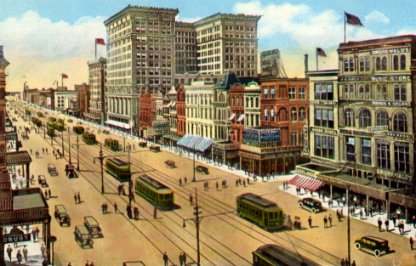
This being a report on a Call of Cthulhu session I played in on 2nd March, in the style of the times.
—
In the decade since our return from the war, Mr. Ambrose and I have had our difficulties, but life had settled into a pleasant flow here in New Orleans, until we were thrown into the strange affair of the cannibal baby factory, and our eyes began to open to the dark secrets lurking beneath the veneer of American life.
Our story began one lazy Sunday afternoon, as we sat on the balcony of the pleasant New Orleans home we had been sharing this past year. Bourbons and cigarillos in hand, we had just swung into reminiscence about the hard times that beset us after our return from the trenches – hard times that were a far cry from our recent good fortune. Just a year earlier I had finally been able to open my own medical practice just off of Canal Street, and though business was still slow, for the first time in years it appeared that I had a future. Of course matters were still more complex for Mr. Ambrose, who had shared my good fortune during the war and had witnessed the full horrors of trench warfare as a participant, rather than a sawbones, and who was having trouble settling into a steady civilian life even now. Nonetheless, things were looking up on that peaceful Sunday afternoon as we sat on our verandah, lazily discussing troubles that once held our lives in such a pinch, but now seemed just vaguely amusing from the perspective of a little distance, and a little whisky. Oh, to think now that we could have been so pained by the troubles of the mortal flesh – as if such concerns as addiction, poverty and strife could hold any real terror, when compared to what we were about to discover in our neighbour’s basement …
For it was at that moment, as we embarked upon our second glasses of bourbon, that our neighbour came home. Our neighbour Mr. Corbett – good, upstanding citizen, semi-retired from his shipping business, who still attended his warehouse three days a week, whiled away most middays at a well-respected gentleman’s club in the centre of town, and commuted regularly to New York – New York! – in pursuit of his extensive business interests. A man of such wealth and respectability that he owned his own Model T Ford, and a house across the way from our somewhat ramshackle bachelor’s pad, where he enjoyed extensive grounds and even a separate garage for his car. There he was now, as the Bourbon warmed my palate, struggling up the pathway to his front door with two packages in his arms – one round like a bowling ball, the other roughly the length of a folded billiard cue, both wrapped in butcher’s paper. He seemed to struggle with them, and as he attempted to open his front door he dropped one on the porch. Then, the strangest thing: he looked all about him most furtively, as if caught in the act of smuggling something illegal through his own front door, snatched up the parcel as if it were contraband of some kind, and slipped inside his house most surrepititously.
Perhaps his act would have been dismissed as merely a whiskey-induced vision, and forgotten as a lazy Sunday afternoon’s fancy, were it not for the strange events that followed. When we were perhaps some distance into our third or fourth slugs of that fine Bourbon, lights came on in Mr. Corbett’s basement. We would not even have noted this, but that the light we could see through his basement window grew brighter and brighter, till it was fit to dazzle us; and then, with a distinct popping sound as of electrical shorting, suddenly went dark. Upon first seeing that light, I had remarked to Mr. Ambrose that perhaps Mr. Corbett were in possession of a subterranean billiards room; however, that bright light spoke more of a workshop or laboratory.
This, too, would have passed unremarked, but for the later events of the evening. I had just laid myself down to sleep, having finished another chapter of Fishbein’s New Medical Follies (that pertaining to Eclecticism, I believe) when I was struck by the fancy that I could hear a low moaning, crying sound coming from across the road. I initially discounted it as some old tinnitus, but in truth that tinnitus was only ever psychosomatic and is long cured; and certainly though he bears many ills from the war, Mr. Ambrose has no hearing difficulties, and he had not only heard it but was up and about, trying to fathom it. I joined him and we returned to the verandah, there to listen more closely. It was a strange sound, in some regards like a baby’s crying, but in others like that of an animal or some swamp beast; a kind of gurgling, unpleasant choking sound, interspersed with sloppy gusts of breath and low wails. It was obviously muffled from within Mr. Corbett’s basement and insufficient to wake the neighbours, but it set me to shivering and nervousness such as I have not experienced for years, and perhaps Mr. Ambrose too. For it resembled a sound we had not heard in 10 years, and which the last time we heard it we discounted as merely the horrific vapours of wartime: sometimes, lying in the trenches at night after one of those reckless charges that left so many dead on the battlefield, after the last cries of the dying had subsided, we would hear that same sound, as of some wild beast that prowled the no-man’s land and perhaps feasted on the dead and dying. And once, approaching the bins behind the field hospital where we would dump amputated limbs, I also thought I caught such a sound, though I never found its source. Both Mr. Ambrose and myself dismissed those mysterious and ugly tones at the time as mere trench-madness; yet here it was, clearly emanating from our ageing neighbours basement.
We must, perforce, investigate. Dressing hastily, we marched across the road to Mr. Corbett’s front door. After a brief listen to confirm it was indeed his basement from which the wails and slurps arose, we knocked upon his door. After a considerable delay he answered, wearing that same furtive expression as crossed his face during the incident of the dropped package. I proceeded to make a noise complaint, and to ask him to still “whatever wild animal he was keeping in his basement.” He looked most alarmed at our having caught his game, and immediately tried to mollify us, also promising to still the beast at once. By now my curiosity was piqued, and placing a foot surreptitiously in the door to stop its closing, I offered to accompany him down to his beast, observing that he was old and perhaps not well, and might prefer to be accompanied by two men in the prime of life, lest there be some accident? He declined firmly, and begged of us to wait outside his door – all the while pushing the door against my foot as if to close me out, the scoundrel! I assured him we would wait, and that it were better he left the door open lest there be trouble. Being unable to close the door against me, he finally agreed, and off he went to still his beast. Listening at the door and window, we could faintly hear him talking to the mewling animal, saying to it “hush now!” and “be still, it’s okay!” and other phrases as if he were speaking to a baby, rather than a beast! Whatever he kept down there went silent, and he soon returned, looking even more furtive, and bid us please be gone. After we left him, assuring him we would assist him with his beast were he to need us, we heard the sound of several locks being turned in his front door. Why such security, in peaceful New Orleans?
The next morning we determined to break into his house and see what manner of beast he kept. We convinced ourselves that we did so only out of civic duty, but I think we both felt something was wrong, and needs must assure ourselves that some primeval fear waking in us were unjustified. Oh, had we only had the lack of imagination necessary to assure ourselves it were but a wild beast, and to return to our normal daily routine, we would never be troubled by those horrors such as subsequently have haunted us daily.
While I did my morning at the surgery Mr. Ambrose sought out and purchased the services of a Mr. Boleyn, a feckless and worthless man who spent some time in the trenches with us, and proved himself good for little but causing trouble. One line of trouble he was very good at was breaking into our Colonel’s whiskey safe, and it was the employ of these skills that we engaged for $15 and the promise of a bottle of good tequila. We met him on Mr. Corbett’s verandah at midday, and once he had us through that multi-locked door we bid him wait in the hallway, both to watch the door and to assist us were we to run into further barriers. We then proceeded into Mr. Corbett’s basement, me carrying that bottle of tequila as insurance against Mr. Boleyn’s services and Mr. Ambrose carrying his service revolver.
The basement was surprisingly spacious, consisting of a hallway with two doors on each side, all closed. We followed the traditional process for room clearing that we learnt in darker times, moving anti-clockwise down the hall, and so opened the first door on our right, entering the strangest room we have ever been in, and the first room to ever test our sanity. Before us lay an ordinary nursery, in which were a normal cupboard, a cot, a rocking horse, and over the cot a mobile of little winged angels. From within the cot came the sound of a baby sleeping gently, and the entire room was rich with the smell of formaldehyde. One door led out of the room, though we did not immediately notice it. We approached the cot to view Mr. Corbett’s basement-dwelling baby, thinking perhaps here was the source of last night’s sounds, and before we had time to prepare ourselves we found ourselves facing the most terrible of sights.
The cot did indeed hold a baby, but it was a monstrous construction, a baby with six arms, and all the parts of its body stitched together from what were obviously the discarded remains of other bodies. The arms were of mismatched sizes and colours, unmatched either with his legs; I say that it was a “he,” but that part most necessary to designate gender was not attached; and I swear his ears must have been procured from a girl, though I had no way to prove it. This monstrous frankenstein baby was also the source of that formaldehyde smell – for the body parts from which it had been made were obviously once pickled.
Both Mr. Ambrose and I would have loved to have dismissed this beast as some kind of grotesque doll, constructed for god knows what reason by Mr. Corbett. We knew he had lost his own son and wife, so perchance he was in the midst of some mad delirium, constructing a family life for himself out of the dregs of others; but at this point something so alarming, so horrific, happened that we would never again be able to look upon the macabre and seek easy or dismissive answers for it in the pscyhology of others. For as we stood looking into the cot, the dead eyes opened – and the baby started to scream. The eyes were the most chilling of all for me, because they had obviously been procured from different people. One was blue and slightly rheumy with early cataracts, as if snatched from a middle-aged diabetic; the other was, I am sure, taken from an Oriental of some kind, dark brown and almond shaped and much younger. As if the horror of this were not enough, though clearly the baby could see us and was responding to our presence, those eyes retained the glassy stare of the dead, a look we had both seen many times – but never thought to see mobile and directed at us!!!
We stepped back from the cot in disgust, and it was then that the baby sprang from the cot, hitting me in the face and proceeding to grab on to me with all six arms, bearing down on me with superhuman strength as it chewed at my face. The pain was abominable, as was the stench of mild rot and formaldehyde given off by this grotesque beast. I fear we both panicked, for I have a memory of punching myself in the face and screaming at Mr. Ambrose to get it off me! But after some moments we managed to drag it from my face, and Mr. Ambrose was able to place the upturned cot over it, then putting the rocking horse onto the cot to ensure its immobility. We then squatted before the cot and looked at this beastly thing, as it stuck its fat little mismatched arms through the bars of the cot and hissed and spat at us. We looked into its dead eyes for just a few more seconds before, turning my back on it, I said to my colleague, “Mr. Ambrose, if you please…?” Understanding my intent immediately, he shot that abomination in the head, right between the eyes, and it fell bloodlessly to the ground, dead at last. Shaking and disturbed, we retreated from that room and closed the door fast, leaning against the wall in horror and disbelief. What had we witnessed in there? How could such a golem be made real? Our world had begun to turn …
Our interest, though, had begun to rise. We must find what horrid scheme Mr. Corbett was engaged in, we must end it, and we must confront him and, if necessary, end him too. We would explore the rest of the basement.
The next room proved to be a kind of study. Its walls were lined with bookshelves, and there was a desk with a journal upon it, and next to it a strange, irredescent metal box. The box held a strange allure for me, and without much thought I put it in my jacket pocket. The journal I read, and it told us what we needed to know: Mr. Corbett was engaged in some strange ritual of reanimation, which he believed connected to some ancient Indian god called Ramasekval, and he was obtaining body parts from a deluded religious nutcase called Tomas Zewski, clearly some communist Jewish Pole, who worked at the local hospital. Mr. Corbett was plying Zewski with drugs, and in exchange convincing him that he served some dark lord, and that this lord’s purpose was served by cannibalizing bodies at the hospital for body parts to be sent to Corbett. Such a repulsive scheme as I had never heard of before! Though I spent two years sawing off legs and arms in the trenches of the bloodiest war the world has ever seen, believing myself to be as close to hell as it is possible for living men to go, I now realize that I had only just begun to splash in the shallows of human depravity – and that beyond what I already knew and believed so foul, was an ocean of depravity so deep no one could ever know what horrors lay at its depths. I fear now I am beginning to see just how dark and evil a man’s soul can be, and it unnerves me.
The next room in the basement was confusingly normal: a laundry, full of drying baby clothes. We investigated, but found nothing of interest. At the far end of this room was a door, which we passed through into a machine room, stacked full of parts that had been stripped from various machines. In the corner was a massive generator, and many cans of petrol, that must clearly be used to power whatever light we had seen the night before. We left this room and returned to the hallway. There was one final room off the hallway that we had not looked into, and this we now entered, to find a small space cramped and full of jars and bottles. Many were empty, but some contained pickled body parts – heads, arms, legs. There was a strange picture on the wall at the end of the room, somewhat akin to Michelangelo’s man, but in an Indian style with many more arms and legs. We came close to this picture to investigate it, but it had a strange, unnatural aura that caused it to seem larger, as if it filled the room; strange sounds assailed our ears, and it were as if the painting had been painted on a canvas that was more complex and mathematical than real; only some part of it, wrongly folded, protruded into our own time and space, and looking upon it gave us a twisted and sick hint at those other places where its full form was stretched out. These bizarre contortions of reality sickened and terrified us, and for some minutes I passed out. I must confess that I soiled myself in my terror, and Mr. Ambrose had to drag me, twitching and frothing, from the room. When I came to he was cleaning me up in the laundry room. He had taken off my soiled jacket and trousers, and bid me wear replacements from amongst the stacked laundry of the room. I did, and did not notice at the time that in taking off my jacket he had also stolen from me that lustrous silver box.
So, we had found all but the room in which Mr. Corbett made his baby, and we knew this must be in the room beyond the macabre nursery we had first entered. We needed to return to it, but before we did, I had an idea. I poured the tequila away, and returning to the machine room filled it with petrol. I then stuffed it with a rag from the laundry, also well-soaked in petrol, and thus made a makeshift firebomb. Now we were ready for trouble. We passed back through the nursery, trying not to look at that horrid infant, and through the other door in that room. This took us, we were not surprised to find, into a dissection room filled with the equipment required to build a horrific golem of flesh. We searched it thoroughly but found nothing more to enlighten us. We did, however, find a trapdoor leading deeper into the basement, and were just beginning to look down into it, contemplating further exploration, when behind us we heard the sound of pattering feet, a grinding sound, and a crash. Dashing back into the nursery, we saw the cot had been overturned and the baby’s body was missing! It had somehow survived Mr. Ambrose’s perfect shot, and was now out somewhere in the basement.
We passed carefully out of the nursery and into the hallway, and yet still we could hear the sound of that baby’s feet, pattering around in the basement. Fearing it behind us, and wanting to calm our nerves, we ducked back into the room full of pickled body parts and slammed the door shut. I stood near the door, and Mr. Ambrose returned to look at the picture. As he did so, he suddenly disappeared! One moment he was there, and then he was gone! I was left alone in the room, with nothing but that maddening patter of baby feet, and the body parts. Somewhere behind me, an empty jar fell off of a shelf and smashed. I confess I panicked: I lit my petrol bomb, through it amongst the jars, and ran for the door. The bomb exploded, and up went the formaldehyde, creating in moments a conflagration I was sure would take that damned baby, and I dashed out of the room. Moments later though, leaning in the hallway, I heard Mr. Ambrose crying for help from inside! He had somehow reappeared in that inferno! I thew open the door, dragged him out, and slammed it shut again, then dragged him to the laundry to tend his wounds. He was badly burnt, though not in a life threatening way.
We now, however, had no time. The basement was beginning to burn, and upstairs we heard Mr. Corbett returning. We dashed up the stairs to find him standing ready to confront us, and outside a crowd gathering as the fire began to consume the house. Having no time to spare, I punched Mr. Corbett in the face, and bid Mr. Ambrose drag him outside. I dashed upstairs to his room, grabbed the only useful thing I could find – a pile of letters on his desk – and dashed out after Mr. Ambrose. Putting the doubts of the gathered crowd to rest with my doctor’s manner, we dragged Mr. Corbett’s limp body to my house to “tend” to him.
Once the crowd and the police were gone, and Mr. Corbett’s once-proud home nothing but smouldering ruin, we woke him and began to demand answers. He denied any knowledge of the doings in the basement, and professed to a singular terror at what we told him. We believed him innocent of the charges laid, though we could not think how such could be, and decided instead to investigate Mr. Zewski. It came as no surprise to me than elderly, respectable gentleman would not be the one most to blame for such evil deeds, when a Polish communist were also in the frame. It was time to visit with him, and to have words.
What horrors do they seek beneath these peaceful avenues?
Our pursuit of Mr. Zewski came to nothing. He tried to escape us in a car, and we were forced to commandeer an ambulance, eventually driving him off the road and nearly killing him. Under duress he revealed himself to be exactly the dupe Mr. Corbett’s journal described him as; less a communist mastermind and more a foolish drug addict who believed himself a satanist, though he was a member of no covern. I patched him up as best I could and we drove him back to the hospital in the same ambulance. At the hospital I procured a few harmless injectable placebos such as we occasionally use on the worst of psychosomatics, and we returned to our house. I was now convinced that Mr. Corbett knew more than he was admitting to, and enacted a fiendish plan to get the truth. I injected him with one placebo and told him that it was a poison, and the only antidote was in my possession. Showing him another vial of a harmless placebo, I placed a bell in his bound hand, and told him he had three hours to tell us everything. Before we had even left the room, he was ringing that bell madly, desperate to tell us all. Yet still, when we interrogated him, he denied all knowledge of the doings in his basement. Exasperated, we left him to his imagined death, and decided there was only one thing left to do: before the police dug deep and discovered the body parts from the ruins of his house, we needed to enter that trapdoor.
We wasted no time, and kitting ourselves up with shotgun, pistol, rope and flashlight, we returned to Mr. Corbett’s ruined house. We re-entered the basement and, after digging away ash and rubble, opened the trapdoor. I went first while Mr. Ambrose covered me, and then he followed. We found ourselves in a narrow tunnel, that curved away and out of sight. Most perplexed, we followed it for some minutes. It descended a little and straightened, and we followed it for a few more minutes before encountering the most perplexing and disturbing of sights. Ahead of us the tunnel ended in a blank wall. In front of the wall were some dozens of the same homunculi we had seen in Mr. Corbett’s house, all constructed from discarded body parts, all of different sizes, though all vaguely human. They were digging frantically at the tunnel end, extending it through the earth, and as they dug they hurled the soil behind him. There, blocking a part of the tunnel, was a terrible ugly slug-like thing, larger than a man, that oozed along behind the monsters, eating the soil they threw away with a horrid slurping sound.
The creatures had not seen us, so busy were they at their digging, and we were in no way well-enough armed to best them. We were also deeply, profoundly disturbed by what we saw. We backed slowly away and then fled in terror back down the tunnel, reemerging in the basement as fast as we could. We slammed that trapdoor shut and ran back up into the light, shaking in terror. What were we to do?
Mr. Ambrose became then the most practical of men. He directed me to find a map and a hose. While I did so, he turned on the engine of Mr. Corbett’s car. The hose we snaked from the car’s exhaust pipe down to the trapdoor, where we fed it into that tunnel. We then sealed the trapdoor and returned to the surface to consult the map. Our guess was that those horrid cannibal babies were digging straight towards the centre of town, to an old statue that stood there. Perhaps there was something buried beneath that statue, something they sought, that we could dig up first?
So I must end this diary entry, for we rest now before approaching the resolution of these mysteries. Why did Mr. Ambrose disappear before that warped and mysterious picture, and what was its purpose? Was his strange disappearance linked to the lustrous silver box? How can Mr. Corbett not know what goes on beneath his own feet? And why does his legion of homunculi dig towards that statue? By what fiendish power does he animate those corpses? What secrets have we uncovered in New Orleans? I fear we are on the cusp of a great and terrible discovery, and that our lives will never be the same again …
I cannot recommend Ripper Street highly enough. The actors are excellent, the dialogue fine, and the English a joy to listen to. The setting is grim and nasty, the lead characters compromised and gritty, but it has none of the bitterness and cynicism that so often accompanies those traits in a TV show. It’s also, I think, the first TV show I have ever seen that might be described as sex-worker positive. It’s what Deadwood could have been, if it weren’t so deeply and overwhelmingly misogynist.
Ripper Street is a crime/mystery TV series set in the East End of London in the era of Jack the Ripper. The Ripper himself has been and gone, but the show focuses on the detective who failed to catch him, Detective Inspector Reid, his sergeant Bennett Drake (played by Bron from A Game of Thrones) and an American, Homer Jackson, who is their forensic doctor. Reid has lost a daughter, possibly to Jack the Ripper, and his personal life is on the rocks because of it; Jackson is an ex-Pinkerton on the run with his ex-girlfriend Susan, who runs a brothel (where Jackson lives); and Drake is tormented by his memories of soldiering in Egypt, where he may also have joined some satanic sect. The fifth person in the picture above (far right) is Miss Rose, one of Susan’s employees, who is in a relationship with Jackson but being wooed by Drake.
Reid is played by Matthew McFadyen, most famous for his stirring portrayal of D’Arcy in the BBC adaptation of Pride and Prejudice, and as one might expect from such impeccable credentials, he does an excellent job of portraying a detective trying to use modern, scientific methods to solve crime in a world still steeped in cruelty, superstition and bigotry. Bennett Drake is like a soft version of Bron, capable of being just as vicious but also much more vulnerable. He is Reid’s hard man: in 19th century London no one has to adhere to the human rights act, and when confessions need to be extracted it is Drake who extracts them. Jackson is probably more dangerous than either of them, and has a very dubious past, but provides the medical skills (and to a large extent the real brains of the operation). He is also a selfish, lazy and arrogant man.
So basically this TV series is like a grittier and slightly less fanciful version of From Hell if it somehow crashed into Pride and Prejudice, with Reid as a more down-to-earth version of Abberline, and a team of three putting together a modern approach to policing. In many ways the show seems to have really made a big effort to capture the reality of the times, portraying the East End of London as a far more diverse, contested, and hopeful place than perhaps we are used to seeing in Ripper-era television. I also think it deals particularly well with two classes of person: Americans and sex workers.
The Americans in Ripper Street dress differently, they talk differently, they really do seem to come from a different world. They’re usually either on the run or looking for something, and they aren’t native in London – they don’t know the town, they often hate it, and they’re usually there with a purpose, not usually a good one. They’re gaudier, more dangerous or more sinister, and they’re also more modern – they have ideas and skills and ways of looking at things that the Londoners aren’t used to. This is how I imagine they would have seemed at the time the show is set, and it might be part of the explanation for why British society has such a strange love/hate relationship with American culture. I really like this depiction of the gulf between two apparently closely-related societies, a gulf that I think a lot of people feel in their day-to-day dealings in the real world, and it’s nice to see Americans in Britain being depicted as more than just a different accent.
But where Ripper Street really excels for me is in its treatment of sex work. It’s the first TV show I think I’ve seen other than Deadwood where sex workers are major characters, but unlike Deadwood it doesn’t reduce them to weak and pathetic characters dependent upon men for approval and safety. Though they are constrained by the stupid mores of their time, the sex workers in Ripper Street aren’t weak, and they don’t wait for men to protect them or help them, nor do they seek men’s approval. They are proud, strong women trying to make their own way in a world where women have no formal power. They aren’t sluts or idiots, but ordinary women doing what needs to be done. The show also takes a narrative stance on sex work, not particularly openly, so that we can see the morality of the world in which the women work and trace its hypocrisies and cruelties; this isn’t done in a hamfisted way, generally, and it’s portrayed primarily through the efforts of Reid’s religious wife, Emily, who wishes to establish a shelter to protect homeless women without dictating morals or lifestyle. It’s really refreshing to see a TV show set in an oppressive era that doesn’t fetishize sexual violence and reduce its female characters to victims and objects. If only Deadwood had done the same …
Ripper Street only has eight episodes so far, and a new season won’t be along any time soon, but I strongly recommend viewing what there is. It’s an excellent and enjoyable show, and a welcome addition to that small genre of TV shows about the genesis of modern policing. Don’t hesitate to try it out if you get the chance.