Grossman’s articles were republished countless times – in a variety of military newspapers, in booklets published all over the Soviet Union, and sometimes in Pravda. The Years of War – a large volume, first published in 1945, that includes a revised version of The People Immortal, Grossman’s long article about Treblinka, two short stories and twenty-one of his Red Star articles – was translated into a number of languages including English, French, Dutch and German. As a separate volume, The People Immortal was published in Danish, Welsh[4] and most of the languages of Soviet-occupied Europe.
This is a writer whose popularity at the time of his writing was almost universal. In the same way that Fox News gives an outside observer the best and purest possible insight into the ideology and character of MAGA, so Grossman’s works offer us as readers in the 21st century a rare opportunity to actually understand the ideology and character of the men and women who were saving the West from itself[5]. And the insights it provides to us are of millions of men and women who selflessly committed to defend their nation, their families, their ideology and humanity itself from an ideology so sick and disgusting that its victory threatened to exterminate the human soul[6].
You can see, perhaps, that given his commitment to communism as the ultimate expression of humanity, his trenchant opposition to Nazism, the complete absence of any western or liberal frame of reference in his writing, and the way he directly speaks for the beliefs of millions of history’s most bravest and truest fighters, any modern edition of Grossman’s work is going to present a direct challenge to the supremacy of the post-Soviet liberal worldview. So what, then, should publishers of his work do? To make it palatable to the elites of our degenerating societies they need to intervene to build a fog of uncertainty and denialism around it, to try and suggest that Grossman was not a committed communist, that he was actually constantly in friction with the institutions he defended so proudly in his published work, and that perhaps he had secret, other thoughts more compatible with the warlike modern liberal ideology of nihilistic destruction. You might even try to imply liberal sensibilities, as if he were a person out of time and place, forced by the violence of the war to defend a system that he secretly believed was just as bad. Let’s look at how his translators and memorialists try to do this in The People Immortal.
The noisy interpreters of Grossman’s legacy
An important point to note about The People Immortal is that it was written in two months, May and June of 1942, when the editor of Red Star gave Grossman leave to return to his hometown to write down everything he had experienced. It was then serialized in Red Star from July 1942. The version that Soviet riflemen and air defense women read was written in just two months, while the Red Army was still desperately defending itself and still retreating across a vast swathe of the nation, and although Grossman himself had witnessed the defense of Moscow in late 1941 and may have been confident that the Soviet Union would ultimately win the war, for many of the ordinary soldiers at the front a very different story was unfolding. By the time the first chapter of The People Immortal emerged in Red Star in July the Nazis had renewed their offensive in the south, and soldiers of the Bryansk, Southwest and Southern Armies (under Cherevicenko, Timoshenko and Malinovsky) had been retreating constantly for a year in the face of a seemingly invincible fascist war machine. Many of them had repeatedly escaped encirclements at Kiev, Nikolayev, and Kharkov, had seen their comrades fall in battle, and knew without doubt that the Nazis were unleashing an exterminationist campaign on the friends and family members they had left behind. By the time he wrote The People Immortal it is likely that Grossman’s own mother had been executed in the mass killings in Berdichev. Grossman was not writing this book for serialization in an army newspaper as an act of artistic achievement, but as propaganda to inspire the troops and workers he loved to renew their efforts to destroy the most depraved and sadistic force that humanity had ever unleashed. It is natural that in this context he wrote quickly, passionately, and with divided purpose. Of course his artistic skill is visible in the work, because Grossman could write easily and well and it was precisely the easy power of his writing that had led his commander to give him time off to write this book; but at the same time, he was also using this opportunity to write a text that would explain to soldiers why they had to fight, inspire them to self-sacrifice, and present to his readers the pre-eminent rightness and inevitable victory of communism. The fact that he deliberately wrote in this way does not, however, mean that he saw his work as mere hackery, or that he did not believe these things. It does mean, however, that he was writing in a style he might not choose to use in peacetime, for a purpose that does not exist in peacetime[7]. Let us remember that.
The 2021 Edition of The People Immortal, however, is not the Red Star serialized version. Rather, it is based on a post-war reissue of the book as a novel, a project that occurred after the events of the war were over and when Grossman had time to reflect on both the war, his own writing practice, and his relationship to communism. By the time the book was reissued the Soviet people had a different view on the war, there were different political and artistic sensibilities, and Grossman was a more developed, more capable writer with hundreds of pages of work behind him and four years of war burdening his soul. There is no reason to think that when he worked with an editor on his book in 1945 he would have preserved what he wrote in 1942. But since all his drafts are hand-written, any changes he made were recorded for translators and memorialists to see and read. So the editors of the 2021 Edition have made the decision to reinsert deleted text into the 1945 edition, along with footnotes about what sections they reinserted and why they think these sections were omitted. For example, consider this section of text where Maria Timofeyevna, a 70 year old woman living in a small village recently captured by the Germans, describes her own death[8]:
One of the soldiers said a few quiet words in a genial voice; the others laughed. And once again, with her now almost clairvoyant insight, Maria Timofeyevna understod what was being said. They were merely joking about the good food that had unexpectedly come their way. And she shuddered, suddenly realizing these men’s absolute lack of interest in her. They were in no way concerned, moved or disturbed by the plight of a seventy-year-old woman preparing to meet her death. All that mattered to them was that they were hungry and thirsty – and behind her they could see bread, salt pork, towels and linen. The old woman did not arouse hatred in them, since she was no danger to them. She could just as well have been a cat, or a calf. She was just a useless old woman who chanced to be occupying Lebensraum of vital importance to them.
Nothing on earth can be more terrible that such total indifference to a human being. This impending murder was engendered not by hatred or martial passion but from the bookkeeping obsssions of German economists and industrialists. No murder in the world can be viler than these statistical murders, these conscientiously planned annihilations. As the Germans advanced, they recorded their lines of march on maps and noted in their diaries how much honey they had eaten. They wrote about the rains, about bathing in rivers, about moonlit nights and conversations with comrades. Very few wrote even a word about the murders in all the countless villages with difficult and quickly forgotten names. That was something entirely normal and of no particular interest.
This is not the original text of the 1945 edition. The editors give a footnote, in which they write:
The two sentences from “This impending murder” to “annihilations” are present in the manuscript but were omitted from all the published versions. Grossman’s editors may have felt uncomfortable with some of his more thoughtful passages, perhaps uncertain whether or not they were in accord with the Party line.
So, they have added text that Grossman never intended to appear in the published versions, and have stated that this may have been an editorial intervention or something to do with the Party line. Why? Maybe he just reviewed these sentences and decided he didn’t like them? The passage flows a little more clearly without them, simply describing the attitude of the Germans (“As the Germans advanced …” describes their lack of interest in their own murders, which the first sentence of the paragraph introduces). It is certainly not the case that Grossman’s editors were “uncomfortable with some of his more thoughtful passages”, because even a cursory inspection of the published work will show that they allowed many more thoughtful passages than this to remain in the text. And what is the evidence that this description would not match the Party line? There is no note from the censor, no mention of an order, nothing. But by hinting at this, the editors get to imply, in a roundabout way, that the Party might have been uncomfortable with a negative description of “statistical murders”. This is, of course, consistent with the modern liberal belief that the Communist Party of 1945 or 1937 was “just as bad” as the Nazis.
There are many such interventions in this edition of the work, which serve to create a constant underlying narrative of intercession, censorship and self-censorship. I’m about 79 footnotes in and I’m yet to see a single discussion of these changes that says either “Additional text was omitted by Grossman and we have decided to follow his lead,” or “This was left out for creative reasons by Grossman, but we have decided to include it to better maintain the meaning for modern readers.” Of course they can’t write this kind of footnote, because in the first case we don’t care, and in the second case the translators would be implying they had superior artistic judgment to the writer.
When the translators choose to reinsert text that Grossman crossed out they are, essentially, presenting themselves as equals to the writer in this project. This is frankly ridiculous, because Grossman is a towering genius, and to the best of my knowledge it goes against all basic principles of ethical translation. If these guys want to write a better war novel than Grossman they should attach themselves to a modern military unit, collect notes, and do the work[9]. Otherwise they should present the text as it was intended by its author, and leave this duplicitous editorializing out of it.
The problem with leaving the editorializing out of works like this, though, is that to present Grossman’s novels as they were written and as they were intended, to allow him his own voice, is to grant unimpeded the right of the millions of soldiers who fought and died against fascism to speak to us, the residents of the modern genocide states. While Israel is slaughtering Lebanese journalists and the USA is murdering Iranian schoolchildren, these millions of Soviet soldiers are being granted the opportunity to communicate directly to us, to warn us about the path we are traveling down, and to remind us of the terrible cost that comes to bloodthirsty nations when the righteous strike back. It speaks to the modern reader about where the real spirit of humanity lies, what the real purpose of war should be, and who it was who saved the West from itself the last time it went through one of its semi-regular paroxysms of demonic bloodlust.
Better, then, to insert a thread of sinister suspicion, to constantly suggest that this tender voice of resistance comes to us after struggling against an invisible censor, that the bravery and sacrifice of those lost millions happened despite the heavy-handed Soviet state, not because of it. “You’re lucky to be reading this at all,” they want to constantly remind us, “because the bad guys tried to stop it.” They want to hint to you – without any real evidence – that the Soviet Union disapproved of Grossman’s message, that only his courage and popularity enabled him to speak out, and that his lucid, powerful work on the threat that Fascism posed is only his voice, not the voice of the Soviet state or Stalin or the millions of war dead. What luck that this man was able to wriggle out from under the censor and speak across the decades to us, whose state would never engage in such repressive censorship!
To this end they have besmirched the work of the great man, returning chunks of text he chose to omit without any systematic or convincing reasoning, blaming every omission and editorial decision on censorship or self-censorship rather than creative rethinking or changed perspective. I believe they do a terrible injustice to Grossman, elevate their own arrogance, and turn what should be a timeless meditation on one of humanity’s most crucial moments into a tawdry piece of post-Soviet liberal propaganda.
They’re noisy, intercessionist busy-bodies, censors and propagandists to match anything Grossman faced. Whether they intend it or not they are meddling with the voice of a generation of lost fighters, the brave ordinary peasants and workers of the Soviet Union who gave their health, their wealth and often their lives to save the world from the most disgusting, repulsive ideology humans have ever imagined. From a cultural and literary perspective their intervention is arrogant and ill-mannered; from a political perspective it’s cheap propagandizing; and from a moral perspective it is a disgraceful insult to people whose sacrifices and memory should be cherished by all the people’s of the world.
But such is modern liberalism. Bereft of creative energy or morality, all it can do is cover up its own crimes, and try to convince humanity to look away while it commits yet more. If we don’t stop what is happening in the West, we will slide once more down the blood-slicked slope that led Europe to its exterminationist nadir. We will do it all again, and this time we won’t have the luxury of saying we weren’t warned. Because people like Grossman gave millions of lost voices the opportunity to speak across the generations to us and warn us about the gory swamp at the bottom of this slope we are sliding down, but people like the translators of this edition of his book did their best to insert a wheedling “Well, akshually …” under those voices.
They betray them, and ultimately they betray us.
fn1: I haven’t read George RR Martin’s works, and I probably never will, but I have heard he also kind of does this, and I wonder if part of the popularity of Game of Thrones arises from the fact that it is written in this style, a kind of fantasy War and Peace. I quite like this style of writing, though it can sometimes seem contrived and I certainly appreciate why some people wouldn’t. I feel Grossman’s version is less intense than Pasternak’s or Tolstoy’s, but it’s still sometimes a little unfamiliar or uncomfortable.
fn2: And what a tour de force those last pages are. My god.
fn3: There is even a section very early in Life and Fate where a Soviet prisoner of the Germans declares that Stalin did not go far enough in his purges, and suggests that if the party had “turned the screws” tighter in the 1930s, they would not be in a Nazi camp. Near the end of the book we see a more desperate version of this same communist commitment, when a major character demands to know how Stalin could have got the beginning of the war so wrong.
fn4: Unlike Lenin!
fn5: Now of course the cycle begins to repeat, except now it is the IRGC and Hamas attempting to save the West from itself, and I wonder if in future they too will be traduced in the way the Soviet Union is now, assuming they are victorious.
fn6: I do not exaggerate here: this is how Grossman himself described the stakes of the conflict. If you feel this is an unreasonable description of fascism, take it up with Grossman, or with god.
fn7: I feel it is easy to forget this when you’re sitting on your sofa on a Sunday morning reading these books, especially the books he wrote after the war. Yes, these books still hold the fervor of the beliefs I have described above, but they are also works of moral and political philosophy, explorations of the human soul, and attempts to present Grossman’s particular view about Marxism, party politics, and his conflicted identity as a Jew in a changing Soviet system. It’s easy in this context to forget why he wrote, and to underestimate the depth and strength of his commitment to the Communist project. For this reason I recommend reading Grossman’s books alongside Chuikov’s Battle for Stalingrad (available at the internet archive), the Black Book of Polish Jewry, and Grossman’s essay The Hell of Treblinka, to get a proper understanding of the context in which Grossman wrote. These were desperate, desperate times, and the fate of hundreds of millions hung in the balance.
fn8: Maria dies a few paragraphs after this section. The Nazi commander has taken the father of the village Commissar prisoner, and is now looking for his son, a 7 year old boy called Lionya who has run away into the forests. When he asks where the boy is, Maria – a 70 year old woman – replies “Are you at war with children too, you swine?” and raises her hand to strike him. The chapter finishes with the soldiers stepping over her body, chattering about the food and linen they are looting from her house. This is the indifference the quoted passage is leading up to.
fn9: Of course they can’t do this because the highly censorious Soviet Union in the midst of a fight for its very survival was more permissive with war journalists than any modern military from any of the liberal democracies.
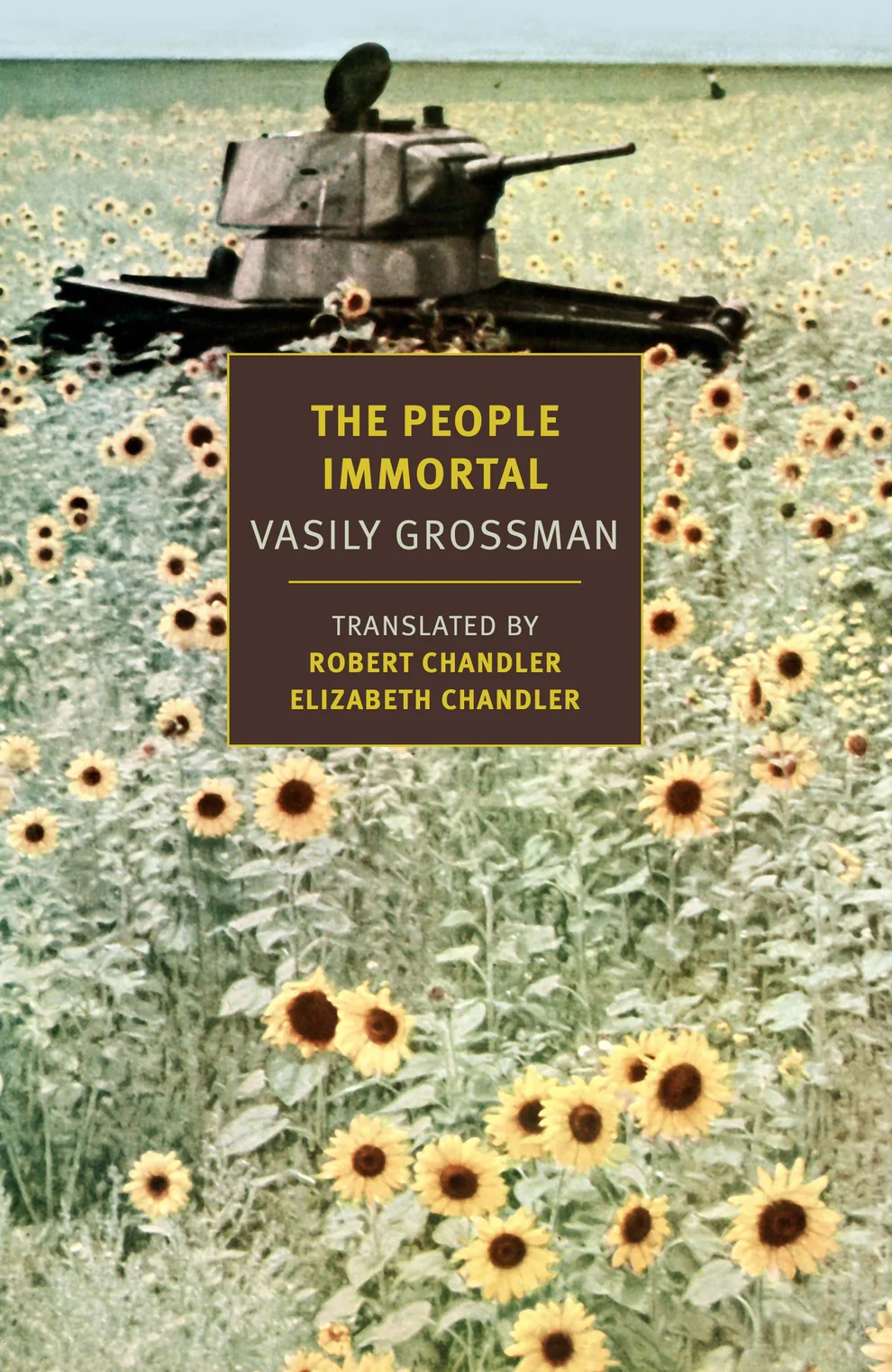
I have begun reading Vasily Grossman’s The People Immortal, his story of an encircled Soviet army formation written in the summer of 1942. Although it was his first novel from the war, I have only come to it after reading Stalingrad (originally published as For a Just Cause in 1952) and Life and Fate, which is one of the most incredible books it is possible to read. While Stalingrad and Life and Fate describe the events surrounding the fulcrum of the war – the lead up to and aftermath of the battle of Stalingrad – The People Immortal is set earlier, in the opening months of the Nazi invasion of the Soviet Union, when the Red Army was retreating rapidly through Ukraine and Belorussia, with the loss of vast amounts of equipment and millions of men, who were encircled, captured and then shipped off to certain destruction in barbaric concentration camps. It is a shorter, sharper, less contemplative novel than Grossman’s two widely-recognized masterpieces, but it is still a powerful and insightful novel, and I strongly recommend reading Grossman to anyone who wants to appreciate how the written world can convey the fundamental nature of humanity.
I do not aim here to write a review of Grossman’s books, which in any case I don’t think I can do justice to. Life and Fate, in particular, is an astounding work of art, which is best appreciated by grappling directly with it. These books aren’t always easy, because they are long, they aren’t written for us in the 21st century, and books written in and about the Soviet Union need a lot of supportive explication, but they are worth it. Like many Russian novels, they have that particular style of omniscient narrator who describes everyone’s inner thoughts and feelings, which makes them relatively easy to read, but they also have many characters and many conflicting perspectives, which can make them exhausting and drawn-out[1]. At times they also don’t seem to have a plot that is going anywhere, especially in the convoluted experiences of Viktor Shtrum, and it’s weird for example how only the last few pages of the book Stalingrad actually bring us to the battle of Stalingrad[2]. There are also some harrowing passages, and the certain knowledge (since we know how it all ends) that a lot of the people we’re reading about are going to die. But they are absolutely some of the most amazing literature you will ever encounter, and I strongly encourage you to read them.
So here my purpose is not to review the books themselves, but to review the translators and explicators of the 2021 edition of The People Immortal, because I feel they have done the book and Grossman himself an injustice, and here I want to explain how and why I think the grubby politics of the modern liberal West have intervened in the marginalia of this book to try and undermine the pure and powerful message that Grossman aims to convey. I will begin by describing a little about the almost spiritual strength of Grossman’s communist beliefs, and then talk a little about the efforts I believe the translators have made to undermine and belittle the force of his ideology.
Grossman’s spiritual communism
When I say that Vassily Grossman’s communism is almost spiritual I don’t mean it in that trite, silly way that libertarians dismiss Marxism or left-wing ideals as ‘like a religion’. Rather, I mean that he saw the battle between communism and Nazism, and the ultimate, world-historical victory of communism, which he assumed would happen, in almost spiritual terms. Throughout Stalingrad and Life and Fate he talks about fascism and Nazism as anti-human forces, not merely as an affront to his political beliefs or simply as a threat to the system of politics and government that he supports, or even “just” as a threat to the existence of his nation and people. Rather, he sees this political movement as an assault against, and a dire threat to, the very essence of what it means to be human. He see these ideologies as fundamentally anti-human and deeply evil, and in both of those books he repeatedly describes the battle against them in apocalyptic terms. Of course he references their stated goal to destroy Bolshevism and exterminate the 150 million people who lived in this system, of course he describes their political and military goals in clear materialist terms, but more importantly he describes the possibility of victory by these forces as a direct threat to the continued existence of humanity. He directly references the victory of these forces as extinguishing the human soul, and sees the Red Army’s fight as not just a political, ideological or national fight, but also a battle for the light of humanity itself.
In addition to this Grossman is obviously a deeply committed communist, and this commitment is repeatedly, viscerally obvious in his work. For example, there are many passages in The People Immortal where he compares the activities of soldiers during a battle with the work of ordinary people in factories and farms, characterizing the Soviet soldier as a laborer and drawing a clear connection between the work of battle and the work of the factory or farm. He consistently links both of these forms of labor to the pre-eminence of workers and peasants within the Soviet political system. He also describes workers of all kinds with a sensitive, realistic, and noble tone – although he might recognize that a peasant from the plains beyond Kazan cannot read or write, he does not condescend to or insult that peasant in any way. There is no contempt in his writing when he describes the ordinary people of the Soviet Union or the work they do, their weaknesses and foibles and selfish ordinary traits. This lack of contempt is clear and easy to understand when we contrast it with the scorn he heaps on those kulaks who slide out of the shadows in Ukraine to welcome the Nazis, or his occasional descriptions of the Nazis themselves. He is a writer of and for the people, a committed and ideological communist who put the best years of his life and his incredible talent to work in defense of humanity against evil, and in support of the communist project he loved[3].
He was also an incredibly popular writer, in a way that is hard to believe in the modern era. Every single one of his reports in the army newspaper, Red Star, was greeted by the soldiers of the Red Army with the kind of eager fervor we might now associate only with a new Harry Potter novel. Consider this description of his popularity from the introduction to the 2021 edition of The People Immortal:
The People Immortal – the first Soviet novel about the war – was serialized in Red Star in July and August, to general acclaim. Grossman went on to cover all the main battles of the war, from the defense of Moscow to the fall of Berlin, and his articles were valued by ordinary soldiers and generals alike. Groups of front-line soldiers would gather to listen while one of them read aloud from a single copy of Red Star; the writer Viktor Nekrasov, who fought at Stalingrad as a young man, remembers how “the papers with [Grossman’s] and Ehrenburg’s articles were read and re-read by us until they were in tatters.”
Grossman’s articles were republished countless times – in a variety of military newspapers, in booklets published all over the Soviet Union, and sometimes in Pravda. The Years of War – a large volume, first published in 1945, that includes a revised version of The People Immortal, Grossman’s long article about Treblinka, two short stories and twenty-one of his Red Star articles – was translated into a number of languages including English, French, Dutch and German. As a separate volume, The People Immortal was published in Danish, Welsh[4] and most of the languages of Soviet-occupied Europe.
This is a writer whose popularity at the time of his writing was almost universal. In the same way that Fox News gives an outside observer the best and purest possible insight into the ideology and character of MAGA, so Grossman’s works offer us as readers in the 21st century a rare opportunity to actually understand the ideology and character of the men and women who were saving the West from itself[5]. And the insights it provides to us are of millions of men and women who selflessly committed to defend their nation, their families, their ideology and humanity itself from an ideology so sick and disgusting that its victory threatened to exterminate the human soul[6].
You can see, perhaps, that given his commitment to communism as the ultimate expression of humanity, his trenchant opposition to Nazism, the complete absence of any western or liberal frame of reference in his writing, and the way he directly speaks for the beliefs of millions of history’s most bravest and truest fighters, any modern edition of Grossman’s work is going to present a direct challenge to the supremacy of the post-Soviet liberal worldview. So what, then, should publishers of his work do? To make it palatable to the elites of our degenerating societies they need to intervene to build a fog of uncertainty and denialism around it, to try and suggest that Grossman was not a committed communist, that he was actually constantly in friction with the institutions he defended so proudly in his published work, and that perhaps he had secret, other thoughts more compatible with the warlike modern liberal ideology of nihilistic destruction. You might even try to imply liberal sensibilities, as if he were a person out of time and place, forced by the violence of the war to defend a system that he secretly believed was just as bad. Let’s look at how his translators and memorialists try to do this in The People Immortal.
The noisy interpreters of Grossman’s legacy
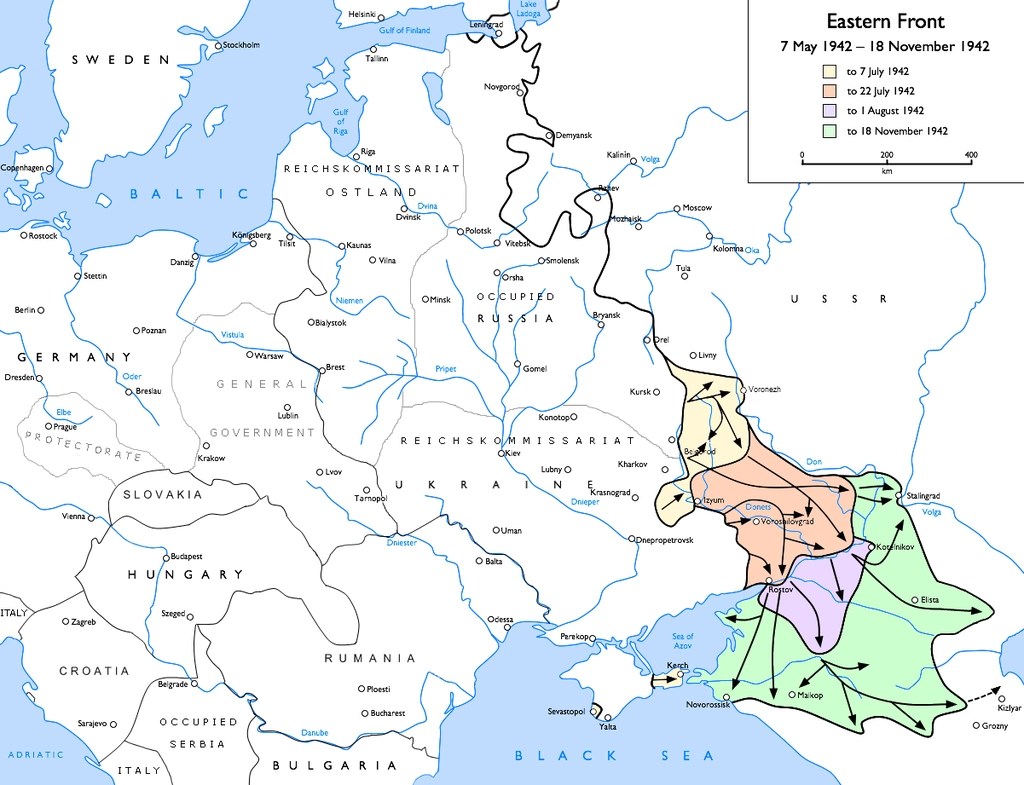
An important point to note about The People Immortal is that it was written in two months, May and June of 1942, when the editor of Red Star gave Grossman leave to return to his hometown to write down everything he had experienced. It was then serialized in Red Star from July 1942. The version that Soviet riflemen and air defense women read was written in just two months, while the Red Army was still desperately defending itself and still retreating across a vast swathe of the nation, and although Grossman himself had witnessed the defense of Moscow in late 1941 and may have been confident that the Soviet Union would ultimately win the war, for many of the ordinary soldiers at the front a very different story was unfolding. By the time the first chapter of The People Immortal emerged in Red Star in July the Nazis had renewed their offensive in the south, and soldiers of the Bryansk, Southwest and Southern Armies (under Cherevicenko, Timoshenko and Malinovsky) had been retreating constantly for a year in the face of a seemingly invincible fascist war machine. Many of them had repeatedly escaped encirclements at Kiev, Nikolayev, and Kharkov, had seen their comrades fall in battle, and knew without doubt that the Nazis were unleashing an exterminationist campaign on the friends and family members they had left behind. By the time he wrote The People Immortal it is likely that Grossman’s own mother had been executed in the mass killings in Berdichev. Grossman was not writing this book for serialization in an army newspaper as an act of artistic achievement, but as propaganda to inspire the troops and workers he loved to renew their efforts to destroy the most depraved and sadistic force that humanity had ever unleashed. It is natural that in this context he wrote quickly, passionately, and with divided purpose. Of course his artistic skill is visible in the work, because Grossman could write easily and well and it was precisely the easy power of his writing that had led his commander to give him time off to write this book; but at the same time, he was also using this opportunity to write a text that would explain to soldiers why they had to fight, inspire them to self-sacrifice, and present to his readers the pre-eminent rightness and inevitable victory of communism. The fact that he deliberately wrote in this way does not, however, mean that he saw his work as mere hackery, or that he did not believe these things. It does mean, however, that he was writing in a style he might not choose to use in peacetime, for a purpose that does not exist in peacetime[7]. Let us remember that.
The 2021 Edition of The People Immortal, however, is not the Red Star serialized version. Rather, it is based on a post-war reissue of the book as a novel, a project that occurred after the events of the war were over and when Grossman had time to reflect on both the war, his own writing practice, and his relationship to communism. By the time the book was reissued the Soviet people had a different view on the war, there were different political and artistic sensibilities, and Grossman was a more developed, more capable writer with hundreds of pages of work behind him and four years of war burdening his soul. There is no reason to think that when he worked with an editor on his book in 1945 he would have preserved what he wrote in 1942. But since all his drafts are hand-written, any changes he made were recorded for translators and memorialists to see and read. So the editors of the 2021 Edition have made the decision to reinsert deleted text into the 1945 edition, along with footnotes about what sections they reinserted and why they think these sections were omitted. For example, consider this section of text where Maria Timofeyevna, a 70 year old woman living in a small village recently captured by the Germans, describes her own death[8]:
One of the soldiers said a few quiet words in a genial voice; the others laughed. And once again, with her now almost clairvoyant insight, Maria Timofeyevna understod what was being said. They were merely joking about the good food that had unexpectedly come their way. And she shuddered, suddenly realizing these men’s absolute lack of interest in her. They were in no way concerned, moved or disturbed by the plight of a seventy-year-old woman preparing to meet her death. All that mattered to them was that they were hungry and thirsty – and behind her they could see bread, salt pork, towels and linen. The old woman did not arouse hatred in them, since she was no danger to them. She could just as well have been a cat, or a calf. She was just a useless old woman who chanced to be occupying Lebensraum of vital importance to them.
Nothing on earth can be more terrible that such total indifference to a human being. This impending murder was engendered not by hatred or martial passion but from the bookkeeping obsssions of German economists and industrialists. No murder in the world can be viler than these statistical murders, these conscientiously planned annihilations. As the Germans advanced, they recorded their lines of march on maps and noted in their diaries how much honey they had eaten. They wrote about the rains, about bathing in rivers, about moonlit nights and conversations with comrades. Very few wrote even a word about the murders in all the countless villages with difficult and quickly forgotten names. That was something entirely normal and of no particular interest.
This is not the original text of the 1945 edition. The editors give a footnote, in which they write:
The two sentences from “This impending murder” to “annihilations” are present in the manuscript but were omitted from all the published versions. Grossman’s editors may have felt uncomfortable with some of his more thoughtful passages, perhaps uncertain whether or not they were in accord with the Party line.
So, they have added text that Grossman never intended to appear in the published versions, and have stated that this may have been an editorial intervention or something to do with the Party line. Why? Maybe he just reviewed these sentences and decided he didn’t like them? The passage flows a little more clearly without them, simply describing the attitude of the Germans (“As the Germans advanced …” describes their lack of interest in their own murders, which the first sentence of the paragraph introduces). It is certainly not the case that Grossman’s editors were “uncomfortable with some of his more thoughtful passages”, because even a cursory inspection of the published work will show that they allowed many more thoughtful passages than this to remain in the text. And what is the evidence that this description would not match the Party line? There is no note from the censor, no mention of an order, nothing. But by hinting at this, the editors get to imply, in a roundabout way, that the Party might have been uncomfortable with a negative description of “statistical murders”. This is, of course, consistent with the modern liberal belief that the Communist Party of 1945 or 1937 was “just as bad” as the Nazis.
There are many such interventions in this edition of the work, which serve to create a constant underlying narrative of intercession, censorship and self-censorship. I’m about 79 footnotes in and I’m yet to see a single discussion of these changes that says either “Additional text was omitted by Grossman and we have decided to follow his lead,” or “This was left out for creative reasons by Grossman, but we have decided to include it to better maintain the meaning for modern readers.” Of course they can’t write this kind of footnote, because in the first case we don’t care, and in the second case the translators would be implying they had superior artistic judgment to the writer.
When the translators choose to reinsert text that Grossman crossed out they are, essentially, presenting themselves as equals to the writer in this project. This is frankly ridiculous, because Grossman is a towering genius, and to the best of my knowledge it goes against all basic principles of ethical translation. If these guys want to write a better war novel than Grossman they should attach themselves to a modern military unit, collect notes, and do the work[9]. Otherwise they should present the text as it was intended by its author, and leave this duplicitous editorializing out of it.
The problem with leaving the editorializing out of works like this, though, is that to present Grossman’s novels as they were written and as they were intended, to allow him his own voice, is to grant unimpeded the right of the millions of soldiers who fought and died against fascism to speak to us, the residents of the modern genocide states. While Israel is slaughtering Lebanese journalists and the USA is murdering Iranian schoolchildren, these millions of Soviet soldiers are being granted the opportunity to communicate directly to us, to warn us about the path we are traveling down, and to remind us of the terrible cost that comes to bloodthirsty nations when the righteous strike back. It speaks to the modern reader about where the real spirit of humanity lies, what the real purpose of war should be, and who it was who saved the West from itself the last time it went through one of its semi-regular paroxysms of demonic bloodlust.
Better, then, to insert a thread of sinister suspicion, to constantly suggest that this tender voice of resistance comes to us after struggling against an invisible censor, that the bravery and sacrifice of those lost millions happened despite the heavy-handed Soviet state, not because of it. “You’re lucky to be reading this at all,” they want to constantly remind us, “because the bad guys tried to stop it.” They want to hint to you – without any real evidence – that the Soviet Union disapproved of Grossman’s message, that only his courage and popularity enabled him to speak out, and that his lucid, powerful work on the threat that Fascism posed is only his voice, not the voice of the Soviet state or Stalin or the millions of war dead. What luck that this man was able to wriggle out from under the censor and speak across the decades to us, whose state would never engage in such repressive censorship!
To this end they have besmirched the work of the great man, returning chunks of text he chose to omit without any systematic or convincing reasoning, blaming every omission and editorial decision on censorship or self-censorship rather than creative rethinking or changed perspective. I believe they do a terrible injustice to Grossman, elevate their own arrogance, and turn what should be a timeless meditation on one of humanity’s most crucial moments into a tawdry piece of post-Soviet liberal propaganda.
They’re noisy, intercessionist busy-bodies, censors and propagandists to match anything Grossman faced. Whether they intend it or not they are meddling with the voice of a generation of lost fighters, the brave ordinary peasants and workers of the Soviet Union who gave their health, their wealth and often their lives to save the world from the most disgusting, repulsive ideology humans have ever imagined. From a cultural and literary perspective their intervention is arrogant and ill-mannered; from a political perspective it’s cheap propagandizing; and from a moral perspective it is a disgraceful insult to people whose sacrifices and memory should be cherished by all the people’s of the world.
But such is modern liberalism. Bereft of creative energy or morality, all it can do is cover up its own crimes, and try to convince humanity to look away while it commits yet more. If we don’t stop what is happening in the West, we will slide once more down the blood-slicked slope that led Europe to its exterminationist nadir. We will do it all again, and this time we won’t have the luxury of saying we weren’t warned. Because people like Grossman gave millions of lost voices the opportunity to speak across the generations to us and warn us about the gory swamp at the bottom of this slope we are sliding down, but people like the translators of this edition of his book did their best to insert a wheedling “Well, akshually …” under those voices.
They betray them, and ultimately they betray us.
fn1: I haven’t read George RR Martin’s works, and I probably never will, but I have heard he also kind of does this, and I wonder if part of the popularity of Game of Thrones arises from the fact that it is written in this style, a kind of fantasy War and Peace. I quite like this style of writing, though it can sometimes seem contrived and I certainly appreciate why some people wouldn’t. I feel Grossman’s version is less intense than Pasternak’s or Tolstoy’s, but it’s still sometimes a little unfamiliar or uncomfortable.
fn2: And what a tour de force those last pages are. My god.
fn3: There is even a section very early in Life and Fate where a Soviet prisoner of the Germans declares that Stalin did not go far enough in his purges, and suggests that if the party had “turned the screws” tighter in the 1930s, they would not be in a Nazi camp. Near the end of the book we see a more desperate version of this same communist commitment, when a major character demands to know how Stalin could have got the beginning of the war so wrong.
fn4: Unlike Lenin!
fn5: Now of course the cycle begins to repeat, except now it is the IRGC and Hamas attempting to save the West from itself, and I wonder if in future they too will be traduced in the way the Soviet Union is now, assuming they are victorious.
fn6: I do not exaggerate here: this is how Grossman himself described the stakes of the conflict. If you feel this is an unreasonable description of fascism, take it up with Grossman, or with god.
fn7: I feel it is easy to forget this when you’re sitting on your sofa on a Sunday morning reading these books, especially the books he wrote after the war. Yes, these books still hold the fervor of the beliefs I have described above, but they are also works of moral and political philosophy, explorations of the human soul, and attempts to present Grossman’s particular view about Marxism, party politics, and his conflicted identity as a Jew in a changing Soviet system. It’s easy in this context to forget why he wrote, and to underestimate the depth and strength of his commitment to the Communist project. For this reason I recommend reading Grossman’s books alongside Chuikov’s Battle for Stalingrad (available at the internet archive), the Black Book of Polish Jewry, and Grossman’s essay The Hell of Treblinka, to get a proper understanding of the context in which Grossman wrote. These were desperate, desperate times, and the fate of hundreds of millions hung in the balance.
fn8: Maria dies a few paragraphs after this section. The Nazi commander has taken the father of the village Commissar prisoner, and is now looking for his son, a 7 year old boy called Lionya who has run away into the forests. When he asks where the boy is, Maria – a 70 year old woman – replies “Are you at war with children too, you swine?” and raises her hand to strike him. The chapter finishes with the soldiers stepping over her body, chattering about the food and linen they are looting from her house. This is the indifference the quoted passage is leading up to.
fn9: Of course they can’t do this because the highly censorious Soviet Union in the midst of a fight for its very survival was more permissive with war journalists than any modern military from any of the liberal democracies.


Leave a Reply