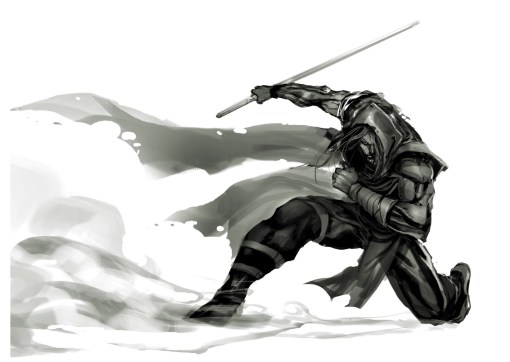
• soul assassin

    These are known as darkling days
    rhyming schemes gone askew,
    crackling gifts of light and air,
    exploding worlds,
    ours to share

    -Lament of the Unredeemed

    Sometimes unexpected things happen in unpleasant places. The PCs have stumbled on a death cult that seems to be wandering across the galaxy digging through old tombs in search of something called “the ansible.” They were paid by a remnant holy man called Michael to kill a priest of this death cult, and having done so find themselves under the protection of the rulers of Pearl 7, in the pirate system known as the Reach. Killing this priest had been traumatic for them, since he was accompanied by a couple of demons and seemed to be able to conjure more when he needed them; our heroes are not used to the idea that demons could be real entities, or that someone would conjure them, or that when they drift into striking range the air turns cold and the victim hears faint echoes of dying children and tortured animals.

    They also weren’t expecting to discover the death priest’s purpose, documented on grainy old videos of the death priest raising the souls of long-dead heroes and torturing them to force them to tell him the location of the ansible. Though at first they didn’t believe what they were seeing, their puzzlement soon turned to horror as they realized the extent of this death priest’s reach, and perhaps also his ambition.

    They agreed to Michael’s request to help him hunt down the death cult. His plan was to return to his planet and trace the priest’s travels backwards from there, but before they left with him the characters decided to clear a few things up. First, Alpha the psionicist had a background in archaeology, and had realized that they might be able to find out more about the mysterious ansible and the links between the long-dead heroes the death priest had sought out. To do this he needed to set up an archaeological dig in the tombspine, which would mean seeking the support of the tombspine management committee – yes, even pirates have committees. To this end he would need to prepare an application, because even pirates have forms, and bureaucrats.

    Second, the PCs realized that the death priest must have a base of operations on Pearl 2 – where he was under the protection of the local authorities – and might have some materials there that could give them more information about where he was from and why he sought the ansible. Since no one yet knew he was dead, and probably believed he was still working quietly on his vile task in the tombspine, they guessed that they could raid his lodgings relatively easily if they moved quickly. While they waited for the first stage of Alpha’s research application to be processed, they set off for Pearl 2, to find the death priest’s lair and storm it.

    In the slavers’ lair

    Although all the Pearls maintain slaves, Pearl 2 is the heaviest user of slavery and the largest trader in slaves. The Pearl trades, breeds and trains human slaves, bringing in captives from around the sector and breeding carefully-selected slave stock to trade with other Pearls, and to use in its heavy industry. Pearl 2 is packed full of heavy industries, and slaves are used extensively in all the worst jobs in these industries. Pearl 2 also maintains an extensive and rigidly policed caste system, with many tiers of free workers who are treated little better than slaves, though clearly above them. Densely populated, polluted and constantly riven by low-level social conflict, Pearl 2 is a model of all the problems the Spiral Confederacy aims to eliminate from human society.

    The PCs entered this sprawling den of iniquity with a strong sense of foreboding and trepidation. Even the approach to the Pearl is forbidding, with the entire structure swathed in clouds of toxic dust. The Pearl is not a spherical habitat, but a series of obloid structures of differing sizes, interconnected by huge spars that carry traffic and goods between the separate sections. The upper half of the major sections stands clear of the miasma surrounding the Pearl, and the higher one lives in the habitat the wealthier one is. Slaves live, toil and die in the bottom-most sections of the Pearl, never seeing the light of the weak red dwarf that powers the Reach. Like the other Pearls, Pearl 2 has no field technology outside its superstructure, and as a result its surface is discoloured and pitted from the constant contact with the miasma.

    The PCs disembarked at a small service dock in the mid-level of the main section. No one greeted them, and the machine for registering their weapons was broken so they simply walked into the Pearl itself bearing all their weapons unremarked. Pearl 7 had organized accommodation for them in the area called Silicon Valley, which was near the dock, so they proceeded there immediately. Silicon Valley is a light industrial area devoted to reclaiming silicon from imported sands, and consisted of a kind of canyon of buildings stretching perhaps a couple of kms along one edge of the habitat. At its base were the reclamation facilities, shrouded in silicon dust; higher up the valley were light industries and chip makers, and near the top the shops and traders and residencies of the better-paid workers. The PCs took small rooms in an area relatively free of silicon dust, and set about finding the death priest.

    They started by visiting a local public web access facility, from which Simon Simon tried a little low-level hacking. He could not find the death priest’s address directly, but he was able to identify the dock from which the priest’s ship had set out for the Gardens. There was a dockmaster with a full manifest of addresses which Simon Simon could not access, but he was able to make a fake identity for himself as a representative of a shell company that dealt directly with the Confederacy for illegal technology, the kind of company that one did not ask too many questions about. He sent an email to the dockmaster from this shell company, informing him of the PCs’ imminent visit.

    Their visit was a success; after a 40 minute wait and with a small amount of payment to the dock master they were able to obtain the death priest’s address. Unsurprisingly for a pirate haven, no one was particularly cautious about information privacy – at least, not other people’s. It was relatively easy to establish that he lived in a particular location in an area of a subsidiary habitat, called The Bones.

    As they left, the dock master’s agent warned them they might not want to visit the Bones.

    Everything has to end somewhere
    Everything has to end somewhere

    Among The Bones

    Deciding it might be wise to listen to the dock master, they returned to the web access shop so that Simon Simon could investigate the Bones.  They soon found out why they had been warned against the Bones: this area was where old, sick, surplus or dead slaves were sent for “reprocessing”. It was essentially a giant human abattoir. The only people who lived in the Bones were the few free workers in the processing plants, and criminals and radicals on the run from the law, bounty hunters, or enemies in the main parts of the Pearl. Gangs that had been cast out of the rest of the Pearl would flee here, living alongside dissidents and hermits and homeless people with nowhere better to hide. It was a dangerous place.

    While he was searching, Simon Simon stumbled on a layer of Pearl 2’s web that he had not expected. The information network here was heavily stratified, with different layers available to different classes of people and careful restriction of who could put information onto any of them. Simon Simon was alternating between a common information layer used by the local municipal authorities and a general knowledge and news layer – as close as the Pearl had to a real internet – to gain information on the Bones. But in switching layers he discovered a common information exchange protocol between the security forces and the municipal layer. He could not hack the security forces’ secure network, but he could hack messages coming out of it to the municipal services. These would be messages requesting rerouting of traffic for an ambulance, or the closure of an electricity supply during a raid. Simon Simon noticed that the municipal authorities had been asked not to meddle with the area around the death priest’s lair by none other than the Pearl 2 leadership’s personal security force; and that this same force had been raiding the safe houses of two particular cults, and making requests for municipal support during these raids. These requests had begun a couple of weeks ago, at about the same time as the request for the priest’s lair to be freed of interference. One of the cults was of no concern to Simon Simon, some kind of cult with an ancient messiah who had been killed by his own father, and whose flesh promised eternal life when eaten; but the other was a mysterious cult called the Unredeemed, with a heritage at least a thousand years old, that claimed to be a cult of Adherents with no AI. Simon Simon was intrigued by this cult of Adherents without an AI, and also wondered why a cult that had been left unmolested for a thousand years would suddenly start being attacked just as the death priest arrived. Coincidence – or was there a link?

    Once Simon had determined a safe and quick route to the death priest’s lair, they bought a cheap wheeled (!) van and set off. Driving from the spar into the Bones proper they noticed that the section was deserted, with few people on the streets and very little activity except large, ominous factories. Interspersed amongst the factories were grimy accommodation for the area’s few free workers, and occasional workshops. Abandoned factories and crumbling ruins scattered the level they drove through, rusting gates and tumbling walls a testament to the Bones’ ancient, thankless task.

    The death priest’s lair appeared to be one such abandoned factory, set back from a narrow road, surrounded by shuttered warehouses, and seemingly completely unguarded. The ground floor was a large warehouse with closed roller doors, and above that were three levels of tiered office space. On one side of the building was a scattering of containers, but they were stacked against the wall of the building and could not be accessed. The whole building was dark and silent, and gave off an air of menacing isolation.

    They entered the ground floor through a small side door, which Simon Simon opened with the help of his AI. Stepping through a narrow entry way, they opened the inner door, and Ahmose ducked inside to crouch behind a crate of some kind that was just inside the door. This was the main warehouse space, but it was shrouded in deep darkness, so Lam flicked on the lights near the entrance. Moments later, as the warehouse was flooded with cold halogen light, Ahmose found herself staring into the blank eye sockets of a human skull. The “crate” she had hidden behind was actually a bale of bones, stacked tightly together and bound up with packing wire and plastic, a line of skulls staring out at Ahmose’s crouching eye level. The rest of the warehouse was scattered with similar bales of bones, and in one corner lay a huge pile of human bones, attended by a small tracked excavator. There was nothing else in the room.

    They searched it carefully, but aside from an empty gantry with some control equipment on it, there was nothing in the room. A freight lift at the rear of the warehouse led up to the next level, and with only empty skulls at their backs, they were in no mood to delay. They took the lift to the next level.

    The doors opened into a pitch black hallway. Ahmose, Simon Simon and Alpha could see down this hallway dimly with their nightvision, so they knew someone was moving at the far end, but they could see little more than that. Lam, blind without combat armour or genetic enhancements, flicked on the lights just as she had downstairs. The hallway lit up, revealing a strange and horrible tableau in the moments before the lift doors closed again. The hallway stretched the length of the building, to a stairwell at its far end. On the left hand wall a single large window stretched the length of the hall, enabling the PCs to look into a large, empty medical room. Bodies were strapped to gurneys inside that room. The other side of the hall had three doorways; two were closed, with narrow glass windows next to them opening into empty rooms. The third doorway was open, and from it had emerged two corpses. These corpses were staggering down the hallway towards the lift doors, arms outstretched, in a kind of shambling lurch. One wore a pair of coveralls and was covered in hideous radiation burns; the other appeared to have been operated on, and wore only a surgical gown with blotches of dried blood all over it. Both stared sightlessly down the hall as they stumbled forward, growling hideously.

    Lam and Alpha reflexively opened fire, Alpha with his auto-rifle on full automatic, spattering chunks of radioactive zombie all over the infirmary window; then the lift doors closed. Simon Simon hit the button to jam them open, and moments later they slid open to reveal those same two zombies, closer now, and two more emerging behind them. With a yell Ahmose leapt forward, blade in hand, ordering the others to shoot down the zombies at the end of the hall while she held off those that came too close. Her tactic worked, and after a frenzied few minutes’ work they had cleared the hallway, killing 16 of the shambling dead with no injury. They stood in the hallway, panting and staring at each other in shock.

    First they had met demons, and now the walking dead. What next?

    They searched the infirmary, noting that all the dead bodies on gurneys had had organs carefully removed, and that the organs were nowhere in the infirmary’s freezers. A grim foreboding grew as to what they could expect to find next …

    They took the stairs to the next level, finding a hallway with the same structure as the hall below: a single door on one side, and three doors on the other. Inside these three doors they found two offices and a kitchen. The first office seemed to be a simple secretaries’ room, with signs it had been suddenly vacated but no evidence of a struggle. The second, a kitchen with rotting food inside its primitive refrigerator, also spoke of the building having been suddenly vacated. The third was another office, perhaps for a more senior staff member, which had a locked drawer. They set about smashing the drawer.

    Although Simon Simon stood on guard outside the door as they set about the drawer, he did not see their assailants until the grenade was inside the room and the door shut. A moment later he heard the muffled thump! of the explosion, and felt a blade penetrating his ribs. Thankfully spared the worst of the damage by his combat armour, he turned to see his assailant. Before him stood a small, wiry man, wearing some kind of leather armour but surrounded by a strange miasma of shadow. What little Simon Simon could see of his face through the shadows wreathed about it suggested an aging man with his skin shrivelled tight against the bones of his skull, like ancient paper. He carried a semi-transclucent sword in one hand, which glowed and shimmered in that flickering miasma of shadow, and sizzled where Simon Simon’s blood ran along it. Beyond this man, near the door, a second, similar figure stood, shimmering sword in one hand and a scroll unrolling in the other. A moment later that figure disappeared.

    A chill ran up Simon Simon’s spine and he collapsed, paralyzed, to the ground. Moments later the PCs ripped the door open and opened fire on the assassin. Bullets and laser beams could penetrate the miasma of shadow around him, but they seemed to slow or dissipate when they hit it, so that he did not seem to feel their full force. They had him pinned down but Simon Simon could not tell them about the second assassin, who stabbed Ahmose with the same devastating effect moments later. Alpha managed to subdue the first assailant, but not before the second assassin had beaten Lam into unconsciousness. The assassin was about to finish Alpha when Ahmose’s paralysis faded, and she was able to push herself out of the door, firing her Gauss pistol on full auto as she did. Thankfully this shot cut down the second assassin.

    Once again they survived a battle by the skin of Ahmose’s combat armour. One assassin was still alive, so they bound him and gagged him. Ahmose insisted on gagging him in case he could “do magic,” at which the other PCs shrugged in disgust, but now they were beginning to suspect that Ahmose’s constant warnings about necromancy and ancient lore might have more truth to them than old wives’ tales should.

    Alpha administered first aid, and once they had recovered and rested a little they finished searching the room where they had been breaking into the drawer before the grenade had surprised them. Inside the drawer was a disc of pornography, and a note saying “When the boss is away: 681983.” They took it.

    Injured and with a nagging, primal fear creeping up on them, they opened the last door to a scene of horror.

    The door opened into what had once been the office meeting room, a large room with a few tables and chairs, and a large set of glass doors opening to a balcony with a view over the rest of the section. Through the grimy windows they could see the industrial skyline, smoke belching from sinister chimneys, the squat hulks of the reclamation factories and their evil exhaust smeared against the off-white walls of the dome of the habitat. The view was obscured, however, by a naked body hanging upside down from the ceiling of the meeting room, its flayed skin in a neat pile on the floor next to it and the whole rotting thing hanging over a large ceremonial bucket.

    “Oh, that’s where they put the organs,” Ahmose said matter-of-factly as Alpha retched behind her; arrayed around the ceremonial bucket were a series of open jars containing the various organs harvested from downstairs. In front of the bowl was a knee cushion, exactly the same kind as they had found with the death priest in the tombspine, and a silver sword that glowed with its own light. All the furniture in the room had been shifted outside onto the balcony, and the floor carefully painted with a symbol of some kind using what looked like many layers of dried blood.

    They had found the death priest’s lair. Ahmose warned them not to step inside the symbol and Alpha, not believing her, fired a bullet at the rope holding the body; the bullet stopped at the symbol’s edge with a loud bang, and sank to the ground with a clatter. Careful not to touch the pattern on the floor, they cut down the body and, once it had hit the ground, Ahmose carefully scrubbed away a part of the symbol. Something in the tense atmosphere of the room relaxed, and suddenly a wave of stench rolled over them as the barrier dissipated. They grabbed the silver sword, wrapping it in a towel and stuffing it in a sack, and retreated to the hallway. With nowhere else to put him, they bound the assassin to a table in the kitchen and set off up the last flight of stairs to the top floor of the building.

    By now Alpha and Simon Simon were beginning to unravel. Good citizens of the Core of the Confederacy, they had been raised on science and logic, and they could not understand anything they were seeing. Nothing that had happened to them since they entered the Reach made any sense, and nothing they had been taught prepared them for it. That creeping horror of the unknown, with which Ahmose and Lam were still vaguely familiar, had begun to sink through the barriers of their education, and now they were beginning to panic. They were on the verge of cutting and running, and twitching to get this job done as quickly and dirtily as possible. Cautious only out of terror, they jumped at shadows and twitched to shoot anything that moved.

    At the top of the stairs was a door, closed and painted with the same symbol from the room below. Ahmose dragged it open, revealing a small office antechamber to a larger room. Alpha sent his surveillance drone into the room, using infrared and motion sensors only, and finding nothing threatening. The drone drifted through the door of the office into the larger room beyond, and twitched right immediately as its motion sensors triggered. Something was hovering in the air in the room, moving rapidly towards the drone. It was a blob of frozen air, much colder than the rest of the room and floating at about the height of a human head. Moments later it passed through the drone and into the antechamber, heading towards the PCs, who were ready …

    … But not for a ghost. The thing that entered the room had a glowing skull floating atop a disembodied, ghost-like body, all shrouded in tattered robes. It drifted straight at them, ignoring the laser blast from Simon Simon’s gun and then straight past Ahmose, clawing at her as it passed. Then it fled down the stairs, a frozen, stinking wind blowing briefly in its wake. Ahmose sank against the wall, reduced to imbecility by one touch from its clammy, icy touch. Simon Simon and Alpha, too scared to follow without the group, dragged Ahmose into the room and leaned against the wall, gasping for breath. Lam stepped into the inner room, but now Lam was beginning to feel their mood, and had lost her temper. She saw the death priests notes and religious items on a table at the far side of the room, strode over, and hurled them all into a sack. Then, turning back, she started storming around the room, kicking things. Simon Simon came in to calm her, but she pushed past him into the antechamber, staring around with wild eyes and ranting.

    “First a pile of bones and them I’m attacked by a radioactive space zombie and then there are space ninjas and then a fucking ghost! I am so sick of this!” She stared around at Ahmose and Alpha, leaning wretched against the wall, and then her gaze alighted on the kitten. “SPACE ZOMBIES!” She yelled, and tore down the kitten post with a single sweep of her right hand. Then, shaking the sack at the others, she yelled, “I’ve got the loot, let’s get out of here and back to civilization before we see any more of this hoodoo guru’s madness!” And with that, she marched off to the stairs.

    Alpha followed, trying to calm her down but mostly sympathizing with her, but not before he noticed the safe hidden behind the ripped poster. On a whim he dragged out the note from downstairs, and punched the code into the safe. It slid open, revealing a line of test tubes containing what looked suspiciously like human embryos … hastily grabbing them and stuffing them in a container of dry ice from inside the safe, he dashed downstairs after Lam.

    Meanwhile, in the inner room, Simon Simon cast about desperately for signs of anything else that needed to be taken. He didn’t want to be left here alone but he also didn’t want to waste the trip, and he was sure that Lam’s search had been just perfunctory. Sure enough, in the corner he saw a primitive leather backpack and a staff. The backpack appeared to contain travel documents, and had a tag from a spaceline on it, and probably carried the information they were actually after. Grunting, and not thinking very clearly about what can happen when you touch a death priest’s staff, Simon Simon gathered them up and hustled after the others.  He grabbed Ahmose on the way, leading the suddenly imbecilic woman down the stairs and into the hallway below, to be confronted by Lam and Alpha at the end of the hall, jabbering. They had found the corpse of the assassin, drained by the ghost, which was now lost somewhere in the Pearl.

    None of them thought about the possibility that they were carrying the only three weapons in the entire Pearl that could kill that ghost.

    They hurried out and piled back into the van, Lam driving erratically. On their way back, Simon Simon convinced them to let him visit the safe house of the Unredeemed, which was nearby. They agreed, but told him there would be no more adventures. They parked outside and he approached the building, an old worker’s residence in a street of abandoned worker’s residences. Someone threatened him with a gun, but he mollified them by telling them his AI’s call sign in a technical code that only other Adherents would understand. They agreed to give him an hour of his time, and while the rest of the party waited outside, he stepped inside … into the lair of the Cult of the Unredeemed…
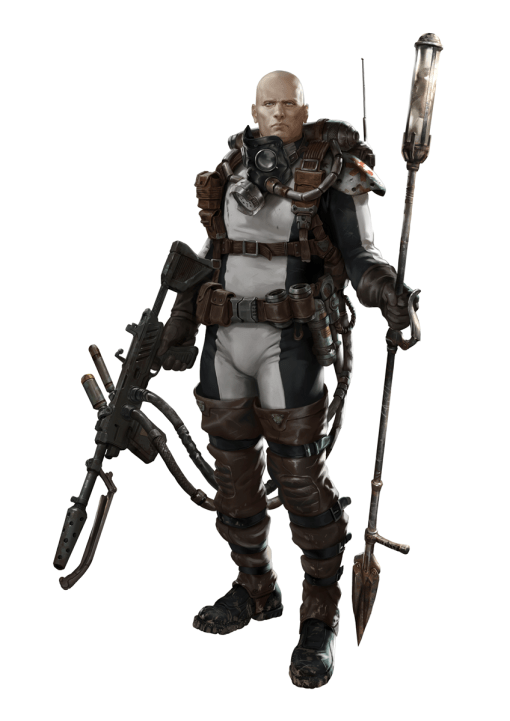
  • I’ve just returned a week with the WHO in Geneva, where I was working on tobacco control. The tobacco control lobby have made huge achievements in the last 20 years, managing to turn the tide of tobacco use in many countries and pushing some countries (like Australia) towards the dream of zero tobacco, without criminalizing anyone or directly engaging in prohibition strategies. However in the past 2-3 years the movement has been inflamed by a new controversy that they seem to be handling rather poorly – electronic cigarettes. Debate on what to do about e-cigarettes has been vocal and bitter, with the tobacco control camp dividing on roughly Atlantic lines between two opposing camps: harm reduction and prohibition. On the one hand, the prohibitionists see e-cigarettes as a product that glamorizes smoking and is no less healthy, and they want to control the proliferation of these products before they can get the market purchase that tobacco obtained in the early 19th century. This part of the tobacco control lobby sees them as a potential gateway to cigarette smoking, and thinks they should be punitively controlled from the start. Another part of the tobacco control lobby sees e-cigarettes as an alternative to smoking, and situates them within a harm reduction framework that suggests they could play an important role in moving smokers away from dangerous tobacco. e-Cigarettes are a nicotine delivery system without any of the carcinogenic products of burnt tobacco, and so offer a way for addicted smokers to satisfy their nicotine needs without inhaling carcinogens; from a harm reduction perspective this makes the e-cigarette a very useful tool in tobacco control. The debate is usefully summarized by the British Medical Journal here, with links, and the journal Addiction has a lot to say on the matter.

    For what it’s worth, as someone who worked for years in the field of heroin use, I see harm reduction as the absolute best strategy for dealing with drug use, and I think e-Cigarettes provide an excellent tool for steering smokers away from tobacco. Nicotine itself is not a poisonous or carcinogenic substance, and the only reason to object to its consumption is a moralistic opposition to addiction itself. From a harm reduction perspective, such a position is completely nonsensical: if we object to a drug, we should do so purely for its health or social effects, not for the simple fact that it is addictive, and while the health and social effects of smoking tobacco are huge, there is no evidence of any serious negative consequences of vaping.

    I would go further and say that vaping isn’t just a neutral thing – it’s potentially hugely beneficial. In the era of smoking bans, there is a huge market for a product that enables people to smoke in public places, cars, and their family home without offending or harming the people around them. Vaping doesn’t just not harm the individual, it enables them to smoke around those of their friends and family who didn’t take up this stupid habit. As quit campaigns, smoking bans and taxes begin to bite, smokers are surrounded by more and more people who don’t smoke, which gives them increasing incentive to drop tobacco. But tobacco is intensely addictive, so they couldn’t – until this technology offered a way to do it. I’ve gamed indoors with players who vape, and it is absolutely a completely innocuous habit. I’ve gamed with smokers too, and in order to not offend the group they have to pause the game to go outside and smoke. The better option is obvious.

    In fact, I don’t think I’ve ever met a smoker who wouldn’t vape in such a situation.

    About ten years ago I was involved in an evaluation of a sudden heroin shortage in Australia. One of the main lessons of this shortage was that prohibition and harm reduction are strategies that can complement each other. In an environment of strict prohibition, when sudden market disruptions happen, the availability of harm reduction measures can rapidly take people out of the marketplace for the drug and onto safer alternatives. As we ratchet up the pressure on tobacco companies, increasing taxes and making it more and more difficult to smoke in public, e-cigarettes offer the chance for smokers to switch away from a socially disapproved drug to a more comfortable choice, and our research on the heroin shortage suggests that there is a critical threshold at which people will rush to adopt this new technology. We absolutely need to push the market towards this position, so that as many people as possible adopt a low-harm, low-offensiveness alternative to smoking.

    However, there is another huge benefit of e-cigarettes which I think tobacco control advocates need to consider, and which could have a huge impact on the tobacco control movement. To understand it, we need to draw on the lessons of solar power. e-Cigarettes have the potential to drive the tobacco companies out of business in the same way that solar power has begun to put pressure on utility companies through the utility death spiral. This basic model is simple, though disputed: As more and more people install rooftop solar, the utility companies lose money and have to raise prices for their remaining customers, encouraging more to switch to rooftop solar and hastening the loss of customers. This model also applies to e-cigarettes: as more and more people shift to e-cigarettes, tobacco companies will have to recuperate their profits from an increasingly small consumer base, forcing them to raise prices. Fortunately for the tobacco companies their primary production model is incredibly exploitative, so they have a very cheap cost base; but unfortunately most countries now have high tobacco excises, so any cost increase is multiplied to the customer. This will act the way the excise itself acts, encouraging more people to quit or switch to e-cigarettes … and so on.

    Solar panels are actually a great market story. Solar power started off as a niche product for satellites, but as companies matured they researched new technologies and became more cost competitive, getting installed in low power applications like calculators and slowly expanding market share. As market share grew the technology became cheaper, and they were able to compete in more and more sectors, until finally now they are able to compete with mainstream utilities. Although the original technology benefited from government projects (especially satellites and space probes) the technology has not itself benefited from subsidies until recently, achieving most of its market share through good old-fashioned market competition and investment. e-cigarettes are similar, having developed through chemical companies in China and slowly expanded into the tobacco market. They’ve been remarkably successful considering the aggressive and anti-market behavior of most tobacco companies, which shows just how unpopular the tobacco product is even amongst many of its regular users. Furthermore, just like solar power, e-cigarettes are now benefiting from the regulatory framework within which they operate. In the past, without any regulatory framework, solar power competed solely on price. But now, with clean air laws and emission standards, solar power competes on these other regulatory aspects, which vastly increases its acceptability. Similarly, where once an e-cigarette would have seemed like a clunky and pretentious toy, it now appears sensible or sophisticated – it enables its user to smoke amongst non-smokers, ensures they don’t disrupt parties or meetings for a break, and doesn’t attractive opprobrium around children. In such a strict regulatory framework it has obvious appeal beyond price; and unlike electricity, smoking is a luxury, a choice, which makes e-cigarettes even more likely to attract rapid uptake.

    The implications of this for tobacco companies are terrible, just as solar power is a real threat to utilities. If we allow e-cigarettes unfettered access to the smoking market, leave them largely unrestricted, and reduce taxes on their nicotine, we can quickly force a situation in which tobacco companies are massively undercut by a genuinely disruptive competitor. As tobacco companies lose money they lose the ability to fight court cases against new regulations, and to market aggressively in new markets (such as developing nations). But their only alternative is to raise prices on existing users, encouraging more to switch to e-cigarettes. This is especially problematic for tobacco companies because of their vulnerability to divestment; just this week AXA dumped 2 billion euros of tobacco shares, and encouraged other funds to do likewise. As they lose investors the tobacco companies lose funds to support further expansion, increasing pressure to retain current smokers – who are shifting to e-cigarettes, a product with a diverse corporate background.

    Seen in the framework of “disruptive” technologies like solar power, it seems obvious to me what the tobacco control movement’s response should be, similar to that of environmentalists to solar power: encourage changes to the regulatory environment that favour e-cigarettes; reduce barriers to market entry for these products; continue to put regulatory pressure on tobacco companies; advocate laws that prevent tobacco companies from entering the e-cigarette market; and aggressively encourage divestment of tobacco company shares. With this combination of activities, the tobacco control lobby can hasten the end of the tobacco industry, without inconveniencing even a single smoker.

    WIN!

  • Cleansing the hearts of men
    Cleansing the hearts of men

    Were the hearts of men always corrupt, or did they become so when the world died? Before Eschaton, were men’s hearts as clear as distilled water, or in that halcyon time did only nature thrive pure and clean? Was Eschaton the cause of men’s corruption, or punishment for it?

    I do not ask myself these questions as I burn out the evils of this world (there is much that must be burnt). But now I crouch on this hillside looking down at this thriving camp of filthy apocalyptics (there is much that must be burnt). And I wonder what came first – the impure fire in the sky, or the impure fire in men’s hearts.

    I emerged from a test of fire in the bowels of the corrupt earth, and find myself facing only the unceasing corruption of men’s souls…

    The catacombs and the lost man

    We had traveled to these catacombs seeking a valuable transceiver for the untrustworthy Chroniclers in Tumbler. Here we stood at the edge of the catacombs, checking weapons and gear. With a grunt our Apocalyptic slapped Tesla on the back, muttered something about being right behind her, and nodded at the tunnel entrance. She took a deep breath and slid inside, her filthy rags and oil-smeared face merging quickly with the shadows. We gave her a moment to move ahead before we slipped in after her.

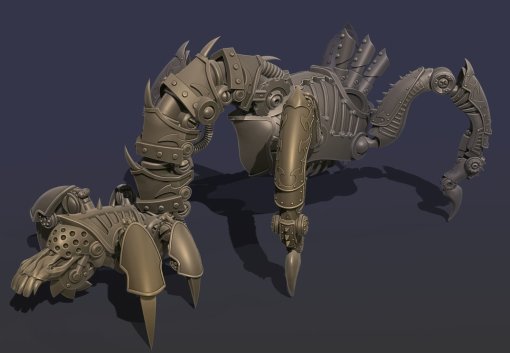
    Even Tesla could not help but be swayed near to terror by the tunnel we entered. Even that dirt-grubbing scrapper, who blinks unsteadily at sunlight and dreams of the comfort of crushing stone depths and darkness, crouched shivering at the bottom of the entrance tunnel, staring about her in disgust and horror. For once no one complained at the cold, harsh operating-theatre light of my splayer, because no light could render the hideous flesh of those tunnels more horrific than the simple fact of their brooding, grotesquely pulsating presence. The tunnels were lined with flesh, like a hideous oesophagus plunging into the gullet of some dreadful dark beast (if only we had known). It yielded spongily to our steps, and did not respond to our touch, but on a regular, slow beat the whole thing flickered as if disturbed by a distant … heartbeat. A sickly smell pervaded the place, as if they exuded some faint odour, and the air was warm and clammy. Somewhere, one of us retched. My finger twitched on the trigger of my fungicide rifle, and I noticed the hellvetic checking his explosives. No human is made for this horror.

    We plunged on. Perhaps no human is made for this horror, but we had a job to do. A nod, a grunt, the Hellvetic hoisted his rifle and the Apocalyptic whispered a few assuring words, hulking protectively over the scrapper, and we pushed on. The tunnel opened into a large chamber, hideously papered over with living flesh and scattered evenly with entryways leading into smaller chambers. These chambers were all empty but one, which was scattered with adventurers’ implements: sacks, a few blade bracelets, some empty suits of armour, a scattering of blood[1]. In this room also the walls were different, stained in places with a darker pattern. In one part this darker pattern bulged out from the wall, revealing a kind of sac hanging from the wall, perhaps engorged with some fluid. We approached carefully to investigate, and in the light of my splayer saw something move inside the sac – something vaguely human shaped, that began pressing desperately against the sac. The apocalyptic stepped forward and sliced smoothly up the side of the sac with a sudden glinting blade, and a man fell out of the sack in a splatter of amniotic fluid and a burst of grave-stench.

    For a moment we all stood there stunned; he kneeled before us, coughing and gasping desperately. He wore a leather coat and a gas mask, still strapped on his face and maybe the reason he was still conscious. The Hellvetic gripped him on one shoulder as if to offer reassurance, but he looked up at us wretchedly through gore-smeared goggles and said, “Just make it quick,” in a tired, resigned voice.

    In a corner of the chamber Tesla looked at those other sacs and the scattered remains of other adventurers, and keened quietly to herself.

    “No, friend, it’s not your time yet.” Sylvan grabbed him under one shoulder and offered him water from a canteen. “You’re free.” Someone cleaned his goggles, and he looked around at us all with a brief expression of wonder.

    Then he saw Tesla beginning to scrabble through a toolkit discarded on the fleshy floor, and lunged weakly forward. “Hey! That’s mine!” Looked around at the other discarded tools.

    We returned to the surface so he could recover his strength, talked. His name was Stanislav (“Stanko to my friends – but you can call me Stanislav”)[2]. He was a Scrapper, hired with his friends by a group of mercenaries to scout ahead and find this cave. They found the cave but something – things – ambushed them and when he woke up he was in the sac. So were his friends, but something came and took them one at a time, screaming and desperate. Dragged them away.

    He didn’t know where his mercenary employers were – maybe they had abandoned him, maybe killed by cockroaches. He didn’t care, but he wanted to find the things that killed his friends, and show them a similar mercy.

    We agreed. We went back into the cave.

    What could possibly go wrong?
    What could possibly go wrong?

    A single tunnel from the lower chamber descended further into the depths. It ended at a kind of kitchen, strange now that its furniture and implements dripped with horrible, misshapen fleshy outgrowths. An ancient blast door lay jammed open, almost as old as Eschaton and probably originally rusted into place; now it was held fast by tendrils of faintly rippling flesh. Beyond, a narrow tunnel led deeper into the complex, now lit by occasional flickering lights. We entered it.

    We were only a little distance into the tunnel when they attacked, two vicious monsters bigger than men and armed with wicked claws. They struck from both ends of our group, strung out in the dim corridor, but we fought them off, killing them both. They were big, grey things, with blank expressions and strange, twisted bodies – once men, maybe, but ossified and warped by some terrible chemistry. I have read rumours of these things in the archives: beasts tortured and changed to monsters by the corruption of the spore zone, and acting with a single mind, often possessed by a single greater power. No doubt they nested here, preying on cockroach clanners and waiting to burn.

    My surmise was correct. At the tunnel’s end we found an open chamber scattered with the bones of cockroach clanners. In the centre of the chamber was a broken grille that had once covered a shaft that plummeted into the earth. The grille had been broken upward, and the cockroaches attacked from below. Signs of struggle and violence suggested they had not gone lightly, and had perhaps killed more than one of their attackers; but now they were gone. The remaining beasts, and our transceiver, must lie below, at the bottom of that shaft.

    We descended. The shaft opened into a large room, flickering with lights and cocooned in grotesque, pulsing flesh. This was some kind of control room, with many lights flickering, old chairs, perhaps a map buried beneath glossy skin. Holes in the walls sussurated with the faint movement of air from distant caverns, the flesh puckering around them like the disgusting lips of a blighted, mutated beast. Our transceiver was buried amongst flesh and steel on one side of the room, waiting for us to remove it. But at the far end of the room an ancient door was jammed half open. We did not see it, but we felt the movement inside.

    Sprawled over the bench and desk next to the transceiver, partially covering the machinery in which it was buried, was a huge heart, pumping and twitching with a fell puissance.

    We moved quickly. The hellvetic placed a triggered explosive on the heart and took a firing position near the shaft, while I placed my fire grenades at two points in the room. Tesla and Stanko began to dismantle the control panel in order to remove the transceiver, and Sylvan and I approached the door.

    I threw my final fire bomb through the door, and all hell broke loose. Beasts swarmed out of the room beyond the door, screaming and smoking, and fell upon us. Vicious battle ensued, with the hellvetic firing into the fray with an angry chatter of peacemaker-fire, Sylvan moving smoothly amongst the battle slicing and stabbing and getting torn at by angry beasts while I tried to burn them and Stanko and Tesla desperately worked to free the transceiver. The beasts were many and vicious, and as they closed in Stanko had to stop working on the transceiver to fire at them with the pistol Sylvan had loaned him; he killed one, but the hellvetic was being pushed back and Sylvan seemed to go down under the beasts’ attack. Fortunately he rose up again, strengthened with rage[3] and beat back the last attackers as Tesla and Stanko dragged the transceiver free. We ran for the shaft, Sylvan going up last and me and Ronan setting off the explosives before he was even clear of the shaft.

    They all burnt.

    We struggled outside with the transceiver and fled, putting distance between ourselves and anything that might be left behind. We doubted there would be pursuit, because we had heard the rumbling of collapsing caverns behind us, but we wanted to be sure because the fight had taken its toll, and we were all badly injured. Stanko’s left arm had been mangled at the shoulder, and everyone was exhausted when we stopped. I gave what battlefield treatments I could, and we made the decision not to return to Tumbler, but to go to Gesseln, where we could get healing and maybe find a buyer for this transceiver. Why return anything to those untrustworthy Chroniclers in Tumbler?

    Weary but not unwise, we trudged north.

    Stanko’s merry band

    After a day of travel we stumbled upon Stanko’s employers. Tesla found them while she was scouting ahead, not because she stumbled on their camp but because she followed the Cockroach clanners who were preparing to ambush it. By following the clanners she saw that they were digging tunnels under the camp and preparing to attack from below.

    Stanko wanted to be paid. Cockroaches killing everyone in the mercenary camp would certainly stop him collecting his payment, but he was leery about going in with us, because he didn’t trust his employers. We agreed with him; they were a band of Apocalyptics, and a nasty looking bunch. Sylvan seemed particularly adamant that we should not trust this band, and that we needed a story to ensure they did not come after us. He, of all of us, knows the mettle of his kind – why would we doubt him?[4] We decided to stay hidden, and he would go in and negotiate for his money, using the information about the Cockroaches as a further incentive. He would tell the mercenaries he had been rescued by a group of Spitalians who had destroyed the caverns he had been sent to scout; this would hopefully discourage the mercenaries from continuing on their mission, and maybe enable us to secure an escort back to Gesseln (not that I wish to travel with Apocalyptics – one is enough).

    Stanko entered the camp. Would they listen to him, and pay him, or would they show the treachery typical of their kind, cut his throat and come for us, oblivious to the trap that the cockroaches had set for them?

    Would our fate rest in the hands of a Cockroach warband? We watched Stanko begin negotiating, and placed our trust in the treacherous souls of men, and the brutal instincts of the Cockroach clan …


    fn1: There were also some burn husks, which the Apocalyptic slipped into his pouch when Karl the Spitalian was not looking. This tale is told, as last time, from Karl’s perspective.

    fn2: My friend Sergeant M from Australia was visiting Japan and wanted to join our session, so we made a temporary character for him. He played Stanko the whole day with a dour Russian accent, cynical and resigned to the evils of this post-apocalyptic world. “What could possibly go wrong?” Stanko was a perfect expression of wasteland fatalism.

    fn3: Actually massively enhanced by a burn husk he secretly huffed, which vastly improved his fighting prowess; he should have done this at the beginning of the fight

    fn4: Sylvan had discovered burn spores growing in the lair, and realized that the Apocalyptics had been traveling to the catacombs to harvest burn spores. This made him think they would kill anyone who had been inside the lair, unless we could assure them that there was no longer any value in protecting the secret of its contents. But he couldn’t tell the other characters that, because he was still hiding the fact that he had taken burn, and he now realized that the burn he had taken probably belonged to an agent of the Apocalyptics in the camp …

  • I won it in a bet, officer, honestly! It's not stolen!
    I won it in a bet, officer, honestly! It’s not stolen!

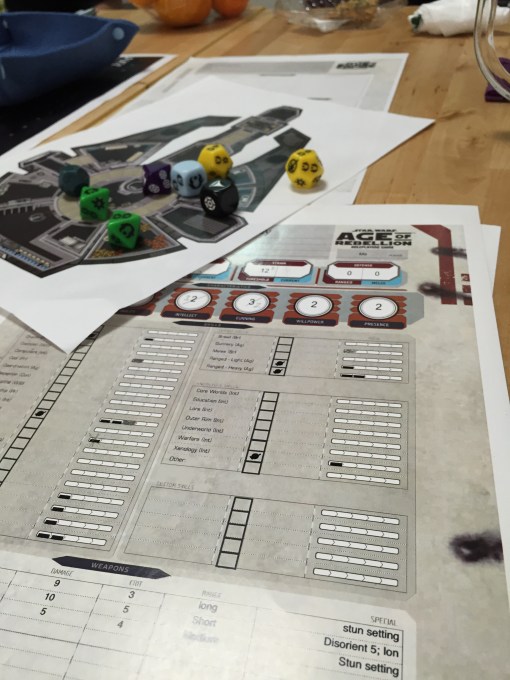
    This week in Japan is Golden Week, a nearly week-long public holiday, and in honour of the fine weather my group did a two-day marathon of Star Wars role-playing using the Fantasy Flight Games system.

    Our group was a good mix of five members:

    • Whitney (me), human soldier (medic)
    • Wargh, Wookie hired gun
    • RAPTOR-1, Droid bounty hunter (assassin)
    • Aleema, Twilek Jedi Sentinel (shien)
    • Jorus, Acrid[1] Hired gun

    We started off running through a slightly modified version of the introductory adventure, then blasted into space and ran on an improvised adventure that rapidly went to hell through our intense stupidity. This was a marathon session so this report is a very quick summary of the main events.

    Trapped on Tatooine without enough funds to get a ship, we needed work. We took a job for Teemo the Hutt, a notorious gangster from our local spaceport, Mos Shuuta. It being impossible to easily travel between spaceports on Tatooine, we needed his help. He asked us to head into the desert to find a lost droid of his that was being held by some Jawas, so we did. However on the way to find the droid we bumped into some Trandoshian slavers and killed them, releasing their slaves and putting ourselves in trouble. We found the droid at the Jawa crawler, which had been destroyed days earlier by the Trandoshians, and returned to Mos Shuuta with it [this took weeks in total]. Unfortunately, Teemo the Hutt was impatient with the time we took, and the Trandoshians were business partners of his; when we returned to town we found ourselves pursued by his henchmen looking to exact revenge for our “treachery” in killing his business partners and “stealing” his droid. We guessed he had hired multiple groups to get his droid, and intended to kill all the groups that failed.

    Oops.

    Surrounded by desert with nowhere to run, we soon realized we had no choice but to steal a spaceship and escape the port. Fortunately a Trandoshian slaver called Threx had arrived in town in a spaceship in need of repairs, so all we had to do was capture his spaceship and repair it and escape. We stole the part he needed from the local scrapyard and headed towards the ship. A helpful droid told us we would first need to deactivate the standard security clamps that hold all ships in port until their nominated release date; this would mean a trip to the spaceport and a spot of lying. We did this successfully but unfortunately in the process we tipped off a local to our plan, and he told some imperial stormtroopers.

    Oops.

    There followed a kind of hilarious chase through town during which we slowly killed all the stormtroopers. With little time before more came, we headed to the dock where Threx’s ship, the Poleaxe, awaited us, unclamped. Unfortunately we were met by four droid guards, which we killed, but in doing so we alerted Threx, who was onboard his ship. Desperate battle followed, and ultimately Wargh prevailed over Threx with a supreme display of Wookie rage. As RAPTOR-1 prepared the ship for take off, Whitney took the gun turret to kill some stormtroopers who were setting up a heavy blaster nest, and off we went.

    We hit low orbit at the speed of plot, but we weren’t alone – four TIE fighters bore down on us as we raced for the jump point, and we didn’t yet have the hyperdrive converter thingamy slotted into place. Jorus and Whitney took position at the gun turrets, with Aleema and RAPTOR-1 piloting, and battle was joined. While RAPTOR-1 and Aleema cartwheeled and tumbled through the skies above tattooine and Wargh worked feverishly to install the jump-drive activator thingamy, Whitney and Jorus picked off the TIE fighters one by one. Unfortunately they didn’t destroy them fast enough, and their clutzy old ship began to take a lot of damage. Wargh managed to install the hyperspace warp-accumulator whatsit, but in the thick of combat Aleema was having difficulty determining a hyperspace path, and didn’t want to use the pre-loaded path. However, with the ship hull degrading and more TIE fighters inbound she decided not to waste any more time, and punched the hyperdrive for the pre-loaded path. They jumped, leaving the ruins of four TIE fighters scattered across a wide swathe of Tatooine space.

    Decisions, decisions ...
    Decisions, decisions …

    Looting and planning

    Once they were in the safety of hyperspace they searched the ship. The ship must have been in the middle of resupply, because although it had enough fuel it lacked significant supplies and most of the cargo had not been loaded. There was a large stock of empty food packets that were obviously designed for smuggling spice, a couple of thousand credits, and a life support system holding a mysterious plant of some kind, that was obviously not safe to simply open and examine and may even have been held in a special environment.

    They also examined the droid, which they were supposed to have delivered to Teemo the Hutt had he not accused them of treachery and set out to kill them. It was a standard astromech droid, but it seemed to have had some kind of reengineering to fit it with large, powerful magnets so that it could be stowed on the outside of any spaceship, rather than stored in a standard astromech array. Obviously this would make it useful for smugglers, but why would anyone want to hide an astromech? Every spaceship had one, and there was never any reason to hide them. Mysterious…

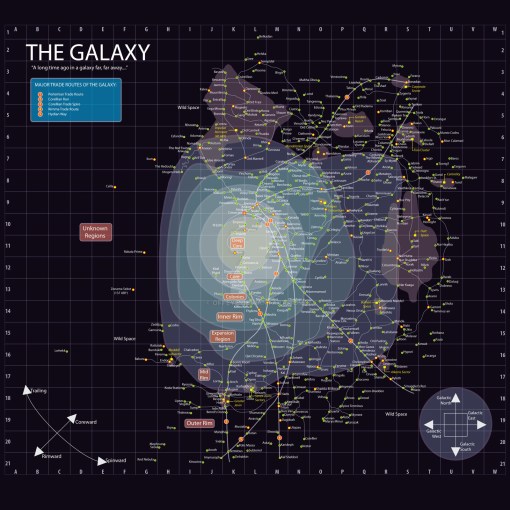
    The ship emerged from hyperspace within a day, and they found themselves on the Corellian way, where it intersects with the hyperspace path from the sector around Tatooine. This put them a short jump away from Ryloth, Aleema’s home planet, and also a fast series of jumps away from the Mid Rim. So now they had choices. They could turn around and go back to kill Teemo the Hutt, though his allegiance with the Empire and the presence of Imperial ships in the system made that plan seem a little reckless. Their ship was obviously designed for smuggling spice, so they could head to Ryloth and attempt to pick up a cargo to do a spice run. They guessed they plant they were carrying must be valuable to someone, and if they wanted they could try and find someone who could give them advice on it. The best option for that would be to find an Ithorian, and Whitney knew of a famous Ithorian xenobiologist[2] called Chutah Da, who was exploring the nearby Mid Rim on a herdship.

    First they would need to get their new ship repaired. Aleema did not want to return to Ryloth, so they decided to go to Mon Gazza to use the starport there. This would bring them to the edge of the Mid Rim and near the zone of space where the Ithorian doctor was traveling, so they decided to try and pick up trade goods at Mon Gazza and travel from there to the trailing edge of the Mid Rim from the Corellian Way, to find this doctor. They hit hyperspace again.

    This isn't going to work for anyone here
    This isn’t going to work for anyone here

    Mon Gazza: A wretched hive of scum and villainy

    As soon as they arrived in Mon Gazza system their strange new droid sprung to life and began printing out a receipt-like line of ticker-tape, on which were printed numbers and ship codes. In a moment of recklessness, they decided to pursue this clue as soon as they had repaired their ship. Putting the receipt into safe keeping, they landed on Mon Gazza and negotiated port access with the local mining concern. Mon Gazza was very similar to Tatooine, a barren desert planet with little to recommend it except extensive pod racing contests and spice mines. It was as grim as the planet they had just evacuated.

    As soon as they landed they found out that the port and all the community around it was in the grip of a local strongman called Xersca, who was guarded by a posse of stupid little insect-humanoids called Aqualish. After we caught him following us we visited his bazaar to have a chat with him about a mutually beneficial agreement, but during the chat he told us he had already stolen our cargo. This, unfortunately for Xersca, wasn’t exactly correct; he had sent two of his Aqualish, armed with rifles, to take the cargo, but as he was bragging about his cunning Wargh, who had stayed back at the ship to negotiate with the harbour mechanic, was beating them to death. Word of their unpleasant end reached us just as Xersca was attempting to extort us for the return of his cargo. We left him there in a state of puzzlement, with a parting suggestion that when he was ready to come to an agreement with us he could come and make an offer of payment.

    Our initial success notwithstanding, we soon realized that hanging around this port was going to end in a big fight, and Xersca probably had resources he could call upon that he hadn’t yet deployed, so we decided to light out as soon as our ship was repaired. The mechanic, having witnessed Wargh killing someone who tried to cheat us, offered us a very reasonable deal on repairs, and we were able to leave after a few days. One of the Aqualish who had been sent to rob us somehow survived Wargh’s fury, but he had no useful information for us and was terrified of returning to Xersca, who he promised would kill him. We took him on board with us when we left, to act as watchman and guard when we were away from the ship. Botan the Aqualish Idiot, our first retainer!

    The final act: A wretched hive of confusion and stupidity

    With all the galaxy to explore and no particularly pressing goals, we decided to pursue the clues that the droid had spat out. Although we didn’t understand all the information on the strip of paper, we at least recognized a star location relatively nearby, and a code for a ship. We hit hyperspace and traveled to the destination.

    At the destination we hit a star system with a seemingly unmarked spaceport floating over a distant planet. The spaceport hailed us and demanded our ship codes; we supplied the codes on the receipt, assuming that this was a shadow spaceport and that it would be dangerous to visit this spaceport without the right codes. Unfortunately the spaceship identified by these codes, the Green Arrow, was already docked at the spaceport, and so we had given our game away. Rather than streak out before we got into more trouble, we decided to bluff our way in – despite our bluffing powers being frankly terrible – and somehow convinced the traffic controller that there was some kind of error; we also managed to convince the man who met us at the docks that the other ship was an imposter.

    This man gave us until the end of the day to sort out why this imposter ship had “the goods” that we were meant to be carrying, and to get “the goods” back or we would have to pay for them. We stupidly agreed.

    This led to a confused and chaotic few hours on the spaceship, which ended with us entangled in a three way battle between a large gang of mercenaries and a small gang of extremely deadly pirates from the Green Arrow. During this battle we managed to get a couple of people killed, steal some kind of arm-mounted laser shield that seems like it might be worth a lot of money, and get the entire area of space station around Dock 67 completely trashed, probably somehow killing 20 or 30 people who were sucked into space during the explosive decompression that our stupidity caused.

    Ooops.

    Fortunately we got out safely, and were in hyperspace before the spaceport authorities could catch us. In the melee we managed to learn that the mercenaries attacking the Green Arrow were from Dash Corp mercenary group, and the goods belonged to some scary guy called Saba. Then we were out.

    The universe is dark and full of terrors. It also, apparently, is full of idiots. Let’s hope we can do better next time …


    fn1: Jorus was played by Little A, a Japanese occasional member of our group. The Acrid are a species our GM made up for Little A, which speak heavily-modified galactic standard, so that basically the only PCs in the group who could communicate with Jorus were those whose players spoke Japanese. Little A, with no real English background, did a great job of keeping up. I wish I could do so well in Japanese! In the end it didn’t matter because we created so much chaos that even in our native language no one knew what was going on. At least Little A had an excuse!

    fn2: Somewhat remarkably, Whitney’s one rank in Xenobiology proved extremely useful in this adventure!

  • They looked like this! Honestly!
    They looked like this! Honestly!

    In our first D&D session we began investigating the dungeon from the Basic Rules set, somehow managing to avoid a TPK in the first battle but retreating to the village after our two followers were killed. In the second session our elf, Aengus, went on a date with the town cleric, learning nothing of interest, and after a day of rest we hired two new followers – a completely useless fighter called Abel Artone and a halfling called Begol Burrowell, who is famous for some situation involving an enraged badger – and set off to finish plundering the dungeon.

    We arrived at a deserted outer courtyard, finding no sign of enemies or of our charmed kobold companion Dogface. Not really stopping to consider the possibility that his absence might be a warning, we plunged back into the dungeon (behind Abel, of course). Entering through the main door and finding nothing disturbed since our previous journey, we decided to head to the room of our fateful encounter with the zombies from the other direction, rather than retracing our footsteps. We passed through the open doorway on the east side of the entrance chamber and into a small room empty but for rubbish. We searched the room and found nothing, but Eric of Melbourne was nearly decapitated by falling beams in the ceiling, which dislodged a loose brick. Behind that he found a silver dagger, potentially useful when we decide to slay a werewolf, so we took that and moved into the next room. Here were more boxes, only these could be opened and investigated. We searched the room until our search was interrupted by a zombie in a box, which emerged moaning and dragging a rusted sword. Once again, Eric of Melbourne’s stalwart faith proved useless against basic undead, and we had to beat the thing to death with blade and stick.

    Of course it had no treasure.

    We passed this room into the closet where our last followers met their unfortunate end, and back into the area we had already explored. From here, heading northeast, we found stairs leading down into the lower level of the dungeons beneath the castle, where the kobold gang was hiding. Rather than risk such heavy opposition, we decided to clean out this level first, and headed north to the final rooms in the castle. The next room was occupied by 5 kobolds, who tried to do battle with us but were no match for our valiant swords and ferocious spirit. We killed them quickly, and found nothing of value on their bodies.

    Good thing we made a deal with our followers to split treasure only after we had recuperated the cost of their equipment!!

    From this room there was only one other exit, heading east into a small room. In the middle of this room was a statue of a kobold, pointing its sword at the door we entered from; the far wall beyond the kobold had a solid wooden door, the first door we had seen since we entered. We ventured forth, but were attacked by a giant lizard that emerged from hiding behind the statue, attacking our useless fighter Abel (who goes first, of course) with surprise and killing him in one savage bite.

    Good thing we clarified marching order! We beat the thing to death while it was trying to swallow the fighter. Of course it had no treasure.

    The door on the far side of the room was locked. Aengus used his super elven sight to look through the keyhole, and saw a bit of ruined wall with some sunlight on it. No one poked him in the eye. We retreated.

    We circumnavigated that room, moving back through rooms we had navigated a few days before and passing right around the west wing of the building, only to come to another room with exactly the same statue pointing its silly, hopeless little shortsword away from exactly the same kind of door. Perhaps the shortsword wasn’t so hopeless; as we searched the room Barus the Magic-user touched the statue and it spun viciously in a 360 degree arc, cutting his head off.

    We took his spellbook and retreated to consider our options. This door must be locked for good reasons – no doubt, having vanquished those five kobolds we stood at the threshold of their treasure chamber, piles of gold glinting in the sunlight Aengus had seen through the keyhole (was it even sunlight, or just the gleam of untold riches!?) Clearly the kobolds had bound the doors fast and secured the entryways with fiendish statue-traps to keep us away from their hoard, a hoard no doubt stolen from innocent villagers over years of violent raiding and despoiling. We were honourbound to somehow breach their inner sanctum, and carry away the money, though no doubt finding its original owners would be all but impossible and we would likely have to keep it for now.

    How to get in? It was Aengus’ low elven-cunning that found the way – we would burn the door down. We set some of Barus’s oil on the door and set it alight, then piled broken chests around it. Soon we had a good fire going, and we retreated and waited for it to burn itself out. Once the fire had burnt down we strode forward and kicked the charred remains of the door down, marching in to reclaim our birthright in a swirl of sparks and smoke!

    We found a large, 30′ x 60′ room with a huge table in the middle[1]. There were chairs set around the table, and skeletons sitting in some of the chairs. Eric of Melbourne stepped forward to quell the skeletal monstrosities, but they weren’t moving; and anyway before he could a beautiful music washed over him and Begol, and they gave up all thoughts of violence. They walked calmly into the room, ready to meet the beautiful source of that fine music.

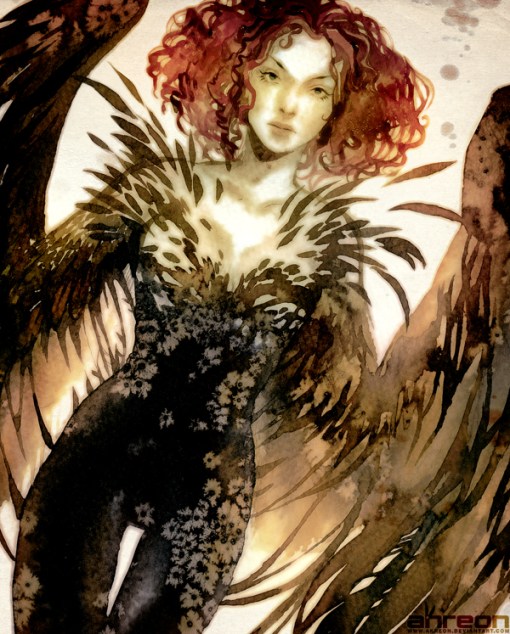
    Aengus saw his two colleagues entranced with the horrible screeching emerging from the fireplace. He charged forward, hurdled the table, and looked into the fireplace. There he found two horrible, hideous old women with wings and goats legs, keening away like their cats had just died. He went to strike one but they attacked with their cloven feet and knives they pulled from the ashes, stabbing him to death immediately.

    His last, blurry vision was of his friends sitting down at the table as the harpies swooped down on them, blades ready, and cut their throats. He took a while to die, and the last minutes of his life were a vista of horrific feasting.

    Then the harpies turned to look at him …


    fn1: Actually the table on the map was so big it didn’t fit through any of the doors of the room. Some fiendish magic at work here!


  • Except adventurers, obviously … Karameikos is the first campaign setting for Dungeons and Dragons (D&D), and the setting in which my new skype campaign occurs. Karameikos is described in the TSR supplement The Grand Duchy of Karameikos, which gives information about the major towns of the region and the major personalities living in them.

    This book makes clear that the major town in Karameikos is Specularum, a town of 50,000 people that may have grown significantly in recent times. It also identifies at least two major high level clerics in this town: Olliver Jowett, an 18th level Cleric, and Aleksyev Nikelnevich, an 11th level Cleric. There are other powerful clerics described in the book but their location is not specified. Olliver and Aleksyev’s stats are given in the book, and they both have Cure Serious Wounds, Cure Disease and Raise Dead memorized, though Olliver could memorize 4x Raise Dead if he really wanted.

    I have previously posted here about post-scarcity fantasy, and how it would be extremely cost-effective for clerics in the middle ages to intervene in child birth to save lives. I previously used the AD&D rule book to establish populations of Clerics, but now I have access to the ultimate Canonical text, a definitive world description from the original rules. What are the implications of this world description for my theories about post-scarcity fantasy?

    First of all, let us gather some statistics. It’s impossible to know the true birth and death rates in the middle ages, but there are estimates from 17th century Britain that give birth rates of about 30 per 1000 population, and death rates of about 25 per 1000 population. Based on these, we can expect about 3.5 deaths per day, and about 4 births per day, some of which will be of high risk to the mother.

    Based on the presence of just Olliver and Aleksyev in Specularum, we can expect that 2 of these 3.5 deaths could be prevented every day by simply walking over to the place they occurred and casting Raise Dead. If we assume that at least 2 of these deaths are caused by disease – a not unreasonable assumption in the middle ages – then two more deaths could be prevented by application of the Cure Disease spell.

    Just these two clerics could ensure that no one ever died in Specularum.

    They could improve their job by using the Commune spell to learn some basic techniques to improve childbirth and medical procedures. “Why do women die in childbirth” would be a very useful commune question – Olliver can ask one question a day. Presumably once in a year he could get around to this question. Olliver has a 4th level assistant with Cure Light Wounds who could attend 2 births every day and cast this spell to prevent major injuries (ordinary commoners have 1d6 hit points so presumably this spell would completely reverse the damage done on them and/or their children). This would occasionally prevent the need for Raise Dead spells, though between them Olliver and Aleksyenev have enough Raise Dead spells to simply negate every death in the town.

    It seems pretty clear to me that based on the canonical textbook, there is no death in the world of Dungeons and Dragons. The only people who die in Dungeons and Dragons are adventurers – we toil in the depths, risking our lives every moment, while overhead a utopian society pursues its life of perfect peace and eternal harmony.

    Why are we doing this again?

  • Strange blooms on far shores
    Strange blooms on far shores

    The Spiral Confederacy restarts with the characters leaving Niscorp 1743 for The Reach, a pirate system a short jump away. On Niscorp 1743 they had killed some ice spiders at great personal risk, getting a research administrator out of a spot of trouble and earning themselves some zero-g training as a reward. They had also met a priest from an ocean planet, Michael, who had offered to pay them in exchange for taking him to The Reach. The Reach is a fine spot to drop rumours of human trafficking, and also a great place to pick up the kind of weapons that are illegal for ordinary citizens in the Confederacy; they also had a crate of laser carbines to sell, so a journey to The Reach seemed inevitable.

    While they rested and prepared equipment they recruited a second pilot, a young woman called Lam with a dubious naval history. Given the risky nature of many of their ventures, they guessed it might be wise to build a little redundancy into their crew, so they recruited the only pilot in Niscorp 1743 who was willing to go to The Reach and who could shoot as well as fly.

    Stable personality was not in their list of essential criteria, so Lam was hired.

    After a week of travel they arrived in The Reach, jumping in to a point beyond its extensive asteroid field. From the jump point the system’s red dwarf star was a tiny, distant red speck, flickering in and out of view through the curtain of asteroids. They passed around the asteroid field slowly, on a pre-assigned route, and by the time they emerged on the other side they could see the 7th Pearl, shining in the far distance. Between them and it a small flight of fighter vessels approached, hailing them for travel details. Their first encounter with the Pirates of The Reach passed in a completely mundane manner, with an exchange of basic credentials and a docking trajectory for Pearl 7. They docked where they were told and disembarked into a small lounge where they were met by a man who introduced himself as an ambassador for foreign guests, and a small rat-faced man named Ampoule who Michael told them would be their guide for the day. Michael showed them how to use their mysterious payment, and left them to themselves.

    Basic rules for Confederate travelers in The Reach gave them one week of free accommodation, after which they must pay in local currency (“credits”) or leave. Overstaying this welcome would see their ship impounded and the crew bonded as indentured labourers for a year. They could live on their ship and organize basic energy and fuel for free, but if they wanted any comfort they would need to make some money. Stir-crazy after a week on their tiny ship, they set out immediately to sell the laser carbines and begin stocking their armoury.

    There was a large market place for all manner of unsavoury enterprises a short distance from the docks, and it was here they went first. Here they found arms dealers, slavers, and even a prohibitively expensive dealer in black market memory backups. They sold their carbines and organized delivery of a slew of laser rifles and a suit of combat armour, then retired to their ship to relax. Over the next few days they began visiting slave markets and dealers, dropping hints about their illicit cargo and looking to lay down lots of clues about where they found it. Once the armour and guns arrived, they began to think about looking for a little work.

    They booked some rooms near the docks, to spread out a little, and it was then as they were settling in that they received an invitation to meet Michael at a place called the Rubble Bar, to discuss possible work. The Rubble Bar is a small tavern at the part of the docks closest to Pearl 7’s ruined superstructure; from its single large window customers can watch workmen repairing the spars of the damaged section, while they sip drinks from lost civilizations. Each of them ordered a drink from a civilization that had passed away, and sat sipping it contemplatively while they waited for their mysterious priest.

    Michael arrived with a glass of the last water from a dessicated planet, and began to talk business. He had come to The Reach to kill a man. This man, a priest named Jaccus, had been welcomed to Michael’s planet as a guest, but had defiled one of his culture’s sacred tombs and killed its guardian. The most ancient tombs on Michael’s planet are dessicated sky burials placed reverently on islands made of the calcified bones of giant sea creatures; these tombs are often thousands of years old, and are tended by elderly monks in a role of great honour and little responsibility afforded to senior religious figures. This priest Jaccus had visited such a tomb-island and desecrated it horribly, then fled the planet. Michael, who had traveled a few times before, was sent to find Jaccus and kill him. Jaccus had assumed his deeds would go unnoticed for months, so isolated are the tomb-islands, but hadn’t realized a supply ship would arrive just a few days later on a scheduled visit. So it was that they were easily able to track his movements out of the system, and Michael could follow him, though he fell further behind with each jump.

    Unfortunately, after Jaccus arrived in The Reach a few weeks ago he had managed to obtain the protection of the Viscount of Pearl 2, making it difficult to obtain mercenaries to kill him. So it was that he turned to the PCs to do it; as outlanders they were free to take contracts on anyone they wanted. Currently it appeared Jaccus had made a trip to The Gardens, and so would be easy to ambush and kill if he was approached there in the next few days. For this job he would pay them 100,000 credits, almost enough to buy another suit of combat armour.

    The PCs did not agree to kill this Jaccus, but they did agree to go visit him in The Gardens, see what they thought of him, and kill him if necessary. Michael was not phased by this conditional offer. “Once you meet him you will want to kill him,” he assured them, and left them to their drinks.

    To the ruins
    To the ruins

    Death in the Gardens

    They left for the Gardens the next day on a small sub-light flyer, a rickety thing that took a few hours to get them to their destination. Its approach took them across the 100km long face of the Gardens, a lush expanse of steel, forest and planes hanging in the middle of space. The mist trapped within its field generators shrouded much of its expanse, and shone with the lurid reflected light of the distant sun. Some strange technology transported that light through sub-space portals so that the Gardens were bathed in sunlight vastly more powerful than its distance from the faint red dwarf warranted, ensuring that the Gardens roiled with mist and heat. In the breaks between these clouds they caught glimpses of the Gardens themselves, vistas of green or gold splayed out across rippling uneven territory, scattered with occasional deep holes where the wreckage of spaceships interlocked. The Gardens started with a low plane of wreckage that crawled slowly up through foothills to shallow peaks formed by the spines of ancient Confederacy capital ships, wrecked by the system’s strange defenses and pulled to this Lagrange point to be recommissioned for The Reach’s bizarre experiment in herb gardening. Beyond the jagged ridges of those wrecked ships, now softened by a shroud of vegetation, hung the infinite blackness of space, cordoned away from the lush fields by a thin layer of field technology.

    They disembarked at the Gardens’ tiny docks, noting the presence of another flyer, encoded with the emblems of Pearl 2, and stood for the first time under the Reach’s starry night, unprotected by steel shells or spaceship hulls. Ahead of them stood a low wall and a custom’s house, blurs of green and misty grey visible beyond; but here at the docks they stood under a stunning vista of stars, scattered around the black firmanent like diamonds on velvet. Shielded only by the thin barrier of the Gardens protective field, they could view the full glory of the stars of their sector, try briefly to find their home stars before they were interrupted by the dockmaster.

    Brought back to humdrum reality, they dismissed his questions and offered him 100 credits to forget their presence. He aimed to argue, but one look at Ahmose’s stern reproach and he thought better of it. Jaccus, he told them, had headed “that way”, waving vaguely in a certain direction, and headed back to his hut. Simon Simon used his Adherent Grace, scrying, to access all the cameras in the vicinity of the docks, and soon found video footage of an old man in black robes with a staff, accompanied by three men in light armour with assault rifles, heading in the direction the dockmaster had indicated. They were dragging an anti-gravity sled loaded with audio-visual equipment, heading up into the hills. Time to go.

    They passed through the low wall and into the Gardens. From here the trek in the direction Jaccus had headed started easily, but it got harder. First a stretch of rhododendron forest steeped in rain and mist; then an open stretch of field, followed by a series of fragrant herb gardens and some hikes through mossy hills. They could see the skeleton of the broken spaceships beneath the fields and forests, with occasional parts protruding from amongst the greenery – here a rusted cannon, there a lichen-encrusted plexiglass window. As they headed up the wreckage became older, and increasingly harder to discern from nature, until they found themselves walking through ancient, silent, mist-shrouded forests, so old they seemed almost hallowed. Old growth rainforest, floating in space on a mere sliver of steel, billions of kilometres from the sun.

    It was in this forest that they stumbled on the cameras. Simon Simon noticed them with his scrying Grace, all connected together and filming the zone they were entering. They moved past the cameras and headed upward over the cupola of some ancient battleship, passing through a small copse of trees at the summit. Weapons drawn, they moved out of the shadow of the trees to find themselves looking down into a narrow vale, beyond which stretched slopes leading up to the rim of the Gardens. Black space hung in the near distance, the horizon unevenly scattered with trees and the slopes before them heavily wooded. They stood on the wreckage of an ancient cruiser, but the horizon was formed entirely with the wreckage of an ancient Confederacy warship, its gun turrets, now long dead, rusting in between trees and brooks. Below them the vale opened out towards the lower slopes, a small stream trickling merrily through it. To their right lay the wreckage of the cockpit of a crashed fighter ship, the hull shattered open around an open space that had been turned into a campsite. Three tents had been erected around a small fire, and a little computer ran a set of screens on which the vision from all those cameras could be seen. They had found Jaccus’s camp.

    They had also found his men, who opened fire on them from positions in the valley. The battle was short and brutal[1], and with minimal injuries the group prevailed, killing all three mercenaries. They descended into the camp to search it, looking around carefully for Jaccus. The AV gear they had brought with them was nowhere to be seen. They were searching the camp when Simon Simon decided to use his scrying Grace to check the cameras in the vicinity, and saw movement in one. Looking closer he saw something in the shadows, descending the hills towards them.

    Lam and Ahmose took defensive positions, guns ready, pointing out at the hills, but they didn’t see it coming. Something emerged from the shadows of the trees and hit Alpha from behind, tearing through his weak armour and disappearing before he could react. Something else hit Ahmose and Lam, but before they could react it was gone. They looked around, gasping, weapons ready, and then the things hit them again. They were beasts of some kind, 3m tall monsters made entirely of shadow but for their glowing red, fiendish eyes and long, lascivious red tongues. They attacked with wicked claws and beat huge, black, bat-like wings behind their misshapen, demonic bodies.

    Actual demons, conjured from shadow, were attacking them. They fought back hard and valiantly but Alpha went down with the next strike. Ahmose killed one, and as it died they heard the distant sound of crows screeching, and the thin wail of a tortured child. Ahmose moved on to the second beast, and Lam shot down the third; a cold wind blew over her, and she heard whispers from the shadows, a young man begging for his life, gaggles of students telling lies about their friends in the corridors of a school … evil whispers …

    As the fight proceeded Simon Simon desperately searched the area, until he found Jaccus standing in the shadow of a tree, staff in hand. The old man was singing a song, and the air was rippling around them. “There!” Simon Simon yelled, and fired his laser rifle. He missed Jaccus but the beam passed through the coalescing shadow-form of another demon. As they killed them, more appeared! “Kill the priest!” Simon Simon yelled to Ahmose, and Ahmose duly acted.

    Jaccus died quickly, but before he did two more of those beasts appeared. One managed to escape their violence, fleeing with the death of its master, and they never saw it again. The battle was done. Where each demon had died was a patch of blackened, dead grass that stank of rot. They stood looking at each other in shock. What had they found, what had they killed?

    They searched Jaccus’ body and the area of the camp, but they didn’t find anything to tell them anything about what they had seen. Where was the AV equipment? Why was Jaccus here and what were those things? With no evidence in the camp they expanded their search, trawling the whole area for any information about what Jaccus had been doing there.

    History by the blowtorch

    They found the reason after a day of searching. They soon discovered that all the disused turrets on the spine of the Gardens contained bodies. This was an ancient burial site, with bodies placed in careful position inside the turrets, wrapped in shrouds and accompanied by gifts for the next world, now long-decayed and crumbling. Two of these turret-graves had been defiled, the bodies broken apart and their skulls burnt in some way. Another turret-grave had been partially defiled, the body broken up and the skull placed in a ritual position. Candles had been set out, along with a silver bowl, a small silver knife, and a blowtorch. Behind this strange tableau was the AV  equipment, some kind of ancient, primitive video camera the size of an artillery piece. A cushion sat between the camera and the skull, presumable waiting for Jaccus, with a microphone next to it.

    Back at the camp they found a box full of discs of some kind, with writing on them. Alpha suspected these discs were from two specific locations, and dated in some non-standard dating system: 7 all had the same glyphs written on them, and some numbers, and two had more numbers on them and different glyphs. Acting on a hunch, they put the first of these two into a playback system attached to the camera. And saw…

    The camera crackled. Primitive, this camera. The shadows of one of the domed turrets they had seen before, but no burnt bones: in the middle of the room sat a skull, shrouded in shadow, and between the camera and the skull the dim shape of Jaccus, cross-legged on the cushion, rocking backwards and forwards, chanting. One hand sat near the blowtorch, and candles glowed in the dim light, set out around the skull. The chanting continued – so boring.

    They fast forwarded the video until they saw movement, stopped and rewound a little. Jaccus’s chanting fading, drifting away, his rocking going still. A shadow rolled in, crouched over the candles, which guttered and dimmed. They heard the sound of a sigh, and then some kind of howling, the room becoming darker, Jaccus hunched. Something stirred in amongst the candles around the skull; they flickered and dimmed, then burned bright. The darkness faded, and Jaccus emitted a kind of grunt, like an old man doing something disgusting; in the distant background of the soundtrack they heard the thin reedy sound of a child crying and begging, quickly fading away. Smoke formed dimly in the air above the skull, coalesced into a semi-solid, vaguely humanoid form.

    “Who calls me?” A sound like rocks grating on each other, a grim crackling rustle of anger, emerged from the ring of candles.

    “I, Jaccus, your master, call you. I would speak you, and you had best listen.” Jaccus stirred from his listing position, and spat the words out with odd harshness.

    “You worm. You grub. I was a great warrior, I have slain men a thousand times your equal, I fought on the marches of Ellas, I was a hero before your ancestors were apes, you cannot command me, wo-”

    The grating voice descended to screaming. Jaccus had calmly picked up the blowtorch, turned it on, and started bathing the skull in flame. The screams were horrid, rippling out of the darkness from every direction and sounding as if they would tear the microphone apart and leap through, monsters of agony, to attack the listeners.

    After about 10 seconds of this, Jaccus turned off the flame.

    “You thought your death put you beyond pain, but I have found you. There is nowhere you can run to. You are mine to play with. You will do as I tell you.”

    The voice protested. More flame, more screams. It carried on like this for a few minutes, but slowly the voice became weaker, more desperate, until finally it broke and begged Jaccus to tell it what he wanted.

    “Where is the ansible?”

    “I don’t know what you -” More flame.

    This proceeded for several minutes, the same question and the same answer. Finally, Jaccus gave up. “You know nothing, do you?” He didn’t wait for an answer, but turned on the blowtorch and took a full minute to burn the skull black. The voice screamed and screamed and screamed, but he didn’t stop until he was satisfied the whole skull was black. Then he flicked his fingers, the candles faded, and the screaming voice sank away, replaced briefly by a horrible howling sound like wind over frozen ground.

    Jaccus reached back and turned off the camera.

    Of priests and lost things

    They returned to Pearl 7 with the videos. Once they were back in the ship Simon Simon obssessively watched all of them, but no one joined him in the video room. They called Michael and showed him the video from the tomb. He guessed, as they did, that the other seven videos were from his home planet. This Jaccus had invaded these tombs looking for something called the “ansible”, and hadn’t found it. Obviously he had some plan to search for it – first Michael’s planet, then The Reach. But he had come from somewhere. Someone knew what they were looking for.

    Michael made the group an offer: would they come back to his planet, and from there trace Jaccus back to wherever he had come from, find the people he worked for, and destroy them? His people, being just uplifted, had nothing to offer them as a reward, but he would speak to his ruling council and they would speak to the Confederacy, and he thought then a reward could be organized. Would they help?

    They looked at each other. Something terrifying had moved in those tombs, something they didn’t understand. But while they couldn’t understand its power, they could feel its evil.

    Of course they would help.


    fn1: I think this is going to be a common phrase in this campaign. In this battle one soldier died instantly, and another got so badly damaged that he was basically useless. If you don’t have combat armour this is a game of one-shot kills.

  • On Saturday I ran another session of The Spiral Confederacy campaign, culminating in a vicious battle in a floating forest built on the ruins of ancient spaceships (report to come). One player went down in the first round of the surprise attack and the entire battle (with three waves of attackers, approximately) was over in about 5 rounds – 30 seconds! This system is being run using Traveler rules, which are quite lightly described and incomplete in places. During the battle I discovered a few rules that are missing, and came up with a few new house rules to ease some benefits, and also to employ a wider range of skills and attributes in combat. These house rules are listed below.

    No critical hits: The standard rulebook states that a roll of 6 or more above the target number is a “critical success”, but doesn’t actually define any special rule for a critical success in combat except that it definitely does at least one point of damage. I have decided not to fiddle with this, because vicious experience on Saturday confirmed for me that Traveler’s injury mechanism doesn’t really allow for it and is so brutal that there is no need for it; the effect alone is sufficiently powerful to make all the difference.

    Stealth attacks: There are no rules for stealth attacks in the book. During the session I chose to add the effect of the stealth roll to the attack, and the target cannot dodge or parry. Reading the book I see a set of rules for carrying one skill’s effect over to another; basically success adds 1 to the next roll, while critical success adds 2. However I don’t like this – I like stealth attacks to be lethal, and with no critical hit system the only way to increase damage is to roll really well, so adding the full effect of the stealth roll onto the subsequent attack seems more realistic (and about the only way for an assassin with a normal blade to deliver serious damage against a heavily-armoured target). This means that a good stealth attack with a blade (with e.g. 2d6+2 damage) is likely to end up doing more like 2d6+6 or 2d6+8 damage on a stealth attack. This will do fatal damage against a lightly-armoured person, which is reasonable.

    Using the tactics skill for cover: If a PC is not in cover at the beginning of combat, they need to make a tactics roll to get into cover.  The result of the roll will determine the cover level as follows:

    • 0-5: 1/4 cover (no benefit)
    • 6-8: 1/2 cover (-1 to hit)
    • 9-11: 3/4 cover (-2 to hit)
    • 12+: Full cover (-4 to hit)

    This ensures that a person with no tactics skill and no intelligence bonus will need to roll better than an 8 on 2d6 to actually find effective cover, which seems really likely to me – if I got in a firefight I wouldn’t have a clue where to hide. It’s obviously only useful when your PCs are in battlefields with lots of boxes and junk etc; rather than describing it all in detail and asking the PC to make a choice, just roll it up and then tell them what they’re hiding behind. If there is lots of obvious cover (e.g. a tank!) then this rule needn’t be applied. This is one of several ways of enhancing the role of the tactics skill in combat.

    This skill check can also be done by someone with leadership to direct someone else to cover; in this case both the leader and the person taking cover need to use a significant action in the same round.

    Also, related to cover: shooting from behind cover requires a minor action to position oneself and then a significant action to fire. i.e. you only get the benefits of cover when attacking if you use all your actions in the round to attack.

    Establishing aim is a significant action: All the PCs used their minor action to aim, giving them essentially an immediate +1 to hit. Boring! So I have decided in future that you can’t just aim and shoot; you need to first use a significant action to establish the process. After that aiming will give you the benefit as described in the book, i.e. +1 per minor action. This ensures that you need to take a full round to aim but it will typically mean that the aim leads to a +3 to hit, since it will usually occur in the following train of actions: significant action-minor action/minor action-shoot. This may not always occur (e.g. use a minor action to draw weapon-significant action to establish aim /shoot at +1-minor action to take cover).

    Tactics to change initiative: A PC can change their own initiative using tactics, or change someone else’s using leadership. They must use a significant action to do this; then they make a roll with difficulty equal to current initiative; success increases initiative to the result of the new roll. Extreme failure drops the initiative of the affected person to last.

    Gathering wind: if the PC has no use for their minor action they can use it to make an endurance check and if successful regain one point of endurance. This only works if endurance is not 0 and they are not seriously wounded (i.e. only Endurance has been hit). I have decided to include this in order to give everyone some minor chance at battlefield healing, and because minor actions don’t have much use once you’re in cover with your weapon out. It won’t make a big difference to their future if they get hit a second time, but it will at least allow them to take the odd breather. I envisage this being used a lot with the cover rules (e.g. you hit cover with a significant action; use a minor action to take a breather. In the second round you take a full action to go full auto on some poor minion; then the following round you stay behind cover, take another breather and reload your weapon).

    In total these rules significantly enhance the role of people with leadership and tactics, and actually make a person with these skills but no particularly great direct combat skills useful, and worth taking out. With tactics and leadership, a PC can a) improve everyone’s initiative; b) get the weakest people into good cover; c) upgrade the initiative of the slowest PCs. While other PCs do the heavy work of shooting and stabbing, a leader-type character can act in a serious support role to help them get an advantage in the fight.

    I am thinking about additional methods for using leadership – for example, helping people move to positions where they can get a shooting advantage, or using tactics to negate cover. Also the possibility of reducing initiative or forcing morale checks of some kind when a person with leadership dies.

    A final note on Traveler combat: It’s very very dangerous, has a wicked death spiral, and is definitely not for the faint-hearted. I love the way the healing rules enable people to die slowly of their wounds if they don’t get medical care. I also really like the automatic fire rules – they’re simple and very very dangerous. Against an autorifle someone in combat armour will still need to be scared, and can still die in a single shot unless their combat armour is exceptionally high tech. This is a game where you definitely do not want to get caught in a fair fight.

  • TPK Machine
    TPK Machine

    Two friends of mine from my London gaming days invited me to join a skype-based Basic D&D campaign, using the basic Mentzer (1983) red box rules to start with. We are going to follow the rules strictly (or as strictly as we can), using only rules in the 1983 boxed set, plus the Cyclopedia. We will start with the adventure in the book and then move on to B2, etc., taking turns GMing. The GM will play one character. We all either played or owned the Red Box set in question when we were kids, so we want to run through it as adults to see what it is like to play this ancient and world-changing game from the perspective of people who grew up on AD&D but moved on in our early adulthood to all the wealth of the modern RPG world.

    It should be a hoot! Here is the report of our first session.


    We had three PCs:

    • Eric of Melbourne (me), a first level Cleric with fairly phenomenal stats (I rolled an 18 wisdom that I promptly dropped to 12 so I could increase my strength to 16)
    • Aengus the elf, an elf (this being D&D, race is class, very intersectionally aware)
    • Barus of Karameikos, a Magic User with a single hit point, what could possibly go wrong?

    We also employed two followers, who we took directly from page 34 of the rulebook (with their equipment) to make starting the game quicker:

    • Silas Nogood, a Dwarf with monumentally good stats and equipment, for all the good it did him
    • Baghdad the Thief, a thief with phenomenal strength, which is just as well since the thief skills at first level are a complete waste of time

    I have a suspicion that the example characters on page 34 of the rulebook were not rolled in the standard way, because they are all way too good.

    We started the adventure in a small town, where we had heard that there were some monsters just out of town in an old ruined castle, which we could raid for cash. Over a few drinks we agreed to delve into that blighted nest of fear and blood, and the following morning, bleary-eyed and excited, we headed out with our followers to fame and glory.

    On the way we passed an impressively-dressed middle-aged woman on a wagon, who appeared to be a rather high level adventurer. She hailed us in passing but didn’t waste her time on us, lowly as we are. Ha! She will choke on that haughty manner when we are rich, powerful and famous! We also passed a farmer who told us that the monsters in the dungeon usually mind their own business and cause him no trouble. Ha! We’ll show them, the pesky beasts!

    We reached the castle. It had the biggest walls you’ve ever seen, 50′ high and mighty thick, but riddled with holes and crumbling but still completely solid, and so smooth as to be unclimbable. Fiendish magic, this. The gate had crumbled and collapsed like a normal door should (presumably this castle’s original owner only employed unenchanted carpenters, which is probably why it is now ruined and monster-infested). Down the walls to our west there was a bigger hole, perhaps 10′ in circumference, which looked like we could clamber through it.

    That 10′ hole was no doubt a trap. Anyone who intended that to not be a trap would bar it up, lest adventurers use it for stealthy ingress. No doubt we could surprise whatever foul beast lurked on the leeward side by sneaking (in our chain and full plate armour) through the main gate. Our cunning and strategy, and the application of careful pscyhology to the field of battle, is why we will win this place where all those who entered before us died. Judging by the stench hanging around the gate, they died pretty soon after entering that 10′ hole. We would not be so foolish.

    Still, discretion is the better part of valour. We sent the thief forward.

    One of the rotten gates had fallen forward out of the gatehouse. As the thief approached that moulding portal, a beast of horrific demeanour squirmed out from beneath and attacked him. It was a 9′ long lizard-like monstrosity, it’s head a mere gaping, circular mouth surrounded by slimy tentacles. All 8 of those tentacles attacked unfortunate Baghdad, and he fell twitching to the ground. We yelled our rage and attacked! Well, Silas attacked. Aengus, Barus and I moved forward to close missile range and fired slings and arrows at the beast. In turn the beast, having dispensed with our hapless thief, advanced on the dwarf, mouth agape and slimy tentacles wiggling horribly in gleeful anticipation of thick green dwarvish blood. It slapped at him with all 8 tentacles[1] but he somehow resisted their glutinous venom, and struck back with a resounding thwack. It managed one more round of tentacular whirling death, and then one of Barus’s sling stones put an end to it.

    Baghdad was merely paralyzed, fortunately. We slapped him awake and sent him into the beasts lair, rope attached lest there be more. He slithered into its hole and emerged a few minutes later covered in slime and carrying gold, copper and gems. A find! We were rich!

    We dusted ourselves off, pocketed the gems, and turned our attention to the wall. Clearly the gate was an ambush point – who would have expected such a devious tactic!? We must find some other way in. We scouted east, to the edge of the wall, and then turned north to follow it around. Here we found some holes in the wall and, looking in, saw a gang of perhaps 10 small, dog-like humanoids clustered behind the gate, weapons at the ready, waiting to ambush us. Fiends!

    Still, we are devious. Barus cast a sleep spell on them through the hole in the wall, and they all collapsed where they stood. We marched in through the front gate and slew them, bravely cutting their throats as they snored, but for one. On this one Aengus cast a Charm Person spell, and then we woke him and told him a monster had killed his friends but we had saved him.

    Instant friendship! My childhood classmates would be amazed to see how easily I became a friend of this dog-faced wretch, and jealous no doubt! Let us proceed! Dog-face agreed to accompany us to help us find the monster that killed his friends (ha!), and to guide us to where we could protect his gang’s treasure from the monster (ha!)

    We marched up to the main doorway of the castle. Pushing the doors inward, we found ourselves in a big empty room with a door to the north and empty doorways west and east. We headed west, into a dusty storeroom where a giant bat attacked us. We tried to kill it but the pesky thing fluttered away westward. There was lots of dust in here, but we searched carefully and found an onyx gem in amongst the boxes.

    Riches! Fame!

    We headed west. The next room was also a storeroom but of the strangest, most diabolical type. Though filled with boxes, none could be moved, opened or disturbed in any way! And when we tried to search them a voice emerged from one asking us if we were accompanied by some scoundrel called Bargle. We tried opening that box too, and smashing it, but to no avail. Bargus maintains there is no spell in the history of magedom that can work such a wondrous charm, but I think this room is cursed by some dark god.

    We headed onward, finding a narrow closet that opened into a bedroom. There was nothing really in this closet but somehow Baghdad the thief found a hat box, which he opened. Unfortunately the string of the hat box had been coated in poison, and he died on the spot, twitching and frothing and wailing terribly. In the hatbox we found a hat pin that was obviously valuable. We moved on.

    The closet opened into a bedroom, which contained a big musty old bed. Entering the room I was overwhelmed with sleepiness, and desired to rest here, but Dog-face told us that the bed was cursed, and anyone who slept on it could not wake. He showed us a bag of mouldy peas and informed us that anyone sleeping on the bed could be awakened with a pea placed under the mattress (ho ho, how droll!) We insisted he share his peas with us.

    This is the path to fame: begging dried mouldy peas off of a dog-faced half man.

    To the next room! There was a door in the northeast corner of this bedroom, and one to the east, but we headed east now. We passed through a trash-littered hallway of no interest, and into another bedroom, where we carefully opted to touch nothing. From here a door to the east opened into a small closet, which we bravely entered. It was dark in here and it stank. As we entered we heard groaning and four foul, long-dead corpses struggled out from amongst layers of mould and decaying clothes and trash. They rose to their feet groaning and moaning in that fetid way of the restless dead, dragging rusted and dirty swords with them.

    “Never fear!” I cried to my fellows. “This is my domain, that of life over death!” I strode forward, baring my holy symbol, and demanded these pestilent creatures begone.

    They attacked me. Battle was joined.

    The battle was short and brutal. We prevailed, but in the battle Silas proved himself Nogood, and died there under a hail of clumsy zombie swords. By now we were tired and scared – it’s dark in here and smelly, and there are nasty things in the shadows. We grabbed the dwarf’s body and retreated, heading back through the rooms to the unfortunate hat thief, whose body we also grabbed. Dragging him by the feet, we headed out the main exit and into the sunshine. Ah, life and fresh air! We passed the courtyard, telling Dogface to stay here and wait for us in the shadows while we repatriated our “sleeping friends.”

    Back to town for us. On the way we passed that well-dressed woman again, who saw our haggard faces, the tear-smudged filth on our cheeks, the bloodied weapons (and the two corpses). She must have taken pity on us, because she came forward and with a cool hand on a brow and a few whispered words Baghdad and Silas Nogood were brought back to life[2].

    A miracle!! We must be truly deserving of greatness to receive such blessings! We thanked her (forgetting to ask her name!) and returned to town, our energy renewed. Back to kill the rest of those fiends in the morning!

    Art not: The image at the top of the page is from Artful Shrapnel at DeviantArt


    fn1: this is a carrion crawler. It has 8 attacks that each require a death save or you get paralysis. Our dwarf has a save of 9 or something for this. This beast is worth 75 xp. Our GM experienced a TPK here on his first ever session of D&D, which was also his first ever session of RPG ing. That’s just dumb dungeon design.

    fn2: this isn’t in the adventure, though it might as well be since the adventure is pretty railroady. Our GM told us he wanted to introduce the PC for later narrative purposes. I think he just wanted to stop us getting a third share of the treasure! Anyway, we prevailed. Back in a week!

  • Watching history being made
    Watching history being made

    Last night in the half-time of a televised rugby game I saw an interview by Japanese TV with Eddie Jones, recently retired coach of the Japan national rugby team. The Japanese team was the absolute standout entertainer of the recent world cup, beating South Africa in an incredibly tense and brilliantly played game of rugby, and becoming the first team in world cup history to fail to progress despite winning three games in the group phase. This team is half “foreign”, and the captain was a man called Michael Leitch, who came to Japan in high school and stayed to take them onto the world stage.

    Eddie Jones was asked about Leitch in the interview, and after discussing his playing qualities (Leitch is a pretty good player), described some of his personal qualities: that he is humble, hard working, and able to unite the “foreign” and Japanese players in the Japan team through both his language skills and his attitude. Jones also stated that he thinks the Japanese national team will always be a mix of “foreigners” and Japanese nationals, and as a result the captain will always need to be someone who can unite disparate cultures, playing styles and attitudes to rugby.

    It’s only sport but Eddie Jones here is saying a really important thing about the role of migrants in any society. Every society has its weaknesses – Japan’s size in rugby, the UK’s poor mathematics, Australia’s voracious need for foreign ideas – but usually people don’t recognize their own country’s shortcomings. Eddie Jones, a man with a connection to Japan but obviously not Japanese, can see a shortcoming and can state it, but in general we don’t see the problems in our own societies. In well-functioning societies migrants fill those gaps, make them work, and help a society to achieve great things in areas where it would be otherwise weak. Michael Leitch is a really good example of a migrant doing that in Japan, but from overseas the Japanese team is often seen as illegitimate because of this foreign component. In fact the Japanese team is standing out as a representative of how migrants can make every society better, as is Japanese Sumo (which has allowed foreigners to compete and has not had a Japanese grandmaster for something like 11 years). Rather than deserving scorn or belittlement for having “imported” big players, the Japanese rugby team is a sign of how the future of a better world will be.

    As a foreigner in Japan I often notice the different things foreigners offer to Japan, and our unique role here. Obviously I get frustrated with things when I don’t understand them or I am just culturally unable to handle them, and I’m sure Japanese get frustrated with me for being different and wrong; but also I appreciate the new insight Japan gives me into how to live and behave, and I think just as much Japanese people appreciate being able to change their modes of behavior and interaction to deal with a direct and frank Australian style of working and communicating. I say to people new to Japan from overseas: there are 120 million Japanese, they don’t need another Japanese person doing it badly. Following Japanese manners and customs is obviously important, but Japan needs your newness and (from their perspective) uniqueness much more than they need you to become like them. Living in a foreign country that is completely different to my own, I have very quickly come to realize that integration is a myth, and multiculturalism is the only realistic way that foreigners can become part of another society. The Japanese rugby team is a really good example of how that acceptance of and engagement with foreign ideas can improve a culture, and a great example of how the proper acceptance of foreigners into society can lead to huge new achievements.

    Of course for every success story of immigration there is no doubt a downside – the cross-national marriage that failed, the criminal, the person who just didn’t fit in and made everyone uncomfortable. It’s inevitable that a project as challenging as welcoming complete strangers into your home will go wrong. But society is very good at absorbing and cushioning failure – that’s why we have it – and all those failures are of no consequence compared to the successes. Japan’s rugby team is a really good example of how those successes can benefit a nation.

    We live in a time when immigration and especially refugees have become a controversial and scary topic. As a foreigner living as a migrant in a country completely different to my own, this fear of foreigners has special salience – it is scary and dangerous to think that it might one day come here, to this place that has welcomed me. I also think it’s a thing of the past, a strange and anachronistic spasm of old racism that is doomed in this modern world. I hope the Japanese rugby team’s successes can hasten its death, and make their small contribution to building a better world, with cultural differences but no borders.