• ある夜、ある海

    ある夜、3隻の船がカシマネ島へ行った。数時間離れたが同じ船団だった。

    • 「怪しい目撃者」:船団の重要船、乗客が乗っている船
    • 「突然の道徳的クライシス」:数時間後ろに追って、宝物や金を持っていた
    • 「倫理的な分離」:船団の尾、小麦を持っていた

    波を突く「怪しい目撃者」に乗る乗客の中、4人のPCがいた:

    • 烏龍:銀龍血派のエルフソーサラー。昔々、銀龍がカシマネ島にいたから、龍の骨を探しに行った
    • フノートラップ:ドワーフ光領域のクレリック。ある夜、「光」領域の仲間が輝いていた流れ星を見て、落ちた場所はカシマネ島だと推測したからフノートラップハ流れ星の欠片を探しに行った
    • トバル:ハーフエルフパラディン。トバルのパラディン軍のリーダーは夢を見て、カシマネ島で古代の悪が起きると分かった。トバルはその悪を調べに行った
    • ブッキ:ハーフリング戦領域のクレリック。自分の親戚がカシマネ島に住んでいるから、警鐘をもらいに行った

    全員、お互いまだ知らない。全員、レベル3だ。

    この世の3つの月が重い雲の裏に隠されて、海が真っ暗だった。嵐の影響で海が不安定だから乗客の全員が甲板で時間を過ごしていた。一週間の旅の最後の夜で、明日到着期待していた。甲板でゆっくりしながら、船員の活動を見ていて、キャラクター全員は船長は心配していたことに気がついた。心配している顔を見せながら、船員に激しい声で指示をしていた。

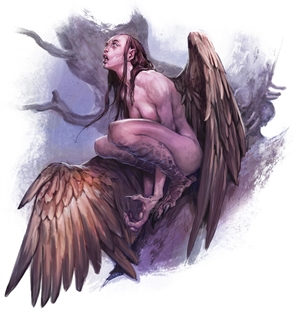
    キャラクターが心配の理由を聞く前に、数人の船員が急に仕事を止めて、静かになってゾンビーみたいに船の側までに歩いていた。人りが側に着いたら直接飛んで、海に潜った。キャルクター達が船の前まで走りに行って、キレイな曲を聞いた。ハーピー!3人が曲の魔法を抵抗したがトバルが曲の影響で船の側を向かった。そして、ハーピーが戦った!

    船員がパニックをしたがキャラクター達が怯えずに反撃した。呪文と武器で戦って、ハーピーの一匹をすぐ倒したが、残り一匹が逃げられた。戦闘の後の状態を調べたら、船員の5人くらいが亡くなって、どうかブッキが失敗してクロスボウで船長のお尻に大怪我しちゃった。船員の数が足りないため、船のコントロールが難しくなった上、船長によるとこの区域の灯台は消えちゃったそうから海湾の状態がわからなかった。強風が吹いて、船が容赦なくビーチまで押された。数時間たつと「怪しい目撃者」が座礁し、壊した。キャラクター達が生存したが船が消失しちゃった。

    キャラクター達がビーチで休憩したときに船長が現れて、お願いした。灯台の光を再火しないと後追う「突然の道徳的クライシス」もここでもがき進んで、宝物が失われるから、キャラクターが崖を登って灯台をさ再火して欲しいと願った。船長は自分でしたかったがトバルのせいでお尻の大怪我されちゃったから無理そうで、代わりにキャラクター達がしてほしいということを表した。

    威圧を使用して、再火の代わりに「突然の道徳的クライシス」が持っている宝物の中から1個の魔法アイテムを貰ったらするという交渉をした。その約束を確保して、崖を登り始めた。

    針ネズミの仲間?

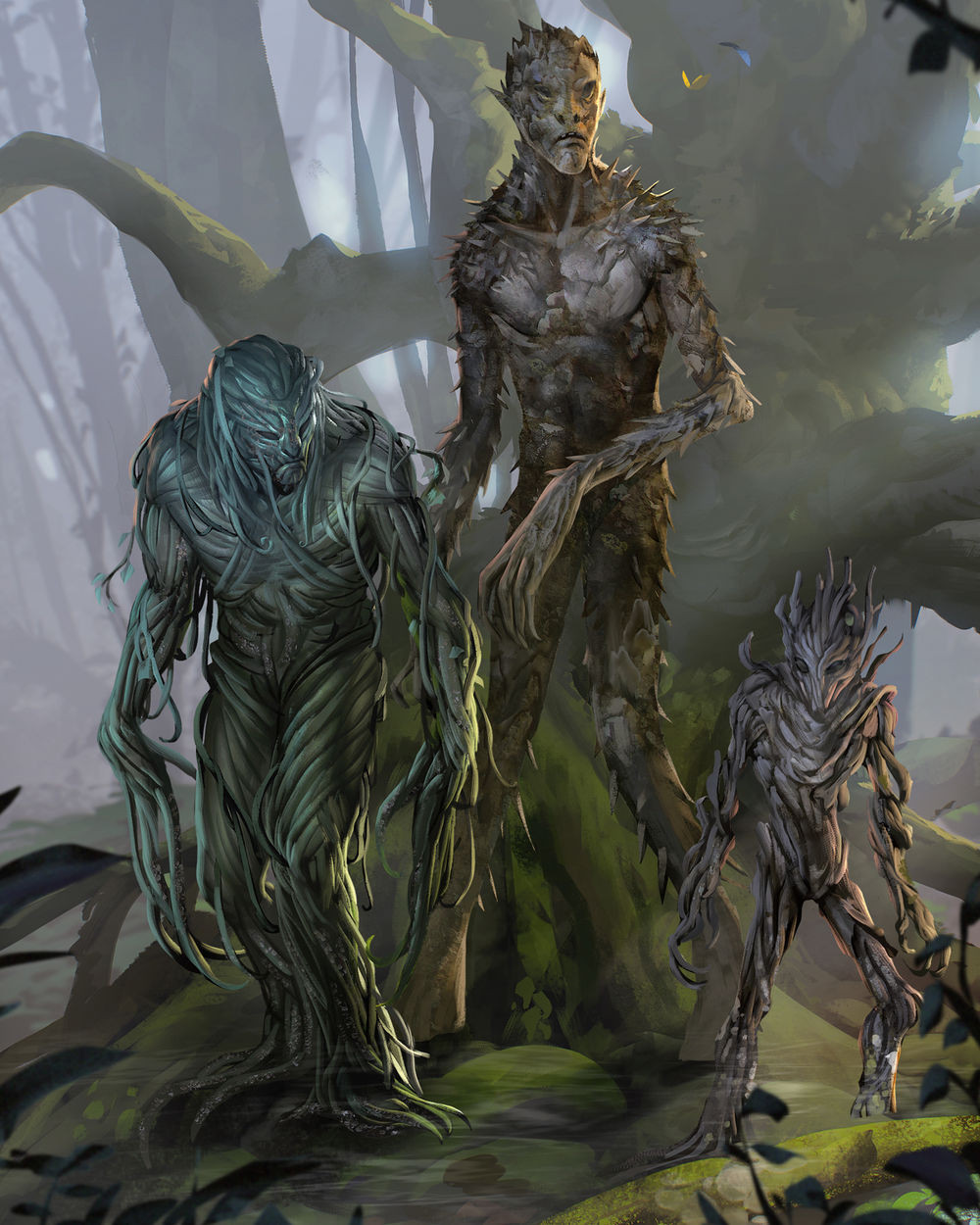
    崖の上に着いたら灯台が見えた。林を通ったらすぐ着く状態だったから進んだ。灯台の門が鍵しめたからフノートラップがピッキングをしようとしたが無理だった。全員が一緒に筋力を使ってドアを押して開けたが大きい音が聞かれて、林から変なものが現れた。「ニードルブライト」という植物系のクリーチャー五匹が戦った。戦闘がすぐ終わったが、また怪我されて全員が少し疲れた。

    再火!

    灯台の1階に入って、小さい部屋を調べた。誰もいなかったから階段を登って光所まで進んだ。光所も鍵しめて、ここもフノートラップがピッキングしないといけなかった。しに行ったら、あのキレイな曲をまた聞こえて、ハーピーの魔法に掛かられた!光所の後ろまで向けて、ハーピーの豪食になる!

    その状態でブッキが「小奇跡」を唱えて、大きい拍手の音が響き、フノートラップにかかった魔法を邪魔してフノートラップが起きた。その瞬間に2匹の起こっているハーピーが光所の上を飛んで戦ったが、フノートラップが神性伝導を呼び出して、光所の真ん中に「曙光」を唱えた。輝く瞬間に量匹のハーピーが大怪我を受け、全員に戦われたら一匹がすぐ死んだ。残りの一匹が逃げちゃったがトバルの上手なジャヴリンで死んで海まで落ちた。

    そういうことで灯台が安全になって再火されたが一体、なぜハーピーがここにいたし、なぜ灯台の面倒員がいなかったのか?全員が階段に下がって、調べに行った。。。

  • Our heroes have captured a goblin, Droop, who was some kind of dogsbody in a room full of Bugbears. Having killed the bugbears and slaughtered a large number of the redbrands at the tavern where they gather, our heroes were fairly sure that there was little left to kill down here in the dark, but just in case they gave this goblin a stern interrogation, and he immediately spilled all the beans. Glasstaff lived in a room north of this room, which should be protected by guards but the four off-duty guards had gone to the tavern to watch the town, and the men they were replacing hadn’t returned yet – probably carousing with the others, Droop surmised, and the PCs did not bother correcting his error. They let him go, and picked their way northward. First they passed through an empty guard room, where the guards they had slain at the inn would have returned had they been able. From there they crept across a narrow corridor into a wizard’s workroom, a typical assortment of rough-hewn furniture, badly pickled animal parts and pungent herbs. They set about carefully searching the room but stopped after Mouse heard a noise in the next room. They burst through a door into an empty bedroom, just in time to see a secret door swinging closed in one corner. With reckless disregard for his own safety Mouse leapt through the door, and was hit by a fusillade of magic darts from the far end of the corridor. The wizard was trying to flee! They chased him and cut him down in a small store room, his life’s blood ebbing away amongst a pile of cooking implements. They searched his body and found his glass staff and some notes to the Black Spider, which confirmed their suspicion that the redbrands had been working for whichever foul creature lived in the mysterious Cragmaw Castle. For now they left his body and moved on.

    Droop had told them about the last few rooms in the complex, where a group of skeletons lay waiting for passing adventurers, but would let through anyone who wore red cloaks. They walked through this room to a door on its east side, where they knew the remaining guards stood watch over some kidnapped villagers. Their plan was simple. Mouse placed an illusion on himself to look like Glasstaff, through open the door and demanded that the three of them follow him to deal with intruders. The guards fell for his deception and walked out with him. When they entered the room Mostly Smithson slammed the door shut and d’Cantrus used his prestidigitation spell to make the guards’ cloaks fall off. They stood back and watched as the skeletons attacked the unready redbrands, beating down the last one after he managed to slay the last skeleton for them. It was harsh, but they had triumphed at both adventuring and irony.

    They freed the prisoners and dragged Glasstaff’s body into town. Here Sildar Hallwinter told them, in shocked disgust, that Glasstaff was actually Iarno Albrek, the wizard he had been sent to Phandalin to find. The townmaster signed over the rights to the old ruined manor, and they repaired to the tavern for a much-needed bath. Over the next few days they caroused with the locals, toasted their newfound freedom, muttered ominous warnings about taxation, and picked up tidbits of information about possible adventures they could undertake once they became bored of the adulation.

    Although d’Cantrus could have run for months on the vague plaudits of a couple of drunk old men the rest of the party grew bored after a few days, and they headed North. They had picked up two adventures and one treasure mission:

    • The townmaster had heard tell of Orcs in Wyvern Tor, and wanted the PCs to hunt them down and kill them
    • The local elven priestess, Sister Gaerele, wanted the PCs to find a banshee called Agatha and ask her a question about a spellbook
    • Mirna Dendrar, one of the captives they freed, told them of an ancient heirloom in a ruined town called Thundertree, which they were welcome to keep as their own if they were willing to risk the journey there to take it.

    They decided first to kill the Orcs in Wyvern Tor, and then consider the banshee. They left the next day.

    On the road to the Triboar trail they were attacked by an Owlbear, which they made short work of. Mostly Smithson and Tyge Trip spent some hours plucking out its feathers, which can be used to produce +1 arrows, and Mouser prepared a couple as they worked. The rest of the feathers they stored for future use when they met a fletcher.

    He speaks three languages!

    Wyvern Tor

    They traveled north on the Triboar trail for two days, until they reached a point where a large valley opened to their east. This valley would lead them to Wyvern Tor. Here the weather was grim and grey, with chill sheets of fine rain drifting off the mountains and rolling over them towards a broad, shadowed line of forest to the west. That forest did not look inviting, and at night strange sounds came out of it. They did not want to spend another night in the open, with that menacing forest on their western flank, but fortunately ahead they saw the ruins of an old inn. As they approached they were confronted by mercenaries, but after assuring them they were no threat they were welcomed into a small compound where a wagon train had taken refuge. Here they found a fletcher who made them a few more arrows, and the mercenaries told them of rumours of evil happenings at Old Owl Well, an old well and ruined town on the northern side of the valley from Wyvern Tor. They were also given some information about Coneytown, a town a day’s travel to the north where they could maybe base themselves while they searched for Agatha.

    The next morning they set out for Wyvern Tor. They entered the valley to the east of the ruined tavern and traveled east for the whole day, stopping for an uneventful but cold and unpleasant night in the lee of a moss-covered outcrop of boulders. The next day they began to search the Tor, a large and sprawling hill that rose above the surrounding hillocks to a commanding height, atop which the fragmented ruins of an ancient tower could just be seen. By midday they had found what they were looking for: over a ridge and in a shallow incline was a large cave mouth, guarded by a single bored-looking Orc.

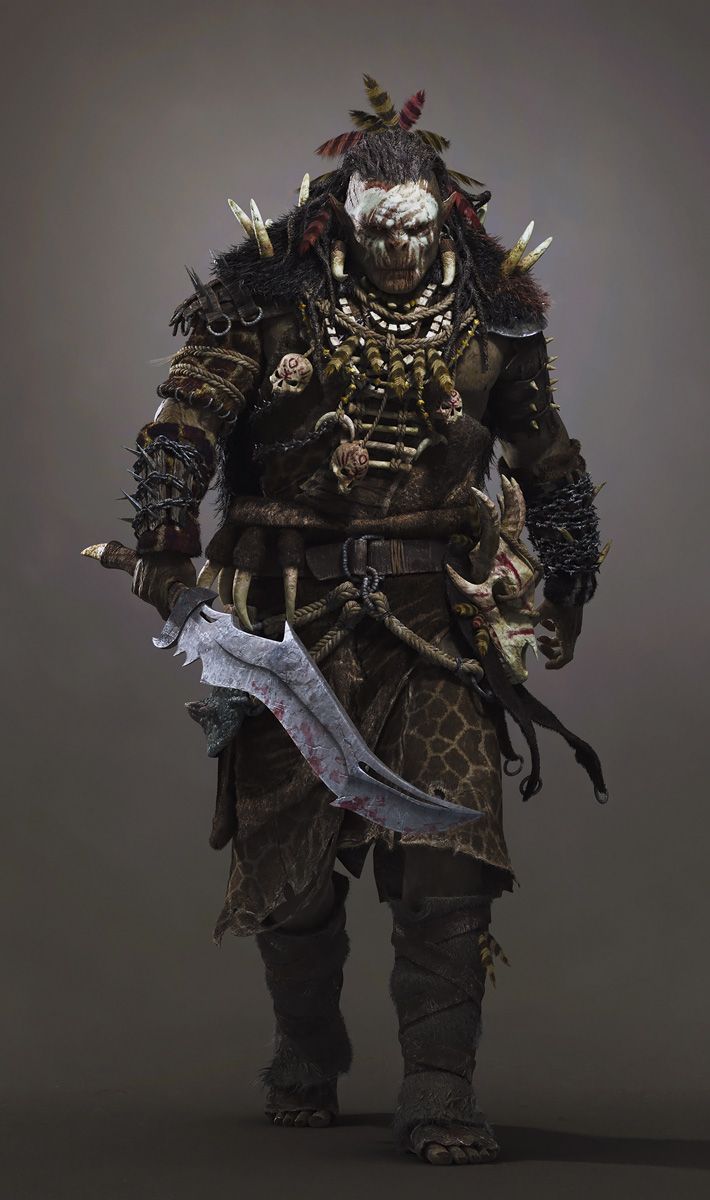
    Bored-looking Orcs are Mouse’s stock-in-trade. While the rest of the party moved away to take up ambush positions in a tree-clogged ravine Mouse threw on a quick goblin disguise and ran out to the cave. The Orc approached him with the typical bullying menace that the green-skinned thugs hold over their weaker cousins, and in a short but brutal conversation Mouse managed to convince it that he and a few of his mates had captured a human treasure, but that his mates had driven him away and now he wanted to join the Orc tribe if they would help him get back his treasure (and share it, of course). This plan appealed to the Orc’s humanitarian instincts – who doesn’t want to help out a weaker cousin in their hour of need – and, grabbing Mouse by his goblin collar, the Orc dragged him into the cave to meet his warboss. Mouse’s heart sank as he was dragged into a large cave, where five filthy Orcs lounged around their savage and nasty-looking warboss, Brughor Axe-biter. Six orcs and a warboss did not disturb Mouse overmuch – but the huge ogre lurking in the shadows behind the warboss’s loathsome sleeping furs did. Ogres are trouble. But it was too late to go back on the plan now, so Mouse put a little more squeak in his voice, and after a convincing display of cowardly bloodlust the entire gang decided to roll out and smash his goblin mates.

    Their surprise when they were ambushed by Mouse’s friends was almost comical in its completeness. Sadly the comedy was washed away in a sea of orc blood, and even the Ogre did not last more than a couple of swings of his oversized club before he was brought smashing down, struck so hard in the end by Tyge’s greatsword that his enraged charge was stopped dead, and he was thrown back with the force of the blow. Beside him Brughor, with his last breath, shamed himself and his clan by speaking to Mouse in goblin rather than Orc: “C’est un piège!”

    Indeed.

    They returned to the Orc cave and searched it thoroughly, uncovering a little treasure and some disgusting Orc food and trash. They found no evidence that the Orcs were connected to Cragmaw castle or the Black Spider. Finally as night settled in they cleaned out the cave as best they could and slept by the Orcs’ dying fire.

    The stones find their voice

    Secrets of the stones

    Before they slept Mouse took them up to the top of Wyvern Tor, to the ruined fragment of tower at the top. He had a feeling that there were secrets buried here, and he had heard the stories of its destruction. Many years ago the Tor had been the home of some dark wizard, who had surrounded himself with wyverns and ruled the area around him with an iron fist. But some obscure texts suggested it was dragons, not wyverns, that roosted here, and the wizard was their slave. Eventually a force of elves and humans had attacked the tower and put down its power at great cost, destroying all but a few shards of the innermost tower and killing the wyverns that defended it. Battles leave treasure, and heroes when they fall sometimes lose their magic items in the blood and mud and shit of the mundane world. Perhaps the stones had a story to tell.

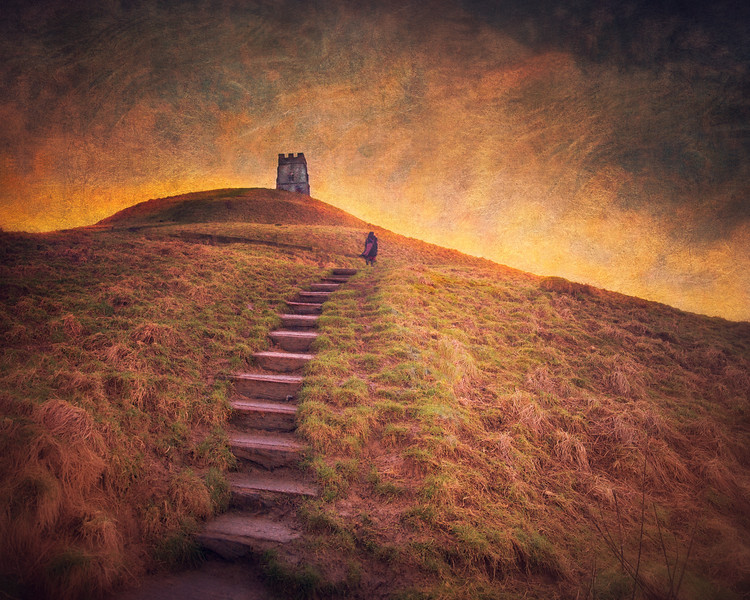
    Mouse had recently discovered that stones could talk to him. Perhaps it was too long in d’Cantrus’s lab, stirring strange reagents and sampling new potions; perhaps it was his parents’ legacy – after all he had never known them, so perhaps they were more special than the whispers in the alleys of his childhood had suggested; perhaps it was some wilder power, handed to him by fate or some capricious god. In any case Mouse believed in it, and so at sunset he trudged with his friends up the long, tussocked path to the flat top of the Tor, picking his way through ancient lightning-shattered stones to the broken and crumbling fragments of wall standing in the centre of the open hilltop. To the southwest the sharp, awe-inspiring Icespire peak stood out of the jumbled grey teeth of the sword mountains, glowing pink in the setting sun. Somewhere on its slopes a flash of blue lightning rippled, perhaps a frost giant’s anger or maybe just some strange natural phenomenon of its constantly storm-tossed stone ligaments. To the west and the north, as they watched Mouse approach the shell of the tower, the PCs could see the last red light of sunset fading across a wide vista of forests, plains and river. Tyge even fancied her half-elven sight could pick out the distant line of the sea, luminous in the magic hour, calling to her even from this distance with that strange mystical voice that it reserves only for the fickle souls of elves and their kin. They drank it all in and then turned to watch Mouse as he leaned his face against the chill stones.

    Mouse laid his young brow against the stone, and for a moment all he felt was the tug of lichen on skin, and all he could smell was the musty talc of the stone. But then his vision faded, into a maelstrom of war and violence, dark shapes rushing and huge shadows, fire and sudden tugging violence. Vast forces flowed past him, huge shapes surged over the stones, and magic lashed and rippled in the air. He smelled blood, lots of blood, and the acrid smell of damp air in the wake of lightning and storms. Somewhere voices cried in unison and he felt the earth plunge. With the stones he fell down a huge distance into darkness and emptiness, the light closing above him. A flash of purest scarlet, a sudden pure, clear view of the sun rising over high mountains, and the vision was gone. Mouse came to, sweating against the cold stone, the last comforting rays of the setting sun gone and the night’s wind chill upon him. In the aftermath of the vision he knew – knew, with the certainty that only magic can make you feel – that there was a treasure down there. Beneath the Tor there had been a complex of tunnels, and it had been sealed in. Perhaps the denizens of the tunnels were still sealed in there. And somewhere on the east side of the Tor there was a way in.

    He retreated from the stones, shaken by the power of his vision, and returned to his friends. Showing uncharacteristic grace and kindness, d’Cantrus wrapped a filthy Orc fur around his shoulders, and Mostly Smithson offered him a sip of the hot rice brew that he carried with him. They picked their way down the hillside, their footsteps lit by deCantrus’s chill magic light, the night slowly closing in around them, and returned to the Orc cave to rest. Somewhere beneath them treasures undisturbed by time lay silently waiting for them.

    But what guarded those treasures? For now, they put that task aside, and turned their gaze north…

    A flash of red …

    Old Owl Well

    Old Owl Well was across the valley from the Tor, and took them half a day to travel to. This day was warmer than the last few and bright, so they found themselves easily able to make out the well as they approached. The story of this well was that it was once a small but thriving settlement that provided fresh water and rest to the trappers of the region, but at some point the trapping business declined and the well fell into disrepair, or was destroyed by raiding orcs. Now it was abandoned, but until recently trappers had continued to use it as a place to stop and rest and gather fresh water. Recently, however, something had been making them stay clear of the place. Trappers being a taciturn lot, no one was quite sure what. But now the characters had a chance to find out, so their first action was to turn away from the ruined walls of the well and head up to a hillside to watch the compound.

    The well was little more than a square of crumbling walls around a central tower, a squat little thing with its upper levels crumbling. To the north of the tower was the well itself, surrounded now with low bushes and tangled with ivy. Beyond the walls on all sides but the south were rough, scrub-covered hills with steep sides, from which it was easy for spies like our heroes to watch the well. From their vantage point they could see, on the eastern side of the tower, a large red tent, its canopy daubed with black symbols of some kind. Bemused, they sat on the hill for a few hours watching, but nobody emerged and nothing moved. Sensing daylight fading, they decided to return to the well and investigate.

    They waited outside the main gates and sent Mouse in. He passed through the gate, moving as stealthily as he could, and first avoiding the tent moved to the broken tower. As he approached he smelled something foul and unusual, a smell he had never experienced before. Disgusted and uncertain, he crept up to the gaping entry of the tower and peered in, only to recoil in shock. A pile of bodies lay in the centre of the old tower, rotting and silent. No wonder he had never experienced the smell before – he had never experienced a charnel house before. Nor, now, would he ever forget. Disgusted, he turned and crept back towards his friends, to warn them that there was murder done here.

    Halfway across the open ground to the gateway though something in his senses tingled. He looked around uncomfortably, and there behind him he saw all those dead bodies walking silently towards him, their mouths open in unmistakable blood lust. Shocked, he stumbled, and they were on him. He slipped between the legs of a particularly large and unruly one, and fled to his friends, yelling in terror.

    Battle was joined. The PCs formed a line just back from the gate outside the well and prepared to fight 12 – 12! – of the most pitiful zombies the world has ever seen. Mostly Smithson’s divine grace drove 5 of them away but they still had to fight 7. As they fought a red-robed figure appeared at the doorway and threw a spell at one of them, freezing Mostly Smithson in place, but disappeared from view when Mouse fired a crossbow bolt at him and disrupted the spell. Tyge’s greatsword, Helmsmasher, hummed and sang its holy joy, and she hacked great glowing swathes through the undead, sending rotten flesh flying across the hillside. Finally they defeated the zombies, though not after taking some injuries, and pursued the red-robed wizard. He succumbed easily to their combined might, and soon they were able to interrogate him.

    Mostly Smithson, with his unique skill and experience in tattoos, was soon able to recognize the man as a Red Wizard of Thay, a necromancer to whit, and with that knowledge all kindness left the crew. They forced him to tell him what he would, and soon discovered he had been raising this army from local villagers and tin miners, to support him while he researched at Owl Well. Satisfied he had nothing useful to tell him, they finally decided to make the world a better place, and Tyge killed him with a single strike of her sword.

    They had pacified the lands east of the Triboar trail. Where next? A chill wind drew their attention to the distant Tor, and they thought about their next steps …

  • Today’s Guardian reports that Theresa May had to suddenly jet off to Europe to plead for new concessions on her Brexit deal, as the wreckers and traitors in her party circle and prepare for a leadership challenge. Within a day of her postponing the meaningful vote in parliament, Europe’s leaders are in the press singing from the same song sheet, that there will be no renegotiations or concessions, and although they’ll offer “explainers” to help her politically, they are preparing for a no-deal brexit. This is not the first time that the UK leadership have had their efforts rebuffed – David Davis failed to enforce multiple red lines – but it is a stark example of the challenge of managing an independent foreign and trade policy when you run a middling-size country with a fading service economy. This is Britain’s first example of what “take back control” really means.

    I think a majority (or at least a large minority) of Britons either grew up after the UK entered the union or were too young to remember what life was like before EU membership. For most Britons, the last time their nation had full “control” of its foreign and trade policy it was an empire, with considerable power and influence globally and large captive markets in the colonies where it could rely on economic support. Naturally, if your history as an independent nation was one of imperial smash-and-grab policies you will have a rose-tinted vision of the benefits of full “control”. But modern Britain is not an empire and never will be, and it would be wise for Britain’s brexiteers to consider what it really means to “take back control” when your nation doesn’t have a huge population and is not an industrial giant. The reality is that as of next year Britain is going to be a nation of 60 million people with a hollowed-out industrial base, a weak agricultural sector and a limited natural resource base. What does it mean to “take back control” for such a country? Fortunately, we have examples, and it might be wise for Britain’s brexiteers to look at how those exemplars of independence achieved success.

    I grew up in a country that was not part of any union and had to make its own way in the world, Australia. In order to be a successful independent modern nation Australia went through a 15 year period of reform, starting with Hawke’s Labor party grabbing power in 1983 and ending with the imposition of the GST in 1998. During that time we saw waves of reform. Universal health coverage was introduced (1984), labour reform happened (1983 – 1991), superannuation reformed (the mid-80s and early 90s), tariff barriers were removed, sclerotic industries were modernized and reformed (e.g the dairy industry), education reform was constant and oriented towards making it an export market, the relationship between federal and state governments was modernized and changed, migration was loosened and reformed, tax reform happened in several steps, and through it all we had a long, difficult and often frustrating conversation about the extermination and dispossession that underpinned much of our economic success. We also saw a shift in perspective from our old colonial masters to Asia, with sometimes fraught and complex negotiations with our Asian neighbours. By 1996 commentators spoke of the Australian people’s “reform fatigue”, a phrase I remember well, and this constant shifting of the ground on which older Australians grew up is part of the reason the electorate was described as waiting for the Labor party “with baseball bats” in the 1996 election. Most of these reforms were hugely important and successful, and from 1996 we had 20 years of uninterrupted economic growth. Even reforms that seemed largely cultural and not necessarily economic probably had a role to play in this complete modernization of Australian society – it’s unlikely for example that Aboriginal people would have stood quietly by and let the mining and resource boom of the 2000s happen on their land if they had not been given significant concessions in land rights in the 1980s and 1990s, and it’s unlikely that we would have been as ready to engage with Asia as we are if education had not been modernized with an Asian focus in the 1990s.

    Australia also built its post-war success on migration, and I think now something like 20% of Australians were born overseas, with nearly 40% having been born overseas or having a parent born overseas. Our population grew rapidly from 1950 to 2000, and is nearly double what it was 70 years ago, with that increase heavily supported by migration. We also had to make significant concessions to international reality. For example, we outsource our defense policy to the USA and act with them in all their wars, even the illegal ones, and we have supported the One China Policy for practical reasons since the 1970s. When you have a population of 24 million people and rely for your economic wellbeing on trade with big Asian neighbours, you can’t afford to be too assertive in your foreign policy, and you also can’t afford big ticket domestic defense items like, say, Trident, or aircraft carriers. With the advantage of remoteness and the benefit of limited tariff barriers and huge quantities of natural resources we don’t need to worry about defense too much, so long as we keep trading without too many qualms about who we’re selling to. This isn’t a luxury that a nation like Japan or Germany can have, since they have large geopolitical rivals with bad histories quite nearby. Australia has long since given up on expecting to be a major player in the world stage, and where we exert influence we do so through soft power and being likable. Is this something that the UK wants to do?

    Singapore is another country that has made it as a successful independent nation, but probably not in a way that is politically compatible with Brexit fever dreams. Something like 80% of Singaporean housing is government-owned, and there are strict rules on ethnic composition of housing blocks and other public amenities, along with strict censorship, to ensure that racial harmony is a fundamental part of the Singaporean way of life. Singapore also has a very large immigrant population, low tariffs, and an atmosphere of competition with other nations and social cooperation internally that the UK won’t be able to develop overnight. Singapore has often been touted as a model for Britain’s independent future, but it’s unlikely to be one that is palatable to the British voter, with its very large transient migrant population, heavy state investment in industry, housing and infrastructure, extremely long working hours, heavy censorship and strict rules to protect racial harmony.

    Canada is another successful independent nation, but it has the agricultural and natural resources benefits that Australia has, is neighbour to a huge and dominant economy that is very culturally connected, and also built its economic success through migration. I have a friend who just got permanent residency (with his Japanese wife) in Canada without ever living there, and moved there to be on welfare payments while he looked for work. That’s not a migration model that will please Brexiters (his skin is quite brown!) and probably not a model that will be very attractive to potential migrants once Britain’s economy slumps. Canada also benefits from having no viable external enemies, a long cultural tradition of getting along with each other, and heavy state investment in e.g. health and welfare. It also has bears.

    Japan is a nation that has been successful without migration, but it has a very large population (twice that of Britain), is very close to some very big trading partners, and succeeded with the help of major foreign support when it was rebuilding its (very large) industrial base after world war 2. Japan also, like Britain, has a weak agricultural sector and no natural resources. But Japan’s economic and international political success is built on a range of factors that would not appeal to the brexiteers. First and foremost it has a huge national debt and a bipartisan policy of using government money to fund infrastructure, bailouts, and industrial support. It has always maintained a strong industry policy, and tight relations between industry and government. It has a German-style approach to labour relations, in which workers are partners in business and government and disputes are resolved through compromise and consensus, and Japanese industrial leaders often have to tighten their belts with their workers in exchange for not having to put up with combative unions. Japan also has a constitutionally-mandated policy of pacifism, and invests heavily in overseas aid to ensure it maintains a strong connection in the region. Furthermore, Japan is a nation heavily committed to the international order, trying always to work through the UN and multinational agreements rather than being truly independent. Japan doesn’t pick sides or moralize, and is an exemplary global citizen. As a result of its lack of migrants Japan is also ageing, and is opening its borders to migration rapidly.

    Something that many of these countries have in common is a commitment to social harmony. To varying degrees they have tried to prevent major outbreaks of social disorder or disruption – Australia does not have France style yellow-jacket demonstrations, and for example while Australia had 20 years of domestic environmental activism that was often quite confrontational, the end result was always some form of compromise to maintain the peace. Part of maintaining social order requires a commitment to equality, which is very strongly observed in Japan and Canada, and to various programs that may (as in the case of Singapore) require heavy government investment in order to ensure that there is a minimum standard of living for everyone. This is also not something that the Brexiters seem particularly happy with.

    It seems clear to me that “taking back control” for Britain is going to require some difficult and unavoidable choices, that the British people won’t be happy to make. Cutting back on migration will mean that British people have to work harder and pull together in ways they aren’t used to; going independent will mean burning money on defense or outsourcing it to a great power or lowering expectations about Britain’s international assertiveness; being an open trading nation will require political compromises with trading partners that will stick in the craw of many of Britain’s elder statesmen; maintaining social harmony and a united front is going to demand sacrifices of everyone. But most of all, British people are going to have to come to terms with the reality that they don’t have much clout at all on the international stage, and that until they can develop some industries that foreigners want to buy, build some goodwill outside of the EU, and establish an independent voice that has some actual value to people they haven’t traditionally had much connection to, they aren’t going to be taken seriously globally. Theresa May’s hapless trip to Europe is a harbinger of what awaits them when they “take back control,” and as someone who grew up in a nation that has had to navigate difficult currents over dark waters, I would ask two questions of the British: do you want this, and are you ready for it? Because from what I have seen over the past year, you don’t and you’re not.

  • Warboss Wilde says: To lose one brexit minister may be considered unfortunate; but to lose both looks like carelessness

    Tonight I was walking home from kickboxing thinking about the pickle Theresa May finds herself completely unable to resolve, and I really wanted to feel a little sympathy for her, even though she’s not a Tory. This is a state-educated woman who basically stepped in to clean up the mess the Bullingdon Boys made, and at every turn she has faced these useless red-faced Etonian babies throwing their toys back out of the pram and spitting the dummy, bawling and squealing because they can’t have their roast pork and face-fuck it too. It really smacks of the hired help being punished for doing her job, and I want to feel some sympathy for the terrible situation that she (and much more poignantly, all Britons) faces. But I can’t, because she would have a lot more bargaining space if she hadn’t arrogantly assumed she could beat Labour, and called an election she didn’t need to in order to do a blatant power grab. This duly backfired, and now she – and by extension all of Britain – are held in thrall to the whims of the DUP, who hold the balance of power and are clearly a bunch of certified religious nutjobs.

    Somehow while I was ambling through the narrow streets of Koenji this reminded me of the time before the Good Friday agreement, and a common argument that was made back then against the idea of a united Ireland: That if Ireland united, the protestants of Northern Ireland would be forced against their will to live in a backwards country ruled by religious nutjobs. This argument pretended to be a reasonable centrist (or even left wing) argument. It accepted the validity of the nationalist cause, but argued that a large part of the Northern Irish community was protestant, and if the nationalists got their justice for past colonialism and oppression, this would mean that protestants – who were all loyalists – would be forced to accept living under the Roman Catholic leadership of Ireland, who at the time were religious nutjobs. In this argument often Sinn Fein weren’t first and foremost socialists, but were actually closet creationists. But even putting aside Sinn Fein’s loyalties, people were urged to reject unionist politics on the basis that it would force protestants to live under the christian equivalent of Sharia law, in an economically backward country[1].

    Well, isn’t it funny how times have changed? In the 20 years since the Good Friday agreement Ireland’s economy boomed, it became a modern and open European country, legalized gay marriage and abortion, and now has a child of migrants as its president. It has a climate change policy, and recently had an inquiry into abuses by the catholic church. Meanwhile Northern Ireland is ruled by a bunch of creationist climate-change denying dipshits, who are holding the entire UK to ransom over the possibility that their little fiefdom might be treated mildly differently to the rest of the UK, and threatening to bring back the troubles (which, let us not forget, their older members were likely deeply involved in). Northern Ireland still doesn’t have legal same-sex marriage, while the rest of the UK and Ireland do. Can anyone look at the two countries now and conclude that unionism would have been worse for Northern Ireland’s protestants than staying in the UK, and being forced into the christian equivalent of Sharia law by the DUP?

    Another, perhaps inverted version of this way that history washes away all the too-comfortable positions of its ideologues is the UK miner’s strike. I was in the UK when this happened and even though I was young it was a terrifying and all-consuming political event. I do not remember anyone ever discussing the strike in terms of climate change or clean air, only in terms of worker’s rights, industrial struggle and nationalization. The Tories blatantly lured Scargill’s union into striking in order to break them, and to break the back of a powerful force in the British left, to set the stage for the privatization drive of the late 1980s; the union and the left defended itself on these grounds. It’s worth remembering that the same police who committed violence on the picket lines also fabricated lies about the Hillsborough disaster, and were in Jimmy Saville’s pocket. These were evil times. But when you look back on what happened, for all the evil and corruption it unleashed on the UK, the closure of the mines was essential for the UK’s environment and for preventing climate change. Had they not closed, the UK’s air would remain filthy, northern children would be dying from asthma and growing up stunted, and the UK would be completely unable to meet its climate change commitments. It’s even possible to imagine that Scargill, emboldened by defeating the Tories, would have led his union to greater power in the Labour party, and that in the early 1990s they would have become climate change denialists. By now of course the closure of the coal industry would have become imperative, but it’s easy to see how this debate would unfold now: poisoned by Trumpism, with the utilities fighting against alternative energy, the Miner’s union would become a proto-fascist body, spreading climate change denialism and embracing some kind of UKIP-style demagogue in order to protect their patch. The miner’s strike was a terrible time for the north, the Tories were cruel and showed the worst side of the industrial ruling class, and the corruption and police violence unleashed by it took 20 years to be put back under control (and in some ways still isn’t); but if it hadn’t happened, it would be happening now, with scary Trumpist and brexit overtones.

    History has a weird way of laying waste to ideologies.


    fn1: I’m not here trying to say that the people making this argument didn’t also make the point that e.g. you shouldn’t give in to terrorists, there was never any colonialism to start with, only the IRA killed people, etc. Just that I remember this argument a lot, and often as a kind of “okay so let’s say we ignore the terrorism for now, even then we have the problem that …” It was a kind of “even if there was no terrorism, this unionist idea would still be terrible because… ” argument.

  • I am playing in a GURPS campaign that is a muskets and magic setting, in which our go-to fighter is a rifleman called Bamiyan. I haven’t been recording this campaign here because it has been written elsewhere up until some months ago (though with permission from the GM I may start). GURPS is a complex and fiddly system, with a heavy focus on realism, and one consequence of this is that our rifleman is constantly hampered by the amount of time it takes to reload his stupid muskets. Seriously, the dwarves need to do something about that! So, since we haven’t got a better technology, my wizard Freya Tigrisdottir is going to learn a new school of magic, Battle Magic, which enables her to affect guns and rilfemen. Here is a list of spells for that school.

    Aim

    Increases the accuracy rating of the weapon on its next shot by up to +5.

    Duration: 1 minute (or next shot fired)

    Base cost: 1/bonus

    Prerequisite: magery 1


    Perfect mechanism

    Increases the affected weapon’s reliability rating to 20. Can be extended to additional weapons at a cost of 1 pt/weapon.

    Duration: 1 minute

    Base cost: 2, 1 to maintain

    Prerequisite: At least 1 point of xp in the affected weapon’s class


    Magic shot

    Renders the next shot by the weapon magical, so that it can penetrate spells like Missile Shield. Also enables the weapon to affect non-corporeal magic targets (such as mages under the affect of Body of Air spells, ghosts, etc). Does not offer any other bonuses. Can be extended to additional weapons at a cost of 1 pt/weapon.

    Duration: 1 minute (or next shot fired)

    Base cost: 2

    Prerequisite: Aim


    Sniper

    Grants a hit and damage bonus on the next shot fired by the subject. Note that the bonus affects the damage as well as the skill of the user. This spell does not render the weapon magical, since it affects the user of the gun, not the gun itself.

    Duration: 1 minute (or next shot fired)

    Base cost: 2/bonus

    Prerequisite: Aim, Magic shot, at least 1 point of xp in the affected weapon’s class


    Far sight

    Enhances the shooter’s eyesight so that the range to the target is effectively less than the actual distance. This reduces the shooter’s penalty and also potentially (if enough points are sunk into the spell) removes the half damage penalty for firing at extreme range, or enables the shooter to fire beyond the usual range of the weapon.

    Duration: 1 minute (or next shot fired)

    Base cost: 2/range class

    Prerequisite: Sniper


    Fierce powder

    Enhances the force at which a gun fires, adding 1d6 of damage to the resulting shot. Cannot be scaled up (it’s only powder, after all). Most effective when cast on pistols.

    Duration: 1 minute (or next shot fired)

    Base cost: 2

    Prerequisite: Magic shot, Perfect mechanism


    Stability

    Renders the shooter’s upper body immune to the vicissitudes of environmental stress such as riding a horse or wagon, standing on a heaving ship, etc. Nullifies any penalties due to this condition and enables the shooter to automatically pass skill checks to maintain focus.

    Duration: 1 minute

    Base cost: 5

    Prerequisite: Magery 2, sniper, far sight


    Fast reload

    Reduces the load time for any weapon to 1 second, provided the subject is holding the necessary components (powder, shot) and the gun. Can be extended to multiple weapons. Note that this still means that reloading will take at least 2 seconds –one second to cast the spell, and one second to load the gun. Note the process by which an officer and his batman can fire rapidly when in conjunction with a wizard: in second one he swaps his unloaded gun for a loaded gun his batman holds; in second two the batman produces the components for the unloaded gun (during which the soldier fires the loaded gun); in second three the wizard casts Fast Reload; in second four the batman loads the gun; then in second five the batman and officer swap the guns again, and so on. Note that this process can apply to two lines of soldiers if the wizard has enough mana to cast the reload spell on all the auxiliary reloaders at once.

    Duration: 1 second

    Cost: 2/gun

    Prerequisites: Perfect mechanism, aim, magery 2, at least 1 xp spent in the gun being affected by the spell


    Complex form

    Enables the caster to combine two or more spells from this school together in a single casting. This is an additional cost on top of the standard cost of each spell, that costs 2 points per spell combined. So for example to cast aim and perfect mechanism in one casting would require 4 points plus the cost of those spells. Note that this form must affect the same subject so it cannot combine spells that affect shooters with spells that affect weapons.

    Duration: 1 minute (or next shot fired)

    Base cost: 2 per spell combined

    Prerequisite: Magery 2, at least 2 other spells from this school.


    Elemental embrace

    Enables the caster to imbue the next shot fired with the damage from an elemental attack spell such as lightning bolt, fire bolt, etc. The caster must successfully cast the elemental attack spell within one minute of this spell, and the shot must also be fired within one minute of this spell, or the effect dissipates. It is wise to cast perfect mechanism when combining with this spell, since fumbles can be quite catastrophic. Note the total time to cast this spell is 1 second plus the number of seconds required to cast the elemental spell. Can be combined with Complex Form.

    Duration: 1 minute (or next shot fired)

    Base cost: 2 + elemental spell cast

    Prerequisite: Magery 2, complex form, aim, fierce powder


    Artillerist

    Enables the caster to direct the rifleman’s shot even if the rifleman cannot see the target. This spell requires that the wizard be able to see the shooter and the target, and that there be some way that the bullet can cleanly travel to the target (i.e. open air all the way). It does not provide the shooter any bonuses, and the shooter cannot aim (since he/she cannot see the target). All it does is allow the shooter to shoot things he/she cannot otherwise see.

    Duration: 1 minute

    Base cost: 5

    Prerequisite: Magery 2, complex form, Aim, sniper


    Duelist shot

    Enables the subject to fire two weapons at once with no penalty.

    Duration: 1 minute (until next shot fired)

    Base cost: 5

    Prerequisite: Aim, sniper, artillerist, stability

  • Today I read transcripts of Donald Trump’s post-midterms press conference, and I stumbled upon this fascinating quote:

    And Barbara Comstock was another I think that she could’ve won that race, but she did not want to have an embrace. For that, I do not blame her. But she lost substantially lost. Peter Roskam did not want the embrace. Erik Paulsen did not want the embrace. And in New Jersey, I think that he could have done well, but did not work out too good. Bob, you can come, I feel badly, that is something that could’ve been one. John Faso. Those are some of the people that decided for their own reason not to embrace, whether it is me or what we stand for, but what we stand for meant a lot to a lot of people.

    And I was struck by this language: I’ve seen it before. The embrace is the process by which people are turned into vampires. This is a direct reference to the process of becoming a vampire in the Vampire: The Masquerade role playing game. This is deeply depressing for two reasons: first of all, because it means that there is a vampire in charge of the nuclear codes; and worse still, because it means the pretentious artistes at White Wolf were right all along[1]. Those bastards!

    Once you realize that Trump is a vampire from that RPG, it answers a lot of questions. Obviously the orange “fake tan” is actually some kind of special chemical make up that enables him to emerge in sunlight (presumably he learnt the tech from Tony Blair); I guess Trump’s secret solution to the abortion issue is to make everyone undead, so it no longer matters; and now we know why so many Republicans are paedophiles – it’s a vampire thing, paedophilia. It’s disturbing to know that a large proportion of the US congress are vampires, but judging by Trump’s speech a lot of members also refused to accept eternal life and give away their actual souls in exchange for power; but it’s also very disappointing to know that even though they didn’t actually get eternal life, they still gave up their metaphorical souls for temporal power, which makes one wonder why they didn’t just go the whole hog and accept the embrace? These people are going to hell for what they did, why not trade their full soul for eternal life? This kind of half-arsed equivocation is just pathetic, Representative Comstock!

    Anyway, we all know these people are arseholes with bad policy ideas, and that they’re also pathetic cowards, so it’s kind of believable that they would baulk at the full embrace but still enact the policies. The real question is: what kind of Vampire is Trump? What clan is he? There are many clans to choose from, but I have narrowed it down to four possibilities.

    • Malkavian: These guys are insane, described as lunatics and jesters, but also visionaries. Some are fanatics, and some have an instinctive ability to pick apart and reassemble minds. Listening to James Comey’s description of his meetings with Trump, you can imagine Trump is doing that. A Malkavian? Possibly…
    • Nosferatu: These guys are deformed, warped by the Embrace, which would explain a lot. They’re hideous, evil beasts driven by their passions, twisted by the Embrace. Unfortunately the definitive text also says they’re more human than other vampires, and Trump shows no human traits, so … maybe not.
    • Ventrue: I think this is most likely, the clan devoted to power and persuasion. The latest text describes two of their archetypes as “cold-blooded corporate director” and “conservative politician”. The Ventrue use their powers to control both the supernatural and mortal world. They blend in with the leading political, media and corporate figures of their age, which would enable a monster like Trump to fit in and find a way to excel …
    • Caitiff: Another possibility, my personal favourite, is that Trump is a caitiff, someone who was embraced and abandoned and doesn’t know their own lineage. Having discovered himself alone and powerful and prey to the clans, he has decided to go loud, and defend himself by being so public and so powerful that no one can touch him. Everything he does is a desperate thrashing out at the supernatural forces closing in on him. For bonus salivatory fun, he was turned by a Ventrue, who has been staked for making such a disastrous mistake – and who was a democrat. In fact all the major dems are vampires, and Trump is their by-blow. If you doubt me, look at page 103 of the new book – if that’s not Hilary Clinton I’m a goblin.

    I don’t know how the White Wolf crew figured this out – perhaps they’re vampires too and this is some cosmic joke – but instead of writing a pretentious and unworkable RPG they should have spent their creative years warning us about the dark powers in our midst. This is particularly ironic given I joined a Vampire game a while back and created a character who lived in the ruins of one of Trump’s failed casino projects.

    How can the world have gone so wrong!?


    fn1: I guess there is also the possibility that Trump is an avid Vampire role-player, and he was just deploying a metaphor. This would be simultaneously great and incredibly creepy. It would be great because it would so wonderfully troll the lefties at White Wolf to know that Cheeto Jesus is a Vampire player; but it would also be deeply disturbing. I have been roleplaying for 30 years and I play some pretty disturbing games but I could not imagine anything as grotesque as Trump, John Kelly, Stephen Miller and Sarah Huckabee-Sanders in the basement of the White House rolling d10 dice pools in some deeply pretentious storytelling game. No! I would rather that Trump were a vampire, and armageddon were incoming!

  • When I was a teenager I remember my father as a difficult man with frustratingly retrograde opinions, which were typical of men of his nationality (British) and his generation (born just before WW2). He was a typesetter, a classic tradesman’s job from the post-war years, and he had the kind of views on race, gender, sexuality and social issues that you might expect of a man of this background and this age. He could say shocking things about non-white people, about women, or about any man who had not followed the same straight and narrow path from school to work that he had done. But his views were mellowed by his love of reading, and by a vague sense of groundedness about how the world actually worked. So for example he would say racist things about Aboriginal people, while also recognizing that they had been treated poorly by white colonizers; he could recognize the basic humanity of non-white people while believing basically that the races shouldn’t mix, and that his race (in particular the “English”) was superior. In my memory of my teenage years, he could say bad things but race issues were not always at the forefront of his mind. If welfare fraud or racial stereotypes or “young people today” came up in conversation he would be difficult, but somehow he still seemed to be navigating the world as it was, despite his limited education and because of his love of reading. My father introduced me to a lot of terrible ideas about Aborigines and women, but he also introduced me to National Geographic magazines, liberal views on sex work and drugs, Erich von Danniken[1] and archaeology more generally, and he always supported my interest in science, geography and reading.

    When I was 17 my father lost his job and left me behind in rural Australia to return to the UK, where presumably he thought he might still be able to find work. Sadly a fifty-something typesetter in the late 1980s had no chance of finding new work, since his job had basically been automated away in the space of five years of rapid computer growth, so he ended up living on benefits in a trailer park in Devon. And over the years since he returned to the UK he went from being the infuriatingly backward but still-reachable uneducated man of my childhood to an out-and-out bigot, hating anyone and everyone who was different to him, full of bile and rage at the world and terrified of all the possibilities in it. He went from someone who worked alongside Indian and Caribbean men in industry to a scared old man who refused to visit London because it had “too many foreigners”; from a man who recommended Rachel Carson’s Silent Spring to an ignorant climate change denialist; from a migrant in Australia to a man who hated all migrants and believed there were millions of “illegal asylum seekers” living in the UK; from a proud working man to a benefit fraudster who sat in the mobile home he was illegally buying with government rental support complaining about European benefit fraudsters coming to the UK to “abuse our generosity”; from a man who took pride in his nation’s role in resisting the Nazis, to a believer in every sinister lie he heard about Jews, gypsies, communists and gays. Over 30 sad years he became the Racist Uncle from central casting, terrified of the world and angry at everyone who was not an old, bitter man like him.

    It was not just my father either: everyone else in my own and the older generations in my family became the same over those 30 years. Before I returned from a brief period working in the UK to Japan, I remember sitting in my grandmother’s living room while she told me that “them black people will get what’s coming to them when Cameron’s elected”, and my uncle warned me “don’t argue with me, sunshine” while he spat bile and invective over the EU – while he was resting in the UK in between work placements in the Europe. Of the four men in my generation or above who I still know alive and living in the UK, two of them had their best career opportunities in Europe, and one of those got his first wife there.  Yet there they sat, hurling hatred and scorn at everyone connected with the European project, at black people, foreigners, young women – anyone who wasn’t like them.

    This kind of hateful bile was a constant of my visits to my family in south west England, Brexit country. But there was one other constant every time I went down there: on every tea table, or clipped and stuck to the wall, or in the recycling bin (that they hated), or left scattered around to finish the crosswords: The Daily Mail. And from every bitter, pinched and angry mouth: “The news tells me that the gypsies are now …” “Which news?” “The Daily Mail!” Every opinion, every vicious and vengeful bit of hate speech, every tenuous or blatantly untrue “fact” they used to justify every one of their horrible, scornful opinions was dragged straight from the lying, filthy pages of that lying, filthy rag. Every day it headlined with some story about gypsies or travelers stealing land; or about hordes of “unregistered asylum seekers” who were getting free homes and cars and money while good deserving white people lived in the streets; or about how homeless white people were filthy pigs who brought it on themselves. Every day they bought it and read it and consumed its unfiltered hatred, mainlining discrimination and scorn to the point that my father, disabled by polio at the age of 5, would place his free disability parking sticker on the window of his car while ranting about some article from the Daily Mail and sneering at all these stupid young people who demand their human rights be respected. This man, whose entire twilit years were coddled by disability pensions and free healthcare and physiotherapy and special support for his disability, would mouth that phrase “their human rights” with such bitter rage that you would think he was talking about satan’s ballbag itself. But he wasn’t, he was speaking about himself, spurting out self-hatred and bitterness that he had been mainlining for 30 years from that disgusting, stupid rag, the Daily Mail.

    So it was with a sense of profound disappointment that I read this morning in the Guardian that Paul Dacre, the editor of the Daily Mail for 26 of those 30 years that it was slowly turning my father from a normal human being to a rage-infested muppet, has received a lifetime achievement award from the Society of Editors, presented to him by the Editor of that other esteemed vessel of white men’s hate, the Daily Telegraph.

    Some achievement. The newspaper most famous for its support of Oswald Mosley and Hitler turned into the delivery device for weaponized hatred, straight into the minds of uneducated men like my father who didn’t know better. By the time Dacre’s tenure was over he had managed to get UKIP national support, and bring on the Brexit he longed for that will destroy the economic security the Mail‘s own readers crave. This newspaper turned a nation of mild-mannered, stoic shopkeepers into a nation of rabid xenophobes and bilious haters, intent on kicking out anyone who was different in any way, or just plain kicking them if they couldn’t kick them out. Even on the Iraq war, the one thing the newspaper ever got right, it only opposed the war because it wanted to pull up the drawbridge and leave the rest of the world to burn, confident in the idea that Britain doesn’t need anyone and that any kind of social connection or sharing is weak, wrong and bad for the English. This newspaper poisoned the minds of a generation, so that it could get Britain out of Europe and damn the working people of Britain to a generation of peonage in service to its rich owner and his rich friends.

    The Daily Mail did this by combining a tight writing style that perfectly appealed to the poorly-educated men and women of the war generation and the baby boom, appealing to their worst instincts and their colonialist nostalgic, and boosting that nascent racism and nostalgia into inflamed hatred and terror of any change. There is no policy the Daily Mail has supported in the past 30 years that was intended to benefit the lives of ordinary working or middle-class Britons, and the editor and his rich buddies knew that, so they coated every dodgy policy they pushed in the sweet and intoxicating icing of racism, hatred, and self-aggrandizing scorn. They pushed and amplified that scorn and racism, and used it to wrap every new and discriminatory policy they could, as they pushed Britain towards plutocracy. The final poison pill they tricked the elderly population of Britain into swallowing was Brexit, the bitter medicine that will strangle their grandchildrens’ futures. And the visionary who conceived of this horrible 30 year con receives a medal for his efforts.

    In the future our grandchildren will look back on these 30 years as the last chance humanity had to change its direction. They will see that even as the planet went onto the boil, and inequality consumed the social order we had been building, a small gang of thieving plutocrats seized the media and politics and used their power to make sure no meaningful action was taken to turn society onto a different, better course. They will see how the many possible future pathways we could have taken to a better world were blocked off one by by these rich gangsters, until at the end of that 30 years we were left with a very small number of possible pathways to follow that would not end in civilization collapse and ruin. And then they will note that the people who spent 30 years heading off every road to a better future were given a prize for their efforts. Paul Dacre may be able to take that prize to his gold-plated grave, but the children of the future won’t deem him worthy of anything except scorn and ridicule. The same will apply to all those other titans of industry and media masters who brought us to this ruinous pass: all the newspaper editors who supported the Iraq war and unleashed Isis on a middle east already struggling under inequality and climate change; Rupert Murdoch, who unleashed Fox news on America and turned it from hope to hatred; Bari Weiss and Bret Stephens and all the other idiot centrist both-siders who twiddled while their nation slouched into nihilistic fascism, and put nazis and climate change denialists on the precious space of their editorial pages because they felt that “ideological balance” was more important than basic decency or a future for their children. All these people will be remembered as enemies not just of the people they were supposed to serve, but of human civilization. Remember the day this man got this prize, and the people who gave it to him. Some day there will have to be an accounting for the great evil being done in this time by our parents’ generation, and it might as well start with this man, who poisoned my parents minds against their own childrens’ futures, and turned a generation of hard-working, decent people into terrified haters. He will get away with what he did, but history will reward him with infamy.


    fn1: I am not a believer!


  • On Saturday 700,000 people marched in London in support of a people’s vote on Brexit, basically demanding a do-over on the stupid referendum that brought the UK to its current terrible pass. This makes the march comparable in size to the march against the Iraq war in 2003, and reading about it I was struck by the similarities between what is happening now and the events that led up to that disgusting decision. The Brexit referendum was a rash decision by a formerly very popular politician that was driven forward by a campaign of lies and deceit, full of transparent falsehoods like the 350 million pound NHS lies. Now, just like then, the media have openly supported Brexit or offered only lukewarm opposition, and many in the Tory media have used accusations of treachery and cowardice against their opponents. Last year the Daily Mail had its “enemies of the people” headline, and in 2002 Paul Kelly, editor of the Australian, was touring the country calling anyone who opposed the Iraq War a coward and a traitor. Then, as now, we had shady foreign power involvement in Britain’s political decisions – in 2003 it was clear that Blair had already signed up to the war regardless of public opinion, and in 2018 we’re discovering that the Brexit campaign was funded by shady overseas money, probably Russian, and almost certainly is driven by Tory politicians’ desire to protect their rich backers’ tax havens and money laundering activities from next year’s EU legal changes. In 2018 just as in 2002 we see politicians and media personalities heaping scorn on experts – in 2002 this led to the shady death of a WMD expert, and the BBC being forced into a humiliating apology for reporting it fairly, while in 2018 we see politicians openly dismissing any and every attempt to give a proper warning of what is coming. This leads to this horrible feeling – in 2018 just as in 2003 – that you know exactly what is going to happen, you can predict all the terrible things that are going to come of it, and yet still the political class is choosing to drive their train straight into the crash that everyone is warning them about. Just as in 2003, this rally will show the politicians clearly that that they are on the wrong path, but they will ignore it and make this terrible mistake regardless.

    So it’s worth looking at the consequences of the Iraq war for the British labour party, because the party is still shackled to that mistake. The Iraq war sunk Blair as a politician, and within 5 years he was out. It completely ruined Labour’s reputation and forced them into years of introspection and chaos. Blair took the country to war in order to please a constituency – liberal interventionists, neo-cons, and “sensible centrists” – that had very little respect from Labour’s traditional backers, and as a result he created years of friction within the party apparatus. This ultimately led to the changes in the relationship between leadership and membership that brought Corbyn to power. For years after their election loss, senior figures in Labour were being pilloried by the membership for their mistakes, and opposition to the war was one of the central tools by which Corbyn was able to win the leadership – everyone else was tainted by their support, and as the catastrophe of ISIS unfolded in the Levant, Corbyn was able to stand tall as the only member of the Labour party with any principles. I have no doubt (although no evidence) that Blair’s decision to throw traditional Labour constituencies like the peace movement, supporters of Palestine, disarmament activists, and non-interventionists, under the bus in order to please an ultimately incredibly unpopular American republican caused many of them to abandon the party in disgust. I think this is part of the reason that Labour lost Scotland, a big part of the reason for the growth of Lib Dem support, and also part of the reason that Labour struggled to fight off UKIP in the mid 2010s. Nobody weds themselves to a party with 100% commitment, and it is possible for a party to abuse the trust that its constituencies give it. Labour’s loss in 2010 and the subsequent ruin of the UK economy at the hands of a bunch of pig-fucking Tory economic wreckers is at least partly due to the decision to screw their own constituencies in this way. Even today, traditional supporters of Labour on the left are much more circumspect in their support of it than they used to be, and although some centrist wankers will try to claim that this is because Corbyn turns people off, it is certainly also to do with the way those traditional supporters were alienated in the rush to murder a million Iraqis.

    The same will happen to the Tories after Brexit. The entire fiasco came about because Cameron wanted to please a bunch of UKIP-voting idiots who were not core Tory constituents, and came at the expense of his core supporters in the home counties and business. Senior Tories disparaged the kind of conservative, careful experts in and outside government who warned them what disaster was coming, and have regularly and repeatedly acted in a way that alienates their business backers. The original vote was barely democratic, it’s now clear that it was gamed by foreign money to benefit a small claque of extremely rich money launderers, and it is almost impossible to find a sizable group of people in the UK who will benefit from it. Yet the Tories push on to disaster, and I bet that today even as this 700,000 people gather to remind them of their democratic responsibilities, senior Tories will dismiss them as unrepresentative. Next year Brexit will happen, the UK’s economy will crash, everything will go to hell, and suddenly everyone will remember that this was a uniquely Tory disaster. The next election will see them tossed out on their ear, and for a decade the only question asked of any aspirant to power in that party will be “did you vote for this shit?” The Tory reputation on trade and international diplomacy will be wrecked. The only question remains – what kind of insurgent will rise up through the party to replace the idiots who wrought this disaster on the British people? Will it be a traditional Tory equivalent of Corbyn, harking back to the original roots of the party and disdaining the modernising and populist elements that crashed it? Or will it be something darker and more sinister, a nativist or fascist tough-love authoritarian? In theory this coming disaster should put an end to nativism in British politics, as everyone who voted for UKIP and Brexit comes to terms with the economic ruin they left their children. But will this be what happens?

    Because there is one big difference between what happened after the Iraq war, and now. Labour has always faced a hostile press who are willing to blame them for every problem Britain faces, while the Tories have an easy run from every arm of the media. After they bring the country to ruin, will the media’s love of pretending that their intellectually bankrupt economic ideas are “sound management” finally end? Will the media recognize the Tories for the traitors and economic wreckers they really are? Or will they simply put in double shifts to blame the entire fiasco on Labour and foreigners, and work extra hard to launder the Tories’ reputation? And in doing so, what new horrors will bubble up from the dark and sinister hinterlands of British conservatism, to replace the architects of this foolish and stupid policy? By rights Brexit and its fallout should be the end of the Tories, just as the Iraq war was the end of Blairism and the rich-appeasing faux leftism of 1990s Labour. If there is any justice these people will be cast into the political wilderness and their party reduced to a foolish rump. But with the support of liars and scandal-mongers like the Daily Mail, perhaps the Tories will be able to reinvent themselves in an even uglier, more perverted form.

    Let us hope not, for the good of what will be left of Britain after 2019.

  • And let me tell you something
    Before you go taking a walk in my world,
    …you better take a look at the real world
    Cause this ain’t no Mr. Rogers Neighborhood
    Can you say “feel like shit?”
    Yea maybe sometimes I do feel like shit
    I ain’t happy about it, but I’d rather feel like shit
    …than be full of shit!


    There are times in life when it’s necessary to turn to the original gurus of self-righteous self-inspiration, Suicidal Tendencies. Life getting you down, you feel you can’t keep going? Crank up ST and when the boys ask you “Are you feelin’ suicidal?” yell back “I’m suicidal!” and you’ll be back on track in no time. Been meandering through some shit, making mistakes you know are your own dumb fault, and need to kick yourself back onto the straight and narrow? Gotta kill Captain Stupid is what you need. Getting played by conmen who play on your better nature, maybe take you for a ride using your religious impulses? Then you can crank up Send Me Your Money and be reminded that “Here comes another con hiding behind a collar / His only God is the almighty dollar / He ain’t no prophet, he ain’t no healer / He’s just a two bit goddamn money stealer.” That’ll get your cynical radar working again! But the Suicidals’ most useful refrain, the one that applies most often and most powerfully in this shit-stained and terrible world, is the imprecation at the beginning of the second half of their skate power classic, You Can’t Bring Me Down:

    Just cause you don’t understand what’s going on
    …don’t mean it don’t make no sense
    And just cause you don’t like it,
    …don’t mean it ain’t no good

    This pure reminder of the power of bullshit over mortal men came to me today when I began to delve into the background of the latest Sokal Hoax that has been visited on the social sciences. I’d like to explore this hoax, consider how it would have panned out in other disciplines, make a few criticisms, and discuss the implications of some of their supposedly preposterous papers. So as Mikey would say – bring it on home, brother doc!

    The Latest Hoax

    The latest hoax comes with its own report, a massive online screed that describes what they did, why they did it, how they did it and what happened. Basically they spent a year preparing a bunch of papers that they submitted to a wide range of social studies journals in a field they refer to as “grievance studies”, which they define by saying

    we have come to call these fields “grievance studies” in shorthand because of their common goal of problematizing aspects of culture in minute detail in order to attempt diagnoses of power imbalances and oppression rooted in identity.

    This definition of the field is easily the vaguest and most hand-wavey way to select a broad set of targets I have ever seen, and it’s also obviously intended to be perjorative. In fact their whole project could perhaps be described as having the “common goal of problematizing aspects of culture in minute detail” – starting with their definition of the culture.

    The authors admit that they’re not experts in the field, but they spent a year studying the content, methods and style of the field, then wrote papers that they submitted to journals under fake names (one real professor gave them permission to use his name) from fake institutions. They submitted 20 papers over the year, writing one every 9 days, and got 7 published, one with a commendation; the other 13 were repeatedly rejected or still under review when somehow their cover was blown and they had to reveal the hoax.

    The basic problem with the hoax

    The papers they submitted are listed at the website and are pretty hilarious, and some of the papers that were published were obviously terrible (though they may have been interesting reading). Two of the papers they submitted – one on dog parks and one on immersive pornography – used fake data, i.e. academic misconduct, and two were plagiarized parts of Mein Kampf, with some words replaced to reverse them into a feminist meaning of some kind (I guess by replacing “Jew” with “men” or something).

    Submitting an article based on fraudulent data is, let’s be clear, academic misconduct, and it is also extremely difficult for peer reviewers to catch. Sure it’s easy in retrospect to say “that data was fake” but when peer reviewers get an article they don’t get the raw data, they have to judge based on the summaries in the paper. This is how the Wakefield paper that led to the collapse in MMR vaccination got published in the Lancet – Wakefield made up his data, and it was impossible for the peer reviewers to know that. The STAPP controversy in Japan – which led to several scientists being disgraced and one suicide – involved doctored images that were only discovered when a research assistant blew the whistle. Medicine is full of these controversies in which data is faked or manipulated and only discovered after a huge amount of detective work, or after a junior staff member destroys their career blowing the whistle. Submitting fraudulent work to peer review – a process which at heart depends on good faith assumptions all around – is guaranteed to be successful. It’s not an indictment of anyone to do this.

    Submitting a word-replaced Mein Kampf is incredibly tacky, tasteless and juvenile. Most academics don’t read Mein Kampf, and it’s not a necessary text for most sociological disciplines. If the journal doesn’t use plagiarism software or the peer reviewers don’t, then this is undoubtedly going to slide through, and while much of Mein Kampf is pernicious nonsense a lot of it is actually pretty straightforward descriptions of political strategies and contemporary events. Indeed the chapter they used (chapter 12 of volume 1) is really about organizing and political vision[1], with only passing references to Jewish perfidy – it’s the kind of thing that could be rendered pretty bland with a word replace. But from the description in their report one might think they had successfully published an exterminationist screed. I’m sure the hoaxers thought they were being super clever doing this, but they weren’t. Detecting plagiarism is a journal’s responsibility more than a peer reviewer’s, and not all journals can. It’s not even clear if the plagiarized text would have been easily detected by google searches of fragments if there was a suitable level of word replacement.

    So several of their hoax papers were highlighting problems with the peer review process in general, not with anything to do with social studies. Of the remainder, some were substantially rewritten during review, and a lot were rejected or sent back for major revision. While people on twitter are claiming that “many papers” were accepted, in fact the most obviously problematic ones were rejected. For example the paper that recommended mistreating white students, ignoring their work and dismissing their efforts, to teach them about white privilege, was rejected three times, but people on twitter are claiming that the treatment of this paper shows some kind of problematic morality by the peer reviewers.

    The next problem with the hoax is that the authors have misrepresented good-spirited, kind-hearted attempts at taking their work seriously with uncritical acceptance of their work. Consider this peer review that they report[2] on a paper on whether men commit sexual violence by masturbating to fantasies of real women (more on this below):

    I was also trying to think through examples of how this theoretical argument has implications in romantic consensual relationships. Through the paper, I was thinking about the rise of sexting and consensual pornographic selfies between couples, and how to situate it in your argument. I think this is interesting because you could argue that even if these pictures are shared and contained within a consensual private relationship, the pictures themselves are a reaction to the idea that the man may be thinking about another woman while masturbating. The entire industry of boudoir photography, where women sometimes have erotic pictures taken for their significant other before deploying overseas in the military for example, is implicitly a way of saying, “if you’re going to masturbate, it might as well be to me.” Essentially, even in consensual monogamous relationships, masturbatory fantasies might create some level of coercion for women. You mention this theme on page 21 in terms of the consumption of non-consensual digital media as metasexual-rape, but I think it is interesting to think through these potentially more subtle consensual but coercive elements as well

    This is a genuine, good-faith effort to engage with the authors’ argument, and to work out its implications. But this peer reviewer, who has clearly devoted considerable time to engaging with and attempting to improve this paper, now discovers that he or she was being punked the whole time, and the authors were laughing at her naivete for thinking their idea should be taken seriously. He or she did this work for free, as part of an industry where we all give freely of our time to help each other improve their ideas, but actually this good faith effort was just being manipulated and used as part of a cheap publicity stunt by some people who have an axe to grind with an entire, entirely vaguely-defined branch of academia. And note also that after all this peer reviewer’s work, this paper was still rejected – but the hoaxers are using it as ammunition for their claim that “grievance studies” takes preposterous ideas seriously. Is that fair, or reasonable? And is it ethical to conduct experiments on other academics without consent?

    I would be interested to know, incidentally, if their little prank was submitted to institutional review before they did it. If I tried to pull this shitty little move in my field, without putting it through an IRB, I think my career would be toast.

    But there is another problem with this hoax, which I want to dwell on in a little more detail: some of the papers actually covered interesting topics of relevance in their field, and the fact that the hoaxers think their theories were preposterous doesn’t mean they were actually preposterous. It’s at this point that the Suicidals’ most powerful rule applies: Just because you don’t understand what’s going on, don’t mean it don’t make sense.

    The theoretical value of some of the hoax papers

    Why don’t men use dildos for masturbation?

    Let us consider first the paper the authors refer to as “Dildos”, actual title Going in Through the Back Door: Challenging Straight Male Homohysteria and Transphobia through Receptive Penetrative Sex Toy Use. In this paper the hoaxers ask why men don’t use dildos for masturbation, and suggest it is out of a fear of homosexuality, and transphobia. The hoaxers say that they wrote this paper

    To see if journals will accept ludicrous arguments if they support (unfalsifiable) claims that common (and harmless) sexual choices made by straight men are actually homophobic, transphobic, and anti-feminist

    But is this argument ludicrous? Why don’t men use dildos more? After all, we know that men can obtain sexual pleasure from anal insertion, through prostate stimulation. There is a genre of porn in which this happens (for both cismen and transgender women), and it is a specialty service provided by sex workers, but it is not generally commonly practiced in heterosexual intercourse or male masturbation. Why? Men can be pretty bloody-minded about sexual pleasure, so why don’t they do this more? There could be many reasons, such as that it’s impractical, or it’s dirty, or (for couple sex) that women have a problem with penetrating men, or because men see sex toys as fundamentally femininized objects – but it could also be out of a residual homophobia, right? This seems prima facie an interesting theory that could be explored. For example, the only mainstream movie I can think of where a woman penetrates a man is Deadpool, and so it should be fairly easy to study reactions to that movie and analyze them for homophobia (reddit should be pretty good for this, or MRA websites). Understanding the reasons for this might offer new ways for men to enjoy sex, and a new diversity of sex roles for women, which one presumes is a good thing. So why is this argument ludicrous?

    Why do men visit Hooters?

    Another article that was published was referred to by the hoaxers as “Hooters”, actual title An Ethnography of Breastaurant Masculinity: Themes of Objectification, Sexual Conquest, Male Control, and Masculine Toughness in a Sexually Objectifying Restaurant. The article argues that men visit “breastaurants” to assert male dominance and enjoy a particular form of “authentic masculinity,” presumably in contrast to the simpler motive of wanting to be able to look at tits. The authors say they did this article to

    see if journals will publish papers that seek to problematize heterosexual men’s attraction to women and will accept very shoddy qualitative methodology and ideologically-motivated interpretations which support this

    But again, this is basically an interesting question. Why do men go to restaurants with scantily-clad women? They could eat at a normal restaurant and then watch porn, or just read playboy while they eat. Or they could eat and then go to a strip club. So why do they need to be served in restaurants by breasty girls? And why are some men completely uninterested in these environments, even though they’re seriously into tits? The answer that this is something about performing a type of masculinity, and needing women as props for some kind of expression of dominance, makes sense intuitively (which doesn’t mean it’s right). It’s particularly interesting that this article is being presented as preposterous by the hoaxers now just as debate is raging about why Brett Kavanaugh insisted in sharing his non-consensual sexual encounters with other men, while Bill Cosby did his on the down-low. It’s almost as if Bill and Brett had different forms of masculine dominance to express! Forms of masculine dominance that need to be explored and understood! By academics in social studies, for example!

    Also note here that the tone of the hoaxers’ explanation suggests that the idea that visiting breasty restaurants is problematic is obviously wrong and everyone believes them about this. In fact, many Americans of good faith from many different backgrounds don’t consider visiting Hooters to be a particularly savoury activity, and you probably won’t convince your girlfriend you’re not an arsehole by telling her she’s wrong to “problematize heterosexual men’s attraction to women” in the context of your having blown your weekly entertainment budget on a trip to Hooters. Understanding why she has problematized this behavior might help you to get laid the following week!

    Do men do violence to women when they fantasize about them?

    The hoaxers wrote an article that they refer to as “Masturbation”, real title Rubbing One Out: Defining Metasexual Violence of Objectification Through Nonconsensual Masturbation, which was ultimately rejected from Sociological Theory after peer review. I think this was the most interesting of their fake articles, covering a really interesting topic, with real ethical implications. The basic idea here is that when men fantasize about women without women’s consent (for example when masturbating) they’re committing a kind of sexual violence, even though the woman in question doesn’t know about this. They wrote this article to test

    To see if the definition of sexual violence can be expanded into thought crimes

    But this way of presenting their argument (“Thought crimes”) and the idea that the definition of sexual violence hasn’t already been expanded to thought crimes, is deeply dangerous and stupid. To deal with the second point first, in many jurisdictions anime or manga that depicts sex with children is banned. But in these comics nobody has been harmed. So yes, sexual violence has been extended to include thought crimes. But if we don’t expand the definition of sexual violence into thought crimes we run into some very serious legal and ethical problems. Consider the crime of upskirting, in which men take secret videos up women’s skirts and put them onto porn sites for other men to masturbate to. In general the upskirted woman has no clue she’s been filmed, and the video usually doesn’t show her face so it’s not possible for her to be identified. It is, essentially, a victimless crime. Yet we treat upskirting as a far more serious crime than just surreptitiously taking photos of people, which we consider to be rude but not criminal. This is because we consider upskirting to be a kind of sexual violence exactly equivalent to the topic of this article! This is also true for revenge porn, which is often public shaming of a woman that destroys her career, but doesn’t have to be. If you share videos of your ex-girlfriend naked with some other men, and she never finds out about it and your friends don’t publicize those pictures, so she is not affected in any way, everyone would agree that you have still done a terrible thing to her, and that this constitutes sexual violence of some kind. I’ve no doubt that in many jurisdictions this revenge porn is a crime even though the woman targeted has not suffered in any way. Indeed, even if a man just shows his friend a video of a one night stand, and the friend doesn’t know the woman, will never meet her, and has no way to harm her, this is still considered to be a disgusting act. So the fundamental principle involved here is completely sound. This is why porn is made – because the women are being paid to allow strangers to watch them have sex. When people sext each other they are obviously clearly giving explicit permission to the recipient to use the photo for sexual gratification (this is why it is called sexting). Couples usually don’t sext each other until they trust each other precisely because they don’t want the pictures shared so that people they don’t know can masturbate to them without their consent. We also typically treat men who steal women’s underwear differently to men who steal other men’s socks at the coin laundry – I think the reason for this is obvious! So the basic principle at the heart of this paper is solid. Yet the hoaxers treat the idea underlying much of our modern understanding of revenge porn and illicit sexual photography as a joke.

    I think the basic problem here is that while the hoaxers have mimicked the style of the field, and understand which theoretical questions to target and write about, they fundamentally don’t understand the field, and so things they consider to be ludicrous are actually important and real questions in the topic, with important and real consequences. They don’t understand it, but it actually makes sense. And now they’ve created this circus of people sneering at how bad the papers were, when actually they were addressing decent topics and real questions.

    How would this have happened in other fields?

    So if we treat these three papers as serious recognizing that two were published, and then discount the paper with fradulent data (dog park) and the paper that was plagiarized (feminist mein kampf) we are left with just three papers that were published that might be genuinely bullshit, out of 20. That’s 15%, or 22% if you drop the plagiarized and fraudulent papers from the denominator. Sounds bad, right? But this brings us to our next big problem with this hoax: there was no control group. If I submitted 20 papers with dodgy methods and shonky reasoning to public health journals, I think I could get 15% published. Just a week or two ago I reported on a major paper in the Lancet that I think has shonky methods and reasoning, as well as poorly-gathered data, but it got major publicity and will probably adversely affect alcohol policy in future. I have repeatedly on this blog attacked papers published in the National Bureau of Economics Research (NBER) archives, which use terrible methods, poor quality data, bad reasoning and poor scientific design. Are 15% of NBER papers bullshit? I would suggest the figure is likely much higher. But we can’t compare because the authors didn’t try to hoax these fields, and as far as I know no one has ever tried to hoax them. This despite the clear and certain knowledge that the R&R paper in economics was based on a flawed model and bad reasoning, but was used to inform fiscal policy in several countries, and the basic conclusions are still believed even though it has been roundly debunked.

    The absence of hoaxes (or even proper critical commentary) on other fields means that they can maintain an air of inassailability while social studies and feminist theory are repeatedly criticized for their methods and the quality of their research and peer review. This is a political project, not a scientific project, and these hoaxers have gone to great lengths to produce a salable, PR-ready attack on a field they don’t like, using a method that is itself poorly reasoned, with shonky methodology, and a lack of detailed understanding of the academic goals of the field they’re punking. They also, it should be remembered, have acted very unethically. I think the beam is in their own eye, or as the Suicidals would say:

    Ah, damn, we got a lot of stupid people
    Doing a lot of stupid things
    Thinking a lot of stupid thoughts
    And if you want to see one
    Just look in the mirror

    Conclusion

    This hoax shouldn’t be taken seriously, and it doesn’t say anything much about the quality of research or academic editing in the field they’re criticizing. Certainly on the face of it some of the papers that were published seem pretty damning, but some of them covered real topics of genuine interest, and the hoaxers’ interpretation of the theoretical value of the work is deeply flawed. This is a PR stunt, nothing more, and it does nothing to address whatever real issues sociology and women’s studies face. Until people start genuinely developing a model for properly assessing the quality of academic work in multiple fields, with control groups and proper adjustment for confounders, in a cross-disciplinary team that fully understands the fields being critiqued, these kinds of hoaxes will remain just stupid stunts, that play on the goodwill of peer reviewers and academics for the short-term political and public benefit of the hoaxers, but for no longer benefit to the community being punked, and at the risk of considerable harm. Until a proper assessment of the quality of all disciplines is conducted, we should not waste our time punking others, but think harder about how we can improve our own.


    fn1: I won’t link, because a lot of online texts of Mein Kampf are on super dubious websites – look it up yourself if you wish to see what the punking text was.

    fn2: Revealing peer reviews is generally considered unethical, btw

  • Our heroes have killed the changing of the guard, and now they descend into the Redbrand lair. From the ruined manor a flight of stairs leads down to a heavy wooden door, which they pushed aside to reveal a dim cellar. They descended the stairs into a large stone chamber dominated by a huge cistern, filled with cold pure water. The room was large, their lantern light barely reaching to the walls, which were lined with barrels. As Mouser dug around in the barrels looking for signs of traps or treasure a door in the northwest wall opened and a trio of redbrand thugs came charging out to attack them. They dealt with them in short order, beating them down into the flagstones in the doorway of their room. They searched the rooms further, finding a few trinkets and what looked like a package of emergency supplies hidden in the waters of the cistern. Whoever had secreted this escape package in the cistern was going to get an unpleasant surprise if they tried to flee and found their secret stash already looted; but the PCs doubted that anyone was going to escape from here.

    They searched some more, and found a secret door in the southern wall of the room. From here they walked carefully through to a large, natural cave cold and smelling vaguely of rot. They immediately guessed that this must be where the strange eye-beast lived. A tunnel from the south they guessed connected the large cave to the secret entrance the halfling child had reported finding on the edge of the village – a useful escape, if that were their plan. A narrow chasm split the tunnel in two, and a bridge linked the two sides of the cave. Mouser crept into the room and headed north on the near side of the chasm, seeing nothing interesting. As he returned to the group he was struck by a strange series of visions, of falling into the chasm and rotting suddenly away, and an intense sense of hunger. Disgusted and confused, he crept back to the group. They moved to the edge of the cave and Mouser and Imoto chan headed back into the cave, Imoto chan tying a rope to the bridge and dropping it into the chasm as Mouser crept north to explore some more.

    As Imoto chan finished tying the rope to the bridge she was suddenly struck by some strange magic that caused her body to rot and well up in stench and disgusting, noisome ruin. Somewhere over the chasm, the eye-beast was attacking them. Tyge rushed across the bridge, which collapsed under weight and dumped her into the chasm. Imoto chan leapt across the chasm to find the eye-beast, while Mouser took cover behind a pillar, firing arrows, and Mostly Smithson charged north to cross a bridge on the northern end of the cave, and Raymond deCantrus let loose spells across the chasm. The eye-beast was well hidden but they were able to drive it out of cover and cut it down without suffering too much damage.

    In the chasm they found the body of Thel Dendrar, the woodcarver who had gone missing after he confronted the redbrands, and a chest containing some small trinkets and some potions. The chasm was haunted by a strange, weak magic that froze both space and time, rendering it chilly and making all movement in the chasm difficult and slow. As a result Thel’s corpse was still fresh, and strangely lifelike even though it had been ripped open by the Nothic and half eaten. Disgusted, Tyge climbed out and they resumed their quest.

    From the cave a tunnel headed west and back into the more regular hallways of the cellar. A set of steps led down to a hallway, with a door at the base of the steps. Mouser opened the doorway, and was attacked by three bugbears who had been waiting quietly for them in the room. Pushed back mostly by disgust at the stench of their foul dog-like bodies, Mouser was shocked to see one hurl a spear straight into Mostly Smithson so hard that it went clean through his chest, knocking him down. The battle that followed was fast and brutal, and for pressed moments they thought they were all going to die before Tyge was able to cut a bloody, vicious path through the bugbear leader and start scattering bugbear hair and flesh like confetti in some horrid underdark wedding. Mouser took the chance to revive Mostly Smithson, and ultimately they prevailed through steel, lightning and hard, nasty work.

    Standing in the stench of bloody dog-hair, shivering in rage and reaction, they looked around the dimly lit hallway, back at the room of half-eaten stored corpses and scattered vitreous nothic goo, and decided it might be best if they took a rest. Shuddering at the stench and iniquity, they pushed the door of the bugbear lair closed, and settled down to sleep.

    Which was when they saw the goblin. With a sigh, and a shared sideways look of tired resignation, deCantrus asked it, “What is your name, little wretch?”

    “Droop,” he replied, and so his fate was sealed …