• My post on how I don’t like 4th edition D&D (apparently I mustn’t call it AD&D anymore!) was reddited a few months back and has received 4 comments, the last of which claims that I don’t know what I’m talking about because “There’s no Orc race in 4e”. Now, this is very hard for me to believe because Orcs are the meat and drink of D&D (how else would we get our genocidal mojo on?), and if there were no Orc race there would be 6 million generations of pissed off D&D fans (can you imagine the emo-style whingeing that would evoke?)

    But more importantly, I was there and I played it and there were Orcs. Now I don’t recall if they were officially Orcs or not but I definitely played one – and then I definitely slew some. That was the whole point of the two sessions I played. I have references, dammit (but they’re mad, and Scottish, so I don’t want to actually use them, so don’t ask for them). I don’t know for sure if the game I played was part of an official module or not (I get a sense it might have been but I wasn’t the DM so I don’t know).

    But here’s the weirdness – I google 4e Orc and I can’t find much info, when I do a search on the D&D website I don’t get any 4e info (but then, there doesn’t seem to be any 4e info on the website, it’s all legacy stuff), but I do find references to half-Orcs.  You can’t get a half-Orc without the assistance of an Orc (yuck). But on DeviantArt there are pictures of 4e Orcs selling for 200 pounds. So what gives – do they exist or not?

    And if there are no Orcs, is D&D still D&D? What do 1st level characters cut their teeth on?

    It’s still boring though…

  • This man knows how to ride
    This man knows how to ride

    This review is completely free of spoilers. I went to see the Korean movie The Good The Bad The Weird last night, it was completely Feng Shui (ish). It’s a Korean cowboy movie set in 30s Manchuria, with big elements of Hard Boiled built in and no martial arts. This is refreshing – don’t get me wrong, I love a good martial arts movie, but a Korean cowboy movie is (to me at least) completely novel. And the Chinese desert is really really impressive. As, incidentally, is the star who played “the bad”, Lee Byung-Hun (pictured above).

    The basic premise of this movie is that there is a map, and it points to some treasure (of course), and there are a couple of bandits and a bounty hunter after it, as well as a couple of bandit gangs and the Japanese army. There is a nationalist tone to the efforts of some of the bandits (what is it about Eastern bandits being nationalist?) and of course a tiny bit of hating on the Chinese and the  Japanese (is this de rigeur for Koreans?) But it’s soooo much fun. A classic combination of slapstick, confusion, crazy shootin’, hyper-cool East Asian fashion, and train robbery. The map passes from hand to hand, secrets are revealed, many people die in very stupid ways, and the jokes fly thick and fast. In the end of course nothing turns out how you expect, and on at least 88 different occasions you get confused about who wants the map, what they are doing and why. But it’s a lot of fun! I strongly recommend it.

    Also the soundtrack rocks.

  • A few months ago I had a weird run-in with a DM, which I blogged about, most annoying it was too. It happened in a pub in South London, so I never went back to the group that plays there.

    Since then I have had two more moments of trouble at the role-playing club where I play, and I have been forced to conclude that while meeting role-players in a pub is a really good way to avoid having arseholes come to your house, it’s a really good way to meet arseholes. It would also appear that role-playing is going through a bit of a renaissance in London at the moment – our club has become so busy that they’ve had to split over multiple nights, and it is still really really noisy, with maybe 30 people upstairs in the venue (which has no aircon, and in winter has all the windows closed… hmmm, stuffy role-player-boy smells…)

    If you can imagine the scenario of 30 people yelling for attention, while drunk, in a stuffy room, and then throw into the mix a really frustrating player who can’t pay attention, doesn’t ever remember any names or details, continually texts his mates on his phone, and interrupts every description or conversation to talk about something that happened 5 minutes ago (which he genuinely seems to think is still happening) you can well imagine that playing was getting frustrating. So last week we cut loose the frustrating player, and decided to move to someone’s house. Last night we played, it was quiet and calm and pleasant, and it was soooooooo fun.

    I’ve got a real role-playing group back! It’s great!!!

  • This is another off-topic rant which I’m going to cross-post with my other blog, because I’m a grump after watching a fortnight of insane british racism. The Guardian is the UK’s supposedly intellectual, left-wing newspaper, ostensibly well-respected internationally for its quality. Unfortunately it is in reality a propaganda organ for the labour party (who are currently in power), which is probably the world’s most illiberal left-wing party, and is best characterised by its being the only left-wing party in government to join the Iraq war. Need we say more? I suppose we could excuse them for being spineless lickspittles and quislings, but if that’s their defense against allegations of racist mendacity, well, they can use it as much as they like.

    I’ve been watching the Guardian defending racist language, standing by anti-foreign strikers, and supporting the government’s open racism (in the form of the slogan “British Jobs for British Workers”) and feeling my ire slowly rise for a week, but the straw that broke the camel’s back is this piece of unmitigated shite – disguised as opinion, by a supposed academic – which tries to lay the blame for all anti-semitism in Asia at the feet of the Japanese. The Japanese! Who, let’s not forget, rescued Jews through their German embassy in world war 2, even though Germany was their  ally.

    Now, I have tried to give this “academic” the benefit of the doubt but I find only one fact in his whole article which isn’t straight from Wikipedia, but the breadth and scope of his assertions leaves me stunned. For someone who has studied the orient, he shows two types of nasty racism which really, really annoy me: first, he wants desperately to smear Japan specifically; and second, he sees the entire rest of Asia as in their thrall.

    First, to Japan, which he claims has long been anti-semitic based on citations of books which coincidentally all appear in this wikipedia article labelled as “tondemo bon” (outrageous or dodgy books)[1]. He expects us to believe further that this anti-semitism – which is apparently confined to a bunch of phantasmagorical fringe texts – was exported all through Asia. He sites one book from China, and then proceeds to mention that Malaysia – a majority muslim country – also has anti-semitism. His support for this claim? Statements by the ex-Prime Minister. So Japan is the well-spring of anti-semitism in Asia, as proven by a few dodgy fringe books, while Malaysia “are not immune” even though their PM was publicly anti-semitic. This weak phrase suggests contagion from abroad, which seems a little topsy-turvy when one considers the relative importance of the media through which this anti-semitism is expressed in the two countries. But did our hero stop to consider this? No, he didn’t, he certainly didn’t. Japan, you see, is our misfortune. Sound like a familiar trope?

    Our worthy scholar then proceeds to the usual claims about Japan – that it is a closed society with a short history of democracy, and so vulnerable to conspiracy theories. Of course, Japan introduced male suffrage in the Meiji restoration, 150 years ago, so its history of democracy is no worse than many other countries, and the “closed society” claim is just the usual ignorant rubbish. Perhaps not unusually, our noble inquirer then proceeds to link anti-semitism to anti-colonialism [2], which rather contradicts the implication that Japan is the well-spring of Asian anti-semitism, since it was never colonised (though Malaysia was…)

    I’m sure I could write a piece of software which can assemble 3 or 4 stereotypes about Japan into a single paragraph, and then use them to justify any racist claim you want to make. Why employ shonky academics to do it when you can just do it with dice and a couple of slips of paper?

    Buruma’s other piece of racism, though, seems to me much nastier. His claim that Japan is the well-spring of anti-semitism in the region depends on the assumption that all the other Asian nations are weak, easily influenced and vulnerable to superior western ideals. Which claim, incidentally, relies on some sort of view of the Japanese as super-human politically and culturally[3]. But more importantly it relies on the idea that these societies are not capable of self-determination. Witness, for example, the breathtaking claim that The Chinese picked up many modern western ideas from the Japanese. Now, correct me if I’m wrong, but I recall the Chinese taking a somewhat different path to the Japanese in the ’30s, through this chap Mao and this idea “communism” which he definitely didn’t get from an itinerant Shinto monk. And you know, I think China might have a 1000 year long association with the West through this thing called “the Silk Road”. They might have some independent ability to get ideas there, including anti-semitism, if they want it. Which they probably don’t, Buruma’s entire evidence being the claim that an anti-semitic book is selling well and even read by members of the government. The Chinese Governments’ reading patterns are well known on account of its high level of public accountability, you see.

    But this claim is obviously made about those nations – Malaysia, the Phillipines – which are generally viewed as less sophisticated. They’re not, of course, but ranking them according to their similarity to western ideals is the classic stance of the cheap orientalist. This is slipshod academic work, and sloppy journalism to publish it. But it suits two combined tasks that the Guardian has to cope with. On the one hand, they have to fight off the hordes of right-wing Israel supporters who claim their coverage of the war in Gaza is anti-semitic, which defense they mount by regularly running critiques of anti-semitism; and on the other hand they have to remind themselves that yes, the British did win the war, and the Japanese are sub-human. Which they do by regularly running articles which assemble as many nasty stereotypes as possible, with the express purpose of reminding the reader of how awful those Japanese are. The final conclusion is irrelevant – it’s the body, where the gentle reader is reminded that Japanese are inscrutable aliens with great powers, that is the important bit. And if that tactic sounds familiar to you, there’s a reason…

    So, this week, I have concluded that the Guardian is racist. Don’t even get me started on the Daily Mail!

    [1] The only fact he changes from the wikipedia article is the date of translation of the Protocols of the Elders of Zion into Japanese, which he claimed occurred in 1905 (two years after they were “discovered” during the war with Russia), while the wiki claims the translation at 1936. Tel Aviv University puts it at 1924. Obviously a true scholar! Japan was so anti-semitic that it only translated the text of the chief anti-semitic coda 21 years after its original publication, and only because some soldiers stumbled on it and brought it home. Imagine if the Nazis had been as anti-semitic as the Japanese!

    [2] a fine trope, incidentally, for right-wingers who want to tar all national liberation movements with the same brush. I’m surprised he didn’t fit a critique of Mao and Ho Chi Minh in there somewhere.

    [3] projection much?

  • According to this awesomely stupid article in the New Zealand 3 news, I may have a methamphetamine addiction – apparently being into Dungeons and Dragons and “other violent stuff” is the big giveaway.

    So before I continue planning for next week’s campaign, I’m just gonna go smoke some “P”, and hack up a baby or two. Any of you role-players want to join me?

  • Being a brief guide to the peoples and concerns of the New World, prepared for the discerning reader of The Ladies Illustrated Quarterly by M Scott Momaday, whose recent novel The Last of the Mohicans, though not in any wise a truthful account of matters Indian, is humbly presented in serialized form in this same publication, for the edification and pleasure of Good Christian Ladies, from this Quarter.

    The Fulfiller: Delaware war-chieftain, based on the Western edge of Delaware land, near the French, in Southern Ohio. Fought with the British against the French in the French and Indian War, but his prime interest is to secure land for the Delaware.

    Captain Pipe: Delaware war-chieftain, based Further North in Ohio

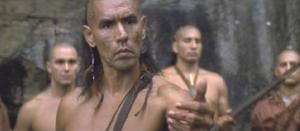
    Who would not help this man?
    Who would not help this man?

    Magua: Renegade Huron of the Mohawks, has moved South with his tribe in rejection of Huron deals with the French. His treachery against the British in the French and Indian war completed, the British are none the wiser about him and he has returned to deal with them again. A brutal savage possessed only of dark dreams and motives.

    The Imposter: A mad Delaware prophet, sadly much loved of the Delaware themselves, who advocates renunciation of French and English goods and Infernalism, and a return to traditional values. Has had some success in convincing the Delaware to negotiate rules of trade with the British, but is neither respected nor feared by any British counsel.

    Leaning wood: Cherokee Principal Chief, who has traveled to England and met His Highness King George V. Continually puts on airs for himself, and treats himself as a King when his British contemporaries see him as little more than a court jester. A sad figure.

    Half King: An Iroquois tribal leader called the Half-King by the British, fought alongside George Washington at the Battle of Monongahela. Rumoured to have killed the French Ensign Joseph Coulon de Jumonville by taking out his brains and washing his hands with them while saying “Thou are not dead yet, my father” in French. Much hated by the French.


  • After a summer’s evening party meeting the main factions operating in the New World, we meet our heroes as they try to decide whether they need to pick sides, and what sides to pick. Sympathies seem to lie with the Natives, though those sympathies would perhaps extend to the colonials were they not so thoroughly bent on genocide.  So the characters choose to explore their Indian sympathies a little more, by visiting the native camp near Albany to speak to The Prophet. Unfortunately, when they arrive the Prophet is engaged in a sun-staring trance which, Magua tells them, will last days. So they speak a little with Magua, who reveals accidentally that he is a “follower” of the Prophet (even though the Prophet is Delaware, and Magua was Huron). Magua seems quite interested in peaceful relations with the characters, though they can’t tell why. They leave the camp, and return to town, where they are joined by a new character, a woodsman and colonial who has been drawn to them by a dream in which his woodland realm is destroyed by a mysterious force.

    The characters are invited to meet the British Head of Spies at the Albany Freemen’s Club, where they are offered a new opportunity at fruitful work. The Spymaster, a Mister Jake Abanatha, reveals to them that the Delaware Indian tribes near Ohio have been suffering from a strange plague, against which their magic is useless. Rumour is flying around the Indian tribes that this is English work, and the British suspect French treachery. The characters are to visit  the region and investigate the cause of the disease. If French calumny is involved, Jake suspects it will prove to be the work of the recently escaped spy, La Belle dame sans Merci,  and possibly also foul-mouthed Jacques. If so they are to employ their usual discretion to destroy everyone responsible and undo the damage. They are to travel openly as agents of the British come to investigate  the disease, and are to stay at Thorn Lodge, the  home of a colonial magician called Jake Luma. David Williamson, a Lieutenant Colonel in the Colonial Militia, will also be present. The nearby trading town of Thorntown can be used to store goods and send or receive messages.

    The characters set off the next day, but are interrupted in the afternoon by Magua himself. Initially suspicious, they soon find themselves at ease in his presence. He tells them that he has a favour to ask of them:

    When you discover the true nature of the lodge you are staying in, if it suits you to do so, you will open the gates. My Braves and I will be waiting nearby, and will enter to cleanse the place

    He tells them he knows no more than they do of this request, but was sent to ask them by the Prophet, who had a vision. That is all he can tell them.

    The characters continue to Thorn Town, which they discover is home to a Hungarian gunsmith, who offers to sell them Hungarian Fire-lances if they are interested. Needless to say, they are, and they promise to return to investigate further. From there they proceed to Thorn Lodge, where they are welcomed by Jake Luma and David Williamson, and given rooms. Russell Ganymede searches the entire interior of the mansion with his Demonic Vision, and discovers that the Magician Jake Luma’s private “study” contains no evidence that it is a study – it consists of a couple of couches, a whisky cabinet and a bookcase of French porn. Where, then, does he do his “researches”? The characters are intrigued. The house is also heavily guarded by between 50 and 100 elite militiamen, which seems passing strange…

    After night falls the characters sneak into the garden to explore, and soon discover at the rear of the grounds a large stretch of dense forest, whose exterior is patrolled by many militiamen. Speaking to one of the militiamen, the Woodsman is told that Indians attack through the forest, so it must be guarded. But another militiaman tells him it is an Indian graveyard, so he cannot enter. These two ideas are mutually exclusive! So the characters sneak inside, and discover that it is, indeed, an Indian graveyard, for they are attacked by a ghost. This ghost they kill, before Lord Merton moves forward to speak to the others in Huron, telling them he is here to investigate the land beyond, and not to desecrate the grave. Showing them his Iroquois coup-belt, he convinces the ghosts, and they point up the hill at the rear of the forest, into the darkness, begging him to free their land of “the stain which desecrates it”.

    The characters move past the ghosts and deeper into the forest, travelling uphill until they come to a small clearing. Beyond the clearing is a waterfall, and perched near it a sinister stone building, squat and drab. Standing at the front of the building, still as the dripping trees, are two demonic-looking creatures the characters have never seen before: Myrmidons. What shall they do, and what does the building contain that it must be so guarded …?

  • So, here are some examples  of how we play our Feng Shui craziness…

    1. Psycho Gun nut gets to work: Sure, we were meant to be reconnoitring and using our (very sub-standard) seduction skills to get into the building site, but our armed-to-the-teeth Chow Yun Fat hard-boiled wannabe gun nut decided to go in the “easy” way and started a gun battle with all 6 security guards, who turned out to be quite well armed. Being unarmoured and soft, the rest of us decided that this constituted a distraction of epic proportions, and ran off to the other side of the building site to cut a hole in the fence. As we ran away, Yukiko texted some advice to the psycho gun nut: “Keep M Busy. Die well. thx c u l8r”. Improvisation by text, I like it!
    2. The karaoke sanctuary: we have been encouraged to use the terrain and surroundings to our advantage, and to make them up as we go, so I obliged. Before we went to the afore-mentioned building site  Yukiko identified a karaoke bar on the other side of the road from their hiding spot. She popped inside, used her conjuration magic to sanctify one of the singing rooms for several days, and then paid for an all night ticket. This meant that the characters had a karaoke-box bolthole should they run into any over-powered supernatural creatures on the building site…
    3. Don’t talk now, I’m concentrating: So Miss Yukiko needed to do some reconnaisance while the rest of her group had their arses handed to them by a big, lipless bastard. So she squatted down behind a dumpster bin, flipped out her phone and started playing tetris. While so concentrating, she summoned up a Yuki no onna (Snow woman), a kind of ghost, to prowl the perimeter of the battlefield looking for fleeing or incoming baddies… all while she played tetris behind the dumpster.
    4. Flattening the baddies: so the battle wasn’t going at all well because the big lipless bastard was a named bruiser, not at all nice. Again Yukiko invented some surroundings, this time noticing that the named bruiser was right beneath a huge construction crane. She flipped her phone, summoned a specialised battering-ram demon on top of the crane, and had it smash the gantries so the counter-weight would fall on the named demon. Then she texted all her fighting fellows: “Trouble coming, get away, thx cu l8r”. Unfortunately, in flattening the bad guy she also flattened his phone, which had their only lead to the head honcho… oh well…

    Miss Akizuki is definitely the most fun I’ve had with a modern adventurer for a long time. I’m hoping there’ll be lots more hijinx to come…

  • Yukiko Akizuki is my Feng Shui character. She is a 20 year old ex-shrine maiden from a Shinto Shrine in Izu, South of Tokyo, whose shrine was ransacked by ugly big-nosed foreigners. These foreigners killed the other residents of the shrine and stole the god that lives behind the shrine, and Yukiko – who survived somehow, possibly not entirely intact – has vowed to find them and destroy them, and return her shrine’s god to its rightful place. To help her in this quest, the shrine’s fox messengers gave Yukiko some special magical powers, and a tuft of fox fur she can use to conjure them when she is in need.

    Yukiko, having just flattened a Named Bad Guy
    Yukiko, having just flattened a Named Bad Guy

    Yukiko then went to Tokyo, where she sank into Shibuya culture for a while and became a Yamanba, living in internet cafes and causing lots of trouble, before she finally sorted out some money (no-one knows quite how). During her time in Shibuya she may have become involved with some seedy characters, because she has a book of purikura (Print Club) photos. Purikura are the little pictures you take in those photo booths in Tokyo, then decorate with stars and funny faces. All of Yukiko’s purikura photos are of her with the various demons she can summon. They serve as proof that she can conjure a variety of different nasties…

    No-one in this image is a demon
    No-one in this image is a demon

    In Feng Shui game terms Yukiko is a Magic Cop archetype, with 1 gun shtick replaced with a kung fu shtick (the foxy one, of course). Her magic is healing, conjuring and fertility. She is pretty weak and very prone to avoiding combat. Most of the time she uses her conjurations and stays out of combat. We are still working on the conjurations, but it seems that she needs to play tetris on her mobile phone in order to concentrate when she is casting spells. Yukiko is a bit strange and anti-social, and maybe not very sensible… but maybe that will change when she gets her god back…

  • So my role-playing group split into 2 sessions this year  (as a kind of new years’ resolution I suppose), largely because I’m too lazy to do a session a week. So we had a vote (the only time democracy has been allowed near my Infernal campaign!) and eventually settled on Feng Shui, being DM’d by my nice Cumbrian friend Martin.

    Feng Shui is some kind of crazy rules-lite rpg based around the genre of Hong Kong action flicks. Essential properties of Feng Shui (at least, as we’re doing it) are:

    • All the PCs are essentially crazy super heroes with crazy powers
    • All the archetypes are based on some kind of hollywood or hong kong action movie
    • PCs have special powers called shticks which are really the main thing they use
    • NPCs are divided into named NPCs (bad arsed enemies) and unnamed NPCs (cannon fodder)
    • All PCs have to have a plot hook, a reason they are in the adventure, which requires some kind of nemesis, and a really shlocky story
    • Wherever possible, PCs should do crazy, heroic and fantastic things for fun

    Our group is half kung fu girls and half psycho boys, and we are carving our way through a cast of unnamed badguys. I just flattened the named one using a 50 ton weight. It was fun. We are really enjoying it and getting into the flow of things. I am not usually a fan of rules-lite games, especially with the rules as broken as they are in Feng Shui, but I have to say I  don’t care in this case. The rules are so broken that I have had to invent suggested conjuring rules, because the ones in the book are useless. We’re kind of making it up as we go along. But it’s a barrel of laughs and so far the most fun I think I have ever had while playing!