• In this video you can see a 16 year old schoolboy pile drive a kid who has been bullying him for years. The video was posted on facebook by one of the bully’s friends, and from there ended up on Australia’s national news services. Don’t be fooled by the relative sizes of the kids, according to the accompanying story the larger boy in this footage had been bullied for years at his school, and he finally snapped when the little shit in the video started punching him. This video has created quite a controversy in Australia, because the school suspended the bullied child (as well, I think, as the bully) and lots of “experts” have been paraded in front of the media to talk about how this response is the wrong way to handle a bully. Here, for example, we have an opinion piece in the Herald telling us that this sort of thing is terribly wrong. Commenters on every piece, and on the youtube video, seem to be universally positive, however, and cite an age-old adage, that bullies are fundamentally cowards who cave in when someone strikes back.

    I was bullied a lot at school, and for me the sight of the little shit in this video staggering to his feet and swaying about, barely conscious, was profoundly pleasant. I laughed aloud, and wished the bigger boy had followed it up with a nice solid punch to the face. Having been in the same situation as that bullied child, I know that on that day he made the amazing discovery that actually, most people are weak cowards, and even the biggest and scariest people back down if you confront them. His whole world will have changed, and the confidence he will have gained from watching that little snotling wobbling in front of him will never be forgotten. When I was a child I was knocked unconscious by bullies twice, and had a kneecap dislocated once. I was subjected to all the taunts and behaviour described in the linked article, and I discovered at the age of about 12 – when I first kicked one of my antagonizers as hard as I could in the balls, and left him mewling in a little ball in the middle of the playground – that the only language bullies understand is the language they speak. Drag them down from their arrogant heights in front of their mates, make them cry and scream and they will never again command any power over you. But even if your tactic backfires – as so many experts quoted over this incident will claim – and your bully returns fire, you have already won. I never won a fight at school – even the kid I testiculized came back (after an hour rummaging around in his pants desperately checking if his shrivelled little balls were still intact, no doubt) and punched me in the face, several times, while the whole school watched and cheered him. But no one in that school ever said a word against me ever again. The same is true of every other bully I ever confronted. Of course, if you can win, all the better, but I was the smallest kid in school with no sports skill and no muscles, so I always lost. But it was always a strategic defeat for the bully, because his bubble of superiority was punctured, and all the kids who laughed along with him knew they couldn’t entertain themselves at my expense.

    By the final year of school, of course, all those kids knew that the years they’d wasted on being cool at school were coming back to bite them on the arse – me and my uncool nerdy mates had an out, we were heading to university and the big city, and my bullies were being left behind in a fading smelting town, with no work prospects and no qualifications. Even the pretty girls eventually abandoned them to hook up with a rich, nerdy banker. The only legacy the fucknuts at school can leave you from their bullying is the loss of your own confidence, and it’s so easy to stop them from doing even that. You just have to stand up to them, and even if it hurts, afterwards it’s you who has the pride, you who have shown you’re the stronger person, and everyone around them knows it even if they never tell you. Plus, you’ll be taking an important lesson into your adult life: if you stand up to people, they give you what you want. This is a lesson the bullies never learn, and if you’re the person who stands up to them you get the chance to teach them just how worthless they really are. Hopefully that lesson will persist through their whole future, cursing their social interactions, their sex lives and their careers, as some small recompense for all the children whose confidence they broke with their pointless cruelty.

    So I take my hat off to that kid, I toast his success, and all the experts can take their meaningless advice and shove it up their arses. In honour of that video and his efforts, I’d like to share with you all a story from my high school days, which I think is the best “revenge against a bully” story that happened in my school days. It doesn’t concern me, but the nastiest and most violent bully in the school, and a mild-mannered kid from my friendship group who had been taunted by him for years. Let’s refer to them repsectively as Mr. Fucknuckle[1], and Plucky Ginger.

    My school in this dusty smelting town had a tradition amongst kids that when a pressing matter needed to be resolved, the disputants in question would go to the nearby churchyard and duel it out. The rest of the troglodytes at my school would toddle along and form a cheering circle, and thus would important debates about academic achievement be resolved in the time-honoured fashion. Now it so happened that Mr. Fucknuckle had a long-standing enmity with another kid, perhaps not so much bullying as a general character dispute[2]. So they agreed to meet at the churchyard and because both were pretty nasty, it attracted a larger than average crowd. Now, to his credit, Mr. Fucknuckle was a pretty savage fighter, and big, and scary, and he won the fight pretty quickly (I think it was to “first blood” in this instance).

    However, amongst the crowd was Plucky Ginger, who had been enduring low-level taunts and the occasional violent instance from Mr. Fucknuckle for years. I don’t know what happened this particular day – maybe it was the stress of coming exams, maybe he’d seen a video on the internet[3] – but something inside him broke, some barrier against all the rage of the underdog, and out of the crowd he charged, while Mr. Fucknuckle was still basking in the glory of the moment. Before anyone could stop him he launched a surprise attack, bowled Mr. Fucknuckle over, and sprung atop him. From this position he launched a classic “ground ‘n pound” attack, punching him over and over in the face in a frenzied and insane manner. He did a lot of very nasty-looking superficial damage to Mr. Fucknuckle’s screwed-up, ugly little mug, and true to their characters, the troglodytes in the crowd cheered him on. Finally one of Mr. Fucknuckle’s sycophants ran over and dragged him off, but this wasn’t the reason Plucky Ginger stopped. It turns out he had punched so frenziedly and repeatedly that at some point in the attack he had broken his hand.

    So, Plucky Ginger retreated from the field of battle and Mr. Fucknuckle slunk away, dripping blood and covered in bruises, his invincibility finally and convincingly disproved by the boy everyone knew he had been bullying for years. His aura was shattered, and Plucky Ginger made anew. The fact that he had broken his hand venting his rage earned him even greater respect, and from that time on he was never again subjected to a single bad word by any of the varied crew of trogs and sub-humans in our Shared Learning Space.

    So if you’re reading this, kids, take my advice and the advice of generations of bullied kids everywhere: ignore the experts and do what the kid in the video did. Smash the bully, as hard as you can, without fear of the consequences. Even if he hits you back, he has already lost, and when you see the banking of the evil light in his eyes, the power that flows through you will keep your spirits aloft for years to come.

    fn1: I never suffered under the tyranny of Mr. Fucknuckle because he tried me on early in my time at the school – year 11 – with a simple and age old antagonism. During touch football practice I touched him, and in front of the whole PE class he said to me (in his typically slovenly bully’s “language”) “Touch me again and I’ll bash ya, mate.” So in front of everyone, right there and then, I touched him. Challenged in such an upfront way, there was nothing he could do – bashing me would look trite and silly (and the PE teacher was there) and he’d gain nothing, since I clearly wasn’t scared of him. He uttered the typical “huh, you aren’t worth it” but never again ventured to do anything except exchange the odd uncivil grunt with me. If only he had been so sensible with Plucky Ginger…

    fn2: Hard though it is to imagine that teenage boys, let alone Mr. Fucknuckle, have a character on which to base a dispute

    fn3: Which actually hadn’t been invented yet[4], and of this fact I am eternally grateful. Bullying is much much nastier now that the immoral little fucksticks can bully you out of school hours without even being in your presence[5]

    fn4: I know I know, strictly speaking it had been, just not disseminated…

    fn5: Although let’s get this clear, verbal abuse is not worse than physical abuse. When people physically abuse you, they tend to also verbally abuse you. It’s not like they hit you silently.

  • Yesterday (2:46pm) one week elapsed since the earthquake of north eastern Japan wiped out  a large portion of the eastern seaboard and threw half of Japan into (orderly) chaos. This post is a roundup of some of the things that have happened in that time, as seen from inside Japan. As foreign media become increasingly detached from reality, and information about events here goes through more and more permutations across news services, I thought it might be a good idea to give a perspective based on what the media within Japan, and those Japanese people I know, are seeing and saying about the disaster. This is all being digested safely from my armchair in my partner’s house in steamy Beppu, but I’m returning to the thick of it (well, to Tokyo) tomorrow. As always, some of this information is based on my understanding of Japanese newscasts so needs to be taken with a grain of salt. A lot of it is from TV reports so unreferenced.

    Commemoration Ceremonies

    Workplaces and institutions across Japan paused yesterday at the moment of the quake to commemorate the destruction. In some cities in the affected areas sirens rang out for the duration of the pause. These moments were in some instances filmed and broadcast, and afterward visibly moved participants were interviewed. Everyone is well aware of how momentous this moment of destruction was.

    Graduation Ceremonies

    Schools around Japan are holding their graduation ceremonies this week, and in a much more somber tone than is usual. In the earthquake-affected region the students are unable to attend proper ceremonies because the halls have been destroyed or pressed into use for evacuees; they can’t wear kimonos or suits because they have no possessions, and no kimono shops are open. So we have seen footage of students receiving their graduation certificates wearing tracksuits, in their classrooms rather than in front of their peers in a big hall. These have been very emotional and somber events, with even the school principal crying in his speech in one televised event (I cannot imagine an event serious enough to make my school principal show any emotion, let alone tears). Graduation ceremonies always involve some star student making a speech about the future, but this year’s have a grim cloud hanging over them that gives those speeches new meaning. Some universities in Tokyo have postponed or rescheduled graduation ceremonies, especially if they involve many foreign students who are delaying their return to the country.

    Rolling blackouts

    Tokyo and other parts of Eastern Japan have been subject to rolling blackouts and requests for reduction in energy use to allow the power system to cope with the simultaneous loss of six reactors. Mostly these blackouts have been cancelled at the last minute, because energy conservation has been sufficient, but it has led to reduced opening hours for shops, and the energy conservation has disrupted the transport system, so many people are staying home. This is why I am in Beppu; given 4 days’ leave to work from home, I figured I could do it from somewhere a little more geologically reliable – right now it’s better to be in the neighbourhood of a dormant volcano than an active fault [aren’t the geographical choices facing Japanese people just great?]

    Foreign Panic

    The foreign media being somewhat overhyped about the whole thing, and some governments rather overly panicky – especially about radiation – there has been a lot of panic amongst foreign residents of Japan and their families overseas. Beyond the messages of concern [thanks everyone, much appreciated!] many foreigners have been receiving desperate pleas from family to leave. Americans, particularly, seem to be vulnerable to this (what is CNN showing over there?) I know of one American living in Beppu who has fled the country even though she is 1000 kms from the danger zone, and several others who are being bombarded with panicky pleas from their family in the US. Britain has laid on charter flights to evacuate Brits from Tokyo, and the US has suggested an 80km exclusion zone around the Fukushima power plants (which, wisely, the Japanese have not bothered to implement). The Australian government has been more measured, suggesting merely that Australians avoid visiting Tokyo due to disruptions in essential services, the threat of aftershocks, and possible radiation hazards. The WHO on the other hand says that there is no reason to avoid visiting Tokyo or to leave.

    Many foreigners are desperately scrambling to leave the country, so there is a 6 hour wait at the immigration department in Tokyo for re-entry permits, the airports are clogged and tickets are hard to find. Even in Osaka… Others are just popping out to Korea for a few days, though how this will help protect them from a radiation menace they think will stretch as far as Beppu I don’t know…

    Social Media

    Social media have come to the fore as agents for the dissemination of clear and useful information in this disaster, and for helping people remain in contact. Facebook posts an information header on the pages of all Japanese users, in 4 possible languages, giving up to date information on blackouts, train schedules, and other information. It also actively combats rumour and panic, putting up advisories on inaccurate chain emails and panic shopping. They also put up a very informative report on a meeting between the British ambassador in Tokyo and the UK Chief Scientist, dispelling many myths about radiation. Sadly, the British Foreign Office isn’t reading a Japanese facebook.

    Facebook has also been useful for keeping in contact with each other and overseas contacts. My friend in Iwaki was able to tell everyone about his survival in one sentence through facebook, after his phone charge died; another friend changed his profile picture to a map of Japan, showing clearly how far he was from the Fukushima power plant, so his US friends and relatives could get some context.

    Skype has offered every Japanese account holder 25 free minutes to contact relatives, and the Japanese social networking site Mixi is offering both an information page and organizing fundraising for the disaster victims. Social media have been excellent in their handling of this crisis.

    Work and Social Disruption Outside the Disaster Zone

    Because it’s so hard to move around Tokyo at the moment, many shops are closed or running on reduced electricity, and the town has a very different feeling to three weeks ago when I arrived. The usual frantic pace of partying and shopping has died down. Many people are working from home, and my colleagues are treating the workplace as a dangerous excursion, with only two staff members going in once a day. No one wants to be far from home when the aftershock comes. Many large businesses have shut down for the week, and/or have rejigged their activities to send support to the North. The whole country has been submerged into a sombre mood, in which the frivolous ordinary lifestyle of a week ago has been, at least partly, suspended.

    Corporate support

    Big companies make up the backbone of Japanese economic life, and they have responded rapidly to the disaster. Yamaha alone is sending 500 diesel generators into the disaster zone, and another company 1000; NEOS Gasoline have sent a fleet of tankers to carry petroleum, and many agricultural coops and smaller supermarkets have scrambled to reopen shops in disaster-struck towns. Throughout the tsunami zone since Tuesday, shops have been slowly reopening to try and resupply the locals. Nonetheless, the shattered infrastructure and blocked roads have made it hard to get any help into the area quickly. The government has even released stocks of salt from its strategic salt reserve [who knew countries had such things?] to help with the production of food. Many smaller companies are donating stocks to disaster coordination agencies and prefectural governments (individuals have been told not to do this), or sending skilled workers. Particularly, prefectural government staff have been sent from across the country to help with coordinating disaster efforts.

    Cold Weather and Floods

    After the tsunami came a cold snap that drove temperatures across Japan below zero. Here in steamy Beppu night-time temperatures were forecast to hit -2, and in the affected area -4. This came with heavy snow in the North. On top of this, the Spring Tide season started yesterday, leading to 8 days of above-average tide levels. The earthquake apparently lowered the coastal land by 40cm in the affected area, so tides are going to be particularly high this year and will probably inundate inland areas that would otherwise be safe. In some places the tsunami actually destroyed cities’ typhoon wave barriers – huge constructions of reinforced concrete that were smashed into pieces like lego blocks, further weakening coastal resistance to high tides and heavy weather. This is going to be a huge reconstruction task.

    Evacuation, starvation and nuclear panic

    Some tens of people have died in or during movement to evacuation centres, largely through the cold or lack of access to proper medicines. The self defence forces found one hospital in the exclusion zone of the power plant that had been abandoned by staff, with some 6 patients already dead. With no power supplies and limited transport in or out, some hastily-established evacuation centres have received no medicine before Friday. On Friday I saw an interview with a nurse who was the only medical professional in an ad hoc evacuation centre in a school, that had been formed by the local city office. They had no power, no lights, and only the medicine they could scrounge up from the immediate vicinity; and no way to get in or out for more. This nurse had spent 6 days managing the health complaints of 200 or so evacuees – including injuries – while waiting for some kind of help to get through. She had organized medical charts, lists of needed medicines, and treatment regimens as best she could, but had obviously run out of everything she needed by Friday, when the first self defence force supplies reached her. In the interview she was composed but clearly at the end of her tether. Can you imagine being forced to take responsibility for such a task, with nothing more at your disposal than your own ingenuity?

    I think that the evacuation and resupply task has been made much harder by the nuclear panic, because people leaving the areas are clogging roads, and people unable to leave are scared to go outside to find the support material they need. Not to mention the occasional moments of callous terror evidenced in people abandoning their patients during evacuation. A more reasonable approach to nuclear terror is needed, I think. Which brings us to…

    The Fukushima Power Plant

    I have left this to last because of the controversy surrounding it in the international press. Eight days on, it still hasn’t entered a meltdown, and according to the WHO radiation levels outside the 30km exclusion zone are not harmful to health. On Thursday the self defence forces started water bombing it, and on Friday the fire department and defence forces started spraying it with water, including using special appliances from Tokyo that can spraydown into the containment vessel. Radiation inside the plant is high and there are concerns for the workers there, but it’s not out of control yet, and workers are not sent back to the reactor after they exceed 150 milliseiverts.

    A professor interviewed on NHK this morning revealed that the design plans for Japanese reactors don’t cover an event of this magnitude, and no one had envisaged such a catastrophic failure, which basically consists of the complete destruction of all infrastructure within 50km, that is a collapse of the external electricity grid as well as all functioning roads and support services. I have heard that the reactor was built to withstand 8m waves, but the waves that hit it were well above that, and delivered with considerably more force than the reactor was designed for. Nonetheless all 6 plants are still standing, and 2 are in relatively good condition. And although they hadn’t planned for damage of this magnitude, the reactor team did a drill in November last year that involved patching in power from an external grid; they’re using this drill to set up the current external power supply, only they have to run power cables from high tension lines some distance from the plant (the only lines intact after the event). This isn’t a trivial task, since presumably they will have to find a transformer in the wreckage.

    The description of the repair task being undertaken, given on TV this morning, was terrifying. All the pumps and electrical gear in the plants were submerged by the wave, and destroyed, so they need to repatch the electrical systems and then repair pumps; but repairing pumps requires getting power into them to diagnose problems. So they have 20 staff working in the least damaged reactors (1 and 2, I think), in the dark, wearing heavy protective gear, frantically trying to restore electrical function in heavily damaged equipment. This has to be done at a fast pace because they can only work there for 8 or 10 hours before they reach their radiation limit and have to be taken out. They also have to pause when the spraying of damaged plants would interfere with cable laying or cleanup.

    It’s worth bearing in mind that before repairs could begin, cleanup had to happen. Before equipment could reach them, roads had to be cleared; before cables could be laid, places to lay them to had to be found and water had to drain away.

    A lot of the foreign media have panicked over this situation and made a lot of accusations of poor planning, incompetence and confusion on the part of the company, as well as unclear communication by the authorities. The unclear communication is primarily coming from overseas (especially the Americans and the French, including some melodramatic poet in charge of EU energy policy who described it as an “apocalypse” – a phrase I think would be particularly insulting to a country that has seen more clearly than any other what nuclear apocalypse could actually look like). If one listens to Edano san, the PM’s spokesperson, he is being very clear and direct about the situation, which remains – despite the angstridden claims of the foreign press – largely under control, though not yet fixed, 8 days after it started.

    As for poor planning – this plant was built 40 years ago, when the biggest quake ever to happen in the area was a 7.3 magnitude. It was designed to withstand 8m tsunami waves, but has survived much larger waves capable of throwing boats on top of schools. I don’t think that there would be a chemical plant or nuclear reactor on earth whose disaster plan includes a section on how to handle the complete destruction of infrastructure surrounding the plant, loss of all road transport facilities, swamping of all repair and support facilities onsite, and inability to bring in new staff for several days (or even food!) Under the circumstances, the staff on that site have done well, and we should all be very impressed by them. Plus, we should remember that radiation leaks from a plant like this aren’t that dangerous, even if it melts down, and focus on the real dangers in this situation – the huge numbers of people who are at risk of illness, hunger and exposure because a massive wave wiped out whole towns and cities.

    And we should ask ourselves just how ghoulish the press are being in this situation, with their fixation on a disaster that hasn’t happened, in hopes (?) of having a compound tragedy to report on. Panic merchants and liars, in the circumstances, is my judgment.

  • Curiosity killed the…

    In part 2 of this manga series, Yakumo and Haruka have to investigate the strange possession of a young woman by the ghost of a man, against the backdrop of a serial murderer in their town. The serial murder has been abducting schoolgirls, holding them for a few days and then killing them, but this isn’t Yakumo’s case; he has been approached to deal with a young woman who has been rendered catatonic by possession, and in investigating her situation he finds she has been possessed by a man.

    In this episode we find out more about Yakumo’s friend Gotou san, who is a private investigator assisting the police with the serial murderer case and is central to the plot, because it turns out that the possessed girl and the serial killer are intimately linked. We also find out a little more about Yakumo’s family background, and Haruka reveals she too may have a talent for seeing ghosts, probably because her older sister – for whose childhood death Haruka blames herself – hangs around her spiritually, and is guiding her to certain scenes and situations.

    There’s an interesting contrast in this story between Yakumo’s self-imposed isolation from a society that has always scorned him, and Haruka’s connectedness, both of which are directly related to their ability to see the supernatural world. We see increasing hints of a possible relationship between them, and it seems likely that Haruka is going to draw Yakumo back to the mundane concerns of the world (and out of his “movie research club” at university, that is really just a front for skipping class and sleeping). The development of their relationship is going to be slow, however, and no doubt form the central plot tension of the series.

    Part 2 of the series doesn’t involve any high-risk situations or combat, it’s pure investigative work, and as usual the final resolution has to wait until the start of part 3, but it looks like it’s going to be a high risk play that may go pear-shaped. As an investigative story, part 2 was interesting, and although we work out early on who the serial killer is, the task of unravelling his motives and his connection to the possessed girl held my attention well; it was also more than a little disturbing. It’s worth the effort to read, which is just as well because Part 2 was a lot harder to read than part 1, involving a lot more casual and slang Japanese, and more unusual words. Nonetheless, my mad scramble from Tokyo wasn’t so crazy that I couldn’t chug my way through to the end of this book by Shin-Osaka, so not tooooo hard.

    This series is holding my attention and the ghost stories so far have been interesting and well done. I’m seeing the development of an internal logic to the supernatural world, which is going to make future stories more predictable but also more believable; and I like both the main characters, as well as their slightly antagonistic relationship. They both have past problems whose resolution we may see in the future, and lots of scope for development and exploration. So, I continue to recommend Psychic Detective Yakumo.

  • Recently for some reason there has been discussion of the dangers of nuclear power. People have been casting their memories back to that most famous of disasters, Chernobyl, when things went slightly pear-shaped in a communist dictatorship, and a rather backward and poorly-designed, badly-run nuclear plant went critical. Now there is a 30km wide exclusion zone around the location of the disaster, which has become a nature reserve, and indeed now the Ukrainian government allows package tours. Also, lots of people work in the exclusion zone maintaining the sarcophagus on the power plant itself. So is radiation deadly, that all these things can happen in the space of 20 years from a disaster rated as the worst possible form of nuclear accident?

    At the moment in Japan a lot of people are very scared of a radiation leak or meltdown at the Fukushima plant, and indeed I know of one American in Beppu – 1000 km from the Fukushima site – who has fled the country, and two others who are being urged to by their family. My Father asked me to leave Japan when I was in Tokyo, which is 200 kms from the Fukushima site. How worried should we be about radiation releases from Fukushima? How strong is the evidence from Chernobyl about the dangers of nuclear power, and should we conclude from the ecological evidence that it is too dangerous to use safely?

    Bomb Exposure

    We can examine some of this information from reference to existing research in Japan, which hosts the excellent Radiation Effects Research Foundation, whose English-language guide to the health effects of radiation gives clear information about the health effects of the original atomic bombs. It’s surprising to discover that the radiation effects of the bombs, though noticeable, are not so powerful as one might suspect. Those exposed within 2500 m of the epicentre had an average increase in risk of solid cancers of 10%, in leukaemia of 46% amongst all survivors, and in some cases specific cancers can be attributed to the effects of the bomb. It’s worth noting that these effects aren’t very large in comparison to smoking, for example, which has an attributable risk for all cancers of about 30%[1], or a relative risk of lung cancer death (not just lung cancer morbidity) of about 23. So it’s pretty clear that while atomic bombs are very very nasty (with very high fatality numbers in both Nagasaki and Hiroshima) their radiation effects are actually no worse than smoking – which the WHO estimates has 50% prevalence amongst men in Japan[2].

    Meltdown Exposure

    Bombs have a different main means of exposure, though – radiative  rather than consumed. Radioactivity from nuclear accidents is breathed in, drunk, or consumed as part of the food chain. So maybe cancer rates differ markedly. I know from conference presentations in Australia that the RERF also does a lot of research on this issue (I saw a very interesting presentation on a nuclear weapon research institute in a closed city further East from Chernobyl in the old USSR that was very, very badly managed), but this is much more broadly researched, and the conclusion again seems to be that radiation released from nuclear plants in serious accidents is not that dangerous – especially to adults[3]. This paper, for example, gives detailed estimates of the burden of disease in Europe grouped by exposure category. It includes estimates of the “attributable fraction,” the proportion of deaths to cancer that might be due to exposure to radiation from Chernobyl. Table 1 shows the attributable fraction for all cancers except leukaemia, thyroid and skin cancers. In the area immediately around the plant (the highest exposure levels) this is 0.23%; in the furthest areas of Western Europe it is 0%. The equivalent attributable fraction for leukaemia is 0.66% for those in the area immediately around the plant. For thyroid cancer in children, the attributable fraction in the most heavily exposed areas is 20% (Table 2); but note that this amounts to an average of 6000 cases in 2.7 million children. This is not a high risk event! Compare this with lung cancer amongst smokers (30%), and think of all the men you know who smoked who are still alive at the age of 70 or 75. While anything that increases your risk of death is bad, the reality is that Chernobyl was a pretty weak cause of cancer in even the most intensely exposed children.

    These results are also supported by this paper, which concludes that

    It is unlikely that the cancer burden from the largest radiological accident to date could be detected by monitoring national cancer statistics. Indeed, results of analyses of time trends in cancer incidence and mortality in Europe do not, at present, indicate any increase in cancer rates—other than of thyroid cancer in the most contaminated regions—that can be clearly attributed to radiation from the Chernobyl accident

    So, it appears that thyroid cancer is an issue amongst children heavily exposed to a post-meltdown radiation release. But what about adults?

    Amongst adults there is a group of study subjects who were heavily exposed in Chernobyl, and who have been reported on by various researchers  – the 72000 people referred to as the “liquidators,” people whose job was to decontaminate the area around the site as best they were able to. The Greenpeace report on Chernobyl[pdf] contains illustrative tables drawn from papers about these people, which show estimates of their excess risk of all cancers (page 33). These estimates range from a relative risk of 1.11 to 2.62, and an all-cause relative risk of about 1.25. That is, a 25% increased risk of any cancer. These people were deeply exposed to radiation, probably without proper protective equipment in situations of hard labour, and yet they can’t muster a relative risk of any cancer that exceeds that of regular smokers (or even ex-smokers). There are, in fact, still 400 or so people living illegally within the Chernobyl exlusion zone even now. If you do calculations based on the tables in page 33 for the 300,000 people evacuated from the area around the Fukushima plant – that is, if you assume they were all working as liquidators instead of fleeing to Tokyo – you’ll find the entire group would experience between 1200 and 12000 extra cancers, depending on whether there is a misprint in the tables in the Greenpeace report (if there is a misprint it’s 12000, otherwise it’s 1200). Now, those people aren’t working as liquidators, so even if they stayed in their homes after a complete meltdown of the Fukushima plant, they’d probably experience a risk of cancer less than 25% higher than background levels.

    A 25% elevated risk of cancer is bad, true, but it’s not catastrophic – especially for the 50% of men already at 20 times the normal risk of cancer due to smoking.

    Conclusion

    Radiation release from a reactor meltdown situation is a scary thought, but it’s nowhere near as dangerous as the media are presenting. The Chernobyl reactor meltdown was almost certainly more serious than an “equivalent” meltdown in Fukushima (Chernobyl was a graphite core without a containment unit) and it led to an average increase in cancer risk of less than 25% in those immediately around the plant and exposed to radiation. This was in a situation with a botched evacuation, before people understood the risks. In fact, the proportion of cancers attributable to Chernobyl in adults immediately around the plant at the time of the fire is less than 1%. Unless one is actively working in radiation remediation, the risks are minimal. For children the risks are much more serious, but even then the risk of thyroid cancer is very low, because thyroid cancer is a very very rare disease. Amongst 2.7 million children immediately exposed to high radiation levels around Chernobyl there were perhaps 6000 thyroid cancers attributable to the accident. This is a serious and preventable problem, but a death sentence for exposed children it is not.

    As  a final note, Facebook Japan has been providing regular updates on the disaster and recently published a comment from the UK Embassy, who had a teleconference withe the UK Chief Scientist. Their conclusion based on what he told them:

    In case of a ‘reasonable worst case scenario’ (defined as total meltdown of one reactor with subsequent radioactive explosion) an exclusion zone of 30 km would be the maximum required to avoid affecting peoples’ health. Even in a worse situation (loss of two or more reactors) it is unlikely that the damage would be significantly more than that caused by the loss of a single reactor.

    and

    The experts do not consider the wind direction to be material. They say Tokyo is too far away to be materially affected.

    Compared to the risk of death by radiation exposure, you are much, much more likely to die of a traffic accident, or a serious aftershock, than you are a meltdown – a full meltdown, not the current steam explosions – in Fukushima.

    fn1: Chou P, Nomura A, Stemmermann G. A prospective study of the attributable risk of cancer due to cigarette smoking. American Journal of Public Health, 1992 January; 82(1): 37–40.

    fn2: It’s worth noting though that the figures for cancer death in survivors of atomic bombs are highly biased. For a start, they’re given based on averages; there is a linear relationship between exposure and solid cancer prevalence, with those closer to the blast site having 50% increased risk. But particularly, lots of people in the blasts died immediately of other causes, which creates a potential survivor bias in that perhaps only those who were sheltered from the initial blast enter the long-term calculations for cancer risk. One shouldn’t infer from studies of atomic bomb survivors that radiation is not a significant and nasty after-effect of atomic attack. Not to mention that modern weapons are nuclear, not atomic, and much much more violent than those used 60 years ago.

    fn3: And, kids, if you’re reading this blog, I suggest you go talk to your parents right now and ask them the meaning of the words “parental supervision.” You shouldn’t be reading my blog.


  • This is the story of my flight from Tokyo. On Monday my University decided it would be easier and safer for us all to stay home because the municipal government had introduced rolling power cuts (5 hours a day!) and the train system had switched to electricity conservation mode, which meant queues of two hours to get onto trains.  Getting to work was hard and with aftershocks still rolling by (there were two significant ones while I tried to sleep on Monday night) nobody thought it would be particularly safe to be traveling to and from work. So we were told to work from home. I realized at this point that working from home can be done just as well from my partner’s home in Beppu, where I was living before – well away from earthquakes, nuclear fallout and even Godzilla (if the fallout heads over the sea). So, on Tuesday I left Tokyo for distant Beppu.

    Of course I took the Japanese internally displaced person’s preferred mode of evacuation – the shinkansen (bullet train). I chose this means for several reasons – prices don’t change depending on time before the booking, you can pay for a non-reserved ticket that can be used anytime (very handy for evacuations, especially if you want to have a coffee before you get on the train), you don’t have to do the hour-and-a-half trek across town to the airport (or arrive early), and the shinkansen rocks.

    By Tuesday morning Tokyo was in nothing like the state I had expected. On Monday night the rolling blackouts were canceled, and when I got to Kichijoji station at 11am it was as silent as any normal day in Tokyo. The only slightly unusual thing I saw was intense activity in the local supermarkets, but this was probably as much due to their restricted hours (10 to 4pm instead of 9am to 1am) as any panic buying. Everything appeared to be operating normally, though some convenience stores were slightly less well lit. I suspect that the energy conservation needs were met by the many big businesses that have shut down this week, and the train system running on a reduced timetable, plus individuals’ efforts, and the blackouts were no longer necessary.

    So, onto my train I hopped, and off to Tokyo station to find my steel salvation. Not that I felt very much in need of salvation, and actually I was feeling twinges of guilt about leaving Tokyo as I passed through a completely normal day with the intention of “working from home” on the other side of the country.

    But all that changed when I reached Tokyo station, the shinkansen departure point, which was thronged with people all sharing one goal – to get out. I saw it as soon as I arrived – huge queues at the shinkansen ticket booth, perhaps a hundred or more people in each, plus a constant queue 3 deep at every ticket vending machine, as thousands of people descended on Japan’s fastest escape route on a Tuesday midday. Where usually the station would be quiet, and the shinkansen counter being visited primarily by groups of businessmen or little groups of pretty ladies-who-lunch off on a day trip (perhaps Haiku writing, or off to some seasonal event) today it was packed with families, with children and pets, waiting to buy their exit tickets. There were many foreigners also trying to find tickets, and most telling of all the Japanese were carrying their luggage with them. Usually when a Japanese family go on a trip, they plan ahead and arrange a courier to deliver their bags overnight to their destination (this costs about 1200 yen). But this time they clearly hadn’t had time to arrange such niceties, and were dragging their clothes, valuables and pets with them on the train. This, I am sure, is the first and clearest sign of genuine panic.

    But panic there was not, with everyone going about their evacuation business in the calm, orderly way in which Japanese people do everything. Nobody jumped queues, people apologized for moving through your queue if it was in their way, and everybody waited patiently while the person in front of them struggled with the vending machines. There were many staff yelling instructions, so in that strange way that Japan does, where everyone is quiet and goes about their business calmly against a backdrop of strident business-like yelling, things proceeded merely as if it were the start of the long national holidays. The staff at the station – barring one idiot – were calm and reassuring, and everything happened with ease.

    First I asked a polite young lady for lockers, and put my luggage out of my way, then I went to the exit from the station and asked an extremely agitated and ignorant older man if I could buy a ticket outside the station. He said no, I would have to go back inside the station to the shinkansen counter and wait with the other million people to buy my ticket. I foolishly believed him, and spent the next 20 minutes trying to find the right queue, and then trying to operate the vending machines (I’m no fool but I couldn’t even get the English language version to produce a ticket). Worrying about spending all my available cash on the wrong ticket, I asked a helpful station chap what to do and he told me “there’s a ticket shop right outside the gate – it’ll be quieter there!” I think he even patted me on the back. So I toddled out past the idiot who had misdirected me before, turned left and found a completely empty ticket counter, with noone waiting. It was quiet, airconditioned, calm, a few people using the machines… so my ticket purchase took all of a total of 25 minutes – 20 minutes of confusion, 4 minutes of ticket purchase[1], and 1 minute of helping an extremely rude American woman ask questions of the staff, for which she did not even thank me.

    So, having booked a ticket, off I went to get lunch, and here again I found signs of chaos. I went to the “Soup Stock Tokyo” to get curry rice, and the staff said to me – very apologetically – that they had run out of rice and were cooking more and could I wait half an hour? This was the middle of the lunch-hour rush. How could a shop catering to the lunch hour rush in Tokyo have run out of rice? This was a Japanese version of the cheese-shop skit. So I found myself, on a normal Tuesday afternoon in Tokyo, eating bread. Nonetheless, I found a relaxing cafe, took in the subterranean Tokyo atmosphere, and then plunged back into the chaos of the station to find my 13:30 train.

    The train arrived on time, was prepped on time, and we all got in and found our seats. Next to me was an Italian chap, his Japanese girlfriend and their slobbery shitzuh dog, which looked at me with wizened eyes and rasped its slobbery rasp from inside its carry bag. The Italian told me that his embassy had advised him “If you can’t leave Japan head South” so he and his girlfriend were fleeing to Kyoto without a plan. But with a dog. Her relatives lived in Fukushima and she spent the entire train ride trying to call them on her mobile – also a big breach of Japanese etiquette, to use a phone in the carriage, but I presume if she made contact she was going to dash out of the carriage, and in any case everyone would surely forgive her. Apparently her relatives were safe but refusing to leave.

    For those who have never had the singular pleasure of flying across the countryside on elevated rails, watching vast swathes of mountain and city flash by like they were Made In Dream, Japanese Shinkansens have separate carriages for reserved and non-reserved seats[2], with the first three carriages set aside for people without reservations. In rush hour these are like commuter trains, packed with people standing. But today, on a Tuesday afternoon, those carriages were so packed that people flowed over into carriage 4. And unlike a normal commuter morning, they didn’t empty out at Shinagawa or Yokohama – people were standing all the way to Kyoto, a 3 hour trip. More signs that this was an exodus, not a normal travelling day. I had visions of nuclear disaster up north, and JR rendering all carriages into non-reserved, so that every shinkansen leaving Tokyo was speeding through the Spring fog packed to the gunnels with desperate people leaving. There is a shinkansen every 8 minutes – could they empty Tokyo within a day? What a strange contrast to the survivors of previous eras’ disasters, shambling along roads with their possessions on their backs or on makeshift carts.

    No, instead we in modern Japan are hurled out of the zone of chaos on metal rails, insulated from the world around us and listening to the calming voice of the announcer asking us only to smoke in the designated rooms and to refrain from talking on mobile phones. And once we were out we all felt that lifting of the spirits that comes with a worry left behind, and indeed once past Shizuoka (where last night there was a magnitude 6 aftershock, that damaged nothing) it was impossible not to be relieved. I walked up to carriage 8 to get a coffee just before Shin-Osaka and saw in every carriage a family with a pet in a cage[3], but once we were past Shin-Osaka the train returned to its normal quiet, nearly empty weekday norm.

    And here’s the final beauty of it all … expecting delays in all the panic and confusion, my helpful ticket official at Tokyo station had booked my follow-on train at Kokura with an extra 20 minute wait, to ensure that I didn’t miss it. But everything went so smoothly according to schedule that I was able to catch an earlier connection, and reached Beppu an hour earlier than intended.

    Only in Japan can an evacuation train arrive early at its destination …

    fn1: for some unfathomable reason, Japan Rail tickets take an age to issue.

    fn2: Unlike British trains, where you regularly have to turf someone out of your seat; also unlike British trains, Japanese train doors open from the inside

    fn3: It isn’t entirely unusual to see pets on the shinkansen, but more than one in a whole train is weird. I once saw a Russian family with 3 perfect little Russian children carrying two ferrets and a rabbit, but in general one doesn’t see this sort of thing very often. No doubt there is a pet courier service that provides superior comfort and transport quality for one’s precious wan-chan

  • All this talk of human rivers and grim waves of destruction reminds me that I haven’t got around to posting up a review of my most recent reading material, Twelve by Jasper Kent. Maintaining the recent trend towards undead-themed novels, Twelve is a tale about vampires set in Russia in 1812, during Napoleon’s invasion. Napoleon is within weeks of Moscow, and a group of four Russian officers who form a kind of irregular spy cadre regather for the first time in four years to unleash a new force in the war. One of their number has called on an old ally from outside of Russia, a mysterious man named Zmyeelich who brings with him 12 dirty, sinister-looking mercenaries. These 12 men, the officers are assured, will provide great aid in the war against Napoleon. Nothing is revealed about these men and their nature, except that they are very disturbing; but over the course of the book their true form is revealed, and one of the group of four sets out to destroy them all.

    The blurb on the book suggests that these 12 men are a threat to all of humanity, but I didn’t get this impression reading the story. Rather, they’re just really really nasty. We certainly get to find out how nasty during some of the descriptions of their more vicious actions against the French, and it’s clear that they are worth a lot more than 12 men in their actions. But stacked up against the size of Napoleon’s army – some 400,000 men when it crossed the Neman, and probably still more than 200,000 when it reached Moscow – it’s hard to believe they could make a dent in less than a year, especially since the central theme of the story is our main hero managing to kill them one by one. Of course, his killing of them depends on knowledge that the French don’t have, but they are proven to be far from invincible. The main story turns into a tale of vengeance and holy fury, with our hero committed to the destruction of the twelve out of purely religious and moral concerns.

    The book contains an interesting side story about the main character’s relationship with a sex worker called Dominique, and his guilt at his preference for her over his wife. His relationships with the other three spies, which prove to be crippled by self doubt and distrust, are also essential to the progress of the plot and make his situation very believable. The story is also written with what I imagine to be the classic monster-hunter/van Helsing style, where the main character’s own fears, deductions and moral failings are displayed to the reader through his debates with himself, his dreams and his anxious ponderings. In this sense it fits with my image of older horror stories, like Frankenstein and the work of Bram Stoker, which often involve intense debates entirely within the conscience of the main character.

    The backdrop of the Napoleonic wars is also handled very well, with the characters (and their nemesis) settling as spies in deserted Moscow during the French occupation, then following them back during the initial stages of their retreat. The sense of a city emptied, under occupation and empty of supplies is well conveyed, as is the increasing desperation and lawlessness of the French. In amongst all this we see the increasingly uncontrolled and predatory behaviour of the vampires as our heroes’ cooperation and trust begins to break down; and then the winter comes. This builds tension nicely to the climax, which occurs at Napoleons’ disastrous crossing of the river Berezine, which seals the fate of both Napoleon and the sinister enemies that the Russian spies have called forth.

    This book is well written, in the classic horror story style of focusing on the thoughts and feelings of the protagonist and his relations with his fellows. It works well on undermining trust between these fellows, and uses the classic methods of understated description and avoiding gore to build up the horror and violence of the foe, though eventually it gets suitably grotesque. The vampires are evil and powerful without being unbelievably invincible, and our hero’s efforts to defeat them are largely believable. The historical context is really interesting and the backdrop of war, slaughter and confusion gives a subdued apocalyptic feel to the whole setting. Overall this book is an excellent addition to the vampire genre, and well worth reading if you like either historical fiction or solid undead stories with a hint of an old-fashioned horror style.


  • Well, that wasn’t the experience I had in mind when I came to Japan. I was at work when this little nugget of chaos hit, and the trains immediately stopped so I spent all of yesterday evening (6.5 hours!) walking home, from Hongo to Kichijoji.  The route is in the map above, it’s between 16 and 18 kms (10.8 to 11.1 miles) and takes 3 hours 40 minutes without traffic lights. My experience of the biggest earthquake to hit Japan in 1200 years was … a long walk. Anyway, this post will describe events from the moment it struck to my arrival home, with hopefully some observations on Japanese life during the ramble. I’ve set it out in sections for your viewing pleasure and I’m approaching it in a light-hearted manner but let’s not forget that while I’m writing this a handful of cities have been completely destroyed and over a thousand people are still missing…

    The Quake

    I share an office with 4 women, two of whom were in yesterday and one of whom is rather sensitive where earthquakes are concerned (we had several in the last 2 weeks). We’ve already had enough minor rumbles for me to know that she’s got a very good sense for these things, and so we were all aware the moment the slightest tremor started. We sat at our desks while it got worse and my colleague became increasingly agitated, but the building itself wasn’t moving so much, really. Whenever an earthquake strikes I look out my window and thank my luck, because our building is new, made of very solid stuff and surrounded by a kind of cage of concrete buttresses, which are themselves cross-hatched with huge diagonally-placed steel girders. They weren’t even moving, and things were rattling inside and it was a bit … mobile … but nothing bad. It was certainly not like the video footage of Fukushima. But things kept getting worse so after maybe another 5 or 10 seconds the women in my office broke for the door, and we saw other staff rushing by outside. Since I don’t know much about earthquake safety, and figured that Tokyo people know best, I followed. This is sufficient both to show that a lifetime’s exposure to safety information isn’t necessarily particularly effective (as you’ll see, we should have stayed!) and to illustrate how long and devastating this earthquake was. We are on the 5th floor of the Medicine faculty building, and before we left we grabbed our coats and bags (!) – I forgot my bag at the door and went back for it. We then had to walk down the corridor and down 5 flights of stairs, along the corridor and through the (still-functioning) automatic doors, and out under a massive concrete verandah(!) to the path outside. When we arrived, the ground was still rocking, and the earthquake took a few seconds more to subside. I’d say it was more than a minute long (we had to descend those stairs with some care) and it was at its worst when we were halfway down the stairs.

    So why was going outside so unwise? First of all because the stairs were not the most negotiable of rocking, twisting obstacle courses, and we could have fallen. But mostly because when we got outside we found ourselves standing in a narrow valley between two 8 storey buildings, with nowhere to run if one collapsed, right next to a truck full of gas bottles. Imagine the timing, if a single bit of concrete set off something in those gas bottles, and wiped out the cream of Tokyo University’s medical faculty so thoroughly that there wouldn’t be enough flesh left to clone them[1].

    The Wait

    We then engaged in every post-apocalyptic drama’s most tedious part, the wait. Everyone stood around in the cold, trying to get a reception on their phone, while a loud speaker gave us increasingly disturbing news – first it was a magnitude 5, then a magnitude 6, then we discover the whole coast is affected, etc. The ground kept swaying occasionally, and we were all quite scared, so that sometimes you couldn’t tell if it was the ground or your own fevered imagination. At which point you could just check that truck, to see how much the gas bottles were wobbling… until the delivery chap came out wheeling a gas bottle, and tightened the whole lot up. People were wandering around, trying to call loved ones, looking around at the clear cold day and talking about how damnably scary a big earthquake is, and I was looking at that cage of girders and buttresses around our building and thinking, “bravo for Japanese engineering.” Eventually, after about 20 minutes, the loudspeaker informed us that we should all move to an open area and wait for further instructions. Sometime in this period the three women from reception emerged from the building, having taken the much more sensible approach of hiding under their desks while the world wobbled[2].

    So off we all went, me and the women from my office at quite a pace, because that gas truck was a bit disturbing. Halfway there another big tremor hit, so you could see all the topiary of the medicine faculty grounds shaking and grooving – had the topiary been dinosaurs and not mere tree-shaping, the effect would have been quite excellent. My colleagues and I decided to move more rapidly at this point, because I have already decided that I intend to die at the wheel of a ferrari during my mid-life crisis, not in a hail of broken glass from the university admin building. So we arrived expeditiously at the centre of the campus, and more standing around ensued. One of the reception staff managed to produce another ingenious Japanese invention – a combined torch and radio – and we listened to increasingly alarming news from up north – a 6m tsunami forecast for Fukushima, all underground trains halted, risk of aftershocks. Which kept coming and coming, so that every few minutes the ground kept shaking.

    After another little while two of our colleagues were dispatched to check the building, and the all clear was given. We returned to our offices but no-one was in the mood for work. One of my colleagues walked around distributing water bottles “just in case” and we all spent the afternoon checking the internet. At about 5pm it was decided to leave early, because none of the trains were working, so we were going to have to walk home. With typical Japanese quiet calm, teams were organized, to ensure that the foreign staff who speaks no Japanese could get home, and the completely new guy who doesn’t know Tokyo (i.e. me). One staff member had ordered sushi for a party that was now cancelled, so we ate some sushi and off we went, leaving behind four staff members who live so far away that their only choice was to stay the night in the office.

    Disaster Japanese

    I should mention at this point that my Japanese is neither good enough to understand Japanese spoken on loud-speakers, nor sufficiently stocked with disaster words. Also, although I can read some Japanese I don’t read nearly enough to be able to navigate information sites quickly, nor can I understand much of radio broadcasts, so I was very much dependent on my colleagues’ support when it came to working out what was happening. I also don’t know anything about Tokyo so had no idea how to get home. My heart goes out to all those people in Japan who don’t speak or read Japanese and found themselves stranded and far from home in such a situation, because it can be bewildering even if most day-to-day conversation is manageable. By the end of the day my colleague who doesn’t speak any Japanese (a British visiting professor) was beginning to get quite frustrated, because even though people translate the essential stuff, when people are scared and confused they naturally exchange a lot of information very rapidly in their mother tongue. Certainly in the shock of the event my Japanese went a little backward, and my sentence construction fragmented. Plus, who prepares the necessary vocabulary for a situation like this in their second language? Who thinks to themselves “I really should learn all the apocalypse words in my second language”? Well, actually, I have learnt a pretty weird vocabulary in my time here, but I’m a nerd. And my weird vocabulary might include monsters, but it doesn’t include words like “evacuation” and “elevated ground”. So, handling a disaster in a second language… not the best way to deal with the situation[3].

    The Walk

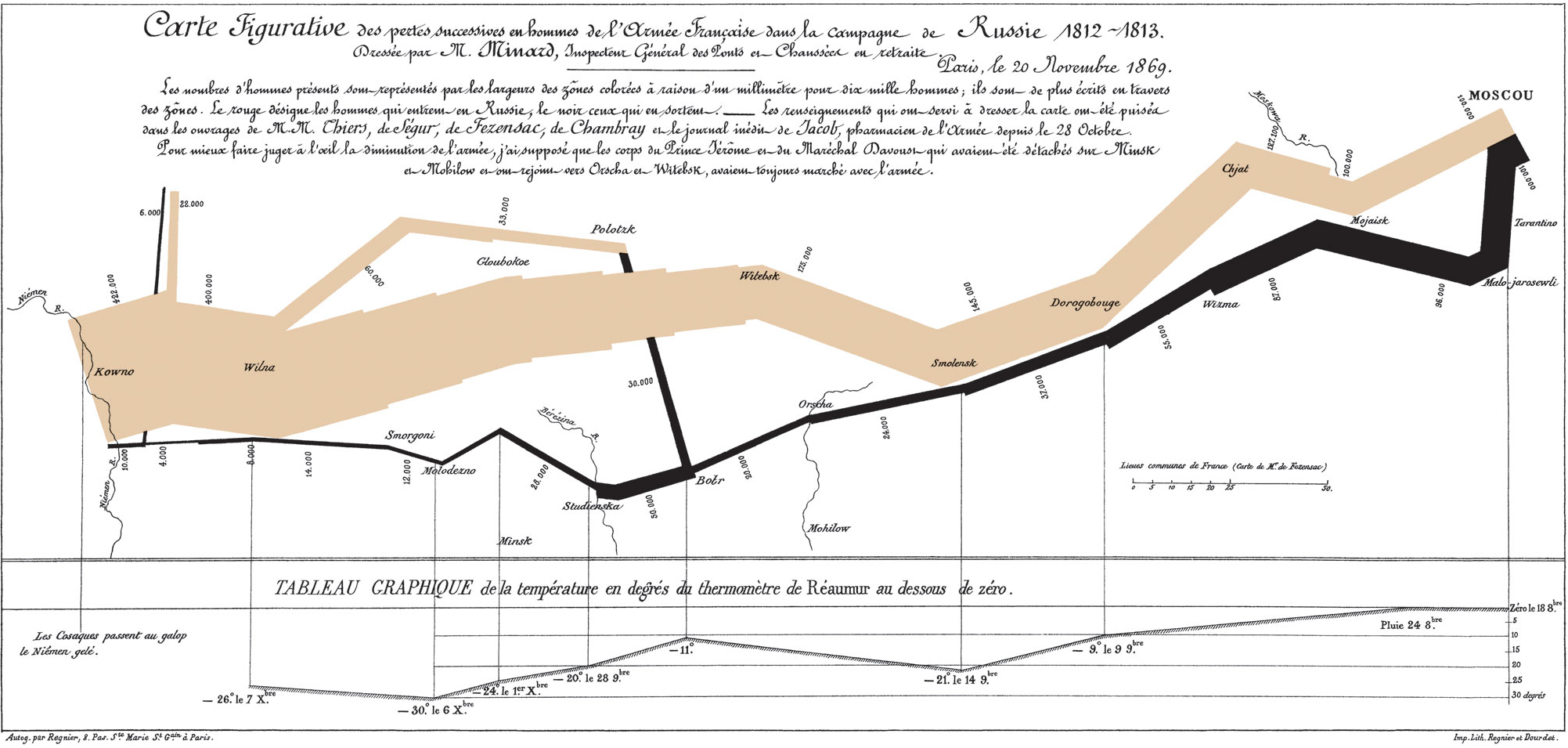
    So we set off, me and two colleagues, for a walk we predicted to take about 3.5 hours. One colleague was separating at Shinjuku, and one at Shin Nagano. At that point I would be on my own, and I had rather sensibly elected not to print a map. Of course, this is Japan so you can guarantee that someone will help you, but I think it should be clear here that I’m not part of that small elite of people who are going to survive the apocalypse. Though I did have good walking shoes (I recommend Whoop-de-doo shoe company for all your apocalyptic footwear needs). We set off at 5:30, and as soon as we emerged from the campus we entered a river of people. As we got closer to Shinjuku station this river widened, like the famous graphic of Napoleon’s advance on Moscow; everyone was heading the same way, towards the huge junctions at Shinjuku and Ikebukuro. The same river was flowing on both sides of the road, and in between us was a river of traffic, all moving very slowly and forced to delay at every crossing as thousands of people crossed the roads. The crowd was cooperative and quiet, as crowds always are in Japan, not pushing or getting in each other’s way even at the stupidly-designed crossing near the Shinjuku rail bridge, where a crowd 10 abreast coming one way hits the same crowd going the other way, at a corner where the pavement is barricaded from the road and narrows to two people in width. Even bicycles negotiated this chokepoint without yells or complaints. People just accepted that we were in this situation, and moved through and past each other with that quiet Japanese manner that makes everything here flow so smoothly.

    On the way we passed many things, but one thing we didn’t see was any evidence of earthquake damage, and everyone was chatting and joking as if this were a funny little outing, or a charity walk. At about 8pm everyone in possession of a docomo phone finally got their earthquake warning call (for the 2:40pm earthquake), and there was more joking about this. We didn’t have proper reception so noone could watch TV or receive information, so mostly we didn’t know about the catastrophe unfolding further North. I passed a bicycle shop where a queue of maybe 20 or 30 people were waiting patiently to buy bicycles, the staff frantically trying to assemble and register the bikes as quickly as possible; every macdonalds had huge queues outside as people gathered for food, and all the convenience stores where thronging with people, many queueing for the toilets. Some restaurants had put out signs saying “We have toilets, please use them,” which was a nice touch. Some shops had to close due to damaged stock (particularly the alcohol shops) but most restaurants were open and doing a roaring trade. I saw a cute scene of a man entering a rental car shop to be greeted by a staff member bowing with good-humoured and exaggerated obeisance, to make clear that this time, at least, the lack of available cars was entirely beyond his control. I passed a group of girls standing around their friend, whose feet just weren’t up to the task in her work shoes – I think this must have been a problem for many people. Groups of people were camping out in the rooms where the cash corners are located, some with their laptops out. At Shinjuku I saw the fascinating contrast of twenty or thirty people crouched under a shop entrance, with nowhere to go for the night; in amongst them was a homeless man with his possessions and, of course, his cardboard house, suddenly a prince among paupers as the usual order of Japanese life was turned on its head by nothing more than the collapse of the transport system. But for all of this sea of humanity with its congestions and minor tribulations and difficulties, I didn’t see a single person get in a fight. And no one smoked as they walked. They stopped at the smoking spots before continuing, preserving even the smallest of Japanese manners at this moment of confusion.

    All these people of all walks of life converged on Shinjuku, the hosts swaggering through the crowd past salarymen and schoolgirls and office ladies in little elegant gaggles, every tenth person wearing a mask. The traffic was still trapped in gridlock, inching forward, and we were moving much faster. Under the Shinjuku bridge and onward up Blue Plum Road, already 3 hours into our journey and me only halfway home. At Shin Nagano when my colleague left me I bought some hand-warmers (kairo) and stuffed them in my pockets, and kept walking until I stumbled on a cute little cafe, Doggie Boogie Cafe, where I took a break and had what I think is the best Thai food I’ve eaten in a long time. Here I rested for an hour before continuing, and now I walked alongside a pair of office workers who had set off an hour before me from Tokyo station, and had just finished their second break (this one, in the cafe with me, was for booze). They were still cheerful despite 4 hours of walking and 3 more to come, and they and the restaurant owner helpfully directed me to a shortcut to Kichijoji, down Itsukaichi Road. Here I found a bus stop for a bus going to Kichijoji station, but it was 10 pm and the last bus left at 9:20pm. Too bad! I had my ipod on now, and kept walking. At 10:50pm I passed that last bus, stuck in traffic and jammed with people. Further on I found the 9pm bus, stopped at a bus stop, and finally got to see something I have always heard of but never seen – two bus company employees actually pushing passengers into the bus to fit more on. One often sees this on TV but I’ve never seen it in real life, so that’s a Tokyo experience I can tick off… and I’m glad I didn’t have the experience of being pushed onto that bus, because I beat it to Kichijoji station when I arrived at midnight.

    So, I finally got home at about quarter past midnight, my only information about the disaster unfolding to the north coming from a single mail from my partner, that arrived during a patchy period of uncongested transmission at about 9pm, telling me it was bad. I have a friend in Iwaki City, which has been partially destroyed and may have to be evacuated due to the nuclear plants; I spent the evening occasionally trying to call him but the reception was impossible. Occasionally mails would reach me from various people, asking if I was okay or telling me they were okay, but this was intermittent. It was just me, alone in the cold neon night amongst a river of a million people just like me. And when I got to Kichijoji at midnight that river was still flowing but I, thankfully, was at the end of my earthquake odyssey and able to find out the true magnitude of the horror unfolding to the north. This morning Tokyo feels just like it did yesterday, as if nothing happened, except for the regular little aftershocks. I think it’s safe to say that this is a very good country to experience a disaster, even if (or maybe especially if) you don’t speak the language. Nonetheless, I’d have happily traded this experience – especially that minute in my office, wondering if I’m about to become a statistic (東京外国人1人死亡)- for a quiet evening with a glass of wine and a book.

    fn1: We’re across from the experimental research facility, where they probably have that technology.

    fn2: As a general approach to problem-solving, this is probably excellent

    fn3: Though I pride myself on understanding all of “A tsunami warning is being broadcast for the Fukushima Prefecture, and all people living in coastal areas should immediately evacuate.”

  • Brian Murphy at The Silver Key has been running something of a series of posts on realism in fantasy, and his mild objections to it. I have been commenting occasionally in mild support of this trend, because I think that the fantasy genre is very conservative and needs to have its perspective broadened and conventions loosened. This inevitably involves experimentation, not all of which is going to work; and the folks at The Silver Key are generally quite conservative, so overly prone to see any experimentation as some form of radicalism or nihilism. However, recently Brian posted about Richard Morgan’s new novel The Cold Commands as a continuation of this theme, and Richard Morgan himself turned up in comments.

    I’m a fan of Richard Morgan’s science fiction, but I hope that it’s been noted around here that I’m not shy of criticizing work I like, and Richard Morgan’s defense of his style of realism really doesn’t do him or the concept of realism in fantasy any favours. Basically, in defense of presenting gore in fantasy he refers to a poem by a Vietnam veteran that describes the “fierce joy” of murdering innocents, apparently based on real life experience. Richard Morgan has cited a war criminal as his muse. It shouldn’t take much effort by most people to recognize that defending your slasher-fiction on the basis that its honest to the experience of war criminals isn’t going to win you any favours with the majority of your critics (or, one hopes, your fans).

    But Richard Morgan goes one better than this, and presents this “realistic” depiction of war – as seen through the eyes of a murderer – as somehow preferable and more realistic than eliding the details or glorifying the emotional and spiritual dimensions of war.

    If Morgan wants to represent realism in war he has most certainly chosen the wrong path to go down here. A “realistic” depiction of the horrors of war would be much more likely to come from the eyes of the mundane majority of modern soldiery, that is the ordinary enlisted men who resisted the pressure to commit war crimes at every turn. These men didn’t write poems about how they loitered at the back of the squad, avoiding being too close to the commander who might order them to murder; they don’t make fine lines out of the “fierce joy” of firing high so they can avoid killing a non-combatant, only to have one of their more eager squadmates finish the job anyway. The only poetry that is written about these men will be the cruel beauty of Wilfred Owen, if they are so unlucky. They don’t get promoted by their war-criminal commanders, and if they take the ultimate risk of turning their arms on their colleagues to save innocent lives they don’t get medals until many years later. In modern war these men are the vast majority of the uniformed ranks, doing their best in very difficult circumstances to follow strict rules that have been laid down for them by a society that has spent 60 years learning what a nightmare modern warfare is. But there’s no joy in the “realistic” stories of ordinary squaddies doing their best to stay moral in immoral circumstances, so it’s much easier for Morgan to fall back on the psychopathic visions of a war criminal in his defense of “realism.” Give me Tolkien’s glorification of the nobility and sacrifice of war over this grubby version of realism any day of the week.

    I suppose as his yardstick Morgan should try reversing his role, and asking himself what muse he would take to his side if he were one of the Vietnamese villagers who survived? If Miyazaki Goro chose to defend his misinterpretation of le Guin’s Wizard of Earthsea on the basis of a poem by a decorated Japanese war criminal, would Morgan consider that to be of high merit? If Nabokov had defended writing Lolita through reference to the self-expulcatory ravings of some child-fucking Victorian-era pervert, would he be lauded for his difficult choice of representing “realism”? If Dostoevsky had defended Crime and Punishment through references to Chopper Read’s biography, would he have in no way diminshed his tale?

    Of course this isn’t entirely Morgan’s fault, because our societies seem to be going through a slow period of forgetting just how horrible and senseless war is. If Guantanamo Bay and the invasion of Iraq represent the nadir of that process of forgetting, it should always be remembered that these things can’t happen in isolation – they need a culture of forgetting to support them, and as we moderns get further and further removed from the cruelty and cost of the wars we start, and as the horrors we committed those years ago fade into distance, of course it’s easy for authors like Morgan to come along, raised and taught during the end stages of this process, and so manufacture justifications for literary savagery from the poetry of war criminals. But I like to hope that if the fantasy genre is reformed and its conventions loosened, it will not be just to shift its attitude to war from the pre-world war 2 justifications and elisions of Tolkien’s era to the self-serving ignorance of our modern times. We can surely do better than that.

  • The final session continued where the previous session left off, with our heroes standing on a pile of corpses… again.Having looted their victims, but none the wiser as to the purpose of the rat-catchers’ guild they were so efficiently destroying, they decided to go back to the start of the sewer complex and explore every room. Amongst the pile of recently-dead they found a map of the sewers in full detail, though it didn’t tell them that a nest of giant spiders was waiting for them near the entrance, or that the warehouse for normal sewer workers was situated perilously close to a Giant Toad’s lair, but inevitably they would deal with these obstacles in the time-honoured fashion. They returned to the entrance from the safe-house above, and set about exploring the remaining spaces in the sewers.

    The Giant Spiders

    Some distance from the rat-catchers they had previously killed the PCs stumbled into a room containing 4 giant spiders. The spiders’ attempt at a stealthy ambush was only partially successful, and in the ensuing battle three of them died very quickly. Several of the PCs were bitten, but no venomous effects ensued, and the remaining spider panicked and fled. The PCs discovered that its lair hid an entrance to an ancient jeweller’s workshop, and looted it accordingly[1]. This old gem cutters room seemed to have been long forgotten by the sewer’s other denizens, and the last person to stumble into this room was now enshrouded in webs, his last healing potion unused and free for the PCs to take. They marked the location of the remaining spider, and retreated to the main causeway.

    Toad-in-the-Hole

    They crossed from the main causeway back past the entry to the sewers, to another causeway that placed them roughly diametrically opposite the location of the spiders. Here the causeway flowed deeper into the sewers, but first it passed a storage room for sewer workers, the stairs from which led up to a perfectly normal city building, such as sewer workers might occasionally use to prepare for their work. This room contained nothing of interest, but at one end there was a closed door, which the characters wanted to enter. Next to it a rough note had been scrawled on the wall:

    Be careful of Frogs

    Assuming this to be a warning against some kind of giant beast, the PCs girded themselves and opened the door. They passed through into a large cave-like room, the floor of which was flooded with stagnant water. One of them threw a rock into the middle of the pool but nothing happened. They decided to what PCs throughout time and space always do in this situation, and press forward. Sure enough, as soon as they were into the pool, a massive toad lunged from the water and struck out with its tongue, which wrapped up Heinze the soldier and started dragging him into the pool. This toad was big enough to eat a grumpy Reikland soldier whole[2], so everyone charged recklessly into the fray. The wizard, unfortunately, had to pause to draw power, and Suzette the Disciple was also somewhat under powered. While Aruson the thief fired arrows into the toad’s repulsive, warty hide, Suzette grabbed its tongue and tried to help Heinze free his sword arm. She offered him just enough assistance to be able to get in one good strike, and he managed to stick his spear right through the toad’s mouth and out one eye. It gargled horribly and died. The PCs continued through the room to a rough-hewn tunnel on the other side, and stumbled on the secret they had been searching for.

    The Rat-catchers’ Secret

    Beyond the abode of the hungry toad was a dark corridor, at the end of which was perhaps a vague light. Aruson crept forward and found himself facing an opening into a larger cave, guarded by two rat-catcher sewer guards. He couldn’t pass them easily into the room and couldn’t see inside, but voices inside the room carried easily to his hiding place. He listened to a conversation between a frightened-sounding man and a strange, sibilant voice that was surely not human:

    • [Sibilant Monster]: Have you opened the entrance?
    • [Frightened Man]:Yes, it has been opened. Since we kidnapped the nobleman’s daughter he has been very helpful in teaching us how to open it. He still believes his daughter will be returned after we execute the plan.
    • [Sibilant Monster]: Good… but, recently your activities have been discovered, have they not?
    • [Frightened Man]: I’m sorry to say that we have been discovered by some new adventurers
    • [Sibilant Monster]: Do you think they’re servants of the nobleman?
    • [Frightened Man]: I don’t think that’s the case. The nobleman is too scared of losing his daughter to employ any adventurers. We don’t know why these adventurers have become involved. We’re moving against them, but the task has consumed many of my rat-catchers
    • [Sibilant Monster]: I don’t care to hear the excuses for your failure. If your organization is no longer convenient to me I don’t need you, and if evidence of your relationship to me is discovered before the attack, I will have to remove all evidence of it. Do you understand me?
    • [Frightened Man]: I understand. We will resolve this problem with the adventurers soon. Then my remaining rat-catchers will help you in the attack.
    • [Sibilant Monster]: That would be best. Your assistance in this plan has made it easier to carry out, but if you fail your organization will no longer be useful to me.
    • [Frightened Man]: (gulps)
    • [Sibilant Monster]: Okay, I’m returning. I leave this in your hands. Don’t fail me.
    • [Frightened Man]: We will put all our efforts in!

    This was followed by the sound of light footsteps, and a door being opened and closed. The Frightened man began calling in guards from other parts of the cave system, and the PCs realized it was time to act. Aruson picked off the two guards nearest to the PCs with a single volley of shots, and the group charged into the main cave. Here they found the boss of the rat-catchers’ guild, a bodyguard and 6 sewer guards. The battle that followed was brief and brutal, but soon finished with minimal injury to the PCs. They took the sewer lord captive, and offered him a simple choice – tell them everything or spend the last few hours of his life in the spider’s lair.

    With this option before him, and looking at the bodies of the last 8 members of his organization, the rat-catcher leader realized that his only safety lay in betraying his monstrous master, and he told the PCs everything. His rat-catcher’s guild was working as spies for a group of monsters that lived below the city, and had been doing their bidding for a little while. Most members of the guild didn’t know about these monsters and believed they were doing the bidding of a local nobleman. In fact the nobleman in question was doing what the rat-catchers told him, because they had abducted his daughter and were holding her prisoner as security against his good behaviour. In fact, his good behaviour was essential to the monster’s plan. They had uncovered an ancient entrance from the sewers to the Temple of Sigmar, but the door could only be opened by a specific key – a key that was a long forgotten heirloom for an Ubersreik noble family. This nobleman was from that family, and had found the key for the rat-catchers. Now they were biding their time, clearing out the area around the door and preparing for a large force of the monsters to attack Sigmar’s Temple from the sewers. Apparently there was something in the temple that they wanted, and they intended to slay all of Sigmar’s servants while they sought it. They knew that the High Priest of Sigmar would be away in Altdorf within a month, and so they were going to attack then, when she and her strongest bodyguards were away.

    The rat-catcher the PCs had found all those weeks ago when travelling to Ubersreik had been on a mission for the monsters. Apparently these monsters had been having difficulty with an orc tribe whose territory abutted their own somewhere underground, and had asked the rat-catchers to send a spy aboveground to find out if the orc tribe were connected to any other tribes or groups that would make it dangerous to attack. He had somehow failed, and the Orcs had been trying to dump his body in a way that hid their presence in the area when the PCs found him. It was purely through happenstance that the PCs had become entangled in the rat-catchers’ plans at all.

    When asked to describe the monsters, the sewer lord told them that they were a kind of twisted, monstrous hybrid of rats and humans.

    Skaven.

    The Rat Ogre

    The PCs demanded he take them to the nobleman’s daughter to free her, and he duly did, leading them down a long, dark tunnel. He didn’t mention, however, that the room at the end was guarded by a rat ogre. The PCs almost blundered straight into this beast’s grasp but were sensible enough to scout ahead. When they saw it they roughed up their captive a bit, then set out to ambush the Rat Ogre. Though fearsome in aspect, this thing fell quickly and easily to their combined forces, and they were able to rescue the girl from her captivity at the edge of the room. From there, having eliminated the rat-catchers’ guild, caught its leader, looted its possessions and uncovered its plans, there was nothing for it but to go to the Temple of Sigmar and explain the situation.

    Resolution and Rewards

    The High Priest of Sigmar was very interested in this news, and together they set a trap. The sewer lord was put under a geas and forced to return to the skaven and tell them that he had destroyed the adventurers, and that rumours abroad in town suggested the High Priest was moving a dangerous and evil item to Altdorf within days. The skaven would have to attack sooner than expected. This he did, and the Priests and soldiers of the town set a trap for them in the basement of the temple. A force of maybe 50 Skaven emerged from the sewers a few days later, and were set upon in a vicious battle that claimed many lives. The skaven quickly withdrew, but were unable to take all their dead with them, and so the town of Ubersreik were able to find physical evidence of those beasts that were previously only an evil rumour. The High Priest quickly took these bodies and their possessions away, “to do research in Altdorf,” and all that remained of the battle in Ubersreik was rumour and hearsay. The PCs were able to find out that the Skaven had entered the temple to steal a piece of warpstone that was being held there under guard while the Priests of Sigmar sought ways to destroy it.

    As a reward for their efforts, the PCs were given some money, and a deed of land title over Black Rock Keep, in nearby Heideldorf, where recently they had vanquished some mutants and uncovered a cannibalism ring. None of the players viewed this as a particularly good reward…

    Conclusion

    Because of my sudden move to Tokyo this campaign had to be wrapped up quicker than expected, so the truth of the guild and the skaven had to be revealed in a sudden ending rather than dripping out piece by piece. In my next post I will give some final thoughts about Warhammer 3, GMing in Japanese, and Skaven.

    fn1: In case you know it, I’m using an entry from the One-Page Dungeon for this adventure’s map…

    fn2: If you’re wondering how a toad that big can hide in a pond, try visiting an Australian crocodile farm sometime. In those places, beasts big enough to be dinosaurs can hide from view in a foot of water. They are truly loathsome beasts…

  • Apparently there has been a hundred year quest to find them, ever since Darwin’s contemporary discovered the first Zombie ants, but lost all records in a mysterious fire that destroyed his ship. Some new researchers have discovered them in Brazil. But will they, too, be ruined by a strange curse?