• When I was a student of physics I remember having to answer a question about what faster-than-light travel would look like, from the windows of a spaceship. I think it was in Mathematical Methods and Classical Field Theory[1], though it may have been Relativistic Field Theory[7], and I vaguely recall the answer involved stars from behind the spaceship (that you couldn’t see from the windscreen) slowly moving into the front view; as the ship got further from the lightspeed limit, more of these stars would come into the front and if you got fast enough you would eventually see all the stars visible to the eye in a kind of field in front of you, surrounded by darkness (or something). This, of course, would be when the gibbering madness set in, and one of your crew decided to torch the ship in honour of an unnamed god[9]. Note that this is very different to the Star Wars image, where all the stars blur. In fact, I think our solutions explicitly stated that at faster than the speed of light, stars can’t  blur (I can’t remember why).

    It’s a mark of how far we had come by the time we got to MM&CFT (3rd year, I seem to recall) to compare that question and its solution to the question we got in first year Newtonian Mechanics: do you get less wet if you run through rain?

    Currently I’m reading China Mieville’s Embassytown, and he’s writing about hyperspace quite a bit – he calls it the immer – which got me to thinking about different visions of hyperspace and how it can be represented in science fiction. It’s a topic of enduring interest to sci-fi authors, and there’s a lot of different ways of representing it. I can only remember four now, but here goes:

    • Mieville’s strange ocean: The immer is a kind of ocean of darkness and chaos, with its own predators that may or may not be life-forms, and strange beings that sometimes hitch into the realm of the living. There are tides, currents, and deeps, and it is navigated by humans who learn to work their way through these precarious shoals. It also makes humans sick to be in it, and it is conceived as running through or between the material of the universe. The universe we are in is the third universe, with two previous ones having grown and then collapsed; but the immer was there through all of them. This immer is dark and dangerous, rich in its own life and history.
    • Iain M. Banks’s strange geometry: in contrast, Banks’s Culture novels have a representation of hyperspace as a barren, mathematical substrate underlying physical reality; ships travel at hyperspeed through this substrate, and as far as I can remember there are no dangers or risks to them, except when they emerge too close to a gravitational source, which warps the substrate and increases the risk that the ship will be torn apart by entering or leaving the substrate. While Mieville’s hyperspace speaks of a mysterious and wild universe that humans explore at their peril, Banks’s vision speaks of a universe subjugated to human will, reduced to a toll-road with a few tricky interchanges. These different visions are very suited to the cultural backdrops of the novel, I think – an interesting pairing of the cosmological and the sociological.
    • Stephen Baxter’s Bubble: In Ark (the sequel to Flood) we get a description of an early attempt at inerstellar FTL flight. This time it’s a fragile bubble surrounding a spaceship, held together with huge amounts of energy, which draws the ship forward into a kind of gap in the space-time continuum. Anything touching the bubble from the inside is instantly torn apart, and once the bubble is set on its path it can’t be diverted or its direction changed. It’s very “realistic” sci-fi (he even gives a reference) and the whole story, both inside the Ark and in the science guiding its use, is based primarily around the constraints the science poses on action. The opposite of the Culture in every way.
    • Gateway Catapults: The staple of shows like Babylon 5, these present us with hyperspace as a kind of insoluble problem. Instead of navigating it, you get chucked through it by a massive catapult. Some ships (usually military) can open their own gateways into the swirling mystery of hyperspace, but others just hurl themselves at the gate and hope for the best. This is a vision of high science fiction where one of the fundamental mechanisms of the social order is actually quite primitive. We also see this in Dan Simmons’ Hyperion, where the decision to close the gates destroys whole societies – and is driven by the realization that the human “masters” of the gates never understood them or their real purpose at all.

    Hyperspace in its many forms seems like it plays a more important role in the universes of its setting than mere substance. It’s not just a scientific backdrop or a constraint on action; it takes a form which often reinforces or complements the style and cultural background of the novel. It’s a very good example of how the best sci-fi is not about the science at all, but about what it can be used to tell us about ourselves.

    fn1:literally the most evil subject you can take. This subject ate Electromagnetism and Advanced Quantum Mechanics[2] for breakfast and shat them out as a tensor problem you couldn’t solve by graduation, then laughed at your poor mortal brain and ate your soul for lunch. It was an evil subject, worth a paltry 2 credit points (out of 24 in my year), but which consisted of 6 assignments and an exam, and each assignment took – this is not an exaggeration – at least 50 pages of scrap paper, and at least 12 hours of our time. My friends and I had a shift system going in Lab (which, by comparison, was 9 hours a week and worth 8 credit points). One of us would work on the experiment while the other three used up copious amounts of paper trying to solve impossible problems in gravitational dipoles[3]. Then after lab we would charge off to our tutor’s room and he would infuriatingly refuse to give us the answers[4], even though it meant we would pester him again. Finally we would get a breakthrough, and off we would go to reduce the romantic image of moonlight and the gentle slap of waves on the beach to a series of Bessel Functions[5].

    fn2: for which I got 94%, yay![6]

    fn3: seriously, who knew the tides were soooo fucking complex?

    fn4: what can I say, we weren’t really paying fees at this university, we got in on merit and we survived by luck, effort and the regular application of sleepless nights and cask wine to every problem. No one thought we had any right to pass anything, and everybody forced us to study.

    fn5: Which, also, can I say, you guys suck.

    fn6: Which reminds me that the pure maths subject Lie Algebras – which apparently, people who understand it tell me, has some relationship to Advanced Quantum Mechanics – may have been harder than CFT&MM; but that subject was taught by a Mind Flayer, so I’m not sure if my memory of it is correct

    fn7: I’m pretty sure we had a subject called this. It had a lot of Tensor equations in it, and when me and my buddies arrived in our Honours Year[8] there was an equation pinned to the door of our room (from the previous poor bastard to study there) which consisted entirely of Tensor expressions, and took up a whole page of A4 paper (in a not-very-large font). We all stood looking at it, and said “fuck. What have we done?”

    fn8: Honours is an Australian idea, I think: because Australians are smarter than you lot, we do our undergraduate degree in three years, then our masters degree (and thesis) is compressed into one year with two extra subjects and called “honours” even though there’s nothing honourable about brutalizing young people in this way. In addition to having the kind of discipline and brains and educational background required to survive this kind of nasty, Australia also has one of the best rugby teams in the world. Dwell on that, Northern Hemisphere Losers!

    fn9: This part wasn’t in the official solutions, but I should think it’s pretty obvious.

  • Commenter Paul suggested that a Harry Potter RPG would be limited by the problem of knowing the characters and the world too much, in his words:

    1. You’re stuck playing a game where the grandest things that can happen are the books and your characters a left with a feast of crumbs. Harry Potter is facing Voldemort! Can you keep the Dementors from the folk of Hogsmeade while he saves the world?! Or
    2. You avoid the Harry Potter setting either in time or location, but these strip the familiar elements from the novels and rob you of the reason you’re playing it in the first place. Or
    3. You play Harry and friends, but you already know the plot that you’re playing through

    I think this is a similar problem to the kinds of situations you’d run into with, for example, a Dresden game or a LoTR RPG (or Dragonlance, as Paul noted). I’ve got around this in LoTR by choosing option 2), for example – and once ran a LoTR game where the players did 1), in Mordor – they were captured soldiers just trying to escape while the war of the ring continued somewhere far away. There’s no reason to think that the problem couldn’t be surmounted in a Harry Potter RPG.

    So here’s some ideas for two different layers of a Harry Potter RPG.

    For Younger Children

    You could have quite an entertaining little game getting up to hijinks in Hogwarts itself – it’s virtually a sandbox campaign if you want to play it that way, but there are specific inter-house rivalries and shenanigans that can play out against quite a deadly backdrop. I did this for a group of schoolkids I was GMing in Japan, having them start in their school club house and save the town of Matsue from a demon-conjuring older student[2]. You could set up a kind of Ars Magica style of multiple-PC setting, where all the PCs are from the same house, but with different (house-specific) skills, and perhaps with the players having a starting preference. Then, for different challenges in Hogwarts you choose your PCs to match. Maybe there isn’t even a death option, but if something goes horribly wrong you don’t die, you get Dumbledored: one of the teachers turns up and saves you, but then you’re in detention and suffer an xp penalty, or you have to play a different member of your school’s house while you wait for your previous member to get out of detention. Also the goal of some adventures could be mischief against older kids, and you could even define a term or school-year timing process, so that at the end of a fixed number of adventures all the students gain a level; the amount of individual adventuring the kids did in their year partially determines how much they gain from their year’s education (so you tie the adventuring to doing better in school). Thus a good campaign arc also follows the arc of the stories across multiple years; you could have event tables for the summer holidays and for the school as a whole that follow a Make You Kingdom kind of style. This gives the game a more campaign-y, abstracted style, with the players not having to care about getting too bogged down in individual PCs and getting to fully explore the environs of Hogwarts (and maybe it’s a different Hogwarts each time, if enough random tables are used). They can move onto the hard stuff as they get older.

    For “Young Adults”

    (To be said in a yobby English accent, while dancing[1]). Here the game gets darker and more focussed, with a more intensive character generation process and the assumption that the stories will involve only one PC each, in a more traditional style (we’re making a gateway drug here, remember – we need these kids to grow up and head over to the rest of the RPG world). So they can die or get injured, can carry psychological baggage with them (they’re teenagers, so there should be a lot of psychological baggage tables!) and they can come from multiple houses, with the possibility that they’re working for the interests of their own house as much as the group. This style of gaming can allow for hidden magic, forbidden magic, secret exits to town, wandering monsters in and outside Hogwarts, and the possibility of statting-up and fighting some of the teachers, who of course have their own agenda. It could also allow for post-graduation adventures, and the possibility that the PCs go on missions or quests either during or after their training – basically using Hogwarts, the Ministry of Magic and the strict rules of the Harry Potter world to construct a standard exploration/adventure campaign – with some additional mechanics for teenage angst, and a lot of cool narrative tricks for avoiding death, and for deus ex machina-type GM interventions (via Dumbledore). In fact, student-teacher relations could act as a kind of resource in the game, which would encourage players to hide their PCs shenanigans from teachers.

    I reckon that could be a lot of fun. There are fun spells from the books, monsters, lost secrets, there’d be pocket dimensions and monsters and forbidden potions and shagging behind the broomstick sheds – who wouldn’t love it? But in progressing through the system the innocent Harry Potter fans learn to love role-playing, and then at some point they think “ooh, I can do this in a world of my own invention!” and then we have a million new converts to our hobby.

    Mwahahahahahaha.


    fn1: gratuitous Young Ones reference!
    fn2: looking back on that post, the note I left the students as a clue really should have had a classic English translation of Japanese like “Let’s enjoy summoning a Demon together!!!!”

  • I recently watched the last of the Harry Potter movies,which was fun (and had a good dragon!), and thinking about it afterwards was struck by the absence of an RPG for this world. As far as I can tell, there is no official RPG. There are a lot of forum-based RPGs, but no apparent real ones. I’m pretty sure that this has something to do with the strict licensing rules that J.K. Rowling has put on her world, but I was also wondering if it might be related to the snootiness of RPG players and developers, who often seem to dismiss Harry Potter as either a) not serious or b) a rip-off of “better” books or c) too popular. Often I hear complaints from role-players about Harry Potter that seem to include all three at once. I wonder if this influenced developers’ decisions about whether to try? I also guess that Rowling doesn’t have much connection to the role-playing world, unlike, say, Jim Butcher or George Martin, and so didn’t entertain requests from developers with the same openness that she might have treated, say, movie-makers. Finally, I’m guessing that acquiring the rights to Harry Potter for an official RPG would have been expensive and would have involved a lot of development work

    Anyway, regardless of the reason for the non-appearance of such a game, I think it’s a missed opportunity for the RPG world. Harry Potter is as popular as Star Wars, and its appeal mainly lies with impressionable kids. A good, age-appropriate RPG for this mob, even if not a “proper” RPG by the standards of your average traditionalist, would be an excellent gateway drug for a huge cross-section of the non-nerdy community. Rather than expecting them to read a bunch of obscure texts from Appendix N before they can get into the game, they’d turn up at the ripe age of 13 having already absorbed the entire setting, and eager to get into it and do their own thing. For younger gamers even a semi-board game system, heavy on the fluff, or barely more advanced than a choose-your-own-adventure, would be fine. With a captive audience, a well-established world and a set of references that they’ve all read, there would be the potential to draw in a very large number of people who could be trained up for the fantasy genre and introduced to the ideal of RPGs. After that, I would say, some small proportion of them would stick it out.

    The Potter books are unique, too, for drawing an age cohort through them. People start reading these books at somewhere between the age of 8 and 12, and keep going all the way up to 16 or 17. A whole cohort of high-school leavers spent their entire school lives reading this stuff. Just as the books get darker as they progress, a well-designed Basic-Expert-Master style of game design could hook them in to a semi-RPG at 8 and spit them out the other end at 16, fully versed in demonology and necromancy. Even a lot of the spells have been written already, and there’s a whole bunch of stuff that could be run as a spin-off – an attractive miniature-based Quidditch system, a series of campaign books based on innovative involvement in the original story, some kind of card game based on all the Hogwarts characters (sold by house) – that could be either directly related to the game or just released by the same company. It’s the kind of thing that Fantasy Flight Games could surely excel at. And those 16 or 17 year olds would naturally start looking for other systems to play in their own fantasy worlds at some point – the benefits would soon spread across the entire RPG scene.

    It’s a shame this hasn’t happened, because I think it would invigorate the scene, draw in a lot of new blood from diverse backgrounds, and maybe give whatever company did it a sufficient revenue stream to enable them to not bastardize their other RPGs for maximum profits. I wonder if anyone thought of it, tried, and failed, or if the developers overlooked it from the very start? Whatever the reason, it’s a shame it didn’t happen.

  • Can you rise to the challenge?

    The most important sports tournament in the world starts in three weeks: The Rugby World Cup, which is being held in New Zealand, home to the best and the most under-achieving team in the world. Historically famous for choking at the crucial moment, this time around they’re serious. Very serious. So serious, in fact, that the Sydney Morning Herald reports that they’re going to invoke a nation-wide ritual of sexual abstinence, presumably hoping that they can funnel the sexual frustration of 2 million NZ men direct to the team. Do they need to kill a virgin to complete the ritual? Perhaps all that energy will be channeled through the haka.

    Truly, rugby is the most infernal of games.

  • When Britpop was Beautiful

    Summer is the festival season in Japan, and the music festivals come with it. My partner and I went to Summersonic this year, primarily to see Suede, and because the line up was a little boring, we went later than usual, arriving at about 4pm and missing some of the minor bands. Nonetheless, we had a good afternoon and evening. Of course the Japanese do music festivals the way they do everything – quietly, politely, and with a hefty dose of civilization. No watered-down beer and long queues for food here, because there were about 15 bars and about 50 food shops, as well as 5 or 6 stages, so that people were spread well throughout the place. The stage times were staggered so that there was no simultaneous throng of people leaving stages all at the same time, and there was a wide range of chill-out places. Unlike my disastrous experience with Snap, C&C Music Factory and “the KLF Experience” in Sydney many years ago, there was a huge amount of seating, so people were in good humour, well-fed and relaxed, with lots to do while they waited for their favourite band. This was despite the intense summer heat – it was 33C and intensely humid yesterday, and all the bands were sweating buckets, but everyone was chilled and there was no sign of violence or trouble. Ah, Japan… So here’s an overview of what we saw.

    Upcoming Chinese Music at the Island Stage

    The Island Stage was one of the smaller stages, and not many people were watching at any time, but it was particularly interesting because it had been set aside for a range of new bands from Asia – mainly Chinese, I think – and they were really interesting. First we saw Muma and Third Party, who I only saw one song by before they finished, but they seemed very promising. Next we saw Queen Sea Big Shark, who were like a slightly more New Romantic version of La Roux, slightly poppier and less electronic but very good and energetic. We then stuck around for the highlight, Rebuilding the Rights of Statues, who were a kind of Editors-meets-Bauhaus, frantic guitar rock goth crossover with a lot of energy and passion. Their first song, Bela Lugosi is Back, was a great reinterpretation of the classic original, a bit more speedy and with some frantic guitar loaded on. We liked these bands so much that we bought their CDs, and I’ll be keeping an eye on Chinese acts in Tokyo – the impression I got from this stage was of a lot of gothic/electronic crossover work going on in this particular music scene. Very interesting!

    Jon Spencer Blues Explosion

    Shit, stayed around for two songs. If you’re going to be a pretentious music-type wanking your guitar on stage, you have to be good.

    Public Image Limited

    I have my issues with Johnny Rotten, and I have my issues with bands steaming on past their old-age use by date (I saw Motorhead at another Summersonic, and they were good, but they just seemed like a bunch of old men going through the motions, and there’s something about rock that is young and stupid and at some point people need to give it up), and I quite frankly couldn’t care less if the Sex Pistols had never climbed out of their own vomit long enough to divert punk into its inevitable musical cul-de-sac (though without them we wouldn’t have the excellent Megadeth cover of Anarchy). But despite this, and a slightly doddery and past-it Johnny Rotten looking just a bit out of place in a rock gig rather than an old people’s home, PiL were good. He really can do that vibrato intense voice live, despite his age and the heat, and the guitar work was really really cool. I only stuck around for half of PiL (sorry Johnny, but I was more interested in Rebuilding the Rights of Statues and Suede) but what I saw was very nice, and I’m encouraged to listen to a little more – I didn’t realize PiL was so swirly and intense, having only heard a couple of their songs. So that was nice. But we had to flee before the end to get to the main act…

    Suede

    Now, I’m not so into bands reforming and doing money-making reunion tours, at least, not as a concept, but I can’t really criticize Suede for doing this. I’ve seen Brett Anderson live by himself and also in the Tears, and I know he can continue to produce quite beautiful and intense music – his creativity isn’t trapped in his youth. I also know he can produce passionate work (his solo rendition of Asphalt World at the Mermaid was amazing), and I’m pretty sure he has reinvigorated Suede for the simple reason that a whole bunch of his fans didn’t get to enjoy him live back in the day, and Suede always had a feeling of having ended before its time. So he’s not making anything new with them, just giving people what they didn’t get enough of back then. And I can’t fault it, because what he gives us is such vintage Suede, and so full of the original passion and grand intensity of the band, that one can only be carried along. Brett Anderson is intense, energetic, still astoundingly sexy (and beautiful) and if anything he’s better than he was back in the day. I’ve seen him in different guises four or five times now and every time he does this thing where, about half way through the performance, he really starts to get into it – gets transported to a different place, and really takes the crowd with him. And the crowd really were obssesively good, singing along to all the words and bouncing and screaming (and nearly crushing me when he came to touch the front rows). You can tell Brett Anderson really loves performing, and you can tell that his fans really love the attention he gives them. This was a vintage live performance, full of the classic songs delivered with the original passion, and if you get a chance to see the reformed Suede, I strongly recommend it.

    So, overall, Summersonic was a blast even though I only really went to see one band. I got to find out about a few new bands, enjoyed some really solid performances, and had a good (but exhausting) day out. Next year I probably won’t be going – the line up has been declining in interest every year, from the high point (2006?) when I saw Metallica perform the 20th anniversary rendition of the album Master of Puppets, and also The Editors and Tears. But it’s worth it if one of your favourite bands is there, because you’re bound to stumble on something else you like. Give it a try if you can!

  • Boromir Meets the Witch

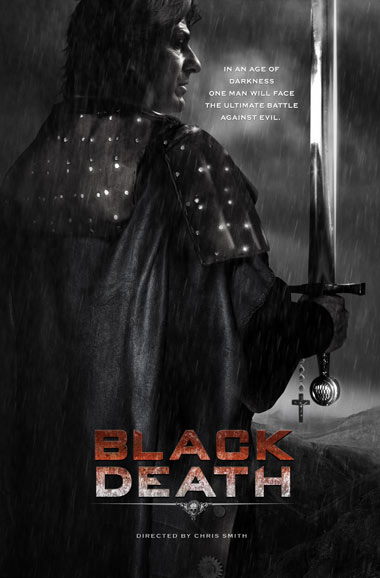
    It’s a Sean Bean boom over here in Kichijoji, with 10 episodes of A Game of Thrones followed up this weekend with the 2010 Sean Bean movie Black Death. In fact, a few weeks ago I watched Red Riding too, where Sean Bean plays an evil paedophile shopping mall developer. He’s always good, is our Sean.

    Anyway, so Black Death is a fairly basic story: it’s 1348, and the black death is ravaging Europe. Sean Bean is a holy warrior serving the church, who is leading an expedition to a village that, rumour has it, has managed to avoid the plague through necromancy. On the way he picks up a novice monk, Osmund (essentially the main character) who lived in the forest near the swamp that protects this village; he has his own reasons for wanting to go back there, and offers to lead Bean’s character (Ulrich) and their motley crew of degenerate witch-hunters into the swamp.

    Once at the village, of course, things start to go wrong, and the treachery and magic of the villagers leads the group into trouble. Unfortunately, things also went wrong for me, because one of the main characters in the village, supposedly quite a menacing chap, is played by the chap who was Percy in Blackadder. Can you take a necromancer seriously after you’ve seen this? How terribly menacing…

    However, if you haven’t seen Percy for four whole seasons of the funniest show ever made, then you can probably appreciate him in this movie, and then the last half of the movie, though a little slow, is still very good, and you get a reasonably disturbing, thriller-style ending to a good story. The movie is generally well-filmed, the plot is simple and straightforward (and thus has no holes), and the exposition is reasonably well done. The setting is quite splendid (Germany in summer, I think) and fits into the gritty/dark/realistic zone of the fantasy spectrum. The acting is a tad wooden at times but generally fine, and although it’s brutal and a bit gory it’s not too disturbing. I found the ending and resolution of the story a little disappointing, and it could have been a little more … decisive, but at least there were no pointless twists. There are no unbelievable monsters to kick the movie off onto a crazy tangent, either, so it’s more psychological thriller than horror. Overall, a reasonably enjoyable movie but nothing outstanding.

  • Britain’s rioters have been returning Games Workshop products, it has emerged.

  • I have just finished the immensely enjoyable Game of Thrones TV series, which is a thoroughly excellent and engrossing viewing experience and a fine addition to the genre. I don’t really have any substantive criticisms to level against it, except that it was too short. Oh, and that it was awesomely misogynist, and this misogyny was clearly intended as part of the fabric of the setting. Maybe I’m just getting old, or maybe it’s my terrible bleeding-heart leftism, but I am finding it increasingly difficult to ignore this kind of thing in TV and movies. Not in the “I refuse to give those bastards my money” kind of way, but just in the “I can’t help noticing it, and I’m a bit sick of it,” kind of way. I’ve noticed this in a few TV shows recently and I’m going to go out on a limb here and say two things: a) it didn’t used to happen and b) it’s a particular problem in modern interpretations of imagined (i.e. fantasy or historical) settings. There might also be a bit of c) modern writers think this is essential to establishing “authenticity” in non-contemporary settings, but whether or not I touch on this we’ll decide as the rant continues.

    Before I discuss this in more detail, though, a few points about A Game of Thrones. I don’t know how true the TV show is to the books, how much swearing and foul language there was in the books and how much Martin’s work was intended to be “gritty,” “dark” or “realistic.” I get the impression it was meant to be all these things, but I don’t know because I haven’t read the books. I’m guessing there must be something in the books to spur this kind of interpretation in the TV show, but then again – when the Sci-Fi channel made A Wizard of Earthsea they swapped the skin tones of the main characters, and Studio Ghibli completely fucked up the underlying philosophy of the same book, so … anything can happen in TV. So in discussing the TV show I’m going to talk about it largely on its own merits.

    So, let’s have a look at the misogyny in A Game of Thrones and the way it establishes the setting, and its essential unreality; we’ll look at some other modern creations (Deadwood, The Walking Dead and True Blood) for comparison, and then we’ll take some old ideas from Susan Faludi to examine whether what we’re looking at is a generational phenomenon in the TV/movie industry. Or is it just HBO? And maybe we’ll call on Rosanne Barr for support.

    The Misogyny in A Game of Thrones

    This TV Show (henceforth referred to as ‘Thrones) is rich with misogyny, primarily expressed through the language used by the main characters, though supported by the nature of the depictions of sex and the prevalence of certain industries (sex work and slavery) and their depiction in the show. There is a further element to the language used, though, which elevates the misogyny beyond mere deprecating language to create an atmosphere in which the female characters are constantly viewed in terms of their sexual vulnerability, and reduced to little more than sexual organs. This is the essence of misogyny – it’s not just bad language, or sexualized language, but an atmosphere of simultaneous sexualization and victimization of the female characters. In ‘Thrones this is very useful for setting the context of, for example, the Khaleesi‘s behaviour (or that of Stark’s youngest daughter, Arya), so that their resistance to suppression and attempts to rise above their status as women are all the more valiant for the fraught context. It also, however, creates a very unpleasant and exhausting environment for the viewer – something which on the one hand is quite good, as it makes the setting richer and more alien, but on the other hand is quite horrible since it leaves you thinking all the male characters are worthless scum, and makes it harder to sympathize with them.

    It is this atmosphere of sexualization that I’m primarily interested in here, though the use of words like cunt, bitch, slut and whore continuously throughout the series is a type of misogyny in itself. A couple of examples of the use of language to create a pervasive and detailed atmosphere of misogyny are:

    • Sex as a conquest metaphor: when approaching the Aerie, a castle on a promontory, someone in the approaching group says “This is the aerie, it’s said to be impregnable.” Of course, impregnable has multiple meanings, but someone else in the group has to make the sense of sex-as-conquest explicit by redefining the particular meaning of impregnable in this case: “Give me 10 men with grappling ropes and I’d get the bitch pregnant.” A perfectly natural choice of phrase at this point would be “I’d capture it” or “I’d take it” (or even her), which leaves the sexualized nature of pregnability implicit, or even chooses not to use it. There’s nothing inconceivable about these alternative choices of phrase. But the chosen phrase changes the meaning of the original statement, and sets an atmosphere of sexual menace over the simple task of visiting a castle (this isn’t helped when we witness the breast-feeding activities going on in the castle, but that’s a separate story…)
    • Degradation of the conception process: “Boy, you were nothing until I squirted you into your mother,” one lord tells one of his sons, in a meeting with Stark’s wife. This choice of words is both brutal and very pithily expresses the relative roles of lord, lady and younger son. It also brings to the fore the role of woman as penetrable or as a vessel – something that commonly happens in the dialogue in this show. They don’t just talk about “having sex” or “conceiving” or “fucking,” but about going inside, being inside, penetrating. They revel in explicit discussion of the nature of the cunt. But it also denigrates that place and its role, using crude or everyday language to reduce the sexual and conception process into mere plumbing, crassly expressed. What is a woman, but a bucket you squirt into?
    • Explaining the cunt: at one point, a guy who has been signed up to the Nightwatch tells another member “I’ll never be inside a woman again.” Again we see the man describing the sexual process explicitly in terms of the nature of the cunt. He isn’t just talking about not getting to have sex; he is talking about the details of the process. And he isn’t talking about women as a desirable thing in and of themselves (“I’ll never touch a woman again,” “I’ll never enjoy a woman in my bed,” etc). He’s talking about the one part of a woman that has any value in this show.

    Simultaneously with this language, ‘Thrones also sets out a world where women are extremely vulnerable and sexual predation is the norm. We see this in many ways throughout the story, and some of them fall into classic misogynist tropes:

    • The threat of child rape: the most shocking example of this is Arya, a girl of about 10, being told she will be raped if she doesn’t make herself look like a boy. But it is also implicit in the treatment of her older sister at court, who from the moment of her promise to Joffrey begins increasingly to seem like a girl at risk of being used, rather than treasured
    • The omnipresence of rape: The Khaleesi‘s story starts as rape, though it changes later; criminals on the Wall are often referred to as rapists, perhaps more often than is strictly necessary given the relative proportion of these crimes in society; basically every time the dol’thraci go to war they commit mass rape, and it is accepted and ignored by all involved (and spoken of as if it were merely scratching an itch). This is a vision of a mediaeval society where rape is a standard accoutrement of masculinity
    • The rock-star vision of sex work: sex workers (or “whores” as they are universally referred to) are a continuous presence in ‘Thrones, and they are treated in much the same way as they are imagined in the world of rock stars. In this vision, sex workers are all very beautiful, very sexually excited, very engaging, they love their work and everything they do is done just like a lover, only with more energy. No one ever gets any diseases from them, and they are all young and pretty. They also all love having sex with each other. This is pretty far from the reality of sex work, and there is way too much sex work in this show to start with – it’s as if the writers think that the entire world consists of housewives or sex workers, and there’s so many that every nobleman can find 6 to play with at the drop of a hat – and they’ll all be pretty and willing. It’s a rock-star’s vision of an industry that, I have no doubt, most of the producers have never experienced first hand. This madonna/whore stereotype is a classic sexist trope, which serves to establish “good” women in their place, who men in any case don’t like having sex with and “squirt” themselves into for the sake of heredity; and “bad” women, who men actually enjoy spending time with but sneer at for their fallen status. It’s an unrealistic and misogynist vision of women.
    • Death as sex: In one telling conversation, the King and his mates are swapping remiscences about their “first,” which turns out to be the first man they killed. The conversation is set up so it seems they’re talking about sex until they elaborate a little, and it’s clearly intended to equate death and sex. Have the producers been reading Andrea Dworkin? Or did they just feel like giving her (hugely controversial) theories a massive leg-up?
    • Unmatched sexual depictions: the only time we see a cock in 10 episodes is on a spy being dragged to death on a horse, and on a very old man who is clearly being depicted as a bit silly. Yet we constantly see tits and arse. This is a common representational inequality used when the viewer is assumed to be male, and serves to preserve the power of men as characters separate from their sexuality, while constantly reminding us that women are only sexualized.

    So this is the atmosphere of ‘Thrones: a combination of classic sexist and misogynist imagery and story components, combined with intensely misogynist language intended to define women as sexual objects and to render them continually sexualized whenever they are onscreen. This is the world that our producers have imagined for us. But in many ways it is a highly unrealistic representation of the way men talk and think about women. Not only is the sex work as depicted here completely divorced from reality, but the language the men use is not language that ordinary men use in conversation with each other. When was the last time my male reader(s) said to another man “I like being inside a woman,” or talked in anyway about women in terms of inside and outside, or even described any aspect of their cunts? How many of my readers would take the word “impregnable” as an opportunity for a rape reference? Has anyone here ever met the kind of man who would talk about “squirting” into a woman? Now, it might be argued that this is the language of the times, that men were different back then – if so, how come Eddard Stark never once uses language like this, and eschews “whores” due to a single historical mistake? Stark is clearly the character we the viewers are most meant to sympathize with, and he has clearly modern values. The other character we most sympathize with is the Khaleesi. She has values that are out of step with her own culture’s (witness her brother’s behaviour, or that of the men at court) but also of her adopted culture’s (she protects women from rape while the women around her ignore it as a necessity of war). This makes me think that the producers know that their viewers will be uncomfortable with the values they are presenting for their world. So why do they go to such lengths to create this environment?

    Misogyny in Other Creations

    I originally thought of titling this post “A Game of Thrones and the Misogyny of HBO” but I checked their past programming and they have a wide and diverse range of shows, some of which are very non-misogynist. Some of their other shows are, though, and I think the one that springs to mind quickest is Deadwood. Outside the HBO fold some good examples of very sexist (if not misogynist, for those who wish to make the distinction) shows are Mad Men and The Walking Dead. In the case of Deadwood, the producer has defended his use of words like cocksucker and fuck even though historical evidence suggests that the word cocksucker is a post-WW2 invention, and in the era of Deadwood men did not use sexual terms in non-sexual contexts. i.e. this whole image of fucking and sucking cocks as a derogatory concept is much more modern than these shows would have us believe. In The Walking Dead we see modern folk cast into a very pre-modern world, living as hunter-gatherers in a zombie apocalypse. They largely retain modern values about language and its use, but revert to very traditional gender roles.

    I think what we’re seeing here is a belief that “authenticity” requires misogyny and sexism, and a subsequent exaggeration of the nature of this misogyny, or even an imposition of modern understanding of what misogyny is onto a very different world and setting. This is most obvious in Deadwood, where we know that historically most swearing was blasphemy-oriented, but in the show the blasphemy has largely been dropped in favour of sexualized insults. It’s gangster-rap as a template for historical sexism. We’re not seeing a historically authentic brand of sexism, but the producer’s image of how men behave when they’re given complete power over women. I think this says more about the writers and producers than it does about the historical setting they are imagining. As further evidence, consider True Blood, which imagines a perfectly modern setting steeped with magic and violence. Here we occasionally witness misogyny and hear this type of language, but largely we see a world where women prey on men and women, men prey on men and women, and all’s fair in the war of the sexes. Obviously one could say this is because vampirism equalizes gender differences, but the decision to adapt these books to TV was a choice made: and I note that when people choose to make fantasy stories in the modern era (such as Buffy, or the soon-to-be-released American Gods) they choose novels that make it easy for them to tell stories that don’t require misogyny or sexual violence. I have a suspicion that the writers of these shows choose very carefully so that the imagined worlds they create are misogynist, but the fantasy stories of modernity are not.

    Why do they do this? I think that they do this because this generation of writers is more misogynist than their viewers. We have a lot of evidence we can call on to examine this possibility, because we can compare modern stories with older stories, and ask ourselves what has changed.

    Trends in writing, and the Backlash

    Susan Faludi’s Backlash describes the trend in 80s and 90s cultural products (particularly film) towards sexist and/or misogynist stories that are much worse than the material produced in the 70s, and she characterizes this as the result of a backlash against the feminist gains of the 60s and 70s. This backlash occurred across society, but is most easily seen in the movies and TV shows of the era. I think this backlash is still ongoing, but as men of a new generation have become increasingly used to women’s workplace rights, perhaps it becomes increasingly evident in the one area where laws can’t affect our relations with each other – cultural representations of sexuality. As women become more equal in bed, some TV shows increasingly try to react against this through a specifically misogynist, sexualized backlash.

    Susan Faludi described the particularly vehement response to the TV comedy Rosanne, which I recall as being a quite funny and very realistic look into the ordinary lives of ordinary Americans. This show was noteworthy for being very popular, but also being an extremely realistic insight into real life. It had fat characters, it treated inter-racial friendship as normal, and the family was a working class family completely disconnected from the fantasy of shows like Beverly Hills 90210. Faludi’s description of the backlash against this show is interesting, because it shows a range of highly gendered language used to attack Rosanne Barr, and also a great deal of discomfort about the idea of TV shows reflecting real life. Rosanne Barr herself describes the writing process of the early 90s as extremely sexist and openly degrading to women, and it’s no surprise that this persists into the modern era.

    This may seem counter-intuitive, since we’re supposed to have come far since the 60s, but consider a few simple comparisons. Which is more sexist – Lord of the Rings or A Game of Thrones? It could be argued that this is a fault of the genre – LoTR is high fantasy, while ‘Thrones is meant to be all dark and gritty and realistic. I don’t think this defence works, because Robin Of Sherwood was envisaged as a gritty and dark take on the Robin Hood stories, and it managed to completely eschew any sense of misogyny while carefully constructing an extremely authentic representation of a sexist mediaeval world. I also think it can be argued quite reasonably that women are better represented in the original Dawn of the Dead than they are in The Walking Dead. I’m willing to bet (though I haven’t seen it) that The Wire is much more misogynist than Cagney and Lacey. Choices are being made about which stories to show and how to show them, and somehow between the 70s and now, the concept of authenticity in post-apocalyptic or fantastic worlds has come to be equated with misogyny. I think this is a generational change, and its origin in the 80s and 90s is well described by Susan Faludi.

    The implications

    The really frustrating aspect of this is that we don’t have any control over the political messages that are put into the work we watch, and in general, because we’re rational adults, we tend not to boycott shows that are misogynist or politically very unpleasant if they’re also very well made (which most of the shows I’ve referenced are). We enjoy them despite their political flaws, especially if they’re in a genre (like fantasy) that has historically been mostly crappy. I think the writers know this, and they know that they can present whatever political vision they like if they’re doing a good job on the show itself. So we continue to sit through the unnecessarily vile language, the misogyny and the unnecessary rape- and sex-work stories (and, in fact, the unnecessary sex scenes and gore) because we’re watching the show for non-superficial reasons.

    The best example I can think of for this is internet porn. Internet porn is free. We watch it because we like porn. But (for Western porn, anyway) the majority of the free downloadable porn is full of vile misogynist language and some stuff that, I think, most men don’t care to see and wouldn’t ask for if they could commission their own movie – dp, face fucking, etc. But we watch it anyway, because we want to look past that stuff to see what we’re fundamentally interested in: pretty girls fucking. The people who make this stuff know this, so they present us with their politicized vision of sex, and we sift out the politics so we can enjoy the sex. Because it’s free, and in any case the market is saturated with these images, we have to tolerate all this stuff we don’t want in order to see a good fuck. The same is true of a good fantasy story or post-apocalyptic world. But it doesn’t have to be that way – it’s just that we have no way to send the message to the producers except to not watch what is, otherwise, excellent stuff.

    I imagine a lot of people will mistake this for a PC rant about sexism in art, and assume I’m calling for some kind of boycott or censorship or something (this is the internet, after all). It’s not, and I’m not. It’s not that I don’t or can’t watch this stuff, it’s just that I’m sick of watching shows where all the female characters are hysterical or weak; I’m sick of being told that women exist only to be fucked, or that any world where women don’t have the same rights as men has to be necessarily imagined as a sexually torrid and rape-centric barbarian’s paradise. I’m sick of people mistaking swearing for toughness (just as I’m sick of rock videos where people mistake tattoos for rebellion). This shit doesn’t represent the real world, or real relations between men and women, and I don’t think it’s particularly representative of the historical reality of how people lived their lives before women could vote or control their bodies. I hate being told by defenders of this kind of stuff (like the producer of Deadwood) that it’s authentic, and therefore must be unsettling or confronting, when even superficial investigation reveals it’s not authentic, and it’s actually an ahistorical impression of the writer’s imagination of how a sexist world works. I don’t need to be reminded that women have cunts. I’ve had sex with lots of women, I like cunts very much thank you, and when I see a pretty girl I am certainly capable of wanting to fuck her; but that doesn’t mean I see women as cunts, or think of them only in terms of their cunts and of being inside them, or that I want to watch stories about a world where women are constantly vulnerable to being fucked. I can imagine a perfectly good sexist world without being reminded about the pervasive (but very low) risk of rape for those women.  Rape is nasty, and I don’t need to be reminded of it every time I want an hour’s escapism in a fantasy world. This doesn’t make me squeamish, and I don’t need some idiot from Hollywood who can’t have sex without paying for it telling me that I don’t have the cajones to think about reality. Because none of this is meant to be reality, and I don’t watch TV stories about dragon-summoning Khaleesi so that I can be reminded of the worst aspects of reality, especially when those worst aspects are probably largely in the imagination of some woman-hating dweeb.

    Also, I like to be able to watch TV with my partner, and sometimes she gets a bit sick of being subjected to show after show in which she is told that, as a woman, she is weak or hysterical or vulnerable or good only for sex. Maybe one day she’ll stop watching fantasy, historical drama, and sci-fi shows if they keep being like this, and then I’ll have to watch them by myself, which is not as much fun.

    So, if you’re reading this, TV writers and producers: can you try and do a bit better? I know it’s really hard for you to understand real women, and it’s easier to make a world superficially authentic with a bit of swearing and blatant misogyny, but it’s a mark of your skill as a writer if you can do better than this. So why don’t you give it a go, you might surprise yourself. You might even find that people respect you a little more.

  • Defective young men and women…

    So I was at the gym this morning doing a quick AM session before heading off to see the Ghost Scrolls, when I saw a daytime TV show doing a special report on the “London NEET Riots” (イギリスニート暴動). This was a classic daytime TV formula, consisting of a studio set with a panel of 3 pretty young women, a slightly older female host, and an expert (in this case, male) drafted in to explain the situation. Like most experts on Japanese TV, he had a whiteboard divided up into many small segments, with which he would explain various aspects of the troubles. Each segment contained a question or quiz to be asked of the panel, who would attempt to guess explanations. Sometimes there would be footage from the riots, with a little cutaway showing one of the panel-members nodding and ooing and aahing. So this is how the discussion unfolded, after the initial background report.

    Child Rioters and The Police Commissioner’s Quiz

    First the expert discussed the presence of teenagers in the riot. The teenagers were presented on the whiteboard, of course, as cute little anime-style pictures of two archetypal hoodies, one white and one black. They were both wearing masks, dark hoodies, and they had their hands tucked into the pouches at the front of the hoodie. Both had the faces of children, but wearing the kind of ferocious frowning expression one sees on angry anime children. The panel were of course shocked that such kids would be involved, especially when the presenter revealed that about 10 primary-school children had been caught. The expert then went on to describe the Police Commissioner’s request for all parents to find out where their children are and not let them outside, and asked the panel why they thought this was. He unveiled two possible answers, one at a time: “because the children might run into danger” was revealed first, and the panel asked if it was true or false. He then revealed the red cross for “false” and followed this up with the next option: “because the children might do something dangerous,” followed by the green circle for “true.” There was, of course, stunned incomprehension on the part of our panel.

    The Cause of the Riots

    The expert characterized the riots as being the work of NEETS (Not in Education, Employment or Training). This is tying the riots straight back to the biggest fear of Japanese society, that sometime in the future their own pool of NEETs may grow in size and troublesomeness. Given that the current stereotypical Japanese NEET is a nerdy kid who stays home and refuses to leave his or her room, it seems they have a long, long way to go before they become a London-style not-so-neat NEET. But given the gulf in culture between Japan and the UK (oh god, looking at these riots the gulf certainly seems very wide!) this characterization probably gives the average Japanese person a reasonable point of reference. For most Japanese, the UK is a distant land of beautiful buildings and gentle manners, so they probably find it very hard to comprehend this current spate of ungentlemanly behaviour. Enter everyone’s bogeyman, the NEET… but more information than that is needed before the Japanese can understand the difference between the British and Japanese conception of the NEET.

    Who is Doing It, Anime Style

    The expert then produced a hilarious graphic depicting the three main identifiable groups involved in the rioting – or perhaps the three main types of NEET (I didn’t stay long enough to see him explain anything about organized crime). Again, the anime graphics come out, first the graphic describing the two teenagers, then a graphic describing “second generation migrants” (移民2世). These second generation migrants were depicted as a black kid, a Sikh kid (Japan always represents India symbolically as a turban), and a white kid (maybe European). They weren’t wearing particularly street-y clothes and didn’t have quite the same ferocious expression as the previously-mentioned schoolkids. Then the expert moved on to the third graphic: The Chav. That’s right, I just witnessed a whiteboard, on TV, in Japan, with the word “Chav” written on it, beneath a picture-perfect depiction of a male and female Chav. White, the man twice the size of the woman, his fist pointed out of the picture with dollar signs tattooed on it, his hair disarrayed, a stupid and slightly confused expression on his face. The woman was looking hard-faced and a bit slovenly, her hair tied back tight and up, both of them wearing jewellery and sports suits. Perfect! Next to it the translation: delinquent young white men and women (不良白人少年少女)。Perfect!

    Beneath each picture was an explanation of their basic lifestyles in terms the Japanese can grasp easily: The teenagers aren’t in school or work; the second generation migrants aren’t going to school; the Chav’s are not in regular or stable employment. The panel had to guess each of these categories before the expert revealed them.

    So there you have it, a canned description of the state of English society for those of you who live somewhere civilized. Given the events of the last 24 hours I’m not sure if you could characterize second-generation migrants as a big part of the riots (unless being killed by rioters in a hit-and run accident counts), and I’m not sure if “delinquent” is the best description of a Chav (or the best translation of 不良 in this instance; “inferior” or “defective” also applies, haha). But I think we see here the essence of the problem. Get an education and a job, you arseholes.

    Update: I found a screenshot of the picture of Chavs on Reddit…

  • It’s ET for the noughties! This movie, by JJ Abrams (who apparently made Lost), reproduces many of the major themes of that classic alien encounter movie. It has the energetic and investigative children, the military moving in to cover up the situation, parents who don’t quite get it, and bicycles everywhere. It’s even set very close in time, though one gets the feeling that Super 8 is actually a kind of follow-up to an alternate universe where the military gets its way.

    In this movie, a group of pesky kids are filming a movie for an amateur directors’ competition when they witness a massive (and excellent!) train crash. Aware that something is terribly wrong in the aftermath, they flee as the military swoops in to start securing the site. In the ensuing days people start going missing, bizarre things start happening, and the pesky kids start to realize that something very unreal and disturbing is happening. The movie follows the various shenanigans as, being just children, they slip under the military’s gaze and begin investigating the disappearances. Their investigations and the military’s activity lead to a tense climax, resolved through the kids’ innocence and basic good sense.

    The movie is darker than the original ET and more adult, but retains many of the same themes of friendship and discovery. It’s tightly scripted and the plot is tense and engaging, and the child actors are excellent. There seemed to be a few flaws in the ending and the resolution which were slightly less than satisfying, but I didn’t care because it had all moved so smoothly up to the finale and we all know roughly what was meant to happen, even if it didn’t quite seem as clear and coherent as it should – in situations like this, with a good movie that held your attention and kept you engaged in the characters, you can overlook quite a few flaws near the end.

    If you enjoyed ET as a kid and are interested in a more adult, more modern reimagining of the same ideas, infused with a slightly darker and more paranoid cultural background, then this movie will suit you very well. It’s tense, exciting, well acted and well scripted, with good special effects that are used very carefully to avoid overkill. Well worth seeing at the cinema, and a good addition to the alien encounter genre.