Today I received my copy of Fantasy Flight Games’ Star Wars: Edge of the Empire, along with some necessary WFRP3 materials. Edge of the Empire is described as a “beginner’s game,” which means that it essentially doesn’t have any character creation rules, has a very stripped down combat system, and contains a well laid out but slightly railroad-y introductory adventure. There are 4 pre-designed PCs, but no way to make other PCs. The rulebook is just 48 pages, the adventure book is 30 pages long, and there are also some tokens to represent PCs/adversaries, and a set of special dice. It really is a beginner’s game, though those with experience of other Fantasy Flight Games (FFG) product can probably hack it (see below). This is a first impressions review.
First of all, the product is very slick. It’s well laid out, in a sparse and modern style that gives the whole thing an atmosphere supportive of a space opera setting. The graphics in the book are very nice, in a space opera style, and the pictures are very heavily focused on Tattooine, which draws the reader’s attention to the original three movies and ensures a certain fidelity to the production. The text is perhaps a little small, so that at times when it is interspersed with the coloured symbols for the dice it is kind of dizzying. The general flow of the rules is sensible, introducing the basic dice mechanic first and then describing skills, then combat and finally a little bit of GM material. The maps are nicely drawn and, as you can see from the picture, include a YT-1300 light freighter. What more can you want?
The system is very light and easy to learn, and it’s a testament to FFG’s game design and presentation skills that the entire system, as well as the GM section, can be laid out in a total of 48 pages (including acknowledgements and index) – even though it includes a section on starship combat. The system is essentially a rules-lite version of Warhammer Fantasy Roleplaying 3 (WFRP3), with all the fiddly componentry stripped out. There are no action cards for combat, no talent cards or recharge tokens, but essentially the same system in place. Instead of action cards there is a talent tree, with individual parts of the tree purchased at varying xp costs and dependent on previous parts of the tree. The dice system is simplified but very similar to the WFRP3 system. In place of conservative/reckless dice and training dice we have “upgrades,” which are d12s that replace the basic d8 stat dice; challenge dice can also be upgraded. There are equivalents of fortune and misfortune dice, and so the whole thing works in a very similar way. There are also equivalents to banes and boons, and a thing called a triumph that works as a combined additional success/sigmar’s comet. So if you’re used to playing WFRP3 it’s pretty much just a straight conversion, but the dice pools are easier to put together than in WFRP3. Critical hits and wounds are also handled more simply: there are no wound cards, just a growing tier of effects, with every PC able to bear four critical wounds before they become incapacitated; each additional critical wound has an additional effect. For the beginner’s game there is no death, just incapacitation. The system includes no character creation rules but it does provide four PCs: a human smuggler, Twi’lek bounty hunter, droid colonist and wookie hired gun. These are laid out in very attractive “folios” that contain essential rules information. Each folio has three double page spreads: the first is the starting PC, the second gives the same PC with two character development options selected to show how development works, and the third is blank but for the character attributes, and includes a talent tree so that you can develop the PC any way you want. So essentially these folios contain (implicit) information on four character classes and four races, though you have to do a bit of hacking to work out the background.
The adventure is very well laid out and carefully designed for beginning players. It is partially a railroad: the first instructions to the GM are to make clear to the PCs that a) they have to escape the town they are in and b) they can’t go any way except by spaceship. It then lays out a set of six encounters designed to showcase the major aspects of the rules, up to and including starship combat. Each encounter includes boxed sections that contain reminders of the key rules from the rulebook, so a GM learning the system can quickly adapt without having to fiddle in rulebooks. I’m not sure how other “beginners” games lay out their introductory adventures but this seems like an excellent approach. Given the simplicity of the system, I suspect that after one run through this book most GMs will be ready to handle anything else. There is apparently a second adventure available free at the FFG website, but I haven’t checked it.
I think essentially in this game the people at FFG have learnt from their mistakes with the overly complex and fiddly WFRP3 system, as well as identifying better ways to introduce the system to new players and GMs, and intend to trial it with this stripped back version for Star Wars. This version is a little disappointing, in that it doesn’t offer any freedom for experienced players to just jump into the Star Wars universe, and for an experienced GM like me it seems like a rip-off. It also doesn’t provide much background material on the Star Wars milieu, which I really need (I don’t know anything beyond the stuff in the original three movies), and it is set in the early stages of the rebellion so is the perfect setting for exploring the world of the original movies with a fast-paced, simple and creative system. Given this, I’m disappointed that they didn’t include a second book of background material, perhaps with options for character development. I certainly hope that the next set they release in the series will flesh out the full system, including Jedi, so that we can have a complete gaming system for the Star Wars universe. I remain a big fan of the fundamental ideas underlying WFRP3, and it’s nice to see FFG committing to producing more material in a similar vein, while ironing out the creases in the original.
Finally, I think that the system presented here could be easily hacked to produce a rules-lite version of WFRP3. I might give this a go over the next few weeks, and see what I can come up with. In any case, I think it’s only a matter of time before the revised system presented here gets turned into a classic fantasy RPG. That will be fun, I think. Let’s hope that this Star Wars system is a success, and FFG are encouraged to apply its pared-back rules to other settings.
We are in a position where the costs of the Successor have to be paid for from within the MoD budget. There is no magic pot of money that is going to be created out of thin air to go on top of that. As a government, we have been very clear about that. Certainly myself and the chancellor. [emphasis mine]
This is an interesting phenomenon. Like most developed nations, the UK maintains a fiat currency system. That is, the government decides by an act of will (by “fiat”) how many pounds are in circulation. There is, quite literally, “a magic pot of money” that can be “created out of thin air.” Yet the current government’s chief of the treasury and its chancellor want to tell us that their is no such option for Britain. Now, it may be that creating money out of thin air carries political risks that they don’t want to bear, and a high-value strategic weapon like Trident is not worth the risk (after all, what ex-imperial power would want to invest lots of money in its military?), but they aren’t telling us this. They’re telling us that the treasury and the government are unwilling to accept the basic tenets of the financial system they are in charge of.
This little moment of magical thinking comes at a time when the Japanese government has announced a plan to do just the opposite – they’re going to spend 4% of GDP on infrastructure investment (aka “bridges to nowhere”) and introduce a huge new program of quantitative easing in order to try and get Japan back to inflation. This has the business pages of the western world in uproar, because the new prime minister (PM), Shinzo Abe, is acting against the economic orthodoxy that brought the UK its triple-dip recession, and which journalists love because their slow minds are very good at talking about “if this economy were a family” and “weaning society off the drug of government debt” but very poor at actually analyzing economic policy in a modern fiat currency. Thus we have Evans-Pritchard giving us a detailed account of how Abe is channelling his granddaddy, and we should all be worried about this (because Japan has a strict non-militarist clause in its constitution …? There are really no dots here to join). We have breathless quotes from ex-members of the Bank of England (which has a sterling record in preventing economic bangs) suggesting
‘When a large country with its own currency reaches its fiscal limit, growth ends not with a bang but a whimper,’’
Is there any sense in which this is even verifiable? What is a “whimper” in economic terms, and when did any country on the planet have its growth end with “a whimper”? Is this something we define through official statistics? Is three quarters of negative growth a whimper? What, for that matter, is a “bang”? Note that the man who coined this fantabulous piece of illusionism was a member of the UK monetary policy advisory committee and, despite that country’s spectacular recent failures, is still quoted as an expert on something (what?) by journalists.
Nothing makes economics journalists slobber more than the chance to deride Japan for its big spending, low baby economy. Thus we have Michael Pascoe essentially repeating Pritchard-evans in a cascade of frothing stupidity as he attempts to describe how terrible deficit spending is, but falling back only on the age-old canard of “Japanese men have small willies”:
Not only is a quarter of the population aged over 65, increasing numbers of Japanese women are deciding they don’t want to marry Japanese men and have their children.
I live in Japan, I know this schtick: it’s called “Charisma man.” Implicit in this kind of language is the suggestion that Japanese men are terrible and Japanese women are looking for something more … fecund. Someone who can rescue them from those terrible Japanese men who just can’t get it up. The sentence is an awkward construction, intended to emphasize that this lack of rogery is an internal problem. It’s also carefully constructed to elide any concept of progress or equality. Good societies breed. Bad societies have women who don’t want to marry. Heaven forfend that modern women might have control of their own fertility, and decide that children aren’t worth the bother.
Arguments about the need for more babies are heavily dependent on the idea that the proportion of government spending is a key measure of risk. Japan, we are told,
already runs on an unsustainable funding model, a level of indebtedness and spending that makes the Greeks and Americans look frugal.
This seems pretty strange to me. Good old unsustainable Japan, 10th most populous country in the world with no natural resources to speak of, 3rd biggest economy in the world, one of the world’s largest aid donors, the world’s major source of manufacturing exports, with many of the biggest manufacturing and service companies, the lowest infant mortality and the longest life expectancy. Also with very low unemployment and very low levels of inequality by any standard you care to measure. Poor, unsustainable Japan. What is it to do?
Never fear, another vapid journalist has a host of suggestions, because he understands “the merits of skepticism.” We are told that “Japan has become a nation that can’t proceed without the economic equivalent of a walker.” Remember, there is no magic pot of money, so any solution which involves government investment must be, by definition, “a walker” – even though almost every country on the planet is dependent on Japan for almost all its heavy manufacturing and high tech needs. There is no multiplier from government spending, not even if you’re a British company buying high speed trains from a country that developed advanced heavy manufacturing on the back of 100 years of industrial policy and targeted deficit spending. Fortunately, our intrepid journalist knows better. Debt is bad, government spending is bad, and Japan can’t sustain more. So we need to consider alternatives, encapsulated in these questions for Abe:
does he have a plan to make Japan more competitive to take on China or halt Sony’s slide toward irrelevance? How about ideas to make the labour force more flexible and international, starting with a new immigration policy? Or a strategy that inspires young Japanese to start new companies or families? What about freer trade? Increasing women’s role in politics and business? Even an energy plan that champions something other than the nuclear reactors Japanese fear amid earthquake risks? None of the above.
So this journalist wants Abe to simultaneously find a way to make Japanese technology competitive against a nation 10 times its size, wants to make it possible for women to enter the workforce and start families, wants more immigration to a nation with one of the most challenging language contexts in the developed world, and wants to dismantle nuclear energy policy – without spending a yen of government money. How is this going to happen?
The last time this idiot journalist traveled on a shinkansen, did he consider the effects of eliminating the government spending that made the train possible, while simultaneously dismantling the nuclear power system that propels it?
I think he didn’t. He also didn’t think about the actual barriers to immigration policy in Japan (most especially, the fact that Japanese don’t speak English) or the barriers to workplace flexibility. Japan maintains an excellent system of public maternity leave. Good luck getting your employer to give you the time off to use it – but this is the government’s fault, right?
Here we see a classic symptom of the modern commentator on Japan. Wherever Japanese government has achieved success, we hear economics pundits and journalists screaming about government incompetence. But wherever the truth might lie in the overwhelming power of Japanese corporations and business elites to determine policy, we hear a sudden silence about the role of government in weakening those forces. Anyone who has worked in Japan knows that the single biggest force influencing people’s decision to delay childbearing is the difficulty of finding family friendly work. This is a classic situation where government intervention and public spending can make a difference – but no commentator will consider those options. And so we have a strange situation where massive government spending has made Japan one of the most successful economies on the globe (without natural resources), but modern lack of growth is taken as a sign of the complete failure of government spending to make Japan better; while the private forces that dominate ordinary Japanese people’s lives are completely ignored.
The truth is that, while Japan has massive government spending and is one of the most equal societies in the OECD (with all the benefits for social cohesion that this brings), it is also one of the most schizophrenically neo-liberal economies in the OECD. Japan has limited workers rights, limited licensing laws or restrictions on the entertainment economy, businesses are self-regulating to an extreme degree (see e.g. TEPCO), university education is almost entirely fee-based, there is very little social welfare for the unemployed, and many utilities and services are essentially privatized. Yet when I read neo-liberals commentating on Japan I never read anything about how the Japanese economic model might present an example of a neo-liberal pathway to equality and happiness. Instead we have unsustainable spending, women who won’t breed (with dubious hints that they are waiting for a white man to show them what it’s all about) and the dead hand of government. Why can’t market commentators move beyond their fixation on Japanese government spending and start looking at the Japanese economic and social system as a whole? I don’t think I’ve ever read a discussion of Japan’s declining birthrate in the mainstream press that discusses the role of workplace culture in preventing child-rearing decisions. Ever. I’ve never read a discussion of Japanese government spending that mentions the bullet train, although it’s implicit in much of the discussion of Japan’s past. Every failure of the Japanese economy is slated home to the government, but all its successes – born on the back of a conscious industrial policy and a massive program of public spending spread over 40 years – are just good luck and corporate endeavour.
So my challenge to neo-liberals is: put your money where your mouth is. Admit that Japan’s laissez faire labour market practices are the real reason for its declining birthrate, admit that government spending worked to make Japan great, and then move on to construct a narrative in which Japan’s neo-liberal market elements and laissez-faire social order created, or helped create, equality and wealth. Spin me a story – how does this work? Is your knowledge of Japan and your ability to analyze economic systems more than skin deep? Or is the extent of your analytical ability “government spending bad, Japan proof?” Are you an economic commentator, or a neo-liberal parrot? Surprise me!
The north of the Steamlands is covered by a sweeping arc of human influence, reaching from the Spear Capes on the west coast to the Palace Cape on the east, where the human presence begins to wane under the influence of the Machine Minds. South of this arc of influence and west of the Palace Cape is a huge swathe of untamed land, referred to generally as the World Forest. This forest sprawls over mountains and plains, hills and rivers, and constitutes fully half of the landmass of the Steamlands. In the north and west it is dry eucalypt forest, merging with pine on the higher slopes; to the far south it turns to temperate rainforest, also primarily eucalypt, and here the Beastmen roam in what is commonly called the Beastlands. In the deep centre of this huge forest complex are the kingdoms of the elves, an ancient and reclusive race with many secrets, their own pagan gods, and a strange and wild magic that is unfamiliar to the humans of the north. Most believe that the elves and beastmen lived in the Steamlands long before the coming of humans, but this history is not clear, because there are no early records of contact between humans and elves, and it may be that the elves arrived later than humans. Although their sailing technology is primitive, it is noteworthy that the elves of the western coast – perhaps the least understood of all the elves – are remarkably adept at sailing, and have a stock of legends of long journeys that, though little studied by humans, suggest knowledge of events and places that are unknown in the Steamlands but can be dated back thousands of years.
If it is true that the elves came from elsewhere, no one knows where that elsewhere might have been, why they came to the Steamlands, or the relationship between their strange nature gods and the civilized gods of humans. Though congress between the races has improved in recent years, little exchange of cultural knowledge occurs, and it appears that the elves like to keep their secrets fast hidden. Thus, to the majority of humans the elves remain a race of barbaric wild folk, little better than Beastmen. Though explorers and adventurers returning from the World Forest report magnificent and strange cities, and marvels of nature lore and magic, most folk dismiss these tales as fanciful rubbish, and imagine elves as loose bands of tribal savages.
The truth lies somewhere between these two extremes. Elves are divided loosely into three groups: high elves, who live in the mountains; wood elves, the majority, who populate the deep forests; and low elves, who live on the coast and are expert sailors. The three groups share a language, though they have many dialects, and trade and sometimes make war with each other. The high elves seem to live mostly in small agricultural communities, farming the valleys of the high mountains and fishing on the lakes. The wood elves live in wandering bands that travel around loosely defined territories, living off the land. Low elves have small coastal communities, but spend much of their time living on the open sea, often returning to land only after months at sea. However, both the low elves and the wood elves also maintain metropolises: the cities of the low elves form at sea for brief, defined periods, as the boats of many small communities come together for festivals of marriage, diplomacy and trade[1]. The wood elves maintain permanent cities in the deepest, oldest parts of the forest, carved out of the wilderness and growing as part of it. These cities are often nearly empty, and populated on a seasonal basis as the wandering bands return from their travels. Different bands seem to maintain different, regular patterns of migration and return, but the rules governing these nomadic cycles are unclear to outsiders – whether they are religious, seasonal, or cultural is impossible to say. Because elves live longer than humans, and do not construct their lives around standard seasonal patterns, they seem to maintain longer cycles in their lives – so every 10 or 30 years the cycles of a large number of bands will synchronize, and the cities will become festivals of glorious noise and colour.
At all times elven cities will be occupied by travelers, diplomats, the elderly and the very young, as well as members of other communities at rest or play. They are also home to non-elven forest residents: centaurs, fauns, and a range of fey folk can be found in most elven cities. They also maintain strange colleges of magic and religion, shrines, and their unique agricultural and biological institutes, which fashion new and weird crops and make mysterious creations out of the stuff of life. In the World Forest, what is natural and what is created can be impossible for outsiders to distinguish, and it is not known whether the forest shaped the elves, or the elves the forest.
Elves can be remarkably diverse in appearance, with skin ranging from deep black through the palest white tinted with pale blue, green or copper hues. Their hair is usually black or blond. Universally they are small and slight of build, with delicate bone structures and exaggerated facial features – large, non-human eyes, oversized but delicate ears, and remarkable cheekbones. Their eyes usually show very little white, and can appear strangely non-sentient with their unblinking gaze. Their voices are remarkably powerful, with a wide vocal range and strange ability to project sound beyond the limits of their frame. They also have remarkable hearing, but it is easily confused by the mess of sounds in a human city – they can only employ their senses well when they are in the wilderness. Elves live perhaps three or four times the length of time of humans, and it is not clear if they are mammals. Males and females are indistinguishable, and their is no extant record of childbirth. Some suggest they are a mature (or immature) form of fey life – just an ephemeral stage in the fairy cycle – while others have suggested that they can reproduce asexually or sexually. More extreme theories also exist – that the elves produce children collectively through their will, which is why they have to gather in cities periodically; or that they are a static race incapable of producing new members of their kind. There is no record of the existence of a half elf, and dark rumours amongst those close to the elves that miscegenation of this kind is seen as abominable. The elves are also deeply resistant to the human religions, maintaining their own strange pagan worship against all reasonable evidence that it is worthless under the gaze of Sigmar.
The elves of the Steamlands are a strange, magical race that cannot ever be fully understood or accepted by humans. Nonetheless, their adventurers and traders travel amongst the humans of the Steamlands, cause little harm and, though not widely trusted, are usually accepted with good grace. Though many humans think a time will come when there is a reckoning between the races, and many humans see elves as inferior and barbaric, they are tolerated or accepted in most places. Whether the suspicions of their darker purpose will be proven true is a matter that only time will tell; and the truth of their past and their strange, alien culture is something that can only be discovered by the hardiest and most persistent of adventurers …
—
fn1: somewhat like the annual democratic meeting of the old Icelanders.
Mangoes are a fruit from heaven, much loved by all residents of the Steamlands, but the environment is inimical to their growth. Aside from the lush jungle of the far south, the climate of the Steamlands is harsh: cold, snowy winters and harsh, dry late summer and autumn make it difficult for a fruit as fragrant and delicate as the mango to survive. Mangoes in the Steamlands thus only survive around hot springs, where they are protected from the chill of winter and safe from the harshest excesses of summer. But because all hot springs retain a certain magical property of earth magic, mangoes have developed a kind of affinity for magic, and if the seed of a rotten mango is appropriately treated in a hot spring, it can become a cheap and durable vessel for simple magic. In particular, mango seeds that have been boiled in a hot spring can be enchanted with base magics and a trigger word, such that when thrown and activated they cast a low-grade spell in a small area.
To be enchanted, a rotten mango must be reduced to just its seed through treatment in a hot spring. Hot spring owners don’t allow rotten fruit in their hot springs, so usually this treatment needs to be done in a wild hot spring or at a friendly location. Unfortunately, wild springs have become increasingly rare as hot spring farming has become more common, and although a few exist around Separation City they are near the graveyards, and rumoured to be haunted. This means that preparation of mango seeds can be dangerous and time consuming. However, once prepared, they can be enchanted.
Preparation is not simple, however, and requires someone with knowledge of plants and hot springs. Typically the task can be completed by a wood elf, farmer, NPC specialist, or way watcher. Preparation takes about an hour, and requires a 2D nature lore check. Failure renders the seeds unusable, but success can affect the enchantment process, as described below.
1 success: the seeds can be enchanted
3 successes: +1 expertise die on the enchantment check
2 boons: reduce enchantment cost by 10 sps per seed
2 banes: +1 misfortune die on the enchantment check
Chaos star: one seed is cursed so that it only produces bane and chaos effects
The enchantment process itself costs 30 sps per seed. To enchant the seeds, the wizard gathers the ingredients and conducts a ritual that lasts one night. Mango seeds only hold magic from rank 1 spells, and no more than than three mango seeds can be enchanted at any one time. Only spells that produce a lingering effect can be cast on the seeds, and if the enchantment is successful these seeds will become a kind of grenade that, when thrown, afflicts a small number of enemies in an engagement with the lingering effect. Only magic (not blessings) can be used on the mango seeds, and positive enchantments can also be cast (affecting allies rather than enemies). The enchantment check is a 3D spellcraft check, with effects described below.
1 success: 1 seed enchanted
3 success: 3 seeds enchanted
2 boons: seeds gain the two boons effect
2 banes: seeds gain the chaos star effect
Sigma: seeds gain the sigmar +1 wound effect
Throwing the seeds is easy: they simply need to land in an engagement, so the task is a 1D ballistic skill check with no effect of enemy defense. Once the seed lands in the engagement, the targeted enemy or enemies need to resist the effects of the spell embedded in the mango. Because the mango seed requires activation with a special word (chosen by the enchanter) only those who know the command word may use them, and there is a risk of failure due to a poorly timed command word (hence the skill check to deliver the seed). Effects of seeds do not stack, so only one seed can be used in an engagement at any one time. This is reflected on the action card through the recharge value of the card.
An example card is shown at the top of this post. This card is assumed to have been enchanted with the Jade Order entangling spell. Other spells will produce different lingering effects. The condition invoked by the seed lasts as long as there are recharge tokens on the card.
It is rumoured that there are ways to treat mango seeds to make them reusable, but this magic is either lost or known only to the elves. It is also rumoured that the flesh of mangoes makes a useful ingredient for potions, but this may also be a secret known only to the elves…
When last we left our heroes, they had begun investigating the mysterious heresies being perpetrated by the Matriarch of Separation City. In this week’s session were the dwarven trollslayer, the human wizard, a human initiate in service to the war god Myrmidia, and the elven scout. Previously (though unreported here), the party had asked the healers they rescued to visit their onsen for a few days, to give healing to the guests there by way of repayment for having their lives saved. Let us assume that the coachman and roadwarden decided to accompany the healers back to the Onsen, and thus the party composition had changed.
The doctor’s hidden horrors
This session the group’s first task was to investigate the doctor. Given that the wizard, Sangar, was afflicted with a serious case of bog lice, and Aza’hi the dwarf had sustained a hideous injury that even the healers were unable to tend to, the natural way to investigate the doctor’s situation was simply to attend for a consultation. The PCs walked from Iron Ring to the settlement called Turtle River, a 30 minute stroll through rice paddies, orchards and the occasional stand of eucalypts, past the local temple of Sigmar. Passing the temple of Sigmar the PCs noticed it was strangely empty but for a small group of ragged-looking men and women who they subsequently discovered were refugees from farms to the west. They paid it little mind though, and marched straight into the doctor’s surgery for some medical care.
The doctor’s surgery consisted of a waiting room, a private office and the consulting room itself, and with the doctor currently seeing a patient only the receptionist was present. She bade them sit and then excused herself, explaining that she had to help the doctor with his tasks. While she was out of the room the wizard Sangar cast his newly learnt spell Whispering Wind, which he then sent wandering through the doctor’s private office looking for suspicious clues. He soon found that the doctor’s study contained a large table on which lay a partially dissected goblin corpse. The wind also warned him of a crate full of potions, and some kind of mysterious magical flask on a shelf. The group decided that while Aza’hi and the wizard were seeing the doctor, the elf Laren and the (as yet unnamed!) initiate would enter the study and investigate in more detail, guided by the remnants of the wizard’s whispering wind.
As soon as the two of them entered the study, they were struck by the horrors of the goblin’s corpse. In the gloomy half light of the office, with its partially severed head drawn back to stare blank-eyed at the door and its innards strung over a retort stand it was a truly hideous sight, even for those who knew what to expect. And the smell! So intense was the initiate’s shock at the sight of the corpse that he suffered immediate stress and began to shake. The elf, being typically unconcerned with the fate of lesser races, breezed on by and began investigating the corpse for clues. Between them they made short work of the room, and discovered:
A crate of metal vials, with a note indicating they had been delivered from Store to the Bloody Shower tavern in Separation City. A second note indicated that they were a cure for the ghoulpox, but advised the doctor not to treat lady von Jungfreud’s husband, and suggested that the potion would combine with her grief at the loss of her husband to make her more susceptible to suggestion. The note also told the doctor to suggest to von Jungfreud that she send the priests of Sigmar out to investigate an area west of Separation City that was suffering from the plague, and told the doctor that a messenger would come soon to give him the instructions for the next stage of the plan. This messenger would come disguised as a troupe of wandering performers, and he was to visit the troupe at midday to meet his contact once it had arrived. The letter was simply signed “F”
A single, strange flask, which contained a swirling green gas and was obviously dangerous. Subsequent investigation by the wizard revealed it would release a noxious cloud that could be used as a trap
Laren identified that the doctor had been experimenting on using the goblin’s brains as a breeding ground for ghoulpox[1]. Because elves mummify their dead, and all elves are taught the process when they are at school, Laren was an expert at removing brains through noses, and was able to draw the entire goblin brain out through the nose to take away for a sample[2]
A book entitled “The Proceedings of the Annual Conference of the Justified Experiment and Research Kommission” dated for a 10 year period ending about 10 years ago, that was so rich with evil magic that the initiatie of Myrmidia refused to touch it[3]
Having grabbed this stuff (except the book), elf and human ducked out the back entrance to the study, and everyone met up a little way down the road. From there they returned to Iron Ring, carrying the letter that proved the doctor had allowed von Jungfreud’s husband to die, and that he was in league with a mysterious man called “F.” Judging by the simple of the black crescent moon engraved on the bottom of the bottles, “F” was from the distant Shadowlands, which have a bad reputation for evil magic throughout the Steamlands.
The doctor’s secret schemes
Given this, the PCs decided to confront the lady von Jungfreud with their knowledge, and convince her to allow the healers to return. This didn’t work out for them, and she had them kicked out before they could convince her, and refused to believe any stories about the doctor. They did discover that she, too, was taking some kind of medicine that the doctor had given her – possibly a medicine that was causing her to be sick. Laren the elf sneaked back into her house after they had gone and stole a bottle of this medicine, but when Sangar the wizard investigated it he determined that it was actually a potion for curing disease[4]. He promptly drank it, to cure his bog lice, and incurred another, mildly painful symptom as a result. Sangar, always a puny half-man, was beginning to become increasingly debilitated under the weight of his disease symptoms.
The PCs were now confident that the doctor was running a very evil plan in the town, which involved driving out all the major religious organizations and then engaging in some kind of final act of heinous viciousness when his messenger in the travelling cavalcade arrived. They were further sure that he was acting in league with a dark power from the Shadowlands. The time had come to act. They took rooms in the Bloody Shower tavern and returned to the doctor’s surgery after it had closed for business. Their plan was to grab him, drag him down to the beach at turtle river, and torture him until he confessed to everything. This proved remarkably easy: he was alone in his office, had left the back door open, and had no defenses of any kind. They grabbed him in one round, knocked him out, dragged him to the beach, and with a completely minimal amount of slapping around he revealed everything.
The doctor, they discovered, had been a member of the Justified Experiment and Research Commission (JERK) in his university days. Mostly an avenue for young firebrand atheists in engineering and the physical sciences to rail against the power of the church, it was occasionally used as a vehicle for more sinister plots by evil tricksters. It was here that the doctor met a “famous phsyician” from the Shadowlands, who he now knows only as “F,” under whose thrall he slowly fell. All of his actions have been part of some plan of F’s, originally presented to the doctor as a plan to increase the influence of physicians in the Steamlands, but now apparently becoming something much more sinister. The first stage of F’s plan was the delivery of the ghoulpox treatments, and the revelation that the ghoulpox was ravaging the area to the west of town. As refugees came into the town they brought the pox with them, but this pox was immune to the efforts of the healers; at this point the doctor began treating them. He allowed von Jungfreud’s husband to die, and then suggested to her that she send the priest of Sigmar and all the dwarves in the town out to “cleanse the blight.” They never returned, probably ambushed and slaughtered (the doctor doesn’t know). He then, again on F’s advice, convinced von Jungfreud to cast out the healers. Aware that witch hunters would be sent to Separation City if the healers reached Heavenbalm, and not blind to the risks as von Jungfreud was, the doctor undertook to have the healers murdered on the road, and gave the bandits two goblin bodies he had planned to dissect for use as false clues as to the perpetrators. He expects the messenger from F to come any day now, with the final part of F’s plan. Realizing that it will be very nasty, the doctor has begun to realize that he has been used by a dark power, and is in way too deep in a scheme of great evil. He wants to escape it, and was eager to help the PCs if they can find any way to keep him alive.
The PCs offered to help him escape town if he would convince von Jungfreud to recall the healers, and also help them deal with the messenger. He agreed, and they went straight to von Jungfreud’s house. Confronted by the doctor’s confession and still suggestible from his medicines, she agreed to help him flee and to recall the healers. Having achieved this goal, the PCs retired to sleep, and wait for the arrival of the cavalcade.
The circus comes to town
Sure enough, the cavalcade arrived the following morning, with three large caravans rolling out of the hills into the open scrub in front of the main gates to Iron Ring. Four performers capered beside the wagons, leaping and frolicking, while two of the wagons were driven by a large, powerful looking couple whose pale skin and red hair suggested they hailed from the Shadowlands. The four performers approached the gate and asked permission to troop through town that afternoon, advertising their performance. The gate guards agreed, and the cavalcade was set for 1pm. The PCs, meanwhile, decided that the doctor should not visit the camp at midday as ordered, but should speak to the members of the cavalcade and arrange for his contact to visit him in the healers’ hospice that evening – where the PCs could set an ambush.
As the cavalcade passed through the town, the initiate managed to a glimpse of the mark of Nurgle, a pustulent emblem that grows on the bodies of those devoted to the chaos god of disease and corruption, Nurgle. The cavalcade were servants of darkness, indeed, and had to be stopped! Once the cavalcade had trooped through town, while the doctor was talking to the members to arrange the new meeting point, one of them slipped away in the crowd and headed towards the hot spring at the centre of town, carrying what was clearly a bag of pus. Suspecting an intent to spread disease, the characters sent the elf to intervene: she used an act of skullduggery to bump the girl carrying the bag, and replace it with a bag of rotten mangoes in the confusion. This worked, and so they were able to stop the town being given a second disease epidemic. The mangoes were cast into the onsen, and when the elf dragged them out later they proved to be quite delicious from the parboiling they had received. In the evening they would ambush the contact and find out if that was the entirety of F’s plan – they suspected it wasn’t.
The plagubearers
In the evening they laid their trap. The doctor waited in the main room of the healers’ hospice, and the elf Laren hid in a storage closet close enough to hear all that was said. The remainder of the party waited outside, hidden in the darkness. Soon they saw who F had dispatched to meet the doctor:
A tall, thin man wearing tattered, broken armour and rotten clothes, carrying a sword. He was obviously riddled with disease, but also obviously reeked of demonic magical power
The two Shadowlanders, armed with hammer and sword
A great, fat horrifically disfigured humanoid, perhaps 2.5 m in height, dressed in rags and hobbling along on one twisted and ruined leg. His belly was cut with deep slashes from which guts and pus oozed, and his body was covered in sores and pustules. His face was a mess of snot, blood and decay, and behind him trailed a miasma of stench. This was a class, old-fashioned plaguebearer of Nurgle, dragging himself through the night in all his inglorious horror
Three cat-sized disease imps, misshapen devil figures commonly referred to as nurglings, that chuckled along behind their sorcerous master
This misshapen crew of festering evil slouched its way into the healers’ hospice, clearly relishing the chance to defile somewhere so pure and simple. Once they had all shuffled, chittered and oozed their way inside, the sorcerer spoke to the doctor. Outside, the party ghosted in towards the door, ready to spring a trap as lethal as they could think of.
In a voice that hissed and sighed with sickness and ruin, the thin man said to the doctor, “You were told to come at midday. You did not. This has inconvenienced us, and it angers me. But no matter, you have arranged to meet me exactly where I wanted you. Now we can enact the last stage of our plan – which begins with killing you.”
The next couple of seconds were filled with the doctor’s gasps, gurgles and final whispered pleadings as the plaguebearer smothered and destroyed him. Fortunately, none of the PCs were there to see it, and by the time they could burst into the room the doctor was already done for. Unfortunately, the dwarf had failed to move quietly enough, and the thin man was ready. He cast a spell as our heroes burst into the room, drawing about himself a swirling cloud of dark and diseased power as a cloak of protection.
Laren fired an arrow from the darkness that penetrated this cloak; the initiate succesfully hit with his mace, and Sangar conjured thorns all through the sorcerer’s body that harmed him viciously. Unfortunately, the sorcerer was protected by the mark of Nurgle, and though the elf could not be seen from her hiding place, nonetheless she was struck with a horrible disease. The dwarf slammed straight into the plaguebearer, dealing a vicious wound with his sword, though not so vicious that the plaguebearer was not able to strike back …
… and at this point the session ended for the night. In six weeks we will rejoin our heroes as they do battle against the servants of Nurgle. Will they come out of the battle alive and free of the pox? Fortunately, the healers will return in a day’s time … if anyone is left alive to benefit from their services …
—
fn1: she rolled a chaos star on a failed observation check.
fn2: originally I was going to have her just dig around in the skull, thus incurring a disease risk, but she proposed this part of the elf’s past, and for her creative interpretation of her character’s history I decided to let her escape the disease check
fn3: he also rolled a chaos star on a successful observation check specifically targeting the books.
fn4: two chaos stars on an unsuccessful magical sight check
He is not impressed by ontological arguments in favour of a higher power
This session report comes a little late, but continues the Steamlands Campaign that I am running using Warhammer 3. This is a report from a session late last year, when we had a slightly different-sized group of players, two of them completely new to the campaign. This session we had the Wizard of the Jade Order, the dwarven Trollslayer, a human Coachman and a human Roadwarden. Conveniently this group was somewhat better composed for combat.
When last we left our heroes, they were under attack from Beastmen, but the Roadwarden had pulled off a cunning trick that saw the leader of the Beastmen – a 12′ tall wargor – dragged along the road with its head trapped inside the group’s wagon, and the lesser Beastmen – the ungors – all entangled by the Jade wizard. At the start of this session those four ungors had been slaughtered where they stood, and the party had regrouped ready for the return of the wargor. They knew he was returning from the road, because as they gathered themselves in the clearing they could hear his rage echoing through the woods ahead. First the clatter of hooves and thunder of the wagon wheels; then a roar, a crash and a scream; silence broken by wet tearing sounds; and, finally, the approaching roars of an enraged beastman.
After just enough time for the Jade wizard to lay some healing on the Roadwarden, and for the others in the group to catch their breath, the wargor re-emerged in their clearing. Pieces of the wagon were still caught around its horns and neck, and in one huge clawed hand it held the back leg, hip and part of the spine of the donkey that had been hauling their cart. This monstrous piece of loot still steamed in the cool spring air, and the beastman himself appeared to be chewing on a large chunk of something donkey. He also clearly wasn’t happy: entering the clearing, he let loose a great roar and with a contemptuous shrug hurled the portion of donkey through the air at the party. It landed with a wet splattery thud and explosion of gore nowhere near the characters, and in its wake the beastman hurled himself into the fray.
The battle was short, brutal and surprisingly successful. The Jade wizard used entanglement to slow the beast, the Coachman and Roadwarden shot him, and the Trollslayer eventually cleaved him twain. Though they were terrified and some of the party could barely bruise the beast, they prevailed without injury. Having successfully divided the wargor from his underlings, the party could gang up on their single foe and destroy him before he had much chance to strike back. They cut out his tusks as proof for a bounty, and proceeded on their merry way to Separation City.
The healers and the bandits
The following day, when they were just a few hours from Separation City, our heroes stumbled upon an ambush just commencing. On the road before them a heavily-armed bandit was poised to deliver the coup de grace to a wounded soldier; beyond him two seriously wounded healers of the Shallya cult leaned against a driverless wagon. In the undergrowth near the road were three more bandits, armed with crossbows and preparing to fire on the wounded healers. Such a circumstance is almost unheard of in civilized lands – the healers of Shallya are welcomed everywhere they go, and rarely need to travel with a guard because even bandits will receive healing from them when it is needed. The party were suitably incensed, and immediately attacked the bandits, but upon seeing the Trollslayer the entire group turned and fled into the hills. The Jade wizard tried an entanglement spell that failed, but the party weren’t entirely without luck: one bandit tripped over something in their hideout, and the characters captured him before he could get up again.
Once they had helped the healers to recover, the party interrogated the bandit. He had tripped over the body of a goblin, wrapped in canvas, that the bandits had brought with them, and revealed that they had intended to leave the body as evidence that the healers had been slain by goblins. In fact, the bandits had been hired by someone in Separation City to ambush and murder the healers. The bandit didn’t know who had hired them, but told the party that they could find out if they managed to track down the leader of the bandit tribe, a man called Max Fleisher who could be found at the Bloody Shower tavern in Separation City – or in the bandit camp back in the foothills.
The healers had no idea why they had been targeted by the bandits. However, they did tell the PCs that they had been cast out of Separation City by the town’s matriarch, Lady Agnetha von Jungfreud, and were heading to Heavenbalm to complain to the head of the church there and gain redress. This is extremely unusual – casting out Shallyan healers is an act of heresy, and it was likely that were the healers to make it to Heavenbalm the consequences for the matriarch would be severe, up to and possibly including being burnt alive at the stake if an investigator from Heavenbalm could determine that Chaos was the cause of the heresy. And the good prosecutors of Heavenbalm always find the truth …
The healers, of course, being good folk of Shallya, were worried for the Lady von Jungfreud, and asked our heroes to rush to Separation City and give her one last chance to change her mind. They themselves had been denied an audience with her, but were the characters able to get an audience the healers are sure they would be able to convince her to change her mind. Were the characters to act this very day they might be able to send a fast horse to recall the healers, and thus avoid any unpleasantness for the town.
The healers could not explain the reasons for their exile, except that the town had been struck by ghoulpox in the past year, and for some reason this particular pox had been proof against their ministrations – “perhaps Shallya’s grace left us for a time” – so that only the town physician, Dr. Wilhelm Verfullen, had been able to have any success against the pox. The healers had failed to save von Jungfreud’s own husband, and only the physician’s swift intervention had saved her son and her, though von Jungfreud was now hideously scarred by the pox. In rage at the healers’ failings, she cast them all out and gave their hospice over to the physician.
It seemed likely, then, that whatever heresy was afoot in Separation City must have some relationship to whoever hired the bandits. The PCs pursued the bandits into the hills, following a narrow path leading away from the ambush site. Even though they approached cautiously they were too late to stop the bandit leader escaping, managing only to kill two of his cronies. There was nothing for it, then, but to proceed to Separation City and act quickly to try and convince von Jungfreud to recall the healers.
Separation City: von Jungfreud’s declaration
At the gates of the city the party were stopped by some slovenly guards, and read the following declaration:
By order of Lady Angetha von Jungfreud, the Dowager Lady of the Manor of Hugeldal.
Within the town of Hugeldal and its immediate environs the performance of Shallyan miracles is proscribed on pain of a fine of up to 10 gold crowns, the threat of the gentler tortures, and banishment.
Should you require medical attention whilst in Hugeldal, please visit the former Shallyan temple hospice in the Iron Ring, where members of the most worshipful Guild of Physicks will minister to any and all afflictions for a competitive fee and to high professional standards.
Not only had von Jungfreud cast out the Shallyans, but she had put her own personal seal to a written declaration to that effect! This was undoubtedly heresy, and apparently a heresy that benefited the physicians of the town most. The characters decided to take rooms at the Bloody Shower tavern, and to investigate further the mysteries of the town and its heresies.
It is here that we leave the PCs, preparing for a visit to the good doctor himself to find out what he knows and to try and seek healing for their wounds. They then intend to visit the Dowager Lady herself, and to hunt down the bandit leader, before bringing the strange heresies of Separation City to a close … if stranger things do not lurk beneath the surface of this heresy …
I discovered tonight that my blog has come to the attention of a Muslim scholar in the UK, in a piece he wrote about the UK census. Like me, this scholar noted the obssessive focus of the UK press on the growth of Islam, rather than the explosion of atheism[1]. Unlike me, the writer of this piece didn’t comment on the simultaneous release of gay marriage laws that privilege the bigotry of the mainstream churches. I wonder why?
Anyway, in previous posts here I have presented the use of Tolkien by fascists as evidence in favour of my thesis that his work is racist. So it’s only fair that I hoist myself on my own petard, and have a look at what kind of people hold my work in high esteem[2]. If we can find even one work by this website that supports the veil, then surely I’m anti bikini? Right?
Fortunately, the Islam21c website gives a convenient collection of all the works of the scholar in question, Shaikh Haitham Al-Haddad, so we can read his opinions in full, and an interesting read they are. Essentially they read like your standard form of leftist religiosity, with perhaps a touch more homophobia and prostration than one might see of a Catholic liberation theologist, but generally in the same vein – they’re the sort of thing that a mainstream leftist christian in America would probably approve of (minus the “peace be upon him”s) or that a conservative Australian catholic unionist (or even Tony Abbott) could get behind. They also have a particular theme that you won’t find in the works of a “mainstream” religious activist in the UK – how to deal with being a Muslim in Britain. And in this regard they don’t read particularly differently to the opinions of a practical Marxist or fascist, in that they attempt to provide guidelines for how to conduct oneself in a world that one simultaneously appreciates and enjoys, but finds morally bankrupt and which (to a greater or lesser extent depending on one’s political and religious leanings) rejects you or your kind. Thus we find advice on whether or not to vote (do so, but do so from a framework of minimizing evil, and aim to follow the advice of Muslim scholars about which party to vote for); advice about how to respond to the killing of bin Laden (which, funnily enough, contains no advice; but condemns al Qaeda while blaming everything on America); an opinion on the London riots (morally reprehensible, but driven by racism and the exclusion of the poor from education[4]); and recommendations about banking practice (if you hold views which require a boycott, as do e.g. vegetarians or environmentalists, then you need people to gather information and present their opinion of whether particular products are valid to use[3]). Every gold card should have a fatwa!
More interesting is the site’s attempts to describe the nature of the hijab (voluntary, but recommended to all), the issue of immodest hijabs (yes, they exist!) and the problems inherent in treating the hijab as a symbol of identity rather than an act of worship (I actually thought these readings would put many a post-structuralist feminist to shame); and most interestingly, its ongoing series of posts on what it means to be British in an Islamic context, built around a debate with another Islamic scholar about the role of music (very appropriate, given the strength of British culture in the production of music). Would that mainstream journalists in the UK could put as much thought into these issues as this obscure website has done! In this context I thought the open letter to David Cameron was particularly impressive.
Although I think I can say I disagree with almost everything on this site, I think I understand the fundamental struggle it describes: to try to live according to a strict set of moral precepts in a world that doesn’t agree with them, or that agrees with them in principle but doesn’t support them practically. You can see this from christian fundamentalists, vegans, pacifists and some kinds of Marxists and libertarians, and the personal struggles their websites describe are all the same. Unlike some christians in the west, though, this site is more honest: it directly blames the Japanese tsunami on a failure to embrace the correct God – a view this tired atheist would have once got angry about, but now appreciates for its cruel honesty. The more times that religious people say things like this, the more potential followers they will lose, because in statements like this they reveal the fundamental cruelty of the god they claim loves them, and the responsibility of all right thinking people everywhere to oppose those gods if they were real. Anyone who submits to a god that kills 10,000 people even though they have never had a chance to convert to his “love” is lacking some fundamental understanding of what compassion is. Or is being very bloody-minded. Either way, it’s better that these things are stated openly than clothed in mealy-mouthed excuses about “the problem of evil.”
Anyway, the post-colonial critique of mainstream analyses of Islam was good, as was the debate about what it means to be British, and the subjugation of nationalism to the greater struggle – very much in keeping with the major streams of international socialist thought. Shame about the hocus-pocus, but you can’t have everything – but who cares when you can hoist faustusnotes on his own petard, and prove without a shadow of a doubt that my website is opposed to bikinis!? And, no doubt, objectively pro-terrorist …
—
fn1: incidentally, my spell-checker notes that “Islam” requires a capital “I” whereas “atheism” does not need a capital. Typing here, I also note that “Christianity” requires a capital “C”. I think this is bullshit. I think in all future posts, I will capitalize the “A” in “Atheism.”
fn2: my claiming that this islam21c blog holds me in high esteem might be stretching it a bit, but we don’t get a great many hits around here, so please go easy on me.
fn3: In Australia, vegans generally told each other that Toohey’s Red and Coopers were safe beers to drink
fn4: but your average rioter probably doesn’t want to assume this means they receive any sympathy – if our friendly shaikh had his way, they’d be getting a hand amputated!
Separation City is a town in the north eastern bays of the Steamlands, that rose to prominence during the period of religious diversification that swept the whole northern half of the island early in its recorded history. As part of the changes that took place at that time, one sect of worshippers of Sigmar split from the main body of the faith, and through manipulation of political disputes were able to establish themselves in a position of relative power and security during the turbulent times of religious reformation. However, this sect proved to be on the wrong side of history, and the area they lay claim to spiritual guidance of has slowly declined in wealth and power as it fell behind the more religiously diverse northern and western regions. Separation city remains an important trade route with the Four Kingdoms, however, and also the last major town on the road heading into the deeper mountains of the steamlands – making it also potentially the last bulwark against beastmen emerging from the inmost parts of the island.
Separation City was originally a small fishing town, ruled by petty nobles who dabbled equally in trade and piracy. Like most of the human-inhabited parts of the Steamlands, its citizens were originally exclusively worshipers of the warrior god Sigmar, though they only had a poor and weak shrine, and paid lip-service to their faith. However, some hundreds of years ago new religions began to filter into the Steamlands – Verana worship entered through the elves, and Ulric gained popularity as traders from the Shadowlands began to gain a greater influence in distant Store and Twinluck. There was much debate within the church of Sigmar about whether to accept foreign religions or to attempt to quell them, and this debate slowly solidified into two forces: the larger, more prosperous Eight Banners Sect, which was linked with the Emperor of Infinite Ways in Twinluck, and the smaller but more ferocious Peaceful Mind sect. As more religions entered the Steamlands, debate intensified between these sects. There were rumours that one or both sects were using ancient assassin guilds to settle scores and resolve differences, and more than once the Emperor of Infinite Ways had to intervene to resolve petty land disputes over shrines or other possessions. The dispute came to a head, however, when Shallya’s envoys sailed into the chief port of the Spear Bays in a fleet of white ships, and with their healing powers eliminated in a week a stubborn and ferocious outbreak of ghoulpox that had threatened to destroy the kingdom. The Emperor of Infinite Ways saw an opportunity to profit, and granted the Shallya faith leave to preach and practice anywhere in the Steamlands. The men of the Peaceful Mind sect rebelled against his teachings, and demanded that he cast all other religions forth from the land. The Emperor, finding the voice of the Peaceful Mind unopposed after the sudden disappearance of the High Priest of the Eight Banners, agreed to their demands reluctantly, hoping to end further religious strife. Unfortunately, the Shallyans disapproved of the scenes of persecution that followed, and refused to offer further healing services until religious tolerance was extended to all. In the chaos of the following days a group of fanatics of the Peaceful Mind sect executed healers who were attending to an urgent ghoulpox outbreak in Store, and the resulting outburst of public anger forced the Emperor to have the fanatics executed. In protest, the men of the Peaceful Mind sect then announced their withdrawal from the Church of Sigmar, and marched enmasse from its central shrine at Heavenbalm toward the sea. They established a new church in Separation City, forced out the nascent churches of the new religions, and invited nobles who agreed with them to join them there. Though few did, a powerful noble family from Store saw an opportunity to escape troubles in their own city, and moved to Separation City. Thus ennobled, the priests of the Peaceful Mind sect set about establishing a new, purer religious presence in Separation City. The Emperor of Infinite Ways prepared for war, and the noble family of Separation City used their newfound position of importance to negotiate a deal that would favour their allies in Store: the Peaceful Mind sect would rejoin the church of Sigmar and accept religious tolerance if the Emperor would abdicate, free all the city states of the Steamlands to pursue their own path, and dissolve the Empire. In the interests of peace and harmony the Emperor so agreed, and the modern political landscape was formed. Of course, in the aftermath of the Emperor’s abdication, the first family to grab power in Store was a close ally of that family that had moved to Separation City, and many old scores were settled; but most agree the resolution of the conflict was for the best, since it allowed the healers freedom to settle in every major town in the Steamlands, as well as opening the path for other minor religions, and subsequently for the entrance of wizards from the North and West.
Others, of course, maintain that it was in this period of religious tolerance that Chaos was able to gain a foothold in the steamlands, and revile the Eight Banners Sect and the last Emperor of Infinite Ways as the initial agents of Chaos. Certainly, it is an unhappy coincidence that the healers of Shallya should have arrived at the Spear Capes just at the same time as the first ever outbreak of ghoulpox was observed, and that ghoulpox should have afflicted so many other communities in the years that followed. No evidence has been found of a guiding hand behind the spread of that vile disease, but the whispers cannot be stilled …
To this day, Separation City remains a haven of religious intolerance. It is the spiritual home of the minority Peaceful Mind sect, whose fanatics wander the land preaching the equivalence of Chaos and all the other non-Sigmar gods. Besides an unusually small Shallyan presence and a decrepit shrine to Verana, it has no significant outside religious presence, and though itinerant religious folk are tolerated, they are not welcome. This makes the land East of Separation City also spiritually poor, since Greathalf though larger is poorer and weaker, and holds no appeal for the major churches. Some in the centre of the Steamlands worry that this makes Separation City a hotbed of Chaos activity, especially since it is the closest major city to the Beastlands.
Separation City holds a trading outposts with the dwarves of the Four Kingdoms, and also has significant steam wealth – there are many hot springs and various steam-powered luxuries in the town, as well as a small industry based around the healing and recuperating powers of the spas – many nobles from the wilder west coast, and even from lands over the sea, come to Separation City to “take the airs.” Separation City also boasts eight huge pits of boiling water called the Eight Hells, each of which has been named after one of the eight flags of the Eight Banners sect, and which are rumoured to hold magical properties that can be harnessed by properly trained wizards. Wizards are not welcome in Separation City, however, and rarely given much chance to conduct research at the hells.
Separation City is divided into four main areas, each surrounded by its own low walls and separated by short stretches of hills and rice paddies. There is a port area at the beach, with some small hot spring hotels; inland to the northwest and built across a small plateau is Iron Ring, the centre of the town. To its west is the cemetery area, which also holds some open air hot springs and one of the Hells. Finally, northeast of the Iron Ring, and north of the port, is Turtle River, where the main church of Sigmar is built and many of the services supporting the priests can be found. Each area is linked to each other by roads, and a kind of steam-powered rail system links the port to the Iron Ring, so that goods and people can be dragged up from the bay. Between the cemetery area and the Iron Ring is a small dwarven outpost, neat and well-built and situated in its own walled area, from the middle of which rises a large docking spike for the dwarves’ famous airships. The dwarves are liked in the town and contribute to its well-built and well-maintained engineering, especially the defensive walls around the separate sections of the town. One of the Hells is also located just outside the dwarven outpost, and is rumoured to be the easiest hell to research.
West of the city, on the road that leads into the interior of the island, is a small mountain called Monkey Mountain, that is rumoured to be home to a race of intelligent monkeys. These monkeys do not usually bother the folk of the city, though they occasionally raid caravans passing on the west road, or on the coast road to Greathalf. These monkeys worship an ancient and twisted monkey god, and travellers passing the mountain typically leave offerings at one of its dilapidated shrine, as a form of tribute to guarantee safe passage. Though humans have little contact with these monkeys, no one has ever suspected that they might be related to the beastmen – they are not pernicious, merely mischievous and simple.
Prosperous, inward-looking, and peaceful, Separation City has been largely forgotten by the rest of the Steamlands, being remembered only when there is an upsurge of beastman violence, and the emissaries of the Separated head north and west to raise armies of vengeance. It is to Separation City that our adventuring group came to sign the deed to their hot spring hotel, and it is here that their adventures started …
With the sad events recently in America, and president Obama’s newfound (apparent) determination to do something about assault weapons, a lot of attention has focused on Australia’s National Firearms Agreement (NFA), which outlawed certain categories of guns and included a program to buy back guns already in circulation (commonly called the “gun buyback program”). Several studies have been conducted in the aftermath of the agreement, and these seem to have found that it was associated with a reduction in suicides and possibly homicides, with some evidence that the widely expected substitution in suicide methods didn’t offset the gains. The suicide gains appear to be quite large. I think the definitive paper is probably that by Simon Chapman and colleagues, which can be read free online (I think) through pubmed and gives some impressive charts showing declines in gun-related mortality. It is obvious from those charts though that homicide rates were declining anyway, so the results on homicide are weak. Leigh and Neill published a state-by-state analysis of similar trends, with details on the magnitude of the buyback program in each state, and also found tentative evidence in support of the law’s effects on homicides and suicides. However, there is a side debate about whether the law had an effect on mass killings, these events having been the spur for the law in the first place and also the primary focus of any gun laws that Obama will introduce.
The figures for mass killings are fairly impressive: Australia had 12 between 1980 and 1996, but has had zero since. New Zealand had 3 between 1980 and 1996, and had 1 since (in 1997). The USA has a continuing rate of mass killings, and these comparisons are suggestive of an effect of the law. Here I will argue that we need to wait another 10 years before we can make any statement about the effectiveness of the laws in this regard, and probably another 20 years before we can rule out the possibility that the sudden cessation of mass killings was due to other reasons. I will be basing a lot of this analysis on a dubious paper by McPhedran and Baker in the Justice Policy Journal, which contains the data on mass killings for the two countries.
Methods
Data on all mass shootings in New Zealand (NZ) and Australia were collected from the McPhedran and Baker paper for the period 1980-2012. In this paper a mass shooting was defined as an event where at least 4 people were killed by gunshots, not including the perpetrator. McPhedran and Baker give the number of mass shootings and the total death toll for each country. The study period was divided into pre-NFA (1980-1996) and post-NFA (1997-2012) periods. For the pre-NFA period the number of mass shootings was turned into a rate per unit of NZ population per year, on the assumption that although populations changed over time during the study period, the ratio of Australia’s to NZ’s population remained roughly static at approximately five times. Practically, this means that the number of mass shootings in NZ was divided by the length of the pre-NFA period (16 years) to get an annual rate of shootings, while the the number of mass shootings in Australia was divided by five times the length of the period to get its rate. This enables a sloppy, back-of-the-envelope calculation without fiddling with tricky population changes[1].
Once the rates had been calculated for the pre-NFA period, the probability that the observed number of shootings would be seen in the post-NFA period was calculated, on the assumption that mass shootings follow a poisson distribution and that the rate of shootings was not affected by the NFA. If the probability of observing the given number of shootings in Australia in the post-NFA period was less than 5%, we conclude that the NFA was effective; if the probability of observing the given number of shootings in NZ in the post-NFA period was less than 5%, we conclude that some other cultural change was occurring to drive down rates of mass shootings.
Finally, if the probability of observing the given number of shootings was greater than 5%, the additional number of years required to get the probability below 5% was calculated for both countries. Dubious conclusions were drawn on the basis of this[2].
Results
There were 12 shootings in Australia in the pre-NFA period, with 96 deaths, and 0 in the post-NFA period. There were 3 shootings in the pre-NFA period in NZ, with 24 deaths, and 1 in the post-NFA period with 5 deaths. Using the bodgy standardization method, we would expect to observe 15 mass shootings causing 120 deaths in Australia in the pre-NFA period if it had the same mass shooting rate as NZ, which suggests that shootings were less prevalent in Australia before 1996.
The rate of mass shootings per unit of NZ population per year in the pre-NFA period were 0.19 in NZ and 0.15 in Australia. Under the assumption that mass shootings are Poisson distributed, if these rates were to continue in the 15 year post-NFA period, there would be a 22% probability of observing only 1 or 0 mass shootings in NZ, and an 11% probability of observing 0 mass shootings in Australia. That is, we cannot say that the large reduction in the number of shootings post-NFA was statistically significant in Australia.
In fact, in order to conclude that the NFA had a significant effect on mass shootings, we would need to observe no mass shootings in Australia between 1997 and 2017. Conversely, if there are no mass shootings in NZ between now and 2023, we can conclude that a cultural change occurred in NZ that led to a reduction in mass shootings. So really, we have to wait until 2023 before we can draw any statistical conclusions about the effect of the NFA on the rate of mass shootings, unless we are willing to argue that New Zealanders are so radically different to Australians that they are not an appropriate control group for such a comparison.
Conclusion
It is not possible to conclude at this stage that the National Firearms Agreement reduced the rate of mass shootings, and we will need a much larger period of study before we can. Note that were we to approach this problem in 2017, when we had sufficient post-NFA data, we would also be best advised to extend the pre-NFA study period to 20 years, and this would likely reduce the rate of shootings in Australia (I think the 90s were a high water mark for this), which would again mean that we would likely again find no effect. It’s a bit of a hare and tortoise thing, this.
This study has limitations. Its primary limitation is that it is extremely bodgy. Secondary limitations include its having bought into the dubious framing of the McPhedran and Baker paper, its lack of attention to mortality, and the fact that it used a Poisson rather than a negative binomial distributional assumption – I think the results would be even less conclusive if a negative binomial distribution were used but I don’t now that much about those distributions, so can’t comment.
As a final note, it’s my impression that the NFA is well liked in Australia, easy to implement, cheap, and apparently effective in reducing suicides and homicides, possibly meaning it was more effective than originally intended. This law was implemented very quickly by a new and quite inexperienced prime minister, in a pressure cooker public environment and often against the interests of a constituency that was naturally inclined to vote for him. I think this is a testament to the policy-making skills of Australia’s bureaucracy at the time, and also to Howard’s political skill in that period. This exactly the kind of situation in which bad legislation will be drawn up, but he seems to have done a good job. I think it would be really fascinating if he and a few of his advisors and bureaucrats of that era were to get together and write a perspective piece for a major medical journal, describing the pressures they faced and how they managed to produce the legislation given the public and policy challenges they faced. I think it would get into the BMJ – they should do it! Whether the legislation was implemented as a cynical popularity boost by Howard, or for genuine public policy purposes, the results have been surprising and I think it would be interesting to see how such a beneficial law can be developed and implemented in such an environment.
It’s also worth remembering that the previous government under Bob Hawke faced a similar challenge with HIV/AIDS in 1984, and responded similarly effectively. This suggests that in health and law enforcement, Australia’s policy development framework is robust, effective and well liked by the population independent of the political leanings of the party in power. Let’s hope it stays that way long beyond the post-NFA period!
—
fn1: opinions are easy to have, and one shouldn’t have to work too hard to arrive at them.
fn2: For those tempted to try this at home, this is definitely not how the experimental method works. It’s a thought[3] experiment!
In the last week I have watched the Hobbit twice, first with my partner and then as part of an end-of-year party with my players. In both cases, the people who attended the movie with me gave it the thumbs up – we all really enjoyed it – and I can definitely say that it maintains Peter Jackson’s tradition of getting Tolkien right. However, it got a much more mixed critical reception from my friends than The Lord of the Rings did, and although it was very good I think there was a lot wrong with it as well.
The first thing to say is that Jackson appears to have taken on the special – and in my opinion exemplary – project of properly binding the two stories together. He has taken crucial material from the appendices of The Lord of the Rings and incorporated it into the movie, so that there are actually a lot of scenes in the movie that aren’t in the book, but are taken from cross-references in other parts of Tolkien’s work. In my opinion this is an excellent idea, and it improves the story, since instead of being a stand-alone adventure with hints of background darkness, it meshes into what we already know about the war of the ring. When we first read The Hobbit we blundered through all that stuff, not even knowing it was there, but Jackson has made a wise decision in not pretending that the previous movies weren’t made, and explicitly linking the two stories. The extra material he puts in is related to the larger plot: it shows how the timeline of The Hobbit links in with events in the appendices and the other books (I think the Unfinished Tales) by inserting events like Radagast the Brown’s investigations of Mirkwood, and Gandalf’s councils with Elrond et al, into the narrative flow of the main story. He also gives lots of hints as to the nature of Gandalf’s schemes and plans, so that we now know that certain actions he took were not simply due to happenstance, but part of his bigger plan.
The downside to this project, though, is that the movie doesn’t stand alone, and the main story of The Hobbit sometimes takes second place to the bigger events of Middle Earth. Precisely one of the charming points of The Hobbit is its sense of stand-alone adventure, that nothing really grand is happening and it’s just a bunch of bumbling dwarves getting on with their lives. In this movie they’re a bunch of bumbling dwarves whose desire to get on with their lives is being manipulated to a bigger purpose by Gandalf. It’s not an innocent “adventure” anymore, but a grim and serious quest being played out by a group of innocents.
For those of us who enjoy the broader sweep of Tolkien’s history, this is just grand. But for The Hobbit‘s original audience – children – and all those people who see fantasy movies as a pleasant distraction, this bigger picture stuff may be a little tedious. It also runs against the other chief artistic goal of the movie: to make it accessible to children. Because the reality is that a movie with Gollum in it is not for children, but the book was written for kids, and Jackson obviously intended this movie for a youthful audience. It doesn’t have the grimness and sense of hopelessness of The Lord of the Rings, and there is no gore: the party mash their way through a thousand trillion goblins but you never see a drop of blood, and even the trollish grotesqueness tends towards the hilarious rather than the disturbing. It is carnivalesque rather than grotesque, which is fine – until you meet Sauron or Gollum or Smaug, and then suddenly it’s nasty as hell, and not for children. The scenes with Gollum, particularly, are very disturbing, and Gollum – done brilliantly as ever – is if anything scarier than he is in The Lord of the Rings. At times he is close to being as horrifying as the grey men in The Descent, killing in cold blood and openly contemplating cannibalism, balancing on the knife edge of his two personalities and always close to doing bloody murder with his bare hands. So the movie is swings and roundabouts, taking us from silly Sinbad-style adventure thrills to sudden bubbles of grim darkness, and no real way to balance the two. I guess if he had made the whole thing genuinely grim and perilous he would have been criticized, but in attempting to convey hints of the bigger and darker story to come, he creates occasional jarring shifts in tone and theme. Maybe this is a flaw of the book as much as the movie, but I found myself wishing for the whole thing to have been grim and perilous – not just the odd moments.
One thing that Jackson has done to rescue the book from its more foolish moments, however, is he has made the dwarves genuinely steely, adult figures rather than the laughable stereotypes that they have always previously been portrayed as. There was a lot of complaining on some websites about how terribly wrong the dwarves are, but the source material gives us precious little to go on, and it certainly seems like a lot of fanboys’ images of Tolkien’s dwarves are based on how they imagined dwarves when, as 12 year olds, they read the book. i.e., their image of Tolkien’s dwarves is heavily corrupted by Disney. But Jackson has escaped that trap, and gives us real, serious dwarves. Dwalin, particularly, is excellent: he looks, sounds and acts like he is from a race that was spawned from stone and spends its life working in iron. Thorin is genuinely a warrior, and those who are not warriors are genuinely not warriors. It’s a motley bunch, well aware of its own limitations, but united in a quest and doing its best in a hard world. The dwarves are not comedy figures like Gimli sometimes was, and they are designed to make us respect them as wandering heroes looking for their home.
The same probably couldn’t be said about Radagast the Brown…
A few other minor points about the big problems with this movie are below, with dissenting views from my friends where I remember them.
48 Frames Per Second is bad: I have seen the movie with and without this “innovation,” and all I can say is that in 48fps it looks like you’re watching a fantasy version of The Bold and the Beautiful. Many of the scenes look like they’re on a cheap set, and Jackson’s penchant for facial close-ups really works against him when the film medium has the effect of making everything look like a soap opera. Avoid 48fps if you can. One viewer disagreed with me on this and thought 48 fps was better, but he is a designer, so what would he know about art?
Smaug is great: One of my pet hates about big budget movies is they always fuck up the dragon, but Jackson has avoided that. You don’t get a clear look at Smaug but it’s clear that he’s huge, hideous, and evil. This is a dragon that will terrify you to death, not a wagon-sized lizard with Sean Connery’s face.
The troll scene is disappointing: there are two moments in the movie where Bilbo has a chance to prove himself and rescue the group, and on both occasions Jackson fluffs it. The troll scene has some great parts, and the trolls themselves are hilarious, but Bilbo’s role was disappointing. Others in my group said the trolls were not so great, either, and one viewer suggested Bilbo’s agency had been stolen from him in these scenes in order to enhance the sense that he didn’t fit in …
Bilbo was controversial: I really like the actor who plays Bilbo, and I think he was great for the part, but others said he had overdone the depiction of Bilbo as reluctant adventure. The consensus appeared to be “Yes! Alright! I get it! You don’t like adventuring! We know that! Now can you start doing stuff???!!!”
Galadriel and Gandalf’s relationship is great: Jackson really has an eye for the things that Tolkien hinted at but didn’t deliver on. His depiction of gollum as evil but pathetic is superlative, and he really explored Frodo and Samwise’s relationship beautifully. In this movie he gives us more hints of the long and special relationship between Gandalf and Galadriel, and also of her unique power and influence; this is one of those times when overdoing the facial close-ups works. Cate Blanchett is perfect as Galadriel and Ian McKellen has really got Gandalf down to a T. The two of them together are electric.
The orcs haven’t lost it: Orcs in Middle Earth are not cannon fodder, and the orcs in this movie are really tough, scary bastards. The worgs aren’t as good as those in The Lord of the Rings, though.
So, overall I don’t think those who enjoyed The Lord of the Rings will be disappointed with The Hobbit, but I do think it tries to do too many things at once: it tries to be a rollicking kids’ adventure, an insight into the machinations and schemes of those who fought the growing shadow, and a grim and stern introduction to a great battle between mighty powers, all at once. These three things don’t fit together, and I would have much preferred it was the last two rather than the first one. A truly mature version of this movie would be as sinister as The Fellowship of the Ring, and just as desperate, but this movie flits between that world and the sunny children’s adventure too much. I shouldn’t really complain because I wouldn’t have liked it that much if it were just a Disney-esque romp (though it would still have been fun). Nonetheless, I don’t think it works entirely to mix the three themes.
Still, it’s a worthy addition to the canon and arguably rescues The Hobbit from itself (and Tolkien’s bad sense of content placement, as well) by moving the bigger story into the interstices of the plot. I recommend you don’t miss this movie!
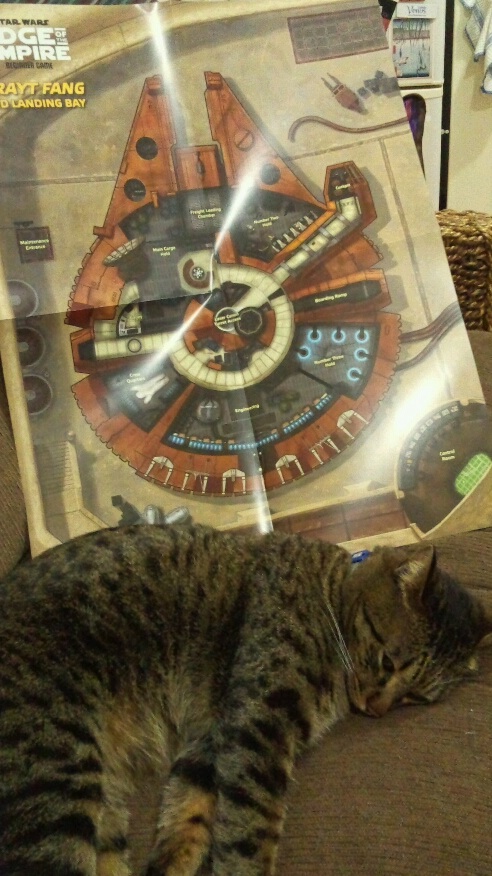


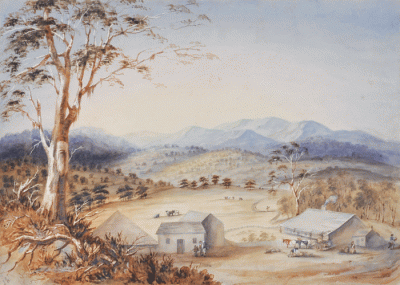

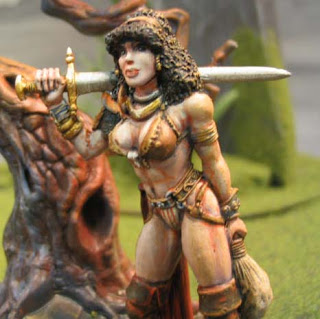

 Compromise and Conceit