This week Vox posted an article on “Japan’s blackface problem,” which aimed to give an American perspective on the practice of Japanese actors putting on black faces, and to discuss what the author calls Japan’s “bizarre, troubled relationship with race.” I wonder what Japanese people can learn about how to treat race from that sophisticated bastion of cultural critique and racial neutrality, America?
Before I look at yet another nuanced and authoritative insight into the world’s problems from a racially enlightened American, I thought I’d share an insight from this month’s print edition of The Economist magazine, which I happened to pick up in my travels. In an article on racial inequalities in access to selective public schools in New York, an American documentary maker is reported as follows:
Curtis Chin, who has been filming New York teenagers preparing for the SHSAT, adds that all some black and Hispanic families want ‘is that their kids don’t get locked up in jail. It’s hard to measure that against an aspiration of going to Harvard or working for Goldman Sachs
I can say with considerable confidence that there is no black, Hispanic or indeed non-Japanese community of any race living in Japan now who are concerned about their kids going to jail rather than university. Which makes one wonder – what does America have to say to the rest of the world about race that it shouldn’t be saying first and only to itself? Let’s see what Vox has to say.
What does blackface mean in Japan?
The article is centred on concerns about a phenomenon that has no associations with colonialism or racism in Asia. Blackface has a long history of racist associations in the USA, and probably Europe and the UK, but in Asia it has no association at all with discrimination against black people. Black people in East and south-East Asia are basically just a different colour of foreigner, and discrimination against them stems from the same well spring as discrimination against all other foreigners. In some countries (Japan, probably Korea, I don’t know about China) black skin has an ancient association with demons and evil outsiders that predates Asian knowledge about the existence of black humans, but the extent to which this figures in Japanese attitudes towards black people is hard to say. The existence of the yamanba phenomenon in Japanese youth culture suggests that deliberately darkening the skin for fashion is shocking in a similar way to dressing as a Goth in the west (with associations of death and horror), but the leap between this and discrimination against black people is pretty weak sauce – weak sauce that the Vox article applies through an “analysis” of ganguro culture. The article cites an American living in Japan as describing this and the associated “b-girl” phenomenon as “exotic othering” and suggests that it’s potentially racist even though it is specifically cited as being done in “appreciation” of black American culture. It describes hip hop being culturally appropriated by taking American hip hop and running it through a J-pop machine.
This makes me think that the author and probably the American in Japan who they quote have never been to a Japanese hip hop club, or paid attention to the music there. There is a big difference between “cultural appropriation” and performing a foreign style, and if you don’t get this difference you’re pretty clueless about the music you’re describing. It’s also funny to read concerns about cultural appropriation from an American community that has engaged in one of the most breathtaking pieces of such appropriation in history, describing people with no cultural connection to any part of Africa as “African Americans” simply because of their skin colour. Newsflash, America: Africa is not a country.
American critiques of blackface centre on the fact that your intent does not change the racism of the representative behavior that blackface performs. That is, a white person putting on blackface just so that they can do an authentic portrayal of a black character at, say, Halloween, is still being racist even if their intent is simply and honestly just to do an authentic portrayal of a black character. The Vox article wants to apply this ideal outside of America in a culture that has never had a history of lynching, segregation, slavery or colonialism in Africa. Is this going to give a useful insight into how Japanese people think about black people, or how they should behave towards them?
A “recent” history of fascism
It appears, based on the Vox article, that I left a key word out of that paragraph. I should have written about a recent history of lynching and segregation. The Vox article writes
the national government has done stunningly little to prohibit racist hate speech, particularly given Japan’s recent history of fascism
The “particulary” in this sentence is clearly intended to stress the link between Japan’s “recent” history of fascism and the government’ s intentions, but this is laughable. Japan’s fascism was precisely 70 years ago, and Japan is the only country on earth with a constitution that forbids it from going to war. America’s segregation laws ended less than 50 years ago, but this government report on Obama’s speech at Selma doesn’t refer to heroes who changed “recent” history there. The last lynching in the USA was (depending on how you look at it) in 1998 or 1951, and laws were still being passed against it in 1968. So when we discuss racial problems in the USA should we refer to their “recent history” of lynching, segregation and Jim Crow? Their “recent history” of communal violence against native Americans (Wounded Knee was in 1972)?
When was the last time you read an article on Germany and Greece that referred to Germany’s “recent” history of fascism? Even articles explicitly about the Nazi occupation of Greece and recent demands for reparations don’t refer to Germany’s “recent” history of fascism. This sentence is a really jarring reminder that Japan is held uniquely victim of its historical actions in a way that Germany and especially the USA are not.
If we are going to talk about the influence of Japanese colonial history on its attitude towards race we should make sure that a) we assess all countries by the same historical attitudes and b) we recognize that Japan has no history of aggressive colonization of black nations. This is a uniquely white, European phenomenon.
Misinterpreting Japanese legislative intent
The article notes that Japan makes no efforts to ban hate speech or control the behavior of its racial extremists. The article fails to note that Japan also took a long time to move on child pornography, that it generally has a very liberal approach towards protecting speech, and that there are many countries in the world that don’t care to pass hate speech laws. Indeed, the article manages to gloss over America’s own tortured conversation on this issue – lots of Americans see hate speech laws as an affront to their own constitution, and while disagreeing with hate speech think that it should be protected. To present the absence of a law that is contentious in your own country as proof that another country is racist is disingenuous to say the least.
The article also exaggerates the role and position of racial extremists in Japan. I once had the pleasure of standing at the Shibuya hachiko meeting point waiting for a friend while a fascist stood nearby on a black van, yelling hateful slogans about how foreigners who complain about Japan shouldn’t live here. Why was I comfortable about this? Because I know that almost every person passing that black van sees those people as crazy weirdo, and as a result they are generally excluded from public conversation, to the extent that they have to drive around towns in black vans blaring out their hate speech. The same ideas that are seen as extremist in Japan are widely disseminated in the English press by, for example, the leader of UKIP, who has a column in a Sunday newspaper. The Economist recently had to withdraw a book review of a history of slavery that complained that too many of the white characters were portrayed as immoral and too many of the black characters as victims. The kind of anti-immigrant rhetoric you hear from mainstream politicians in France, the UK, Australia and America is not usually uttered by Japanese politicians or newspapers (though it does sometimes creep in).
Any article describing Japan’s famous “racism” needs to recognize this, and give at least some time to the myriad ways in which Japan treats its foreign residents better than many white countries do. I bet, for example that my reader(s) doesn’t know that in some parts of Japan I can vote, even though I’m not even a permanent resident, and there are moves afoot to give non-citizen residents the right to vote in national elections. One-sided depictions of racial politics in Japan give a misleading impression of how strong it is here.
Misinterpreting Japanese attitudes towards multiculturalism
The article cites an associate professor from Temple University saying that
The blackface thing is emblematic of a larger problem of Japanese politics and civil society in which diversity is not recognized, or cultivated, or respected
I think this is an overly simplistic understanding of Japan’s attitude towards diversity, also based on a misunderstanding of Japan’s legislative intent. Yes, Japan doesn’t have an official policy of multiculturalism (although some towns such as Osaka do), but this is because Japan generally doesn’t have a practice of legislating cultural movements. In fact, Japanese people implement a kind of basic principle and acceptance of multiculturalism that is staggeringly simple in its open-mindedness. Japanese people naturally assume that foreigners who come to Japan will continue to live their foreign ways, speak their own language at home, and pursue their own cultural traditions, while obeying Japanese law. This is essentially multiculturalism. For example, if I am in a majority Japanese environment (e.g. kickboxing) with a single other foreigner, and we speak in Japanese, the Japanese around us will laugh and ask why we aren’t speaking our natural language, because it seems strange to them that we wouldn’t. Japanese often ask whether living in Japan is difficult, because they accept that we will be trying to continue our own traditions in a society that doesn’t necessarily accomodate them. They are remarkably forgiving of foreigners who don’t learn Japanese, and they respect that learning to read Japanese is an extremely burdensome task for adults. They assume that we will want to continue cooking our own food and accessing our own cultural goods in our own homes, and are surprised if we do Japanese things. This can sometimes appear as racism – e.g. the assumption some landlords make that foreign residents will wear shoes inside – but it also reflects a basic assumption of multiculturalism underlying the Japanese approach to foreign residents of Japan.
It’s worth noting that a lot of Japanese cultural movements are determined outside of government, through corporations and local community activities. Reporting on racial issues in Japan needs to respect this, and look beyond government legislative activities to understand how Japan is responding to major cultural issues. I would add that this is important in other areas of cultural relations too, such as Japan’s attitude towards world war 2. It is not enough to say “the Japanese government has not done enough”[1], one also needs to look at the broad groundswell of support for global engagement, maintenance of the ban on war in the constitution, and other community-level activities to draw Korea, Japan and China closer.
In general, however, foreign commentators on Japanese cultural issues don’t bother to look deep, or don’t know how, and take Japanese government actions as the sole representative of Japanese attitudes towards those issues – which is particularly ironic in this Vox article, which makes the point that Japanese people see themselves as culturally homogeneous when they’re not. Perhaps the article could start by not assuming that the actions of a few people or the absence of an American-style legislative pattern represents the homogeneous view of the whole society.
You Americans … you talk too much
In closing (and paraphrasing Monty Python), Americans need to stop lecturing the world on race until they have sorted out their own house. Combined with Vox’s generally patronizing tone, an article that misrepresents or misunderstands aspects of Japanese legislative and cultural attitudes, in discussing an issue that is of zero relevance in Japan and is not capable of reflecting a Japanese racial attitude, comes across as hectoring. Furthermore, in assuming that Japanese people should have the same view of race as Americans, and invoking a history of colonialism that is older than America’s own more recent fraught issues, and ascribing to Japanese people views that are uniquely American, the article is itself flat out racist. It might make Americans feel better in light of their own recent disturbances in places like Ferguson, the huge disparities in economic wellbeing between races in America, and the massive incarceration of a whole community on the basis of its skin colour, but it doesn’t make America look better when it lectures other countries as if their racial issues are the same as America’s. Americans should shut up about racial issues in other countries until they have sorted out their own house, and non-white Americans should recognize that they too can be racist when they present their unique cultural perspective, leveraging the unique power of America’s cultural exports, onto other countries.
I have written on this blog before about how culturally toxic I think American feminism has been for feminist movements in other countries, exporting a unique blend of conservatism and identity politics to countries that don’t need it. I think the same thing applies when people in other countries listen to America on racial issues. Yes, America has had some inspiring and powerful black figures who dragged American racial politics out of a deep, dark place. But most other countries were never in that place to start with, and in admiring those figures we should be careful not to also draw too deeply from the font of American exceptionalism and christian conservatism that they often drink from. Too often American “progressivism” is conservative by international standards and flounces about the world trying to teach others how to behave from a perspective of American exceptionalism rather than genuine intercultural respect. This Vox article is a classic entry in that ledger of American cultural exceptionalism, telling Americans nothing about race in Japan and giving Japanese nothing useful to learn about their own racial issues.
—
fn1: As always on this blog I would like to remind my reader(s) that Japan has repeatedly and thoroughly apologized for its wartime activities, and has paid reparations.
The picture above[1] shows the latest estimated volume of arctic sea ice in March, 2015. The red line is 2015, and it looks like it is heading below the 2010 maximum. This is a disturbing trend because 2014 had a very high minimum, but the March maximum may well be very low. We know that 2014 was the first or second hottest year on record, and January and February this year were very warm. Even a cursory look at the Polar Science Center website reveals the very real possibility that we are heading towards another year of very low arctic sea ice extent, which will mean more flooding in the UK and Europe, and another crazy winter in north east America.
Destructive beauty
At the same time as the sea ice is struggling to reach a decent maximum, and thinning out every year, the Pacific appears to be entering a new era of vicious storms. The picture above[2] shows four tropical storms or cyclones generating around Australia simultaneously. One is cyclone Pam, which subsequently laid waste to Vanuatu (the emergency response is underway as I write this).
Science is having trouble keeping up with the pace of change that global warming is forcing on the planet. There is no scientific consensus on the role of global warming in typhoons and hurricanes, no solid understanding of where the arctic is heading, no established climate models that can understand the huge drought that is slowly consuming California, and only suspicions about the relationship between Sao Paulo’s deep water problems and Amazonian deforestation, but the inherent conservatism of the scientific process is no reason for us lay observers not to draw the obvious conclusion: Global warming is here, and it is wreaking havoc on our planet as we stand by and watch. Where is our planet heading? Or more relevantly, where is our reckless disrespect for the planet taking us?
Ecooptimism
As these portents unfold, today I read an article at Lawyers, Guns and Money describing a new phenomenon of “ecooptimism.” Apparently Al Gore has written an article arguing that we may be turning the corner in our response to AGW, because lots of solar panels are being installed; apparently Andrew Revkin gave a talk last year where he said that everything was going to be okay. Apparently Naomi Klein thinks we are able to find a way out of the worst problems that our planet is heading towards. I guess people think that recent agreements between China and the USA, action in the USA on power station standards, and China’s independent decisions to limit its coal use, are signs that we have turned a corner.
Another strain of ecooptimism on the part of economists like Nicholas Stern, decision makers and some of the major international bodies (such as the IMF) holds that even though things are a bit ragged right now, we still have time to reverse the situation by implementing some basic policies, and we can prevent further warming above the 2C “guardrail” without causing major damage to world economic growth. Under this form of optimism, even though we have delayed up until now, moderate changes in the next few years will still be sufficient to prevent major harm to either the environment or the global economy and growth opportunities for poor countries. This view of the global warming challenge holds that it is a serious threat to human civilization, but we can avert the collapse of modern society by imposing a moderate tax regime.
Should I be an ecooptimist? I think not, because these people are deeply wrong. They are ignoring the damage we have already done, misunderstanding how we need to think about the causes, and ignoring the powerful momentum of the climate system.
Ignoring the damage done
What is happening now in the arctic is not a coincidence: global warming is already destroying our planet. The damage being done by the collapse of the arctic sea ice is profound and widespread, and goes well beyond the possibility of polar bear extinction. The ridiculously resilient ridge driving California’s drought is almost certainly related to the collapse of the ice, as are the crazy winters in the eastern USA and the extreme rains in the UK. But California’s drought is also exarcebated by higher surface temperatures, reductions in winter snowfall and the role of unseasonally warm rains in destroying the snowpack that supports summer water reserves. Further south, Sao Paulo’s extreme drought is a response to deforestation (which is also driving global warming) and increasing temperatures. These two droughts alone threaten something like 40 million people in two of the world’s biggest economies, but no one has a serious plan to reverse either. And in the case of Sao Paulo, adaptation is impossible – while Californians, if they act now, could build a desalination plant, Sao Paulo is inland and its choices have essentially already run out. Of course American politics is so stupid that California won’t build a desalination plant until its water levels are so low that it doesn’t have enough water to generate the power that the plant needs …
Optimism about our future ignores that our future has already been changed by the damage we have already done.
Misunderstanding the causes
Somewhat ironically, economists are very good at confusing budgets and flows. When discussing national debts and tax burdens, mainstream economists have a tendency to think about the total national debt and current interest rates, rather than the amount of the debt coming due at any time, and the rate of change of interest payments. When thinking about global warming, they seem to focus on the rate of increase of atmospheric carbon rather than the total amount we are allowed to emit and have emitted. Under this way of thinking, it’s sufficient to reduce the rate of increase of carbon dioxide emissions – you just need to get them lower, but not necessarily to zero or negative. But this is completely wrong: when we make any policy about mitigating future global warming, we need to think about the total allowable carbon emissions, historical and future, and the rate of emissions is only relevant in as much as it determines how quickly we need to go carbon negative. When one thinks about the carbon budget, rather than carbon emission rates, then a carbon tax is simply a temporary policy to reduce emission rates so that we can buy time to achieve our real goal, which is hitting zero carbon emissions before we hit the budget. If a policy has a limit to how much it can reduce rates of emission – as most carbon taxes have been shown to have – then they are necessarily temporary policies. But most mainstream economists think that we can achieve our goals through only a carbon tax and a bit of minor regulation. They see reducing the rate of emission as the end goal, rather than staying within a carbon budget. They never go that extra step to ask – once we have dealt with the low-hanging fruit (coal-fired power emissions) how are we going to clean up the rest of the emissions?
How are we going to clean up the rest of the emissions? Cement-making, international air travel and shipping will probably be carbon-intensive for the foreseeable future. So what are we going to do? If your response is “carbon capture and storage,” you don’t have a solution.
Ignoring the momentum in the system
We already have a certain amount of warming built into the system. Due to feedbacks and the dynamics of the climate system, warming and its effects will continue to propagate after carbon dioxide emissions stop. This means that even if we could wave a magic wand that stopped all emissions tomorrow, the effects of those emissions on the biosphere through phenomena such as glacier melt, desertification, sea ice melt and storm intensity will continue to worsen for some time to come, and the planet will continue to warm a little more. Whatever effects we are seeing now from warming are going to get worse and then linger even if we stop emissions tomorrow. What we are seeing happening now is not the worst possible outcome of our best possible policy response – it is only the beginning. Practically, even if US and Chinese policy-makers have an epiphany tomorrow it will be 10 years before we get a really effective climate policy in place, 20 years before we can get carbon zero. That means we have 20 years of worsening warming, and beyond that an unspecified period of further warming, and beyond that period a further unspecified period of time when the effects of that warming propagate. Sea level rise may lag warming by years, which means that even if we act fast to get carbon zero in 20 years, sea level rise may worsen for 10 or 20 years after that. Arctic sea ice melt is obviously very responsive to warming, but we are only seeing the start of it – the effects of warming will continue to worsen the ice melt for years after the warming stops.
The practical effects of our stupidity
What this means in practice is that the arctic ecosystem is doomed. If anyone believes that another 20 years of warming are going to leave any appreciable ice in the arctic then they are very foolish. A collapse in this system means the near-extinction of a wide range of animals including polar bears, major changes to the jet stream with potentially catastrophic effects on northern Europe and America (including possible widespread cooling), the worsening of drought in California and massive changes in the Siberian ecosystem. Even putting aside potentially fatal methane releases from the sub-arctic, this is going to lead to a world we alive today do not recognize. It may also lead to the collapse of fisheries across the Pacific and Atlantic, depending on how major fish species respond to the loss of plankton and apex predators. The Pacific islands are doomed, of course, because they will run out of fresh water long before they sink beneath the waves, and low-lying Bangladesh is going to see widespread inundation with huge human movements. Pacific storm seasons will get far worse and much of the currently-inhabited coastal property of the eastern USA will have to be abandoned. The cost in flood defense and storm protection for cities like New York will be staggering. Water and food security in the Himalayan catchments, North Africa and Australia will become precarious, and cycles of flooding and drought in places as diverse as the UK and Australia will become much more extreme.
All of this is locked in, even under the best possible policy future.
Ecofascism?
There are people born today who are going to come of age in a world where the environment is unrecognizable compared to that which most of the human species has become used to. Some 20 – 40 years from now our children and their children will grow up into a world that recognizes our generation as the greatest criminals in the history of the human species. They will look on the devastation we have wrought and their anger will be deep and powerful, especially when they see the way that so many of our generation deliberately and wilfully ignored what was coming, or even made policy decisions that would worsen it. They will look on politicians like Australia’s Tony Abbott, who abolished a carbon price while bleating about “intergenerational debt” with deep scorn, and they will look on people who voted for these criminals as selfish clowns. This generation will also face a future far more precarious than anything we can imagine, because the world will still be warming and they will have to make not only deep cuts to their carbon emissions, but difficult and dangerous decisions about how to remove carbon dioxide from the atmosphere, while dealing with food insecurity and natural disasters on a scale we can’t imagine. Our generation thinks that debates about carbon pricing are difficult; our children’s children will be arguing about whether to ban air travel and the steel industry.
This generation will respond to these challenges with political movements that live up to all the worst claims that conservatives make about the modern environmental movement. For example, because of the corruption and stupidity of current politicians in America, our children’s children will face a world without effective antibiotics. They will also need to reduce carbon emissions radically. The simple solution to both of these problems will be to ban meat eating or to allow only free range organic meat, making the worst nightmare vision of conservative critics of environmentalists and hippies into a reality. Maybe by then there will be new antibiotics that aren’t affected by the stupidity of the meat industry, but it’s highly unlikely that there will be a solution to the industry’s carbon emissions, and our children’s children will not be in a position where half solutions are acceptable.
Unless we act now, this is the world we will grow old in. I see no reason for ecooptimism, and I think that the people expressing optimism on the basis of partial technological solutions, or the comfort of easy first steps like a carbon tax, are fooling themselves if they think that we as a species are going to pull through this problem with such a simple and easy response. This is no time for optimism, but for a society-wide effort, at the same level as was required in world war 2 to eliminate fascism. If we don’t make that effort now, we will all be ecofascists 20 years from now.
There will be no denialists and no ecooptimists in that future.
My friend gave me a copy of Ready Player One to read on the plane back to Japan, but my airline tricked me into flying a 777 without reclining seats or accessible reading lights or wi-fi, so I didn’t get to finish it till today nor did I realize how enormously popular it is until I randomly googled it. It’s a really good book, but has some really irritating flaws, so here is my review.
The basic idea of the story is simple and powerful, and I’m surprised it took so long to be written. It’s set in a dystopian near future (where, for once, the effect of climate change is stated and assumed throughout the story), where the world economy is slowly falling apart but there is a new virtual reality internet called the OASIS, where people can spend basically their whole lives escaping the boredom and horrors of everyday life. This world is fully interactive using haptic gloves and suits, so a kind of addictive experience (fortunately the author doesn’t use this silly idea of internet addiction), but it is also huge, a kind of galaxy of many worlds where almost anything can happen. The designer of the OASIS has died, but instead of leaving a will he has left behind his fortune, plus the title to control the company that designed the OASIS, as a prize in a complex game that, when the book starts, no one has won. This idea is patently ludicrous: the OASIS is the most important technological development in human history (as an example, our lead character receives his education through the OASIS and it is clearly a superior education to any physical school) but its developer has left the deed to the thing for any random gamer dickhead to take possession of. We’ve all seen what gamers are like – would you want the world’s biggest and most important company to be controlled by them?
And it is clear from the book that it is gamers who will take the prize, since the prize is a complex series of challenges based entirely on computer games. In order to crack the puzzles one needs to be an exceptional gamer; but worse still, all the clues to the puzzles are drawn from 1980s nerd and teen pop culture, so in order to find the clues one needs to be deeply invested in such execrable crap as The Breakfast Club and Highlander. One also needs to be a genius with 1980s arcade games, possibly the worst games ever invented.
As a result of this plot device, the book is a constant pastiche of 80s references, and the characters are the kind of losers you hated in first year university, who quote Monty Python in place of social interaction, and think going to see the Rocky Horror Picture Show is the height of cool. Worse still, the characters in this story are the worst kind of computer game winners: they may not be able to get laid or interact with actual human beings, but in the OASIS they’re unbelievably, perfectly good at everything. Worst of all is our hero Wade, who when challenged is able without any appreciable effort to get a perfect score in pacman, and wins a contest (based on a computer game) that the next best competitor took five weeks of constant striving to win. He’s also capable of hacking international corporations, quickly hacking the system to create a new identity for himself, and making leaps of intuitive faith about obscure 1980s game and video references even though he was never part of the 1980s culture and only understands these things from studying his hero. He is, of course, also stunningly good at PvP first person combat games.
In short, he (and his three colleagues) are at a Harry Potter level of unrealistic character development. Mixed with all the worst traits of the nerd world, and an urgent need to prove how smart they are. Reading about these kinds of people is annoying!
However, the challenge is also intoxicating, and the growth of the relationships between the main characters – and the challenges they face in solving the puzzle – is really compelling. Although I didn’t like any of the characters, I soon found myself really wanting them to survive and really engaged with the story. It’s a tense, tight, well-told tale with several unexpected twists and turns, and much of the setting is a range of magical or technological fantasy worlds that make it a fairly unique mix of real world and fantastic tales. The magical world much of it is set in (the OASIS) seems very unrealistic, but it’s also a stimulating and interesting vision of how the future could unfold if the technology were available. If you can put aside the constant, mostly lame, references to the 80s, and the really boring and annoying way in which the characters are almost perfect in every way relevant to their quest, it’s an exciting and enjoyable romp through a very well realized image of the future of society’s relationship with the internet. I strongly recomend this book for gamers and those interested in visions of the future in which communication and internet technology trumps manufacturing and off-world exploration – it’s a fascinating and exciting story with an excellent ending! If you have any interest in virtual worlds, and enjoy watching ordinary people get it wrong and then somehow struggling through to get it right, then I strongly recommend this book!
Another perfect moment in British colonial development
I am in London for a week doing some research with small area analysis, and on the weekend had a brief opportunity to actually see the city. As is traditional by now on my annual trips to London, I visited the World Wildlife Photography Exhibition (which was a bit weak this year, I thought), and having a bit of time to kill wandered up the road to the Science Museum. Here I stumbled on a small and interesting exhibition entitled Churchill’s Scientists, about the people that worked with Winston Churchill before, during and after the war on various projects, and Churchill’s powerful influence on British science.
This year will see the 70th anniversary of the end of the war, and you would think by now that popular culture of the victorious countries would finally have got to the point where it is able to handle a more nuanced analysis of the politics of that time than mere hagiography. It’s clear that the allied powers were uncomfortable about some of their actions during the war: the careful elision of Arthur “Bomber” Harris and his fliers from peacetime awards is an example of British squeamishness about the morality of the bomber war, but this squeamishness doesn’t seem to have manifested itself in any kind of clear critical reevaluation of the behavior of the allies at war, at least in popular culture. This silence is starting to be broken by, for example, Antony Beevor’s uncomfortable discussion of rape in Berlin, or his discussion of the treatment of collaborator women in Normandy; but it is generally absent from public discussion. Churchill’s Scientists is, sadly, another example of this careful and deliberate overlooking of the flaws of wartime leaders and their politics when presented in popular culture.
The exhibition itself is small and interesting, walking us through various aspects of the scientific endeavours of the pre-war and post-war eras. It describes the scientists who worked with Churchill, their relationship with him and the public service, and how science was conducted during the war. Churchill was very close friends with a statistician who advised him on all aspects of war endeavours, and also was very supportive of operational research, which was basically an attempt to revise wartime strategy on the basis of evidence. The achievements of these scientists given their technological limitations are quite amazing: drawing graphs by hand on graph paper to attempt to explain every aspect of the statistics and epidemiology of rationing, conducting experiments on themselves to understand the effects of low-calorie diets, and feverishly working to improve tactics and technologies that were valuable to the war. The post-war efforts were also very interesting: there is a life-size installation showing the original model of myoglobin, which was studied using x-ray crystallography and then built by hand using cane rods and beads to create the three-dimensional structure. There is a telling quote about how scientists became used to asking not “how much will it cost” but “how quickly can we get it done and what do we need?” There are also some interesting examples of how the wartime expectations of scientists translated into peacetime success: they had contacts in the ministries from their wartime work, they were used to having funds and knew how to raise money, and they had access to hugely increased resources as the ministries dumped wartime surplus in universities and research institutes. In the 1950s this translated into rapid advances in medicine, genetics, nuclear power and astronomy, all of which are documented in the exhibition.
There are, however, some political aspects that are overlooked. Currently in the UK there is an ongoing debate about whether to stop conducting the Census because it costs too much, and it is clear that since the war there has been a shift in funding priorities and a move away from the idea that science should be funded at any cost. I would have been interested to find out how this happened: did Churchill change his attitude towards funding for science or was this a post-Churchill trend? Was Churchill the last of the Great Investors? What did subsequent conservative party leaders make of his legacy and how do they talk about it? Why is it that the country that invented radar, that perfected antibiotic production, and that contributed more than any other to modern geographical statistics and demography, can no longer “afford” the census? Was the war a high point and an aberration in the history of British science funding? Did its successes distort the post-war scientific landscape and expectations? None of this is really described in the exhibition, which limits itself to Churchill’s positive legacy, and doesn’t seem to want to explore how it was undone. There is also a bit of attention paid to female scientists in Churchill’s war efforts, including women who developed X-ray crystallography and did important nutritional epidemiology research. But we know that much of the computational work done in the war and immediately after was also done by women, but they were slowly squeezed out of the industry after the war. I would have been interested in some description of what happened to all those female scientists and ancillary staff after the war – were they forced out of science the way women were forced out of factory work, or did Churchill’s support for women in science during the war permanently change the landscape for women in science? It seems clear that Watson and Crick’s work – initially sparked by x-ray images of the DNA that are shown in this exhibition – must have been built on the work of crystallography’s pioneers, who were women. But where did those women end up when the war effort wound down?
The other aspect of this exhibition that is sadly missing is a discussion of Churchill and his scientists’ darker sides. We are introduced to the exhibition through Churchill’s love of flying; the website for the exhibition quotes him talking about new technologies in aerial bombing; and the exhibition itself talks about his support for a British nuclear weapon. But nowhere in the exhibition is his enthusiasm for terror bombing discussed, nor the unsavoury way in which he developed this enthusiasm, running terror bombing campaigns against Iraqi tribespeople in the 1920s. Arthur Harris is only presented once in the exhibition, dismissing a biologist who proposed a campaign of tactical bombing of railway junctions (he “wasted his time studying the sexual proclivities of apes,” was the dismissal); but nowhere is the corollary of this position – Harris’s lust for destroying cities – mentioned, or the extensive scientific work that went into developing the best techniques for burning civilians alive. In the year that western governments will demand Japan apologize for its wartime atrocities (again!), one would think they could at least mention in an exhibition on wartime science the extensive research that went into perfecting the practice of burning Japanese civilians alive.
In case one thinks this might have been just an oversight on the part of the curators, later we see a more direct example of this careful elision, when the exhibit focuses on Britain’s post-war nuclear weapons program. Again, we have been presented with Churchill’s direct interest in blowing stuff up; here we are shown video of a nuclear test, and discussion of the research that scientists were able to do on the environmental and physical effects of the bombs. The exhibition doesn’t mention that many of these tests, conducted in Maralinga in Australia, were conducted on land that Aborigines had been expelled from and were unable to return to. It also doesn’t mention the contamination of Aboriginal customary lands, any possible harmful health effects for Aborigines living in the area, and the controversies of the Maralinga inquiries and subsequent compensation for soldiers and workers. Not even a one sentence reference.
Given that we know Churchill was a deeply racist man who supported colonialism and had no interest in the rights of non-white British, it seems hardly surprising that he might have had a slightly cavalier attitude towards ethics in research and military tactics where it was directed against Iraqi tribesmen or Australian Aborigines. It seems like 70 years after the end of the war it might be possible to start talking about this stuff honestly outside of academia, and to publicly reevaluate the legacy of men like Churchill, and many of his senior scientists, in the light of everything we know now, rather than simply portraying all their efforts through only the lens of wartime heroism. Churchill was undoubtedly a great man and a powerful leader, and the world owes him a debt of gratitude. He was also a racist and a colonialist, and some of the decisions he made before, during and after the war may not have been either right or the best decisions for the time. It also appears that despite his greatness, the legacy of his interest in science and education was soon undone, and the reasons for this are important for us to consider now. What does it say about Britain that 70 years after the end of the war it is still not possible to honestly assess Churchill’s wartime efforts but only to extol his great contribution to science; yet 70 years later his contributions to science have been so far wound back that the government is considering abolishing the Census? Does such hagiography benefit Britain, or British science? I would suggest not.
This year is the 70th anniversary of the end of the war, and we are going to see a lot more public discussion of the actions and contributions of the great people of that time. I fear that this discussion is going to be very shallow, and sadly empty of any attempt to critically reassess the contributions of the people involved, and how they shaped our post-war culture. This exhibition is a good example of how the war will be presented this year: stripped of moral context, all uncomfortable truths banished from discussion, and all long-term ramifications for post-war politics and culture carefully sanitized to ensure that no difficult questions are asked, or answered. Perhaps we aren’t doomed to repeat history, but I think this year at the very least we are going to be bored stiff by it.
If you are going to walk on thin ice, you might as well dance
– Inuit proverb
Drew stared, blank-eyed, at the doctor. He was watching her intently, probably thinking his expression meant something to her, but to him he was just the same as all the rest. A man, not old enough to be distinguishable by the patterns of his flab and baldness, not young enough to be noticeable for his physique or style. Just a man. The same as the one she refused to speak to yesterday? She wasn’t sure. The white coat didn’t help. In any case, she had decided to speak to this one, so she needed to appear affable.
Drew put on her affable face. He spoke.
“Let’s start with your name. It isn’t actually DRU, is it?” He pronounced her name separately by each letter. Cute.
“No. That isn’t how you say it. It’s Drew.”
“But that isn’t your actual name is it? You can’t call yourself after your unit designation.”
“How do you know my unit designation?” She arched up, suspicious. How much did these people know about her?
“It was on your lapels when we found you. ‘Dedicated Retribution Unit 471.’ But that’s not your name, just your designation.”
She sniffed. “Same thing. Anyway, everyone calls me Drew.” Threw a huffy kind of shrug at him.
“Very well Drew. But that’s not your actual name. I would like an identity by which I can refer to you, something that speaks about your place in the world. So can you tell me your name?”
Clearly, Drew thought, they must be going around in circles here. Why are people so stupid? “That is my name, and I think it tells you everything you need to know about me. I’m Drew. Nice to meet you. Who are you?” She arched an eyebrow in what she hoped was a pointed manner.
“Hmm. Let’s make a deal, okay?” She recognized daddy-talk, or big-brother-talk, like he thought he was going to con her with some false authority. Did he not know what she was? She was used to authority, she carried 35 rounds of it in a bullpup-configured light assault carbine, or 10 rounds of it in a high-powered FinnArms Stalker. Not-yet-middle-aged corporate doctors did not carry authority, they carried a badge. “You tell me your name, and I’ll tell you mine.” Smug face, like he’d just pulled the biggest con of the century.
“Drew. Pleased to meet you.” Humour! Zing! She wanted to hold out her hand for effect, but the plastic zip-ties kind of threw that out the window. Also, she was getting a little sharp here, she needed to dull it down. So probably just as well. She made sure to slur her next words. “‘N who’re you?”
As usual, her sass drew a sigh. What is it with Men Of A Certain Age not being able to handle a girl who talks back? Pindicks or something. “Drew … that’s not your name. I want to know your real name, so we have something solid here, you know?”
She sighed too. “Okay Doc. I had a real name, but it died, alright? When my friend ‘Lenie died and all I had left of her was her bracelet, I took it down to the ice. You haven’t been to the ice, right? It’s there on the shore in late spring, still there but all slushy and mashing against itself, makes this kind of grating sound. I threw ‘Lenie’s bracelet into the ice and when I said goodbye, and when I did I threw my name away too. Since then I just used whatever name was useful, but when I joined the squad they all called me Drew, so Drew it is.” She turned plaintive little girls eyes on him, just for a moment. “Can you please just call me Drew?” She asked in a small voice.
“Okay … Drew.” He sat down again. “Nice to meet you.” Brotherly wink. Sure you mean it doc, sure. “So, I want to ask you some questions, first, about what happened at Tunguska.”
“I don’t know!” She blurted, almost too quickly. “I got shot. Or something.” Slumped back, huffy. What had happened?
For the first time, the doctor turned on the screen on the wall. Grainy footage appeared. He shuffled it. Angles changed, vision cleared. There was the tower she’d been sent to. She’d been inside, level 3, but the tower she could see was a mess, level 3 up was a smoking wreck. A body hanging out of the window must have been … was that Armoured Angel, their heavy weapons guy? Were her whole team dead? Maybe not, because she could see a gaggle of corporate troops at the base of the tower, in that classic huddle of squaddies getting ready to storm a room. She didn’t remember any of this…
The doctor hit play. This was drone footage so there was no sound, but she saw the guys geeing themselves up to go in, then a charge went off and the door came open. The first guy moved to enter the door, but blew back, shot maybe. Then the screen went kind of blurry and the men started falling down. The screen paused.
“How did you do that?” the doctor asked her, sounding kind of impressed. Do what?
“I’m not there,” she pointed out reasonably. “What are you talking about?”
He rewound a little. “You’re there. Can’t you see?”
“No, it’s just kind of misty.”
“That’s blood and smoke. Here, let me slow it down.” He switched to freeze frame. Moment by moment, she watched the men’s deaths unfold. First the guy who’d been barrelling for the door, blown back by a single shot in the face. Then the man on the left of the door, vision still obscured by smoke, fell back in confusion, fell over. On his other side, the demolitions guy died in a flagrant head shot. Whatever was shooting them was carrying something small but very powerful. But the third guy went down from the thigh, looked like a lot of blood from a deep cut. The fourth guy was just starting to react, maybe, and he didn’t die, went back as if he’d been tripped, and his gun ripped away. Three more of the team went down in an arc of auto fire from that guy, one of them their heavy weapons support, hit by maybe five or six bullets in the chest and head. Now that the smoke was clearing Drew could see a kind of figure moving through the dust and smoke, small and lithe, carrying that guy’s assault rifle in one hand and rippers extending from the other. It was hard to see in blurry drone footage through smoke, but there was definitely a ghost figure in there, moving through the cadre. They fell apart behind her, like a piece of ocean-caught maguro being sliced carefully open by an expert chef.
Was that … her?
Behind her, three men burst out of the empty doorway and headed away. She recognized Jesus’s slight limp, Ragged Jerry with his shotgun, and Magnum, huge and hulking but obviously badly hurt. Magnum maybe paused to look back at her but they obviously weren’t messing around, they were lighting out for the hills.
It was her. How had she done that?
“I … ” she watched in confusion.
“Let me play it again.” The doctor hit shuffle, it went back to the start, she watched herself butcher her way through the team again. This time she definitely saw herself in that small, lithe figure, but she was moving so fast.
The Russian Gear. She’d bought it in Vladivostok before the mission. Told no one. It … itched … in her for a few days, then settled down. Of course she hid the operating scars. None of her team knew about it. But they must know now, after they saw that.
“Are they alive!?” she demanded, tearing up. Magnum had dragged her out of that shelled tank back in the Indo zone, kissed her face and cried when they got on the AV in Calcutta and saw the size of their payment. Ragged Jerry always beat her at cards and sneered, but always volunteered for her team. And Jesus, always laughing and joking and looking sidelong at the future like it was just there, waiting for him to grab it and make it stand still …
“As far as we know they got away from the zone before the response was organized. You were the only captive.” The video played on behind her, a classic tableau of last-ditch defending. Taking cover, using up ammo, charging, getting knocked down … except it all happened at breathtaking speed, and finished when she fell, exhausted, to one knee, and just sat there shattered as they smashed her in the head with their rifle butts.
“I don’t know how I did that,” she said slowly. Looked at him. “Do you?” Don’t mention the Russians…
“No,” said the doctor, handing her a tissue and sitting down. “But here’s the thing, Drew … it’s not possible that you can hold the cyberware required to do that, and still be human. We’ve done the tests, and we have a clear diagnosis of cyberpsychosis.” He sat back, steepling his fingers like he thought this was something she might be scared of.
“Really?” She said in a small voice. She’d always cut it fine, but always thought she was staying the human side of … that. She wasn’t scared of cyberpsychosis, but she was definitely scared of what the corporations did about it. “Are you sure?”
“Yes, we are.” He sighed and did that Concerned Uncle voice that men did when they thought she couldn’t understand the gravity of simple words, and needed to be patronized. “So we don’t have many choices here, Drew. You know what happens to cyberpsychotics. But we have a treatment we are going to try on you. It’ll stop your psychosis, but we’ll have to remove all your cyberware.”
She didn’t react, looked at him calmly. Her affable face fell off, replaced with … nothing. Take her cyberware? Make her … meat? She wasn’t ever going to go back to … meat. ‘Lenie had been … meat. Back when Drew was … meat. She was not going back to that. Cattle, like she and ‘Lenie had been. She had gone from sheep to wolf. They weren’t sending her back to that.
She watched coldly as he stood up from behind the desk, so sure of his diagnosis and his corporate power. “We’ll talk again tomorrow Drew,” he said affably, “See what kind of agreement we can come to about removing your cyberware. You can’t go on with this much boosting and hope to stay human. We have to take it out.” He walked to the door, seemingly incapable of noticing the gravity of the cold stare Drew was giving him. “See you tomorrow.”
Drew knew all about Men Of A Certain Age and their feelings about how much say women should have over their own bodies. She had seen it all before, and vowed never to see it again. She watched him walk out of the door, watched as it slid shut behind him, and as she waited for the guards to come, she started calculating.
—
Time passed.
How do you count the passage of time when you are in an empty space? Drew sat in a tiny white cell, with a bed and a separate toilet, and waited to be dragged down a pristine white tiled hallway to another pristine white, tiled room. She had a small cot with white sheets, a tiny window she couldn’t reach, no books or screens or vids. All she could do was wait. And think.
Drew was not good at thinking. She had never counted thinking to be a particularly useful talent. Running, fighting, hiding, knowing when to give in – they were useful talents. Thinking just made you angry, so Drew didn’t usually think – she acted. But in this white room she very quickly realized action was not where it was at.
They were drugging her. Something in the food, she realized when they came to get her on the second day and she could barely fight them at all.
But she also realized there were no cameras in her little toilet (or maybe she assumed it). So after she ate she rushed in there and puked it up. She drank toilet water instead of what they gave her, and acted sluggish when they came for her. They’d put something on her cyberware that made her eyes fuzzy and slowed her boosting, but something was wrong with some part of it, because her rippers still worked. Just a bit – they didn’t come out fast and it was a lot of concentration, but she could get them out maybe one inch, which was enough to touch her zip-ties. She had noticed that there was maybe a two minute gap between when the guards dropped her trussed and sluggish into the doctor’s room, and when he arrived. And yesterday she noted 12 seconds – count them, 12 – between when he arrived and the door automatically locked.
She could feel that Russian ghost stirring in her. It was beyond the control of whatever they had stuck on her or in her to stop her cyberware. That Russian ghost was uncoiling, seething through her, demanding action.
She wasn’t resisting. They wanted her cyberware. They were going to get it.
—
It was the same formula the next day. Now was her third day without food, but what girl doesn’t go without food? Drew figured she had a few hours of action before she wore out, provided her Russian ghost didn’t sputter and die too soon. The guards came for her, assumed she was too deadbeat to resist, slapped her in zip ties and dragged her down the pristine white corridor. They dumped her in the chair – the one on her right took the time to give her a good feel, as he had done yesterday, while the one on her left, no doubt a good family man, looked the other way – and then left. This gave her two minutes to draw out her rippers and saw through the zip ties. They gave in in time, but she didn’t have confidence that she could secretly slice through her ankle shackles, and anyway the effort of pushing the rippers out against the cyberlock was really starting to drain her. So she waited, breathing calmly to recover her strength and trying to make contact with the Russian ghost.
She found it just as the doctor walked in. Twelve seconds is a lot of time for her Russian ghost, but she had no time to waste so she leapt over the desk and gouged his eyes out, then ducked into the hall. One last effort to push out the rippers and sever the leg shackles, then down the hallway looking for her captors. She found them in a room in the opposite direction from her cell, running into the hallway carrying electric batons. From behind her she could hear the faint screams of her blinded doctor, which maybe had alerted her two guards (if they hadn’t seen the CCTV). She was flat against the wall when they came out, and Family Man didn’t know what hit him. The other guy spent a little bit of time acquainting himself with exactly what had hit him, but she didn’t have time for the details, not here and now. Having done the best she could, she moved on, keys in hand, cyberlock removed.
She got out. It was fun, mostly, though she was hungry and strung out. Her one regret was that cyberpsych. She had been forced to leave him alive, but blinded. No time to go back.
The rest of his profession would have to make up for it.
—
She never found out who was holding her, though she assumes now it was Arasaka. They were probably looking at turning a nice profit from all her cyberware, and now that she knows what Arasaka is up to she thinks maybe she would have been an experimental prototype for the Full Body Replacement (FBR) troops parading around New Horizon now. No matter, she’s free, and she’s not going back into “treatment.” Let them try and take her …
—
Footnote1: This is the story of Drew’s transition from corporate soldier to renegade solo, after she was captured in a suicidal defense of her troop at the Tunguska intervention.
Footnote2: I have no idea if the opening proverb is actually an Inuit proverb – it’s just a google search result – but it suits the story so I’m running with it.
Mood: Inconsolable. One day I will be powerful enough to come out from under these shadows, and destroy the people who have made me beg and cower. When that day comes the list of people I have to shoot will be long and detailed, and I am going to need a lot of ammunition. I am stocking up.
Outfit: I guess every cloud has a silver lining, and today I’m wearing this beautiful silk gown that the Dubious Mr. Smith gave me. It’s this beautiful pale shell colour with simple geometric patterns crushed into the fabric, I think it may have cost him more money than I have ever seen or owned, but he just tossed it to me so I wouldn’t drip on the carpet. I guess before I kill him I should thank him for the gift…
There’s something oddly calming about reading the Falcon’s war diaries. It’s not just the detailed and intelligent tactics she uses, or her clear thinking under pressure; unlike the other Dialectical Ephemeralists, who spend a lot of time talking about irrelevant philosophical and political stuff that no modern girl cares about, the Falcon burns with this white-hot and pure anger that reaches straight into the heart of any girl who has had to fight her way up. Like me. I don’t know what happened to the Falcon, though I guess like most heavily-armed chicks she died in a messy puddle, but somehow her writing reaches out to me across two oceans and some untold distance in time, and I feel like she’s sitting next to me in this bath, whispering sweet nothings in my ear. Now when I’m exhausted from the crab-bucket politics of this petty world, I find it strangely relaxing to read one of her war diaries, as if she had come alive from the chip and straight into my head to tell me it’s all gonna be okay, just like her I can rampage across a continent getting even with anyone who pushed me down, and being cool while I do it.
For example, after today’s chaos, being pushed around like a pawn in a game of Battleship (whatever that is), I needed a really long bath to let all this exhaustion seep out of me, but it’s no longer enough – I’m wired on my anger at the way I’m being pushed around by these great powers. So I open my little reading screen and pick up one of her war diaries, and like magic she has this to say about the powers she was up against over there in the Andes:
They are what we once dreamed of as gods, mythical agents of destiny, as inescapable as Death, that poor old peasant labourer, bent over his scythe, no longer is. Poor Death, no match for the mighty altered carbon technologies of data storage and retrieval arrayed against him. Once we lived in terror of his arrival. Now we flirt outrageously with his sombre dignity, and beings like these won’t even let him in the tradesman’s entrance.
Did she know I was here in this bath, close to tears because of the sheer stupid challenge of bouncing around between these people who can crush me with a word? How is it that every time I read something the Falcon has written, I feel she is speaking directly to me? I guess that’s why she’s a revolutionary hero, and I’m a battered girl in the bathtub of a repair shop in New Horizon.
That’s going to change one day, dear diary, and the events of today and going to be replayed in excruciating, painful detail on the flesh of every person who was part of them.
So today our epic fail continued. Ghost came up from his hack long enough to tell us he’d been followed by a Goliath security system and a Goliath SWAT team was inbound, then dived back into the Husk to try to lay a false trail that would give the impression we had been used as a relay for some other hacker, and were just victims of an unfortunate hack. With Goliath inbound Pops had to make himself scarce because his short temper had, as usual, pissed off some dude somewhere who can do stuff, plus we had this whole array of highly illegal weaponry that we needed to get out stat, so me and Coyote ran upstairs to pack it all into the AV while Pops set fire to all the remnants of Lima’s search that we had painstakingly laid out in one of our container rooms. Good thing we took photos. I dragged Rice with us, and my armour, and me and Coyote started packing all our illegal guns, explosives, drugs and ammunition into the van. Ragut was trying to push this enormous crate in front of the doors to ensure we could get out, while his wife was waiting outside on an AV bike, ready to go. I told Tail to shut off all power to the door and ordered Ragut to leave – why waste time on that stuff? He left in a hurry and for once Tail did his job. Then I realized things would go a lot faster if Rice helped Ghost, so I turned on his cyberdeck and let him loose with the warning that I’d blow his brains out if he betrayed us (and Goliath would probably do it first).
Of course Ghost couldn’t tell us till later, but he was in a massive Husk dive on our behalf, trying to make up for his mistake. Rice tried to help him but got promptly fried by ICE, and went unconscious on me, so I threw him in the van with the other contraband. First Ghost laid a track to Rice’s hideout, trying to make it look like someone had used us as a relay. Unfortunately the Goliath ICE was on his tail fast, so he had to go further afield, and he decided to hit a convenience store associated with Arasaka. He got in but there was nothing there, so from there he went deeper, towards some servers. Here he alerted Arasaka ICE (he’s a real light-footed guy, our hacker), but by now Goliath had got in and so the two ICE programs started fighting each other. Ghost slipped out and broadcast the news that Goliath and Arasaka were going to war digitally, using the same bulletin board where he previously posted up his own address (why he did that I don’t know). Then he disconnected.
While all that was going on me and Coyote finished packing the van. He jumped in the van and off it went, out the door and into space before Goliath arrived, leaving me up top. Then Pops came up, covered in soot from setting fire to the Lima-relics, and moments later the building sprinkler system started spraying water all over us. I saw a chance here and called Goliath fire services, confirmed we had a valid contract with them (Ragut is a sensible man) and got them to send a unit. While I was doing this Pops revealed that he had not put his highly illegal new assault rifle in the van, and definitely could not be around when Goliath arrived.
Great. Dementia? Maybe. I put Pops on my AV bike and told him to get gone, I’ll handle it. I made sure my bike helmet was programmed to the girliest, floralist style I have before I gave it to him (Pops always insists on wearing a helmet, the old grump!) Off he went, leaving me and Ghost, who had just emerged soaking wet from down below. My plan was to do the innocent truthful thing, which would probably not work since Ghost will likely mess it up[1], but we don’t have much choice here and I am not abandoning our hideout to Goliath. Sometimes a girl has to draw a line, and the loss of my full wardrobe is where I put that line.
After a few minutes we heard the first thrum of AVs. At this point Ghost decided to jump in the whaler and strip off, though why I’m not sure. I went outside to meet the AVs, and of course it wasn’t the fire unit but a whole team of heavily armed SWAT dudes (quelle surprise, as the yanks would say). They had 3 miniguns on me instantly and I was down on my belly like a civilian protester in no time, waiting to be cuffed. Shock. Once the armoured dudes were down and onto me I managed to point out that they weren’t the fire brigade, but they weren’t listening. They soon found Ghost and dragged him out too (naked, for some reason). Then the fire brigade turned up, sowing confusion through the ranks. Everything would have worked out here, with the Goliath guys deciding it was a false alarm and just a genuine fire, except that one of them recognized me.
“Is that … the DRUID?” he asked, and two of his mates poo-pooed him but another checked me out and realized it was me.
Typical. Some thuggish trooper in the Indo zone with a rep less than mine uses it to get laid for free in every bar from here to Sao Paulo. My rep gets me entangled with Goliath. I swear, one day …
Quite reasonably, this idiot cop said “What’s the Dedicated Retribution Unit doing working as a mechanic in a repair shop down here?” They dragged us in. Waited a few minutes to call in a secure prison AV, then threw me and Ghost in the back and headed off for downtown Goliath.
We all know what waits for me in Goliath Security. Either they hand me over to Arasaka and cash in my contract (15k now!) or, more likely, they take one look at my history of cyberpsychosis and send me to one of their shadow cyberpsychosis treatment units, where I will be remade into a full body replacement, to spend the rest of my life on the verge of cyberpsychosis while I stomp around in a clumsy mecha body that’s straight out of some Oil Age Japanese nightmare.
At this point I started thinking of ways to go down hard, but also wondering if I could still talk my way out of this. But it turned out not to matter, because we were stopped en route. The back of the van opens and these dudes in suits check us out. Some forms are swapped, hands are shaken, dudish words exchanged, and then we are uncuffed and put in the back of this big expensive AV. And off we go, no words of explanation proferred. Me and Ghost are just going along with it, because what else can you do when the powers above decide that your time has come? They took us to some kind of super-expensive hotel, and then there was a long, long elevator ride, and then we were let out into this exquisite hotel suite. There were a couple of guys waiting for us here, some man who introduced himself as Mr. Smith, and then a hacker and some super-slick corporate executive. I know when my number’s up, but I’m not going down in a set of wet coveralls: when Mr. Smith asked if I wanted anything that’s when I said I wanted dry clothes and got this splendid robe. Ghost of course just flopped down and got oily water all over their amazing couch. Men!
Conversation with the Dubious Mr. Smith was short and irritable. Basically it turns out Alt wanted us out from that Goliath trap, and these guys were the only ones who could organize it in short order. But they want something in return of course, and that something is a tough challenge. Apparently some guy called Elvis was the true head of the Church of Exalta, and he was last seen in the Crash Zone with a thing called ANITA. ANITA is a computer of some kind that is powerful enough to host a shard of the lost Exalta, which makes it an enormously valuable find. Unfortunately the Crash Zone is an irradiated hell hole, and they don’t want to send their guys there on such a fickle lead. Enter Expendable Drew, stage left. They liberated me from cyberpsychosis so that I can go die of radiation poisoning.
Sounds like a deal. I checked some specifics, thanked them, and hit the street. A car took us back to Rastafari, where Pops and Coyote were waiting for us. It turns out that they had been following the Goliath AVs, and Pops was considering a straight-out raid, kill the drivers and steal the girl type stuff, but Coyote convinced him to back down and put in a call to Alt. She agreed to liberate us but wanted to do it at arm’s length, hence the involvement of the Dubious Mr. Smith.
Over beers, while we were cooling down and Ghost was telling us about his hack, he also revealed that Alt had contacted him while we were in the Goliath prison van, but he told her to call him back later.
That’s when I decided to take my bath and read some Falcon. Sometimes you have to know when to withdraw and nurse your wounds.
Dialectical ephemeralism, you can take it or leave it, it’s nonsense. The Falcon though, she speaks to me. We’re separated by time and space, and she doesn’t know mandarin or Russian, but it doesn’t matter, we speak the same language: the language of angry outsiders. These people are going to pay.
The Falcon is right about many things, but sometimes she is too fatalistic. She once wrote:
The enemy you cannot kill. You can only drive it back damaged into the depths and teach your children to watch the waves for its return.
But about this she is wrong: she never met the DRUID. When the time is right, I’m going to let Death back in through the tradesman’s door, and me and Death, we’re going to get real close, we’re going to go on a little dance through the mansions of the rich and famous, righting wrongs and repaying old debts. Then these people will know why I’m called the DRUID: Dedicated Retribution Unit (Involuntarily Demobilized).
They should have demobilized me properly when they had the chance.
—
fn1: Sure it’ll be Ghost who messes it up, not Drew who has Persuasion and fast talk 2, Empathy 3…
If only they’d had a blight-proof potato … or an end to British occupation?
Debate over the infiltration of the Republican party by anti-vaccination ideas has naturally led to the resurrection of that old Shibboleth, the idea that the left is also “anti-science” because left-wingers and environmentalists are opposed to GMOs, despite the available evidence that they are safe. I think the GMO issue is a good example of why the “anti-science” label is not a good way to approach debate on science communication. The growth of anti-GMO ideas in the environmental movement is a good example of how motivated reasoning arises from genuine political and economic concerns, and later takes on a (usually tattered) cloak of scientific justification in order to give it mainstream respectability. In this post I hope to show that the pro-GMO crowd can themselves be irrational and “anti-scientific”, and that motivated reasoning isn’t in and of itself “anti-science.”
Is Opposition to GMOs left-wing?
First though, let’s put to bed the idea that opposition to GMOs is a uniquely left-wing attribute. Dan Kahan has a blog post on this topic, in which he explores risk perception by political orientation for a variety of issues. In this post he identifies no difference in level of concern between those who we might broadly define as left-wing and right-wing. In his survey right-wingers were much more worried about fiscal policy and immigration, while left-wingers were more concerned about nuclear power, global warming and guns; but they were all equally unconcerned about GMOs.
If we go a little further, and step into the cess-pit below the line to this National Review Online editorial on GMOs and the left, we can find plenty of evidence that right-wingers distrust Monsanto and approach the GMO issue with very similar motivated reasoning to the left: distrust of big corporations, vulnerability to the plutocracy, and informed personal choice.
I think opposition to GMOs appears left-wing because it is primarily articulated (surprise!) by environmentalist organizations like Greenpeace, and community organizations that tend to have a stronger history in left-wing movements than right-wing movements. But this is just appearances, and in fact there is a strong response to issues of unrestricted corporate power, profit-making from the food chain, and tampering with “traditional” foods that crosses party political lines. This makes the GMO issue very similar to the vaccination issue: opposition is broad-based, but articulated through leftist voices because community organizing tends to be a leftist thing, environmental and consumer choice organizations are often vaguely left-wing, and (by coincidence) in the case of anti-vax ideology, the wealthy and photogenic voices tend to be California liberals. I guess Buddha would say that critics are focusing on the pointing finger, and missing all the glory of the heavens.
Motivated reasoning and opposition to GMOs
Reading the comments in the NRO piece it should be fairly obvious that, while people’s scientific concerns might be articulated through worries about effects on the food chain and human health, the real well-spring of their discontent is economic and political. Right-wing people are worried about consumer choice, about increased power of big corporations in a very important market (food), and about the damage that vertical monopolies and plutocratic cosy relationships do to free market ideals. Left-wing people are worried about unrestricted influence of big corporations on food markets and the environment, about an increase in pesticide use, and about whether GMOs will really achieve what their backers say they will given the distributional inequities in world food markets. Right-wingers want to see more market diversity and believe that food prices and production levels can be improved through economic (market) changes rather than technological magic bullets; left-wingers think that the primary reason for world hunger is mal-distribution and not weak production.
In my opinion the “frankenstein foods” stuff and health concerns, and ecological worries, are primarily a gloss over these deep-seated and real concerns about inequity and inefficiency in our food markets. But there is no way that the big agribusinesses are going to be interested in debating distributional justice in a world market whose inequities deliver them huge profits, so they and their media friends make sure the debate remains firmly focused on narrow health and scientific concerns that can be easily dismissed. This in turn forces opponents of GMO to resort to weak scientific arguments within this restricted domain, rather than the broader issues of food security and inequality, or systemic farming practices that are clearly damaging the environment and which GMO crops will not necessarily improve.
In my opinion, if GMOs were around at the time of the potato famine, their backers would be claiming that the potato famine could be solved by a blight-resistant crop. Opponents of such an extravagant move would point out (rightly) that the famine is caused by maldistribution and colonialism, but their complaints would be dismissed as Chartist rabble-rousing. So then, not able to debate on the real issue, they would be forced into debating the issue as framed by the GMO backers: as a conflict between food safety and famine. Of course, history tells us that the potato famine was a political issue, not a technological one. Given its political origins, it’s unlikely that a GMO solution would have worked.
What is different with malnutrition today?
The Underpants Gnome thinking of the pro-GMO lobby
In my view the pro-GMO crowd are infected with a type of Underpants Gnome style of thinking. This thinking goes like this:
Invent technologically advanced food
?
Solve world hunger
This is not how the international food system works. A good example of this style of thinking is in my old post about GMOs, where I explained in detail why Golden Rice is not the panacaea its backers claim it to be, but my interlocutor continued to argue that Golden Rice would somehow solve Vitamin A Deficiency against all the evidence.
Malnutrition in the modern world has several inter-related causes, and a lot of them have nothing to do with an absence of food. Diarrhoea and unimproved drinking water lead to stunting and malnutrition even where food is abundant, as does poor diet and insufficient breastfeeding. Many low- and middle-income countries are experiencing simultaneous epidemics of obesity and under-nutrition, primarily due to inequality within and between nations, and again often related to open defecation (in South Asia) and unimproved water. Where malnutrition is directly related to an absence of food the causes are often either war and conflict (e.g. South Sudan) or maldistribution of food. Much of the food produced in some low- and middle-income farming communities is shipped out to the rich world to feed meat crops, and many countries devote a large amount of their productive land to cash crops for export, not to food crops for local production.
None of these problems will be solved by GMOs. Availability of drought-resistant crops won’t save South Sudanese families in refugee camps due to war; Roundup Ready corn won’t reduce diarrhoea in countries of sub-Saharan Africa with polluted water sources; improving the production of plantains won’t reduce stunting if the cause of stunting is inadequate breastfeeding and poor nutritional choices in countries like Ghana or Zambia where food sources are readily available but stunting still common. Increased production of wheat in the USA for feedlots won’t help reduce poverty in Africa.
Yet solving world hunger and improving the lives of poor farmers is one of the most often cited benefits of GMOs. To me this is evidence that the pro-GMO lobby – especially the scientific leftists and moderate right wing commentators who most strongly attack the environmental movement on this – are using the same motivated reasoning as their opponents. Despite the abundant evidence that malnutrition is easily fixed through infrastructure changes and shifts in the international food economy, backers of GMOs want to focus on their magic bullet argument for solving an ages-old problem through modern technology. The “green revolution” of the past 30 years has failed to solve the problem of world hunger, but they think another 10 years of further green revolutions will make all the difference. This is not scientific thinking, any more than claiming flounder genes in tomatoes will kill you.
I have yet to see any evidence that the pro-GMO lobby have seriously taken on the real causes of malnutrition and poor nutrition in low- and middle-income nations, and I have never seen any supporter of GMO argue that they won’t improve food security in these countries, or that changes to the international food system are more important than work on GMOs. Instead they focus almost exclusively on the environmental and consumer choice movement’s silly and bogus claims about health risks. I think this is because they are suffering from the same motivated reasoning as their opponents: they are presenting the world hunger argument because the real, underlying reason for these GMOs – to improve corporate profits – is not something they can talk about. But their arguments about world hunger are woefully weak, and they have to cleave closely to Underpants Gnome logic in order to defend a technology they genuinely believe is safe and beneficial.
Is the anti-GMO movement different to the anti-AGW movement?
Often the anti-GMO movement is pointed to as the left’s AGW denialism. I think this is fundamentally flawed for two reasons: first, because the underlying issue the left is attacking, food security and global inequality, is real and serious; and second, because of the difference in origins of the movements. Anti-GMO ideas, like anti-vaccination ideas, arose largely organically in response to real concerns about the product itself. AGW denialism, on the other hand, was created by a small group of activists endowed with money from Big Tobacco and energy interests, and is maintained by these interests in order to slow down essential responses. I think this difference is important, because it speaks to the fundamental honesty of the intellectual underpinnnings of the movement. Anti-GMO and anti-vaccination groups have genuinely-held concerns about the product they are attacking, and though these may be real and serious or may be misguided and ignorant, they are intellectually honest in their assessment of these risks. On the other hand, the monied interests at the heart of the complex web of AGW denialist organizations are fundamentally dishonest – they know that the science is against them, but deploy deliberate techniques to poison the science well in order to support their interests. I don’t think you can say someone is anti-science if they are honestly misusing weak science to defend a position that might have developed from other, unspoken concerns; but I do think someone is anti-science if they are funding a movement with the specific intent of attacking science and scientists to protect their financial interests. The idea that these monied interests know the science is against them but fund attacks on it anyway might seem conspiratorial, but we know this is what Big Tobacco did for about 30 years, when they knew tobacco caused cancer but attacked any public scientific studies that showed this – and Big Tobacco was behind the original AGW deniers.
Although I’m not fully convinced by my own thesis yet, I think the anti-AGW movement is unique in the pantheon of modern “anti-science” movements (anti-nuclear, anti-vax, anti-GMO, anti-fluoridation, anti-AGW) for being a created movement, rather than one that grew organically out of real (though often misguided) concerns about the product in question. This isn’t to say that there aren’t people with a financial interest in these other movements (see e.g. Andrew Wakefield); but the anti-AGW movement is unique for the level of corporate funding it has received, and the order in which the money-making grifters and the concerned public figures arose. Regardless of whether its origins are important, I think it is distinct from those other movements in that there is no valid underlying concern that is being blown out of proportion in this movement. There is no nuclear waste issue, no side-effects issue, no global inequality issue underlying this movement that can get the fixation of some lonely blogger who starts a movement – just a need to protect the profits of a particularly dirty sector of the economy. While the motivated reasoning of an anti-vaxxer might be “I’m concerned about the side-effects of these drugs, so I’m going to minimize the danger of the diseases and write a children’s book about how great measles is,” the motivated reasoning of an anti-AGW funder is “I need to protect my industry from mitigation efforts so I’m going to fund multiple organizations to attack the science.”
Those are fundamentally different things, and confusing these movements doesn’t help us deal with either.
The recent outbreak of measles in America, and its relationship with the anti-vaccination movement, has led to a lot of online debate. Much of this debate is about how these “anti-science” parents and the movement they listen to is increasing the risk of disease for everyone. While the increase in risk is undoubtedly a real issue, I’m not convinced by the quality of the “anti-science” framing of the issue. I’ve said before on this blog that I think the rhetoric of “anti-science” is both unproductive and unrealistic, and I think this applies even more to the anti-vaccine issue than to the GMO issue where I originally discussed it.
Much of that argument was about things written on John Quiggin’s blog, and today he has again written a post about anti-science, this time in the context of the Republican’s newfound interest in anti-vaccination ideology. The comments illustrate the pointlessness of the anti-science label well, with partisan actors degenerating into a frenzy of accusations that their opponents are anti-science, mostly without any reference to any form of evidence, or based on the kind of one-sided “facts” that Quiggin has previously associated with anti-science rhetoric. However, near the top of the comments thread a commenter called “Jim Rose” has a link to a blog post by Dan Kahan, explaining his recent work on science communication on this very issue. In a recent experiment that I briefly mentioned in my last post on this issue, people’s attitudes were categorized on two dimensions of social deviancy and risk, and then they were exposed to different forms of science communication. Those exposed to an “anti-science” diatribe divided rapidly into a group who doubled down on their views and a group who supported the anti-science framing. Kahan’s conclusion is blunt and damning for the kind of “agnotology” favoured by people like John Quiggin:
The “anti-science trope,” in sum, is not just contrary to fact. It is contrary to the tremendous stake that the public has in keeping its vaccine science communication environment free of reason-effacing forms of pollution.
i.e. the “anti-science trope” is itself anti-science, in that it does not reflect the reality of how people think about science in judging controversial issues, and is inconsistent with the best available knowledge about how to engage people with divergent views on important scientific issues.
Dan Kahan is a well-respected authority on this issue, and it’s interesting to note that he has attracted a comment from one well-known pro-science blogger, Skeptical Raptor, saying
Let me say that I’m gobsmacked as I read the conclusions. It may turn my world on its head …
Kahan’s findings on how to communicate science and how to engage objectors to particular scientific ideas basically completely oppose John Quiggin’s agnotology, and that of much of the scientific blogosphere, especially those on the New Atheist/Leftist fringe. They also back up my initial sense that this “anti-science” label is ignorant of both the reasons people take the positions they do, and the best ways to engage with them to change those positions. Kahan gives an example of a good way of engaging with anti-vaxxers, from a blog post by a pro-vaccination mother, and shows that it is nothing like what he calls the “ad hoc risk communication literature” that (in my opinion) characterizes much of the science blogging community’s response to these movements. I should also point out that I have defined a group of what I call the “scientific left,” who I roughly consider to be people like John Quiggin and myself, and Kahan’s findings (and the example he links to) are radically different to the way that the “scientific left” as I understand it engages with these movements.
There’s a lot of food for thought here, and a lot of ideas about how to better handle anti-vaccination, anti-GMO and (maybe) anti-AGW movements. It’s my personal opinion (on the basis of nothing solid, yet) that anti-AGW and pro-smoking movements are different to others, though I can’t at this stage say clearly why. I also think that the approach of people like Stephan Lewandowsky seems inferior to that of Kahan – there is value in identifying the conspiracy-theory side of AGW denialism, but the combative and confrontational nature of Lewandowsky’s work seems to disagree with Kahan’s approach. But Kahan’s work certainly suggests that the scornful agnotology of commentators like John Quiggin, PZ Myers and Dawkins, while fun to join in on from the inside, is potentially very counter-productive, and is itself “anti-science” by its own definition (which fact I find hilarious). This validates my initial suspicions about the term, and makes me think the scientific left has to do more – and be more scientific! – if we want to improve the use of science for the public good.
Crimson, an aging warrior once famous for his military exploits but now gone to seed, slower and past his prime
Quark, a man of genuinely diminutive size (a dwarf, in fact), albino and considered monstrous in the gyre. A technical genius, drone pilot and artillerist
Ryan, a 15 year old dragged to service from the booms, where his remarkable swimming abilities drew attention. Ryan is a rider, a rare type of person with a symbiotic relationship with a sea lion. Ryan’s sea lion is a 1 ton Steller’s sea lion called Arashi
These three are members of the Wind Guard, a small and tight-knit squad of agents who do specialist work for the Gyre. They had previously worked together on the Bobsled, a famous tug boat reconditioned for battle and renowned for its resilience in storms. The adventure starts with them meeting Captain Dilver at the Strategy Gardens in the Hulks. Captain Dilver is the highest-ranked person they have ever met in the Gyre, a leader in the Wind Guard who is infamous for having quashed a rebellion in the Hulks 20 years earlier. Through spies, treachery and violence he beat the rebellion and captured its leaders; he is famous for having joined them together by leg and hand with plastic ties. He then threw their children in the ocean and laughed as they struggled to save them. Once they had drowned, he made the controversial decision not to recover the bodies for recycling, because “we’ll not have their taint in our world.” He left them for the ocean. For the PCs, he is a figure of awe and command.
They met in the strategy gardens, a small space of peace and calm built onto the bows of the MV China 1, a huge bulk carrier forming one of the central parts of the Hulks. The strategy gardens have a small central shed, in which Captain Dilver is rumoured to meet and plan his strategies, inside a small garden of roses, strawberries, blackberry bushes and a few stunted lemon and plantain trees. A solar-powered antibiotic fermenter bubbles away in one corner, casting an acrid stench over the whole garden. The PCs met him at midday on a clear day in what was once early autumn. A gentle breeze blew over the gardens and clouds over the Gyre cast enough cover to enable them to meet without veils. Being midday, the call to prayer echoed across the Hulks, singing the song of the afternoon weather report to anyone who needed to know it. The characters approached Captain Dilver humbly, sitting on chairs around a small table and politely taking up cups of konbucha, nibbling daintily on candied grasshoppers, and waiting for him to speak.
Dilver offered them a simple job. After their work on the Bobsled they were deserving of a rest, and he had a simple job for them that, while it carried a small risk of violence, was basically a holiday. They were to travel to a raft on the edge of the Gyre and collect an old man. An oral history project conducted across all the raft communities in the Gyre’s areas of influence had recently finished, and as part of this oral history project they had discovered a raft city that had lasted for 50 years. On this city was an old man called Ken who knew the intricate details of the Gyre’s currents, fish movements and weather. This man was old and surely soon to die, and they wanted to bring him to the Gyre to learn his secrets before he did. The PCs were to take a ship to this raft, and buy this man. On the way they were to stop off at the Eiffel Tower and deliver medicines, because 4 of the 6 guards resident in the tower had fallen sick with some disease that could not be cured with the current stock of drugs on the island. They were to take the Windslip, a famous and beautiful trimaran that could move fast on the wind over calm seas, and use its high density solar cells to power a computer unit that was running a task for the Arc. Some scientists on the Arc had identified a satellite with a possibly stable orbit, and to test its orbit they needed a moving ship running a continuous GPS signal to the satellite. The Windslip was perfect for this job, and a 5 day journey the right length of time. The PCs were to run the computer tracking system over the whole 5 days of their journey, via the Eiffel tower, to the raft.
What could possibly go wrong?
Dilver gave them vague guidance on negotiations with the Raft for the old man. They were to carry an initial down payment consisting of a solar-powered antibiotic fermenter, 100 old screens, a new satellite dish, some weapons and a basic stock of drugs. They were to agree to any payment up to and including a small ship. Noticing the PC’s expressions of surprise at such a high price, he hastened to explain to them that, having discovered that the raft community had lasted 50 years they were thinking of inducting it into the Gyre proper. The Gyre is not a colonial enterprise, and the rafters had to want to join the Gyre. To facilitate this they wanted to make them wealthier and connect them more closely to the life of the Gyre. Currently only the raft community’s leaders held screens, but it was hoped that shipping in 100 screens would make raft culture available to a wider pool of people. That plus the wealth the raft could gain from extra drugs, independence in communications and drugs, and a small ship, would certainly make it look favourably on accession to the Gyre.
Unconvinced, the PCs set out for the Eiffel tower.
Poison and iron
They set off from the inner dock, the dock where the smaller ships hide from the full ravages of the world ocean. This dock is a sheltered spot under an oil rig, connected to the sea by a twisting canal some 100 metres long that winds through the poorest part of the Hulks. They met the Windslip‘s four crew in the breathless, still air under the rig, drawing first suspicion and distrust at the sight of the monstrous Quark, and then relief and confidence when the men learnt they would have a rider aboard. The Windslip set off, drifting out of the docks under its own electric power and then speeding to the southwest on a light but constant wind. The computer in the hold slid silently through its infinite cycles of tracking and counting, and in the gentle wind the PCs had little to do. The Windslip steered itself, skipping lightly over the vast world sea towards their destination. By the afternoon of their second day they could see a distant cloud, like a smudge on the horizon, and soon the first seabirds were mobbing their ship. An hour or two later and they were at the Eiffel tower, sliding gracefully in to dock at the small second wharf. The second wharf was a capsized ship, made fast against the side of the huge bulk carrier Silicon Dream by a complex web of chains and tires. They slid into this dock in the shadow of the tower itself, which loomed above them and glowed orange in the afternoon light. The whole tower screamed with the constant calls of a million seabirds of every shape and colour, and even separated from that horde by the full height of the Silicon Dream and the first spars of the tower the noise was nearly deafening.
They lashed the Windslip tight and alighted to the dock. Here they were met by the man in charge of the tower, Captain Jack, and the tower’s ornithologist Vlae. They greeted them warily, hailing them with the traditional greeting of “Fair Winds, brother” but standing well back out of fear of infection. Seeing their wariness, Jack led them straight to their cabins and offered to immediately introduce Quark to the four sick soldiers. Ryan went with him but Crimson had a deep fear of disease, having experienced cholera outbreaks before, and stayed as far away as possible. Captain Jack led Quark and Ryan through the vast cavernous holds of the Silicon Dream, some empty and some filled with supplies or precious materials – old wood, bales of soil, seed stock, ivory, steel, crates of guano ready for transport, endless shelves of eggs – until they reached a smaller cargo hold in the stern. This space had been converted into a medical facility, and through its door they could see into the chamber, in which 12 beds and a small nurses station were set out. The four guards lay in their beds, looking sorry for themselves and very weak. Quark entered and began investigating their symptoms, asking them about what they ate and how it was prepared, and looking especially for signs of the dreaded cholera. The eldest of the soldiers was an aging hero named Anna, who had led the attack that captured the itinerant warship the Gunfather some years ago, and who was famous for her calm and poise. A younger soldier, Adams, revealed that he had prepared the food – made a bowl of mashed pumpkin and taro, flavoured with honey, then gone personally to fish for snapper near the first dock. The group had eaten the pumpkin mash with fresh snapper sashimi an hour later. Quark realized that during that hour the food was largely unattended, and investigating their symptoms concluded they had all been poisoned, probably with rat poison.
There was a poisoner in the Eiffel Tower.
They returned to the living area of the ship, passing back through the silent halls of stored treasures and emerging on a narrow gantry. As they emerged, they ran into Vlae, walking along the gantry covered in blood. He was carrying a seabird in one hand, its neck ripped open and blood all over his face and coveralls. “Dinner,” he said by way of explanation, stopping in the sulphurous light of a decklamp. He had obviously torn its throat with his teeth, judging by the down still stuck to his bloodied chin. They edged past him, looking suspicious. Quark told Captain Jack that, being unsure about the possibility of contagious disease in the food, he and his crew would eat on the deck of the Windslip with their own food; Jack and Vlae could join them but bring their own food. He did not mention rat poison. This agreed upon they retired to prepare dinner, and Quark warned the others of his suspicions.
Dinner passed awkwardly, with the PCs watching Jack and Vlae warily to try and work out which was the poisoner. Over dinner they discussed the guards’ “illness,” and discovered that both had an alibi, though unproven: Vlae “took his dinner on the tower” (i.e. he killed a seabird and ate it raw), while Jack ate in his office while filling in reports. After their awkward dinner Ryan slipped into the shadows and stalked them back to their rooms, where he was able to watch Vlae reading ornithology books and Jack communicating with his family by screen. No evidence at all of ill intent. With no proof of who was the poisoner, they went to sleep – Quark and Ryan on the Silicon Dream in their assigned quarters and Crimson on the deck of the Windslip.
In the early dawn Quark was shaken awake by Jack and led quietly through the ship to the tower. He and Jack climbed some stairs to a viewing gantry some 30m above the decks, and along the gantry to a harpoon gun. The night was clear and blissfully free of the scream of birds, most of which were sleeping; under a moonlit sky a gentle wind was blowing, raising the sea surface into mild choppy waves that gleamed white in the moonlight as they broke. The wind streamed cool and fresh across the ship and the tower, bringing with it the smell of salt and guano. From above them came a constant gentle sussurration of coos and gulling, as occasionally a few birds amongst the throng muttered or complained in its sleep. Hidden in the shadows of the harpoon gun, Jack pointed down to the deck of one of the giant carriers on which the tower rested. Down there in the shadows of the ship’s decking, tubes and crates, a tableau of iron piracy was playing out. Three men stood over a steel tube on the deck. One was cutting it with some kind of welder, while one ran a saw or wire through the red hot metal, and another pulled the metal slowly away from the cut. Nearby, standing in a patch of moonlight, a sentry of some kind stood, wearing whalebone armour that glowed in the moonlight like a ghost. Jack pointed at Quark and then at the harpoon gun, a silent question that Quark answered with a grim nod. He prepared to fire …
Meanwhile Vlae had woken Ryan and led him to meet Crimson on the decks of the Windslip, where he explained the problem. They needed to ambush these men and kill them, but first they needed to know by what ship they had come, and how many combatants might have come with them. Vlae wanted Ryan to take his sea lion Arashi and approach the area from which the men must have boarded the ship, and search it for their boat. Had they come in a tiny ship’s boat, or had they managed to get a whole warship to silently approach the tower? Ryan nodded and slipped away into the darkness on Arashi, with clear instructions: find the pirate ship, tell the others the situation by his cellphone, and then give the order to attack when he thought it was clear. As Ryan slipped off through the moon-streaked waves to find his prey, Vlae led Crimson through a complex network of corridors and gantries to a point in the ship beneath the pirates. From there, he said, Crimson could rush up a flight of stairs and out through a hatchway onto the deck, emerging right on top of the pirates. As soon as he got the signal to attack, he could charge.
Ryan slipped around the outside of the Silicon Dream and down to the point where the pirates had boarded the next carrier, the Batons Rouge. In the near-darkness he could not swim under the keel, for fear of getting tangled in chains and plastic in the darkness, so instead he had to swim the long way round, but pulled along by Arashi he was able to get to his target zone rapidly. Emerging from a short dive near the point where the pirates had boarded the ship, he immediately found their vessel: a small submarine pulled up near the Batons Rouge, its deck just beneath the water but its conning tower protruding from the gentle waves. A thick black cable ran from the submarine’s conning tower up to the deck of the Batons Rouge, indicating that the conning tower was open, and ropes hung down the side of the Batons Rouge. Ryan gave his sea lion the order to guard him and slipped through the seething waves onto the deck of the submarine. Somewhere out in the darkness his giant mount disappeared into the waves, to circle the submarine and wait for anyone to approach. Ryan crawled up the conning tower and took position behind the hatch, bone spear out. He then drew out his cell phone and sent a text: “Found a small submarine. Go!”
Arashi protects his rider
As soon as he received the text, Quark powered up the harpoon and fired at the gleaming ghost-soldier. At the same time Crimson hurled himself out of the depths of the ship, charging in to attack the group of soldiers. One died instantly in his charge, and the other slipped down to join the fight. Quark’s shot missed, as did his second, and in the struggle that followed one of the men jumped over the edge of the ship. Crimson joined battle with the remaining two pirates. From his position on the conning tower Ryan heard the man hit the water, and start swimming to the ship; soon he heard a huge crash, desperate panting, a curse; there was some splashing, another huge crash, and a more agonized series of moans; another splash and then just the silence of the waves. Up above, Crimson was being pressed back by two foes, one wearing terrifying armour of carved bone, until Quark’s third harpoon smashed into the bone knight’s leg and tore it off. Quark then fashioned himself a flying fox of shark leather and hurled himself down towards the deck on a nearby cable, but missed the deck and flew into the sea, where Arashi waited. Fortunately Arashi was feeling discerning, and as Quark scrambled up one of the pirates’ ropes Arashi’s head popped up from below, giving a knowing “whuff!” and pushing him up the rope.
Arashi is not renowned for showing discretion in the exercise of his guard duties, and he weighs 1 ton.
As the battle crawled to its bitter end up on deck a pirate emerged from the hatch of the submarine, looking for the reason the power had stopped flowing to the welder. Ryan struck him from the shadows, sticking his bone spear straight through the pirate’s neck and killing him instantly. Up above, Crimson took down the shark-skin armoured pirate while the bone-armoured man floundered and gasped. The greasy business of the kill done, he cornered the bone-armoured man against the railings, warned him not to jump, and offered him clemency for information. The bone man, feeling his life rapidly ebbing out of his speared leg, agreed, and told them all they need to know. Iron piracy is an automatic death sentence that the Wind Guard have the power to commute to a life sentence repairing nets; there is a small host of cages hanging on the lower levels of the Eiffel tower, in which Iron pirates are trapped alive while the seabirds eat them, that attest to the savagery of Gyre justice. The bone pirate was all too willing to give away his submarine and any hope of freedom in order to avoid that fate, even though it meant a life spent as a crippled slave. He revealed that there was only one more pirate inside the submarine (who Ryan had killed) and that there was a trap on the bottom rung of the ladder inside the conning tower, and a switch to turn it off further inside – anyone stepping on the yellow mark on the lowest rung would experience the full power of the submarine’s extensive array of batteries, in a millisecond. Ryan entered the submarine, avoiding the yellow mark, turned off the trap and explored. The submarine was almost entirely batteries and motor, with three tiny rooms reserved for the crew. One was a tiny common area, one a control room, and one a sleeping room. The sleeping room had four beds rolled out next to each other, and two more beds in the unused torpedo tubes. There was nothing to steal – these men had been living on the edge of nothing when they raided the Towers. There was, however, a half-empty container of rat poison …
The party retired for the night. They called Captain Dilver and he told them, “We’ll send a ship to secure the submarine. Continue on your path. This submarine is a wavegift. Offer it to the rafters if they demand a ship in exchange for the old man.”
The PCs went to sleep stunned. The Gyre was willing to offer a submarine for a single person?
The raft
The next day they set out for the raft community, leaving the bone pirate tied in the cavernous hold of the Silicon Dream. Their journey passed uneventfully, though it was delayed for a couple of hours after they stumbled on a school of tuna and pursued it for meat; they arrived slightly late on the second day bearing a gift of maguro. As they approached the rafts they decided to do some reconnaissance, and Quark sent up his drone to scan the area. It revealed a small collection of rafts built around a container ship, the bow of which was unimpeded by construction, plowing the waves like a real ship. The rafts fanned out from the rear, built around a series of semi-capsized ships that offered both wavebreaks and structural stability. The rafts themselves were a kind of campsite, scattered with homes made in containers or tents, or the ruins of old yachts dragged atop the rafts themselves. At the outer extreme of the fan of rafts as an open space built from the smallest and weakest platforms, and it was here that the Windslip would dock, and the negotiations would proceed. However, as they approached Quark identified a small, deadly-looking ship on the far side of the container ship, that looked too new to be part of the raft. Someone else appeared to be here, and their first fear was that it was a Himalayan ship.
They sent Ryan to investigate. He slipped away with Arashi, diving under the container ship and aiming to surface just beyond the Himalayan ship. This time, driving fast on Arashi in a calm sea in daylight, he could go directly under the ship, staying in the sunlit zone where the autumn sunlight struck through the waves in beautiful golden lances, trusting to Arashi to guide him through the thick reeds and garbage growing under the ship and to drag him back to the surface before his prodigious lungs gave out. Five minutes underwater being carried forward by a ton of sleek death was as nothing to Ryan, who hung in that liminal space between sunlight, air and limpid darkness with a confidence borne of years of experience. Beneath him lay the long-abandoned stones and temples of the Tibetan plane, longed-for but lost; above him the glorious interplay of sunlight and ocean, all that Ryan had ever known; a sleek line of bubbles streaked by him as Arashi sped through the semi-darkness to their prey. Bound to that mighty beast like a silent sibling, Ryan guided it through the dancing golden rays, under the shadow of the container ship and the vicious-looking interloper, to emerge exactly where he intended, drawing deep breaths but controlled and quiet. The waves chopped, Arashi gently whuffed, and in the near distance the lethal-looking ship floated, tied to the old container ship. There was no sign of movement on board, and no one stirred at the sight of a sea lion on the edge of the rafts. The ship had a nasty-looking deck gun, and writing in a language Ryan could not understand – but Ryan could barely read his own language, let alone identify another. After a few minutes’ watching, with no sign of movement, the teenager gave up. He and Arashi slipped below the waves and returned the way they had come, no knowledge gained.
They docked with the raft, and immediately a delegation of elders met them. At the centre was The Matriarch, leader of the rafts and a powerful presence in her own right. A pavilion was set up near the sea edge, and a conclave sat around the old woman as she prepared to negotiate. The down-payment was unloaded from the ship, and the old man, a stumbling, halting and ancient man came forth, accompanied by two children. In the course of negotiations it became obvious that the Matriarch wanted the two children to be sent to the Arc to do an apprenticeship. She also wanted an ocean-going fishing vessel – not a submarine, but something capable of real fishing work. How could she think a single old man was worth so much? Crimson had to make a call to check if such an offer was acceptable, but as he pulled out his mobile phone to make the call everyone’s phones started ringing. The dial tone was the emergency tone reserved for Captain Dilver. Crimson answered.
“Dilver. Do you have the man?”
“No, we’re negotiating now. What’s wrong?”
“Change of plan. Grab the man and get out. Turn off the computer in the ship and get away as fast as you can. Something’s coming.”
“What?”
“Don’t waste time, just do it. Move now!”
The phone went dead. Dilver had spoken. No one argues with Dilver. Crimson moved. He pushed forward and grabbed the old man, announcing the change in plan to his colleagues. As he did so they heard the crack of rifles and three bullets shot past their heads. Up on the ridge of rafts near the container ship’s stern, three men were moving forward, carrying carbines and intent on combat. It was immediately obvious from their size and armour that they were Gurkhas. The Himalayan kingdom had sent its soldiers after the old man. Why was he worth so much?
They ran for the ship, rifle shots cracking around them. Ryan ran for the water, calling Arashi. The old man struggled, and somehow Crimson couldn’t move him. The Gurkhas came closer, shooting. Someone hit Ryan in the leg, but he managed to hit the water. Crimson dragged the old man into a channel of water between two rafts, and would have been trapped there moving slowly except that Ryan and Arashi slid down the channel, grabbed him and hauled him out as fast as they could. They all slid to the Windslip, Arashi pushing them on board. Quark was on the deck gun, firing nail bombs out at the Gurkhas to keep them down and away from the ship. Crimson ran below with the old man to tie him down where he wouldn’t be able to escape, as their crew started the ship away from the docks, moving as fast as they could.
Suddenly there was a huge explosion, a bright flash and a moment of confusion. Quark and Ryan were hurled from the decks of the ship, Crimson and the old man pushed deep down into the water and stunned. Boiling water streamed over them, and moments later they were all floundering in the water. Arashi lay stunned and gurgling, Crimson struggled in the water near death, the old man struggled in the hot sea, his legs melted. A huge wave of displaced water rolled over the rafts, knocking down children and elderly and Gurkhas alike. Somewhere near them the ship’s crew screamed and thrashed. The Windslip, broken and melted, sank beneath the waves with a horrible gurgling roar, and they were all left floundering in the water.
Crimson struggled in the water next to the old man, holding him up and looking in horror at his melted and wrecked lower legs, when his phone rang, the same emergency tone.
“Dilver, are you out? Do you have the old man?”
What??
“Something hit us. He’s dying.”
“Get the code. Whatever you do, get the code!”
Crimson stared in dumb shock at the phone. He had been about to abandon this stupid old man to the waves. What was this? Floating in the water, still half stunned, he turned to the old man and grabbed him by the neck. “What is the code?”
The old man hissed, “There is no code.” But Crimson noticed that as he did so the old man reached for a strange necklace he wore. This necklace was a piece of plastic in the shape of the character 源、strung onto a strange thick plastic cord. Was that the code? Crimson tore it off and stuffed it into his sharkskin tunic, then dragged the man to shore.
Another brilliant flash and the sea exploded behind them, a wave of super-heated salty steam roared past them, and they were tumbling over and over in the water. The remaining crew, floundering there in the centre of the blast, disappeared and never came up. More waves of warm water rushed past them.
When he righted himself, Crimson was closer to the raft and somehow still holding the old man. He thrashed forward in the water, hauling himself to the raft. As he did so Arashi, recovered from his temporary stun, surged behind them and hurled them onto the raft with a satisfied “whuff!” Almost immdiately, rifle shots cracked into the deck around them. Looking down, Crimson realized he was badly hurt, possibly dying. Quark and Ryan also struggle onto the deck, and Arashi cruised the verges of the rafts, ducking in and out of sight.
The Gurkhas had run out of ammunition and were charging forward now. One charged towards Crimson and two towards Quark where he was attempting to tend to the old man’s wounds. Crimson charged his mark, leapt into the air and delivered a solid kick to the man’s chest, knocking him off the raft and into the water. Quar, saw two coming for him and hurled a grenade at them, managing to blow the legs off one but barely hurting the other. He fell back until Crimson could join the battle, sword join, and Crimson and the remaining Gurkha began a deadly duel, kukri against cutlass. Behind them the Gurkha in the water died horribly, battered away from the rafts by Arashi and savaged from below whenever he tried to swim. His desperate thrashings soon calmed.
Crimson was too badly injured to hold off the Gurkha, who began to press his advantage. Quark watched in horror from his position over the old man, unable to do anything. But Ryan still had his crossbow. He took aim and fired at the Gurkha’s unarmoured head, scoring a spectacular blow under the jaw; the bone bolt blew out of the man’s face, and he fell dead on the spot. They had beaten their attackers.
The phone rang. Dilver.
“Where’s the old man. Did you get the code?”
“There is no code, just a necklace. We’re fighting.”
“Fighting who? What?”
“Gurkhas, there’s a ship here.”
“Do not let that ship get away on pain of death. No message can reach the Himalayans. Kill everyone.”
The phone went dead. Though they were all nearly dead, they charged off to the ship.
There were two men on the ship, already moving it into open water. A gun battle followed, but Quark managed to shoot out their radio, and Crimson and Ryan boarded the ship and killed both the crew. They had stopped the ship escaping, and no Gurkha survived the battle. Crimson was nearly dead, Quark and Ryan both badly injured, and the rafters in uproar. Crimson called Dilver.
“Dilver. Do you have the code?”
“We got something. The ship is stopped. We lost the Windslip.” Losing the Windslip is a death sentence.
“No matter. We’re sending a sloop, the Gunfather. We’re sending seaplanes. I’ll be there in a few hours. Don’t let anyone send any messages, keep the old man near you and find the Matriarch. We’re going to have a serious conversation with her.”
They waited. Within hours, as promised, three seaplanes arrived. Seaplanes fly on biodiesel, a rare and precious commodity. Sending three large ones for any mission is unheard of. They taxied up to the rafts and disgorged scores of soldiers, men the PCs had never seen before: large, heavily armoured, carrying terrifying guns. Shots were fired. Rafters were rounded up, beaten, corralled. From amongst the mess Dilver emerged, wearing full combat armour, carrying his helmet, accompanied by two men in full armour none of the PCs had ever seen.
“Fair wind, brothers. Where is the matriarch?” They dragged out the matriarch.
Dilver then proceeded to show the same steel he showed those years earlier, when he made his name. He turned to the matriarch. “I am taking hostages, including your family.” As the PCs watched one of his soldiers dragged off the two children she had earlier tried to bargain with. “If anyone ever hears about what happened today from anyone on this raft I will hang your children from the Towers, to be eaten by birds. I will then come here and sink your rafts, the waves will take you and no one will know you were ever here. Fifty years of your history will be gone like raindrops on the waves.” Behind him a protesting rafter was shot, as if for emphasis. “Keep today’s events secret for one year and your raft will join the Gyre. Do you understand me?”
She nodded, silent tears running down her cheeks, as her children were bundled into a plane.
Dilver looked at the PCs. “You. Come with me.”
Dilver ushered them into a seaplane with the children and a few other moaning rafters, who he pushed and slapped out of the way. They were soon airborne, Dilver yelling over the roar of the engines.
“I’m sorry, I didn’t tell you all the details. Before the world submerged, near the end, the Chinese government built a kind of arc, filled it with rare materials that can’t be found on the open ocean, and left it for the flood to cover. It has a nuclear powerplant at its centre, which will activate and power it to the surface when called. The idea was that the government would call it up when they had stabilized after the flood. A good idea but the Chinese government expended itself fighting for the Himalayas, and everyone thought the codes to control the arc were lost. We knew where it was, but no one could activate it. But one of our spies in the Himalayan kingdom heard of a bundle of diaries that revealed some old Chinese scientists who survived the flood and the wars and were somewhere on rafts in the area, who might have the code. That’s why we instituted the oral history project, and the old man ken was one of them. So we sent you to get him but we didn’t want anyone to know why, which is why we told you a story about him knowing the currents. We didn’t realize the Himalayans had found him too.
“But the real mistake was the computer we had tracking that satellite. Our science guys didn’t realize that the satellite was a military satellite. They realized this morning that their hacking had triggered an emergency system. They warned me immediately and I called you, but it wasn’t fast enough. The satellite is an orbital laser. The scientists who made this mistake are already dead, I saw to it myself this morning.”
“We lost the Windslip but we gain a Gurkha warship, and more importantly we get this.” He took the necklace from Crimson. “The story is that this arc holds 100,000 tons of steel, a seed stock, another 100,000 tons of soil, it has huge quantities of wood, cement, medicines, vaccuum-packed rice, medical facilities, glass. And at its centre is a nuclear powerplant. The Himalayans know where it is, but if they think their ship was lost to storms without any record, and they don’t realize we have the key, they may not be there when we raise it from the depths. So we can take possession of the whole arc.”
“You have done well, boys. Even the loss of the Windslip will not count against you. But next time, follow my instructions a little less tardily, yes?”
He pocketed the necklace, and that was all the thanks they ever received from Captain Dilver – that, and their lives.
Sometimes Drew has difficulty remembering where she keeps the coffee
Date: 5th October, 2177 [will this day never end?]
Weather: Rainy
Mood: Disappointed. Does our hacker really have to be this incompetent?
Outfit: Today I wore my maid outfit, because we were torturing this Rice dude and Pops wanted me to get coffees. I don’t know why this hunk of existentially doomed meat needs coffee, but Pops had his Earnest Conversation face on, so I had to be the coffee wench. I figured if you’re going to do it you should do it properly, but apparently Rice gets all freaked out being served coffee by a girl in a maid outfit who wants to cut his fingers off. And he thinks he has it tough! Now I’m gonna have to flee across town in my maid’s outfit, and everyone is going to think I escaped from a love hotel with a man twice my age, which is like gross.
News: There is no news. We are in deep trouble is all that matters.
So in between killing people I’ve been reading some more of the Dialectical Ephemeralism that Lima was into before we iced him. They have this bunch of crazy visionaries who have all these sayings about life and love and killing people, because they seem to care about a bunch of unimportant stuff like passion and politics, not just the big things like killing people and fashion. One of them, this chick called the Falcon, was mostly responsible for some sort of military tactics that combined guerilla warfare and mobile hacking teams, and it looks like she laid some of the theoretical groundwork for the transsubstantiation shtick that Lima and his hyper-incestuous family got their kicks from. After one particularly nasty fubar in the Andes she had this to say about the difference between machine life and reality:
The difference between virtuality and life is very simple. In a construct you know everything is being run by an all-powerful machine. Reality doesn’t offer this assurance, so it’s very easy to develop the mistaken impression that you’re in control.
Until today I never really understood why people listen to the ranting of crazy visionaries, but today I got it a bit, because this Falcon chick was completely right about getting the idea you’re in control when you’re not. Case in point: everything that went wrong today.
We raided this rundown apartment block in Little Boston looking for this dumb hacker called Rice for reasons I don’t really understand or care about, but which Pops thinks are worth killing people for (so probably not very important). That raid went completely south because there was a riot going on and Americans are so stupid that when they see a heavily armed team of wet-workers come to ice a dude they think running into the gunfire is a good way to get rich. Once the smoke and nunchakus cleared we found out Rice had managed to do a runner in an AV because our hacker got ambushed by some homeless guys who stole his gun. We all had, as the Falcon would say, the mistaken idea we were in control, and didn’t employ bodyguards for our van, and in the chaos Rice got away.
When your enemy goes to ground …
But our hacker isn’t stupid so he managed to get a fix on that AV, and we chased them across town. Unfortunately they dropped out of sight and we lost them, but Coyote guessed they were heading for the docks so we ran a shortcut down there and managed to find at least roughly the area where we thought they might have gone to ground. There was this huge area of slums and ruined houses clustered around some kind of monster building the size of a city, and all these shacks and shanties clustered everywhere we could see. We tried asking the natives about the AV but nobody was talking, because maybe they think we look scary in full body armour or something, so after a bit we gave up. Then Ghost remembered he had had a run in with some goldfish hunters down here, and maybe they could help him. He put in the call and after a bit they rocked up, pretty casual and all happy to see us. When we explained the situation they agreed to help, and after a bit of asking around they found out that our target had gone inside that huge building, which is like a beehive if a beehive were made out of interlocking multi-storey carparks. We took our AV in and demounted, leaving Tail to run the AV in a holding pattern while we went looking for our kill. The goldfish hunters asked around a bit and we found out that the AV belonged to a small mercenary corp that based itself at the bottom of the beehive, and everyone told us they were nasty and not to be messed with. But Rice had left them behind and gone up to the top of the beehive with a couple of guards, and we thought maybe he had hired some mercs to help him out. That meant if we avoided the mercenary base and just went to get him we’d probably not piss them off too much, provided their relationship with Rice was purely business. What could go wrong?
It was dark in there and there were more people living in jumbled-up wreckage down here, and they were also scared of us and moved out of our way when we passed them. Pretty soon everywhere we went was deserted before we got there, but I guess no one knew what we were looking for because when we got to the top of the beehive to where we thought Rice was hiding out we found that he didn’t know we were coming. There was this kind of murky stairwell with spiral stairs leading up to a couple of apartments that we thought he was in, so up we went. Pops and Coyote took point, and I hung back one spiral down on the stairs to give them cover as they went. Just as well I did…
Unfortunately the steps halfway up were booby-trapped, and Pops’s eyes are too old and blind to notice something like that so he triggered it. A whole section of stairs fell apart and down he went, landing on the stairs one level down right next to me with one of his grand-daddy grunts like the ones he makes when he has to plug the tv cord in because it “accidentally” came out while he was watching one of his boring news shows. Only louder, I guess, and kind of angrier. Pops’s Angry Voice is like da Vinci’s paint palette or something, when you first discover him it’s all sepia shades of tasteful and subtle anger but then once you know him a bit better and start exploring his work you discover that he has this lurid technicolor range that he’s quite capable of painting the ceiling with. And at this point he hit the brighter tones of red from that palette. As he was cursing and pulling his cyberleg out of the woodwork and trying to remember not to swear in front of a girl and then telling me not to repeat these words he was using even though he knows I spent years in hit squads with a Scottish munitions expert who had forgotten every civilized word in more languages than Pops has ever learnt this little squad of goons came to the top of the stairwell and started shooting at Coyote and Ghost so I had to kill them. So then battle was joined, as the Falcon would say, and we started working our way up the stairwell with me shooting carefully at anyone who popped their heads over the balcony and Pops yelling and inventing new ways of being a grumpy old man and Coyote getting shotgun pellets in the face. Eventually we got to the bit where the stairs end and the balcony starts, and we were crouched there looking at a couple of groaning dying mercs and getting ready to blast our way over the top when this dude hiding behind an indestructible concrete column yells “Wait!”
So we wait and suddenly Pops isn’t grumpy anymore and is ready to be reasonable and says “What?” in his best Friendly Officer Voice. And this dude grunts and then slings a body out from behind the column and says “you can have this guy if you leave us alone and go away,” which is like the most reasonable thing I have heard anyone say in weeks (except maybe last week when Ghost finally agreed to lower the seat on the shared toilet after he uses it, after I told him I’d shoot off the only limb he has never used if he kept leaving it up, which Pops told me was unreasonable! But this is no time for venting about Pops’s poor negotiation skills and Ghost’s bad hygiene habits). So then we get into this little negotiation thing, where the dude reveals he has a grenade launcher with every chamber full (wow!) and then Pops has to go forward and get that body and we don’t know if it’s actually the dude we’re looking for but we’re all frankly sick of this scene so it’s time to move on and then Coyote makes everything extra tense by asking the dude if he’s willing to sell the grenade launcher which is like a Charlton Heston question, “my cold dead hands” Coyote, “my cold dead hands” and then we start backing away down the stairs under the watchful eye of that grenade launcher, dragging the Man Who Would be Rice with us.
Which is where I had to put on my maid outfit. We got out okay, paid off the goldfish hunters with a bit of nuyen by way of thanks, and got our AV out of their as fast as we could. Once we got back to our base we tied Rice up in one of our rooms, and woke him up, and then Pops put on his Insane-but-Reasonable Voice and started asking Rice simple questions. The first of which was “would you like some coffee?” and so then I had to make coffees because apparently I’m not very good at asking people questions and Rice kept losing his equilibrium when I asked chirpy questions about how we were going to kill him. Which is apparently even more disturbing if you’re wearing a maid outfit when you ask. Boys are so wimpy! Anyway we came to an agreement and Rice told us everything we wanted to know and agreed to do everything we told him to do if we didn’t kill him, so today was really turning into like the Annual Festival of Reasonable People or something.
So Rice told us he used to work for this dude called Blacklist but now he’s all into moonlighting for this religious nut-job called Blue, who runs the church of the children of Exalta or something down in the Docks and has started attracting some of Blacklist’s better and less reliable cadres because of ghostchalk and money. Blue is dealing ghost chalk on Blacklist’s turf which is messing stuff up in the social order, and Blacklist wants Blue taken down because of this and other things. In exchange for this Blacklist might be able to make us some fake IDs to get topside, which we need because we need to start killing cyber psychiatrists. So Rice told us all about Blue’s defenses and hideout, and in exchange for not dying horribly (or at all!) he agreed to help us set up a trap for Blue, though he said it would take a few days to be sure Blue thought Rice was still on the run and in hiding and not suspicious. So we agreed to keep Rice for a few days and then set up a meeting.
And this is where everything went wrong. All flushed with our success we decided to start investigating the link to Alt and the cyber-psychiatrists. We have to liberate some dude called Hog from a top security cyber-psycho facility because he might know something about where Alt’s lost crazy sister is hiding or something, but to get to him we need to trace his records. He was being seen by some small-scale psychiatrist for a while, so we decided to get Ghost to hack that psychiatrist and get some records and information about Hog. Unfortunately, Ghost completely messed up the hack. He got the info we wanted, but then he tripped the security systems of the company, and managed to get traced back to our hideout for bonus points. Now we have a Goliath security team coming down on us, and we’re all in our base surrounded by a captive hacker and a bunch of illegal weapons … and I’m in my maid outfit.
I guess that Falcon chick was right about things going wrong if you get the mistaken idea you’re in control. Now we have to run or fight or find some trick to get out of trouble with New Horizon’s biggest security company. I hope that we don’t get to test out another one of the Falcon’s sayings before I can finish this diary:


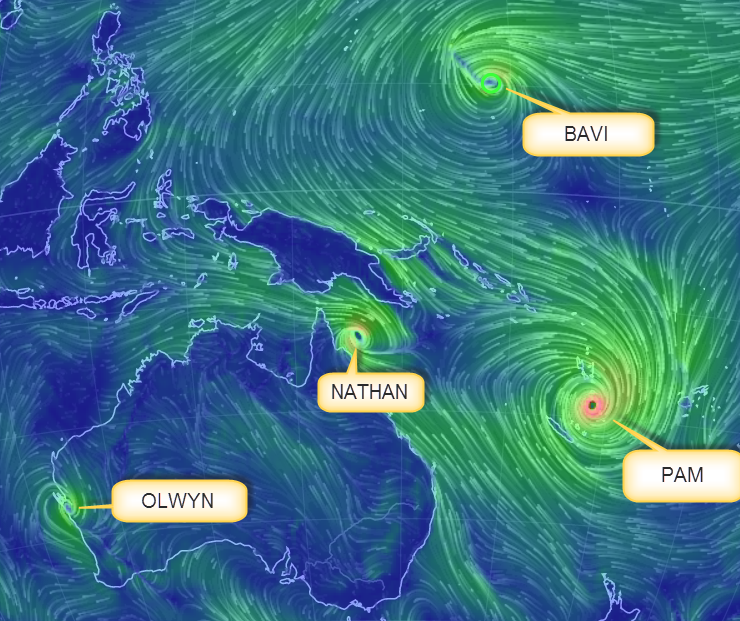







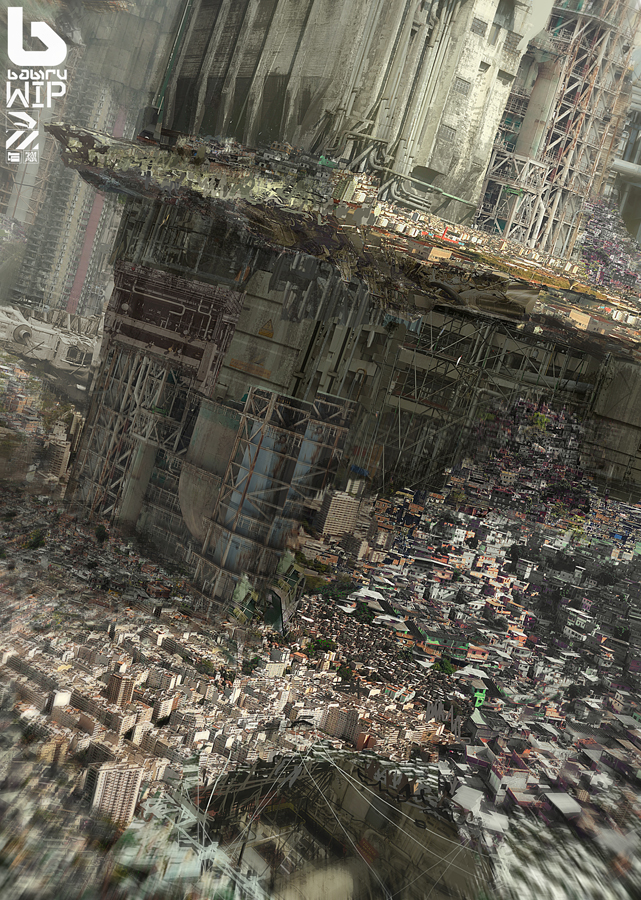
 Compromise and Conceit