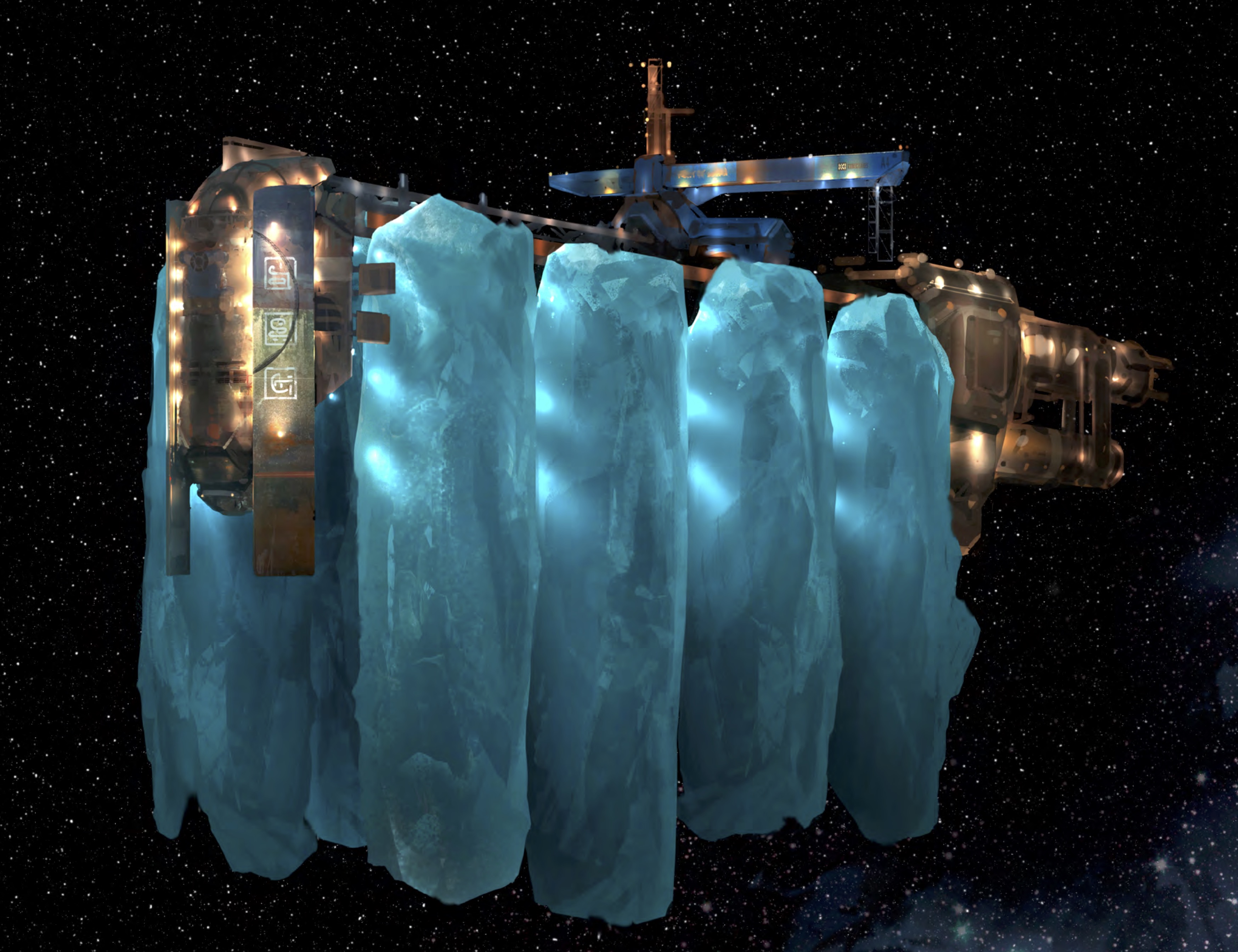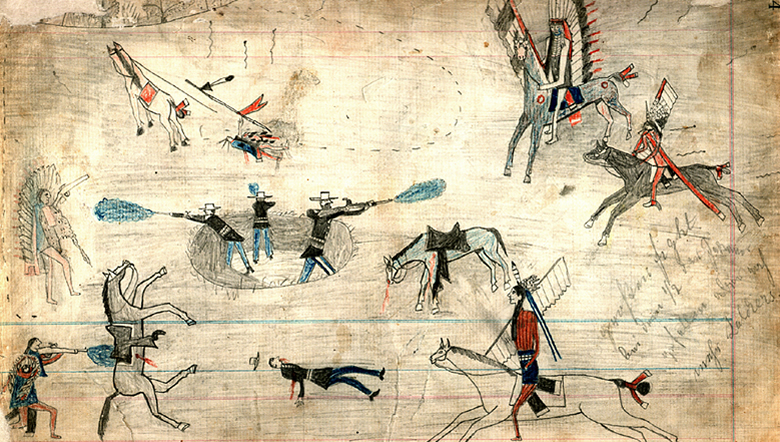
• You came in that?

    [UPDATE 2026/1/2]: If you enjoy Coriolis and are interested in my contributions to this setting, please consider reading my novel Shadows of the Firstcome, serialized for free at Royal Road or available for complete download if you wish to buy it from my Patreon.

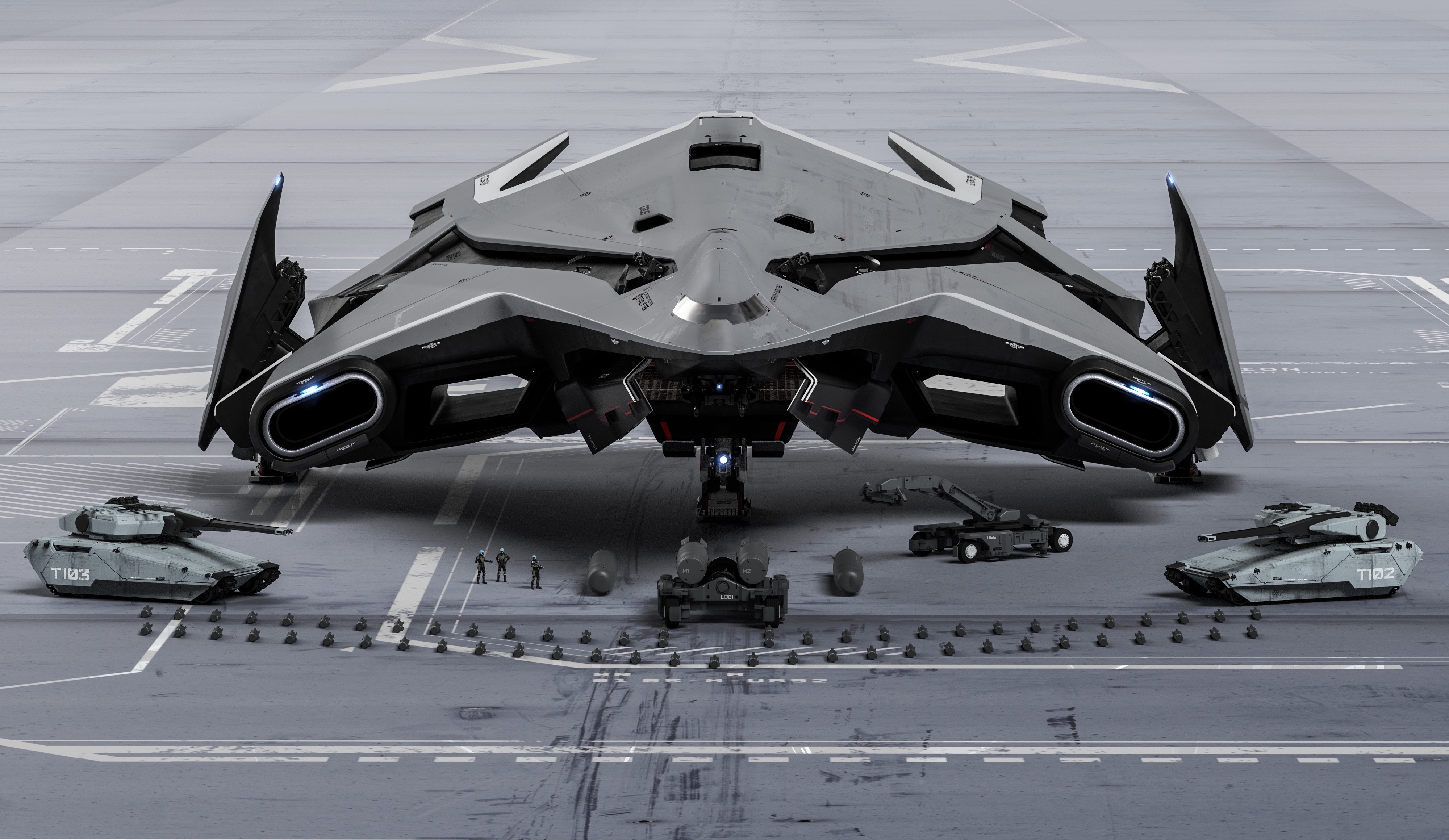
    Our PCs have had their first battle on board their ship, and I have been forced to think in detail about how large it is and how it is laid out. This is difficult, because many RPGs give guidelines on what to put in your ship and how much it costs, but very few talk about how it should all be laid out, how big it is and what it all looks like in the end. Some early games like Traveler provided deckplans but the ships they provided were very closely modeled on nautical ships and had a lot of flaws in their design (including that the final deckplans didn’t much match the design). So I did some thinking about how ship sizes and scales work in the Third Horizon, and came up with some guidelines, as well as some house rules for ship design. This post summarizes them.

    The motivation: The Beast of Burden

    The PCs’ ship is the Beast of Burden, a Class IV converted luxury yacht that they use for exploration and – as little as possible – combat. I have described the Beast of Burden elsewhere but its key modules of interest for ship design are:

    • 4 Luxury suites and 16 standard cabins
    • Two hangars, each capable of holding one class II or two class I ships
    • A single cargo hold, which in the original rules should hold 250 tons of cargo
    • A salvage unit
    • An arboretum

    I ruled at the start of the game that the arboretum is a module, not a feature. The Beast of Burden is also armed and has various other modules, but for the purposes of ship design I think the ones listed above are crucial. So I need to figure out how all this is laid out and what it all looks like.

    Ship size: The surprising scale of Coriolis ships

    To figure out ship size I thought about hangars. These are the largest components of a ship, and are available from Class III up. A Class III ship should be able to hold a single Class I in its hangar, and a Class V should be able to hold one Class III. We can make some judgments from this. First of all, how big is a class I ship? It has 3 modules, so let us assume that each module is either a hangar capable of holding some small air raft or similar sub-orbital vehicle; or that each module is a 5x2x1 m cargo hold [for more on cargo holds see below] then we could imagine that if we laid these modules end to end the longest they would reach to would be perhaps 15-20 m long and 5 m wide. Add on a 5x5m floor plan for the bridge, and then a general padding for the external shell of the ship, engines etc, we can imagine that the longest a Class I ship would be is about 30m. Perhaps its total dimensions would be a maximum of 30m x 20m x10m.

    This tells us that a Class III ship hangar would have to be about 50m x 30m x20m to comfortably fit such a ship. Realistically a Class III ship couldn’t have more than 4 modules for hangars, and we could imagine laying them in a 2×2 pattern (or in a ring of 4). So a Class III ship’s hangars alone could be 100m x 60m x 20m, or a cylinder 50m long and 60m in diameter. Add in some extra space on each end for cargo, service, engines etc and we can imagine the maximum size for a Class III ship would be about 150m x 80m x 30m. A Class IV ship needs to be able to hold 2 Class I ships in a single hangar, so that hangar must be about 100m x 50m x 30m. A Class IV ship could have 8 or maybe even 12 hangars, so its maximum size (with padding for crew space etc) would be 350m x 150m x 80m. Based on this we can present the following table for ships in the Coriolis system.

    Ship class Max length Max width Approx weight Equivalent vessel (Earth)
    I 30m 20m 600 tons Fast patrol vessel
    II 75 m 40m 9000 tons Naval patrol vessel
    III 150m 80m 60000 tons Container ship
    IV 350m 150m 420000 tons Largest ships on earth
    V 600m 300m 3600000 tons None
    VI 1.2 km 1km An enormous amount None
    VII 2.5 km 2 km None
    VIII 5km 4km None
    IX 10km 8km Coriolis station

    The Beast of Burden herself is approximately 240m long, which makes her about the length of a Panamax cargo ship – some of the biggest ships used on earth[1]. Most of this is on the service deck, which holds two hangars, the salvage unit and the cargo. Without these modules she would be much, much smaller, but a Class VI ship with a hangar needs to have a hangar large enough to fit her, so its hangars need to be at least 300m long – in fact they need to be large enough to hold a much bigger Class IV ship than the Beast of Burden, which is why a Class VI ship can be 1.2km long.

    Astute readers might notice that the weights given here are huge. I found some guidelines for calculating the weight of an ocean-going ship which suggest its weight is its volume divided by 5, and I have calculated the spaceship weights on the assumption that they would be half the weight of an equivalent-volume ocean-going ship. The reason for these enormous weights is that a terrestrial ship is long and slim, but no such restrictions apply to a spaceship. The Knock Nevis was 70m wide and maybe 80m in height, while a Class IV ship is twice as wide and higher as well. These larger volumes lead to much greater weights. In any case, in space weight is unimportant, so the main concern is volume, not weight.

    For comparison purposes, I estimate the Coriolis space station is about 4.8 km wide and 7km long, making it a Class IX ship.

    Dimensions of some components

    It’s worth noting that ships of the same class can be remarkably different in size. A Class I ship with three weapons modules might be only 10m long, and a class IV ship that was devoted to carrying pilgrims in coffins might be only 100m long. Without hangars and cargo we can expect they are much more compact, but the ship class is decided by the total quantity of its components, not its size. Let us consider the size of some of these components.

    For living space, I assume that a luxury suite is a 10mx10m floorplan, while standard suites are 5mx5m. I assigned 1m3 of space to the service station per 10m3 of volume of the ship. I decided not to measure cargo by weight, but instead by volume – 1 ton of cargo can be tiny if it is iron ore, or large if it is raw cotton. So instead I assign 10^class m3 of volume to cargo per module (so a class IV ship cargo module is 10,000 m3). The salvage station should be half the size of a hangar on a ship of that class. For class 1 and class II ships I assume a hangar (for sub-orbital small vehicles) might be about 10mx5m. Everything else I consider to be malleable in size and allocation, and I assume extra space for luxury suites or shared living space is natural. Docking stations, etc. scale up with the ship.

    I assume the height of a deck for living space is 2m, or 3m if the ship is spacious, plus 1m per class of the ship. The Beast of Burden has two levels on top of its service deck, so as a class IV luxury yacht each of these levels would be assumed to be about 7m in height, with 3m of actual space experienced by the people in the ship. Obviously service decks don’t follow this plan.

    Finally, I multiply the total volume by a small amount (perhaps 10%) for super structure, and then by a percentage equal to the cost inflation of the ship’s features. So if a ship’s features make it cost 30% more, then it also takes up about 30% more volume.

    House rules for ship design

    I made a few house rules for ship design, which I list here.

    • Cargo by volume: As mentioned above, I think cargo should be measured by volume. I assume 10^class m3. On a class IV ship this means one module takes up 10,000 m3, which is a 100mx10mx10m cube. On the Beast of Burden this is two sections, each 25mx20mx30m, forward of the hangars. A Class IV ship with 12 modules devoted to cargo could have 200mx60mx10m of space, 100mx60mx20m, and so on. By way of comparison I think the largest super-tankers can hold about 500,000 m3 of oil, about 4 times as much as a Class IV bulk hauler.
    • Divisible modules: If modules scale with class, I have decided ship designs can swap a single module for multiple smaller class modules. So for example a single class IV module could be composed of two Class III modules, four Class II modules, or eight Class I modules. So instead of having 64 stasis pods, a Class IV ship could opt for 32 stasis pods and an extra 8 escape pods (both class III modules). This will cost more because module price doesn’t scale with class, but it makes the ship design more versatile
    • Extra class I modules: For ships of class III and above, a couple of free class I modules can be chucked in to represent the vast space in these designs. These ships get 2^(class-2) extra class 1 modules, so a class IV ship gets 4 extra Class 1 modules. For example, an extra tiny hangar for sub-orbital vehicles, one more coffin, an extra escape pod, etc. This is just flavour.
    • Prison modules: The cabins module can be exchanged for a prison that holds as many people as the coffins option. Put it next to the medlab for added torture chamber options.
    • Hangar expansion: The rules suggest that the number of ships should increase as 4^class (so a class V ship can hold 16 class I ships) but this is madness: I have chosen to make it 2^class. On my calculations this means that Coriolis station can hold up to 192 class I ships at any time. I think that’s okay!

    With these rules it’s easier to design flexible ships that suit their purpose.

    Ships beyond Class V

    I have included ships up to Class IX in my table of sizes to allow for the Coriolis to be described by the rules. I have not considered how modules, hps etc. scale up with these sizes, but a basic progression from the rules would suggest a Class IX ship has 640 modules, 24hp and 11 EP, and 17 armour. I would guess that some of these values (particularly armour and hp) would scale further, and modules might plateau, so you might expect 400 modules, 40 hp and 30 armour or something similar. That’s basically indestructible. Good thing there’s only one, and it’s not mobile!

    Conclusion

    The Coriolis ship rules lead to staggeringly large and very cool ships, with a lot of variation in size and structure within a class, and a lot of flexibility to describe different ship designs. Coriolis station is outside the core rules, but probably the way the rules work they could be scaled up to describe Coriolis station accurately. It’s likely that your PCs will encounter ships up to 1 km long, and they’re probably flying in some rusting hulk that is bigger than most ships on earth. I think there is a problem with Class 0 ships – we need some designs for in-system fighters but the current rules don’t support that – but otherwise the rules scale well and it works nicely. By adding dimensions to some components and changing the size of cargo, it’s possible to come up with some guidelines for how to lay out deckplans and design ships that are awesome in scale and lots of fun to fly in.

    I want my spaceships big and exciting. I’m looking forward to the moment my PCs encounter a 1km long spaceship, and have to negotiate …

    Edit to add:

    I have house-ruled the hangar module to allow the hangar to carry more ships of lower class at a rate of 2^(class step). So a class 4 ship hangar can hold 1 class 2 ship or 2 class I ships. But the official rules say this should happen at a rate of 2^(2*class step). So a class IV ship hangar holds 1 class II ship or 4 class I ships. This leads to a really rapid rate of increase of ship sizes, even if we make generous assumptions about how small a class I ship is. For example, suppose we say the biggest a class I ship can be is 15m long and 10m wide, and a hangar should allow 5m on all sides of this ship. So a class I ship needs 25m x 20m of space in a hangar. Then a class III ship hangar would need to be 25mx20m in size, and the largest a class III ship would be would be perhaps 70m x 50m, if it had four hangars. However after this hangars scale up rapidly! A class IV ship hangar would need to hold four class I ships so needs to be 100mx20m, and a class IV ship could potentially have 8 of these, which in a realistic cylinder shape would make its hangars 200m long and 50m across – so the whole ship is about 250m long. After this things scale fast. A class V ship hangar holds 16 class I ships and needs to be 100m x 80m or 200m x 50m, so a class V carrier could be 1km long and definitely more than 600m. Then a class VI ship hangar would hold 64 class I ships and need to be 400m x 100m, and so on. By this reckoning I think the largest ships in each class would be about 1km (class V), about 2km (class VI), 4 km (class VII), 10 km (class VIII) and 20km (class IX). These are huge! And that’s assuming that class I ships are half the size of my starting assumption. In this variant there is much more diversity of size within ship classes, and the PCs will likely never encounter a ship bigger than class IV, but it does raise the possibility that the Order of the Pariah are sitting on some ginormous battleship (let’s call it the Yamato) that is going to appear in the Kua system some time in the future and be bigger than the Coriolis …


    fn1: The largest ship on earth was the Knock Nevis, which was 460 m long. Panamax ships are routinely 250m long.

  • [Spoilers below obviously]

    In 2016 a journalist reported that voting machines of a county in Florida had been hacked by the Russians, in support of electing to the highest office in the land an unqualified and useless white man who has never achieved anything. Other media outlets, right-wing agitators and partisans jumped on this and dismissed it, burying the story completely. In 2019 we discovered it was actually two counties, and the Florida governor has signed an NDA while the FBI investigate. In 2016 Barack Obama tried to organize a coordinated statement from political leaders on Russian interference in the election, but Mitch McConnell refused to support it and threatened to oppose it, in service of electing to the highest office in the land an unqualified and useless white man who has never achieved anything.

    In 2018 the producers and writers of Game of Thrones had their Mary Sue, Tyrion Lannister, give a speech about the power of stories, and about how evil men cannot kill a story, in support of electing to the highest office in the land an unqualified and useless white man who has never achieved anything.

    Do they think we’re fucking stupid? Or are they, in fact, fucking stupid?

    Jon Snow Completes the show’s murderous and misogynist arc

    Until this season, to the best of my recollection, Jon Snow had not murdered any women in cold blood, and hadn’t killed his own lover in a passionate embrace. I guess the show-runners wanted to make sure that he got to share in the fundamental misogynist spirit of the thing, so gave him the chance to murder his own lover in cold blood and made sure it was the crowning moment in the entire 8 seasons of this shitshow. Remember Jon Snow has been turned into this show’s liberal conscience over the past 8 seasons, so in doing this they made their modern, liberal audience complicit in this final act of spite.

    They also had Tyrion complicit in it, because the misogyny of this show has always been a conscious conspiracy by the male characters (with people like Littlefinger and Varys explaining this with bored exasperation to the female characters who hadn’t figured it out). Tyrion egged Jon Snow on to do it, and what were his reasons? Listen to him lay them out: he reels off a long list of all the bad men Danaerys has killed and all the good people she has liberated, and suggests Jon and Tyrion and the bad men of Westeros might be next. Yes, Danaerys killed slavers and murderers and rich exploitative bastards and every man who harboured resentment towards her in his heart. Clearly she was going to have a field day in Westeros! So better that the show’s liberal conscience kill her off before she gets to work. #notallmen amirite?

    The show betrays its own grimdark history

    I have watched over 8 seasons as the people of this show go through a vicious and cruel exploration of the grimdark genre which, I have argued before, has nothing in common with the reality of mediaeval history and is really just the show-runners’ fantasy of how they would act if they had no legal restraints on the murderous power of their cocks. One element of this grimdark fantasy’s over-the-top bloodthirstiness is its heroes love of murdering prisoners, and the gleeful abandon with which they wander through the battlefield putting their vanquished foes to the sword. This has been standard practice of all the armies of Westeros since the beginning, including the good guys. Jon Snow certainly had no problem with it when he defeated the wildlings north of the wall, or after the battle of the bastards. He didn’t complain when Sansa had the captured leader of his enemies eaten alive by his own dogs.

    But when Danaerys and her foreign horde do it, the men who have been running people through with impunity for 8 years develop a sudden case of the Geneva Conventions. Suddenly the show would have us believe that its gentlemen are really gentlemen, and if any one of these other leaders got astride a dragon in a time of war they wouldn’t burn a city to the ground. They’ve been more than happy to have their soldiers run rampage through vanquished cities for the last 8 years and suddenly they get the willies. It does seem like the show has softened this season, as they have attempted to make some of the characters more relatable to the liberal US audience watching it, but this is a problem. For 8 seasons we have understood that the spoils go to the victor. We accepted Danaerys’s Dothraki horde raping and looting their way through every town they conquered and we understood that powerful men get to choose who and what and how they fuck. There was nothing in all the abuse Sansa experienced that was incongruous in its time or place, and only its brutality was unusual. We appreciated that when the Hound killed those dudes talking about Arya as a chicken it wasn’t because their conversation was in any way wrong in the context of this world; it’s just that the Hound didn’t want them to do it to his friend. But if we carry this to its logical conclusion then whoever ascends the Iron Throne is going to murder their way there, and treat the city – and all the seven kingdoms – like their property. Given that the only people left standing are the liberal crowd pleasers, this is going to be a little on the nose for many of the fans. So the show had to take a liberal turn to not end up with one of the most repellent endings in cinematic history. But to me this is a massive disappointment. Don’t throw this gory shit at me for 7 seasons and genuinely revel in it then suddenly get squeamish at the last. Show the courage of your convictions and have the eventual ruler burn, stab, rape and murder their way to the top. Dispense the summary justice and vengeance we should expect! Even Cersei’s death was a cop out here: we all know that if this show were sticking true to its roots she and Jaime would have been captured and she would have been handed around to the people of King’s Landing to be used before her eventual bitter end.

    I didn’t sit through the red wedding to see this piss-weak cop out of an ending. If you’re going to commit to this level of grimdark, see it through.

    Does everyone in Westeros have their own weather?

    I tried to focus on the stupid scene where Tyrione is allowed to choose the next king by a suddenly piss-weak Grey Worm, but I kept looking at the costumes and thinking what is wrong with these people? All the northerners were dressed like they were on a mission beyond the wall, while the southern dandies were in the mediaeval version of shorts and a t-shirt – on a sunny day in the south! What’s going on here? Does every noble in Westeros have the power to set up their own personal environmental zone? Shouldn’t the northerners be sweating like Brits? This whole scene was some of the worst story-telling I have seen in modern tv but still, couldn’t they at least have got the costumes right?

    (Incidentally and relatedly – as time goes on in this show I have become more and more convinced that the Northerners are a bunch of insufferable prigs. Turning up to a meeting in the sunny south wearing your best arctic weather gear and sitting like you have a stick up your arse Sansa is the epitome of the kind of inflexible prudery that makes them Westeros’s eternal losers).

    Pulling the teeth of all the most dangerous people

    I think I’m not alone in wondering what the actual fuck was up Grey Worm’s arse in the second half of this episode. Or Drogon’s, for that matter. Or Arya’s. Or Sansa’s two episodes earlier. Over the past 3 episodes we have seen Sansa retreat to the basement at the first sign of trouble, we have seen Arya go from monster-slayer to pissy girl who forgot how to change her face, and finally in this episode we see Drogon just give up on the whole thing and piss off once his mother dies. WTF? Since when do dragons just chuck a bit of side-eye and run away after someone kills their mother? Worse still, Drogon shows enough intelligence to know that Danaerys’s quest for the throne was her undoing, but not enough to figure out that the dude holding her body killed her, even though the knife that smells like him is sticking out of her chest. Why didn’t Drogon burn Jon Snow, the tower, the city, and all the rest of humanity? Oh because he’s a dragon and they’re renowned pacifists? This is just pathetic.

    Similarly with Grey Worm, who goes from being willing to kill all his allies in order to get vengeance on a couple of captives, to handing Tyrion over to what are effectively his enemies, making some weak mewling pleas for justice, then allowing his prisoner to speak, choose a king of all the 7 kingdoms, and then get himself pardoned. The Unsullied have gone from an unstoppable force with iron commitment to their queen, to a bunch of pussies who give up as soon as some white people ask them nicely. Similarly the Dothraki, who in the last scenes are depicted walking along the docks past Jon Snow – the man who murdered their queen – and ignoring him affably.

    Basically every opponent of the entitled white men in this story – and in particular every rival to Jon Snow’s attentions as the Most Important Character – has been completely disempowered in this season, their motivations, powers and murderous ethics all melting in the southern sun so that Jon can come out as the reluctant hero. This is weak.

    Tyrion fails up

    Tyrion has been a failure for multiple seasons. Basically every piece of advice he has given Danaerys has been wrong. She could have captured King’s Landing first with three dragons, burnt Cersei alive, raised a huge army, waited for the army of the dead to come to the south, burnt them all to a crisp with her three dragons, presented herself to all of humanity as their savior, and then replaced all the kings of all seven kingdoms with her handpicked allies. But because of Tyrion’s advice she lost a dragon on a stupid mission to the north that just led to her fooling herself into thinking she had an ally she didn’t; she gave that treacherous ally time to build dragon-killing machines that took out her second dragon; and she lost her best friend in the process. Then Tyrion helped her enemy escape which ensured that she didn’t get to flamegrill Cersei, the woman in all of human history who most deserves a flame grilling, and almost allowed a claimant to the throne to escape alive and foment insurrection. And finally Tyrion managed to convince her lover to kill her (not a hard job since Jon Snow is such a piss-weak loser of a human, and in this show the boys will always prioritize their misogynist conspiracy over a worthy woman). Anyone looking at Tyrion’s history of bad advice would probably think that he’s not a good person to listen to.

    So of course when he proposed Bran as king they all agreed. Bran, the most useless person in all the useless people in this show. Bran, who has no experience of leadership, no experience of battle, no significant education, no identifiable character traits, and no evidence of any ability to think or plan. Bran, whose sole contribution to the progress of the story – in fact the only way in which he has materially affected any human being in 8 seasons – was to break Hodor’s mind in a desperate defense that was revealed to have been completely futile within a couple of minutes of it happening. This man is the person who was recommended to the council of Entitled Fuckwits as the next leader. And what new system has Tyrion introduced them all to with his shitty speech? An elected monarchy? I’m sure that will last the test of time!

    And after that, with all his evidence of dangerous and useless advice, Tyrion was appointed hand to this useless man. Has anyone ever failed their way to a loftier position than this pair of idiots? This show is like an object lesson in the value of being a rich white failson. Even Jon Snow, whose repeated failings led ultimately to the destruction of much of the northern population and the sacking of King’s Landing, manages to escape justice for murder and then once assigned to the Nights Watch is seen, at the end, just skipping out on those obligations to go and fuck wildlings beyond the wall without a care in the world.

    This show should be renamed Rich White Kids Can’t Fail.

    Winter’s waning as the final insult

    At the end of the show, as we see Jon Snow skipping out on his punishment that Grey Worm meekly agreed to and heading north of the wall to find, fuck and fail another Ygrit (who had the clearest judgment of his character, though for some reason she still fucked him) we see the first budding shoots of spring. This really pissed me off. For 8 seasons we have watched this show on the fundamental understanding that winter in Westeros is unpredictable, long, and horrible. It has been made clear to us that winter doesn’t just come because the Night King brings it, but that it comes randomly for its own reasons, and the Night King has not had anything to do with its coming for so long that nobody believes in him anymore – Cersei had to see a wight with her own eyes to believe he was even real, remember. We were told repeatedly that this coming winter would be longer and harsher than those recorded in long memory, and led to believe that this is why the Night King has been raised up and why he is using it to his advantage. Yet here, barely a couple of months after the Night King dies and so only perhaps an actual earth season since winter reached Winterfell, we see it is already receding.

    This is utter bullshit and it is the perfect, final example of how the writers of this show betrayed all its fundamental principles in order to tie it together into a nice, trite package that reassures us that the system must stay the same, nothing must ever change, and white men must win. It’s pathetic, weak writing and the end of this show was a catastrophe.

  • Could you lie to this nice lady?

    On 18th May 2019 Australia held a federal election, and the ruling Liberal/National Party (LNP) Coalition scored a victory over the Australian Labor Party (ALP) that was billed by most observers as an “upset” because opinion polls had in general been predicting a narrow ALP victory. The opinion polls predicted that the ALP would get a two-party preferred vote of 51.5% over 48.5% for the LNP, and would cruise to victory on the back of this; in fact, with 76% of the vote counted the Coalition is on 50.9% two party preferred, and the ALP on 49.1%. So it certainly seems like the opinion polls got it wrong. But did they, and why?

    Did opinion polls get it wrong?

    The best site for detailed data on opinion polls is the Poll Bludger, whose list of polls (scroll to the bottom) shows a persistent estimate of 51-52% two-party preferred vote in favour of the ALP. But there is a slightly more complicated story here, which needs to be considered before we go to far in saying they got it wrong. First of all you’ll note that the party-specific estimates put the ALP at between 33% and 37% primary vote, with the Greens running between 9% and 14%, while the Coalition is consistently listed as between 36% and 39%. Estimates for Pauline Hanson’s One Nation Party put her between 4% and 9%. This is important for two reasons: the way that opinion pollers estimate the two party preferred vote, and the margin of error of each poll.

    The first thing to note is that the final estimates of the different primary votes weren’t so wildly off. Wikipedia has the current vote tally at 41% to the Coalition, 34% to ALP and 10% to Greens. The LNP vote is higher than any poll put it at, but the other three parties’ tallies are well within the range of predicted values. The big outlier is One Nation, which polled at 3%, well below predictions – and far enough below to think that the extra 2% primary vote to the Coalition could reflect this underperformance. This has big implications for the two party preferred vote estimates from the opinion poll companies, because the two-party preferred vote is not a thing that is sampled – it is inferred from past preference distributions, from simple questions about where respondents will put their second choice, or from additional questions in the poll. So uncertainty in primary votes of the minor parties will flow through to larger uncertainty in two-party preferred vote tallies, since these votes have to flow on. By way of example, a 1% difference in the primary vote estimate for the Greens (e.g. 9% vs. 10%) will manifest as a difference of 10% in the total number of two-party preferred votes flowing to the major parties. If the assumed proportion of those votes that go to the Liberals is wrong, then you can expect to see this multiplied through in the final two-party preferred vote. In the case of One Nation, some polls (e.g. Essential Research) consistently gave them 6-7% of the primary vote, when they actually got 3%. So that’s a 50% miscalculation in the number of preference votes that flow to someone from this party. This is a unique problem for opinion polling in a nation like Australia and it raises the question: Have opinion poll companies learnt to deal with preferencing in the era of minor parties?

    The second thing to note is the margin of error of these polls. Margin of error is used to show what the range of possible “true” values for the polled proportion might be. For example, if a poll estimates 40% of people will vote Liberal with a 2% margin of error that means that the “real” proportion of people who will vote Liberal is between 38% and 42%. For a binary question, the method for calculating the margin of error can be found here, but polls in Australian politics are no longer a binary question: we need to know the margin of error for four proportions, and this margin of error grows as a proportion of the estimate when the estimate is smaller. For example the most recent Ipsos poll lists its margin of error as 2.3%, but this suggests that the estimated primary vote for the Coalition (39%) should actually lie between 36.7% and 41.3%. This means that the estimated primary vote for the ALP should have a slightly wider margin of error (since it’s smaller) and the Greens even more so. Given this, it’s safe to say that the observed primary vote totals currently recorded lie exactly within the margins of error for the Ipsos poll. This poll did not get any estimates wrong! But it is being reported as wrong.

    The reason the poll is reported as wrong is the combination of these two problems: the margin of error on the primary votes of all these parties should magnify the margin of error on the two-party preferred vote so that in the end it is larger than 2.3%, so we should be saying that the two-party preferred vote for the Coalition that is inferred from this poll is probably wider than the range 47 – 51%. That’s easily wide enough for the Coalition to win the election. But newspapers never report the margin of error or its implications.

    When you look at the actual data from the polls, take into account the margin of error and consider the uncertainty in preferences, the polls did not get it wrong at all – the media did in their reporting of the polls. But we can ask a second question about these polls: can opinion polls have any meaning in a close race?

    What do opinion polls mean in a close race?

    In most elections in Australia most seats don’t come into play, and only a couple of swing seats change, because most are safe. This election has definitely followed this pattern, with 7 seats changing hands and 5 in doubt – only 12 seats mattered in this election. Amongst those 12 seats it appears (based on the current snapshot of data) that the Coalition gained 8 and lost 4, for a net gain of 4. Of those 12 seats 9 were held by non-Coalition parties before the election, and 3 by the Coalition. Under a purely random outcome – that is, if there was nothing determining whether these seats changed hands and it was purely random, the equivalent of a coin toss – then the chance of this outcome is not particularly low. Indeed, even if the ALP had a 60% chance of retaining their own seats and a 40% chance of winning Coalition seats, it’s still fairly likely that you would observe an outcome like this. A lot of these seats were on razor thin margins, so that literally they could be vulnerable to upset if there was something like bad weather or a few grumpy people or a change in the proportion of donkey votes.

    I don’t think polls conducted at the national level can be expected to tell us much about the results of a series of coin tosses. If those 12 seats were mostly determined by chance, not by any structural drivers of change, how is a poll that predicts a 51% two-party preferred vote, with 2% margin of error, going to determine that they’re going to flip? It simply can’t, because you can’t predict random variation with a structural model. Basically, the outcome of this election was well within the boundaries one would expect based purely on the non-systematic random error at the population level.

    When a party is heading for a drubbing you can expect the polls to pick it up, but when a minor change to the status quo is going to happen due to either luck or unobserved local factors, you can’t expect polls to offer a better prediction than coin flips.

    The importance of minor parties to the result

    One thing I did notice in the coverage of this election was that there were a lot of seats where the Coalition was garnering the biggest primary vote but then the ALP and the Greens’ primary vote combined was almost as large or a little larger, followed by two fairly chunky independent parties. I think in a lot of elections this means that Greens and independents’ preferences were crucial to the outcome. As the Greens’ vote grows I expect it encompasses more and more disaffected Liberal and National voters, and not just ALP voters with a concern about the environment. For example in Parkes, NSW the National Party and the ALP experienced major swings against them, but the National candidate won with a two-party preferred vote swing towards him. This suggests that preferences from minor parties were super important. This may not seem important at the national level but at the local level it can be crucial. In Herbert, which the Coalition gained, two minor parties got over 10% of the vote. In Bass the combined ALP/Green primary vote is bigger than the Coalition’s, but the Liberal member is ahead on preferences, which suggests that the Greens are not giving strong preference flows to the ALP. This variation in flows is highly seat-specific and extremely hard to model or predict – and I don’t think that the opinion polling companies have any way of handling this.

    Sample and selection bias in modern polling

    It can be noted from the Pollbludger list of surveys that they consistently overestimated the ALP’s two-party preferred vote, which shouldn’t happen if they were just randomly getting it wrong – there appears to be some form of systematic bias in the survey results. Surveys like opinion polls are prone to two big sources of bias: sampling bias and selection bias. Sampling bias happens when the companies random phone dialing produces a sample that is demographically incorrect, for example by sampling too many baby boomers or too many men. It is often said that sampling companies only call landlines, which should lead to an over-representation of old people so that the sample is 50% elderly people even though the population is only 20% elderly. This problem can be fixed by weighting, in which the proportions are calculated with a weight to reflect the relative rarity of young people. This method increases the margin of error but should handle the sample bias problem. However, there is a deeper problem that weighting cannot fix, which is selection bias. Selection bias occurs when your sample is not representative of the population, even if demographically they appear to be. It doesn’t matter if 10% of your sample are aged 15-24, and 10% of the population is aged 15-24, if the 15-24 year olds you sampled are fundamentally different to the 15-24 year olds in the population. Some people will tell you weighting fixes these kinds of problems but it doesn’t: there is no statistical solution to sampling the wrong people.

    I often hear that this problem arises because polling companies only call landlines, and people with landlines are weirdos, but I checked and this isn’t the case: Ipsos for example samples mobile phones and 40-50% of its sample is drawn from mobile phones. This sample is still heavily biased though, because people who answer their phones to strangers are a bit weird, and people who agree to do surveys are even weirder. The most likely respondent to a phone survey is someone who is very bored and very politically engaged; and as time goes by, I think the people who answer polls are getting weirder and weirder. If your sample is a mixture of politically super-engaged young people and the bored elderly, then you are likely to get a heavy selection bias. One possible consequence of this could be a pro-ALP bias in the results: the young people who answer their mobile are super politically engaged, which in that age group means pro-ALP or pro-Green, and their responses are being given a high weight because young people are under sampled. It’s also possible that the weighting has been applied incorrectly, though that seems unlikely to be a problem across the entire range of polling companies.

    I don’t think this is the main problem for these polls. There is a 2% over-estimate of the ALP two-party preferred vote but this could easily arise from misapplication of preferences. The slight under-estimate of the LNP primary vote could come from inaccuracies in the National Party estimate, for example from people saying they’re going to vote One Nation on the phone, but reverting to National or Liberal in the Booth. Although there could be a selection bias in the sampling process, I don’t think this selection bias has been historically pro-ALP. I think the problem in this election has been that the fragmentation of the major party votes on both the left (to Green/Indies) and on the right (to One Nation, UAP, Hinch and others) has made small errors in sampling and small errors in assignment of preferences snowball into larger errors in the two-party preferred estimate. In any case, this was a close election and it’s hard for polls to be right when the election comes down to toss-ups in a few local electorates.

    What does this mean for political feedback processes in democracies?

    Although I think the problem is exaggerated in this election, I do think this is going to be a bigger problem in future as the major parties continue to lose support to minor parties. One Nation may come and go but the Greens have been on a 10% national vote share for a decade now and aren’t going anywhere, and as they start to get closer to more lower house seats their influence on election surprises will likely grow – and not necessarily in the ALP’s favour. This means that the major parties are not going to be able to rely on opinion polls as a source of feedback from the electorate about the raw political consequences of their actions and that, I think, is a big problem for the way our democracy works.

    Outside of their membership – and in the case of the ALP, the unions – political parties have no particular mechanism for receiving feedback from the general public except elections. Over the last 20 years opinion polls have formed one major component of the way in which political leaders learn about the reception their policies have in the general community. Sure, they can ask their membership for an opinion, and they’ll get feedback through other segments of the community (such as the environmental movement for the Greens, or the unions for the ALP), but in the absence of opinion polls they won’t learn much about how the politically disengaged think of their policies. But in Australia under compulsory voting the politically disengaged still vote, and they still get angry about politicians, and they still have political ideals. If this broader community withdraws completely so that their opinion can no longer be gauged – or worse still, politicians learn to believe that the opinions of those who are polled are representative of community sentiment in general – then politicians will instead learn about the reception their policies receive only through the biased filter of stakeholders, the media, and their own party organisms. I don’t see any of the major parties working to make themselves more accessible to community feedback and more amenable to public discussion and engagement, and I don’t think they will be able to find a way to do that even if they tried. Over the past 20 years instead politicians have gauged the popularity of their platform from polls, and used it to modify and often to moderate their policies in between elections. Everyone hates the political leader who simply shapes their policies to match the polls, but everyone hates a politician who ignores public opinion just as much. We do expect our politicians to pay attention to what we think in between elections, and to take it into account when making policy. If it becomes impossible for them to do this, then an important mode of communication between those who make the laws and those who don’t will be broken or worse still become deceptive.

    It does not seem that this problem is going to go away or get better. This means that the major political parties are going to have to start finding new mechanisms to receive feedback from the general public – and we the public are going to have to find new ways to get through to them. Until then, expect more and nastier surprises in the future, and more weird political contortions as the major parties realize they haven’t just lost control of the narrative – they aren’t even sure what the narrative is. And since we the public learn what the rest of the public think from opinion polls as well, we too will lose our sense of what our own country wants, leaving us dependent on our crazy Aunt’s Facebook posts as our only vox populi.

    As people retreat from engagement with pollsters, the era of the opinion poll will begin to close. We need to build a new form of participatory democracy to replace it. But, and how? And until we do, how confused will we become in the democracy we have? The strange dynamics of modern information systems are wreaking havoc in our democratic systems, and it is becoming increasingly urgent that we understand how, and what we can do to secure our democracies in this strange new world of fragmented information.

    But as Scott Morrison stands up in the hottest, driest era in the history of the continent and talks about building more coal mines on the back of his mandate, I don’t hold out much hope that there will be any change.


  • Broken the barred gate, rime on the plaster,
    walls gape, torn up, destroyed, consumed by age

    Earth-grip holds the proud builders, departed, long lost,
    and the hard grasp of the grave, until a hundred generations
    of people have passed.

    Our characters have escaped from a djinn-possessed ship, and returned triumphant to Coriolis station where they reported word of the Syndicate’s smuggling ring to the Coriolis Guard. But it was not their intention to run an aborted rescue mission on a doomed ice hauler: they had been out at the Eye of Anuba on the trail of an ancient Firstcome spaceship, which an ancient book told them was lying silent and untouched beyond the Eye. They decided then, after the distraction of the ruin of the Orun II, to try and reach that Firstcome ruin again. They spent a few days in Coriolis station recovering their good humour and resupplying the Beast of Burden, and then set off again for the Dark Between the Stars.

    The crew for this mission:

    • Pilot Saqr (Pilot)
    • Gunner Oliver Greenstar (Colonist)
    • Gunner Adam (Soldier)
    • Sensor Operator Siladan Hatshepsut (Archaeologist)
    • Doctor Bana Delecta (Medicurg)
    • Pilot Al Hamra (Mystic)

    Syndicate Salvage

    The journey to the asteroid belt was uneventful, as it had been before, but as they approached the Eye of Anuba, following the same course as their last journey, the PCs were hailed by a passing ship. Captain Arrak of the Amoeba was pleasant enough in his greetings, but soon began asking pointed questions about their route, and whether they had encountered any abandoned ships on their journey. He told them that the Amoeba was a salvage ship, simply looking for wrecks to scour out here in the Dark, but their sixth sense told them there was something more involved than that. Siladan scanned the Amoeba and noticed that she was heavily armed, much more dangerous than is necessary for a salvage ship working the asteroid belt in the Kua system, and likely on the prowl for some illegal purpose. They guessed that this was the Syndicate, looking for evidence of the Gunmetal Logic, the ship they had sent out 10 days before to intercept the Orun II, and which the PCs had captured and hidden away on Rockhome 3.

    They played dumb, a simple luxury yacht taking a bunch of rich tourists on a joy ride past the Eye of Anuba and out into the Dark. They had seen nothing but if they stumbled on anything they would let captain Arrak know immediately. He thanked them and the ships parted ways, although not before the Amoeba slyly dropped a drone in pursuit of their ship. Whether or not their story had worked, captain Arrak was keeping tabs on them.

    Once the Amoeba was out of sensor range Saqr jumped into their fighter, the No Satisfaction, and dropped into the edge of the Eye of Anuba, flying through the storm of asteroids into a position behind the drone and out of its passive sensor range. Oliver and Adam took gunnery positions in the Beast of Burden, and Saqr opened fire on the drone. Saqr’s shot hit, but the drone had ablative armour: The drone disappeared in a storm of melted plastic and crystal dust and then emerged fully intact, its sensors going onto full broadcast mode. Before it could send a warning to its parent ship Adam fired their accelerator cannon and blew the newly-vulnerable drone to fragments.

    Safe from prying eyes, they skipped over the Eye of Anuba and began their search for the shipwreck.

    Firstcome Ruin

    They found the ship after a day of searching, lying on the line of travel their ancient book had recommended. It was not as large as the book suggested, perhaps 600m long and a narrow 100m wide. It lay there in the vast emptiness, completely silent, powered down, motionless in the vast Dark. Under its belly there was a cloud of wreckage, and as they approached they could see that it had been in some kind of intense battle. The huge engines at the back of the ship had been torn apart by various heavy weapons, and the ship had been torn apart all along its belly.

    They flew under its belly and into the shadows of Kua’s sun, looking for entry points. The belly of the ship had been blown out along a 300m long line, with pieces of the  hull lying in a rough sphere near its belly, perhaps having melted off after an intense fire. It appeared to have been a cargo ship, but the superstructure and all the contents of its cargo bays had been ruined by fire and brutal missile strikes. There it lay, nameless and ruined and unclaimed for 500 years. The PCs drifted in, looking for a way to loot this graveyard.

    It was then that the Muzhadjar struck, unfurling themselves from the ancient wreck and swooping down to feast on the Beast of Burden. Fortunately Siladan detected them before they could come too close and the gunners were able to open fire on them, while Saqr threw their ship into a rapid spiral to try and avoid the beasts. They destroyed the first one as they sped towards the ship, but Oliver’s shot on the second one did not kill it, and Saqr had to throw the Beast of Burden into more complex evasive manoeuvres to stop the beast catching onto their hull. Were even one of these beasts to latch onto their ship they would be unable to kill it with their ship’s weapons, and would have to do a space walk to take it on with their personal weapons. Saqr thew their ship into a desperate loop and Adam released a torpedo, which hit the second beast as it swooped in, blowing it apart into a cloud of shadows and wrecked flesh.

    They flew back towards the ship, scanning carefully for more of the Muzhadjar and finding none. So far away from the Rimward Reach and the main crowd of Firstcome shipwrecks, perhaps this remnant vessel had only been able to draw a few loners rather than the vast flocks that they had heard populated the Reach, and could tear a ship to ruins in just a couple of hours. As they drew close to the ravaged ship nothing more emerged to attack them, so they drew the Beast of Burden to a halt, suited up, and prepared for an EVA.

    Among the Ruins

    Saqr flew across first, using a hand-held rocket to move from the ship to the roof of the devastated cargo bay underneath the ship. Here he tied a guideline to one of the cargo crane gantries stretching across the roof of the cargo bay, and waited for the rest of the crew to join him. They left Reiko Ando behind to manage the ship, and traveled across the guideline one by one. Oliver Greenstar lost control of his ascent and flew into a crazed spiral, hitting a piece of floating hull and hurting himself before he finally reached the cargo bay. Trapped in his wake, Al Hamra was nearly hit by a piece of flying debris but managed to pull out of its way just in time. Finally they all gathered in the cargo bay. From there they took another careful space walk to the engineering section at the stern of the bay, Siladan almost kicking himself away into the Dark before Saqr and Dr. Delecta caught him. They reached the engineering section without further incident, and settled into the relative safety of its blackened and wrecked consoles.

    Now they were in amongst the wreckage they could see that this ship had been horribly damaged in some ancient battle. A huge hole had been blasted through the middle of the ship by some enormous ancient weapon, leaving a perfect tunnel some 10m in diameter that traveled from the very top of the ship to the very bottom, emerging midships in the cargo bay. At the rear of the ship, in the engineering section, the floor and walls were riddled with holes from some powerful projectile weapon, as if perhaps the ship had been repeatedly strafed at close quarters, leaving raking sweeps of holes that pierced the walls and structure of the ship and let in pale shafts of light from distant Kua. The walls and floors had been blackened by fire, and the engines had obviously been massively damaged by missile fire, cannon and super-heated energy. They could find no human remains, probably because anything that was not secured to the walls and floors had been sucked out by the massive, explosive decompression when the base of the ship was blown out by whatever rail gun had punched the hole ‘midships. Throughout the engineering area and the cargo bay there was a faint cloud of dust, the scattered remnants of ash and melted plastic floating in the space of the hold. Where beams of Kua’s pale light shone through the blast holes in the ship’s hull they were caught by this cloud, filtered into faint rays of light streaking the empty space of the hold and the engineering section as if it were an abandoned cathedral to some primal god.

    The cargo bay was perhaps 300m long and 100m wide. The engineering section was 80m wide and 20m long at its widest, a huge sweeping room of control panels, strange ruined machinery, and wreckage. It had once been separated from the cargo bay by a huge sweeping wall of plexiglass, but that wall had been blown out by the force of decompression, or by the implosion of the ship’s reactors, and now only shattered fragments protruded from the floor, leaving it open to space and the desolate emptiness of the hold. There was an elevator shaft, but the elevator was jammed and wrecked inside it and riddled with holes. Next to it a narrow staircase led upward to the ship’s main deck.

    Before they headed up Siladan and Oliver found a control panel that held switches for emergency power batteries, and flipping the switches managed to engage enough power to turn on emergency gravity generators. Everyone gently drifted to the floor of the engineering bay, finally able to walk in vaguely natural gravity. Oliver through a piece of broken steel out of the shattered window into the cargo bay and watched it slowly accelerate toward where the floor had once been – and then pass beyond it, outside where the hull had been, and off into the emptiness of the Dark Between the Stars.

    There would be no jumping out, then.

    With the reserve batteries some emergency lights flicked on, casting a grim red glow over the wrecked panels. They marched up the stairs.

    The drones

    The stairs took them up to another engineering section, abandoned and empty like the last but not as badly damaged. Two more huge engines loomed over the stern wall of this section, wrecked and full of holes but not as badly burned as those downstairs. Here the plexiglass was mostly intact, and looked out on another huge cargo bay, perhaps 100m wide and 30m high, stretching 200m to a distant wall. The starboard side of the hangar had been blasted open by multiple missile strikes and all its contents torn outside by decompression. Across the blasted wasteland of the cargo bay itself the walls on the far side were riddled with holes from secondary blasts and perhaps also the same cannon fire that had hit the engines. Kua’s light streamed in through the holes in the starboard walls, casting a diffuse golden glow over the slowly settling plastic dust.

    As they advanced across the open space Dr. Delecta checked her motion sensor and warned everyone that there were two incoming targets. Moments later something opened fire on them from the far side of the bay. Energy weapons streaked across the open space, and they rushed to cover – finding none. Instead they dropped prone and returned fire, shooting at vague shapes in the distant gloom around the far wall of the cargo hold. Energy weapons fired at them, and two strange floating drones emerged from the shadows of the far wall. They had cylindrical bodies with wiry tentacles hanging down to the ground, a blue glowing exhaust of some kind beneath the cylinder and an energy weapon on the top. As they moved forward firing, the tentacles writhed and twitched, looking for someone to grip and drag into the air. The party fired into them as fast as they could, Oliver and Adam using full burst autofire. One of the drones struck Oliver in the leg, but they managed to shoot them down before they could reach melee combat and grab anyone with their tentacles. The drones fell broken to the floor of the hold, and the PCs advanced to investigate them.

    Siladan was able to confirm that one robot could be recovered, and perhaps reengineered to serve as a drone defender on their ship. They moved on, into the bow of the ancient ship.

    Loot

    Dr Delecta’s motion sensor warned them of more movement above, but at this level now they were safe, so they searched the bow of the ship for loot. They found a docking bay filled with high quality firstcome exo suits, and called in the Beast of Burden to dock with the air lock. They also found some torpedos, which they moved into the Beast of Burden – though they dropped one and activated its nuclear warhead, and had to throw it out of the hole in the middle of the ship before it detonated, leaving it drifting off at gravitational speeds into space to detonate 11 minutes’ travel away. They changed into the Firstcome exo suits, dragged the dead drone defender back to their ship, and moved upstairs to the top deck of the ancient ship.

    They had to climb up the elevator to do this, and as soon as they emerged they were attacked by a strange, animated suit of armour that looked like it had been cast from mercury. It fired on them with a vicious thermal weapon of some kind, knocking Oliver unconscious almost immediately and almost killing Adam before their return fire could cut it down. Even as they destroyed it a second one entered the room they had entered, and they were forced to fight it too. Siladan charged in with his mercurium sword but the beast caught his strike, tore the weapon from his hand and hurled it out of the ship’s hull and into space. As the team poured gunfire into the strange suit of armour Siladan lost his cool and headbutted it with his new Firstcome exo suit. Somehow he found the beast’s only weakness, caved in its skull and killed it with one hit. The strange mercurium armour fell dead at his feet.

    They looted these ancient Kinetic Intelligences, and searched through the ruins of the upper decks diligently until they found the ship’s data cores. They removed these carefully, finding also the captain’s personal tabula, and dragged it all back to the Beast of Burden. Satisfied they had found enough to profit handsomely, they cut loose from the ship and headed back towards Coriolis. Once they were a good distance from the ship Al Hamra contacted captain Arrak of the Amoeba and told him of the find. For 25,000 birr they sold its location and agreed never to speak of it to anyone.

    Behind them the grave of the Firstcome floated in the empty Dark, the story of its destruction untold, its crew forgotten. It had been a good day, and its secrets would make them rich.

  • A lot of people are getting upset about the way that Danaerys Targarion has gone off the deep end and turned into a crazy firebug. Some people are saying it’s sexist because she’s only lost her shit because Jon Snow won’t sleep with her (because suddenly incest is uncool in this world?!) Some people are saying it’s terrible writing because we had no clue that this was coming, since she’s been put forward as the people’s savior since the very beginning. A lot of people had high hopes for this woman because she seems to have something resembling a moral code, breaker of chains, etc.

    This is the woman who burnt her servant alive after her Dothraki warriors raped her and murdered all her family. It’s the woman who burnt the Tarly brothers alive because they weren’t sufficiently obsequious. It’s the woman who got all wet every time her first husband talked about burning Westeros cities and dragging their broken gods back to Essos in chains. None of this is unexpected. Amanda Marcotte makes some of the build-up to this supposed degeneration clear at Salon, but I have to ask why anyone is surprised when any character they thought had redeeming features turns bad? Because none of these characters have redeeming features. This happened three seasons ago when Stannis Baratheon did exactly what a man in his position should be expected to do and burnt his own daughter alive as a sacrifice to the Lord of Light. I wrote then about how weird it was that anyone ever respected this guy, let alone were surprised at his sudden barbaric turn. The same thing applies to Danaerys.

    The only way to watch Game of Thrones is with a nihilistic eye to the slaughter and destruction. I enjoyed this episode because it is always fun to watch the dragons off the leash, and I’m in this to watch bad people get what they deserve. There is nothing else to redeem this misogynist shitshow. Yesterday’s episode was full of dumb writing: Turning Cersei into a wailing girl instead of having her die on the rooftop of the red keep trying to kill the dragon with the last Scorpion; having Arya suddenly walk away from 7 seasons of training because a pscyho guy saved her physically and morally, and suddenly lose all her ninja skills to boot; having Jaime try to save Cersei instead of killing her as prophesied; having Danaerys not burn Tyrion along with Varys; why in all the fiery fucks I don’t give is Jon Snow still allowed to do anything except polish Brienne of Tarth’s codpiece?! It’s terrible writing and the plan to strip away all the female characters’ strong points and render them useless at the feet of the men (just as they started back in season 1) is obvious. But you don’t watch it for that. You watch it so you can see everyone die. There is nothing else to redeem this show.

    The only character you should ever have been supporting was the Night King.

  • Are you young, American, living in America and scared about where your country is headed? Want to get out before it all goes down? Are you worried about getting shot at school or work, or by the police? Don’t think that the healthcare situation is going to get better or even stay as bad as it is? Have a pre-existing condition and don’t know how you’re going to be able to afford medicines after you turn 26 (or even now)? Are you worried about Roe vs. Wade and pretty sure your reproductive rights are going down the tube in the next few years? Noticed that the new Georgia anti-abortion bill includes ectopic pregnancies, so is actually gynocidal? Are you poor and doubt you’ll ever be able to get into a good university and make a decent career, but don’t want to be stuck in an Amazon warehouse the rest of your life because working class work no longer pays in America? Are you black and don’t want to get shot by the police, or Jewish and a little bit worried about where those Proud Boys are taking your country?

    Do you need to get out? This post outlines two strategies for a simple and easy way to get out of the USA, for people aged 16-21 who are either finishing high school or finishing university, and not sure what to do next. If you’re confident that even if the Dems win the next presidential election things still aren’t going to get better, you might want to consider one of these two strategies. Both involve leaving America for Japan, and this post is to tell you how.

    Strategy 1: English Teacher

    Lots of young people don’t know about this, but there are lots of private English teaching companies in Japan that are always looking for staff from native English speaking countries to work in them. To get a job at an English teaching company in Japan you need three basic qualifications: you need to be a native speaker, you need a bachelor’s degree, and you should still be in possession of a face[1]. Most of the big English teaching companies do recruitment tours in the USA, but they usually also have open recruitment on their websites. You can find them pretty easily on google. For a company like Aeon you will go to a day-long recruitment seminar that doubles as an interview, and usually you’ll get a job offer as a result. You just need to turn up looking presentable, act like you care, and be willing to work with kids. You do not need to be able to speak Japanese or have any knowledge of Japanese culture (though knowing more about Japan than “manga!” and “geisha!” would be helpful probably).

    Once you get the job the English teaching company will place you in a random city in Japan, pay for your airfare, and organize an apartment for you. This may be a share house or it may be a one room. You’ll get paid probably 200-250k yen per month (about 1800 – 2000 USD) and will have to pay taxes and health insurance from that. Health insurance is affordable, and it covers everything: no pre-existing condition exemptions or any shit like that. It starts from the day you arrive in the country. Usually the company will help you set up bank account, phone etc., so even if you don’t speak Japanese you’ll be good to go. Once you arrive and get settled you can save a bit of money and after a few months you’ll be in a position to move somewhere you like, or change companies to a better one. If you speak Japanese because you were lucky enough to study it at high school you can maybe shift to a better job. But the key thing is you’ve landed in civilization, and you’ll be safe.

    The salary isn’t great but it’s enough to save money if you don’t do dumb-arsed things, and you will be able to make occasional short trips in Asia on that salary. Japan is not an expensive country and especially if you aren’t in Tokyo or Osaka it’s a super cheap place to live. The working conditions at teaching companies aren’t great (typically some evening and weekend work, and your days off may not be guaranteed to be Saturday and Sunday) but they don’t have at-will firing over here and even though you’re foreign you have all the employment rights of a local, including unemployment benefits after a minimum period of time in the job. English teachers are generally considered to be the lowest of the low among foreigners living in Japan, for reasons you’ll understand within minutes of meeting your colleagues, but it’s better to be the lowest of the low in Japan than to be middle class in America. So do it!

    If you’re a high school student this option isn’t open to you (these companies require a bachelor’s degree) but you can aim for it: they don’t care where your degree is from so you can attend a local low-cost uni (I believe you guys call this “community college”?) and still get accepted when you graduate. See my special notes for high school students below.

    There are also similar companies in China and Korea (see my notes on other Asian countries below). There is also an Assistant Language Teacher program where you work in schools, which is apparently a little more demanding to get into. Google is your best friend here!

    Strategy 2: Japan government scholarship

    The Japanese government runs a large scholarship program for students from overseas, called the Japan Government Scholarship, also known as the MEXT scholarship or Monbusho scholarship. This is available for all education levels: undergraduate, masters or PhD. You apply through your embassy (the US website is here) about now. The scholarship pays your university fees, a monthly living allowance, and a return airfare. You can apply for this for your undergraduate studies, so you apply from high school and go straight to university study in Japan. Unless you are planning on studying certain topics (e.g. Japanese literature) you don’t need to be able to speak or read Japanese: they set a Japanese test during the application process but this is used to determine what level of training you need, not to screen you out. The amazing thing about MEXT scholarships is that they’re not very competitive – not many people know about them and not many people want to move to study in Japan – so even if you don’t have a stellar record you still have a chance. Also they don’t discriminate on race or economic background, as far as I know, and it’s a straight-up merit-based application. The allowance is not great – I think about 100k yen for undergrads and about 150k for postgrads – but you’ll get subsidized uni accommodation and won’t pay tax, so it’s perfectly viable. If you go for Masters you need to find a supervisor who teaches in English and isn’t an arsehole – this is a big challenge – but you can do it if you try. One big benefit of the MEXT scholarship at postgrad is you get a year as a “research student” during which you don’t study in the department you’ve chosen but instead just learn Japanese. You can get really good at Japanese this way if you pay attention. Another great thing is that once you’re in the MEXT program it’s easier to go to the next step – so you can go from undergraduate to masters to PhD. Theoretically you could go from 1st year undergraduate to the end of a post-doc on Japan government money, which would put you in Japan for 11 years and probably stand you in a good position for a permanent faculty position, which are like hens’ teeth in the USA but quite common here. ALSO, if you do undergraduate study here you have a very good chance of being able to get a job in a Japanese company when you graduate, probably quite a good one, and build a career here.

    The application period is usually about now so get busy!

    Special notes for high school students

    Note that if you’re finishing high school you can target all of these strategies now. Apply for the MEXT scholarship and if you don’t get it, go to a local community college or whatever they’re called. Target one where you can study an Asian language, either Chinese, Korean or Japanese. Then apply for MEXT again at the end of your undergraduate, and if you don’t get it apply for an English-teaching company in whatever country you studied the language for. You can use this English teaching job as a base to find a job in whatever field you actually want to work, because you’ve got four years of language training under your belt and so should be able to speak the local language reasonably well. If this falls through you’re still okay because no matter how shit your degree was at that community college, a second language is a skill you can take to the bank. You can probably then find an okay job in a US company targeting that country. This means you’re still trapped in a failing state, but at least your attempt to get out didn’t doom you to work at Starbucks (though who knows, four years from now maybe America won’t have any industry except Starbucks).

    Remember, if you get the MEXT scholarship you’re going to graduate from university with no debt, proficient in a second language, and with a full career path in Japan likely right there in front of you.

    Notes on other Asian countries

    Most Asian countries have the English-teaching option available – for sure you can get to China or Korea if you don’t want to go to Japan, and they all have approximately the same requirements. All three countries now have functioning health insurance systems and you won’t get shot in any of them. They’re all aging and need young people, and at least in Korea as well as Japan Americans are generally still viewed well (for now; this is changing). Obviously there are some issues about personal freedom in China and if things continue to go south in the US-China relationship you might not feel safe from reprisals from the government. Other countries like Thailand, Vietnam etc. also have English-teaching jobs but I’m not sure about the pay and conditions – you might find you can’t save money in these countries and it becomes a kind of trap. I don’t know. But any of the high-income Asian countries are good places to teach English.

    China also offers scholarships for overseas students through the CSC. The Chinese education system is very good and if you get a degree at a good Chinese university you’re probably getting a better education than you’d expect in any American uni. I don’t know if the CSC offers scholarships to Americans (since, let’s face it, you guys suck) or what the long-term consequences of that will be for your career in either country, but it could be worth investigating. You might also want to consider Singapore, which has excellent universities, but I have no idea how it works.

    A note on the long-term risks of English teaching

    You can make a life time career as an English teacher in Japan but it won’t be well paid and you’ll remain permanently lower middle class, which is not a big deal over here (Japan is an equitable country) but also not the best working life to pursue. But most importantly, if you spend more than a few years as an English teacher straight out of uni, your employability in your home country will take a nose dive, because you have no skills or experience relevant to a real job. So you need to make an exit plan if you want to return to the west. One option is to get an English as a second language (ESL) masters (you can do this online) and try to move into teaching English at uni, which pays slightly more and has a bit more prestige, but is a slightly riskier career (it can mean a permanent career as an adjunct, which is tough). Another option is to try and jump ship to a real company using whatever skills you’ve got but this can take time and may not lead you to a good place. If your Japanese is good you can maybe shift to being a standard office worker, but if you have no Japanese you need to bear in mind that English teaching is a trap if you do it for more than a few years. Bear in mind that Japan is aging fast, the pool of available workers is dropping in size, and as time goes on opportunities for foreigners here (even foreigners with weak language skills) are only going to grow. Also contrary to what you’ve heard (see below) Japan is becoming more and more open and welcoming to foreigners, even under supposedly militarist Prime Minister Abe, so things will just get easier as time passes. It’s worth risking for a year or two to try and build an escape plan, and if it doesn’t work out what have you lost? Just be ready to jump out if you see that trap closing before it’s too late.

    Why Japan?

    I’m recommending this escape plan because I know Japan: I live here and I know it’s a good place to live. You’ve probably heard that it’s expensive, treats foreigners badly and is very inward-looking. None of this is true. You’re not going to experience much racism at all, if you’re a woman you’re not going to get sexually assaulted on the train, and it’s not an expensive place to live. Rent is affordable even in Tokyo on an English teacher’s wage, your health insurance is fixed at a small proportion of your salary and is always affordable, food is good and cheap, and you can live a good life here even on low wages. You can’t live an American life of huge housing, a car, an assault rifle and all the home-delivered pizza you can eat but that’s a good thing, not a bad thing: those are the reasons your country is killing the planet and itself.

    If you live in Japan you will be safe, you will be healthy, and you’ll be able to build a life for yourself even on a low income. If you want to live here long term you’ll need to learn the language (which is boring and bothersome to do); you may find that as a foreigner you are not going to be able to ascend to the peak of your career here no matter what it is. It may be hard for you to buy a place here either because your low salary precludes saving a lot of money for a deposit, or the bank won’t loan you money if you don’t have permanent residency. You won’t be able to afford to go back to America a lot unless you get out of the English teaching trade, and you will be restricted to short visits to nearby Asian countries. You’ll probably have to work hard and if you choose the wrong company after university (or the wrong post-graduate supervisor) you’ll be bullied and overworked. These are risks of moving here! But you’ll definitely have healthcare, you’ll have no risk of being shot by either crazy white guys or police, if you’re a woman you can walk safely at night no matter what time or how deserted the streets, and no matter what you earn people will show you the respect you deserve as a human being. And the government is not going crazy, nor will it.

    So if you’re young and scared and worried about your future in America, and you really want to get out, consider these two strategies, and get out while you still can.


    fn1: Actually I’m not sure if they care about whether you have a face. But just to be sure, apply now before some lunatic gets a chance to shoot you in the face.

  • We talk about it all night long
    We define our moral ground
    But when I crawl into your arms
    Everything comes tumbling down
    Come sail your ships around me
    And burn your bridges down


    Our heroes find themselves in the engine rooms of the Orun II, an ice hauler that has been overrun by an ancient Djinn. They have rescued the engineer and a deckhand, but the master Stevedore is trapped midships, and they need to make a decision about whether to risk their lives to save the ship itself, which is plunging out of control towards the Eye of Anuba, a cluster of highly active asteroids that will almost certainly tear the ship apart when it reaches them. They have just hours to act.

    The roster for this session:

    • Pilot Saqr (pilot)
    • Gunner Oliver Greenstar (Colonist)
    • Engineer Reiko Ando (Deckhand)
    • Sensor Operator Siladan Hatshepsut (Archaeologist)
    • Doctor Bana Delecta (Medicurg)

    The gunner Adam, their main soldier, had been badly injured in a battle with one of the Djinn’s ancient bodyguards, so he retreated to the Beast of Burden along with Al Hamra, the captain, who had been traumatized in the battle and was on the edge of breaking. The rest of the group retreated with their leader to their ship, where they upgraded their armour and weapons now that they knew the kind of enemy they faced. The engineer turned off the ship’s graviton projectors, so that the ship would no longer be accelerating towards the Eye of Anuba, buying them perhaps an hour of time, and retreated with them to their ship.

    They decided to travel to the workshop in the centre of the ship, rescue the stevedore, then abandon the ship and leave it and its crazed Djinn pilot to die in the Dark Between the Stars. Armed and ready, they set out for the centre of the ship. This could only be reached by an old service elevator that ran down the centre of the ship, so they climbed in and set it running. The elevator was huge, large enough for service vehicles to fit in, but old and rickety, and it almost did not start when they first stepped in. After a moment though it sprung to life with a shudder and began to track through the centre of the ship. The Orgun II is really just three control centres connected by a huge spine of external cargo attachments, so as they traveled along this spine they could look out of the elevator windows and see the huge chunks of ice hanging from the outside of the spine. The distant light of Kua’s sun shone through them, refracting into pale rainbow patterns on the wall so that as the elevator passed along the ship’s cargo it filled alternatively with the faint honeyed glow of the sun itself, and then a rich pattern of dancing rainbows as the sun’s rays were blocked by the ship’s icy cargo. Occasionally the elevator juddered and rocked, and at one point an asteroid struck one of the icebergs as they passed, spraying chunks of ice all over the outside of the elevator. Finally the elevator docked with the central control section of the ship and they were able to enter the workshop area.

    They passed through an outer chamber and through a large door into the workshop itself, a huge domed space full of gear, disassembled service vehicles, spare parts and random pieces of shipware. As they entered the room a shot rang out, nearly hitting Reiko Ando and forcing them all into cover. They called out and after a moment were able to convince the shooter that they meant no harm. After a few tense minutes spent confirming they were not possessed or here to kill him, the master stevedore Kolb Zir emerged from his hiding place behind a workbench and agreed to talk to them.

    The Syndicate

    They were just beginning to talk to Kolb Zir when Siladan received a message from Al Hamra, telling him there were strange signals on the ship’s scanners. Could he patch into the ship’s sensor system and check them? Siladan opened his tabula and patched into the ship’s sensors to check the scans – and saw to his horror the remains of a space battle glittering in the dark a short distance behind their ship. Whatever ship had won that battle was heading towards them, inbound at high speed and running without a transponder. Someone else had been coming to their ship, and someone else had intercepted them, destroyed them, and was now approaching as fast as they could.

    The time for negotiation with Kolb Zir was over. They handed him back his gun, jumped into the service elevator, and began the slow, rickety ride back to the engineering section. By the time the elevator had reached its destination the crew of the other vessel had docked, and as the PCs emerged from the engineering section they met the interlopers in the docking area. This new crew were immediately identifiable from the symbols on their combat armour – Syndicate mercenaries, hired killers for the crime gangs on Coriolis. What had they done to deserve this?!

    Battle was joined, but it was quick and brutal and in the first moments of the fight they were able to take down the gang’s leader. After a short firefight the team were cut down, and only one man was left alive after he surrendered. He called down the pilot of their small ship, and told them that they had been sent to the Orun II to recover some drugs that were onboard. The Syndicate had been running a smuggling operation using ice haulers and scrap ships from the asteroid belt: they would ship in drugs and other contraband from across the Horizon, hide it in shipments from the asteroid belt and then smuggle it into Coriolis in the freight, with the help of corrupt stevedores on Coriolis. They had been told that on this occasion the Orun II was carrying a quantity of a highly dangerous drug called Black Lotus, that had been strapped to some stasis pods and buried in the ice. When the Orun II went dark and disappeared they had been sent out on a mission to find the drugs. As they approached the Orun II they had seen another ship, a small vessel sent by the Melem Gesurra shipping company that owns the Orun II. Assuming it had been sent to take back control of the ship they had destroyed it and docked to take control of the vessel. They had come ready to deal with raiders or pirates, and had not realized they would meet such stiff opposition.

    The party laughed at that, and came up on an idea. They handed the pilot the armour of one of his dead colleagues and told both of them to head forward, get the drugs, and come back with them, and they would let them live. If they did not come back, or did not bring the drugs, they would be abandoned on the ship to die. The Syndicate thugs, having little choice and knowing nothing of the djinn, agreed to this ugly bargain, and set off on the elevator.

    As this interrogation happened Saqr had taken the Syndicate ship and docked it within the Beast of Burden’s second hangar. They prepared themselves for the return of the Syndicate thugs: Oliver Greenstar took up a position in the upper gun turret of the Beast of Burden, autocannon aimed at the central elevator shaft; Reiko Ando and Siladan placed themselves at the airlock connecting the Beast of Burden to the Orun II, ready to meet the thugs if they returned; and Bana Delecta waited in the airlock of the Beast of Burden in case anyone needed medical care. They waited.

    A Grand Bargain

    They had set up both thugs to have an open comms link to the Beast of Burden, but they did not plan for Oliver Greenstar’s personal problem. Oliver had told no-one, but he had been possessed for many years by a creature from the Dark Between the Stars. As he sat at his gunnery station it took control of him and made contact with the Djinn where it sat in the darkened bridge of the Orun II. Alerted to the character’s plans, the Djinn sent its warriors to the entry of the elevator shaft. They killed one of the Syndicate thugs while the Djinn took control of the other, as Oliver Greenstar ran a monologue over the comms system to distract from any small noises the others might have heard[1]. They waited, not realizing what was coming, as the elevator moved smoothly down the shaft, Oliver Greenstar’s possessing spirit ensuring he did not shoot it. After a long, tense wait the thug emerged in the engineering section, but instead of going straight to their ship, he accessed the engineering panels and restored power to the bridge of the Orun II, restarted the engines and gave the Djinn full control of the ice hauler.

    The PCs knew none of this was happening, of course, and only realized something was amiss when the lights on the bridge came on and the engines fired up. Moments later one of the Djinn’s palace guards came charging around a corner and attacked Reiko and Siladan with its mercurium sword. They had been betrayed! Confused, they fought back, but as the battle entered full swing a massive asteroid from the outer edge of the Eye of Anuba smashed into the engineering section, breaking it open and causing massive decompression in the whole section[2]. Somehow Reiko Ando was able to struggle against the explosive decompression and haul herself into the docking tunnel, but Siladan was torn away from the door and dragged towards the tear in the hull, the Djinn’s palace guard stalking after him. Meanwhile the Beast of Burden, connected to the decompression zone by the docking tunnel, began to decompress as well, and Reiko was forced to seal the airlock shut, trapping Siladan on the Orun II.

    It was then that the Djinn made contact with Oliver Greenstar and offered him a deal: let the ship go free and his palace guard would not kill Siladan. Oliver, still ridden by his own possessive spirit, agreed, and the palace guard retreated, leaving Siladan to the dubious mercy of the Dark Between the Stars. Moments later Siladan was sucked out of the hull and tossed into space, in a suit of armour that had no exo suit functions. The Beast of Burden detached hurriedly and rushed to collect him, somehow managing to line him up with an airlock and drag him inside before the cold of space took his last breath[3].

    As Oliver Greenstar’s possessive spirit faded away the Djinn contacted the entire party. It introduced itself to them as Kh’Oudour, told them that it was indebted to them for saving it from 300 years of sleep, and promised them they would meet again. As the Beast of Burden tumbled off into space and the Orun II accelerated away from its previously fatal flight path, Kh’Oudour also gave its thanks to the Green Knight, the beast in possession of Oliver Greenstar. The ships separated, and the Orun II was lost to human reckoning.

    For now.


    fn1: I made a big GM-ing mistake here, to be fair. I should have run a conversation rich with tension, where the two thugs were attacked and one seemed to survive and flee, and the PCs had to guess whether he was possessed or acting, while Greenstar tried to confuse them, but I completely forgot the thugs were wired up and the players didn’t remind me, so when things went south I didn’t give them any chance to figure out what was going on or to enjoy the rich tension of their two press-ganged servants getting whacked. This was a big GM-ing mistake!

    fn2: I had 4 darkness points left and I figured I should use them! Since the campaign started the PCs have become leery about praying to the icons, because they have seen the horrible ways darkness points can be used, and now they would rather fail skill checks than give me free rein top lay with all the environmental hazards that darkness points give me.

    fn3: The group has a group talent called “Survivor” which enables them to somehow survive situations exactly like this, and they called on it now. During character creation there had been discussion of which group talent to take, but as soon as they discovered the survivor talent every player who has previously been in my campaigns insisted that the group take that talent. They promised the new members of the group that they would not regret it. Siladan’s player is one of the new members, and he does not regret that choice!

  • … and if it weren’t for her dragons Danaerys should probably swing with him.

    [Spoilers for Game of Thrones Season 8 Episode 3 below]

    He is incompetent, rash, and when it matters he always makes the wrong decisions. This time around, at the Battle of Winterfell, he also managed to stay well out of battle, hanging around on a dragon and using it to no good end while beneath him thousands of his men died horribly.

    This isn’t the first time, either. At the Battle of the Bastards he completely broke with his own plan when he saw his brother murdered, and then led his troops on a reckless charge that sealed their destruction, and stood their helplessly while they fell all around him. That time only Sansa saved him (though she should probably swing for not telling him about the Knights of the Vale). This time it was Arya.

    Let us recall as well that when his little team were fleeing from the army of the dead beyond the wall, their dragon still alive, it was Jon who delayed their retreat with a stupid reckless charge that put them in range of the Night King’s spear. Everything Jon does is driven first and foremost by stupid reckless rage and posturing. He’s a useless planner and a terrible leader.

    Not that there isn’t blame to go around. In Episode 2 of this season we see the whole team – including Daenarys and Sansa – planning the battle as the Night King approaches, and it’s their clear plan to keep at least one of their dragons out of the battle because they think that the Night King is going to come for Bran. This means that their one reliable weapon against the countless dead is out of the battle, and all on the strange idea that the Night King is going to break out of the battle to kill Bran, a man whose sole effect on the world over 7 whole seasons has been to break Hodor’s mind. Why would they think that is going to happen?

    A better plan

    A far better plan for this battle would have been to use the unmatched power of their dragons to draw the Night King into range of their missile weapons, then shoot him down with dragonglass. They know that the army of the dead has no missile weapons, so once they get near the army of the living the dragons could simply hover over them, within missile range of the army, burning everything that approaches. The Night King then faces a choice: lose his whole army with no ability to replace it, or come forward to kill the dragons. Given the Night King doesn’t know that they know about dragonglass, and doesn’t know they have a huge supply of the stuff, he’s unlikely to think that all the human soldiers are armed with weapons that can kill him and his dragon; and although he will be hard to hit, his dragon will be super easy to kill with dragonglass – not to mention that it will be two dragons against one, and all they need to do is knock him off it so that the army can take him out with dragonglass weapons. They could further bolster this plan by putting Bran in the crypt, instead of in the garden, so that the Night King has to fight his way through the castle to get to him.

    The many stupid decisions in this stupid battle

    But no instead they put Bran in the garden, where the Night King can fly straight in and he can be attacked from all sides; left him with a very small number of defenders; sent the Dolthraki in to fight the Night King without any support; put the siege engines in front of their army and then didn’t bother to use them; dug a trench behind their army so they had to retreat over it; and hid all their non-combatants in a cellar full of dead people when they knew they were fighting an enemy that can raise the dead.

    It’s also worth noting that until Melisandre turned up – completely unexpected – to light the Dolthraki weapons they were standing in the front line with weapons everyone knew could not harm the undead, and obviously intended to be a sacrifice to slow down the enemy. If you want to slow down the enemy why not build your trench a little further out? And have the Dolthraki charge in from the flanks to disrupt the forward motion of the enemy, while the dragons burn the front ranks as they arrive, and just wait for the Night King to get desperate? And why why why would you sacrifice even a single soldier when you know your enemy animates your dead and uses them against you? The moment the Dolthraki rode off into the dark the forces of good knew that they had gifted the Night King another couple of thousand soldiers. Well done!

    This was the worst-planned battle ever. Why did they put their cavalry in front of their infantry, and why was everyone arrayed in front of the enemy even though in the previous episode we learn Brienne will command one of the flanks? You know you’re fighting a tireless enemy who can charge at you so why would you not use the cavalry from the side to disrupt movement? And why did they stop using the siege engines pretty much as soon as the Dolthraki died, instead of laying down a ceaseless rain of fire? And why did Jon spend so much time fart-arsing around up in the clouds on his dragon? If you don’t know where the Night King is, why not idle away some time by incinerating your enemies one field at a time? You’re sitting on the most powerful weapon the world has ever known, rubbing one out in the night sky because you don’t have the guts to fly down and set a bunch of dead people alight? You don’t just know nothing, Jon Snow; you are nothing.

    What is the point of Bran?

    Since the beginning of this show I have found every episode with Bran to be boring and pointless (except the Hodor one). He does nothing, learns nothing, tells no one anything, and contributes nothing. As far as I can remember his sole effect on the world of the living was to break Hodor’s mind, and his worging power is completely useless. Who cares if he can see through crows if he can’t move or speak while he does it, can’t communicate over long distances with anyone else, and can’t do anything through them? I was briefly hoping at some point he might worg into a dragon, which would be great, especially if it was the Night King’s, but nobody has bothered at any point to make his “power” useful or interesting. The people of the forest basically got exterminated helping him, the weird pointless dude in the tree gave him some riddles, Hodor died, and for what? He is supposed to carry the memory of humanity, but that’s already all written down in books and unlike Bran, books are actually capable of communicating, and will still be around long after Bran is dead. What’s the point of him and why would anyone think the Night King would come for him?

    If you’re the Night King why would you break off of a battle where your enemies have two dragons that your forces cannot defend themselves against to hunt down a single useless dude, when you know that once the dragons are dead you can kill him at your leisure? If you were planning such a battle why would you assume he is going to do that? When Bran announced this silly idea in the meeting everyone should have just looked at him and said, “Dude, seriously? Get over yourself.”

    The problem of failsons in Game of Thrones

    Bran’s arrogance in assuming that the Night King would come to him first – because if you want to exterminate all human life you can guarantee the job is done by starting off with a rich dude who has a special insight, amirite? – is of a piece with the show writers’ weird attachment to Jon Snow. Way back when they killed Jon Snow, an act that is entirely consistent with their ruthless willingness to brutally slaughter popular characters and nice people, but then they went against all the show’s moral history by bringing him back from the dead. In doing that they basically singled him out as a super important character in this show with some kind of plot destiny, but since then he has led his people near to ruin repeatedly, and done nothing worthwhile. So why are they keeping him alive?

    They have revealed to us now that he is the true heir to the Iron Throne, which raises the obvious possibility that they’re keeping him alive to fulfill his destiny and sit on the throne. If so then we can see how the show is going to play out: Through his poor temperament and bad judgment he is going to repeatedly create crises that the competent women will have to save him from, and then at the end he will simply walk up to the throne and take it from a more qualified woman. If that is their intention in keeping him alive then the ending of this show is going to be breathtakingly cynical. I’m still hoping Arya will assassinate them all and take it for herself now that my personal favourite the Night King is out of contention, but I’m thinking the chances are low. Jenny’s song [sung admirably by Florence and the Machine] implies that he might abdicate the role in favour of Danaerys getting it, but I doubt that will happen, so my guess is the show-runners are going to lead us to the final conclusion in which this incompetent failson gets everything he doesn’t deserve.

    Please god no.

    A final point about the Arya-Mary Sue thing

    Apparently online a horde of manchildren are angry that Arya killed the Night King and are making out that she’s just a Mary Sue for the creators. This is hilariously bad analysis, and a strong reminder of why fan boys are the worst. Arya has spent 7 seasons training to become an assassin who can swap her face and moves so silently that even the dead can’t hear her, she was introduced in the very first scene of the very first episode as an excellent archer, and her every move in the final scenes of this episode was foreshadowed over the past three seasons, but a bunch of angry men online are angry that Jon Snow – who let me remind you should swing for being an incompetent fool – should have got the pleasure of killing him. Why on earth and wtf? Furthermore, since when did these showrunners reveal they have any kind of Mary Sue characters? They kill off all the cool kids, and the only character they’ve shown any loyalty to is Jon Snow. Before this episode aired there was general speculation about which of the famous people would get it, and who would come back as a wight, so it’s a surprise Arya even got to the end of the episode. And her final act had a great deal of surprise and tension to it – I think the viewer had been well deceived into forgetting her, and even when she leapt she got caught and everyone in that moment surely thought she was going to be the famous person who got done. That was genuinely the best moment of the episode, and way more plausible than the stupid battle plan they came up with. But for a bunch of angry neckbeards it was a step too far because a girl did something important.

    If ever you have cause to doubt male resentment towards women in power, women in the workplace, #metoo or anything else – if ever you find yourself doubting that there will be many men who say they would love to vote for a woman but just not this woman – then just remember how this show unwinds, with an entire battle built around the idea that a useless rich kid who can’t do anything and has contributed nothing should be the focus of everything; a rich man who is so incompetent that every time he takes leadership thousands die, who will probably win the prize because he was just born to win; and a legion of men who are pissed off that this failson didn’t get to be the hero because an actually competent woman cleaned up his mess.

    So much of what’s wrong with modern America is encapsulated in this episode of Game of Thrones, and the reaction of a bunch of angry men to a woman cleaning up an incompetent failson’s mess. I hope this man dies horribly, and I hope Arya does it wearing Danaerys’s face.

  • My appetite’s unchanged
    Sink into dream; these enchanted depths
    The realm of muted wisdom
    Slowly descend; trust ignites the darkness
    And bliss is this drowning moment
    Believe me I am sorry
    To charm with bitter eyes; mesmerizing
    Careless magic turns upon itself, washed down in ritual

    Our heroes return, their souls blackened, from explorations of ancient ruins on the surface of Kua. Dissent has riven their group, as Siladan knows that Adam and Al Hamra found something important but will not share their information with the rest of the group. They sell the sugar globes they found, but money is becoming pressing; in three weeks their next payment on the Beast of Burden comes due, and although they have the funds to cover it they know that a single bad experience in space will force them into debt. They need to rest, and they need to make money.

    Siladan wanted to return to Kua and examine the cadaver clock. He confronted Al Hamra about it, but Al Hamra made the reasonable point that the clock had lain undisturbed for 200 years and probably was not going to be discovered again any time soon; before they examined it in more detail they needed to know more about how these things work, and find out what risks they might be taking. In any case, they needed money; so Siladan returned to the libraries on Coriolis to research a book they had found, Philonimus Guide to the Reach, which puported to hold the secret to treasures in the Rimward Reach.

    The Rimward Reach is a thin and widely dispersed asteroid belt in the outer reaches of the Kua system, which is distinguished as a graveyard for Firstcome ships. No one knows how they were destroyed or how they ended up there, but it is well understood that these ships are haunted by creatures from the Dark Between the Stars. Brave explorers occasionally attempt to loot these ships, but the effort is dangerous: many evil creatures hide in the wrecks of the ships, and the salvage work is grim and deadly. Philonimus’ Guide supposedly contained clues to the location of wrecks that could be looted, and to this end Siladan bent his research skills to attempting to find a safe site for exploration.

    He soon discovered that Philonimus had compiled his guide by visiting asylums for the insane in various systems, and interviewing old pilots who had been committed after the pressures of the dark became too much. Mostly his stories were fever dreams, hallucinations or out-and-out lies by people who had never been pilots, and Siladan slowly lost patience with the book until he was on the verge of quitting, sure that it was just a collection of mad dreams. But in a chapter entitled the Tower he found reference to a dead ship, floating in space between the asteroid belt and the Reach, unhaunted, that could be found by careful explorers who were willing to “thread” an asteroid cluster whose particular description made it identifiable. The chapter referenced the Eye of Anuba, a collection of asteroids in a strange orbit just beyond the asteroid belt, which were constantly clashing and highly mobile, in some kind of weird gravitational distortion. This dead ship apparently lay somewhere beyond the Eye of Anuba, and if one flew a direct course from Kua to the Eye, threaded it carefully and returned to a direct line from Kua, with good sensor work one could find the ship.

    The Eye of Anuba would take a week to reach on the Beast of Burden. They decided to try it.

    Running Dark

    They left as soon as Siladan had confirmed the details, heading on a straight line from Kua to the asteroid belt. They passed the asteroid belt uneventfully after 6 days and headed into the open space towards the Eye of Anuba, intending to cut as close as was safe to the small and deadly cluster, loop over it, and then return strictly to the line of their travel. Everyone knows that entering the Eye of Anuba is fatal, but it is relatively safe with modern ship’s computers to pass nearby, though no sane captain would ever have reason to – it was possible that a ship could float in the dark just beyond the Eye and be undetected for a thousand years. Thinking of the loot, they cut their course near the Eye, diverging slowly from a straight line through its meteoric heart and intending to bounce near it and over the other side.

    It was then that Siladan detected the ship: a large vessel running dark, transponder off, heading straight towards the Eye of Anuba.

    He alerted the captain. A full sensor scan revealed all the details of the ship: it was the Orun II, an ice-hauler out of Coriolis, owned by a legitimate company called Melem Gessura. The ship has a well-documented log of missions to and from the asteroid belt stretching back many years, no serious legal disputes, and all the evidence suggests it is a serious and well-respected old ice-hauler with no secrets. Yet here it was, running dark in the space beyond the asteroid belt, heading straight for the Eye of Anuba and certain destruction.

    The captain hailed it, but received no response. He hailed it twice more and received no response. Strictly speaking – legally speaking – they had received no distress call and could proceed on their mission without being in the wrong. Who were they to judge if a ship’s crew had decided to ignore outsiders and head to certain death? But something about this was wrong. They decided to investigate. They changed course and headed for the ship.

    As they neared the rear of the ship Al Hamra again attempted to hail it, and again received no response. However, for the briefest of moments they all saw a flash of light from the stern, a brief sequence of brilliant flashes that was obviously intended to be a distress signal. Someone without comms was trying to get their attention. They decided to dock.

    Saqr took the Beast of Burden in to the stern, and they extended their docking bay to one of the stern airlocks. While they docked Reiko Ando took the fighter out of their aft hangar and ran a single circuit around the ship. She confirmed by visual inspection that the ship was undamaged, but the airlocks near the bow had been disabled and the bridge appeared to be powered down. Obviously something was going on inside, and they needed to investigate. They docked, and some of the team moved into the ship:

    • Gunner Adam (Soldier)
    • Captain Al Hamra (Mystic)
    • Engineer Reiko Ando (Deckhand)
    • Sensor Operator Siladan Hatshepsut (Archaeologist)
    • Doctor Bana Delecta (Medicurg)

    Saqr and Oliver Greenstar stayed on board to monitor the situation and protect the ship, and the rest of the team entered the ship.

    Ancient Warriors

    They emerged into a large chamber, clearly an access hall, with large doors sealing it off from the engineering section. Adam set up an overwatch point at the airlock while Dr. Delecta tried to get her motion sensor working. It worked briefly, points of light indicating that there was movement in the room beyond the door and somewhere above them and to their right; and also movement to their left, heading rapidly towards them. Before she could give a proper warning a beast emerged from the shadows and attacked them, striking at Adam with a mercurium sword. It was fast, large and very very dangerous, and before they could act properly it had torn deep cuts in Adam’s chest and struck Al Hamra with its claws, a strange and otherworldly cold sinking through his chest and draining his will to live. Stunned, he fell back in terror and it was left to the rest of the group to bludgeon and shoot it to death. Finally the strange creature was dead, but not before it had nearly killed both Adam and Al Hamra. It was some kind of semi-human guardian, armed with a mercurium sword and wearing strange ritual body armour that Siladan dated to at least 300 years old. Its face had been expressionless all through the battle, like they were fighting an animated doll. But it was flesh and blood – so much blood! – and its armour obviously significant. What was it?

    Adam stripped its armour as Reiko Ando struggled with the motion detector and got it working, revealing again that someone was moving around in bulkheads above them. Adam sprang up into the bulkhead and managed to grab a girl hiding in the shadows, dragging her down into the light to talk.

    She was happy to talk, and begged them for help. Her name was Ayda Leon and she was the deckhand on this ship. They had been on a standard mission transporting ice from the asteroid belt to Kua, but one of their crew had noticed on routine inspection that one of the ice blocks held four stasis chambers inside it. They dug out the stasis chambers and put them in the forward observatory, but their captain had opened one, and been possessed by a djinn. After the possession it freed the creatures in the other chambers, possessed them, and started killing the crew. She had fled into the maintenance ducts, and the engineer Atallah Ard had fled to the engineering rooms. Before he fled, though, he took control of the ship, turned it to the Eye of Anubar, and set it to full power. Now he had locked himself in the machine halls, shut off power to the bridge, and was waiting to die. Another member of their crew, Kolb Zir, had locked himself in the workshop ‘midships, and had jammed the elevator to the bow. She could not convince Atallah to turn off the engines and without access to the bridge they could not turn the ship around or change its course, so they were doomed unless they could kill the djinn.

    She rolled up her sleeves, revealing arms covered in tattoos made to look like henna patterns, and asked the characters, “Are you gonna help me? Or am I gonna die out here in the Dark?”

    They had no choice but to help. They banged on the door of the machine hall and eventually convinced the engineer Atallah to let them in. As Aydah had said, there was no way for him to turn the ship around, and even if he turned off the engines they would still fly into the Eye of Anuba eventually. Atallah did not care: he was willing to die to take the djinn to hell with him. But they were not, and they were not willing to let Kolb Zir die either.

    Adam stood up, blood smeared on his stolen ancient armour, and Al Hamra, shivering and cold and terrified by his near death, stepped forward, steadying himself on a piece of warm machinery as he faced his crew. They would rescue Kolb, and find a way to turn this ship around. Here they could do good deeds, and get good rewards. It was a good day.

    All they had to do was kill a djinn and its ancient bodyguards.

  • Watching the new Fantastic Beasts series, set in the Harry Potter world but outside of Hogwarts school, has made me aware of the horrible inequalities and vicious politics of the Harry Potter world. I have reported on how the first movie very starkly illustrated the lack of interest wizards have in the welfare of muggles, and the extreme inequality between wizard and muggle world that wizards actively work to maintain. In the second movie their disregard for the muggles bleeds into full exterminationism, and the central plot of the movie is revealed to be the battle between an evil guy who wants to exterminate all muggles and a plucky wizard who wants to preserve the status quo (although perhaps his main motivation is getting laid). In the second movie we also see how the politics of the wizard world is close to fascist, and definitely dystopian, and the wizards are subjected to a strict system of control and enforcement that seems to be largely built around ensuring they don’t reveal themselves to or do anything to help muggles.

    In comments to the post in which I discuss this dystopian wizard world I attempted to discuss which kind of political dystopia the wizard world is, and after rejecting fascism and communism I settled on a colonialist model for the world. In this post I want to explain in detail how the politics of the Harry Potter world is explicitly colonialist, discuss the world’s repeated turns to exterminationism in light of this politics, and ask a few questions about how it is that a book in which we cheer for a bunch of colonialist bell-ends became an international sensation.

    This post is going to be long, and will be structured something like this:

    • An introduction to colonial practice: Exploitative versus acquisitive colonialism
    • The proto-fascist structure of colonial states
    • The Muggle Protection Act and the politics of muggle exclusion
    • Why muggles are treated the same way as indigenous people in the Harry Potter world
    • The inevitability of extermination and the threat of muggle technology
    • Cheering on racists: How did we come to this?

    In constructing this argument I will draw on background material from the Harry Potter books, some supporting material which I think JK Rowling published, and the events of the two Fantastic Beasts movies. I’m not a Harry Potter expert, so there may be mistakes. Anyway, here goes…

    Two kinds of colonialism

    When people think of colonialism they often think of the conquest and exploitation of India, which is seen as the canonical model of how a rich European state takes over and exploits a thriving non-European community. However, this is only one of two types of colonialism. For simplicity in this post I will define these two kinds as exploitative colonialism and acquisitive colonialism. In exploitative colonialism an aggressive and expansionist state invades and subjugates a weaker but technologically advanced state, destroys or co-opts its existing political structures, and runs its economy to its own exploitative benefit. Typically the state that the colonialist power invades is established, strong, with its own heirarchies, a thriving market, international trade and its own technological developments and progress. The model of such a state is India, but any of the South East Asian nations and also much of North Africa qualifies for this situation. In exploitative colonialism the cost of exterminating the locals, and the huge benefits of exploiting their existing markets and social structures, mean that exploitation is the best or possibly the only way for the colonial power to extract benefit from a people it considers its inferior. In contrast, acquisitive colonialism seeks no benefit from the people it overruns. In acquisitive colonialism the expansionist state finds a people who are technologically far inferior to itself, have a very small and dispersed population, limited or no international trade, and few markets it can intrude into. The only thing they have that is of value to the expansionist state is land and the resources locked in and under that land. Often their political systems are so alien to the conquering state that it cannot conceive of how to exploit them, and in any case the local economy is so small in comparison to the colonial state’s that there is no point in wasting energy trying to extract anything from them. Often these highly isolated societies are also vulnerable to diseases that the colonist brings, so exploitation will be highly destructive in any case. In acquisitive colonialism the costs of extermination are so low, and the benefits of exploitation so minimal, that the best outcome is to destroy the local community, drive it off of all profitable or beneficial lands, isolate it from the invaders and exclude it from all contact with or benefit from the invading society. This form of colonialism was practised in Australia, New Zealand and the Americas. The final goal of this form of colonialism may not have been the complete destruction of an entire race and culture, but it was most certainly the complete expulsion of these people from all profitable lands and their exclusion – generally on racist and eugenicist grounds – from all political and cultural interaction with the colonial state. This final stage is characterized in the USA by the reservation system, and in Australia by the mission system and the child abduction program. These acquisitive colonial states reached their nadir in the mid- to late 19th century and early 20th century, when they mixed their colonial ideology with scientific racism, but had a tail that trailed into the late 20th century, with the end of the explicitly exterminationist strategies probably marked by Wounded Knee in the USA and the end of the child abduction program in Australia in the early 1970s.

    Of course neither of these kinds of colonialism perfectly enacted the goals they set out for themselves, partly due to conflicting political visions, partly due to changing circumstances, and partly because the goals cannot be pursued to their pure conclusion through the flawed and human agents of colonial repression. But that they did not, for example, completely exterminate the native American peoples should not be taken as a sign that American colonialism was not explicitly acquisitive and exterminationist.

    The proto-fascist structure of colonial states

    Colonialism extracts a heavy toll from its subject peoples, but it does not do so without also implementing an architecture of oppression and authoritarianism at home. Colonialist states explicitly structure their world view around heirarchies of human worth, defined in terms of race, class and gender, and the state and its supporters construct a network of social, political, economic and cultural forces to support and maintain these heirarchies. Within the home country of the colonialist state there is usually an extensive apparatus to control the poor, with institutions such as the workhouse and the prison, poor laws, debtor’s prison, and press gangs. Much of the British state’s early actions against sex workers were based on fear of the weakening influence of sexually transmitted infections on the colonial project, and the mistreatment of poor women and their children – including deceptively stealing their children and shipping them to the colonies to be used as cheap labour in the mission system and the homes of wealthy colonial families – is well documented, finally.

    In the acquired colonial territories the state enacts vicious repression on its own lower classes, in the form of anti-union violence and the employment of terror organizations such as the Pinkertons to enforce its will. Where extractive industries in the acquired territories come into conflict with colonial labourers or encounter activism to preserve the environment or other public goods they react violently and with government support. Movement of non-indigenous people into indigenous areas is heavily restricted, and organizations that might represent the interests of indigenous people are suppressed. In the USA there was lynching of free Mexican workers throughout the south west, and in Australia in the 1960s the Freedom Riders were met with violence in their journey around Australia publicizing Aboriginal disadvantage. In the UK it was not uncommon to see “No dogs and Irishmen” signs on public accommodations, and at times in history it was not acceptable for white and indigenous people to marry or live together. In later years through programs like Cointelpro and the undercover police operations of the UK the state’s secret police worked assiduously against not only indigenous rights but also environmental and labour activism, animal rights progress, and any form of restrictions of the rights of the colonial state to extract full value from its stolen lands. In the USA this led to state and extra-judicial violence against indigenous people protecting their water rights, open suppression of land rights activism, and the use of prison and state power to restrict services to reservations to force acquiescence from indigenous activists and their non-indigenous supporters. The British state introduced transportation in the 19th century, dumping petty criminals and labour organizers from the UK into the badlands of its colonial properties and then pitting them against the indigenous residents, and punishing those who spoke out against these practices.

    It is not possible to exterminate whole peoples, push them off their hereditary lands, and steal their resources without maintaining a violent state that represses all attempts at clemency or understanding. You cannot keep humans out of your polity without forcefully policing the boundaries of your polity, and requiring that your citizens stay strictly within it. Colonialist states are repressive, and build up structures of political and state control intended to ensure that their heirarchical and violent systems are maintained. There is a wide literature on the damaging political consequences of the exercise of state power in support of colonialism: George Orwell writes eloquently about its damaging effects in Burmese Days, and Katharine Susannah Pritchard describes the oppressive atmosphere of the frontier very well in Brumby Innes and Coonardoo. Henry Reynolds describes the violence of the frontier in The Forgotten War, and of course the Bringing them Home report details the racist underpinnings of the political order supporting colonialism in Australia. The Waitangi Treaty Grounds in New Zealand offer an unrelenting description of the colonial project in New Zealand, against an incredibly beautiful and peaceful backdrop. There is no reason for anyone in colonial societies not to know these things, but many of us do not.

    Having established these outlines of what colonialist policy is and how colonial states enforce it on both their colonized victims and their citizens, let us move to the world of Harry Potter, and examine how the wizard world treats muggles.

    The Muggle Protection Act and the politics of muggle exclusion

    The Muggle Protection Act is a law passed in 1992 to protect muggles from magical accidents. It was part of a broader body of legislative and scholarly work on maintaining the veil of secrecy between the muggle and wizard worlds. It may be just a coincidence, but most colonial states have a law akin to this. For example in 1869 the Aboriginal Protection Act was passed in Victoria, which amongst other things restricted “where people could live and work, what they could do and who they could meet or marry”. Similar restrictions and guidelines were published in the wizarding world, for example the three volume Laws of Conduct When Dealing with Muggles, or the cultural (but not legal) stigma attached to marrying muggles. It appears, from Queenie’s behaviour in The Crimes of Grindelwald, that it is not possible for her to marry Jacob Kowalski or even to have a relationship with him, which is why she has abducted him and charmed him to come with her to France. That suggests that in 1920s America at least there was some kind of restriction on muggle-wizard relationships, or at least they were only considered acceptable in extreme circumstances. It is also apparently the case that the ministry of magic attempted to remove certain books from school libraries if they depicted relationships with muggles or were overly sensitive in their reporting on muggles.

    The politics of muggle exclusion becomes much clearer when we investigate Dumbledore’s history of activism on this subject. In a letter to Grindelwald on the topic, this scion of liberal wizard politics writes

    Your point about Wizard dominance being FOR THE MUGGLE’S OWN GOOD — this, I think, is the crucial point. Yes, we have been given power and yes, that power gives us the right to rule, but it also gives us responsibilities over the ruled. We must stress this point, it will be the foundation stone upon which we build. Where we are opposed, as we surely will be, this must be the basis of all our counterarguments. We seize control FOR THE GREATER GOOD. And from this it follows that where we meet resistance, we must use only the force that is necessary and no more.

    This is a classic model of white man’s burden. Consider, for example, this minute from the colonial secretary of New South Wales to the Legislative Assembly, 1883:

    HAVING carefully read the two reports by the Protector, the various letters and articles which have appeared in the newspapers on the La Perouse blacks, and the report of Messrs. King and Fosbery on the Warangesda and Maloga Mission Stations, the opinion which I formerly held is confirmed, viz., that much more must be done than has yet been done for the Aborigines before there can be any national feeling of satisfaction that the Colony has done its duty by the remnant of the aboriginal race.

    Later in this note (which can be found as a reference here), we can find in the report of the NSW Aborigines Protection Association the following charming indication of how many people in 1881 felt about Aboriginal people:

    As usual in inaugurating an effort of this nature, the Association had some obstacles to surmount through misrepresentation and apathy. It was said that any attempt to better the condition of the blacks was labour in vain; that they were such irreclaimable savages, and so devoid of ordinary human sympathies that no hold could be got over them ; and that they were dying out so fast that no good end could be served by trying to civilize and educate them.

    This is very close to the way Grindelwald or Voldemort think about Muggles; indeed, without having access to it, one could assume that Dumbledore’s reply to Grindelwald is a reply to a sentiment such as this. Certainly there is a movement in the wizard world – epitomized by Grindelwald and Voldemort, but also expressed through pure-blood fascists like Malfoy – that the wizards have the right to rule over muggles, that no consideration should be given at all to muggles and that purity of blood is essential. Indeed, the entire language of blood status in the wizard world exactly mirrors the language of racial heirarchies in colonial societies, and policies championed by pure-blood fascists are very similar to those proposed by people like A.O. Neville in early 20th century Australia. The similarity of language and intent is striking. Effectively what we see here is one side of an ongoing debate between wizards about whether to completely ignore or even exterminate muggles, or to keep them excluded from wizard society but act where possible for the good of the muggles when doing so. In the Harry Potter books we see this debate manifest as a violent conflict between Voldemort on one side, and Dumbledore and the children on the other, in which we side with Dumbledore and his white man’s burden, rather than the exterminationist Voldemort.

    The Muggle-Indigenous parallel

    Of course, one might argue that this colonial vision cannot be shared between wizards and European colonialists, because wizards are not stealing anyone’s lands. They don’t need to interact with muggles at all and they’re simply maintaining a peaceful distance. But this is not the case at all. Muggles are a constant burden to wizards; muggles are in the way. Whenever wizards show themselves around muggles – whenever they attempt to be on muggle land or in muggle spaces as wizards – they risk violence, and the entire architecture of wizard secrecy was developed in 1683 in response to violent encounters between muggles and wizards. In the colonial project Indigenous people are also in the way, because they occupy land that the colonialists want, and attempts to use that land incur Indigenous anger and violence, so the simple solution is to push them off. Perhaps they could have come to some arrangement to share the land, but why would they bother with people so far beneath them? And why negotiate when essentially you do not believe that Indigenous people are using the land at all? This logic of terra nullius makes it an injustice to the colonialists to have to negotiate with their inferiors for access to land they don’t believe the indigenous people are using or need. A very similar situation applies to the wizard world: wizards cannot openly use muggle land or public space without incurring violence, and so the muggles to them are just a nuisance. They have nothing to gain from interacting with muggles, and consider themselves so far above muggles that negotiating with them is a waste of time, and so they try to separate their societies. To this end they establish a complex system of laws that they enforce with extreme violence (towards wizards who violate them) and obliteration (of memories) for muggles who stumble across their existence. It is also clear from the books that even liberal wizards don’t think twice about interfering in the wellbeing and livelihoods of muggles if the muggles’ presence causes them even a moment’s inconvenience. Consider this story from Harry Potter and the Half-blood Prince[1]:

    There was no doubt that Mrs Cole was an inconveniently sharp woman. Apparently Dumbledore thought so too, for Harry now saw him slip his wand out of the pocket of his velvet suit, at the same time picking up a piece of perfectly blank paper from Mrs Cole’s desktop.

    ‘Here,’ said Dumbledore, waving his wand once as he passed her the piece of paper, ‘I think this will make everything clear.’

    Mrs Cole’s eyes slid out of focus and back again as she gazed intently at the blank paper for a moment.

    ‘That seems perfectly in order,’ she said placidly, handing it back.

    Here Dumbledore, ostensibly a champion of muggle rights, simply screws with a woman’s mind and creates a future disciplinary issue for her, just because she is “inconveniently sharp.” Her situation or needs are of no importance to her at all – he simply dismisses her intentions and free will, and tricks her into not doing her job, with all the consequences that entails.

    It is inevitable that at some point in this history an impatient or particularly arrogant wizard is going to advocate for the next step from this inconvenient co-existence: exterminate them and take their land. This is what Grindelwald wants to do, keeping alive perhaps a small number for some as-yet-unclear purpose. It is also part of Voldemort’s goal, although he also appears to want to reshape wizard society as well. Perhaps he realized that rebellion against the system of muggle protection boards and secrecy statutes was not enough, and to properly settle “the muggle question” one needs to also change wizard society so it is less squeamish about what needs to be done. This would make him no different to the people arguing against the Aborigines Protection Association in Australia in 1881.

    The parallels are obvious: an inferior race interferes in the goals of wizards by being in their way on land they could be using for their own benefit. So the debate becomes: do we tolerate them and do our best to rule with good intentions, avoiding harming them as much as possible; or do we exterminate them for our own convenience? All of the Harry Potter plot – and especially the plot of the new Fantastic Beasts series – concerns the resolution of this debate. It’s the classic debate of the colonial era, with magic.

    Extermination and the threat of muggle technology

    The slide towards extermination is inevitable, and the imperative to do so becomes obvious in The Crimes of Grindelwald, where we begin to realize that there are too many muggles, wizards can’t control them forever, and because they haven’t already completely destroyed their society, the muggles are developing their own technology. Grindelwald shows a vision of the future in which muggles have nuclear weapons and it becomes painfully apparent to the gathered wizards that the game is up: if the muggles get that technology, they are the equals of wizards. That one vision by itself is enough to convince at least half of the wizards to switch sides. Queenie switches sides, with the promise of no moral constraints on how she will be able to deal with muggles. The implication for Queenie is that she can have Jacob – but what does that mean for the other wizards in the room? Murder? Slavery? It’s not clear but the implication is not good. The moral implication of this in the context of this colonialist model of wizard-muggle interactions is obvious: because they didn’t exterminate them and disrupt their culture sooner, the wizards have allowed the muggles to flourish and become independent, and now they are a threat. The wizards should have learnt from the human playbook, and done the job properly from the start. Grindelwald – and, perhaps, later Voldemort – will do the job properly!

    The moral implications

    What should we as readers take away from this collection of stories? I tried googling to find out what others have written about this topic, and although I found some interesting questions and debates on colonialism in the stories, I could not find anyone tackling the obvious racism of the wizard/muggle divide and the horrifying language of colonial racial hierarchies in Rowling’s lexicon of blood purity. I found an article from an academic, Magical Creatures and How to Exploit them, about the colonial politics of wizard’s attitudes towards non-human magical beings. I found a question on Metafilter (wtf!) about whether the wizards bothered to stop colonialism when muggles did it to each other, with the obvious implication (since it happened) that wizards from all the countries on earth sat back quietly while muggles of one country enslaved and exterminated muggles of other countries. This is an interesting question that makes the central interventionist debate in Black Panther look kind of pissy, but it doesn’t address the issue of how wizards view and treat muggles. The entire issue seems to have just slid under everyone’s notice.

    I think this is a strong indictment of how western societies view our colonial past, and also a really depressing example of how much indigenous peoples’ voices and cultural history have been excluded from western culture. We didn’t even notice as a series of books in an obviously, openly racist and colonialist setting swept the world by storm. A huge amount of ink has been spilled on her description of native American wizards, but nothing has been said about the colonized nature of muggle life, and the fascist society that rules over them and is planning to exterminate them.

    There is nowhere in the original series of novels or in the movies where the author makes a judgment on this, or leads us to believe that she even sees this issue (indeed, in Fantastic Beasts and Where to Find Them it is unclear whether we’re even meant to think the summary execution of Tina is bad). It is possible to make stories of this kind with a little more moral nuance than we see in Harry Potter. For example, in his Culture series, Iain M. Banks makes it very clear that there is something slightly wrong about the Culture, and especially about the behavior of the Contact section. In Consider Phlebas we are obviously meant to sympathize with the Culture’s enemies as they race to find the Mind, and in The Player of Games the planet that Gurgeh intervenes in is set up as almost comically evil with the specific intent of posing a moral question about interference. The decisions that the main characters make leave them scarred and cynical, and sometimes set them against their own society. In the movie Avatar the colonial conflict has a clear moral framework and we end up switching sides midway through. There is no point in any of the multitude of books, movies and associated stuff where any wizard character of any kind rebels in any meaningful way against the colonial system, or even questions it. The obvious implication of this is that we’re complicit with it, as readers – we are asked to go along with it, and we do!

    This leads me to ask a few questions about the series, its conception and its reception, which I have not been able to answer:

    • Did J.K. Rowling intend this series to be a discourse on colonialism, or did she invent this entire apparatus out of whole cloth?
    • Has anyone noticed the racism of wizard society and its colonialist parallels, and has Rowling responded to that?
    • Is there any young adult literature where the good guys are embedded in and supporting a society as openly fascist as the one that Rowling writes about?

    It is disturbing to me that this series is about a group of children defending an overtly authoritarian society from a fascist takeover, in which two separate storylines describe bad guys intending to exterminate most of the human race on racial grounds, and we are supposed to cheer on the “good” colonialists who are protecting a “good” society which controls the minds, bodies and souls of 6 billion people because of their infinite inferiority, and maintains a deeply violent and illiberal social order in order to protect that colonialist project. I cannot remember any book I have ever read in my entire life (except perhaps Starship Troopers, but for obvious reasons my memory of that is dim) in which the society the good guys come from is so deeply evil, and yet we are so blithely expected to cheer along the main characters as they defend and support that society. Looking back on it now, I feel as if I have been indoctrinated into a vicious and disturbed cultural order, raised in it just like the children in the books, and only when I was presented with Fantastic Beasts and Where to Find Them did I finally realize that the society I had been cheering for needs to be torn down root and branch.

    Conclusion

    The society of the Harry Potter world is best modeled as a colonialist society in which an elite of extremely powerful people lord segregate themselves from a mass of muggles who they exclude from the riches and benefits of their own society, on explicitly racist grounds. This society has developed an intensely authoritarian and illiberal system of government to control the wizards and ensure that the colonial order is reproduced, and is happy to use violence and imprisonment in a soul-destroying prison to maintain that order. Exterminationist ideology bubbles up repeatedly in this world because it is inevitable that a society which views 6 billion people as worthless interferences in its daily activities will eventually decide that the convenient thing to do is murder all of them, and the need to do so becomes pressing when people realize these supposedly useless muggles will get nukes. We the readers are supposed to cheer on the agents of this authoritarian society as they defend it against a fascist, exterminationist incursion, without ever questioning the underlying principles of this social order, the author never shows any sign that she intends for us to question the moral framework of her series, and no character ever seems to question the fundamental evil of it all.

    Of course this doesn’t mean you can’t enjoy the series, and it’s certainly an interesting political project. But it says a lot about the state of our society that this became popular and that the political underpinnings of the work have never been questioned, or indeed that the explicitly racist framework of the stories has not been repeatedly attacked. Obviously it’s good that millions of children enjoyed a hugely popular book that is enjoyable to read and introduced a whole new generation to the joys of reading and the creative brilliance of literature, but I really hope that in future we as a society can do better than this.


    fn1: Itself a deeply disturbing name, when you think about the history of phrases like “Half-blood” when applied to indigenous peoples.


    Art note: This is a ledger drawing, art drawn on a school exercise book or some other workaday paper, which is a part of the historical record left behind by indigenous Americans after the end of their independent communities. This one is a drawing by an unknown Kiowa artist, which I took from the Wikipedia entry on ledger art.