
Tell me this is not a gatekeeper to the Elder Gods’ lair under the Mountains of Madness. And a hairy chested yeti crab? We are doomed once the ice melts … doomed …
Infernal adventuring…
Tell me this is not a gatekeeper to the Elder Gods’ lair under the Mountains of Madness. And a hairy chested yeti crab? We are doomed once the ice melts … doomed …
Continuing my series of posts on sex work and public health, I thought I might take a brief look at some of the historical debate over sex work and public health. Sex work can be a major risk factor for the transmission of sexually transmitted infections (STIs), and the sex industry can play the role of a classic “high risk” group in epidemiology, maintaining a pool of individuals with some disease and spreading it to low risk groups through sexual contact. This is a well-recognized aspect of the epidemiology of infectious disease, and isn’t in and of itself a stigmatized or morally compromised position for a part of society to occupy. Travelers are a high-risk group for the spread of influenza, prisoners for TB, and children for a range of infectious diseases. But the particular form of the risk that sex workers engage in – sexual – and some of its historical “victims” (that is, the types of men who purchase sex from sex workers) have been of sufficient concern to the authorities that sex workers have attracted a great deal of moral opprobrium for their behavior. Public health interventions of various kinds have been advocated in modern societies since at least the 1870s, and historically have tended to instrumentalize sex workers as a risk group: that is, they only see the health of sex workers through the prism of the harm they may “do” to others, and don’t consider the health, welfare or rights of these women in and of themselves to be of much (or any) value. Examination of the approach to public health in previous eras can be instructive: it helps us to understand the types of political and moral forces that are brought to bear on those who might put the rest of the community at risk through their “immoral” behavior.
Sex Work and the Future of the Nation
Sex work entered the national consciousness in the UK in the 1860s, after the Crimean war. Returning soldiers, and soldiers in camp during and after the war, were targeted for business by, and very frequently visited, sex workers. Gonorrhea and syphilis became serious public health issues, and in this era neither were treatable, so attention naturally turned to prevention efforts. With soldiers who contracted these diseases being rendered unfit to serve, there was a genuine fear that the soldiers’ actions might lead to such a high rate of disease as to compromise the fitness of the army. The UK Government established a commission to investigate the problem in 1864, and debate on the issue became quite public. In 1870, the Daily Telegraph wrote in an editorial:
the question can be suppressed no longer – that it concerns the very life and future history of the nation, and must be carried, as is our wont, before the tribunal of national opinion.
With this, the Telegraph decided to confront the issue of prostitution as it was then imagined: not just as a public health issue, but as an issue that affected the future of the nation. Somewhat hyperbolic, one might think, but the British Medical Journal (BMJ) in the same year showed were the leadership of the medical profession stood on the importance of the issue of sex work and the national good:
Shall we find that, by the control of prostitution, we shall have irretrievably lost in morality and gained not at all in health?[1]
This letter was written in response to proposals to introduce controls on prostitution. These controls would largely have consisted of mandatory health checks for soldiers, proposals to educate them in hygiene and safer sex, and possibly also some extremely punitive measures targeted at sex workers (including, possibly, the right for police to “inspect” any woman considered to be a possible worker). The concern of the correspondent was not just that these measures might prove useless, but that by even so much as considering education of soldiers about the risks of sex with sex workers, Britain would have given up something of its moral core. Merely admitting that ordinary men visit sex workers, and that this could not be stopped, was seen as a potential moral scourge. One imagines that these “prostitutes” must have been a truly terrifying force for evil, that even to speak their name in the presence of soldiers would so corrupt them as to lead to the “irretrievable” loss of some moral value – and with it, we shall see, physical decay.
Nationalism and Sexual Health
There was a strong nationalist aspect to debates about sexuality and sexual health during the period of empire, and a fear that the failure of proper moral controls on certain segments of society would lead to a failure to check
that dire disease, syphilis, which is, more than any other disease, undermining the human constitution in this and other countries[2]
He linked the physical decay associated with this disease directly to the moral decay of prostitution and “immorality.” But the effect of the disease on the national constitution was not believed to be due to its debilitating physical effects alone; the weakening of the nation as a whole that comes about through “moral decay” was also of great concern. In amongst multiple letters to the BMJ describing genuinely terrifying levels of STI infection (up to 20% in one cohort during world war 1), we find doctors such as John Armstrong, who asked in 1921,
Shall we preach indulgences and recommend appliances and disinfecting agents, and so call evil good? By these means we might possibly, but not probably, stamp out syphilis, but the remedy would be a hundredfold worse than the disease, inasmuch as it would lead to a universal physical weakness and degeneracy unparalleled in history[3].
Here we are now 50 years from the original debate over the Contagious Diseases Act, and yet still correspondents to the BMJ are presenting the epidemiology of syphilis as inseparable from the epidemiology of moral decay. In the intervening 50 years they had won world war 1 despite all these supposedly weakening measures, and 50 years of (at least) considering preventive measures and education in the army had hardly led to the debilitation of the nation. And yet … moral degeneracy was still seen around every corner, and even were the medical consequences of it to be stamped out, the moral decay that might result from a policy of permissiveness towards promiscuity and sex work would surely destroy the nation.
The Importance of Moral Enforcement
If this were not enough evidence that the public health benefits of pragmatism were in this time considered very much secondary to the moral interests of the body politic, consider this further editorial piece from the BMJ in 1884, after the passage of various Contagious Diseases Acts in the UK, which included punitive measures against sex workers and a variety of public health measures targeting sex workers:
The reformatory side of the question has not been fully and fairly recognized by those even who have pleaded the sanitary side. Without compulsion in some form or other, there can be no repression of this disease, and, without moral reforms, compulsion would not be tolerated[2].
The “compulsion” here referred to includes the right of police to stop and enforce medical investigation of any woman suspected of sex work, and the continuing abolition of sex work itself (with punishment for the women involved). This editorial makes it clear that morality cannot be separated from public health when talking about STIs, and that prevention of disease in this era was considered impossible without the right of “compulsion” over those who might be affected. The “moral reforms” referred to here are attempts to reinforce existing moral strictures on sex out of marriage and promiscuity – a return to traditional values was considered essential to support willingness to prosecute ordinary women over sex work, and to introduce nationwide measures against sex workers and those who visited them.
Moral debate on prostitution at this time was not entirely one-sided, though even medical men who took a more humane or enlightened approach to the benefits of public health intervention could sound quite judgmental by modern standards, not to mention hyperbolic. Again, from the BMJ of 1869:
My private opinion is, and I hope to have it supported by you, that the discussion of these matters by medical men has now satisfactorily shown that the Contagious Diseases Act is but a division of a still larger question-Prostitution, which, again, cannot be discussed, much less settled, without our possessing considerable knowledge of the kindred questions of Illegitimacy and Infanticide…
Whether the nation will ultimately accept these Acts, and the benefits obtainable from their operation, or not, one thing is certain, the condition of our streets after nightfall will no longer be allowed to be a national disgrace: moreover, “The Ladies’ Anti-Contagious Diseases Association” now admits that the condition of their fallen sisterhood requires investigation, and they take blame to themselves for having so long neglected it. To conclude, I think you will agree with me that, as public feeling is now fully aroused to the necessity of investigating these questions, professional men must be prepared to take their part in the discussion; and Government must look to surgeons to carry out the preventive and sanitary measures which our special knowledge may recommend for the alleviation of the sufferings of women who are often more sinned against than sinning[4].
[Emphasis in the original].
This more enlightened view of the public health benefits of intervention still supports extending the punitive measures of the Contagious Diseases Act to the civil population, and refers to sex workers as “fallen” women. While it might be progressive for its time, it still admits of a need to control and change sex workers, and denies them agency or the right to control their workplace or their own future. At the time, with most STIs untreatable and the “situation” on the streets of London seen as urgent, this coercive approach to public health may have been appropriate, but it set the tone for much of the following 100 years of debate on STIs, sexuality and public health in the medical profession. This tone is perhaps best summed up in the policy statement of the National Council for Combating Venereal Diseases, which, writing fully 50 years after the initial Contagious Disease Acts were passed, stated the following in its policy:
As by far the most important cause [of STIs] is promiscuous sexual intercourse, the question cannot be dealt with apart from social and moral factors … The action of public-health authorities in dwelling in their publications on the medical prevention of these diseases, to the exclusion of moral considerations, is deprecated.[5]
Thus it was still well-accepted medical orthodoxy in 1921 that public health interventions based on education, information and the practice of safer sex were to be ignored in favour of punitive and moral measures. While debate on this was far from settled, we can see the debate has followed this tone and failed to settle on a compromise between morality and hygiene for more than 50 years. Is it any wonder then, that even after syphilis had become just another treatable disease – in the modern era – doctors continued to insist on the importance of fighting immorality in medical practice?
Beyond Sex Work: Illness and Pregnancy as Moral Enforcers
There is an underlying tenor to much of the early correspondence on STIs that suggests they should be seen as the natural consequence of moral decay or that the prevention, through encouraging “immorality,” is worse than the disease. But although implicit in the published statements of these early physicians, they never manage to come out and say that the terror of syphilis could act as a deterrent to immorality[6]. Once the second wave of feminism had reared its ugly head, however, things got a little more heated in the medical literature. Consider this (not uncontroversial) piece from 1971:
Venereal disease being no longer a penalty it is not a Deterrent… if this new understanding and tolerance of an immense human problem is not to land us in one huge jumbo-jet hop from barbarism to decadence then new attitudes to the physical, psychological, and spiritual aspects of personal intimacy must be born.[7]
In this article the role of STI as moral enforcer is clearly stated. This link between promiscuity and disease was being researched in the 1970s, out of fear that the pill would lead to an explosion in STI prevalence, and the role of the pill in removing restraints to “barbarism” was seriously considered, but this opinion piece is one of the clearest statements of an underlying moral panic: that without fear of the negative consequences of sex, people would just get on with enjoying themselves. We’ll come back to this theme in later episodes of this series, because while the second wave feminists were very much in favour of liberalization of sex work laws and the breaking of boundaries on sexual behavior, their radical feminist successors have in common with Dr. Wigfield and their christian fundamentalist fairweather friends a desire to create “new attitudes to the physical, psychological, and spiritual aspects of personal intimacy.” Until the advent of HIV, when gay men entered the spotlight, sex workers and promiscuous women – often casually intermingled in the traditional view of “immorality” – were the ones who were most likely to be the victims of these experiments in returning to old social values[8]. We will see this casual elision of categories (of women, and of behavior) and the return to moral themes of 30, 50 or 100 years ago frequently in even the most modern debates over sex work, and we will see that those worried about “immorality” are very quick to place public health and the physical welfare of women behind their deeper moral concerns, and that it is always sex workers and poor women who suffer first and most from attempts to reverse the flow of sexual liberation. We will also see these nationalist and moralist themes return to the debate, though they may take on new and more modern forms, being confused with issues about European integration, globalization, trafficking in people, the objectification of modern sexual relations through capitalism, and the “pornification” of society. But fundamentally they derive from this same animating principle: that the welfare of people engaging in consensual acts, and the public health risks arising from same, are of secondary concern compared to the pressing need to prevent some form of moral slippage. It is, in essence, the conflict between liberalism and authoritarianism, in the most personal of spheres.
—
1: Drysdale C. Correspondence, British Medical Journal; July 23, 1870
2: Nason, J. An address on sanitation in some of its aspects, moral as well as general. British Medical Journal; July 5, 1884.
3. Armstrong, J. Correspondence, British Medical Journal; November 11, 1922
4: Acton, W. Correspondence, British Medical Journal; April 2, 1870
5: National Council for Combating Venereal Diseases. The prevention of venereal disease: statement of the national council. British Medical Journal; March 26, 1921.
6: I have a memory from long ago of an editorial in the BMJ where a doctor openly advocates leaving syphilis untreated as a deterrent to others, but much searching has failed to turn it up, so I can only conclude that it was a figment of my imagination. But there is a nasty letter in the 1895 BMJ from a woman advocating leaving syphilis untreated in pregnant women, for vaguely eugenicist reasons.
7: Wigfield, AS. Attitudes to Venereal Disease in a Permissive Society. British Medical Journal, 1971, 4, 342-5.
8: And it’s no surprise that once HIV entered the scene – even in 1987 – we had letters to medical journals from surgeons arguing their right not to treat those who engaged in “voluntary sexual perversion or mainline drug abuse”
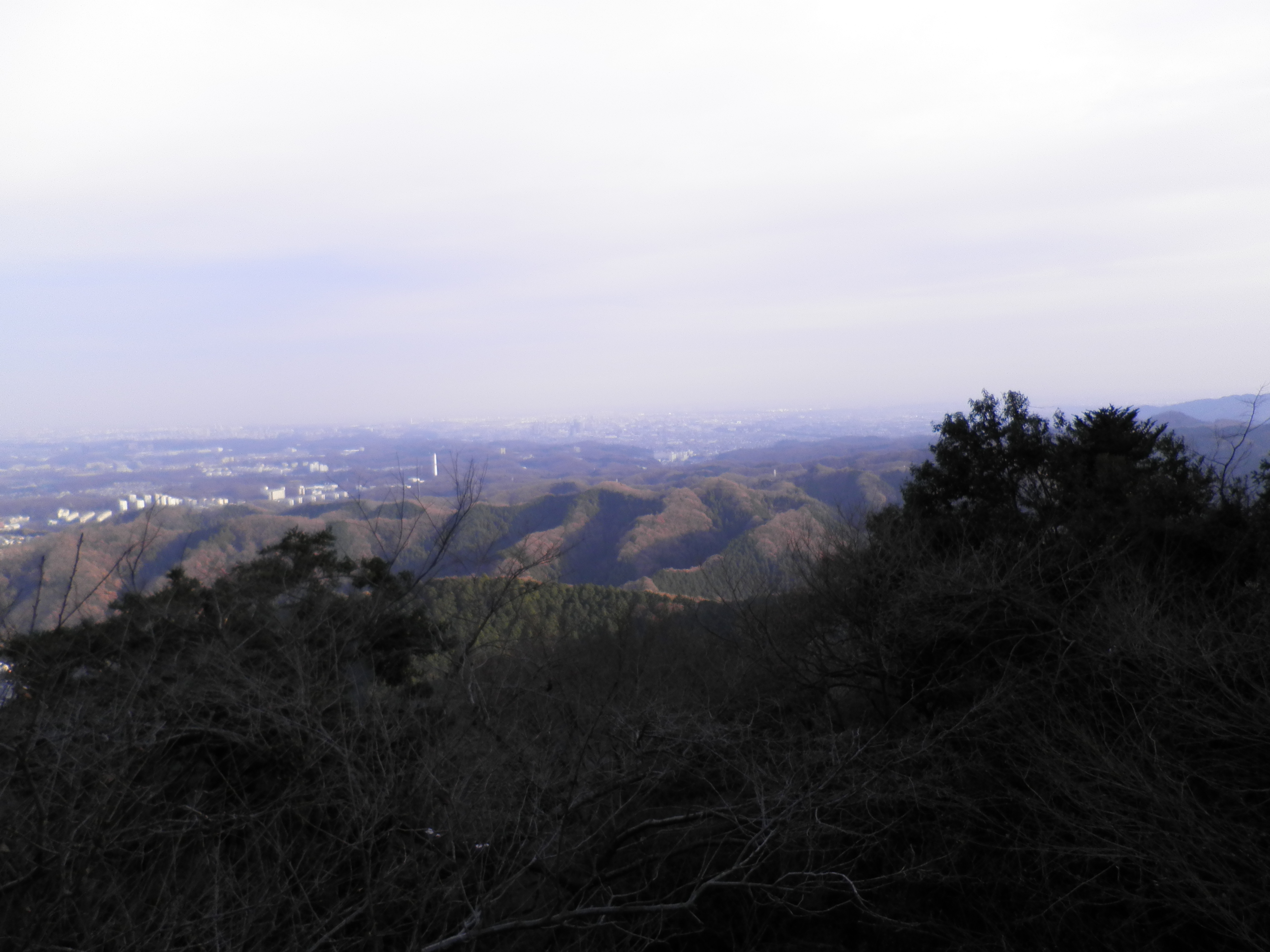
Takao Mountain (高尾山), on the western edge of the Tokyo metropolis, is a low (approximately 500m high) peak on the edge of a small nature reserve, easily accessible on the Keio line or the Chuo line. The mountain top hosts a temple, Yakuoin (薬王院), and some hiking paths, and although it is a steep climb it is easily reached by foot in 40 minutes, on paths that zig-zag through light forest. It’s also accessible by a ropeway (essentially a ski-lift) or a cable car (that is really a type of train). At the base of the mountain is a small and cute village of tourist shops, noodle stores and another small temple. As such it is a popular tourist destination, and also popular as a place to do hatsumode (初詣), the traditional new year shrine visit. My friend went with a billion other people to see the first sunrise of the new year, and I went with some friends in the afternoon for the traditional shrine visit.
In addition to being an excellent tourist day trip, Takao Mountain is also a viable zombie survival spot, offering short term defensibility, an easy escape route, and some possibility of sustainability. It’s probably not entirely suitable to a solo survivor, but a good choice for a group.
Review
Defensibility: The mountain itself is accessed by three pathways on the Tokyo side, at least one of which is wide enough to drive cars up. As far as I know there are no direct pathways on the Western side, which in any case faces onto low population density areas and a wide range of bushland. There is a single railway line leading up to the summit (for the “cable car”). All three pathways have a series of steep switchbacks interspersed with periods of long, straight, steep climbs, they are narrow, and there are regular viewing spots on the higher sections of these paths from which defenders can look down on the lower sections of the slopes. Other hillsides are steep, heavily forested and slippery, scattered with sheer climbs or scree slopes that make climbing extremely difficult for mindless undead. Any of these paths would be easy to block off at lower sections, and easy to defend with suitable firearms. From higher vantage points, with a large supply of ammunition, it would be easy to pick off approaching zombies in complete safety. The main difficulty with defensibility is in monitoring all these approaches: to properly defend the mountain would require maintaining constant vigilance over all the access paths and the forests of the western side, and opens the risk that occasional lone zombies would make it up to a higher location without being identified. This would necessitate continuous caution and the establishment of safe inner bastions. Fortunately the Yakuoin temple offers just such a bastion, as does the monkey park. Overall, the area is highly defensible, if your group contains more than 5 people.
Escape routes: Although not ideal, the forested slopes of the western face offer a last-ditch escape route in the event that the temple and the path to the higher slopes are cut off simultaneously. Furthermore, the ropeway offers an ideal rapid escape route. In the absence of electric power, one could use a simple flying-fox type arrangement to return to the base of the mountain in just a few (hair-raising) minutes, and it’s likely that zombies will lose track of you due to the speed of descent. Even if a zombie horde had come up from the base station, it’s likely given the defensibility of the setting that the zombies would have all left the base area by the time evacuation became necessary; thus, one would arrive at a relatively depopulated lower camp area, and be able to escape rapidly – possibly to a pre-established safe house in the lower town, there to wait until the mountain could be retaken after the horde dispersed or moved on.
Location: Far removed from central Tokyo, Takao Mountain is also slightly separate, being located on the far side of a small rural area. This means that its local zombie population is likely to be small and scattered, and it is less likely to have been raided extensively by non-local populations. Additionally, it contains significant supplies for the tourist industry, as well as a non-transient local community likely to have themselves stocked up on food, leaving more supplies for scavenging. The mountain is not on any major road transport routes, though it is near(ish) to an expressway. It’s also on the end of a train line, which is likely to be the only way to get to the location – roads in Tokyo will be blocked and car transport over long distances likely impossible. But a railway line is a relatively safe and easy way to move across Tokyo – it is elevated and likely clear of obstacles. The mainline to near Takao is the Central Line, which is about 8 tracks wide – it may be possible to drive small cars along this line, enabling transport of supplies and rapid escape from central Tokyo. The mountain also has a tourist centre and various restaurants at different elevations, so even if one arrives without supplies it may be possible to go straight to the top and subsist on scavenged foods for a few days while the world goes to hell.
Concealment: From the base of the mountain, almost nothing is visible of the human habitations higher up, and many of the main tourist attractions – especially the temple – are set back from the slopes of the hill. The sounds and sights of a functioning group of survivors would be virtually unidentifiable from the ground, especially in the temple, so it would be possible to have lights, cooking and reasonably normal human interaction without fear of alerting zombies or humans. This means the necessary preparations for survival over a Japanese winter could proceed fairly smoothly, and even an electricity generator could be used without alerting zombies. Movement between locations on the mountain would also be fairly unlikely to attract attention from zombies at the foot of the mountain, which would make defending the mountain very easy.
Sustainability: The mountain holds several tourist restaurants, a monkey park, visitor centre and temple. Even if a group arrived on foot carrying only the supplies in their backpacks, it would be fairly easy to subsist on the mountainside for a few days. The temple almost certainly contains a generator, and it’s likely (though I didn’t see any) that there is at least some solar power somewhere on the hill, so at least some lighting would be possible. There is a parking space containing some snow ploughs, which means that they also have batteries and fuel (and probably some spare fuel). The mountain is riddled with vending machines, but the restaurants sell dango and fresh soba, so likely hold stocks of buckwheat and barley flour, oil and – if they had been evacuated rapidly – eggs. For the first few days, supplies of water could be obtained from vending machines and kettles, until the first rain filled up some buckets. Of course, buckets and water storage mechanisms are commonplace in a temple, and easily converted to survival. There is enough flat space higher up the mountain to plant potatoes and possibly even a rice crop, and the monkey park comes readily supplied with cages for raising and protecting chickens and goats. In the longer term, the area is already supplied with buildings and a defensible temple, but there is one significant long term problem: water. Being on the top of a mountain, most water will be flowing down, and in dry periods there will be little freestanding or potable water. The best solution to this is to use the higher parts of the mountain to set up a water course for trapping and channeling water. Nonetheless, water storage – in a tank of some kind, and perhaps also in containers looted from the restaurants – would likely be a very wise plan. Otherwise, regular trips down the mountain to collect water would be required, and this would be both dangerous and exhausting.
Longer term, the mountain offers a lot of opportunities to establish a sustainable community. It is reasonably close to Tachikawa, a suburb with large stores, and houses in the nearby town could be looted for solar power supplies. With the elevation of the mountains, it could be possible to set up a solar storage system using pumped water. Plentiful wood means that even when fuel and electricity ran out it would be possible to stay warm for at least the first year, and to build fairly solid barriers against zombie and human infiltration – some forest clearing would even be necessary to establish kill zones. The higher viewing points hold a number of coin-operated binoculars that could be used to ensure that zombies can be spotted at very long distances and monitored, and gun nests with good viewing points could be built around these viewing machines. The mountain holds all the necessities of medium-term survival for a reasonably large group, provided that the water problem can be solved fairly rapidly.
Natural Hazards: Although it contains no sizable buildings capable of collapsing in an earthquake, Takao mountain is obviously vulnerable to landslides, which could be dangerous for those on the lower slopes. However, it’s most significant problem is the risk of forest fires, which could wipe out a community very rapidly. The rope way provides a method for rapidly escaping during a significant fire, but keeping it clear of trees would be essential in order to use it successfully. With roaming gangs of humans likely to spot them, back burning to reduce fire risk is not likely to be an option at first, and in any case water supplies may not be sufficient to do this safely. Constant caution and evacuation planning would be necessary to keep this risk under control. The best solution to this problem would be water and forestry management, and any group unable to do these two things would likely ultimately be driven off the mountain by the difficulties of supply and the risks of fire. But if this problem can be solved, the mountain would no doubt be safe for habitation by even up to 100 people.
Tactics
Takao Mountain is highly defensible, and with suitable tactics potentially close to impregnable in a zombie holocaust. If defenders are armed with rifles, it would be easy to defend against a very large horde of slow-moving shambler zombies. Even if guns were not available, a suitable set of barriers could be established on steeper pathways to enable, for example, a single person armed with a pike to kill struggling zombies in relative safety. At the switchbacks, it would be possible to stand in the crook of the switchback and beat down zombies with a pole or pike. Alternatively, traps could easily be set for mindless undead: establish a barrier at a point on the path just past one of the steeper slopes, and present oneself on a high point of one of the slopes to the side of the path just before the barrier. Zombies then reach the barrier and, unable to pass it, attempt to climb the slope on the side of the path. While they slip and fall on the scree, the defender can easily kill them using a suitable pole weapon.
The railway line is even easier to defend, because the top- and bottom-most extents pass through a smooth tunnel. Using a human target, zombies could be funneled into this tunnel and then trapped against a barrier on the upper side; from there, fire could be used safely inside the tunnel to kill large numbers of them. Alternatively, if active defense is not desired, the lower tunnel could be filled with scree, logs and debris, and a series of large rocks – or even, possibly, the train car itself – used as weapons to clear the upper tunnel. The upper platform itself also has a series of fairly solid barriers for passenger control, and is on a steep slope, so it’s possible that even large numbers of zombies wouldn’t be able to get the momentum necessary to push through them. The station itself thus forms another strong defense point, and suitable use of human bait could enable zombie hordes to be funneled into this killing zone, then beaten, burnt and shot into oblivion.
As the linked map shows, there are multiple stages on the mountain; first the lower peak with the temple, then an upper peak with visitor information centre, and then several more, higher peaks, each accessible by a decreasing number of paths. If a zombie wave overwhelms the lower slopes, the higher sections are all highly defensible, enabling even the most exhausted defenders to repel a numerically superior zombie horde with relative ease. With proper preparation, barriers could be set here and used to slow zombie approach while fleeing. With the steep sides of the mountains a constant threat, it could also be possible to break up hordes by throwing members over the slopes, or using rope traps to drag large numbers off the trail. This wouldn’t stop them permanently, but would break apart the horde so that it would be easier to kill as its members attempted to stagger up the steep mountainsides.
Finally, if long-term defenses were needed it might be possible to use back-burning techniques to establish zones higher up the mountain that are safe from fire. In the worst case scenario, with a huge horde approaching, the lower slopes could be fired – possibly using projectiles lobbed beyond the zombies – and the defenders could then retreat into the back-burnt zones. The zombies, struggling up the steep slopes, would be overrun by the fires and potentially destroyed en masse. This is an extremely risky tactic and only useful in summer, and would obviously attract attention from nearby survivors.
Conclusion
A highly defensible, concealed community can be established on Takao Mountain, capable of defending itself capably from even very large zombie hordes, and able to escape rapidly if overwhelmed. The community could potentially be sustainable and even maintain some of the luxuries of modern society – especially, hot water and some lighting – and, although the early years would be hard work, could become a thriving base for recolonization of the world after a zombie apocalypse. If you’re living in Tokyo and worried about the zombie apocalpyse, you should visit Takao Mountain and familiarize yourself with an escape strategy to this excellent post-apocalyptic base.
Addendum
If you appreciate my thoughts on zombie survival strategies, please consider reading my novella Quarantine Breach, set in the world of 28 Years Later, which is freely available at Royal Road.
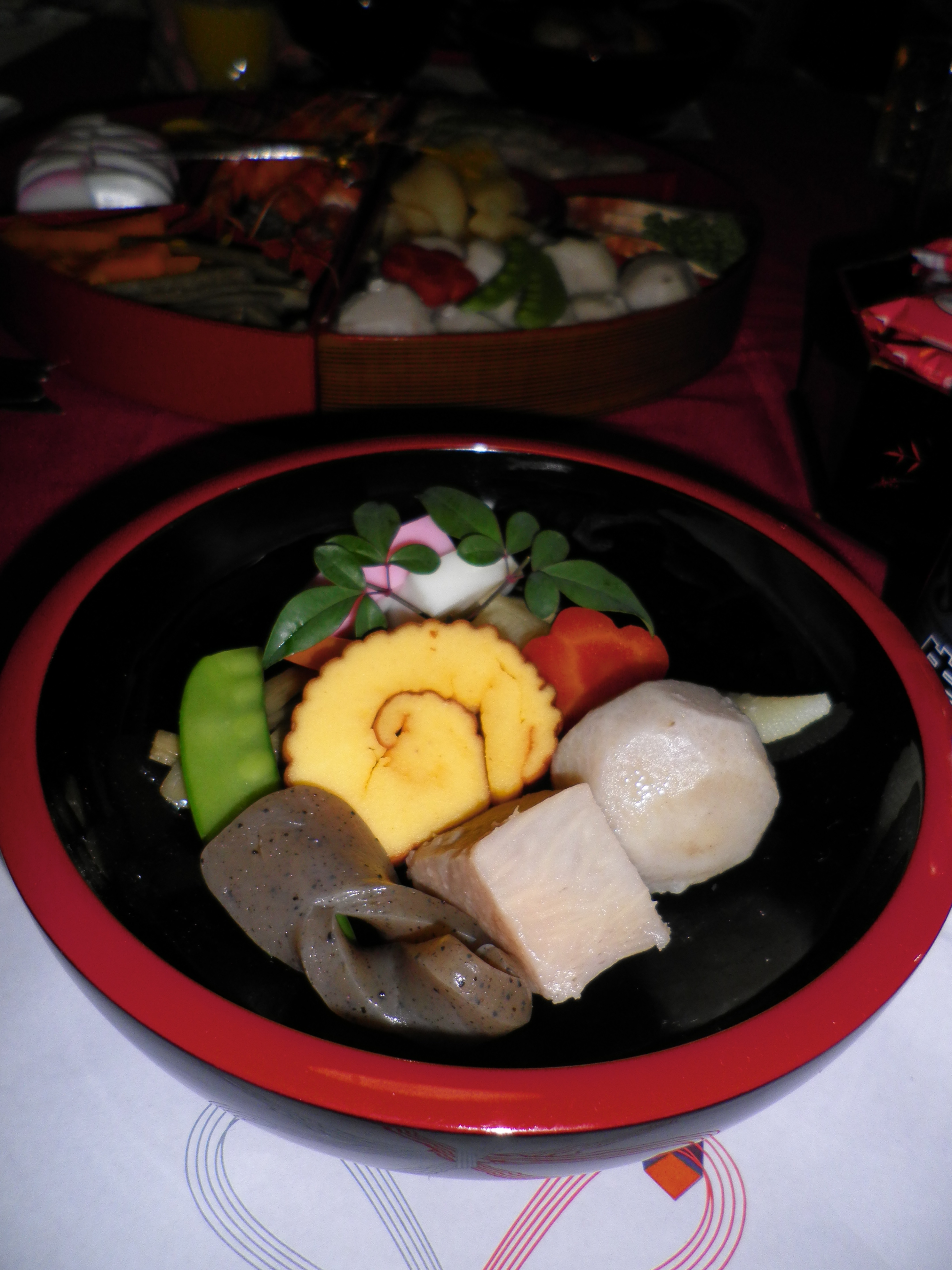
Today I had the rare pleasure of being invited, with the Delightful Miss E and some Australian friends, to my landlord’s house for a lunch of osechi ryori, the special new year’s food that Japanese love to eat at this time. The photo shows the main foods, all of which were hand cooked by our landlord and his family. Starting at the snow pea and going clockwise, we have:
It’s extremely rare to get an invitation to a Japanese family’s home on New Year’s Day – the equivalent of getting an invite to a Christmas dinner in the west – so we were feeling very privileged, especially to receive delicious home cooked food (actually the herring eggs were pretty awful). What’s more, one of our friends was vegan, but Mrs T had cooked a special version of the grilled egg, which used pumpkin and arrowroot flower instead of egg (and I would guess was probably much more delicious!) So, in return, I made my famous vegan lasagne, also known as “the carnivore conversion kit” or, amongst representatives of the meat industry, “public enemy number 1.” I shall put up the recipe in the next few days.

今日、家主さんのお家にお節料理を食べるために誘っていただきました。オーストラリア人の友達の3人が今東京で観光しているから、連れて行かせていただきました。お正月に日本人のご家族に食事の招待をもらうのが珍しいですから、とても嬉しかったです。英語圏のクリスマスみたいです。上の写真は、そのご家族が自分で作ってくれた御節です。美味しかったです!(実は、あのカズノコが美味しくなかった)。家主さん達は、欧米人が御節が好きじゃないとわかるから、私達が何も食べられないと心配していたが、いろいろが美味しかったから安心でした。
その優しさの上に、友達の一人はビーガンですから、普通の御節料理が食べなくて、家主さんが特別なビーガン料理も作ってくれました。ビーガン御節!すごく優しい家主さんです。だから、私は自慢のラザニャを作りました。下の写真は、手作りビーガンラザニャです。味なワンポイントは、味噌が入っています。もうすぐ、レシピをアップします。
友達一人

My Cat, Arashi chan, sleeping off a hard new year’s morning. I’ve decided that this year I’m going to try and take a photo a day every day for the year, and this is the first. I will be trying to put up the better or more interesting ones here, and uploading every one to my flickr page (as Jesus, said, “if it’s worth doing, it’s worth putting on the internet”). Let’s see how long I last. I guess this means that I’ll mostly take photos of my cat, when I’m too busy to do anything else. But it’s worth a try.
Oh, and a happy new year to everyone. I hope you’re all successful in work, life and love (in the opposite order, probably).
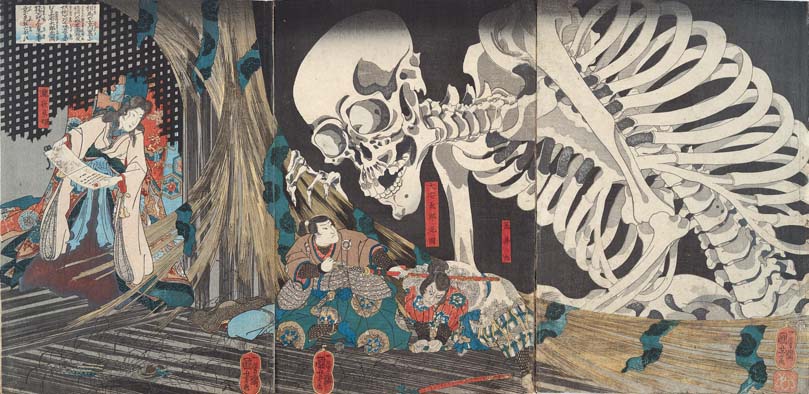
Today I visited the exhibition of Ukiyo-e prints by Kuniyoshi, at the Mori Art Museum in Roppongi Hills. Kuniyoshi is apparently one of the less famous of the Ukiyo-e artists, but his work has been coming back into vogue lately and the exhibition was staged to mark 150 years since his death. For those who are unfamiliar with it, Ukiyo-e, or “images from the floating world,” is a style of print-making and art work dating from pre-Meiji Japan, that focuses on “impermanent” themes detached from the everyday world. It has been credited with influencing the European impressionists, and also was probably the earliest example of mass-produced art. The Mori Art Museum introduced Kuniyoshi as “probably Japan’s greatest graphic designer,” which is an interesting way of thinking about ukiyo-e, and a sign that Japan was quite ahead of the west in this area: I don’t think anyone would really make claims to the existence of graphic design in the West before the 20th century. I think that the ukiyo-e artists were also influential in the development of manga (but don’t quote me on that). I think a lot of ukiyo-e in the later period also served an advertising role.
In Kuniyoshi’s case, images that are detached from everyday concerns seems to have meant that he produced fantastic stories, a smattering of horror, a range of prints on classical Chinese mythological themes, and lots of pictures of actors. The fantastic stories included 108 images of famous warriors, usually in battle or getting up to mischief. The print on this post is an example of his horror, and he also has fantastic themes: a classic adventuring scene of a warrior entering a dank cave on the slopes of Mt. Fuji (through a waterfall curtain – pictured below); Matsumoto Musashi slaying a whale on the open seas (in full battle gear); and various demons in combat with mighty champions. The fantasy and horror images were largely in the middle section of the exhibition, and there were quite a few.
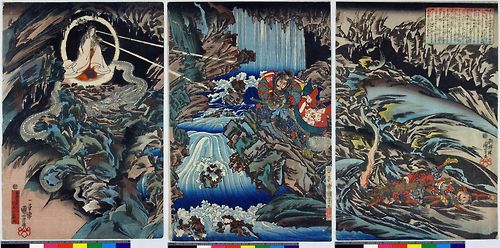
Some of Kuniyoshi’s later landscapes were apparently influenced by Dutch masters, and led him to break with some of the contemporary artistic traditions of the time to create a more naturalistic style, and these pictures gave a very nice combination of western aesthetic with classic ukiyo-e colours and imagery. But ukiyo-e is best on its own terms, and best when it is depicting the slightly fantastical. Its slightly strange perspectives and vibrant colours, combined with vaguely (or obviously) supernatural elements, give rise equally well to stunning scenes of battle or quirky re-imaginings of the ordinary lives of the Japanese of the era. I think Kuniyoshi was probably not a master of the style like some of his slightly later colleagues, but he had the ability like them to use patterns of the weather and the landscape, or slight changes to the ordinary perspective of the setting, to turn even something trivial like a couple of peasants walking through the rain into a magical, slightly surreal scene.
Much of Kuniyoshi’s artwork was driven to surrealism by another, more mundane element of life in pre-Meiji Japan: censorship. Banned from depicting the lives of courtesans, entertainers and rowdies directly, he began painting pictures of foxes, monsters, or even goldfish engaged in these activities. There are a whole series of images of cats doing slightly night-lifey things, and also of various supernatural creatures up to no good. The cats are very lifelike and entertaining, and he must have been inspired by this type of satire to simply experiment with the style: there is one picture of cats curled up and bundled together to look like blowfish that is extremely clever, and another idyllic country scene of two goldfish punting their way downriver on a raft, looking for all the world like fishermen returning home at dusk. These images are both surreal and beautiful, and I can’t imagine they have any satirical or political meaning – they’re just examples of the artist experimenting with a style he developed to escape the censor.
The pictures, then, are excellent, and there are a lot: I think there were over 400 on display, so you get to see a lot of work for your 1500 yen. The exhibition was very busy when I went, so you have to line up and move slowly along from picture to picture – the pictures aren’t big enough to take in from a distance, and the Japanese looking at the pictures obviously found a lot to take in that I didn’t – reading the text within the pictures, or picking out various iconography and classic symbolism that I would have missed. In combination these queues for this many pictures make the exhibition a slow and absorbing process, well worth taking your time on. It’s laid out well in sections, so you can understand what the theme of each section is and where it fits in Kuniyoshi’s career. There are also brief English explanations on each picture, which is good because the language of 150 years ago is well beyond my ken. Indeed, if I have any complaints about this exhibition it’s that there is just too much to take in, and you start getting the urge to skip bits (I skipped the “beautiful women” bit). Other than that, though, I would say that this exhibition is worth the money and well worth hiking to Roppongi Hills for. If you’re in Tokyo before February and looking for a decent retrospective of a single influential artist from the ukiyo-e period, I recommend visiting this exhibition.
This is the first of a series of posts I hope to write over the next few weeks. For the last few months I’ve been working with a PhD student on a cost-effectiveness evaluation of behavioral interventions to reduce HIV transmission among sex workers, and in many ways this has drawn on a lot of my research and public health experience over the past 15 years, so after her successful Thesis Defense today I’m inspired. I hope to lead these posts through an overview of public health and sex work, a discussion of the issue of human trafficking, and finally presentation of the problems in the political debate over sex work. I ultimately hope to present the thesis that radical feminism is a reactionary and conservative ideology which is no friend to women.
Fun, I’m sure we all agree, for the whole family.
As background, I will mention that I’ve done research on sex worker health on and off for the last 15 years, starting with some research on types of genital wart among sex workers, covering some behavioral research, branching into drug treatment issues, and finishing with a recent spate of modeling work that covers sex work in two countries. My first job after I left university was in a sexual health centre, and on my first afternoon at work – after I’d filled in the HR forms and been shown my desk – I was introduced to two representatives from the local sex worker union and given an afternoon tour of the clinic by them, while they explained to me how sex work in Sydney runs. Both were retired sex workers, one a Thai woman and one Australian born. This was back in 1995 before sex work was properly decriminalized in New South Wales, and these women’s job was to visit illegal brothels and check on the health and safety of the women working there. They also had to work with police, other health agencies, and the government to find ways to ensure the safety of the women in the industry, all against the backdrop of the illegal status of the industry. Once they’d given me an overview of the status of sex work in NSW, and the particular problems facing (and, potentially, caused by) migrant sex workers, I was packed off back to my desk with a copy of Sex Work and Sex Workers in Australia, which you can now read most of online, and gives a nice (though dated) insight into the industry as it was back then.
Since then I’ve also had friends (and one girlfriend) who worked in the industry, either when or before I met them, and through my work I’ve had a chance to find out a lot about the industry, to the extent, I hope, that I don’t view it as either a salacious mystery or a grotesque stain on society. I’m hoping, in these posts, to try and summarize what I learnt over the past 15 years but – rather than simply presenting a dry public health view – I want to tackle some of the moral and political issues that have arisen from the feminist and christian backlash against the decriminalization-based models of sex worker self-empowerment that have been gaining popularity in the era of AIDS. It’s my personal opinion that the movement to recriminalize or abolish sex work in countries like the USA, Sweden and the UK is a classic example of a backlash against modern sexual freedom, that it is not in the interests of women – whether sex workers or not – and that sex workers are being used as pawns in a bigger political battle that they want no part of.
These issues are tied in not only with public health and sexual morality, but with immigration, globalization and drug use, and they’re too complex to cover in one or two posts. So, for my next post I’ll give an overview of public health responses to sex work, and from that dry base we’ll see if we can spin off into some turgid moral debate…
A slightly weird idea I know, but I was struck by it while sitting in a Japanese drinking restaurant (izakaya) attempting to read the fantastical labels on all their Sake bottles. I tried a variation on this theme a while back, when I suggested translations of Osaka place names as inspiration for adventure settings. While western wines tend to be named based on their location (e.g. Jacob’s Creek or Chateau de Whatever), Japanese sake[1] tends to be named after auspicious, fortunate, or bold concepts. Previously on this blog I introduced the infamous suigei, or drunken whale, which was inspiration for a lie but not for a spell; however, many of the names that festoon your average drinking restaurant’s wine shelf would probably pass muster as a spell, ability or card. So, here are a few, taken from the Rakuten sake market. I’ve included some basic D&D stats.
Sound of Snow (Yuki no Oto)
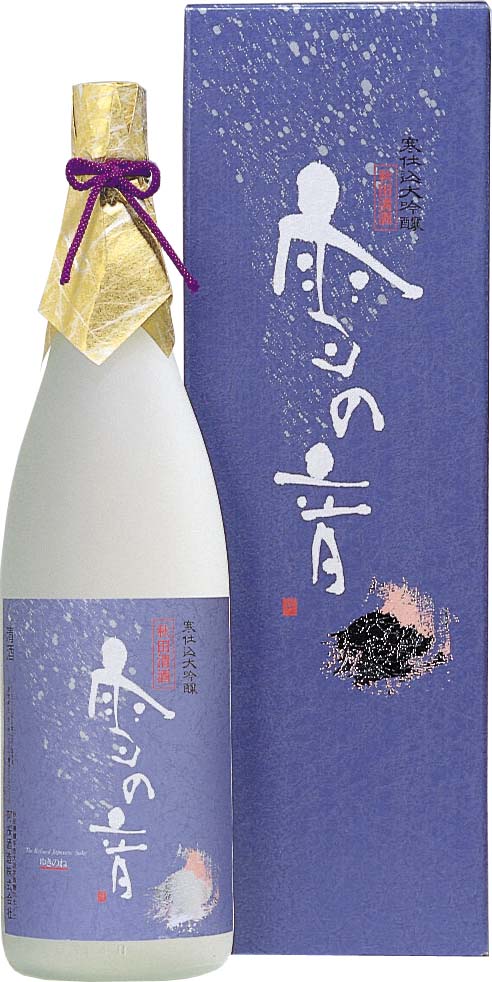 Class: Druid
Level: 3
Duration: 1 rd/lvl
Area of Effect: 20′ radius
Saving Throw: None
The caster and his or her allies become as silent as gently falling snow; +4 on all Move Silently Checks. This spell is ineffective in areas of strong wind or great heat.
The Wine: Incapable of being mass-produced, this wine retains the elegance and mellowness of handmade sake, combined with a rounded and refreshing taste. It goes well with sashimi, grilled white fish, and delicate-flavoured vegetables.
Region: Akita Prefecture, Northeast Japan.
Favorable Reply (iroyoi henji)
 Class: Cleric
Level: 1
Duration: 1 round
Area of Effect: Caster
Saving Throw: None
With this spell, the caster can ask a minor deity a single yes or no question concerning the action to be taken in the round immediately following the casting of the spell. The minor deity will tell the caster whether or not they are capable of success with the given action, but will give no information as to whether, for example, the caster is embarking on the correct actions necessary to secure this success. The action in question must be describable in terms of a single die roll (e.g. a single attack or skill check), not a general sequence of actions (such as, for example, avoiding the snapping pincers of the giant crabs in the pit while balancing on a narrow log, and grabbing a hanging gem). Mechanically, whether this spell is useful depends on whether the GM usually gives this kind of information away for free. Note also that the deity invoked is a minor deity and cannot answer questions of a difficulty beyond its ken.
The Wine: Made with a special Yamagata yeast that achieves an excellent balance of flavours, this is a wine that is able to be enjoyed with food.
Region: Yamagata
Honorable Blade of Fortune (ofuku masamune)
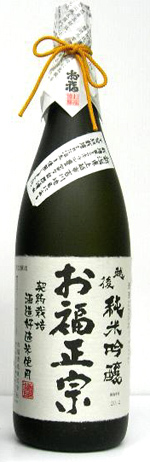 Class: Paladin
Level: 4
Duration: 1 rd/level
Area of Effect: Caster/sight
Saving Throw: None
The caster summons a holy sword that grants him or her both good fortune and power for the duration of its use. The sword grants its wielder +1 to hit and damage, and is capable of damaging monsters that can only be hit by magic weapons up to +3. Furthermore, when the spell is cast the caster rolls 2d10+wisdom bonus. While the caster is wielding the sword, a single d20 roll can be replaced with the result of this casting roll every round. The caster or any ally can replace their roll with the result of this roll. At the very least, this spell will protect one member of the party per round from a critical fumble; note that if the caster rolls a natural 20, this does not grant critical successes (but it can be used on rolls to determine whether a natural 20 results in critical damage).
The Wine: Brewed from rice cultivated for more than 40 years by the famous Takeuchi family of brewers, in terraced rice paddies on the Sea of Japan coast of Niigata, this wine is a masterpiece imbued with the spirit of the brewer.
Region: Niigata
Hawk’s Courage (takayu)
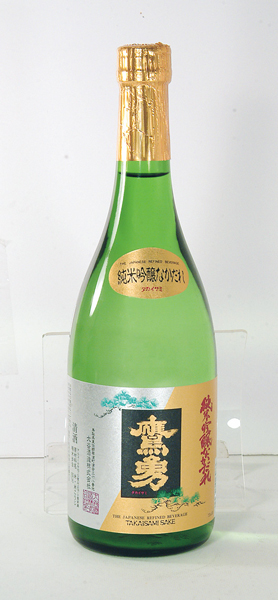 Class: Wizard
Level: 2
Duration: 1 rd/lvl
Area of Effect: One person
Saving Throw: None
This spell grants its target both great courage and fine vision. For the duration of the spell the target gains a +2 morale bonus to saving throws vs. fear, becomes immune to fear of heights, and gains a +2 bonus on spot, listen and search checks. Rumour has it that the spell was developed by wizards in the service of certain ancient clans of pirates who ply the skyways over the most forbidding mountain peaks of the realm.
The Wine: The flavour of this wine is a rare and exquisite thing of beauty. Anyone who receives this wine as a gift will surely be profoundly pleased.
Region: Tottori
There are many, many more wines on the Rakuten marketplace – a whole spell book’s worth if you have the skills. And then there is the shochu … want to give it a try?
—
fn1: which is called nihonshu in Japanese, btw – literally, “Japanese alcohol”

Christmas in Japan is a time for dating and young love. Although some families also hold a little present-giving ceremony on Christmas day, in general the focus in Japan is on dating, on Christmas eve. Christmas has no value to anyone who is not single and under 30; and for those who are, to be dateless on christmas eve is a tragedy. So it is that if you go out on christmas eve you will see huge numbers of couples engaging in “rabu rabu” (love love), and gangs of young dateless women wandering around having, essentially, anti-christmas parties.
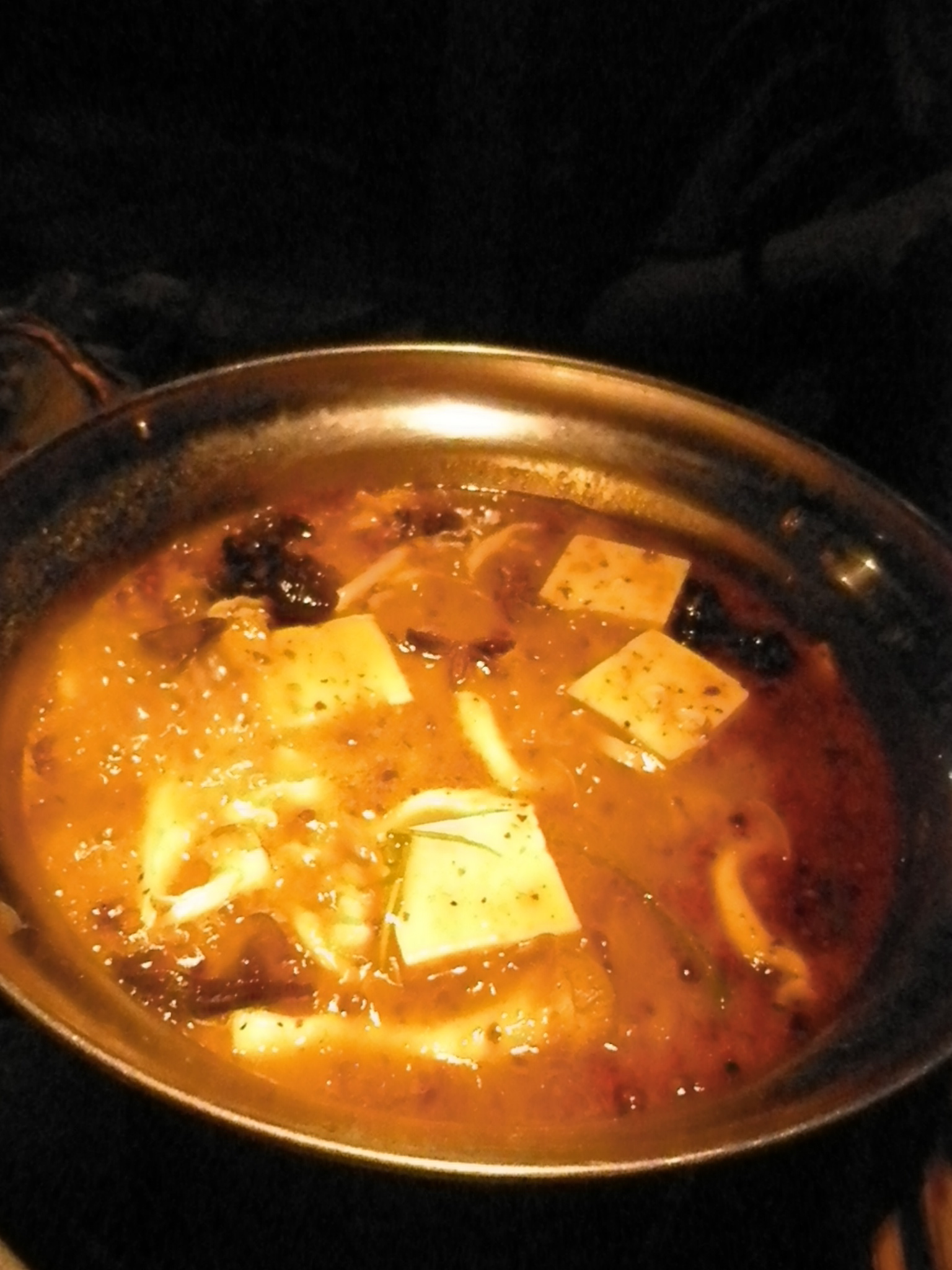
Of course, I had a date, so the Delightful Miss E and I went to Shibuya last night to have a couples dinner at the Asian-Japanese fusion themed restaurant, Fat Buddha, followed by a visit to the new bar Rouge (pictured above), which has been set up by one of our favourite Shibuya haunts, And Dining And People (which has no internet presence at all). Fat Buddha provides a kind of themed dining experience (these are quite popular in Tokyo), based around Japanese-influenced Chinese food. So we had fresh spring rolls with raw scallop and caviar, an amazing pickled plum, baby sardine, shredded chili and perilla leaf pepperoncino pasta, and a delicious Szechuan-style “Janku hotpot” (pictured).
Christmas eve in Japan is a perfect storm of dating couples and end of year parties, in combination of course with an absence of staff – who are all off on dates. So service at this restaurant was astoundingly slow (for Japan), as the skeleton crew tried to hold it together in the face of a veritable tsunami of drunken salarymen, gangs of girls on consolatory party nights, and hordes of dating couples. I booked the day before and was given a two hour slot from 8:30 pm (this was all they had left), and not in any of their booths (Fat Buddha is famous for its secret booth rooms), and in the open area around us I could see three couples on dates, and two girls who were, presumably, dateless (or unaffected by this christmas hype). One end of year party was santa themed – at one point I watched a group of them pass me by, a santa-outfitted woman and her male friends leading another drunk woman to the bathroom. When they returned, the drunk woman was in the santa outfit and the other woman was now fully dressed in normal clothes. Figure out the point of that if you dare.
With our dinner coming to a rather over-stuffed close, the Delightful Miss E and I left the Fat Buddha and returned to street level. Here we passed hordes of stumbling drunks, all under 30, on our way to Rouge. A sizeable portion of these folk were dressed in either a) santa outfits or b) reindeer outfits. The santa outfits were almost exclusively skimpy short dresses, but the reindeer outfits varied from small horns to full body suits. In some cases we would see a couple on a date: man in perfect suit with coiffured hair, woman in skimpy santa one-piece and high heels.
Red is, of course, a colour of happiness and good luck in Japan, and santa is a fat cheerful guy in red – so basically a bit like a happy buddha. This makes him very popular, and in fact christmas cards in Japan are replete with hordes of santas up to traditional Japanese activities in the snow: drinking sake, or skiing, or sitting in a hot spring, or picking tea leaves against a snowy Mt. Fuji backdrop. The Delightful Miss E gave me a christmas card that featured a sumo bout between two santas, refereed by a santa in traditional referee’s outfit, and watched by a full house of drunken santas. Are we getting the point? So, given the chance, of course women on a date are going to find a way to toss in a santa reference.
So we pushed our way through the throng of drunken santas to Rouge, which is set in a secluded alley a little back from the main part of Shibuya, behind a street that until recently included a butler cafe staffed by foreign men. Rouge was pretty busy, but we managed to find a seat, and it was from that seat that I took the photo above. Rouge is like an undersea grotto if the sea was blood red and the grotto were full of tiny lights and a sound system playing reggae christmas carols. It is really very good, and has the same unobtrusive staffing style as its upstairs progenitor, And People. If you’re ever in Shibuya I recommend it!
From our vantage point I took the photo at the top of this post. In the background you can see four girls (one in a santa hood – another one had reindeer antlers, but you can’t see them in the picture), who spent most of the evening taking photos of each other and squealing. These girls were very friendly and sweet, and the fact that they were not on dates on a Christmas Eve is a sad indictment of the quality of modern (single) young men. What were you doing, you stupid boys? There are 17 million men in Tokyo, and somehow these four girls were dateless? Ridiculous. Men need to get their priorities straight! And I’m sure all four of them agree with me.
So that is Christmas in Japan – a fun date, good food and drink, hordes of young people having fun, and neither sight nor sound of the pope decrying materialism from his gold-plated palace. No one in Japan has forgotten the “reason for the season” because they just naturally sensed the real value of the ceremony: booze, good food and love. Which is exactly what I was doing last night (and all of today …)
And with that, a merry christmas to all …
I saw The Adventures of Tintin, aka Tantan no boken in Japanese, in 3D at the Kichijoji Toho Cinema on Friday, and I can report that it was a great deal of fun. It’s basically a mystery adventure that takes Tintin from his hometown to the desert town of Baggar and back again in the quest for the secret of the Unicorn, a 17th century ship. At the beginning of the movie, Tintin purchases a scale model of the ship, only to discover various forces are trying to get it off of him, because of the secret it contains. Being an intrepid investigative reporter, he decides instead of waiting for a press release from the relevant criminal organization to track down the secret himself (this is the inter-war era, remember, when “investigative reporter” still meant something). In the process he meets Captain Haddock, the Thompson twins and a wide range of nasty villains.
Of course, no one is really that interested in the details of his adventures, since we all know roughly what to expect from the stories and the movie genre: there will be some chases, some (mostly non-fatal) fights, some quite ridiculous leaps of intuition by Tintin, some quite ridiculously intelligent acts by his dog Snowy, and another couple of crazy stunt scenes. What people are really interested in is how it cleaves to the original stories and setting, what is Tintin like, and should all die-hard fans of a musty comic be outraged! outraged I tell you! because Tintin’s quiff is at slightly the wrong angle? So I shall skip over the car chase near the end, which is the most genuinely spectacular and exciting chase scene I have seen in years, in favour of reporting on my opinion of the story’s faithfulness to the original.
Of course, it’s been years since I read Tintin and I don’t recall the details, so I don’t know whether, for example, the way he meets Haddock matches the story of the book. But I have strong images and impressions from my (repeated) childhood reading of the stories, and in my opinion the movie is very close in atmosphere, appearance and style to the original. The opening credits are a direct and obvious tribute to the style of the comics, but the movie itself also sticks to the impressions of the story. It is animated in a semi-realistic style, so I couldn’t tell (and haven’t checked) whether it was animation over real actors, or fully animated, and this means it retains the same sense of simple realism of the stories, which though they might cover fantastic themes, always were very grounded in a sense of being in the real world. Tintin is picture perfect, as is Snowy, and Snowy’s mannerisms are just as I remember them – the same eager, attentive walk, the same cowering manner when gunfire starts, the same cat-chasing peskiness. The first 20 minutes of the movie are, just like in the comics, entirely focused on Tintin, and involve him talking to himself a lot (just like in the book!) Captain Haddock is also straight from the pages of the comic, as are the Thompson twins (or Dupont, as they are known in the Japanese version). But more than that, the colours and structures of the setting – ships, planes, buildings, cars – are nearly perfectly like those of the covers of the books. The sands of the desert and the settings for the conflicts there take me straight back to the books, as do some of the fight scenes, the regular moments where someone gets clobbered on the back of the head with a torch or cosh, the way Tintin runs – it’s a real homage to the style of the originals. The way the characters talk is also refreshingly old-fashioned – polite, no swearing, very clear and short expressions and un-self-consciously old fashioned, also like the comics.
Although the first third of the story follows the plot of The Secret of the Unicorn (1942-43), it completely deviates from the second part of this story, Red Rackham’s Treasure, in its conclusion. It includes a few nods to other stories (e.g. in the credits, and a nice inclusion of a part of The Castafiore Emerald). So although the finale is a conclusion completely different to the original, and the action of the last third follows a completely different style, the first half is quite faithful to the comic on which the movie’s name is based. Also, some parts of that story – e.g. Haddock’s reenactment of a naval battle – work better in the movie than I suspect they would on rereading the comic. So I think it’s actually a good companion to the comic story.
The cinematography in this movie is quite nice. The animation is very very good, and some of the grander scenes – pirate battles involving Red Rackham, flight scenes, and the final car chase – are genuinely spectacular. Transitions between scenes are also very nicely done, and works of art in their own right. Snowy is a joy to watch, and the action is very tightly paced and well coordinated. The final battle scene between Haddock and the bad guy is great fun as well. The movie is visually a lot of fun. The only two flaws I would say are that it’s a touch too long, and the plot could have been simplified to get rid of some twists and irrelevancies; and the first 20 minutes can be a bit hard going because it is mostly Tintin talking to himself. This is very faithful to the comic but just doesn’t work in a movie.
Though I’m sure Tintin aficionados will poo-poo this movie, and no doubt refer to some second-rate 70s job as vastly superior, I think it’s a nice companion to the comic it is based on – at least based on my impressionistic memories of the world of Tintin as I read it in my childhood. I was a big fan, and I really appreciate the effort that has gone into recreating the world for the modern cinema audience. It’s a fun movie in its own right, and a nice visualization of Tintin. I recommend it to anyone who’s not completely stuck-in-the-mud about the originals, and/or wants to enjoy a fun adventure. A perfect christmas holiday fun movie!
 Compromise and Conceit