Today while looking up a picture of a Tarrasque I found this entertaining and excellent post on how to kill a Tarrasque (hat tip to the blogger at cataloguing shadows). This Tarrasque-slaying thought experiment has some really excellent ideas about how to do it – my favourite is the plan to create simulacra of the Tarrasque and have it be killed by itself, but the scheme of equipping 50 first level fighters with +5 longbows, polymorphing them into Annis Hags (wtf?!) and then relying on natural 20s to kill the Tarrasque is pretty funny, as are the convoluted tricks required to get the Tarrasque to drown by swallowing 100 tons of iron and falling into a massive pool of water (created by the PC, of course).
This excursion into creative use of magic reminded me of my past discussions of post-scarcity fantasy, and how strange it is that the D&D universe is predicated on a mediaeval style of living, because such a style just would not exist in a world where magic was available. In the linked post, a single wizard can build a huge pool of water, move a river, and create 100 tons of iron; or he or she can give 50 men the power to fly and slay a monster that can eat villages; but somehow all this occurs in a world that hasn’t solved the challenge of disease, manual labour or rapid transportation. This just doesn’t make sense, does it? If the same effort of creative spell use were put to work on solving the world’s problems, they would be fixed almost overnight.
Consider the simulacrum trick in the Tarrasque-slaying guide. Very cunning. Now suppose that a single 28th-level mage exists in the world, and that mage wants to do good. That mage can cast simulacrum twice per day, so she does so – on herself. The two resulting simulacrum are 14th level, and can also cast simulacrum twice per day. They do so – on her, producing four more 14th level mages. These mages produce eight, and so on. Within a couple of weeks there will be a horde of 14th level wizards – all capable of casting, amongst other things, Permanency, Soften Earth, Move Earth and other major spells that can be used to significantly reshape environments. Enough of them working together could power a major power plant with Wall of Fire and Wall of Ice spells; there’s almost nothing they can’t achieve working together in this way. And these are permanent – so as soon as a single wizard reaches 28th level, anywhere in the world, your society can produce an almost infinite supply of 14th level wizards to solve any problem magic can be thrown at. Note how this also applies to reproducing high-level clerics: Heal is a 6th level spell, so as soon as a single Cleric reaches 22nd level, anywhere in the kingdom, all those 14th level wizards who have been created by simluacrum can be sent a lock of his hair or a nail clipping, and every town can be supplied with a simulacrum Cleric capable of healing any affliction affecting anyone in town. Even the XP problem is not hard to overcome: creating a single 14th level Simulacrum of the 28th level Wizard plus a single 11th level Simulacrum of the Cleric will cost each wizard a total of 4600 experience points, not enough to cause them to lose enough levels to lose the Simulacrum spell (for this they need to lose two levels); so each wizard can produce a new simulacrum before they lose their 13th level, and thus produces more wizards than the xp loss will penalize them for.
To give a sense of how powerful this effect is, there are currently 1,200,000 babies born in Japan (in a population of 120 million) every year. At pre-industrial levels of infant mortality, perhaps 10% of these will die. That’s 400 a day. It would take much less than one year to produce enough simulacrum clerics to prevent every baby in Japan from dying, i.e. after one year of generating simulacrum clerics, Japan’s infant mortality rate would be reduced to zero. In the process the world would have generated about 400 14th level wizards, capable of huge works of infrastructure construction. Each of those clerics can also heal disease, and any baby they failed to save can be brought back from the dead the next day using Raise Dead (in essence meaning that those 400 clerics can handle three fatal births every day, so are able to support a population of 360 million at Japanese birth rates).
This also means that as soon as any wizard anywhere on the planet reached 28th level, they would be able to create an army of 14th level wizards. Within a year, probably they could produce a couple of thousand without exceeding food supplies. Of course food supplies could be solved by creating simulacra of an 8th level Cleric at a rate of one per three wizards (and the cleric doesn’t have to be willing!). The 28th level Wizard would then be able to set up two teleportation circles and send the entire army anywhere in the world. Imagine that – you’re sitting on your throne, looking over your army of 10,000 soldiers, and then an army of 1000 wizards and 300 clerics pops out of thin air, dominates the first 1000 soldiers and sets them to slaughtering the next 1,000, then drops 1000 fireballs on the rest of your army. Then the wizard leader comes through, dominates you and takes over your kingdom. The wizards that die get replaced in a few days by the living ones, who simply cast simulacrum on the wizard leader. Rinse and repeat!
Of course, these kinds of silly scenarios are a consequence of the impossibility of magic, which essentially breaches the laws of conservation of energy. But it’s a sign of the paucity of thought in the fantasy world that these powers are seen in isolation from the society in which they’re embedded, and very little thought goes into the moral and social consequences of living in a world where basic problems of human existence can be solved with a word. There’s a strange contradiction here: as gamers we want to play characters in a world of high magic, of lightning bolts and fire balls and healing; but we want this setting to be somehow mediaeval, despite the fact that almost every problem of mediaeval life would have been eradicated. It’s as if the setting is fundamentally contradictory to the mechanism of that setting. Perhaps this is why so many fantasy settings are predicated on huge inequality, out of touch elites and ignorant, cowering peasants: not just because this is the environment we envisage magic developing in, but because the only way magic can be prevented from turning our gaming world into a conflict-free utopia is if the general population are prevented from ever experiencing its benefits by heirarchies of oppression.
And I think it’s a sign of the conservative and stunted nature of the genre that after 40 years of D&D, this contradiction hasn’t been resolved. I wonder if it ever will?
Be careful going outside in London, there’s foreigners everywhere
There are millions of undocumented asylum seekers in this country
Maybe you didn’t feel welcome in London because they don’t want more foreigners there?
Once David Cameron’s elected, them blacks’ll get what’s comin’ to ‘em
Your new girlfriend’s not aboriginal is she?
You’re not English, you’re British
What race is your friend?
Enoch Powell was right you know!
These are the kinds of things my family and friends have been saying about immigration and race in the UK for as long as I can remember. By “family” I mean not just my immediate family, but also the extended family – uncles, Aunts, grandparents and cousins – and all of the family friends I have ever met. Most of my family and their friends now vote for the United Kingdom Independence Party (UKIP), but they used to be classic Tory working class. They’re indicative of the political groundswell that is lifting UKIP up in the polls, and are the reason this new and toxic party came first in the European elections a week ago. If ever it occurs to you to naively wonder why it is that so many UKIP candidates get caught out posting terrible things on social media, just have a look at what my family and their friends – almost all UKIP voters – think of race and immigration. Is it any wonder their representatives have some hairy ideas?
My family are pretty much entirely lower working-class or lumpen proles. My father left school at 15, my mother at 13 (I think); my Grandfather was a Spanish refugee (oh the irony!) who left home at 15 to fight fascism; I was the first person in my entire extended family to get a university education, and probably also the first person in my entire extended family to complete a higher school certificate (my brother got O levels rather than A levels, and only just scraped them in). My father was a tradesman, until he lost his job and spent the remaining 10 years of his working age collecting benefits (and fraudulently using them to pay for a mortgage on a trailer park home, against the housing benefit rules, while complaining about foreigners cheating welfare). Most of the rest of my family are unskilled labourers or tradespeople. They should therefore be the natural constituency of Labour, but their unpleasant views on race make them natural victims of parties like UKIP. My father believes everything he reads in the Daily Mail (he lives in terror of gypsies paving his yard in the night and then presenting him with the bill in the morning), and basically my entire extended family have been slowly seduced into voting against their economic interests by appeals to their racial biases. As an example of how they vote against their interests, my father has a lifelong disability brought about by polio, but he sneers at people with disabilities campaigning for their “human rights” (his quote marks, not mine) even though these people are the reason he has special disability benefits and parking rights. He has always refused to join a union because “they don’t do anything for me” but then he was sacked and blackballed by his employer, so he couldn’t work anywhere in the city where he lived – and then he asked the union if they could help him with legal action (they said no, somewhat unsurprisingly). This is the quality of my extended family – always wanting certain socialised benefits, but refusing to share in the responsibilities and costs of those socialised benefits, and as people like them slowly undermine the strength of the shared social systems they rely on, blaming foreigners for the resulting degradation in public services and benefits.
It is my opinion that the modern leaders of both major British political parties are too shallow and too caught in their own little bubble to understand how people like my parents think. As a result they cannot understand why these people are drifting away from the major parties to the lunacy that is UKIP. I think Margaret Thatcher understood these people – it was her understanding of this class of people that enabled her to construct what is now referred to as the “Tory working class vote” in the first place – and her political opponents from before Blair also saw how these people think, but failed to stop the drift away from class-based solidarity to race-based solidarity. The modern Conservative party is dominated by young Bullingdon club economic radicals, who have absolutely no conception of what it is like to even be a grocer’s daughter, let alone to be an unemployed typesetter living in a trailer park. The modern Labour party is dominated by political lifers, who may mean well (a difficult proposition to support when one looks at the 10-year-long mistake that was Tony Blair) but have no idea how the working class they are supposed to support really think. The few remnants of old labour still left in the party – people like John Prescott – are far out of touch with the modern working class after years of snorting cocaine off of babies’ bottoms in Blair’s cabinet, and their response to UKIP’s rise has been to fall back on 50-year-old concepts of economic protectionism.
In the face of this choice – between obviously out of touch Bullingdon toffs and a clique of political apparatchiks to a vampire – is it any wonder that UKIP have been able to make such gains with the Tory working class? With a complete lack of trust in the political system, having been levered away from an class consciousness during Thatcher’s era, but left rudderless with only their racial consciousness to guide them, the class of British people my family are drawn from are natural targets for UKIP. Labour had 10 years to get these people back into the fold, through restoration of the industrial economy, improvements in benefits and efforts to reduce inequality – practical solutions to the living cost and economic challenges consuming this class of people – but instead they focused on being “intensely comfortable about people being incredibly rich” and were too busy sucking up to the banking industry to bother looking at the little people.
So now both political parties are waking up to realise that a sizeable proportion of the votes they thought they could rely on are drifting away, following the lure of Farage’s racist anger. Both parties have lost the knowledge of how these drifting voters think and what they are worried about, and both parties are unwilling to face a central fact: that these voters they are losing are deeply, unpleasantly racist. This is the party whose leader referred to non-white voters as “Nig-nogs” and whose representatives have a disturbing habit of being caught out saying genuinely horrible things on Facebook – but no one in the leadership of either of the mainstream parties seems to have considered that this might be related to the success of the party. Until they do, they aren’t going to be able to craft a strategy to deal with UKIP’s central anti-immigration theme. How can they? So long as they keep fooling themselves into thinking that the average UKIP voter is a non-racist person with genuine but misguided concerns about European workers taking his job, they aren’t going to get anywhere. Because these people are deeply racist, and race is what is driving their vote. They don’t like foreigners, they don’t want them in the UK, and if foreigners are to come here they want clear assurances that their stay will be temporary, they will be treated badly and paid worse and they will never be given the same rights as the “indigenous” population. If David Cameron doubts that, I recommend he spend 10 minutes trying to discuss labour market reform with my Grandmother.
This also means that the debate about whether to call Farage a racist is irrelevant. UKIP voters aren’t offended by being called racist – they revel in it. My father doesn’t start a conversation with “I’m not racist but …” – he is deeply past that kind of self-equivocation. He refers to black people as “niggers” and starts conversations with proud declarations of his own racism. The inferiority of non-whites is a simple and accepted fact in my extended family. Worrying about whether these people will be offended by being called something they proudly claim for themselves is really angels-on-the-head-of-a-pin stuff. The mainstream parties are going to have to do better than that.
And the truth is, I don’t think they can. A large minority of British people don’t want to be part of Europe, and another large portion don’t care either way. A lot of British people want foreigners out. They were willing to vote Tory or Labour despite the incongruence of their aims and the parties’ aims, because they still trusted those parties, and UKIP was not yet a national force. But now that UKIP has begun to be taken seriously, making consistent electoral gains, an in the wash-up of the financial crisis (which destroyed Labour’s credibility) and the expenses scandal (which tainted both parties irrevocably), the stranglehold of the major parties on the neck of the average British racist prole has been broken. I don’t think they’re going to get those people back, and they should be counting their blessings that it’s only UKIP, not BNP that is benefiting from 20 years of mainstream parties’ stupidity.
In the short term I think Labour will be the major beneficiaries of this trend to vote 1 on race. Labour has a natural constituency based on unionism and class issues that the Tories lack, and the Tory vote has been declining for years. Tory success at the polls has relied on some crafty dog-whistling to ensure that some proportion of the working class vote is prized away from Labour, and they have done this through race (see e.g. their broken promise to keep immigration at 100000 a year). These voters they pry loose from Labour on that basis are fair-weather friends, and will easily be drawn away by a credible racist alternative – and now that alternative is here. Even if UKIP don’t win a single seat at the next general election, they’re going to completely screw up the Tories’ electoral strategy, and I don7t think a more openly racist Tory campaign will save them – nobody believes them on European issues anymore, and since they have consistently failed to meet their pledge to reduce immigration, nobody thinks they’re going to do what they say they will. This is going to make Labour’s task much easier at the next election, but if UKIP don’t implode after that then I suspect Labour will face increasing difficulties in the future. The tide has turned. The racist genie is out of its box, and now there isn’t much either of the main parties can do. Unless Labour can find a way to return the political conversation to a genuine, strong position on inequality and complete reform of the British economy to benefit the poorest and the working class – regardless of what happens in Europe – then both mainstream parties are going to be left desperately hoping that UKIP implodes. If it doesn’t, the tories are toast, and unless they can find a visionary to lead them through this challenging new landscape, my guess is that Labour will have to return to 1950s-style anti-European protectionism.
It’s possible that UKIP may win everything they want without ever winning a seat in parliament … simply by dominating the conversation. This is what happens when the working class vote for their racial interests over their class interests. Let’s hope that this madness remains confined to the UK, because it isn’t pretty to watch and let me assure you, you do not want my extended family’s racist imaginings being treated as a serious policy framework …
I have previously written about the difficulty of accurately understanding the issue of sex trafficking, and attempted to point out the conflicted political goals and deceptive tactics of some of the key activists and organizations in the movement against sex trafficking. I wrote these posts in connection with my argument that radical feminist critiques of sex work are fundamentally anti-woman, and observed that they often employ the power of a fundamentally patriarchal state apparatus to enforce their “radical” goals. Recently, a scandal has exploded around one of the US poster-boys for the anti-trafficking movement, Nic Kristoff, author of the anti-sex work screed Half the Sky and pro-sweatshop campaigner.
It turns out that one of the main anti-trafficking activists upon whom Kristoff’s campaign depended, Somaly Mam, turns out to be a fraud: Newsweek has a long and detailed expose of her false claims to have been abused, along with tales about how she trained the children in her care to lie about their experiences for western media, in order to secure funds and political support. Salon has an article suggesting Kristoff knew about these lies, and played a key role in boosting the tall stories being told in order to support the fund-raising efforts of various NGOs (and of course, to boost his own credentials as a rescuer of poor women from developing nations). This article points out that many women “rescued” by NGOs like Mam’s end up working in the garment industry, and are not allowed to talk about their pay and conditions with visiting journalists. Sounds like trafficking, no? The Newsweek article quotes researching pointing out that the number of children trafficked into sex work in Cambodia is likely tiny, and that most adult women working in the industry also are there voluntarily. Of course, these women are “choosing” sex work in the context of a poor nation with few employment alternatives for uneducated women – and one of the main alternatives is the hard, exhausting and sometimes dangerous option of working in the garment industry – an industry, we should remember, that Kristoff writes articles in support of, and that “rescue” NGOs supply “rescued” sex workers to.
Kristoff is, of course, famous for this sick and disturbing tale of having “bought” two sex workers from their “owner” in Cambodia. Consider the final paragraph of this tale, which shows both a callous disregard for the actual economic and social prospects of women from developing nations, and a cynical contempt for their personal choices:
So now I have purchased the freedom of two human beings so I can return them to their villages. But will emancipation help them? Will their families and villages accept them? Or will they, like some other girls rescued from sexual servitude, find freedom so unsettling that they slink back to slavery in the brothels? We’ll see.
Do you think that many slaves would “slink back to slavery” after they were freed by the underground railway in pre-civil war America? No, probably not. What kind of language is being deployed here, that a commentator would honestly think people liberated from slavery would “slink” back to it? This is disgusting language, and it shows the way in which Kristoff instrumentalizes women and girls in his quest to prove himself morally superior – even as he defends an industry that is renowned for its labour abuses.
Following up on these revelations, the New York Times (Kristoff’s employer) has an excellent article about the difficulties of activism in this field. This article quotes one activist from Cambodia criticizing journalistic endeavours in these nations:
You show the face of the mother, who is so poor that she has to sell her daughter for money? How does this help the daughter or mother? It doesn’t. It helps the NGO to make money.
This is what people like Somaly Mam were doing. It’s worth also reading the comments of the Salon and NY Times articles, which contain detailed and thoughtful comments by activists working in the field who have been waiting for Kristoff’s bubble to burst. They are highly critical of efforts to outlaw sex work, and of the role of the US State Department in encouraging violent crackdowns on “traffickers” that inevitably end up harming sex workers, and these activists instead encourage the development of labour unions and sex worker organizations similar to those operating in Thailand. Of course, a campaigner for sweatshops has zero interest in supporting unionization, which history shows us is the only way workers in the garment industry have ever been able to protect themselves from terrible abuse. A person who supports sweatshops and campaigns against sex work must have seen enough of both industries to know that one pays considerably more than the other – is it any wonder that his response to the industry that pays more is to try and break it up on moral grounds, and to oppose any political response based on labour organization, which is the historical enemy of the industry he supports? No, it is not.
This is what lies behind the anti-trafficking movement, and all too often those who work to criminalize the broader sex industry use the “sex trafficking problem” as their entry-level argument against the entire industry. As these articles show, the effects of this activism on ordinary women voluntarily involved in sex work can be ferocious, not to mention the damage done to women “rescued” from trafficking by these unscrupulous organizations. When contemplating what “should be done” about sex work, the best option is first and foremost to ask the women who work in the industry – not rich white journalists or NGOs who claim to have a simple solution to a moral problem. Because where sex work is concerned, those people will turn out to be liars, and they do not have the interests of poor women and girls at heart.
Today I stumbled on a discussion of a cute little modeling paper, that opened my eyes to a whole world of modeling I didn’t know was happening. The discussion was at the blog Resource Crisis, and it concerned a paper which uses a relatively simple predator-prey model (a Lotka-Volterra model, in other words) to model civilization collapse. The paper can be read here. Apparently it caused a bit of a stir, attracting a write-up in the Guardian and subsequent controversy for having been called a NASA-funded study. The model in the paper has been derided by some as just another piece of Malthusian silliness, but the really interesting aspects of the model arise from the model processes where it does not predict Malthusian outcomes: instead, under some conditions, this model predicts civilization collapse without exhaustion of natural resources, i.e. the social structures in this model bring about collapse without necessarily exhausting resources. This arises from social inequality in the model, in which a small class of elites live parasitically off of a large population of labourers. Some commentators have related the model to global warming (see e.g. the picture in the Guardian article) but I don’t think the model is intended to talk about this. It appears from discussion within and outside the paper that the main interest is in modelling civilization collapses of the past which came about despite abundant wealth and resources: especially, Rome and the Mayan empire.
The model is a fairly simple one and the paper relatively easy to read, along with a very large number of references to similar work in the field. The basic idea is to set out two resource stocks, one natural and the other accrued as time passes. Nature regenerates at a fixed rate, and the human population is assumed to have a carrying capacity above which it is no longer sustainable, but unlike in classic predator prey models with a carrying capacity, humans can live off their accrued wealth when they pass the carrying capacity. Wealth is built by one class of humans (called “commoners” in the model paper) but the wealth is controlled by another, smaller class, called “elites.” These elites give the commoners a subsistence level of wealth, and retain the remainder. Mortality among humans is set by a base rate that modifies according to whether the population is above the carrying capacity threshold, and by access to wealth. Mortality reaches its maximum once wealth is exhausted, but the thresholds for mortality to begin increasing are different for commoners and elites, and they have different consumption rates. Basically the model assumes a fairly nasty imperial society, in which elites control wealth and ensure that once past the carrying capacity it is the poor who suffer first.
The authors then divide societies into three types: Egalitarian, in which there are no elites; Equitable, in which there are elites but equal consumption rates; and Inequitable, in which the elites have different consumption rates. The first two societies suffer collapse, but generally only through resource depletion. The interesting situation is what the authors call “Type-L collapse,” wherein the population of commoners dies out, wealth stops being produced, and then the elite population collapses, even though natural resources have not been depleted. This is visible in Figure 6a of the paper, and leads to an interesting scenario in which natural resources recover but neither population does. This, the authors argue, is a replication of the Mayan collapse. The authors also point out that this collapse happens when the society is at the peak of its wealth and power, and the elites are still growing in size. There is a period of plateauing total wealth, in which the amount of wealth created and consumed are equal. The charts in the paper show net wealth, but of course from the perspective of the people within the society wealth would appear to be growing, since an increasing population of elites consuming wealth at 100x the rate of the commoners must mean that gross wealth (before consumption effects) is growing rapidly. So from within society it looks like a period of unparalleled success and wealth, but it is actually the beginning of the end.
I was struck by the thought that this may already be happening in some countries not through death but through emigration. Thinking of the state of emigration from Nepal and Mexico, for example, it seems that these are countries with high inequality and large population outflows – perhaps they are on the cusp of such a disaster. The obvious example is North Korea, where the elites are sucking the common population dry without any regard for restoring natural resources. Of course in a connected world it is difficult for a single nation to collapse, since they can trade their way out of disaster (though perhaps, over time, this trade forces them into poverty and acts as a natural brake on further exploitation of the natural world). The bigger example is the earth as a whole, but I don’t think that this is a realistic model for the earth as a whole. The only global environmental problem so serious that it could lead to a major extinction event is, in my opinion, global warming, and this is not a resource depletion problem, nor is it necessarily related to inequality. It’s perfectly possible to wipe ourselves out through global warming without much affecting the overall stock of natural resources at all. In fact, the conditions given in the paper for achieving equilibrium are being partially achieved, with the likelihood of population stabilizing at around 9 billion. The second condition – of reducing inequality below some threshold level – may also be achieved once the low-income nations are lifted out of poverty, which Bill Gates seems to think will happen in a generation. So I think this model is more apt for societies of bygone eras, when people were less connected and more vulnerable to resource depletion, due to having access to a smaller range of resources, and less knowledge with which to change technologies as their component resources exhausted, and when in additional to relative inequality, the absolute poverty of the commoners was so great as to make them fatally vulnerable to any sudden reduction in wealth. Although these models are obviously analogous to what could happen to the whole of earth, I think it’s difficult to claim that they apply given the huge range of possibilities for resource consumption and adaptation on the planet as a whole. Still, as cautionary tales they’re interesting, and I think it’s safe to say that we’re at a point in our ecological history where careful custodianship of natural resources will always be a good idea.
As an interesting aside, one of the blog posts connected with this discussion led me to a blog post criticizing the story of Easter Island as portrayed in Jared Diamond’s Collapse. In Diamond’s version of the Easter Island story – which was apparently the mainstream scientific view until just about 10 years ago – the Islanders brought on their own destruction through poor ecological management, but it seems that the opposite is true: they were good custodians of their land, despite deforestation brought on by rats they accidentally brought with them, and their population collapse was actually the fault of western visitors bringing disease. The soil erosion the island is famous for was the fault of 100 years of sheep-farming by Chilean colonists who also brutalized the local population. Jared Diamond responds to the criticisms on the same blog, but his response is frankly a little mean-spirited and unreasonable. This response is in turn met with a blistering critique by his two most trenchant critics, and although I know nothing about archaeology and anthropology, I was certainly impressed by the thoroughness of their response. The truth of this story is heartening on many levels: it indicates that humans can live sustainably with much less knowledge than we currently possess, in very fragile environments, without major conflict. This debate also shows how pernicious and far-reaching the early racist colonial interpretations of history and anthropology could be, with sensationalist and incorrect fables about the Easter Islanders still being carried through academia 100 years later. Anyone who has read Jared Diamond’s books knows that this particular debate – about the relationship between ecology and human social collapse – is not merely academic, with some recent events such as the massacres in Rwanda being slated home to ecological problems, and the obvious bigger environmental issue of how to live together on this earth without destroying it. It’s sad to see someone of Diamond’s calibre and reputation being misled by racist and colonialist stories from 100 years ago, and drawing wrong conclusions about our environmental vulnerabilities as a result.
Anyway, I was fascinated to see simple predator-prey models being used to model civilization collapse, and collapse due to inequality rather than resource depletion, at that. It’s also interesting to note that a lot of the major collapses in history seem to have been driven by inequality rather than simple resource depletion. And interesting that these models should spark debate just at a time when an influential new book is putting forward the idea that modern capitalism is structurally designed to increase inequality (here I am referring to Piketty of course). It doesn’t bode well for the future, does it? These models are fundamentally too simple and limited to describe the risks facing the planet as a whole (which I do not believe are first and foremost resource depletion issues), but the finding that collapse can happen without resource depletion in the presence of inequality is fascinating, and food for thought for those people who think that inequality is only a social justice issue. It’s for the species, Rico!
Every year I have to teach a basic statistics class to new Master’s students, but every year I find my students come from very diverse mathematical and science backgrounds without necessarily any understanding of the fundamentals necessary to grasp a classical statistics course. I have one year to polish these students up to a level where they can complete a fairly demanding research thesis in their second year, and I also have to get them understanding the fundamental principles of statistics so that when they move on from my department they don’t embarrass themselves or others. Of course, I started teaching statistics to these students from the framework in which I learnt it, but I soon realized that the concepts just weren’t sticking. Not just because the students didn’t understand some of the maths, but because translating ideas from mathematical notation into solid concepts is tough for people who know the maths but don’t have a really strong background in it. It’s like learning something in a second language – you can’t think about the language and grasp the concepts at the same time. But a lot of statistics ends up being done on computers, and in practice people don’t need to know the maths as much as they need to have a good grasp of the concepts.
In addition, I noticed that a lot of what I was teaching based on my classical experience of learning stats in the 1990s was basically deadweight, and some of this deadweight was tough to grasp. So I started thinking about changing the way that I taught the principles, to try and move away from unnecessary mathematics, to remove some of the historical details that crowd a basic stats course long after their expiry date, and to try to find new, practical ways to teach some of the core principles. Because when I sit back and think about the core principles of statistics, there are really only two parts that are tough, and it is those two parts that are, I think, most commonly taught in a clunky and old-fashioned way – but they’re also crucial components to the whole edifice of basic statistics, and I think the alternative to teaching them is often seen as jumping straight to computers, which is in many ways worse. So here I want to outline my revisions to teaching statistics, and the principles behind them.
In a nutshell, I have decided to teach distribution theory by starting with a practical class based on dice; and I have also completely ditched the use of standard tables of distributions. I’m in the midst of thinking what else in the classic statistics curriculum is unnecessary or needs to be radically re-taught.
Teaching distribution theory with dice
This year I trialed a class on distribution theory that I taught using 10-sided dice. My distribution theory class is 3 hours long, so I spent 1.5 hours on a practical with dice, and then I introduced the mathematics of the distributions, as an addendum really to playing with the dice. For the dice class, I divided the students into pairs and gave them 10d10 each. I also handed out an excel spreadsheet that was pre-designed to enable them to generate probability distributions from counts of values they rolled – they could have written this themselves at the beginning of class but this always slows class down, and I don’t want the students wasting time on or getting confused by something which is at this stage just a tool, so I prepared the basic spreadsheet for them.
The practical was then divided into these stages:
Generate a uniform distribution: Choose ONE ten-sided die and roll it multiple times (I suggested 30 times), counting the number of times each number was rolled and entering them in the spreadsheet. Graph the resulting probabilities. Is the die loaded? [In fact most students had loaded dice – one group managed to roll almost entirely 1s and 4s (I think) and another group rolled very few high numbers]. Then show them the theoretical distribution on the board. This distribution is so simple that students immediately understand it. This is the key to linking a practical sense of numbers in with the principles of distribution functions; we will build up to more complex distributions, and we will also be leveraging this question about whether the die is loaded for a bit of a Bayesian chat.
Generate a bernoulli distribution: Ask one person from each group to pick a number between 6 and 10; this is the threshold on their d10 for a success. Make sure they use the same d10 that they just built a uniform distribution from. Again, get them to roll about 30 times, and generate the resulting distribution. This distribution is so trivial that the students will be wondering what the point is, but it gets you to a very simple couple of questions that bear on the nature of statistical tests. After about 30 rolls the proportion of successes will be pretty close to the “true” proportion – unless their die is loaded. So I asked the students what they thought the probability of success should be, and they all immediately calculated it as the sum of probabilities in the prior uniform distribution. I asked them what the theoretical probability should be, and again they could easily answer this trivial question – and then I asked them to suggest ways to test whether their die differed from the theoretical probability. This is all preparatory to talking about cumulative distribution functions, probability mass and (later) methods for statistical testing. Often at this stage in my class some students don’t even really know why we would do a statistical test, and by posing these questions I present a natural example of a test you might want to do. I also gave a brief explanation of Bayesian statistics here (in a very heuristic way), explaining the relationship between the Bernoulli distribution and the prior Uniform distribution they had rolled, and pointing out how their knowledge about that prior affected their judgment of the true distribution of the bernoulli. This is all so intuitive with the dice in your hand, that it’s impossible to confused by the theory. Whereas if I had started from Bayes’ theorem and the formula for a Bernoulli distribution the students would be in great pain, even though the maths of each of these ideas is not complex in and of itself.
Generate a sum of uniform distributions: roll 2d10 30 times. Plot the resulting distribution. Of course this distribution is already halfway to being normal (it looks normal), and although we haven’t introduced the maths of the normal distribution everyone knows it from popular culture, so when you say it looks a bit like the bell curve they immediately get it. You can also ask students the probability of a 2, and explain the probability of e.g. a 10; this helps everyone to see in a very practical way just how distorted the probability distribution becomes from just adding two uniform distributions together (I have been doing stats for 20 years and I still think this is a really cool kind of magic!) They can see it in their distribution plot, and they can calculate the probabilities easily from just thinking about the dice. By now everyone is thinking about distributions in a natural and intuitive way, and we haven’t come up with a single actual formula yet.
Generate a binomial distribution: by rolling all 10 dice and adding together the successes, following the success rule in 2. Again, this is an example of the Central Limit Theorem, but the probability calculations for the extreme values are even more potent examples of how adding together random variables makes them behave very differently. They’re also now building a real distribution, and can get a real sense of how probability distributions work to describe the real probability of particular events.
Finally, I have the students build cumulative distribution functions, and relate the calculation of probabilities in the cumulative distribution function for the uniform distribution to the calculation they performed in step 2. Having done all of this they are very comfortable with the concept and application of distribution functions. For the second 1.5 hours I then introduced the equations for these distributions, then introduced the normal distribution and plotted it, and talked about its properties. Where they would previously have been looking at equations that are quite daunting for people without much mathematical background, now they were looking at equations they were already familiar with. Knowing the shape and method of forming these distributions, they can focus on the only important point, which is the relationship between x and the probability that comes out of the function.
Ditching tables
The next step of distribution theory in a traditional stats class is then the tedious task of learning how to calculate cut points of distributions from tables. Having been through the dice exercise the students already have an intuitive feel for cut points and for cumulative distribution functions, so I don’t bother showing them tables. Instead, I give them an excel spreadsheet that contains the functions to do these calculations, and we work through some examples together. I then explain about why we used to have to use tables, but don’t anymore. I explain that the properties of the normal distribution (stability under shifts of location and scale) were useful back in the day when we only had one table to work from, but they’re not anymore. In the past I have noticed that this transformation of the normal distribution really kills a lot of students, it’s really hard for non-mathematicians to think about. But it’s really not important anymore to have to learn about tables. I have new textbooks which still have tables in the back. Why? When was the last time you used a statistical table?
Putting history in its proper place
This shift to teaching cut-points of distributions first practically and then using Excel is part of a move to dump some of the parts of statistics that are largely of historical value only. A lot of classical statistics was invented for a period when experiments were hard to do and very expensive, but they just aren’t as important anymore, or they have been superseded. For example no one uses correlation as a measure of the relationship between two variables anymore – we just use regression, because it’s much more flexible and by associating the relationship between two variables directly with the line through their scatter plot you force students to think about the possibility that a linear model is inadequate. So why bother teaching correlation in this context at all? I teach correlation as a stepping stone to understanding the challenges of longitudinal modeling, and so that students can understand the concept of non-independent observations – not because correlation is a useful tool in its own right – but I think a lot of courses teach it as if it still had the importance it had when it was first used back in the day. I think we could probably even – as a whole community – rejig the way we write basic statistical tests (such as the Z test) so that they don’t rely on calculating a standardized test statistic – there’s no reason modern statistical software needs to calculate a test statistic standardized to N(0,1), but the need to standardize adds a layer of complexity to understanding the theory of testing. Could we rejig our statistical practice so that this standardization process is recognized as a throwback to a time when we only had tables of cut-off points for N(0,1)?
Should we forget about the T-test and non-parametric tests?
Following on from these questions, I wonder about the T-test and non-parametric tests. If you are working in epidemiology it is highly unlikely that in the modern era you will only have 30 or 40 observations. You won’t get into the Lancet without doing a major multi-country study with tens or hundreds of thousands of observations. In this case, the difference between a T-test and a Z-test for a mean is going to be … irrelevant. Should we consider teaching T-tests as a historical oddity, something that you only really need to care about in a few rare fields of modern science? Every other field of physical science makes approximations all the time, but for some reason in statistics we insist on carefully distinguishing between Z- and T-tests, instead of saying “the assumptions of the Z-test don’t work in small samples (that you shouldn’t be relying on anyway).” I know this is not theoretically correct, but with students outside of the physical/engineering sciences, it just adds extra confusion. I compromise on this by explaining the test in full as a basic test, but then pointing out how irrelevant the difference is in the modern world of massive samples.
I think the same might apply to non-parametric tests – we just don’t use them, and the theory of non-parametric statistics is so much richer and more profound than one would ever realize from studying the Wilcoxon Rank-Sum test. Should we bother with tests that are under-powered, and that get many students mired in confusion over when the Central Limit Theorem holds, and what test to use in what setting? Especially in epidemiology, where we will almost always be working with binary outcomes?
My students seemed to enjoy and benefit from the dice class. I certainly find they grasp the issue of critical points in the distributions more easily if they work from Excel than from tables, and I think it helps them to get a sense of what’s important if we teach some other aspects of the topic as being accidents of history rather than essential parts of theory. Are there other things that we can change? Are there other ways we can make this very beautiful, profound topic interesting and accessible to people with limited mathematical background and even more limited mathematical patience? I think there are, and we should strive to find them.
This Compromise and Conceit one-shot begins in a remote part of the northern Red Empire. The background of the one-shot is described here, and the characters are:
Wachiwi, a Sioux scout, blessed with special powers to dance in shadows and summon the aid of her tribe’s ancient spirits
Weayaya, a Sioux skinwalker, capable of taking the form of other humans and animals, but also quite a strong fighter with a spear
Atha’halwe, a Navajo wiseman from the Empire of the Sun, the large empire in the south-west that was founded by the Navajo; this wiseman called on powers of sun and moon, and fought with a semi-magical curved sword he obtained from a demon-faced warrior from beyond the seas
Wickaninnish, an Iroquois brave (fighter) bristling with strange spiritual artifacts, whose name means “No one sits before him in the canoe.” The group’s warrior but also able to call on healing and support powers from his tribe’s gods
Our adventure begins in the late spring, on the shaded side of a hill. The sky was a perfect, pale and cloudless blue, and a gentle cooling breeze blew in from the north. To the far southwest the characters could see a massive herd of buffalo, so far away that they looked like nothing more than the shadow of a huge cloud drifting over the plains. This picture of perfect natural peace was marred by only one small detail: the PCs stood up to their knees in a pile of dead Frenchmen. Nearby, one of these Frenchies was still alive, moaning weakly as his life ebbed away. On the crest of the hill a line of huge crows and buzzards had gathered, watching patiently as the PCs picked through the mess of dead bodies.
While the sight of a mound of dead Frenchies would not usually be cause for consternation amongst good citizens of the Red Empire, in this case they were a source of disappointment. Our heroes had been employed by a village north of this battle scene to find and kill these very Frenchies, and recover from them the village’s stolen totem. Yet for all their haste and careful tracking, the PCs had arrived too late, and had found their quarry killed by some other gang. The totem they had been tasked with finding was nowhere to be seen, and all that they could do was stand in silent consternation, looking at the heaped bodies.
Still, where there are dead there should also be killers, and anything on this wide and sunny earth that is powerful enough to kill a squad of hardened French mercenaries is also big enough to track. With Wickaninnish advising her on the details of the battle, Wachiwi set about finding the tracks of the victors. Wachiwi was a master at her craft, and nothing larger than a mouse could escape this battlefield but that she would find it. Soon enough she had located a faint trail, though on the scrubby and stony ground it was too faint to identify too much detail. The group set off in pursuit of those who had stolen their prize.
The Good Woman
They traveled as fast as they could while tracking, but after several hours’ travel they were interrupted by the sound of screams coming from the lee of a small hill. Our heroes guessed they were a woman’s screams, and immediately set out to investigate. They rode to the base of the hill, and rested their horses near a group of rocks. Weayaya disappeared behind the rocks, and a moment later an enormous crow hopped out from behind them, looking quizzically at its comrades in arms. Weayaya took off quickly and flew over the hill, ascending on the warm air to join a small group of crows that were circling in the sky a short distance away. His instinct was right: they had identified a scene of death, and were waiting for the living to depart so they could descend to feast. From this vantage point in the sky, the whole tableau was clear.
A group of six men in military uniform had made a quick camp in a dry creekbed on the far side of the rise. This creekbed was narrow and choked with bushes, but at one point behind the hill it widened to encompass not just the path of the long-dry stream, but a little beach lined with sagebrush and two small trees. From one of these trees hung a dead man, obviously harshly treated before his end. On the next tree hung a living woman, naked from the waist up and partly flayed. Three of the military men stood around her, while the other three sat around a nearby campfire. Between the fire and the trees lay a dead baby, and on the baby stood a vulture. As crow-Weayaya watched, the men did something to the woman, and she screamed again.
Weayaya returned to the group. It was clear what needed to be done, and no debate was necessary. Wachiwi slid into the creekbed and crept up to the camp, to prepare an ambush. The three warriors led their horses to the top of the rise, and when they judged Wachiwi to have had enough time to approach, they attacked.
Wachiwi slid carefully and quickly up to the camp, and was able to take a position within an arms’ reach of the three torturers. From here she could get a clearer sense of what was happening in the camp. One of the men held a lemon, another held a handful of salt, and the one in the middle held nothing. The woman was tied to the top of the tree by her wrists, so her back was arched and she was helpless before them. They had flayed off parts of her face and shoulder, and were treating these parts with salt and lemon to encourage compliance. As Wachiwi watched the man in the middle struck the woman in the face, and demanded something of her in a language Wachiwi did not understand. A moment later the vulture began to croak, and out of its hideous curved beak came words in rough Sioux: “Where is it?!” The woman stared back at the man in disgust, and replied in Sioux, “My husband may be a coward, but I will give you nothing. Kill me as you did him, you dogs.” The vulture then croaked all this back to the men in their hideous gabbled tongue.
Wachiwi had heard enough; the time for battle had come. In silence she drew from her clothes a dried coyote’s paw, and whispering prayers to her ancestors she buried the paw in the soil near one of the sagebrushes. Having invoked her totem[1], she waited for the sound of her allies charging down the hill. As their ululations reached her, she slipped out of the sagebrush behind the man who slapped the woman, and slid her vicious knife deep into his side, fully intent on gutting him from hip to armpit.
As she struck her comrades came hurtling down the hill, screaming and yelling and firing their weapons, all of which missed. The men in the gully were held frozen in alarm at the sudden ambush, so that their attackers had a chance to charge straight into battle. Wickaninnish leapt from his horse and fell on the salt man, striking him deep in the shoulder with a single blow; Weayaya smashed into the other man with his spear, knocking him back. Atha’halwe dashed past the three men at the campfire as they scrambled to their feet, decapitating two immediately with his katana.
Battle was joined. The man with the lemon was revealed to be a wizard; he invoked some spell that confused Weayaya so that he was unable to strike him. The salt man tried to regain his feet and fight Wickaninnish, but he was too damaged; Wickaninnish surged over him beating and hacking with his axe. Everyone left Wachiwi to deal with the man she had ambushed, but he was tougher than she expected, and was able to recover from the near-fatal wound and draw a sabre, badly damaging her leg. Meanwhile Atha’halwe circled back to kill the last man at the campfire. As the struggle proceeded, the wizard cast another spell, yelling some imprecation in his ugly tongue as he did so. The vulture, of course, translated: “The Great White Mother does not allow her loyal servants such cowardly rest!!” Moments later the two beheaded soldiers rose to their feet, shakily moving towards the battle zone. Fortunately the wizard cast his spell too soon to reanimate the salt man; having clubbed him near to death, Wickaninnish drew from his belt a nasty-looking device made of a huge bear’s claw. With his last axe strike he shattered the hapless foe’s jaw, so that he could stretch the mouth wide enough to insert the bear-claw hook. Moments later he surged up from the twitching body, raising the bear-claw hook to the sky and yelling in triumph. Sunlight glistened on the man’s tongue, ripped out whole and intact from the back of his throat[2]. Wickaninnish flicked it disdainfully to the earth, and turned to take his next foe.
Now the battle had turned desperate for the defenders, and the Vulture translated for both sides as Weayaya speared the wizard to his death and the others teamed up to kill Wachiwi’s foe. “Die, you stinking white man!” “No, please, not that…” “Oh fuck, I’m done in…” “Get behind me, satan!” “aaaaaaaagh!” At the last, Weayaya smashed the wizard to the earth with his spear, and then used the point to score deep cross-marks in his chest. Then, as he twitched and groaned, Weayaya savagely tore back the skin from the crosses, so that he was flayed in a great x-shape, chest and muscles opened to the cleansing sun. With a roar he stood up and joined the battle to fell the remaining soldier.
Having dispensed with their enemies, the PCs took stock. They lay one surviving soldier and the leader, who was still vaguely conscious, next to each other by the fire. Then they cut down the woman. She fell to her knees in the dirt, then rose unsteadily to her feet. She took just one deep, steadying breath and then leapt screaming onto the leader. Knees astride his chest, she grabbed his face and tore out his left eye as he squealed and grunted in horror. Then she stuffed it into his mouth, forcing it shut with one hand while she held his nose fast shut with the other. There followed a minute or so of savage grunting and struggling as the severely wounded soldier tried desperately to shake her off, and our heroes stood around approvingly, catching their breath and watching the woman take her vengeance. The woman screamed curses at him in Sioux, promising him that he would suffer in eternity for torturing her and killing her baby; the Vulture translated her imprecations as the man twitched and kicked. Eventually the leader’s struggles stilled, he stopped kicking, and with some final desultory gurgling sounds, he choked to death on his own eyeball. The woman stood up proudly, spat on his corpse, and then collapsed in the dirt.
Having witnessed justice dispensed fair and honestly, the characters questioned the other man, before ending his miserable existence. The soldiers were English, from a large camp deeper in the wilderness, and were here searching for something that the Vulture translated as “the well of souls.” They thought this might be an entrance to the underworld, but it wasn’t clear in translation. The woman told them that she, her husband and her baby had been traveling when they were abducted for questioning by these soldiers; her husband had proven a coward and told them that there were rumours of a village that held the well, however he had also proven weak, and died before he could tell them more. The woman was a good sioux woman, however, and had held out for an hour before the characters arrived. Atha’halwe healed her, and she told them she would return to her village to tell stories of their heroism, and curse her husband for all time as a coward and a weakling.
The characters decided to continue the path they had been following. These soldiers had come from the direction they were tracking their quarry in, and they suspected that their Frenchmen had been killed by an English patrol. Thus, the story of this quest for the well of souls, and their totem, were intertwined.
Treading only lightly on the laws of physics
Custer’s Last Stand
The characters traveled slowly and carefully, aware that they might cross more such patrols. They stopped to rest the night rather than risk stumbling on enemies in the darkness, and next morning set out early to follow the trail. They traveled for the whole day, and towards evening they found what they were looking for. From a hillside they saw a large British camp in the near distance. It was set out against a steep slope, that curved up to a nearly unscalable bluff. In the shadows of the bluff rested a huge Corvette, something none of our heroes had seen before, though perhaps they had heard of such miracles from the British. This huge vehicle was large enough to carry perhaps 200 men, and indeed set out in its shadow was a large camp for about that many men. The camp was set in the lee of the bluff, so invisible to people in the plains beyond. A wide picket on the edge of the camp ensured that noone would find the camp without alerting its occupants. This picket held three gun nests, and also had a soldier every 30m or so. Wandering the line was a six-legged, two-headed chimaeric dog. This force was obviously deep in hostile territory, and moving with extreme caution to avoid being detected by large Red Empire forces.
The PCs had to get in there to find out what was going on. They waited until dusk, and then Weayaya disguised himself as the dead captain. He and Wachiwi slipped into the camp, and set about finding out what was happening. Weayaya found himself enlisted into the senior officers’ meeting, where with the help of a little magic he was able to understand the proceedings. The meeting was convened by a big, arrogant British general called General Custer, and his plans were very clear: in the morning the entire force was going to do a forced dawn march to a town two hours’ walk away, in the shadow of a hill called Little Bighorn. They were going to descend on the town and kill everyone in it, and then his two wizards would enter the well of souls – for reasons not disclosed at the meeting. They would then leave, leaving no trace that they were ever there. Any squad leader who left any evidence that they 0r their men had been there would be thrown from the Corvette on the return journey. The corvette – which Weayaya discovered was called the Custer’s Last Stand – would remain here, to be called in if things went wrong. The attack would take place at dawn.
While Weayaya learnt these military facts, and then went on a tour of the autonomous sentinel cannon gun-nests at the periphery of the camp, Wachiwi was investigating the two huge warrior-beasts standing in the shadow of the corvette. She had never seen anything like them before: three metres tall, made of human bone and demon flesh, with plates of metal armour embedded amongst the organic mess. Each was armed with a huge sword and an infernal blaster, and though they appeared to be inactive at dusk, their eyes still burned with an evil light inside their heavily-armoured skulls. These beasts were Myrmidons, the pinnacle of British military technology and formidable opponents by any measure, likely worth 20 braves in close battle. The force amassed here, though not capable of defeating a major sioux battle group, would certainly be able to wipe out a single town with a surprise raid.
Something would have to be done.
The dawn battle
Their plan was simple. Weayaya remained in camp disguised as the British captain, and would ride near Custer into battle, with Wachiwi hidden in his saddlebags. They would ambush Weayaya when the battle began. In the meantime, Wickaninnish and Atha’halwe raced ahead to the town of Little Bighorn, to warn the residents of the coming battle. The chieftain of the town was one Sitting Bull, currently deeply involved in the politics of Imperial Ascension and eagerly looking for a victory to present as proof of his candidature. He agreed to the ambush, and they set their ambush in a forested hollow at the base of Little Bighorn.
The trap was easily sprung. Custer’s forces were moving fast and quiet, and had little time for outriders; those they sent were easily neutralized. When his forces entered the hollow the braves attacked, and as soon as the battle began Wachiwi and Weayaya attacked Custer. Wachiwi’s ambush was not enough to seriously hurt him, but she pinned his leg to his saddle with her knife. As he struggled to throw her off, Weayaya struck him with a spear. Custer’s wizards were riding near him and reacted in outrage at this attack, but Weayaya confused them by yelling,
“Custer! You coward and traitor! You have led us into a trap!!”
This declaration worked so well that the wizards were briefly confused, and did not rush to Custer’s aid. As he battled Weayaya and Wachiwi, his men were caught in ferocious battle with the Sioux attackers. Wickaninnish and Atha’halwe cut their way through the throng, making their way towards Custer. Custer was guarded by one of the Myrmidons, but with a stroke of luck Weayaya was able to confuse it with an invocation to the spirits, and for a few brief flurries of battle it did not attack.
As Wickaninnish and Atha’halwe approached, Custer realized he was beyond salvation. Calling to his elite cavalry, he spurred his horse from the battle and led them up the slopes of Little Bighorn, declaring that they would make a last stand on the hilltop. As he fled, Weayaya yelled
“Custer! You cowardly traitor! You lead us to an ambush and flee! You are a low-down servant of the red man!”
The wizards, convinced by Weayaya’s declarations, decided to take sides, and they both let loose balls of balefire on Custer. As he rode up the hill, he was engulfed in two huge balls of black fire. He fell roasted from his horse, and his men riding behind him fell into disarray as the lead horses crashed into the fire and fell. Pursuing Sioux fell on them, hacking them to death.
With their general revealed to be a cowardly traitor, and now dead, the remaining British began to panic. Weayaya rode up to Wickaninnish, and their followed a remarkable piece of stage-managed deception. Wickaninnish dismounted from his horse and, drawing his tomahawk and letting loose a great cry, plunged it deep into the ground. A ripple of confusion spread from the axe, and all across the battlefield people stopped attacking each other[3]. The vulture, circling overhead, translated for Weayaya from English to Sioux, as he said
“Oh brave and powerful warleader, I offer you the surrender of all my men on this battlefield if you will show us mercy.”
All about them soldiers and braves looked on in amazement as the Vulture translated. Wickaninnish raised an arm and replied,
“Pale-faced captain, you have fought well and bravely. It is not your fault that your warchief was a coward and a traitor. Because you acquitted yourselves well, I grant you mercy. If your men throw down their arms and admit their error in this attack, we will allow them to live, and will escort you all back to your camp. I assure your safety!”
Weayaya looked around at the soldiers, and issued this demand. They threw their weapons down and with cries of sorrow, offered themselves to the tender mercy of the Sioux. The battle was over, Custer disgraced, the mission to the well of souls a complete failure, and Wickaninnish now a proud and revered warchief.
They led the men back to the corvette, which they claimed for the Red Empire. Inside they found their totem, which the British had simply stolen opportunistically when they stumbled on the French mercenary band. A few Sioux prisoners were freed, Custer’s documents and plans were stolen, and the wizards questioned. The men would be forced to return on foot to the nearest French outpost, their mission revealed but their lives spared. All that remained was for our heroes to find out why the British were willing to risk so much for a raid on the well of souls. What did they want in the Underworld that they were willing to risk an elite force to do it? What was their interest in the mysteries of the Red Empire…?
—
fn1: This totem enables everyone in battle to replace one characteristic die with a reckless die. Totems need to be placed at the point of battle, so charging braves cannot deploy totems; Wachiwi was the only person who could invoke a totem for this battle.
fn2: This is counting coup! From this Wickaninnish regained a coup point and one point of fatigue.
fn3: This is one of Wickaninnish’s powers, “Bury the hatchet,” which forces a temporary peace on a battle.
Picture credits: the corvette is obviously from Nausicaa. The picture at the top of the post is a piece of ledger art depicting Custer’s last stand, by Kicking Bear, 1896.
Cheerleaders from two US football teams – the Jets and the Bills – are suing their former bosses for unpaid wages, and as part of the case we get to see some fascinating insights into how the football teams tried to control the lives of their cheerleaders. These women paid incredibly poorly – something like $150 for a game that lasts 4 hours and requires at least 9 hours’ practice a week, and they have to pay all their beauty and transport expenses themselves. They also didn’t get any healthcare as far as anyone is able to tell, which of course in America is a big issue since they would be receiving no public support – and they were working in a very dangerous job (which Dick Cheney famously used to minimize the evils of Abu Ghraib prison). But on top of this, they were subjected to intrusive and patronizing efforts to control their personal behavior, all outlined in a detailed manual for cheerleaders. For example, they were given detailed instructions on how their hair should look, and how they should behave in public. For example:
Do not be overly opinionated about anything. Do not complain about anything- ever hang out with a whiner? It’s exhausting and boring.
and
Keep toe nails tightly trimmed and clean. PEDICURES!
A lot of the advice in the manual is for behavior at public events, but a lot of it also impinges on personal life – the whole section on hygiene, while it contains good advice, is not your employer’s business, and the idea that your boss can tell you how you should look after your tea towels is just ridiculous. This level of control, though, seems to be something that the contractor feels they have a right to force on these women even though they are essentially unpaid volunteers. These women are allowed to be married or engaged but they will be sacked instantly if they fraternize with football players.
All these rules and controlling behavior remind me of a phenomenon in Japan that is almost universally viewed with scorn by westerners: AKB 48. I have discussed the onerous restrictions on the women of AKB48 before, and particularly the rule that they cannot have boyfriends, and it appears that they have a lot of similar petty-fogging rules placed on them. However, there are two big difference between the cheerleaders in the linked lawsuit, and AKB48: 1) AKB48 are paid for their work; and 2) Westerners generally view the phenomenon of AKB48 as a completely illegitimate piece of constructed culture, an indictment of a plastic entertainment industry. Exploited cheerleaders being micro-managed so as to form a constructed culture are seen as a labour issue (see the comments on the linked blog for examples of this); AKB48 are a manufactured culture that cannot be taken seriously.
In reality these two groups have a lot in common, beyond the fact that they’re both all-girl units. They are both tools in the construction of a culture, though the cultures they construct are very different. AKB48 are the pinnacle of J-Pop, though they’re often misrepresented in the west as paragons of “kawaii culture,” a phenomenon I think exists only in the minds of western commentators. They serve to perpetuate the image of replacability in Japanese female performance artists, and they also serve to reinforce the connection between cosplay and nerd culture. But on a deeper level, they are a machine devoted to replicating the imagery of the cultural pattern of hard study, careful adherence to group rules, and graduation into adulthood: they serve to construct and reinforce the idealized culture of Japanese high-school/university/jobhunting, and I don’t think that on a cultural level this is a coincidence. Japanese people have begun to question the ludicrous complexity and challenge of this cultural transition from high-school to work, and oh look! Suddenly a huge cultural phenomenon has appeared that is devoted to preserving its fundamental strictures. Of course, when westerners view AKB48 they don’t see them in terms of this deeper cultural reification, viewing them instead as a shallow constructed cultural artifact built on the trivilization of Japanese women. This is an incredibly shallow interpretation, which arises from the classic mix of racism and sexism with which westerners (and western cultural commentators) always approach any issue connected with Japanese women. When you peel back the layers of cute and the cosplay, AKB48 is a signifier of a very powerful cultural force in Japan, and serves to reinforce and reconstruct the process of maturation through adherence to group practice and strict patterns of advancement. Contrary to westerners’ interpretations of it as a cheap and exploitative manifestation of “kawaii culture,” it plays an important role in preserving and reinforcing certain aspects of traditional Japanese culture.
So what culture do the cheerleaders construct and reify? Many of the commenters on the linked websites viewed the cheerleaders as an irrelevant aspect of the football business model, something that could be done away with at no cost to the teams. While on a strictly financial level this might be true, it completely misses the importance of cheerleaders as signifiers of heirarchies in sport. They serve to show where football stands in the social hierarchy, who the cultural phenomenon of football serves and represents, who is welcome and who is not. This is why they have strict image requirements that reinforce the image of the available but chaste Southern Belle, and all signifiers of working class origins or alternative lifestyle are to be expunged. But they also serve to show where women stand in the heirarchy of football: women serve to watch and cheer, and only certain kinds of women are welcome. They signify the role of women as adornment for football and footballers, rather than active participants in a culture. In this sense they serve the same purpose as chainmail-bikini-warrior-women in role-playing: they tell women that they are not welcome here except as adornment, and set the terms on which women are allowed to engage in the hobby. But they play a further role than this in football, because these cheerleaders are required to attend fund-raising and social events on behalf of the team (including annual golf days!) and to entertain potential donors. The social guidelines linked to above primarily concern their behavior at these events. By selecting cheerleaders from a certain race and class background, training them to behave in a certain way and tightly controlling their behavior, the football team shows potential donors what type of organization they’re dealing with, and makes them feel comfortable that they are engaging with a certain type of culture. It projects an image of a sport where women know their place and take certain restricted service roles, and where a certain social order is maintained. These women serve as symbols of the expungement of any form of radicalism or uneasy ideas from the culture of football. This isn’t just a small point of etiquette: there are serious problems of bullying and hazing in football culture, and efforts to prevent and eliminate this culture of bullying will almost certainly have ramifications throughout the coaching and training system, and will require changes to the hierarchies of the whole system. The most obvious manifestation of this would be wholesale changes to the way the game is played: it currently has huge rates of brain injury by design, and the whole game will need to be changed to eliminate this risk. Positioning cheerleaders as the teams do reassures funders and supporters that change isn’t going to happen, through the public presentation of a cultural model that everyone secretly knows is frozen in a different time.
I think this is also why the teams don’t want to pay their cheerleaders even so much as minimum wage. A culture that pays women to perform is fundamentally different to a culture that not only expects them to do as they’re told, but to be ready to perform for free on demand. Cheerleaders, unpaid and carefully groomed for public consumption, are the mechanism by which a highly macho and bullying sports culture tells the world how it views women and what it expects women to do, as well as how it expects women to contribute to the sport. Far from being useless adornments, they play a key role in reproducing the macho and closed culture of the modern sport.
When viewed as creators and reinforcers of cultural norms, both AKB48 and these cheerleaders show the difficulties that women face when they want to work in a field where their beauty, femininity and social talents are recognized and appreciated. On the one hand they are underpaid, micromanaged and exploited; on the other hand they are enlisted in the service of reproducing or constructing important cultural norms, a service of huge value to both their employers, the culture they represent and society more broadly. But at the same time they are attempting to gain appreciation and respect through the performance of femininity, which is generally derided in the west as a trivial thing, and so cultural commentators do not take them seriously either as people or as a social force in their own right. This is why AKB48 are not taken seriously by westerners inside or outside of Japan, and why western commentators cannot understand their huge popularity or why they have taken Japan by storm; and this is why cheerleaders somehow managed to spend years slaving away for a misogynist sports culture, helping to reproduce its bullying and hierarchical cultural structures, without ever coming to the attention of a union organizer or labour rights lawyer.
This is the price women pay for enjoying and attempting to be appreciated for their own femininity, a concept that in the west carries huge importance for cultural representation and as a site of contestation and representation of power, but which is universally derided and dismissed as trivial and unimportant, or as some kind of silly and youthful fancy. When western cultural analysis wakes up to the power and importance of femininity within our own cultures, then perhaps the Lady Gagas and cheerleaders of this world will be taken seriously by those who should be defending their rights – and maybe after that, by those who are restricting their rights.
The eroding empire campaign begins in the rain-washed aftermath of the Black Company’s raid on the Doomsday Cult, which was the event that drew our PCs’ disparate lines of fate together. Having fled the Black Company raid, our PCs rested briefly in a clearing some distance from the Doomsday Cult stockade, eying each other suspiciously. The characters were:
Thybalt, Tiefling warlock
Lithvar, Wood elf druid, the pivot around which all our fates had been drawn together
Syrion Dessair, a human paladin who, were he forced to admit to a god that he serves, would probably say “Myself”
Ayn (pictured), a human cleric of the Doomsday cult, swathed in black robes and deeply scarred both physically and emotionally
Cog 11, a gnome rogue who had decided, on an impulse, to desert his position as scout for the Black Company, and join this strange bunch of wanderers
Though the group mostly shared a common link with Lithvar, Ayn did not, and had only briefly known Syrion (whose motives were, typically for him, very base) and Tyhalt, not the most trustworthy of acquaintances. Thrown in with this strange band, she was even less inclined to trust the scarred and diminutive gnome with the ice-blue, frozen eyes who had led the Black Company to destroy the only good life she had ever known.
No matter! Cog 11 pointed out to everyone that when the Black Company is tasked with destroying a cult, it at least tries to do the job properly, and would be scouring the land for survivors at first light – they needed to get out of this area as quickly as possible and find the relative safety of a town. Lithvar, knowing the area slightly, recommended Tamaran, and after a little pushing and argument they agreed to set out immediately for Tamaran.
Our GM prepared a description of the journey, which I present here:
You set out from the campsite towards Tameron. Everywhere you look you see evidence of last night’s storm, with fallen branches scattered about and dank ground muddy underfoot. Rainwater continues to drip off the leaves above you.
It doesn’t take you long, though, before you can see the sunlight through the trees in front of you. It feels good as you step out of the forest and into the sunlight. You’re greeted with the view of a grassy green valley lying before you, with Tameron lying just a short walk below. A small huddle of buildings lies peacefully in the center of the valley. It is mid-morning and the sun has already begun to dry the muddy roads. You enjoy a cool breeze as you make your way down to Tameron, sticking the edges of the road where the mud has already hardened.
As you approach the town you are reminded of just how good life can be in the Dragon Empire these days. Farmers are hard at work, their ploughshares swinging at the ground semi-rythmically as they prepare their fields for the planting. A boy of about ten herds a flock of geese past you, at first staring at Ayn as he approaches, but then nodding politely as he passes.
Further in town more people are out and about. Some people are picking up roofing shingles that must have come loose in last night’s storm. One man loops a shingle onto the roof of a nearby house, where another man takes it and starts hammering it into place.
A small group of kids skip by, with a chubby boy lagging behind them slightly. They stop and taunt him, and hold out something as if to say “You want this? Ok, come and get it!” and then start running away again. As the red-faced boy sighs resignedly and waddles off after them again, his rotund body turns your thoughts again to how good the people of the Dragon Empire have it these days. Although they are far from wealthy, barely one step above poverty, it’s been many a generation since famine or even plague visited, and war is kept to minor skirmishes on the borders of the Empire, barely effecting the lives of the common folk. Considering the long history of the 13 Ages of the Dragon Empire, a tubby kid in a town like Tameron is a rare – and joyous – thing indeed.
The kind of description that encourages suspicions of impending destruction … Nonetheless, our heroes needed somewhere to hide, so they marched steadfastly into the town, looking for breakfast and if possible somewhere to hide. Soon after they arrived, as they stood in the main square waiting for the nearest tavern to open, they heard a disturbance and saw a boy riding pell-mell into the town, yelling something about destruction and chaos. Cog 11, suspecting the worst, slid into the shadows behind a verandah. Sure enough, the boy had rushed to town to report the destruction of the Doomsday Cult, which the townsfolk had been quite fond of. People gathered and voices were raised in favour of taking a group to the Stockade to look for survivors. Syrion spoke out against this, pointing out that the Black Company and its camp followers would be hungry for loot and unsure of who was a cultist – best to wait. With this counsel dispensed, the party retired to the tavern to enjoy breakfast.
While they were eating breakfast, a local rube entered the tavern and began reading a tale of sexual transgression involving a young knight and two ladies-in-waiting. Syrion turned bright red; though he did not tell the other characters, someone has somehow managed to document all of Syrian’s romantic exploits in painful detail, and is now distributing scrolls throughout the land depicting his scarlet adventures. Try as he might, Syrion is unable to find the source of these pornographic missives, and though he once again tried to identify the source with this latest reader, he learnt nothing. Of course the listeners did not know the stories concerned this particular visiting Paladin, and simply laughed uproariously at the ribald humour of the thing. A strange fate indeed, to be renowned across the land for this kind of night-time swordsmanship, but unknown to everyone.
During breakfast, a local farmer recognized Thybalt, who is unmistakable as the tiefling lad who used to live in a village not one day’s ride from Tameron, and told him that his father was near death three months ago. With little else to do, the characters decided to accompany Thybalt back to his village, to see if his father was still alive and if he needed any help. However before they set off they decided to return with Ayn, the Tameron sheriff and a group of villagers to the ruined stockade, judging it now safe from Black Company soldiers. They arrived to find a scene of complete destruction, the stockade and buildings collapsed in smouldering ruins and the open areas of the encampment scattered with dead cultists, all hacked and mutilated by camp followers seeking rings, gold teeth and hidden treasures. Ayn drifted around the stockade in bewilderment and shock, looking at the ruins of what her life could have been and stopping to shed tears over every member of her little cult. The irony of a Doomsday cultist distressed at the end of the world as she knew it was not lost on her new comrades, but they waited patiently for her to attend to her grief.
When her grief was done it turned to anger, and Ayn began invoking a ritual pledge of vengeance, calling upon the names of her apocalyptic gods to bless her in a quest for revenge. The sheriff, seeing this, attempted to force a deal out of her: that she would not turn vigilante if he would prevent the townsfolk from disturbing and robbing the bodies of her dead fellows. She agreed readily, though as the group left the ruined stockade she told them she would obey no promise to any mortal power, and only pledges to her dark gods counted for her loyalty.
A point that was well noted by her new comrades, no doubt.
From the stockade they traveled to Thybalt’s home village, arriving in the late evening to find a tiny hamlet of just a single cluster of large farming houses. They were greeted with suspicion and coldness – Thybalt was never welcome here – but Thybalt was led into his father’s house, to see the slowly crumbling ruins of his once strong and vibrant father. The old man lay on a pile of blankets and mattresses in one corner of the room, no longer able to climb the stairs, and only moved feebly when the PCs entered. A few villagers came with them bearing food, and sat around to eat as Thybalt’s father told him the true story of at least a part of his origins…
Before Thybalt was born the village was in danger from evil, and Thybalt’s father made a deal with the Crusader to protect the village. To fulfill his pact he simply had to give the contents of a small sandalwood box to Thybalt. He gestured to the box, a non-descript thing on top of a cupboard that had probably sat there all through Thybalt’s childhood, undisturbed in its mundanity. Thybalt took down the box, opening it to reveal a scroll. Like a classic knave, he unrolled the scroll and read it. Two words leapt out in swirls of golden light and swam into his eyes; with all the wisdom of corrupt youth, Thybalt immediately blurted out the words.
As soon as he uttered the words, growling them out in some ancient and sinister tongue, three things happened in three different far away places:
Somewhere deep and dark, a figure reads a book at an altar. Behind the figure is a grey wall. As the figure reads the wall folds slowly away, and the grey mass is revealed not to be a wall at all, but the scaly lids of some vast and terrifying eye. The lids open further, and a huge golden lizard eye swims into view. “It has awakened …”
Somewhere else, outside in a grim and windswept plain. Three rocks stand in a line in a rocky, scrubby part of this barren expanse. After a moment the middle rock vibrates, begins to hum, and then explodes. Where the rock stood a vortex opens, its swirling colours a gate into …
Thybalt hears a voice inside his head. “Who has called me?” it asks in a rattling, hollow tone. Thybalt, again showing the good sense that only youth can give, tells the voice his name. “Thybalt the untitled one. Why have you awakened me?” “It is an ancient pact,” replied Thybalt, opting again for truth over wisdom. “I see… There is much I must teach you.”
Though not cognizant of the distant eye and its import, or the vortex on the plains, the others did hear Thybalt say those words, and watched him sink into a trance. When he awoke he was … changed.. in fact, awoken into his Warlock powers.
Satisfied that nothing too unusual had happened – beyond one of their group binding himself to an ancient evil in exchange for a few weak curse powers – the group settled to sleep the night away, falling into slumber near Thybalt’s father’s slowly dying fire, and Thybalt’s slowly dying father. They did not sleep long though, before they were all woken by a high-pitched and terrified scream.
They tumbled outside to find a woman standing near the house, pointing into the open area that all the houses were built around. The night had brought with it a low mist that hung thick and still over the ground, and here in the middle of this small square lay a dead horse, gutted and still steaming, half protruding from the mist. A monstrous red semi-humanoid lizard-thing squatted in front of it, noisily indulging itself on the poor horse’s innards. When the characters moved towards it it fled into the mist and shadows on the edge of the village, but not to escape – oh no, now it was joined by some fellows, that prowled on the edge of the square.
Instinctively the party came together, forming a tight, outward-facing circle. Only Cog 11 chose not to join his comrades in the defensive circle: he preferred to trust concealment in the darkness and the mist than to fight shoulder-to-shoulder with his new comrades. Besides, he figured, he would be a more effective combatant if the enemy did not know where he was. He just hoped that these un-Godly beasts used their eyes to see, and not some other sense.
Fear gripped the party as they peered out into the darkness, catching fleeting glimpses of shadow-like movement. Something, or somethings were out there, waiting for the opportunity to strike out of the darkness. They knew little of infernal or otherworldly creatures, and their fear of the unknown was almost paralysing. A trembling hand held the only lantern aloft above the center of the circle, sending trembling shadows rippling in all directions, only to rest on the thick, roiling knee-height mist.
Two of the party members, however, were able keep their composure a little more easily than the others. Thybalt had seen these creatures before. They were the same creatures from the hauntings: the ethereal visitors who came to Thybalt in his night to loom menacingly over his bed. Only this time, these monsters seemed somehow… different … their simple physical presence, lifted from dreams and made flesh, emboldened Thybalt – what he could not confront in dreams he realized he could easily kill in the flesh. And there was no trembling in Syrion’s hands as he boldly held his sword forward, ready to pounce. For better or for worse, this boy knows no fear, and was looking forward to the opportunity to demonstrate to the Empire what a fearsome defender of the weak he is.
Moments later two great flame-limned dogs leapt into the square and attacked our heroes. They were followed by a strange, sluggish semi-humanoid creature seemingly made of tar, that sludged its way in from the shadows towards the party. From another direction that red-skinned humanoid lizard came loping out of the shadows on all fours, carrying a spear. Battle was joined!
The fight was short but brutal. After a few passes, Thybalt tried out his new powers, wrapping one of the flame-dogs in shadow-magic that extinguished the dog’s hellfire and tore the dog apart. Cog 11 drifted out of the shadows past the second flame-dog, which sank moments later into the mist, its flames banked and its innards sliding out of several deep cuts to steam in the mist. Ayn called upon her Gods of the End to bless her, and hurled a brilliant shaft of light through the the red lizardman, striking him dead as if he had been hit by a white-hot comet. Finally, Cog 11 hurled a chakram into the head of the tar-man, slicing the top of its head off. Bereft of strength, it slowly oozed out into a puddle in the thinning mist.
Catching their breath as they stood back to back, peering out into the darkness for the next attack, it slowly began to dawn on them that they were still alive. Some of them may have been in life-threatening situations before, and perhaps some of them had even experienced a violent attacker had trying to rip their lives from them before, but for all of them, this was the first time they had stood up to such a threat and defeated it. A combination of adrenaline and fear saw their bodies trembling in the light of the lantern, sending ripples out on the surface of the mist below them. They were alive, which was both a relief and somewhat exhilarating. Drawing breath, they looked around at each other, and for a moment they all drew strength from each others’ position in that circle of belonging. They had done it, and they had done it together.
Congratulating themselves on their first successful battle, the group began to clean up. But then, as if the whole group suddenly realised something simultaneously, they exchanged nervous glances with each other before they wordlessly turning their heads in unison toward the wooden shack where Thybalt’s father lay. They had left it unguarded…
Background to our new 13th Age Campaign, written by the GM …
Empires are born, empires grow, and empires fade away. This is an undeniable fact. You can ask any library-dwelling scholar mage and they will tell you that history dictates this so.
An empire begins with the dream of a better world, and is forged with the sweat and the blood of the countless. Under the guidance of wise leaders, chaos is given order, the people become organized, and peace, and prosperity follow. Yet, power and wealth inevitably leads to hubris, to the belief that now is the time when the forces of history can be brought to heel, that this is the eternal empire. This hubris makes us blind to unavoidable urges such greed, lust for power, insecurity, pride, jealousy as they strengthen across the empire. They begin as a small stream, but they soon grow to a mighty river, sweeping across the land eroding the empire away. When the erosion is complete, all that remains are vague memories of a once all-powerful empire and some crumbled ruins hidden deep a distant jungle.
The land in our story has seen an empire crumble twelve times, but twelve times it has also seen a new empire rise again from the ashes, each time heralding a new Age.
The empire in the 13th Age is known as the Dragon Empire. It is a place of order, and a time of prosperity. A benevolent Emperor sits on the throne in Axis, overseeing the government that works to maintain the order across the Dragon Empire. A kind and just Emperor, he has born the burden of the Dragon Empire for many years and has had to make many sacrifices for her.
However, maintaining peace and prosperity across the Dragon Empire is not a burden that the Emperor carries alone. The Archmage and his Order Magus work tirelessly to tame the forces of nature and harness the power of magic to make the Dragon Empire a safer and more pleasant place to live in. The High Priestess and her Church have devoted their lives to the spiritual protection and spiritual development of the citizens of the Dragon Empire. And the Great Gold Wyrm’s selfless sacrifice and the efforts of the Ordo Aurum keep the forces of Chaos at bay.
Will these four pillars be able to resist the forces of history and make the Dragon Empire the eternal empire? Or are the forces of history already at work, eroding the empire from within and from without? That is our story to tell.
There are three main coherent nations of native Americans in the mid 19th century. They are the Iroquois Confederacy, the Red Empire and the Empire of the Sun.
The Iroquois Confederacy is a group of six nations in the north east of modern America, on the border of Canada. Their most famous members are the Mohawk nation. They are a matrilineal society, possibly also Matriarchal depending on how one defines this historically elusive concept. They have a functioning democracy and are probably the most politically sophisticated of the nations. They are bordered to the north by the Huron, with whom they are in regular conflict, and to the South by the English colonies. To their west is a disputed borderland that leads to the borders of the Red Empire. They trade and farm, and are most familiar with Europeans. An Iroquois character would speak their own nation’s language, and also would be fluent in French (the language of the Confederacy).
The Red Empire covers the area of the Great Plains, basically from somewhere around Chicago west to the rockies, and from the Canadian border down towards Texas and Florida. It is bordered by the Rockies on the west and the English colonies on the East. The Red Empire is populated by many of the Great Plains tribes, most famously the Sioux, Cheyenne, Arapaho and Pawnee. Some of these tribes are nomadic (e.g. the Sioux) and others semi-nomadic. The Cheyenne, for example, are farmers and traders, and the Pawnee live in earth houses but go on long journeys chasing the buffalo. The Red Empire is newer than the Iroquois Confederacy and less stable, with even its political structure still undecided. There are not enough people in the Empire to police its borders or its polity. This means that on the edges of the Empire there are French forts and settlements (to the North) and English forts and settlements (to the East), and on its southwest side its border with the Empire of the Sun is undetermined. It also means that the “law” of the Empire is enforced at a tribal level – although the tribes are at peace with each other and part of a common nation, they often have disputes and resolve legal disagreements according to competing legal settlements. The Red Empire is the main way by which the other native Americans, French and English can trade with each other, though, so everyone is interested in maintaining peace within the Empire, so different tribes can meet and interact and travel (relatively) freely.
The Empire of the Sun covers the conglomeration of the Hopi, Navajo Chumash and Comache people of California, New Mexico and Arizona. They are the guardians of the Grand Canyon, and another ancient and proud culture. The Navajo are the central powers of the Empire. This Empire trades with Mayans and Incas to the South, is rumoured to have a navy, and also trades with nations from across the Pacific (especially Japan, China and Russia). The Empire of the Sun is close to a religious dictatorship, however, and lacks the same freedoms and chaos of the Red Empire.
There are other tribes in America which, untouched by colonialism (or victorious against it) are thriving and powerful cultures. These three nations are the primary agents in the Compromise and Conceit One-shot that I prepared, however.
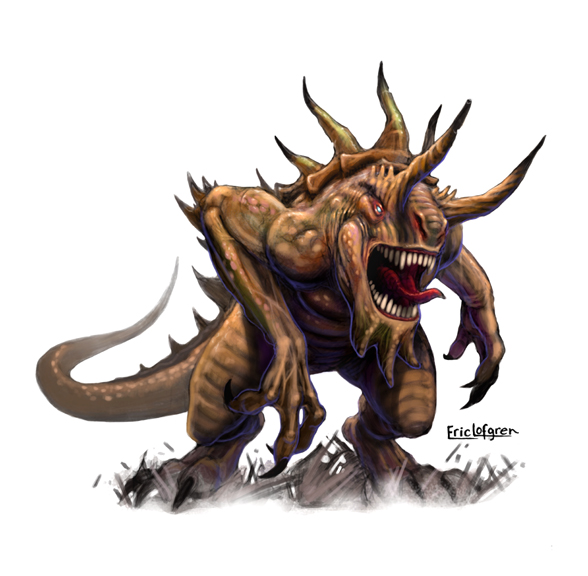
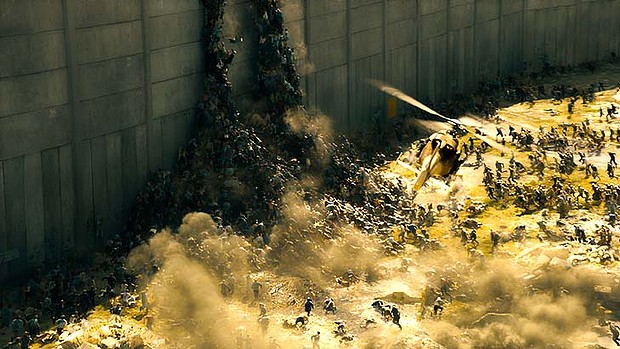


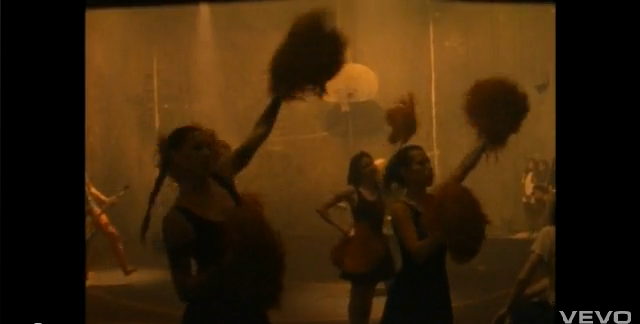


 Compromise and Conceit