This week the journal Science reports a new study finding HIV first emerged in Kinshasa (now the Democratic Republic of the Congo) in the 1920s – not the 1970s or 1980s as previously suspected. The disease was likely introduced to Kinshasa through bush-meat, but spread rapidly across the Congo through mobile workers moving on Belgian-built train networks. At that time the region was a Belgian colony, and labourers were moving across large areas of the country as they moved to and from the capital and large mining areas in the hinterland. The article also reports that Kinshasa itself had a large and active sex industry in support of he transient labourers, and this may have helped to spread the disease. It’s an interesting story of virology, archaeology and globalization.
What I find fascinating about this story is that HIV took hold in the 1920s, but wasn’t identified as a disease until the 1980s, despite the presence of medical and public hygiene programs in Kinshasa, the growth of tropical medicine as a discipline, and the presence of major militaries in the area during both world wars (most notably the Force Publique, a force of some tens of thousands of black Congolese soldiers led by white Belgian officers). Typically the military establishment pays careful attention to hygiene and to STIs, especially since the work of Florence Nightingale, but somehow during all this period they missed HIV as a disease. In fact, this new research suggests that the success of the entire discipline of Tropical Medicine should probably be reassessed.
The reason that HIV was not identified is, I think, quite simple: it has a very long asymptomatic period, up to 12 years, and it does not manifest through a single set of coherent symptoms, like measles or flu, but through a complex of opportunistic infections. The case definition for AIDS is complex and depends on a list of AIDS-defining conditions that have few commonalities, so it is extremely hard for a doctor seeing these cases in disparate people to identify a single underlying condition. Instead the symptoms are treated, and the patient dies. From the point of view of a doctor in 1920s Belgian Congo, finding an underlying cause would be almost impossible. First the doctor might see a soldier with recurrent herpes, then a miner with a rare and untreatable cancer, then a sex-worker with repeated bacterial infections. Some of these people might have got the disease sexually, some through infected needles during a vaccination drive, perhaps the soldier might have exchanged blood in a fight – 10 years ago. It’s just not possible to identify a cause in this case, or to see a common pattern.
So why do we even know about the existence of HIV at all? It was first identified in 1984, but if it had been around since the 1920s it should surely have been identifiable in the modern era, at least since the program to eradicate smallpox, when modern public health was really beginning to come to terms with infectious disease. Why so late? I think it was identified because of a stroke of luck: a group of cases in the USA that all happened in gay men, and with a disproportionate number of Karposi’s Sarcoma (KS) cases. KS is usually limited to elderly southern European men, and so its presence in young American men was highly unusual. But the real trigger was that it occurred in gay men. Its presence in gay men meant that they were all visiting the same small number of gay-friendly clinics, and they were definably different to other men. They all shared a single common factor: their sexual identity. Of course all those patients in the Congo also shared a common sexual identity but nobody thinks of heterosexuality as a defining characteristic. It’s a background property, a default setting. Whereas homosexuality is a definable strand of difference. I think this coincidence set people thinking, first because a small number of doctors saw all the cases, the diseases these cases were experiencing were very unusual for men of their age and race, and they all shared a different sexuality. This of course tripped the doctors into thinking that they must have a common condition, and that it must be related to their sexuality. This in turn sparked a search for a common cause, probably infectious, and in 1987 HIV was identified. Had HIV instead spread into America through heterosexual carriers those carriers would not all have gone to the same doctors and the disease would not have been linked to their sexual identity. This link is essential for HIV because the symptoms occur so long after the transmissive act that it is not possible to connect them without a symbolic link. Without the sexual link, doctors would not have considered an infectious cause of the range of AIDS-defining conditions they were witnessing, and they would not have sought a virus. Had the Morbidity and Mortality Weekly Review reported on a sudden rash of deaths due to Karposi’s Sarcoma, there might have been discussion, but occurring in only heterosexual people widely separated in the community, an infectious cause might not have been considered. This is especially likely since KS is just the first manifestation of AIDS, and not necessarily the killer – people travel through different trajectories of opportunistic infections to their eventual (horrible) death, and in the absence of deaths, given KS is not notifiable, it would probably simply never have come to anyone’s attention – or would have taken so long to be noticed that HIV would have been entrenched in the wider community before it was identified, if it were identified at all.
So I guess we have the unfortunate sacrifices of a significant proportion of gay men in one generation in the USA to thank for our discovery of HIV. By the time the full scope of the disease and its origins were understood, HIV was already out of control in Africa, to the point where it was causing major social and economic problems, and it’s possible to imagine real economic and social collapse happening in some parts of Africa if the disease hadn’t been identified for another 10 or 15 years – especially if by the time of its identification the rich countries were also burdened with a generalized epidemic and facing their own public health (and potentially economic) emergencies.
Which leads to a horrible speculation about the past. Would human society have survived if HIV had emerged 500 or 1000 years earlier? With death following a pattern similar to non-communicable disease and old age, no coherent virological or bacteriological principles, and the point of infection distal from the point of symptom onset, it would have been almost impossible for human society to identify the existence of the disease, let alone its cause. Worse still, HIV is transmitted from mother to child, with very high mortality rates in children, so it would have spread rapidly over generations and had huge mortality rates. Once widespread the disease is economically highly destructive, since it forces communities to divert adult resources to caring for sick adults who should be in the most productive part of their lives. In the absence of a known cause it would simply be seen as “the Scourge,” but in the absence of well-kept statistics on life expectancy and mortality rates, it might be difficult for societies to realize how much worse their health was than previous generations.
In that period there were other diseases – like the Black Death – that had an unknown transmission mechanism, but these were identified as diseases and (mostly erroneous) methods put in place to prevent them, with of course the final method being case isolation and quarantine, a technique that usually has some success with almost all diseases. But these diseases differ from HIV in that there is a rapid progression from symptom onset to mortality and the symptoms are visible and consistent, making the Black Death clearly definable as a disease, which at least makes quarantine possible. With a diverse range of symptoms, a long period from symptom onset to death (often 2-3 years) involving an array of different infections, in a society where death from common infectious diseases was normal, people just would not notice that they were falling prey to a single, easily preventable disease, so even quarantine or case isolation would be unlikely to be implemented. Another difference between HIV and the Black Death is the long asymptomatic phase of HIV guarantees its persistence even though it has a nearly 100% case fatality rate; whereas the Black Death spread through communities so fast that it soon burnt out its susceptible population, leaving a community with some immunity to the disease. HIV is not so virulent, or so kind.
I think if HIV had spread from Africa 500 years earlier, it’s possible that the majority of the human race would have died out within a century or two, leaving whole continents almost empty of people. I guess the Indigenous peoples of the “new” world would have escaped the scourge, leaving the earth to be inherited by native Americans, and most of Europe and Africa to fall to waste and ruin. It’s interesting to think how different the world might have been then, and also chilling to think how vulnerable our society was in the past through ignorance and happenstance. A salutary lesson in a world where we live ever closer to nature, but where many societies still have health systems that are too fragile to handle the challenge presented by relatively preventable diseases like Ebola virus. The Science paper also presents a timely reminder of the importance of being prepared for the unexpected, and the dangers of complacency about the threats the natural world might offer up to us in future …
Outfit: today I punk styled, because I was shopping for some bullet belts when the call came in. Misfits t-shirt, tartan mini, black tights and sensible boots, pony tail, no heavy guns. My e-bags were patterned to “lacrima is my drug,” and that cheerleader squad Nirvana Crush from the computer game I haven’t played, because their punk stylings matched my mood. I set my synthnails to black-and-skulls, that pattern has been a real winner since I downloaded it. I was out on my scooter so the assault rifle was with me, which turned out to be a very good idea. I think I need a better pistol – New Horizon is getting way nastier than I expected.
Feeling: Enervated [Pops taught me this word today!], but then excited. It was a good fight and I killed three guys. The dude in the stairs looked so cool as he fell down the well, and it’s been ages since I heard an assault rifle on full auto, the sound of the gun in the courtyard really got my heart kicking.
My counsellor at the institute told me that I should keep a diary to try and get a grip on my feelings and thoughts. At first I thought it was a stupid idea, and he was really creepy the way he sometimes touched my leg, so I didn’t want to listen to him. Maybe killing him on the way out made me think more about what he said though, because now I think it might be a good idea, so I’m going to give it a go. This is my first entry and I think it’s a pretty good one, though it’s a bit long. I hope they aren’t always this long! I don’t know how it will help me with my feelings and thoughts, since I don’t really have any, and I don’t know what the counsellor thought I would get out of it since he’s dead and he didn’t say anything sensible before I killed him, he just kept saying “Please no!” But I think he might have had a good idea, so I’ll try it.
Before I say what I did today, I should mention that things are getting a little bit hot around here. Pops had a ping out on my name, and we found out today that the contract on me has been sold on to Arasaka Industries. We don’t know why but Arasaka are deep corporate, they don’t mess around and they don’t waste time, and they have top flight mercenaries, so we need to get money together before they start to pay attention to us. That means we need real work, not this stupid Armoured Entourage gig. John was doing some dumb investigation of a cyberpsychotic down in the Indo quarter today in exchange for a free meal, but we’re gonna need better pay than that. We have to get serious. But there’s gotta be work available. Some biotech company on Deck 4 has declared a whole section of Deck to be industrial and is moving all the residents up to Deck 3, but they’re rioting, so there’s a lot of trouble down there, we can probably get work flatlining leaders. John doesn’t like that sort of work – he once told me they had this thing called democracy where he lived, and everyone got to have a say on how the govt did stuff. Can you imagine? That means Smelly Sally down on the garbage level might get to say what happens in the block. They certainly had some dumb ideas in America, no wonder they collapsed. Anyway he won’t like killing rioters, but it’s money, and we need a lot. If they’re doing bounties on heads then I could probably clear the debt if I set up a good nest and John collects heads. Just gotta convince him.
But it turned out that we don’t need to do high turnover whack jobs just yet, because a job came through. Pops knows this dodgy dude called Coyote who has got like the worst facial tattoo ever, who sometimes gets jobs through this fixer called Twitch (real paedo chic), and Twitch has scored a real win job: we have to flatline some cyberpsycho drug dealer, and some gang boss called Alt will pay 10,000 for it but better yet this drug dealer dude is sitting on a mountain of Ghostshock which is worth like fat wads, and Alt doesn’t care about loot, just wants this cyberpsycho flatlined for some old gangland slight. Twitch gets 20% of the 10k, but then we split the drugs evenly and Ghostshock is worth a lot if we can shift it (and this Coyote dude shifts drugs for a living, so like yeah), so we can maybe get most of our debt together in one easy hit. Pops loves whacking chromes, so it’s a buzz. We gotta meet this Alt guy first but the big problem is we need a hacker – everyone says that the cyberpscyho has gone to ground in the lower decks, and we’re gonna need a hacker to get through his defenses. Twitch knew a hacker we could deal with, but because of reasons there is a hit job on him so we need to get to him fast and cancel the hit.
So we had to rush. Coyote and Twitch took his car, me and John took the scooter, and we got to the hacker’s place pretty fast but a team were obviously already there – two cars parked in the lot, tinted windows, two obvious gangbangers in the yard, the whole place gone real silent. While Coyote and Twitch argued about tactics me and John walked up to the two dudes, doing our lover’s tiff act, and then hit them hard and fast. John took his down with one shot in the face but I was using my rippers, and I didn’t quite get my guy. Everything’s too fast now that they’ve taken my ‘ware, and he got away. He had a shotgun, he shot at me a few times and missed, then ran back to the doorway. He shot us both from there but it didn’t really hurt. I thought I should drop the pretty girl act so I called my scooter to me but for some reason it didn’t come, so I ran back to it to get my assault rifle. While I was taking it out I noticed there was this kind of glass walkway from one high-rise to another, that led straight into the level where our hacker was, and there were two heavily-armed dudes walking in there, obvious trouble. So while John pinned down shotgun dude, I let rip on the glass walkway – full magazine, suppression shot. That got their attention, though they were too far away to hurt, and they went into shooting mode, which means they weren’t going to get our hacker. But then my scooter went crazy, fired up and started spinning in circles. It hit me in the head but I ducked, and ran to John. This has gotta mean they’ve got a hacker ghosting them, which I told John, and then ran in. Shotgun dude – who was pretty persistent for a toerag – had done a runner inside, so I sprinted after and John followed, with that Coyote dude behind us.
We shouldn’t have crowded into the entry way of the apartments, because shotgun dude was waiting in an elevator – he tried to stick his arm out and take a shot at us, which could have been bad news, but he mistimed it and the elevator doors closed on his gun – mangled it and didn’t shut. We moved up for the kill but then all the lights went off, the doors clattered shut, and the lift doors slammed shut too (that shotgun dude is fast). The team’s hacker was working fast to shut us down, and our hacker was obviously doing nothing to stop this squad – did he even know they were coming. How good was this guy? Well, to find out we had to take the stairs (five flights! Of course pops complained about his knees), so we took them. It felt like ages but really it was pretty fast, but when we got near the top who should we see but shotgun dude, leaning over the banister and trying to shoot into the darkness his hacker had made. Rookie error! I dropped to a squat and squeezed off a few shots while the others ran past me, and I think I scored a couple of good belly hits, ’cause shotgun dude flipped over the railing and took the long dive. That was one persistent problem fixed. I mean really – if you wanna be serious in this business you need an assault rifle, not some kind of second rate blaster. Also, leaning over railings really isn’t the best move. Rookies! It was like poetry when he flopped over the railing and took that dive. What a swansong!
We hit the 5th floor and we could hear a whole lot of damage going down, gunshots and yells. It was just a short run down a corridor, then one corner and the battle was there. Of course I went round first (pops’s knees are crap, and that Coyote dude is wrestling with congestive heart failure, he’s so slow). There were three guys in some kind of bizarre fight – two white trash gang bangers and a guy in full body armour, one gang banger literally trying to wrestle with the armour dude. I guessed this was our hacker’s body guard, so I took down the nearest white trash with a shot to the knee. The other dude looked around at me and seemed pretty angry, so when John finally arrived (!!!) I told him to shoot the white trash dude. Of course he missed. Someone else inside a room off the corridor was also shooting at white trash dude, so he realized he was out of his depth here and decided to do a runner. This bodyguard guy he was fighting was weird – dressed in some serious combat dress but carrying the girliest pistol you’ve ever seen, and slow as a chump. I got to the end of the hall and blew both the runner’s legs off before the bodyguard had his silly little pistol up, and I’d tapped the dude twice in the head and had my rifle raised and pointed at the bodyguard before he had his pistol on me. Meanwhile John was dispensing the other dude, tap!tap! Then the lights went on and twitch was yelling in Coyote’s ear “Goliath cops! Goliath cops!” So we had to get out. I guess that means the Hacker figured out he was toast if he stayed, and did a runner. dThere was some girl in the room – nondescript Chinese, self-defense pistol, you know the drill – but she came out and Coyote told us we had our hacker so off we went. We ran straight to the smashed up glass corridor, called our vehicles to it, hopped on and flew away before the Goliath cops could reach the scene. Final damage: 4 guys we took down, we dragged some unconscious dude out with us and it turns out that the Chinese girl put a cap in another dude (head shot!) in the room, so all up not a good night for whoever these dudes were.
We stopped a little way away to have a chat with the dude we dragged out, and things got a bit messy here. John broke a few of the dude’s fingers and I cut off a few more, and then he got cooperative, he was speaking English – all these dudes are pasty white American weirdos – but he told John the name of the fixer who got them the job whacking our hacker, some guy called “Blue,” and he was obviously just a low-level grunt, so John and I were going to let him go, but Twitch tried to kill him. I stopped that (Twitch is real slow, I just stepped in and the gun was mine) but while we were talking about mercy and mortality, this Coyote dude pulled out some kind of insane cyber chainsaw and cut our prisoner from one end to the other. There was blood everywhere. Nasty. So then John pulled his gun on Coyote and pointed out to him that that kind of arbitrary slaughter isn’t very collegiate, and Twitch busted out this tiny little blaster, so I had to stick my rifle in Twitch’s face (and I have to say, waxing that paedo-looking dude would be justified on style grounds alone). So it was a classical Mexican stand off until Coyote agreed he’d been a little rash and promised us that Twitch wouldn’t cause anymore trouble, and then it was all roses until someone (Twitch?) told us that this chinese chick was not our hacker. Actually our Hacker was the dude in the full combat suit, apparently his name is Ghost but this girl was just some random he had in his room. So then me and John were like “who are you?” and she turned out to be a paparazzi, which is kind of disastrous right because we are on the run and she was surely filming this hit. So we had a chat, with my gun in her face, and she agreed to cancel uploading any film of our little raid in exchange for joining our hit and getting exclusive interviews with all the people we don’t kill straight up. Easy.
So our Hacker Ghost was in this full battle dress all along and we didn’t even need to run up those stairs. I guess paranoia has its uses.
From there we went to the Firefly bar – I swear I’m gonna get the Sarge, its owner, to smile at me one day – and we had a drink and a chat about what to do next. I think it was a pretty easy job – 5 dead, me with a few shotgun pellets, our hacker safe, and some paparazzi chick who seems to be a real ace with a pistol on our side. We can sell wetjob footage, everyone tells us that is worth a mint if you do it right, and this chick seems pretty professional. Maybe things are looking up.
From now we go to meet Alt, and then the wetwork starts. I’ve had a good day, it’s nice to be doing what I do best. I can smell freedom from here…
Drew out.
—
Footnote: what actually happened in the hacker’s room. So basically while we were fighting with the guys downstairs, the hacker ghost and another PC called Huang Lin (Lin) were trapped in the hacker’s tiny room, with some enormous cyber-enhanced arsehole smashing his way through the door. The hacker was off in cyberspace trying to work out what was going on, but the enemy’s hacker got to him and started frying his brain. Lin, seeing things going wrong but guessing that the raiders didn’t know she would be there, hid in the bathroom. A huge gangster musclehead burst in and went forward to kill the supine hacker. Lin saw her chance and took a called shot on his head from the bathroom. She was successful, and blew his brains out. So while we were fighting our way past shotgun dude and running up stairs, her and Ghost were able to take up defensive positions and take the fight to the two guys that Drew saw going through the glass walkway. Ghost’s ludicrously effective battle dress prevented him from suffering damage, but both of them were having real trouble actually hitting their two enemies. It was a stand off until Drew and Pops turned up with real weaponry. Then things went south fast for our white trash foes, who were all originally American …
Main lesson about cyberpunk: don’t take a knife to a gunfight. This is a one-hit-down system. Act first with extreme prejudice. And carry an assault rifle wherever possible.
On Wednesdays we wear subdermal armour and a smartgun link
The Druid is on the run and out of work, but in the towering ocean megacity of New Horizon, life without money gets real dangerous real fast. Even the desperate people who flee to the lowest deck to hide amongst the sewage and the storm swells still need money to smooth their way through the conflicting networks of crime and policing that make daily life hazardous for those without connections. If you have money you can live a normal life on the lower decks, even though the people on the upper decks have sent their chrome-killers and agents looking for you – it’s the money that keeps you hidden, buys the silence of your neighbours, gets a roof over your head and a safe place to bolt to. But paradoxically, making the money gets you noticed. The Druid needed to find a way to earn money, but her only skill is killing. She can’t work as a Solo on normal jobs though – word is out that a tall, slightly gangly pretty girl with no obvious cyberware is being hunted, and that she’s a Solo. Those kinds of Solos are pretty rare, and if she joined any job she would stand out like dogs balls. She needed occasional work where she could blend in, but do the only thing she does well – kill.
Fortunately, 22nd century life provides just such an opportunity: the armoured entourage. With the rise of New Horizon and its huge media complex, the liberalization of sex work and pornography, and the huge diversity of cyber-enhanced entertainment, a new tier of high-value, short-lived z-list star was born, young men and women who have little fame in the mainstream press but bring in huge amounts of cash for the second-level entertainment companies, whose fame is short-lived and whose fans are often dubious. This low-status, high-profit tier is populated with interactive porn stars, all-girl unit bands with some kind of niche appeal, reality show winners and losers, and a new kind of girl-next-door cam girl who makes her money by filming her daily life and selling it to sad and lonely men whose addiction to girls they’ll never have is as deep as their wallets. In New Horizon there are a lot of lonely men, a lot of socially disconnected people, and a lot of freaks. The less scrupulous media companies make a lot of money from selling these men interactive porn, and voyeuristic vision of the ordinary lives of pubescent beauties whose physical affection would no doubt earn them a long period of chemical castration.
The stars in this industry are short-lived for two reasons: their fame is only as fleeting as the illusion of illegality that their age can conjure, and their fans often turn into vicious stalkers. The obsession this industry profits from draws stalkers the way a shark attracts pilot fish, and these girls are always one fan away from disfigurement and violent early retirement. Most of these girls harbour innocent dreams of fame, because they haven’t been warned that interactive porn and lolita peep shows are a death sentence to a star career; but because of these dreams of fame they need to keep their girl next door appeal, which means no serious cyberware beyond the implants they need to ensure interactivity. They also need to go out and do the things that wannabe stars do: go shopping, go to awards, do charity work. And they inevitably draw an entourage of lower-tier stars, for whom there is no letter in the alphabet. You can see them on Deck 2 or Deck 3, swanning around the cheaper glamour districts in little squads of perfume and pouts, the star at the front and her little entourage clustered around her, acting like it all matters, trying to catch the eye of paparazzi and talent scouts. And it’s in these public spots that their stalkers will find them. The acid attack, the sudden lunging monster with the cheap rippers he bought on Deck 1 for just this final apotheotic moment of stalker sin, the enraged beat down, or just the creepy guy who won’t let her out of his sight. Every girl in this scene needs to keep her fans hooked to her, and every girl knows that some are just a bit too into her; but if her management skills aren’t just right, one day she’ll get a message from some sad dude in the lowest deck, telling her what he’s got planned.
But she can’t break her image, and if the corporation that markets her still has a use for her, it can’t let her go out in a bloody mist just quite yet, so it needs to find a bodyguard it can fit into that entourage. And that’s when the Druid steps up. She wears her humanity and her femininity like a mask, as changeable and malleable as that z-tier cam girls eyelashes. She can fit whatever fashion that inter-porn star is into this week, and she can titter harmlessly with the most vapid of all-girl units. She is just girly enough to blend in to any group of z-tier stars, and just bland enough not to interfere in their shopping and coffee. She’s also just deadly enough to deal with any slobby fan, and boosted fast enough to have his arm from his shoulder before he can get the acid vial out of his bum-pack. But most importantly of all, she doesn’t stand out. She can work alone, in amongst a group of air-headed teens who know nothing about the world of Solos, corporate extractions, wet work – no one who might think that her presence is unusual. She’s just a girl who’s been sent to keep an eye on them. So no word filters back to anyone who matters, unless she has to step out of her feminine role for the split second required to disembowel some creepy old dude with a cupboard full of used undies. At which point her job is done and she can melt away. These companies that hire these teenage inter-porn thrillers and loli-cammers are themselves just one step ahead of the law, and they certainly don’t want to be broadcasting the hazardous side of their dubious work to the authorities, so they’re more than happy to pick up bodyguard work from a reliable, invariably fatal, and extremely discreet young lady who is interested in staying out of the limelight.
And so it is that, since she hit the skids and went lower deck, the Druid has been paying her way as an armoured entourage girl. She’s not the only one, but she’s good – she has a sixth sense for trouble, and when it fails she is so fast that her ward is unlikely to even feel a bruise. The creepy paedophile who wanted to make his mark, though – he won’t be buying any more subscriptions to lolicam, and the girl he “loved” is gonna have to go back to her fans and work a little harder to make up the shortfall. But really, who’s counting? What’s one less weirdo in a world of nearly infinite isolation and sadness?
Today’s Guardian reports possibly the most pathetic and desultory news in the history of war: two British Tornado aircraft destroyed an ISIS pick-up truck. Two jets that cost $27 million each managed, between them, to blow up a battered Toyota pick-up truck, that ISIS probably scored for free but will probably cost a maximum of $5000 to replace. Fortunately the pilots of these two hyper-sophisticated jets made it back safely to their base in Cyprus without being shot down and beheaded. All in all, a good 6 hours’ work!
This story is so full of pathos and futility that it is hard to stop laughing. Is this our contribution to the protection of Kobani and the hundreds of Kurds fixing to die there? We fly two planes for six hours, and use a $50,000 bomb to blow up a pick-up truck? This is how the mighty West is going to stop ISIS from executing every Kurdish soldier in Kobani?
Media reports that hundreds of Kurdish Peshmerga have crossed the border into Syria to fight thousands of ISIS soldiers who have captured many villages in the area and are closing in on Kobani. Assuming those thousands are actually 1000, and that they are all in pick-up trucks, how many missions will the RAF have to fly and what will it cost? Sky news reports that the cost of operating one Tornado on one mission is 210,000 pounds, without dropping a bomb. A single paveway bomb costs 22,000 pounds. So for two Tornadoes to blow up one pick up truck cost 442,000 pounds. Of course, they might have dropped all four of their paveways, and two Brimstone missiles (105,000 each), destroying six pick-ups at a total cost of 708,000 pounds.
If we assume that those 1000 soldiers are all in pick-ups, and all the pick-ups have a weapon on, we could guess 4 dudes in the back (around the gun) and 2 dudes in the seats. Assuming that the Tornado hit the pick-up truck in tandem, that kills 6 men. With 6 men per truck you need about 150 trucks to get to Kobani, and at 6 trucks per mission (assuming full use of all those super-cool weapons) then you’re looking at 40 or so missions, minimum. That’s 28 million pounds to blow up 150 pick up trucks and kill 1000 ISIS soldiers. Of course this estimate is ludicrously optimistic, and if the report is to be believed (and previous reports in which the RAF flew 5 missions without finding a target) then probably it’s more likely that one mission= one pick-up truck, on average. So 150*444,000 pounds, or about 70 million pounds.
Of course, those pick-up trucks had weapons mounted on them. News reports suggest that ISIS captured 50 or so M198 Howitzers, which cost $500,000 each. If we assume that 10 of them are being used in Kobani then the attacks might cost them $5 million. So for 70 million pounds, we can degrade $5 million worth of weaponry and maybe $1 million worth of pick-up trucks. It appears that the RAF is flying a couple of missions a day, so even at its most optimistic this task will take 7 days (more like 10 or 20, assuming it’s possible at all). Will Kobani still be standing in 7 days’ time?
ISIS are rumoured to have $1 billion in reserve, and 30,000 soldiers. If they capture Kobani they will replenish all the pick-up trucks the RAF destroys (newsflash! pick-up trucks are ubiquitous, and Tornadoes are not). It’s probable that all those Kurdish fighters coming into Kobani are bringing weapons, probably heavy weapons supplied by the Australian army to the Kurds in Mosul. So ISIS will win back everything they lose without expending a cent of their savings. Once they’re in the city bombing them will be impossible. Meanwhile ISIS are said to be at the gates of Baghdad, even attacking a prison and the HQ of the Badr militia two weeks ago. It seems pretty obvious to me that air strikes are not working, troops on the ground are the only solution, and the Iraqi army is either sympathetic to ISIS, or not willing to stick around to be executed after they lose. So long as ISIS keep moving, and US and British air strikes are being launched from bases many hours’ flight away, it’s going to be impossible to seriously impede their combat ability. Two tornadoes fly out, locate a squad of ISIS trucks, blow up the best target, return home; three hours later two more Tornadoes turn up, but they have to look around to find the targets, because the trucks have moved. It appears that they frequently fail to find a target, and return without firing a shot. If air war is going to work, it is going to need close air support weapons – A10s and helicopters – but no one dares to deploy a helicopter near ISIS since they captured US anti-aircraft missiles, and the only country capable of deploying A10s in range, Turkey, was denied access to them. So we have high speed jets at the limit of their range scouring empty desert looking for pick-up trucks. This is how we are going to stop ISIS from killing a couple of thousand Kurdish men (and any civilians without the means to escape).
This is so pathetic. The journalists reporting on this intervention are so chuffed about all this hardware and blowing-up-stuff. My god, the Europeans even have a cruise missile named after a GI Joe character (Storm Shadow! What’s not to like?!) How can they not be devastating? But the sad fact is that ISIS have pick up trucks, and dudes with attitude. Spending a quarter of a million pounds to blow up a battered technical and a dude with attitude is not efficient. Nor is it going to help the people fighting those dudes. ISIS are fighting a classical war of movement, and given their numbers and the tools they’re using, it’s ridiculously inefficient to try and destroy them using modern air warfare. Boots on the ground, or go home!
The sad reality is that there’s nothing we in the West can do from afar to stop this monster. ISIS is the Middle East’s Khmer Rouge, and they have arisen from the same hellish swamp: just as the Khmer Rouge seized power violently in the aftermath of the US destruction of Cambodia, ISIS are seizing power violently in the aftermath of the mess created by the US in Iraq, and by the US and Europe in Syria. It’s an object lesson in failed states: create them, and the psychopaths will come. The best way to stop ISIS was to stop the second Iraq war, but our leaders (of all political stripes) were so stupid, vain and cruel that they thought the second Iraq war was a grand idea. ISIS is the brainchild of Tony Blair, John Howard and George Bush. They made it, and their inheritors cannot stop it unless they are wiling to expend the lives and blood of western soldiers that they were so loathe to shed in the past war. Of course that’s not going to happen, so instead they’ll spend millions of dollars blowing up pick-up trucks for a year, until they have trained a force of rebels who will enter Syria just to die. This is what our “civilized” society created, and what our leaders refuse to commit to fixing.
So what should Barack Obama do? I think he should take the $70 million required to defend Kobani, and invest it in a time machine. It doesn’t matter that we don’t have any idea how to build it, so long as the money is put down, and a law passed to guarantee a million bucks a year until the thing is made, everything will be fine. Eventually (maybe a thousand years from now), someone will finally make the time machine. Then the first thing they will do is go back in time and deliver the plans to Barack Obama, at the opening ceremony of the research project. Brilliant! Then someone can go forward in time far enough to get a mind control machine; then they can go back in time to 2003, and stop the second Iraq war. Then ISIS will never happen, and everyone will be happy.
Or we could spend $70 million blowing up second-hand Toyota pick-up trucks, at half a million bucks a pop. Which do you think is the more cost-effective strategy?
On Sunday I ran a Make You Kingdom (迷宮キングダム)one-shot for my regular group. Make You Kingdom is a cute little Japanese kingdom-building role-playing game set in a world (?) that has fallen into a vast and infinite labyrinth, after a cataclysm. The players play the court of a small kingdom, attempting to expand their kingdom and protect it from the many great and evil powers that patrol the mysterious world of the labyrinth. I have previously played the game in Japanese, and had a lot of fun, so it’s been a long-standing goal of mine to GM it in English. This is a report of the session.
The Kingdom Phase
I have previously described the Socialist Republic of Disasters, which I generated entirely randomly, and its court, which consists of the following people:
Mario, who is untroubled by the Ephemeral God, the King
Cocoa “Wise Ears” Scarlet, the Knight
Cookie the Involuntarily Anointed, Ninja
Hairan Blademagnet, the Oracle
The players decided that the people populating their kingdom – their citizens – were vaguely crablike, with a random number of extra limbs and sometimes shells and slightly non-human faces. The ninja player also decided his PC was part cat, with a squirrel for an animal companion. The Knight’s mount was a giant lizard. Everyone was eager to capture monsters, bring them back to the kingdom and clone them in the mysterious cloning ranch. What could go wrong?
The characters had a slightly oily and untrustworthy contact, apparently partially descended from an otter, who is something of a legendary fixer and dealer amongst the kingdoms of this section of the Labyrinth. He appeared to tell the characters that rumour spoke of a debt collector in a neighbouring kingdom, who might be on his way to the Socialist Republic of Disasters to call in the debt that Mario owed to the Subterranean One. He might also, it appeared, be carrying some rare item, and so it might be a good idea to visit him, find a way to escape from the debt, and perhaps loot him. Also the neighbouring kingdom was supposedly a peaceful land ruled by an Ant-King, and dealing with an intruder could gain the characters favour with the ant-king.
In the Kingdom phase the PCs get to make some basic decisions about what to do in the coming adventure, or explore the kingdom and try and get benefits from their people. Cookie decided to send some followers to the kingdom to explore the first two rooms; in both rooms he identified the number of monsters, traps and tunnels, which is very useful since knowing there are monsters in the room prevents surprise, and surprise is bad news in this game. Meanwhile the other characters decided to wander their kingdoms, to see what they could find. Cocoa discovered that the kingdom’s army was slovenly and weak, and as a result for every 5 units of horn that the PCs recover in the dungeon, they would gain 1 gold coin. Hairan discovered that the area around the Socialist Republic of Disasters was still in the process of labyrinthifying, and so they needed magic to protect against this; for every 5 units of magical material recovered in the dungeon, they would gain 1 gold coin. Finally Mario was approached by emissaries from two neighbouring kingdoms, and discovered that two neighbouring kingdoms were at war; he could choose to send troops to help one kingdom in the war, with some benefits if they succeeded in a (very difficult) skill check. Everyone decided not to risk getting involved in the affairs of their neighbours, and instead they set off for the neighbouring kingdom to explore.
The Labyrinth phase
The Labyrinth phase involves moving from room to room, to the destination. This is the fatal part.
The Rust Farm
Sound is no barrier to the Angelic Death Penguin
The characters followed an old and rusting railway line to a distant stop far from their kingdom. This station consisted of a crumbling platform with a rusted sign on it declaring they had reached the “Rust Farm.” They followed the exit through to a set of rusting steel ladders, walkways and gantries, that in turn led down into a vast, rust-hued space set in some kind of huge cavern. The walls of the cavern were set with glowing embers and streaks of lava, that gave the whole room a dim red glow; the room itself was filled with the distant sound of chattering cogs, clattering metal and moving chains. The walls and floor were of rough stone, festooned and inset with rusting steel chains, pylons, and other pieces of disused metal; from the ceiling hung huge chains and meat hooks, all suspended from somewhere far above in the dim light. The room was also faintly diffused with hanging rust, so that it tasted like blood in their mouths and the whole room was suffused with a grim red light.
As soon as they had made camp, the group were attacked by a squad of four mysterious, speedy flying beasts. These creatures crashed into the party from a great height, but the Knight managed to strike one down, and they could all see their enemy’s form as it smashed into their camp. They had been attacked by cybernetic emperor penguins, that had been fitted with armour, chainsaws and rocket engines. Mach penguins!! One of these ferocious beasts stooped on the Oracle, and he would have died had not four of his followers – his troop of busty dancing girls actually – not rushed to his aid, forming a cheerleader-style pyramid over him so that on its return attack the Mach Penguin embedded in them, tearing all four of the Oracle’s followers apart. Hairan lost his four favourite cheerleaders, but was able to stumble to his feet unharmed and destroy the penguin with his warhammer as it tried to free itself from the gore of the dead girls[1].
After the initial shock of the attack the party recoverd quickly and were able to beat down the remaining penguins quickly. They recovered from steel from the penguins, and everyone except the Ninja sat down for a meal to recover some damage. While they did this Cookie explored the room, discovering a cuckoo clock the size of a block of flats on one side of the cave; this was the Mach Penguin’s nest, and inside Cookie found a level 1 firearm (d6+1 damage on a random enemy in one area).
Still somewhat bruised from the encounter, the characters moved on to the next room, which their followers had explored, and where they knew they would find four monsters and a trap …
The Disastrous Study
The next room was entered through a metal tunnel that slowly narrowed and changed composition until it was made of bone. Pushing through the narrowing hallway the characters emerged into a structure made of bone. Confused at first, they wandered a little until they found themselves looking out of some kind of joint or knuckle, onto a fantastic sight. They were inside the bones of a vast, ancient jellyfish-like creature that had crashed and died here. The jellyfish-like creature had bones inside all its tentacles, and these bones had formed a complex network of caves and tunnels when the creature came to its final rest. Outside the beast was a vast, empty night; the only light was the gentle glow of the beast’s bones, and starlit night or some distant glow far above. The beast was so old that the outer layers of jellyfish material had long since decayed and blown away, and some ancient civilization had formed a city here, setting clinics, libraries and offices in every joint and chamber of the vast skeleton. Had the body been turned into a hospital or a research centre for some ancient race of long-dead scholars?
The PCs pushed through this warren of bone-tunnels into a central chamber, where they found a huge single bone, the size of a sailing ship, like cuttlebone. It rested on its keel inside a vast dome, the last remnant of the jellyfish-god’s original flesh, which had dessicated into a perfect dome far ahead, opaque but with enough translucence to allow the dim light from far above to suffuse the room; the keel-like cuttlebone also glowed faintly. As the King pushed through a bone-flap valve into this room the air that rushed in with his entry caused subtle disturbances in the air of the room, and the central bone-sheet rocked gently on its keel like a vast sail. The characters decided that their party would set up camp here – what could possibly go wrong if one camped in the brain-space of a long-dead cthulhoid god?
Of course, as soon as their camp was fixed three skeletons emerged from the dust around the bone-sail, and were lashed into battle by a tall human-shaped shadow monster (a shadowjack!) The battle was short but brutal, for the Shadowjack eats hope, and our party are highly dependent on hope to power their magics and skills. The shadowjack offered up a bounty of magical material, while they were able to harvest the skeletons for bone – both items they need to strengthen their kingdom. Money!
Once the beasts had been cleared the party set out to explore further. The King sent followers to explore other rooms, as far as seemed wise; they returned carrying a jar containing a siamese fighting fish, and bearing reports of chaos and cold. Cookie, Cocoa and Hairan wandered the room, with Hairan managing to find restorative rest in a hospital (Hairan likes hospitals), as well as making better friends with Cocoa; Cookie, meanwhile, managed to become annoyed with Hairan[2]. During this time the characters also found that they were affected by the strange odours coming from the bones, but most of them were able to resist this trap; Mario had an amulet which protected him from it, so the trap did not trouble anyone.
The Offal Beach
If only it were jet powered!!
Having cleared this strange corpse the characters returned to the Rust Farm and took its only other exit, a tunnel of steal that slowly turned to ice, widening and becoming lighter as they headed down it. A cool wind, becoming rapidly colder, blew up this tunnel, until the characters were shivering and frozen. The tunnel emerged into an ice cave and from there into a scene of chaos and frozen death. The cave opened into an expanse of ice and open water, a little stretch of polar ocean with still, freezing waters separating calm, flat stretches of ice. On all these stretches of ice huge flocks of penguins ran around in chaos and confusion, squawking at each other and running around in aimless confusion. The characters pushed through the nearest gang of these strange waddling mad birds to the beach, where they found rafts of penguin bone. They hopped into these rafts and paddled across the calm seas towards a larger mass of ice, from which they could see a plume of smoke rising into the still grey sky.
When they arrived they found a scene of horror. A beach of black pebbles stretched up to a large factory-like structure, from which the smoke emerged. The beach was covered with the shattered remains of penguins, broken, torn apart, surgically opened, smashed and generally horribly mistreated. On one side of the beach a huge, fat leopard seal lounged, gnawing half-heartedly on the remains of a penguin; it was obviously so sated and overweight that it didn’t even want to eat. The King tried to convert it to communism to join their kingdom, but it gave him a flat and terrifying look, snorted a horribly charnel-scented snort, and fell asleep in front of him. Disgusted and horrified, the party headed up the beach to the factory. From the factory a figure of horror emerged, a huge man wearing a blood-soaked apron, his faced concealed behind a mask of penguin skin. In one hand he held a huge and bloodied cleaver; in the other a strange arrangement composed of a piece of clockwork embedded in a piece of penguin.
There followed a short conversation in which this alarming and bizarre man revealed himself to be the ex science-advisor of the Ant King. He had been exiled here after his creations killed the Ant King’s favourite leopard. Taking the characters through his abbatoir-factory-workshop, the man introduced himself as Boeing and told them he was hoping to perfect his invention and return to the Ant King to show it could be used. He took them into a small study, brightly lit by pale sunlight through huge glass windows, and showed them the source of his genius: a huge pile of crashed drones, some propellor-powered and some jet-propelled, stacked up in the snow behind his factory. On the desktop were designs for combining these with penguins. Here was the source of the Mach Penguins they had killed!
The King managed to convince Boeing to join their kingdom, and after a somewhat horrid experience in which Boeing produced a red carpet made of the skins of freshly-butchered penguins they were able to move on to the next room … First however, King Mario sent forth underlings to explore more remote rooms; they came back bearing a massive bean, the size of a horse, wrapped in a leaf big enough to be turned into a sail. This, they were told, came from a room with no monsters and no traps. They headed to the next room, which they already knew contained three traps, and which then linked to the room of massive beans.
The Gimmick Factory
One man’s gimmick is another’s sinister religious offering
The western end of the Offal Beach had a small ice shelf in open water, on which was an abandoned and crumbling whaling station. Within this was a tunnel leading into the ice; this tunnel slowly turned to stone, warming slightly, and opened into a complex network of tunnels that was much more like a normal labyrinth. It was from this labyrinth that their underlings had returned bearing a Siamese Fighting Fish, and indeed this labyrinth was strangely lined with such little ornaments. All the tunnels appeared to have been dug by some ancient race of huge moles, whose three-clawed feet had left triple grooves along the two sides of the smooth tunnels. Each groove was perhaps two hands wide and two hands deep, and after this race of moles had passed on some other group of people must have turned these tunnels into a bizarre place of worship, for the grooves were filled with small gimmicky ornaments: golliwogs, china dolls, hawaiian hula girls, tin soldiers, and of course jars holding siamese fighting fish. The whole was lit with chains of tealights in star-shaped glass holders, and eerily disturbing in its randomness and yet its … completeness. Rather than resembling a huge, labyrinthine junk shop, it took on a frightening, slightly sinister stillness, like a church to some great and ancient evil that expressed itself through the malevolent glint of countless tiny ornamental eyes – and the cold, grim stare of many ferocious warrior fish. The court passed hastily through these sinister tunnels of kitsch watchers, emerging into a crossroads where they only just avoided a ceiling that was tripped to fall; they dodged aside, and then explored more carefully. Cookie managed to disarm a bomb trap, but none of them could disarm the rolling stone, which came hurtling down the tunnels towards them, large enough to crush all of them and preceded by howling winds and the thunder of rock rolling on rock. Watched with distant, alien glee by the millions of tiny fetishes and ornaments, the party scrambled madly away from the stone. They threw themselves around corners and down slippery, sloping tunnels, always down, down, down, until Cookie saw a side exit too small for the rolling ball to enter. They dived in, but only realized too late that this side exit was a slide; it led steeply down, and the whole party were thrown down a steep, sickening series of turns and corkscrews until they were thrown out into brilliant, open air. They found themselves falling through empty space, with no ground in sight: far below them were clouds, far above them a harsh and brilliant sun; and nowhere, as far as the eye could see, any sign of ground. They had a long way to fall to their doom …
The Golden Nebula
… And for their Sherpa a giant coffee pot …
The court and their followers fell and fell, spinning slowly in the vast open sky. The warm air rushed by faster and faster, roaring in their ears; high above them their followers’ wagon tumbled haphazardly through the still sky, all their treasures and worldly possessions falling out of it and cascading amongst the scattered group. Their newly-acquired Siamese fighting fish tumbled from the heavens in its jar, spinning end over end and flashing brilliant azure as with each slow rotation it caught the distant, brilliant sun. Looking down, our PCs were sure they would fall forever – even after a minute of falling they could still see no sign of distant ground. Not that the eventual sight of far-off earth would do anything to ease their dilemma …
… But eventually one of them noticed that they were beginning to fall more slowly. It was impossible to tell with no landmarks, but the clouds seem to have slowed their advance, and the roaring of the wind was lessened; soon, as the clouds began to draw closer, they all realized that their fall was coming to a stop, and eventually they found themselves floating still in space the nearest of those once-distant clouds just a few hundred metres from them. All their followers, the wagon, the Siamese fighting fish and even the giant leaf all came floating down to land still in mid-air, held in gentle stasis between the distant sun and an invisibly distant earth. Their fears of death by falling were gone, but replaced – with fears of death by exposure. For the sun was relentless, there was no shade, no rain, and though there was no wind the air was dry and warm, and even with the greatest of effort they could not move. There was no sign of a rain cloud, a horizon, or any hint of coming night. They were trapped in an empty space, their only source of water that distant cloud, close enough they could almost smell its moisture, near enough to wilt with desire for the gentle shade of its underside; but too far to move to by any means under their control.
For hours they drifted, wilting under that oppressive sun, until one of their followers called out in surprise, and they realized that over the past few hours that cloud had drifted closer, and was now at his feet. Then, to their amazement, he began walking up the side of the cloud as if it were solid. After a few minutes of precarious struggle he stood atop it, arms outstretched, as if it were more solid than one of the icebergs in the Offal Beach! They were saved! Slowly the cloud drew closer to the main knot of courtiers, and they were all able one by one to climb onto the cloud, dragging all their possessions (even the Siamese fighting fish!) with them. They found a space under a tower of cumulus where the sun was less punishing and set up camp, overjoyed to have finally escaped from the heat and the dry air. The cloud, white and moist, was cool and pleasant to sit on, and its crags and towers offered much shade. From its pinnacle they could survey the landscape without panic, though in truth they were all a little concerned that they might be trapped here forever. But at least for now they had safety and a chance to plan.
They had little time to relax though; for shortly their group was visited by a strange monster, that looked alarmingly like a huge coffee pot with wings, the size of a house. This monster demanded to know their business in the kingdom. It was obviously neutral towards them at first but extremely arrogant (and very large); it hovered over them demanding to know more about them, and when challenged to reveal its own identity simply declared “I am not the creator, simply a giant coffee pot.” It then demanded that they offer up a magic item of great worth, or suffer its wrath; lacking any magical items of worth, they were forced to fight it. It summoned forth three strange flying beasts, called Waliahyra, and the battle was on. This battle passed with limited damage to the players, who were able to slay the strange monster quickly and force the surrender of the remaining Waliahyra. After some negotiation, the Waliahyra agreed to join the kingdom of the Socialist Republic of Disasters. They also told the characters that these clouds rotate on a regular path, and that in a few days’ time the cloud would “join up with a tree” so that they could “go to the abyss.”
They waited …
The Abyssal Fort
Yggdrasil is our playground …
After some days the cloud drifted towards a vast and imposing sight at the borders of the Golden Nebula. Here the sun was just as bright, but the clear skies of the nebula bled into a zone of darkness that seemed to be thicker than air. This zone was too large to see to the other side, and in the middle of this empty space grew a grand tree, so huge that its branches were kilometres long and hundreds of metres wide, it’s trunk stretching up and down into obscurity. The light of the nebula’s bright sun pierce this dark space between the branches of the tree, but the thick quality of the air meant that the light soon faded, like sunbeams entering clear water, and the sunlight only entered the abyssal darkness beyond the tree as lances of light, like a streetlamp seen through the branches of a tree on a misty night. The branches of the tree closest to the golden nebula were teeming with life: huge leaves the size of ship sails, strange birds and beasts cavorting on the branches. Somewhere far below, giant ant-like humans herded aphids the size of cattle on branches wide enough to build towns. A roadway coiled around the trunk of the tree, but the ants were so far away that they would surely be months’ worth of careful travel to reach – and who knew what terrifying storms scoured this tree, drawn up from the depths of the abyss beyond? The tree branches became less fecund as they circled the trunk, and on the far side of the tree ice could be seen glittering on the dead branches furthest from the light. Here the party alighted onto a huge branch and set forth into the tree; they soon saw in the distance, on the far side of the tree, a campfire burning in the chilly darks of the abyss.
They set out for the camp, and set their own camp at the base of the branch on which the camp was set. Chill winds blew here, and though it was not cold enough for frost, the bright and cheery sun of the Golden Nebula was a distant memory. From the far camp, figures approached, and they found themselves facing their expected enemy: the Debt Collector, and a bevy of Bad Company. Perfunctory negotiation failed to hold sway over the repo man, and battle was joined. The Debt Collector was a tough foe, able to steal items from the group and armed with double pistols that he could deploy to devastating effect. His bad company were also terrifying. When they came close to a court member’s followers they would lose all their battlefield calm and rush forward, dropping guns and drawing huge meat cleavers, while their own camp followers rolled up a butcher’s wagon festooned with meat hooks and horrifying slaughter devices – the bad company actually tried to eat their enemy’s followers in the middle of battle! Fortunately they were weak and easily killed, and our heroes were soon able to triumph, though they all sustained damage.
Amongst the rubble of the Debt Collector’s camp they found a blank promissory letter, to be signed by Mario, indicating he had paid off his debt and thanking the Subterranean One for his kindness. They signed it and left it in the ruin of the camp where it would be easily found by whatever monster set out to find the debt collector, and then looted the camp. They then decided they’d had enough of adventuring, didn’t want to spend huge amounts of time looking for the last two rooms, and wanted to go home. Mario activated his dungeon insurance policy, and they all teleported back to their Court.
The Conclusion Phase
In the conclusion phase they calculated the Upkeep cost of their castle, rolled for the reaction of the people to their successful return, and calculated loot. Their successful return inspired the people, and new citizens came to join the kingdom; also, another kingdom launched a surprise attack on the Socialist Republic of Disasters but was repulsed, and had to pay reparations; at the end of the adventure our heroes’ kingdom had grown to 91 citizens (including monsters, and monsters cloned in the ranch), and their gold stock had risen. Finally they all gained a level (and Mario gained 2); with these levels they were able to select new skills and increase their number of followers.
A few notes on the game, and playing from Japanese to English
Somewhat surprisingly – given that two of the players are full-time salarymen in Japanese companies – we all had difficulty reading the rules, and at times had to wing some of the random results a little bit. I have read through the key rules as best I can perhaps twice, but because they’re in Japanese I still don’t have a feeling for the overall structure and sense of the rules or the game, as I would have if it were in my native language (this ambiguity is a common experience I have of reading anything in Japanese). Fortunately there is now a ruleset in English (available in pdf format here) but I didn’t have it during the game, so it all felt a bit vague. Still, even with the rules fumbling, the entire adventure – everything we did above – took just 4-5 hours (I think 4.5), including breaks. I think I made some of the battles a little too easy, but overall I think the game flows very quickly and smoothly. We were going for a comic and humorous approach to adventuring, but there was still time for horror, descriptions, and interactions. A few players said they felt especially exhausted afterwards given the time spent playing, but I think this was likely just a coincidence (or connected with the frantic pace of this cute little game? I’m not sure). Everyone said they enjoyed it and want to revisit the game in the future. I think it could be an excellent system for a campaign, though I’m not sure where such a campaign would lead. Playing this in English confirmed my enjoyment of this game, and I’m happy I finally got a chance to GM this game. I hope I can do it again sometime soon!
—
Picture note: the Picture for the Gimmick Factory is from the website of a fine cafe in Shibuya called And People. The Yggrdasil tree in the Abyssal Fort is the work of Margy Nelson, whose artwork can be bought from here, amongst other places.
fn1: This was roll on the death table. The Oracle took enough damage to reach 0 hit points, and so had to roll on the death table. The result: he lost 1d6 followers and took no damage. Brutal!
fn2: All PCs have relationships, and during the game random events can change these relationships in quite remarkable ways. By the end of this adventure Cookie hated everyone.
Because of reasons, Drew and Pops don’t pay their hotel bills
I don’t know what you’re doing here
When there’s murder on the street
I appreciate your concern
But don’t waste your time on me
I’m ashes on the water now
Somewhere far away
Dedicated Retribution Unit 471 (Involuntarily Demobilized), known colloquially as the Druid, is my character for an upcoming cyberpunk campaign. The Druid (who introduces herself as “Drew”) is a Solo on the path to recovery from a serious period of cyber-psychosis, who has formed a deep and tortured relationship with an ex-cop called John Hartigan. As a Solo she specializes in rifles and handguns, but her real fascination is cyberware:a fatal obsession that has seen her humanity degraded to the point that she has little remaining human warmth, or sense of her own worth. But this is during a state of recovery: during a particularly unfortunate corporate expedition she probably went cyber-psychotic, and was only saved for experimental purposes. Only Hartigan’s misguided mission to honour his dead daughter gives her any social connection at all.
The Tunguska Extraction
Don’t be surprised when daylight comes
To find that memory prick your thumbs
You’ll tell them where we run to hide
I’m already dead
It’s a matter of time
Things went wrong for the Druid in Tunguska. At the time she was working for a small New Horizon corp, a simple riflewoman in a squad sent to extract a geophysicist from some second-rate Russian mining interest. They spent a few days preparing in Vladivostok and the Druid, over-estimating her long-forgotten Russian, went cruising the fleshpots of the harbour looking for new cyberware to add to her increasingly humanity-rending collection. Some shady guy on the docks sold her what she thought was a simple adrenal boost, but either she misunderstood his explanations or he lied, because it wasn’t…
The Druid near the end
Unfortunately the extraction went badly wrong. Near the mining complex a Siberian separatist uprising had broken out, but the Druid’s corporation had not been notified by their informants. The team hit the complex well, secured their target, and were on their way out without major incident when the corporate troops detached to suppress the separatist movement turned up to support their colleagues at the complex. With reinforcements the raid went wrong very quickly, and the team soon realized they were trapped and facing extinction. The team leader selected an escape strategy that would require a small team to stay behind and hold a blockhouse while the rest fled, meaning certain suicide for the team; the Druid was selected for this team. During the blockhouse raid the Druid activated her contraband Russian implants, and … something happened… from that point she remembered nothing until she woke up in a high security hospital, being questioned by a polite but persistent doctor. Accounts and video footage obtained by this mysterious doctor suggested that her team had bought the squad enough time, and the mission had been a success. While no news on the fate of the others in her suicide squad was available, she had somehow survived, and the video footage suggested she had done so in a brutal and disturbing way. The doctor told her that her new cyberware had induced psychosis but that they had a new treatment to reverse the process, and they wanted to try it on her. Unfortunately, he wouldn’t tell her who he worked for, and before she could agree or disagree he revealed that the treatment would require removing all her cyberware. She killed him and fled the facility, taking all her cyberware with her.
Drew and Pops
Tell me I’m mad
How should I know
Tell me I’m mad
I have been here for so long
Help me paint a picture
They say it’s a lie
Tell me I’m mad
You’re a fine one to decide
The company – the Druid did not know who they were, but assumed they were her own employer – sent a freelancer after her, an ex-cop called John Hartigan. Given explicit instructions to bring her alive to their facilities, rather than kill her, he was forced to confront and capture her in her capsule hotel. However, somehow during this confrontation she managed to convince him that she was not cyberpsychotic, and that he was being misled. Hartigan is highly skilled at killing cyberpsychotics but has no cyberpsyche training, and is in no position to judge her state of humanity – probably the real reason he made this judgment is that Drew reminded him of his recently deceased daughter, and triggered a protective instinct from a misplaced sense of guilt. He broke his contract and the two fled, entering the world of the street to escape her pursuers. Since they fled, Drew and Pops (as she calls him) live in a complex world of flight, risk and temporary roughhouse jobs for money. She is driven by simple motives, to escape from the people chasing her, because she thinks they want to experiment on her psyche, and also because although she can no longer activate that mysterious Russian cyberware she can’t find any evidence of its surgical removal – she wants to get it back, so she can again experience whatever joy it was that led her through slaughter and terror to escape from that blockhouse. In the meantime she will help Pops find the people who killed his daughter, and kill all of them – horribly but dispassionately. Dispassionately, because the Druid has no feelings except lust for more cyberware, and a desire for the world to slow down to how it was when that Russian ‘ware boosted her. She can often be heard muttering “too fast, too fast!” to herself, as she tries to cope with the mundane pace of a busy world. If it doesn’t slow down …
The trafficked girl
Alone in the city at seventeen
With the hollow and the lonely
The drowning and the drowned
I was made to feel worthless
The wretched and the mean
Beat me up like a weapon I can’t run away from or find a way round
Drew grew up as the only daughter of an Inuit crime lord, not a particularly high calling in gangster culture, living in a traditional Inuit community inside the arctic circle in Sibera. Sheltered from the ugly world of the gangster family she inherited, she was supposed to grow up outside of the cruelty and bitterness of gangster parents who smuggled alcohol to their Inuit brethren, and Inuit children to Russian parents rendered infertile by Russia’s environmental disasters. But her parents’ crime gang fell into conflict with a larger Russian mob, and they were completely destroyed. To avoid execution they sold their own children, and before she could even properly learn Russian Drew found herself a child of a corporate family in New Horizon, the vast island arcology in the Pacific that controlled all political, economic and military activity on the Pacific rim. Here she lived a troubled life, rebelling against the world she didn’t understand, until at 16 she went into debt for a set of $500 rippers. The lure of cyberware, the exhilaration of falling away from a humanity that was always more trouble and pain than it was worth, drew her away from quiet arcology life to a world of crime and brutality. Early brushes with the law brought her into contact with a kindly older policeman who set her up as a riflewoman in a corporate squad, and over a few years her addiction to cyberware blossomed. Too much, too soon … but good for the men and women of the Tunguska team who fled while she fell into madness…
Inhuman, cold, deadly
The blue pain
Fades to a point where it doesn’t fade
It stayed
Blue
Stirred her red coat heart to this strange engine
The Druid is stranded on the edge of humanity. She has only one interest in this world, the boosted clarity of the life of cyber, but she is near the point of tipping back into cyberpscyhosis if she installs much more of it. She is a unique person on this earth, someone who came back from cyberpsychosis – but she doesn’t feel like she has come back. Her anchor to this world is Hartigan, possibly the only person who has ever shown any genuine interest in her as a person, and as a result she has a deep and ferocious loyalty to him. Through his kindness she has regained the ability to feel some kind of human connection, but it is weak and always fighting the desire to fall back into the cold and undemanding emptiness of cyber. Drew’s efforts at the Tunguska extraction have earned her a reputation. It is not enough to make her recognizable in person, but people know the name “the Druid.” If Solos hear that name they will respond with rumours of her legend:
Oh, you mean the Tunguska Rifle? I heard she died there.
or
She pulled those corporate dreks out of the fire in Tunguska, right? I heard she had to chill real deep after that
or
Yeah, she’s the Tunguska heroine. Had a friend of a friend worked with her, said she’s colder, deadlier and more barren than the steppes in winter.
Usually, the Druid just introduces herself as Drew, to avoid incredulity at the contrast between her legend and her physical form: a tall, skinny, slightly gangly girl, dressed in whatever is the latest fashion, tottering on high heels and carrying a couple of shopping bags from classic brand shops, long tangled hair and heavy make-up, all the accoutrements and seemings of harmless femininity. Inuit heritage, cyber skin, eyes and hair mean that her racial background cannot be identified or pinned down – to white people she is Asian, to Asians white. Ambiguity is at the core of her being. Anyone who speaks to her for any length of time will soon see that there is something wrong: her social skills are disjointed and robotic, she lacks any desire or ability to interact socially and behind her eyes there is no soul or deeper personality – the ghost has been nearly completely consumed by the machine. Her femininity is worn like a mask or a shield, as unnatural as the awkward conversational pieces she uses to appear like she cares. Her cyberaddiction has worn her down to a shadow of a person, a few simple impulses wrapped inside a metal-adrenal shell. In place of feelings, Drew is driven by professionalism, loyalty, and a fierce devotion to Hartigan. Beyond that is an empty predator’s will to live, a woman stripped back to animal instincts and out of touch with her soul and her body. Hartigan is the only anchor she has to this world – and she lacks the social dynamism to treat him with more than a distant contempt. The Druid’s fate is marked: she will die, in some pointless gun battle or wasted moment of sudden bravery. Until that day, she is on borrowed time. If the corporation she escaped from don’t find her, or Hartigan, some incidental enemy will; or that brittle humanity will snap, and her comrades will have to kill her. For now, Hartigan has convinced himself she is still human, the phantom of his lost daughter; but at some point he will realize he is tethered to a monster in waiting, and cut her loose. Until that day, she is a cannon on a leash … and that leash is very tenuous … would anyone team up with the Druid? — Note: all quotes at sub-chapter heads are from various songs by Marillion.
This is a kingdom I created entirely randomly for a one-off of Make You Kingdom, to be played in English this weekend.
Kingdom name: The socialist republic of disasters [yes I really rolled this randomly]
Map Position: E3
Kingdom level: 2
Lifestyle level: 1
Culture level: 1
Order level: 2
Military level: 1
Total population: 70
Consisting of …
63 citizens
4 Court members (PCs)
3 Hurryfoxes
People’s voice (Maximum): 10
Facilities:
Royal Palace
Ranch
Staple [steel]
Background details
The Socialist Republic of Disasters is located in map square E3 of a random part of the labyrinth, and is ruled by Comintern President Mario, who is untroubled by the Ephemeral God. The kingdom is remarkably stable and fortunate given its circumstances: though it only covers three squares of a standard 9×9 labyrinth map, its population is surprisingly large and it is allied with a distant kingdom, the United Dungeon Empire, that supplies it with steel. It is also home to three Hurryfoxes (Gonkitsune). Due to a loan that the wise Comintern President Mario took from the Subterranean One, the Republic is also in debt, owing a mighty 15 MG.
The Hurryfoxes live in the kingdom because it has a special property of being able to coexist with monsters: under the wise and benevolent rule of the Comintern President, a ranch was established, and people from all over the kingdom are happy to receive monsters and live alongside them, provided they offer some of their souls and material for use in the ranch, where any new monsters who join the kingdom can be cloned to produce more of their kind. The ranch is an ancient heritage, from a time before the enlightened rule of the Comintern President, when the kingdom was under a sorcerer’s curse that caused all its citizens to be undead. This time is long past, but out of respect for history the Comintern President has kindly allowed the cultural memory of this special lineage to linger, enabling all adventurers to learn any undead skill when they gain a level or a new skill.
Since the demise of the sorcerer and the end of his curse the nation has lived a long and peaceful life under the principled, firm but loving guidance of the comintern; as a result it has a larger population than many similarly-sized kingdoms (+13 population) and has a strong sense of discipline and order (+1 order level).
The ranch: From each monster according to his means
How it looks
This is ultimately up to the players, but given the name, the sense of order, and the sinister-sounding nation they are allied to, I can’t help feeling it has a slightly tatty-grandiose soviet-era feeling to it. I imagine it is not a particularly large kingdom, and is composed primarily of wide, spacious, well-lit tunnels similar to the tunnels in some of the Moscow metro, with the same sense of grandeur. These tunnels form a complex network connecting the living spaces, markets and royal palace (the Comintern Palace, I guess!) together in a soviet-styled warren. I even imagine there is an actual train, a rickety old coal-burner that connects the Socialist Republic of Disasters (SRD) with the distant Unified Dungeon Empire. Perhaps it takes a month to chug along on complex paths through the labyrinthine fallen world, eventually returning two months after it set out with a cargo of iron scrap – rubbish, basically – from the Unified Dungeon Empire.
I imagine the ranch as a somewhat sinister place, not a happy sunlit farm at all. The rules state that if you have a ranch, when you manage to bring a monster back to your kingdom as a citizen you can make a check to produce another one of them in the ranch. Given the speed this happens at, I see it as some kind of sinister magical cloning process, not a game of happy-monster-families. Sometimes, obviously, it goes wrong (which would be why the SRD has 3 hurryfoxes, not 2 or 4). I imagine this is some relic of the time before, and though the citizens know how to operate it, they don’t know how it works.
From each according to their means, to each according to their needs
The court
The court consists of four PCs, described briefly here.
Comintern President Mario, who is untroubled by the Ephemeral God
The President’s Job is Daedalist (迷宮職人, see the second from right in the illustration above), his/her sex is undecided, and his/her primary attributes are quest and warfare. He owes 15MG to the Subterranean one, and it is his mission to escape from the Subterranean One’s debt. Mario likes foppery and storytellers, and hates liars and apologizing.
Cocoa “Wise ears” Scarlet
A Knight with the job of Hunter, who came to SRD from the distant kingdom of Autonomic Dark Gotanda [square F1] as an apprentice and has the mission of becoming Mario’s lover. Cocoa’s primary attribute is warfare, and Cocoa has a horse, armour, weapons and a living drill (a stick with a mole on the end). Cocoa likes the countryside and smart people, and hates Citizens and elderly people.
Hairan Blademagnet
An Oracle with the job of thief, who came down to SRD from heaven in an elevator when he was a child, and whose nemesis is a deep sea monster called the Forneus, that it is his mission to thwart. Hairan’s primary attribute is charisma, followed by quest. He is a belly-god, so can consume food and drink without running out of supplies, so he’ll probably end up obese by the end of the first adventure. He likes receiving weapons, and the labyrinth itself; he hates beards and ogrekin.
Cookie the Involuntarily Anointed
Cookie is a ninja, who came to the SRD as a spy for the neo-superhero federation [map square B6], and has the mission of becoming Cocoa’s rival. Cookie’s job is Doctor, so Cookie has the skills of Monsterology and Anti-magic Formula. Cookie is powerful in quest and wit. Unfortunately for a resident of the SRD, Cookie hates narrow places and hospitals; but she likes stars and princes; Cookie herself carries a Blade of Star, a bomb and a trap collection. Really, she’s a perfect spy!
The adventure
This week’s adventure will start when an old associate of the kingdom, a kind of fence and all-round sleazy guy, arrives to tell Comintern President Mario that a debt collector [a type of monster] has turned up in a nearby kingdom, possibly looking to call in the debt that Mario owes to the Subterranean One. The characters will then set off to find this debt collector and … er … deal with him. Their oily friend knows the way to the neighbouring kingdom, though he doesn’t know the kingdom layout or the nature of the creatures that live there. Is everything as it seems, or is their oily little friend causing trouble …?
Our World of Darkness campaign, that we began by accidentally exterminating a native American tribe from history, ended today when we accidentally reset history to a parallel world ruled by a Thousand Year Reich built on justice and honour.
In the process we went from a group of ordinary mortals struggling to understand why we were trapped in a pocket universe with a genocidal spirit, to generals of a supernatural host, leading armies of magical beasts in a war against heaven. My character, John Micksen, went from a washed-up, ageing hippy sitting alone in a bar, to Winter Knight wielding a sword out of legend (Excalibur!) and leading an army of the four courts of faerie.
We did great things while we wound our ugly and complex path to this brutal ending. In the last session alone we caused an angel to fall from heaven, destroyed an army, killed a god, had lucifer sacrifice himself to open a gate into the primal stuff of the universe, and reset the world so that an evil god never existed. As we wound our way across continents seeking the keys to the destruction of the God Machine we did great things, and saw great evil. From the first moment we opened a door in the basement of a psychiatric hospital, to find an infinite space filled with chains and cogs, we knew we were up against something relentless and evil, and our actions had to be bold, powerful and often cruel.
We started small, rescuing children from paedophiles who were smuggling them to an evil corporation; we burned the paedophiles alive and fought a fatal battle with the petty angel they served. We crossed into the land of the dead from an abandoned concentration camp to save the children’s’ souls from undead scientists who were performing hideous experiments, and while we were there we liberated lucifer himself from a thousand years of captivity. We fled destroyer angels who laid waste to whole city blocks trying to find us, hid in anarchist squats in East Berlin and vegan fascist terrorist lairs in Chicago. We dealt in pride and babies with the courts of faerie, so that we could betray a demon to a vampire, in service to a cause we didn’t yet understand. We did a deal with an ancient dragon and crept into hades to kidnap its ruler in trade for a faerie queen; that same god of death we later saved from a hideous experiment that used his essence to resurrect Jesus – and that same queen rode back into the faerie land of winter on the back of a Russian T34 tank, that our demon violinist drove. We carved a kingdom out of faerie, and bought a mansion in Ireland to connect to it using gold stolen from hell. For a while Cerberus itself (an intellectual and arrogant beast if ever there were one!) was our mansion’s guard dog, but of course we had to flee when angels came to destroy our mansion – a destruction John Micksen watched while speaking of lost love with an angel more terrible and beautiful than the sun. “The Winter Knight,” he said, after fleeing from her wrath, “Tires of this shit.”
We tired of many things, because we were constantly fleeing from great powers. We destroyed corporations digging around for the answers we sought – literally, leveled their offices and killed their officers. Anyone who helped us or even met us died – bodyguards, wives, children, allies, friends, political fellow-travelers, anyone who sheltered us, anyone who did business with us, and almost everyone who crossed us. They died in fire, the rubble of apartment blocks razed by enraged angels who sought after us, in the pits of hell or in the snowy wastes of faerie, they died chained to a steering wheel in a flaming gasoline stand or savaged by berserk werewolves on vast fields of battle. Some of them were pounded into red mist by the Winter Knight, some left to experience an eternity of frozen pain in the deepest darks of the wastes of faerie winter. Some were tortured by our enemies, or just disappeared into nowhere by ancient powers we had angered. For every one of our allies or friends who suffered, our anger grew and our list of retributions extended. We were not patient, or careful, but we did all we could to destroy those who crossed us.
We were no match for our foes. An implacable god without emotion, possessed of infinite patience, sought to change the world to suit its cold mechanical whims, and the angels that served it felt no mercy, fear or compassion. They slowly reworked the political landscape of the world to suit the mysterious machine passions of their master, turning America into a fascist dystopian nightmare, laying waste to whole nations with plague and war, exterminating races and cultures with machine precision that no human could ever master. They sought to tip the balance in every dimension. For a short time the courts of faerie waged war against each other and a strange machine god, and all the seasons were thrown into chaos – until we intervened to restore peace and kidnap a mad faerie queen wed to a despicable machine. But for every victory our terrible foes became more ruthless and more wrathful, so that we were forced to flee, and flee again, always running and hiding.
Some of us died three times. Some of us were infected by the God Machine’s sinister viruses, rebooted, cleansed and returned to us unrecognizable. Some of us were cast down from our powers and left to rot and die, before we rose up again to take on new and greater roles. Some of us tried to strike out for freedom and failed. Some of us had to dig deep and fight hard to uncover the secrets of our past, and strike a path into the future. Some of us lost everything, rebuilt, and lost it all again. We reached our wits’ end, burned our patience, rampaged through our enemies’ lairs in rage and anger destroying everything in sight. We stole a sacred stone from Mecca, and books of gibberish from under the noses of angels that could destroy whole armies. We were epic, and constantly terrified.
All of this came down to a final battle on a dusty plane in the American mid-west, to find a gate that would change the past and the future. Our Demon Violinist opened the gate, while armies fought to end the world, and we reset everything so that all our enemies were extinguished. We triumphed! And the world was restored to an order of peace and justice that could never exist in any boring, cold reality.
Truly, this was a glorious campaign of great deeds, terrifying struggle, mysteries unraveled and paedophiles flame-grilled. It was exhilarating, terrifying, deeply absorbing, sometimes incredibly frustrating, confusing and exhausting. I don’t think it had anything in common with a normal World of Darkness campaign, and the Demon book on which it was all based only arrived for the last session. But it was amazing in its scope, its power and its content. And it ended in glory. It was role-playing at its finest!
From Vox.com, a post summarizing recent findings about how well Obamacare is working on cost containment. There are two particularly interesting links in the post, one from the Kaiser Foundation about the expected 2015 health insurance plan costs, and an updated estimate from the Congressional Budget Office on the future costs of Obamacare. They both present slightly surprising news about how well Obamacare is working.
Falling health insurance premiums
The Kaiser Foundation reviews the cost of health insurance plans annually, and in 2013 it released estimates of the 2014 plan costs. This year it updated those estimates, using comparable methodology, and has found that the cost of some plans is going to fall dramatically, with a 0.8% drop in the cost of plans overall. The Foundation press release is available here, and includes a link to the report here [pdf]. This report is interesting because it looks at the cost of specific types of health insurance plan available through the health insurance exchanges (HIE) set up under Obamacare, so it is directly assessing the cost of plans that were introduced under Obamacare’s rules, operate within its mechanisms, and should be subject to cost containment and competition under the system established by Obamacare. The plans analyzed were the lowest-cost Bronze plan and the two lowest-cost Silvers. These plans are chosen because they are subject to subsidies, so the change in costs will directly affect the government’s budget bottom line, and they are also the plans poorer Americans are most likely to take up.
The system under which these plans operate is costly, but is explained fairly simply in the report. Basically people earning up to 400% of the poverty line are eligible for subsidies when they select these plans, which ensure they pay no more than 9.5% of their income for health insurance and as little as 2.5% for the poorest. Bronze plans get a stronger subsidy rule for people on up to 250% of the poverty line (I think). This is a kind of compensation for having been forced to take up insurance by the Individual Mandate aspect of Obamacare. Furthermore there is a nasty little competition-enhancer built into the act, which I didn’t know about and which is explained on page 4-5 of the document: if you are on a subsidized plan and some new insurer offers a cheaper plan of the same kind, your subsidy will be reduced by the difference in plan costs if you don’t switch plans. So as soon as a cheaper plan enters the marketplace, the insurer offering the more expensive plan will begin to bleed customers; and because there is now no way for an insurer to refuse to sell you a plan, the major blocker of churning (inability to switch plans due to pre-existing conditions) that used to exist will no longer prevent competition from being effective. As we will see, this nasty little trick buried in the law may have a significant role to play.
The Kaiser Foundation analyzed 15 plans from 15 states that included a major city and that have released their 2015 estimated premiums. It found major increases in the cost of plans in some states, from 8.7% in Tennessee to 0.8% in Los Angeles; and major falls in others, from 0.7% in New York to 15.6% in Nevada (page 2; unlabelled figure). Note that this means just in California and NY alone you are seeing no average change in plan costs in an area affecting a population of something like 60 million people. The average fall over the whole dataset was 0.8%; it’s not clear to me if this is a population-weighted average. On pages 3-5 you can see that these changes don’t affect people living on salaries up to 400% of the poverty line in most cases; all the changes actually affect is the size of the subsidy these people receive. It seems to me that this means all the competition pressure on health insurance companies arises from offering plans to people earning over 400% of the poverty line, to employers, and in attempts to grab market share through offering cheaper plans to the subsidized population. I think this is still a huge amount of competition pressure on the insurance companies, and the Kaiser Foundation offers some evidence that this competition is working. Vox.com is all breathless about how “premiums never fall” and “this is unprecedented,” but I don’t know if that is true or not; it could just be that the health insurance companies miscalibrated their plan prices in 2013, when the HIEs were first opening, because they (like a lot of people!) misjudged how popular the Exchanges would be, and now they are able to lower prices because they have a larger pool of low-risk customers than they expected. If that is the real reason for these falls, then it seems likely future falls in premium price are not to be expected; but even if this is the case, it still points to a huge win for Obamacare, since getting low-risk young people into insurance plans to push down prices was a core goal of the policy.
I have a caveat on the future progress of premium prices under best-case scenarios; see my final point below for more on this.
Reduced subsidy cost to the government
The CBO report can be accessed here [pdf], and presents an interesting picture of both predicted costs to the government, and insurance numbers. This report is also an update on a previous report, calculated using the same methodology, so enables comparability over time. Basically the CBO over-estimated the cost to the government of subsidies provided to people taking plans on the HIEs, to the tune of $100 billion over 9 years (that’s a pretty big overestimate!!) The main reason for this overestimate is that the cost of insurance plans is lower than expected, and is expected to rise at lower rates than previously predicted. The average cost now is $3,800, which is expected to rise to $6,900 over the next 9 years; the estimate for 2015 is $3,900 where previously it was $4,400 (page 6), indicating that greater downward pressure has been exerted on prices than was expected, and driving future savings.
The CBO also provides estimates and predictions of health insurance coverage rates (Table 2 on page 4), which show some pretty amazing figures. Most importantly from a coverage perspective, the number of uninsured has been calculated to have decreased by 12 million in 2014, rising to 26 million in 2024 with the majority of those figures being made up in the early years. That’s a huge achievement for health reform in the USA, and if it is sustained will truly be Obama’s great legacy. From the perspective of other nations with 99% coverage of universal insurance it’s a poor outcome, but from the perspective of the USA it’s the biggest social welfare achievement in several generations.
The CBO estimates of coverage include estimates with and without illegal immigrants included, because undocumented immigrants are not eligible for subsidies or access to the HIE, and will form a larger portion of the pool of uninsured as time passes. However, even after excluding them from the pool of uinsured, by the CBO’s calculations the problem of the uninsured will not be fully solved by Obamacare at any time in the next 10 years: insurance coverage will increase to 92% of non-elderly legally resident Americans by 2024 (Table 2 on page 4, again). The exact increase in coverage over a world without Obamacare is not calculated, but it appears to be about 10 percentage points. Now, in 2014, with Obamacare fully functional for 6 months to a year (and some of its provisions in place for a couple of years) coverage is still only 86%. For the sake of America’s poor and sick, I hope that the CBO’s projections prove to be an underestimate.
From the CBO’s projections it is worth noting that Obamacare is expected to cost the government about $150 billion a year a decade from now. That’s not small change! But the vox.com post has some other figures from other reports which suggest that actually there are major cost containment outcomes beginning to show, which is interesting and in my opinion unexpected – I thought cost containment would be one major area where Obamacare would fail. I also didn’t think competition pressures would be effective in lowering prices at least in the short term, so it will be interesting to see if Obamacare exceeds my expectations. Watch this space!
These two linked reports between them do give a fairly good overview of the function of Obamacare, how it works in practice and where its limitations are. Obamacare is a complex beast and it’s worth reading them if you want to get a better understanding of how the new system works from a policy and financing perspective. Reading them also helps to give a sense of how complex the US health financing system is, and how difficult and delicate a task it is to introduce a law aimed at moving towards universal health coverage that doesn’t use a top-down single payer system. The more I see of Obamacare in action, the more I appreciate the challenge Obama faced and the skill with which he developed his signature policy.
A caveat on the future of Obamacare: where the real costs lie
At the bottom of the Vox post is a link to this related post on eight facts about America’s insurance system. It has some interesting material about different problems with the American system, but point 5) seems most relevant to the debate about cost containment under Obamacare. According to this post, hospitals and health plans have very low profit margins compared to drug companies and manufacturers. Part of this is probably just statistical anomaly: major hospital networks and health plans in the USA are not-for-profits, and by design cannot be expected to contribute to calculations of profit margins. But the broader point is important: while Obamacare focuses heavily on competition through health plans, the companies providing these plans don’t have the ability to cut costs through their own operations. If they achieve cost containment, they are going to have to do it through pushing down the profits of the people they purchase drugs and technology from. But these are the people furthest removed along the purchasing chain, and hardest for a fragmented insurance industry to force price reductions from. This suggests that in future the health plans will not be able to further compete on price without further structural reforms to the way the industry works, most particularly some kind of cost constraints on the medical device and drug manufacturers. While superficially this might seem antithetical to the modern capitalist system, it’s pretty standard in most countries with good cost containment programs (Australia and Japan, for example) to have fairly strict price controls on drug companies.
The problem for insurers in America is that they don’t have bargaining power. They need to exert price controls on companies that can sell to their competitors, and because they are offering a service in a fragmented market they can’t effectively withdraw their purchasing power as a last-ditch negotiating tactic. In future I think this means a US administration is going to have to step in to directly fix some maximum prices, or use innovative policy instruments to give defacto joint bargaining power to the insurance industry. I suspect one way that this could be done would be to make the HIE a vehicle for price negotiation – so all insurance plans operating through an HIE can use the HIE as an intermediary for price negotiations with device/drug companies, kind of like the Wheat Marketing Board that used to negotiate prices on behalf of all wheat farmers in Australia. You can bet that the pharmaceutical industry will fight such a change viciously. Another possibility could be to exempt health insurance companies from racketeering or anti-competitive practices laws when they are negotiating with providers, so that they are able to openly collude to fix prices. This would likely also kick up a huge stink, and could have serious negative consequences if other sectors of the economy managed to successfully demand the same right (I’m looking at Microsoft, of course). Another option would be for the government to find ways to encourage (or force) mergers of insurance companies until they reach a large enough size that they can effectively negotiate with providers; but the size required would likely lead to monopoly providers in some states, which would undermine the competition benefits arising from exchanges.
I think this is a fundamental problem of a free market in health, that is going to be very hard to fix without substantially altering the amount of “freedom” in the free market. Obama has shown, I think, that carefully-constructed law has the potential (not yet achieved!) to guide a free market system towards universal health coverage without completely breaking its fundamental structures, so maybe future extensions of Obamacare to resolve these cost constraint limits are also possible. But when we look at how difficult it has been to get Obamacare through, and consider the unique properties of the person who achieved it, it’s really hard to believe that after Obama leaves office there will be another person with the same talents and traits, and the same initial popularity, who will appear in the next 10 years and be able to achieve the next steps in health financing reform in the USA. Maybe Clinton could, though I don’t know; but certainly things will be dire for Obamacare if the next president is a Republican. I really hope that Obama is able to turn Obamacare’s political image around, and use it to win the next presidential election. For America’s poor, the next couple of years will be crucial, and the outcome far from certain.
In my recent post on principles for RPG systems I put dice pools near the top of the list, because I think they’re fun. Unfortunately, however, I think it’s hard to make a simple dice pool that doesn’t break several of the other principles in the list, and it’s difficult to make a dice pool mechanism that is satisfying. This is because of the way in which dice pools are related to skills and attributes.
Most dice pool systems are basically constructing a binomial probability distribution, with the probability of a single success determined by the success number on the dice in the pool, and the number of trials being the size of the pool. That is, in classic binomial distribution notation, if Y is the number of successes, n is the size of the dice pool and p is the probability of a success on one die (e.g. 5 or 6 on a d6=1/3 probability of success on one die), then
Y~Binomial(n,p)
The resulting number of successes is compared to some target number, that is either set by the GM or determined by the opponent’s attributes and skills. The problem here is that for every point of target number, you need more than one die to have a good chance of getting a success. For example in Shadowrun if the target number is 1 (the easiest non-trivial task) you have a 1/3 chance of hitting it with one die, just under 50% with two dice, and so on. Also you cannot get more successes than your pool, so if the target number is equal to n you can’t succeed.
The problem here is that typically your dice pool is constructed in a similar way to your defense target number when it comes to challenged skill checks. For example, if I construct an agility+melee dice pool and try to shoot someone, it will target a difficulty set by their agility+melee dice pool (or something similar). But because each point of target number requires more than a single die to have a chance of success, your attacking pool is not going to be enough to hit, in general. The systems I have played have several ways around this problem, none of which are satisfactory in my opinion. These are listed below.
Shadowrun
Shadowrun gets around the problem of equal target numbers by having both attacker and target roll their dice pool. Because the target pool will generate less successes than a target number based on the attribute/skill combination, this will always produce a lower target number than the attribute/skill combination itself. The problem here is that you have two players constructing then rolling and calculating a dice pool, and comparing results. This has the advantage of giving the player the chance to roll to avoid an attack (which gives them agency) but makes for a lot of rolls, which with large dice pools is trouble. It also introduces a lot of variation, especially at lower levels . You could simplify this by having everyone roll their defense alongside initiative, and then requiring them to keep it, but this would be unsatisfactory to many players, I think.
World of Darkness
World of Darkness (WoD) creates a whole range of problems for itself and then somehow gets around them in a bad way. In WoD your melee attack pool will be an attribute + skill, but your defense pool is just the lowest of two attributes, so it is usually much lower than the attacking pool. This solves the problem of overly-boosted target numbers, but it is deeply unsatisfactory. John Micksen, for example (my WoD Mage) has a defense of 2 (what can I say, he’s clumsy) but he has 3 dots in weaponry, specializing in swords, and he is carrying Excalibur. Excalibur! But his defense is 2! Excalibur is a +5 Holy Sword of Legend, FFS, but he gets no benefit. This is ridiculous: when magically boosted, wielding that sword, Micksen gets 21 dice to attack! But the same Micksen gets a defense of 2, three if he boosts his dexterity above his wits.
However, all is not lost! In WoD, your armour counts on your dice pool. John Micksen’s friend gives him Forces armour 5, so he gets 7 defense. Whew. The WoD rules get around the problem of unfair target numbers by having you subtract your defense from your opponent’s attack pool, and the opponent rolls the result. This seriously reduces the variance of the roll, but it also means that the imbalance of target numbers and attack pools is removed. However, what happens if your defense is greater than your opponent’s attacking pool? In this case, they have no dice left to roll! However, WoD has a rule for this: they roll a single d10 and hit on a 10. That’s right, they have a 10% chance of hitting you with a dice pool of zero.
So let’s imagine this scenario. John Micksen has a ritual casting on himself that gives him +4 strength and dexterity; another that gives him 8s again on his attack rolls; and his friend Andrew has given him Forces 5 armour. John decides he is sick of the paper boy making a noise at the gate of his mansion, so early one sunday morning he staggers out of his faerie-wine induced reverie and, leaving his lithe elven lover entangled in the bedclothes of the master bedroom of their faerie demesne, he wanders up the stairs and into mundane Ireland, picking up Excalibur along the way. He creeps up to the door unheard – this is not difficult, his Dexterity is 6, higher than most mortals (truly Faerie has changed him!), so the stupid paper boy won’t hear him. He hauls open the door[1] and springs forward, yelling obscenities, and takes a swing at the paper boy. “I am the Winter Fucking Knight[2], I do not get woken by paper boys!” he yells, rolling his 18 dice pool (he doesn’t bother wasting a point of willpower on a mere paper boy). The paper boy, however, is a cunning little yobbo and sneaky to boot, so he has a defense of 3,+1 for his woolen jacket, 4 defense for a mere villein! Now John rolls 14 dice, which with 8s again means he should get about 5 or 6 successes. This leaves the paper boy on 1 wound (that is a well-made Irish woolen jacket, not some crappy London fashion accessory!) So, the paper boy grabs his anti-dog club, and jabs it in John Micksen’s face. John Micksen has defense 3 and armour 5, for a total of 8, and the paper boy has a dice pool of 4. Result! The kid has 0 dice! He can’t hit. There stands the Winter Knight, resplendently bare-chested, but shimmering with the power of his friend’s enchanted armour, the snow-flake tattoo that betokens his position as Faerie Champion glittering cold blue light from beneath the silken radiance of the magical armour, armour that has been crafted for him in an arcane ritual by a wizard renowned throughout several planes of existence as a master of the elemental energies that bind the world together.
Oh but wait a minute, the paper boy has rolled a 10 on his one die. His anti-dog club slides through that armour like a hot knife through butter, and jabs John in the ribs, leaving a nasty bruise. The kid pulls a stupid face, yells “‘Ave ‘at, you fuckin’ pervo!” and scarpers up the path and away [well, scarpers as best he can for a kid who has just been stabbed in the face with an Ancient Sword Out of Legend by the Winter Fucking Knight, boosted to superhuman strength and speed].
This ridiculous scenario occurs because the lowest success probability in WoD is 10%, for people with an attacking pool less than their defender’s; followed by 30% for people with at least one die left in their pool. This scenario would have been the same even if John benefited from the +5 of his Ancient Sword that Unites Kingdoms. I think that’s a pretty crap rule. But it’s an inevitable consequence of trying to find a way to give some chance to people with zero pool.
Warhammer 3
Warhammer Fantasy Roleplay 3 (WFRP3) gets around this problem by adapting the Shadowrun approach into a single roll, using a dice pool that is as complicated as possible. Basically, the target’s defense (which is calculated in an arcane and annoying way) is used to add challenge and misfortune dice to the attacker’s pool. These dice can roll failures, which are subtracted from the successes that are rolled by the good part of the pool. The challenge and misfortune dice have different probability distributions to the dice that the attacker puts in the pool (attribute and expertise dice). This system has the excellent property of giving the defender a highly variable target number, along with various side effects and it completely eliminates the problem of balancing defense target numbers against attack target numbers where both are derived from attributes and skills. It is also, as far as I know, the only RPG system I have played (except Rolemaster?) that actively incorporates training into defense (in a variety of overly complex ways, of course). It also only uses one roll. The downside is that constructing and evaluating the dice pool are both complex, requiring a lot of time and effort until you’re really familiar with the system.
Some possible simplifications
The Shadowrun system could be simplified to work in one roll by adding d6s of a different colour to the attacker’s dice roll, and having 5s and 6s on those rolls cancel the 5s or 6s on the attacker’s dice. This is basically the WFRP3 single roll, without the complex dice. Basically this is what WFRP3 needs: a simpler way of constructing and calculating dice pools. You could set up the game table with a large pool of white and red d6s in the middle of the table. The attacker grabs his or her number of whites; the defender grabs his or her number of reds and then passes them to the attacker; the dice pool is then rolled, and the result counted. Alternatively, dice pool construction in WFRP3 could be simplified by leaving the roll of challenge and misfortune dice for the GM; the player only sees the dice he or she rolled, and the GM then calculates the result.
Another possible simplification is to find a way to make attack rolls have more dice than defense targets. For example, if you could add your level to attack rolls, but not to defense target numbers; or if your defense target for any challenged skill check (including combat) was your attribute divided by 3 (round down) + skill, so that most attack pools are larger than target numbers; and also make sure there is a method for boosting attacks (e.g. Edge/Fate/Willpower) etc. Note that with larger dice pools these boosting methods tend to be a waste of time (see e.g. John Micksen), but if you are striving for more contained dice pools, then it probably would work. Of course, no one likes dividing numbers in play, but most character sheets have a place ot write defense; you could have a “defense” section after each attribute, which tells you the value it applies when being used for a defense target.
Another possible dice pool mechanism I thought of yesterday but haven’t done any calculations on, is one in which there is no target number, but the target’s skill+ attribute determine the minimum number required to hit. For example, if attributes start at 2 or 3 points, and skills at 1 or 2 points, then target numbers would range from 3-5. The attacker could then roll e.g. d10s, and get success on any die that rolls above this number. If the target were above 9, then success would only be possible on rolls of 10. So for example you have a dice pool of 5, and your opponent has a target of 5; you roll your five dice and need to get over 5, which basically means that your outcome will be Binomial(5,0.5), giving an “average” of 2.5 successes. Were your opponent’s difficulty 9, you would need to roll 10s, and the chance of getting 1 success would still be pretty good, but little chance of a big success.
I have also been thinking about a concept of what I call success pools, which incorporate post-attack damage values into a coherent framework for all skills and challenges, and could be used to fine tune some of these dice pool mechanisms. I will have more to say about that later.
I don’t think any of the systems I have described here, or their simplifications, are ideal, though the Shadowrun and WFRP3 mechanisms are pretty good (aside from their cumbersome aspects). Shadowrun is fine until you start calculating damage, I think; WFRP3 is fine if you make sure that the only complexity in it is the dice pool (i.e. you drop most of the rest of the game). But they show the difficulty of making a balanced dice pool mechanism, and how there always seems to be a compromise somewhere on the way when you try to introduce a decent random number generation system based on dice.
—
fn1: With his ritual on, John Micksen has strength 7, so he doesn’t so much haul the door open as launch it into orbit



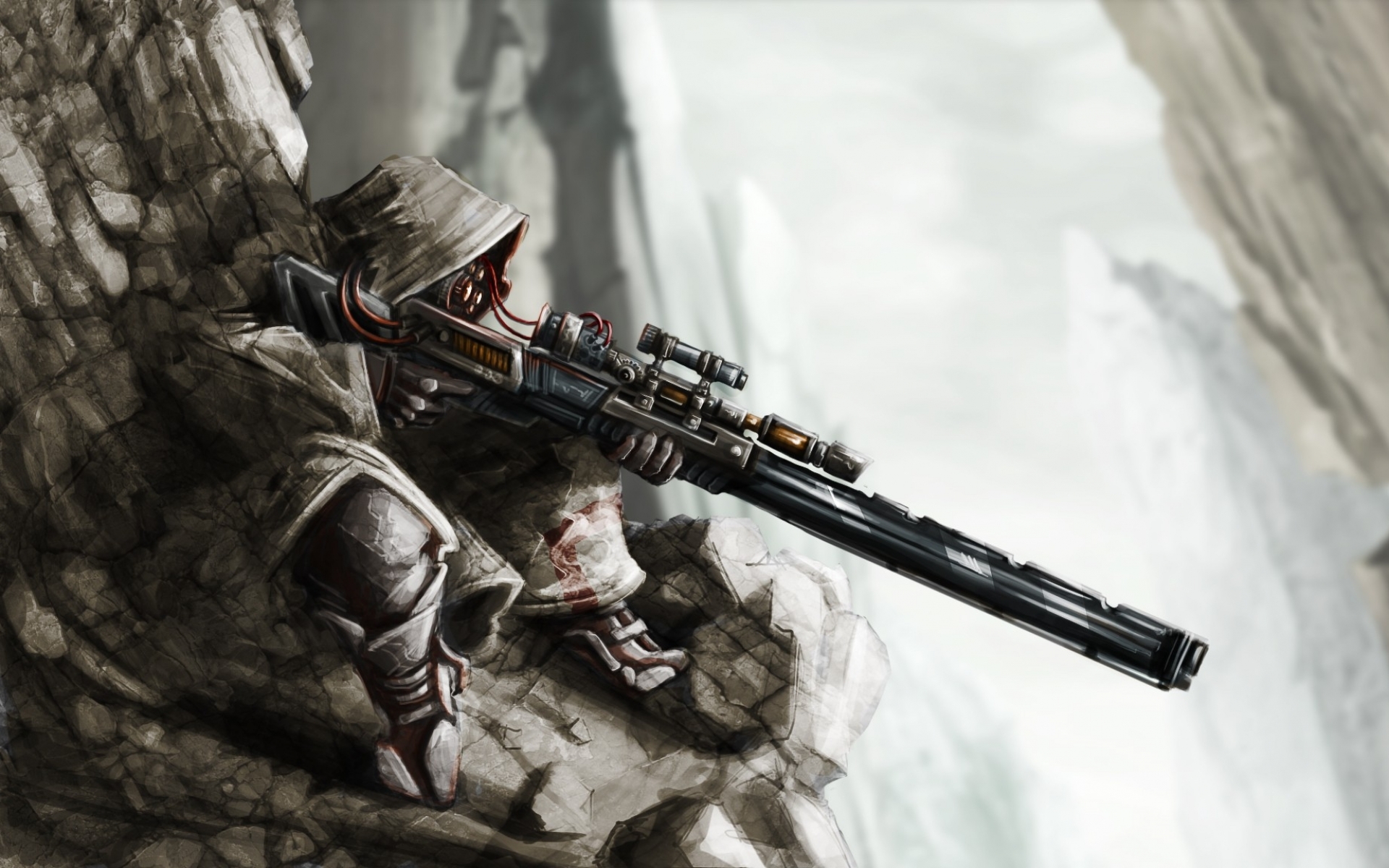

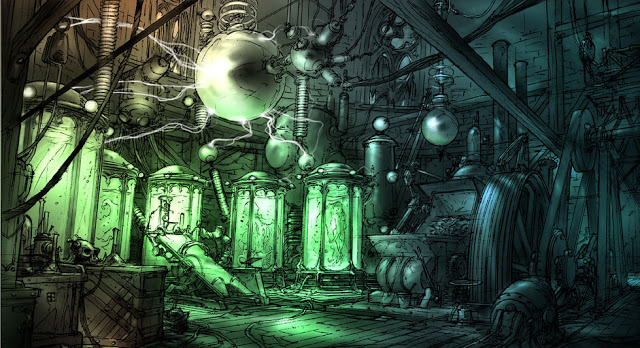

 Compromise and Conceit