• The final roll call
    The final roll call

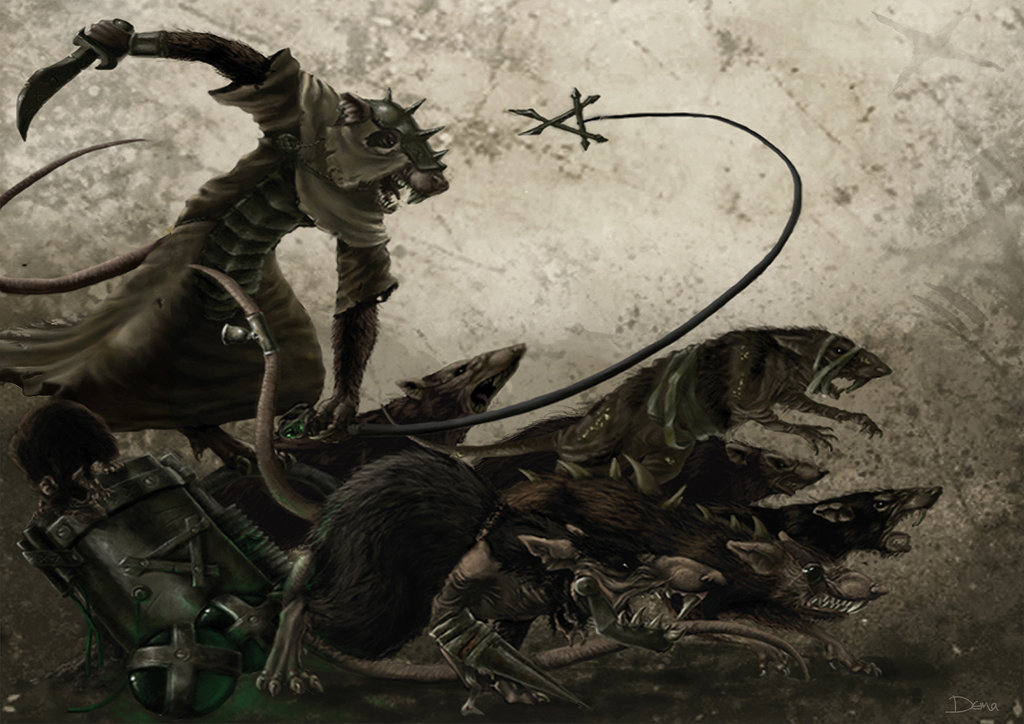
    So we were sent in by ‘is high and mighty lordship to kill the Swine Prince. Ain’t nuffink to it, ‘e says, not that ‘e’d know since ‘e don’t never go down there ‘isself, prefers to stay all lordy and poncey in the ‘ighest room of the inn but ‘e sure ain’t shy about sendin’ in others to clean up his sweet dad’s mess. “Singular and unsettling rumours abound,” says ‘e in ‘is oity-toity way, “Of an experiment of my father’s that went awry, and in the doing of it trapped some antediluvian outsider in the grossly misshapen body of a tortured pig. It falls upon thee – ” oh yes ‘e likes ‘isself some Shakey Spear does our lordship, ” – to cleanse the warrens of this foul monstrosity. Be warned, it is accompanied by a much smaller, runt-like pig that it is said to hold very dear and precious, and one should not harm the little one until the big one is done for. Or so I have heard in talk about the hamlet, from those who came before you.”

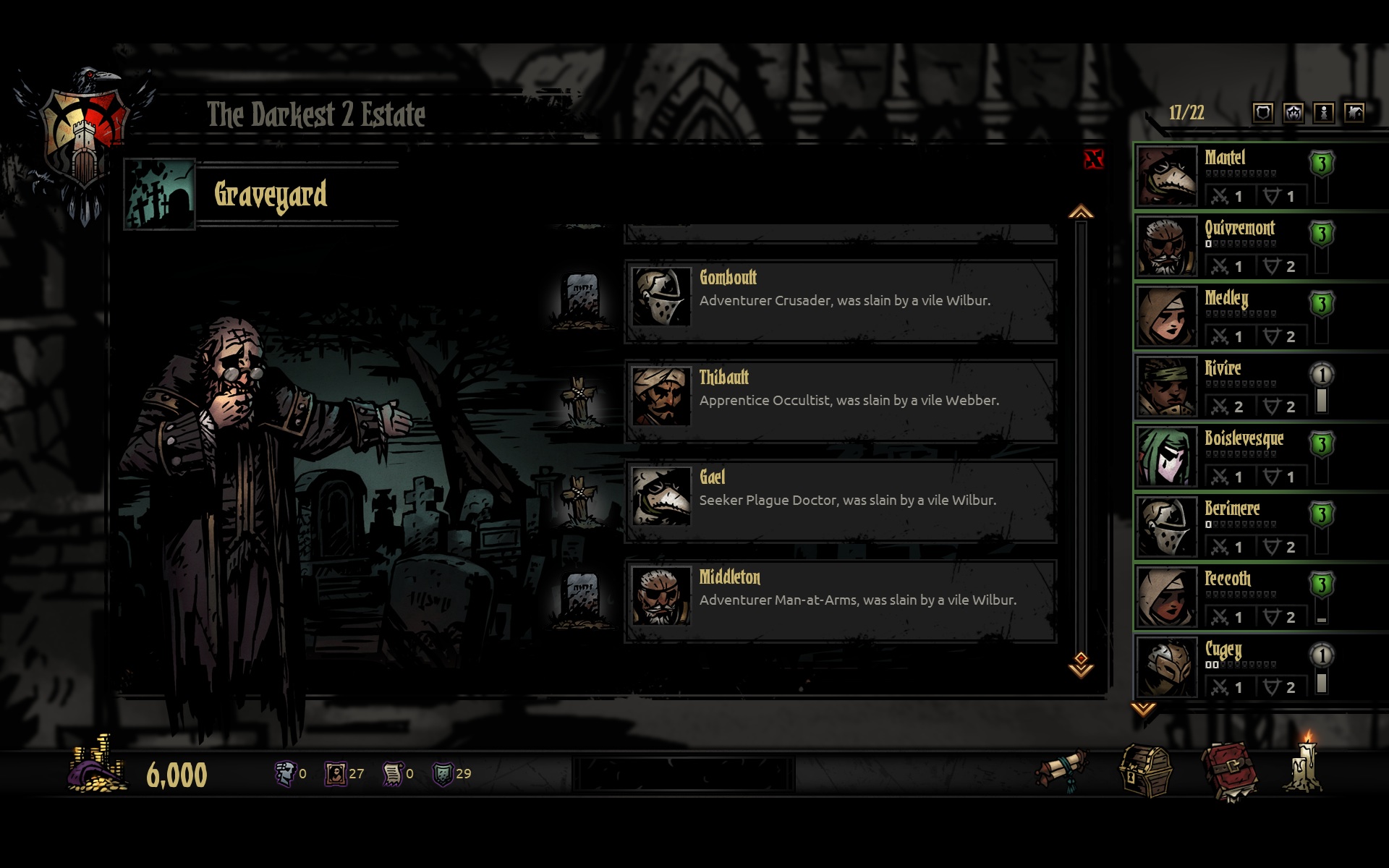
    So that’s that, there’s the promise of a fat stash of glinties and a nice little magic ring when we get back wiv the Swine Prince’s ‘ead, so off we go. It’s a slightly dodgy marchin’ order this day because all the Vestals are down the brothel lickin’ wine off the tits of their fallen sisters, and the last crew wot got back from some big reccie job think this kind of slaughter and jiggery-pokery is beneath them, everyone says they’re gearin’ up for an attack on the Necromancer ‘isself. Wot means it’s me, Gael, your very one and only Plague Doctor; then there’s Thibault, the Occultist wot gives me the creeps and gets a leery look in ‘is eye every time ‘e calls down those ribbons of extra-dimensional ‘orror; then we’ve got Gomboult the Crusader, ‘andy chap to ‘ave around in a pinch though ‘is sermonizing and heretofores get a little bit tiring down there in the deeps; and at the front we’ve got Mr. Middleton ‘isself, Man-at-arms, wot everyone says made a motzah smackin’ Russky arse in the Criminalean, though I don’t credit it myself – methinks ‘e’s put in a few years’ time at the bars and flophouses round the Criminal Sea, but not so much elbow grease on the front line, if you get my drift.

    The plan woz pretty simple stuff. Mr. Middleton and Gomboult stand at the front, whackin’ anythin’ wot gets in arms reach; Thibault stands at back where every Occultist luvs to be, workin’ ‘is Wyrd Reconstruction on anyone wot ‘as the misfortune to get bit, and occasionally ‘aulin’ those extra-dimensional death ribbons out and whackin’ the enemy’s arse with ’em – ‘e calls it Abyssal Artillery, but I just call it the Tentacle Slap. Thibault’s Wyrd Reconstruction works a charm for stitchin’ up big cuts but it’s a bit … unreliable, and sometimes it, ah, it makes ya ooze, know wot I mean? But I’ve got a sovereign remedy for when mortal bits come unstuck, so on the occasion that ‘is Reconstruction goes wrong I ‘astily throw on a bit of Battlefield Medicine, and when I ain’t patchin’ up Thibault’s extra-dimensional mistakes I’m givin’ the same sovereign remedy for acid, poison and other cuts – ’cause my medical skills are rough but effective, don’t ya know? – and the rest of the time I’m lobbin’ little grenades of unpleasant goo at wotever takes my fancy.

    And there’s a lot down there in the warrens that you want to cast some acid on, if you get my drift. This day it woz extra mean, wiv all manner of nasties crawlin’ out of stone and sewer to whale on us, but we made it right through a real long set of tunnels to where we fought that old pig might be. Sad to say, but Thibault got done in by a nasty little spider right outside the Swine Prince’s lair, just took one dram too much spit from the nasty bugger and I didn’t get to ‘im in time. ‘E’s an Occultist too so ‘is eyes went real wide right before ‘e went, and he started beggin’ us “No! They’re coming! Don’t let them take me! These aren’t the angels I was promised!”

    ‘S kind of funny when you think about it, innit? Those Occultists make some kind of skeezy deal with the Big Gentleman At The Tentacle Farm, and ‘e promises ’em glory and power and greatness, but they die faster ‘n anyone else and they all do that little chorus ‘o regret right before the end. Whenever a new one turns up I wonder if I should point out to ‘im my ‘istory of watchin’ his colleagues die gibberin’ in terror at their Inky Boss, but I just don’t ‘ave the ‘eart, me. No, and I figure they can’t back out o’ the deal anyway – why spoil it for the little blighters? Maybe if they didn’t all come from stinkin’ Eden College, wiv airs o’ nobility about ’em, I might be a little more forthcomin’ wiv me tears, but I can’t bring meself to shed none for such as them. Still, he stitched me up good a few times, didn’t ‘e? Shame to see ‘im go like that, all smeared wiv spider goo and smokin’ and cryin’ and beggin’ his mummy to save ‘im from the big scary octopus. You’d ‘ve thought his teachers might ‘ve shown ‘im a picture of his boss, eh?

    Anyway so once we’d given Thibault a proper burial (well akchually we woz pretty close so we just stripped ‘im of ‘is stuff), we girded ourselves and went in for the Big Pig. ‘E was slummin’ it inside this mighty girt cave wot woz completely stinkin’ of pig shit and dead bodies and there woz a dozen corpses and ‘im and ‘is little bum-buddy chowin’ down on the remains ov wot looked like a grave robber though I can’t be sure, on account of it bein’ ‘alf-eaten and smeared in pig shit. But Mr. Middleton, ‘e’s all gee’d up for a stoush after Gomboult gave us all a mighty inspirin’ speech at the camp, and so ‘e yells “I’m gonna make you squeal like a pig under a gate!” and then the shit-show’s on for real like, innit? And the little pig-runt goes and cowers be’ind ‘is master, who is like this towerin’ pig from another dimension, my friend, ‘e is absoLUTEly monstrosterous. ‘E must ‘ave been 20 feet ‘igh and 10 feet wide, and ‘e was standin’ on two legs and ‘oldin’ this massive meat cleaver wot could carve a whale in twain, and ‘e’s got this feral glint in ‘is massive piggy eye, and ‘e don’t squeal but grunts and roars and comes shufflin’ forward but Gomboult and Mr. Middleton are all gee’d up for a fight an’ let me tell you it was quite a stoush. But the little runt pig would throw mud on us and wotever one the mud stuck to, the Swine Prince would rain a storm of meat-chopper death on ’em, and I ‘ad me work cut out keepin’ ’em patched up enough to go back into the fight.

    We did wot we were warned and didn’t ‘it that little runt, though once or twice Mr. Middleton let rip wiv a sly spankin’ just to remind ‘im whose boss, but the little runt didn’t do nothin’, and we woz startin’ to look good. But then the Big Pig dropped such a storm ‘o choppery on us that you would not ‘ave seen your way through it no matter wot, and when the mud and pig-shit ‘ad settled both Mr. Middleton and Gomboult were lookin’ seriously the worse for wear, and there were bits of ’em fallin’ off. I patched up Gomboult, and Mr. Middleton went valiant back into that fight, and got in a big ‘it, but then the Pig rained down more o’ that stompage just as Gomboult was wadin’ back in, and when the festerin’ slime was cleared Mr. Middleton ‘ad become unfit for ‘uman consumption, if you get my drift. ‘E woz just bits of old campaigner, rainin’ down on us. But this made Gomboult quite the mad Crusader, mortal wounded though he woz after that last rain ‘o death, and before I could patch ‘im up ‘e ‘ad charged forward and let rip such a blow wiv ‘is sword that the Swine Prince didn’t ‘ave no chance, and fell dead as a Sunday sucklin’ roast, right there at our feet. Victory!

    But then no sooner ‘ad we felled the big bastard than that little pesky runt came heelin’ over the corpse, set down in front of us and let rip with the most god-awful pig squeal you ‘ave ever ‘eard. And wot wiv Gomboult bein’ in a right mortal state, he just upped and died there on the spot. That squeal ‘ad some infernal power in it, ‘coz it turned my legs and arms to jelly and I couldn’t do nothin’, not even run away through all that swirlin’ mud and Middleton mush. And ‘e just kept screamin’ at me till I passed out!

    So I’m glad you found me when you did, sirs, ’cause it’s mighty stinky in their and I could’a drowned in the mud, but I’m sad to tell you I’ve got nothin’ left in me. I’m done for, I’ve already lost most of meself in that there mud. You’ll find the Swine Prince just down there in the hollow, dead as a demon doorknob and stinkin’ up ‘is own mud pit. As for that runt, if you find ‘im, kick ‘is arse for me. But I’ve got nothin’ left to run on. I’m just one more corpse for the wagon now …


  • Last night over a debauched dinner with two old friends, Drs. A and B, I made one of those stupid long-term bets that bloggers inevitably get sucked into. My specific bet was that the Republican party will not recover from Trump, and will fall into a long period of chaos and dissonance that will prevent them from holding the presidency for at least three election cycles. The bet was with Dr. B, with Dr. A as witness, and the prize is a 1.8 litre bottle of sake for Dr. B if I’m wrong, and a 6-pack of craft beer from whatever country they’re living in if Dr. B wins. In order for Dr. B to win the Republicans simply have to win any presidential election in the next three cycles – so she could win next year, or in 5 years, or 9 years. I have to wait the full 9 years …

    So it was a stupid bet, but I thought I’d just state my reasons here for the record.

    My basic reason is simple: the Republican party has become the party of grifters. They’re not serious about government or about doing better for the country, but serve to funnel donor money to the apparatchiks of the party, and as political backbone for a system of rorts and scams based on websites and shock jocks that sell all manner of stupid stuff to people with a paranoid authoritarian bent. In their incarnation as politicians they basically do the bidding of a small (and increasingly shrinking) group of families whose tax and regulatory interests they serve thoughtlessly, and in exchange they get a lot of money and an easy life. They don’t have to be serious about government or policy to fulfill this role, since ALEC will provide them with cookie-cutter legislation on behalf of their donors, and they simply need to ram it through their local congresses. This is why the modern Republican party has no alternative to Obamacare and feels no pressure to come up with one, and has simplistic and one dimensional solutions to the Iranian nuclear program. Their job is not to come up with policy that helps Americans or the world – it is to preen and pose for their base, while passing a few pieces of legislation that matter to their donors, specifically about winding back environmental and labour regulation and lowering taxes.

    The problem is that their base want specific outcomes, not many of which align with what the donors want, and this primary season Trump has made this conflict between base and elite clear. The donors want cheap Mexican labour but the base want them out; the donors want to abolish social security but the base wants to keep it. Trump doesn’t care about what the donors want because he’s rich and crazy, so he can tell the base what they want to hear, and in so doing he has revealed just how big this gap is between donor and voter expectations. This has created a huge management problem for the Republican elite, who now face a rebellion they can’t quell simply by pointing out that the Democrats are the real enemy.

    If you read the writings of the internet Republican movement – at web sites like Red State – you will see this conflict constantly simmering beneath the surface. Almost all the writers and commenters at Red State and the National Review Online see the Republicans in Congress and the House as sell-outs, who are betraying “conservative” values at every turn. They want to see the Republican party reformed and forced to do what the base wants, and they are aware that the party’s elites are captive to Wall Street and K-Street (which I guess is like a nightmarish version of Sesame Street, or something). Their problem is that the only person who has bucked the money trend and actually tried to present policy that matches what they want is a royal, flaming arsehole, probably an actual fascist, and someone who is so completely unelectable that their party is toast if he wins the primaries – and he will run independent if they don’t give him what he wants.

    This is the big part of the Trump problem: in giving the base the red meat they really want he shows the party up as a party of racists and outright fascists, and indicates a complete lack of respect for religious conservatism, constitutionalism and decency. But the base love it. Ann Coulter has already stated that she doesn’t care if he performs abortions in the oval office so long as he deports all the Mexicans. Lots of other people seem to be falling in line with him despite these apostasies that the online Republican movement think make someone not a real “conservative.” What Trump is really showing is that the Republicans have built an electoral coalition that values racism and fascism over real conservatism or religious principles, and his behavior is so outrageous and indecent that he is going to lose them the election for sure if he wins the primary, and probably even if he doesn’t, because the things he is saying make him unelectable to the vast majority of Americans.

    People used to say that the Republican party had a demographic problem, that it was increasingly the party of old white men and the growth of hispanic and black populations was going to sink it. I think Trump’s ascension shows that, more than a demographic problem, the Republican party has an arsehole problem. Through a calculated strategy of racist dog-whistling and attacks on the poor and the frail they have attracted the arsehole vote and lost the vote of the rest of the population. This is the natural extension of being lazy politicians: every election they had an opportunity to present a genuine policy position and fight on the issues, but since their only real purpose is to be the paid attack dogs of a small clique of rich people, and they’re a pack of grifters, why bother? It’s easier to appeal to racism and stupidity and lazy ideas, and if you lose who cares? The donors have to come back and pay you again, because corrupting a political party is expensive and difficult (and probably the donors are stupid too).

    This lack of seriousness doesn’t stop at the party itself though, but also infests its entire extra-political intellectual apparatus. This is why at Red State you can find big sections linking to Human Events, an execrable conspiracy-theory site. This is why Mark Steyn is in a libel case with a respected scientist, and why the last Supreme Court challenge to Obamacare was so absurd. It’s also the reason that they can present “More guns less crime” arguments as if they were serious, and their supposed intellectual heavyweight organizations like the AEI and the Heritage Foundation are solid global warming deniers. Why bother being serious about a political policy if you just exist to rip people off?

    The only exception to this is the religious fundamentalists, who genuinely believe the insane policies they’re being fed, and who in any case will tolerate any manner of stupid so long as they can win incremental battles on abortion and sexuality. They’re the arsehole party’s useful idiots, but recent defeats in court have started to split them from the Republican mainstream too. The religious part and the insane part are starting to fall out with each other, and Trump is going to drive a wedge between them by giving the arseholes what they want, and leaving the religious nutcases to hope for crumbs from his legislative table.

    This is the natural consequence of pursuing a policy of empty-headed, immature and selfish tax-fetishism in service to a few rich oligarchs. After Bush jr they faced a fork in the road: repudiate his war-mongering and try and rebuild the party around his compassionate conservatism, perhaps starting from a genuine attack on the healthcare issue; or take the donor money and become the party of tactical tax-reduction. The crazy campaign finance laws helped speed up the process, but for a party that had hollowed out its intellectual and policy base through reflexive opposition to workers’ rights and global warming denialism, it was obvious which path they were going to go, especially after their “serious” thinkers made the hideous mistake that is the Iraq War.

    From here they can stumble on, attempting to reconcile the stupidity and insanity of their primary season with the needs of a general election, never winning and looking dumber and dumber every year; or they can split and spend years in exile trying to rebuild. Either way, even without the so-called demographic problems they face, they are looking at a long period in opposition until they can reform. I’m guessing another two double terms of electoral failure at presidential level, and ultimately a long period of failure at the congressional level. That is, 8 years of Clinton and then 8 years of whatever Democrat replaces her. If Sanders gets selected over Clinton and the leadership find a way to get Trump out of the way before he ruins the reputation of every candidate, then they might be able to win on the back of a Fox News-driven fear campaign. But that’s a series of fortunate events that they aren’t going to see – in my (distant, largely ignorant) view, a more likely scenario is Sanders being selected by the Democrats and Trump going third party after a bruising primary season, giving Sanders an easy run.

    In any case, my judgement is that the Republicans are screwed, because very few people are going to Vote 1 Arsehole. Prepare to welcome your Democratic Overlords, America! And send me your craft beers while you still have your freedom …

  • This week’s New England Journal of Medicine has an opinion piece calling for a review of approval policies for GMO crops. This article, co-authored by a medical researcher and a crop scientist, does not call for a loosening of approval processes to enable more rapid movement of GMOs onto the market; rather, it calls for the approval process to be revisited to take into account increasing evidence that GMOs are bad for human health and bad for the environment. The article makes three main recommendations:

    1. “the time has therefore come to thoroughly reconsider all aspects of the safety of plant biotechnology”
    2. The EPA should “delay implementation of its decision to permit use of EnlistDuo”, a specific herbicide that has been developed to combat herbicide resistance due to GMOs
    3. GM foods should be labeled to enable consumers to reject its use

    The article basically makes the point that past assessments of GMO crops’ impact on human health were limited to a few studies that assessed the direct effect of genetically modified material on the human body, rather than the much more serious issue of over-use of herbicides; that there is new evidence that the herbicides being used on GMO crops are carcinogenic; and that the growing problem of herbicide resistance is leading to the reintroduction of dangerous chemicals. The article states that there are now 100,000 acres of arable land in the USA that are infested with herbicide-resistant weeds and the use of Glyphosate has increased by a factor of 250 in 40 years. Past assessments of GMO safety did not consider the dangers due to herbicides, and new evidence suggests that Glyphosate is a carcinogen. Thus GMOs have gone from a wonder crop to a hazard, both to the future of farming (through the spread of herbicide-resistant weeds) and to human health, in a very short period of time. It should also be noted that herbicides and pesticides have huge environmental effects outside of human health – such as the dead zone at the mouth of the Mississippi river – and, as this Lawyers, Guns and Money blog post describes, while the health risks of herbicides entering the human food chain may be low due to good processing and quality control, they pose a much, much greater occupational risk to the farmers and farm labourers who work with the crops. As more herbicide is used these farm-gate risks increase.

    The environmental movement has been making the case against herbicide and pesticide resistance since at least the time when Rachel Carson wrote Silent Spring, and this case is also linked to the growth of antibiotic resistance (the main cause of which is use of antibiotics on cattle). Anti-environmentalist rhetoric consistently ignores this issue, preferring to paint the opponents of industrial spraying and GMOs as kooky and anti-science despite the strong scientific evidence that these chemicals and crops need to be deployed very carefully. A classic example of this deliberate ignorance of science is the campaign to have Rachel Carson declared “worse than Hitler” because her efforts to ban DDT led to the deaths of millions of children due to the end of anti-malaria campaigns. This rhetorical drive, which is still commonly seen in the anti-environmentalist movement, is ignorant on so many levels: DDT is not banned for anti-mosquito use, but is not used because mosquitos developed immunity rapidly due to DDT overuse, and modern campaigns use targeted spraying of an actually effective chemical in a way that balances the risk of resistance against the health benefits. The loss of DDT from our arsenal of anti-malaria weapons arose precisely because of its over-use in agriculture, and we’re seeing the same phenomenon occurring with Glyphosate; yet opponents of the GMOs at the root of this problem are described as “anti-science” by people who continually and deliberately ignore this issue. Just as DDT was simultaneously causing harm in the environment and to human health as its target vectors were building up resistance, so Glyphosate may be causing harm to humans and the environment, while its over-use is rapidly making it ineffective in its target ecological niche, and requiring the introduction of more types of more dangerous herbicides to supplement it.

    The world is fast entering a period when we are going to need every tool at our disposal to ensure maximum crop yields and prevent major epidemics of malnutrition. Global warming and increasing pressure on water supplies are going to create a perfect storm of reduced yields, increased salinity and increased pest pressures at a time when some of our best tools to ensure high yields are being over-used and rapidly becoming ineffective. Pharmaceuticals and chemical products like herbicides, pesticides and antibiotics need to be seen not as some kind of magic cure-all that can be thrown at any problem no matter what, but as precious resources, that need to be carefully monitored and conserved in order to ensure they retain their potency. We also need to recognize that they have serious environmental and occupational health risks that need to be taken seriously. This means paying careful attention to the science and, yes, listening to the objections of opponents of these technologies.

    I’ve said before on this blog that the environmental movement has a long history of being right about really serious threats to human health, from overuse of insecticides through the clean air act and the ozone layer to global warming. It isn’t always right, but dismissing the concerns of the environmental movement out of hand because of foolish stereotypes of the movement as anti-science and lunatic hippies is a stupid and counter-productive move. In the battle of science and GMOs it is the FDA and the agribusinesses that have been proven wrong; the anti-GMO movement has, in fact, been correct about the biggest threats to human health and well-being that GMOs pose. GMOs hold a lot of promise, and they’re going to become more important as we fight to maintain crop yields in an era of record temperatures, reduced access to water and pressures on arable land. But in order to realize that promise, it’s going to be necessary to listen to the environmental movement and take their concerns seriously, rather than dismissing them as anti-science when in fact, once again, it is the opponents of the environmental movement and the supporters of the agriculture lobby who are deliberately ignoring the science. It’s disappointing that it has taken this long for complaints about GMOs that were being aired by environmentalists years ago to finally make it into the pages of medical journals. With a better, more scientifically thorough approvals process and greater caution, we might have less GMOs in use, but they would be much more likely to be living up to their promise.

  • Not militaristic at all ...
    Not militaristic at all …

    I am not a big fan of baseball, and I didn’t enjoy my high school days overmuch. Combining these two seems like a recipe for a bullying and unpleasant experience, and definitely not something I would have any interest in.

    The Koshien, however, changed my mind about high school baseball. The Koshien (甲子園) is an annual high school baseball contest that takes place across all of Japan, and comes to its glorious, bittersweet climax during the hottest months of the year – this week, in fact, in mid-August. High school baseball teams compete to become prefectural champions, and champions from each prefecture – two from Tokyo – then converge on Kobe in August for the finals. The finals are a knockout, with four matches played every day to whittle the teams down from 48 to 32, then through knockout rounds to the final, which happens to be tomorrow. Each match is 1.5 to 2 hours long and is played under the punishing August sun, in extremely harsh conditions[1]: temperatures above 32C (often over 35 this year!) and very high humidity. Today, for example, was 32C with 82% humidity and much, much more pleasant than last week when the quarter finals were being decided. The teams have to play continuously too: the semi final was today and the final is tomorrow, which means that the pitchers in the final will have been playing every second day now for a week or more in this heat.

    When I first saw the Koshien a few years ago I dismissed it without watching it. Baseball in Japan is renowned for its bullying atmosphere, which verges on militaristic at times, and the idea of making schoolboys of 16-18 years of age play a contest in the middle of the day in this heat is a classic representation of just how callous and brutal its culture is. But this year one of my students revealed to me her passion for it, showed me the website and sang the praises of its passion and energy. Since I had a week off for the summer break I thought I’d check it out – and I was hooked immediately. It’s amazing.

    It isn’t just the contest itself that is great – in fact that’s barely part of it at all. Rather, the culture and the style and excitement of the entire series gives it a feeling that ordinary baseball just can’t get. Similar to cricket at its best, it has its own sound and pace, and the crowd are as much a part of the event as the teams. Every team brings a huge contingent of supporters, wearing school colours and usually including a school band and cheerleaders, who make a constant racket throughout the game. This highlight reel is a good a example of the sound of the game – the school song (or a supporter’s chant) playing in the background, drums, pipes, cheering, and the flash of pom-poms as the cheerleaders go wild on a home run. At the end of the reel you can just hear the announcer in a classic, high-pitched voice introducing the next batter, with the honorific “kun” at the end to remind everyone that these heroes of ours are actually just high school kids. During the match the commentators prowl the stands interviewing fans, and showing the world what ingenious support methods the schools have thought up; they read support messages from school children and adults around the country, and every day they have a different pro-baseballer on to help with the commentating. This year the commentators have identified a man they call “Rugger san” (Mr. Rugger) who sits in the same place directly behind the batter in the front row, and is so named because he wears a rugby shirt every day – he has been there the entire two week period. It’s a serious, extravagant two week festival of sport, very similar to the Ashes or Sumo in the strength of its associated support culture, its deep connection with a season, and its importance to ordinary sports fans. But in this case it has its own bittersweet feel, because these are boys near the end of high school, who are going to get one – maybe two, for the younger ones – shots at glory, then graduate and move on with their lives and leave this fleeting moment of fame and joy behind them forever.

    And this is where the Koshien really makes its mark, because it captures something about the strange and furious passion with which Japanese people look back on their high school days. From the west looking in we are often led to believe that Japanese high school is a terrible place, strictly regimented, heirarchical, full of bullying, where the creativity is drained out of little humans ready to turn them into drones for Japan’s massive corporate machine. But Japanese people see it very differently – to them High School is a period of freedom, openness, and passion, this sunny couple of years of freedom before they hit the regimentation of the outer world. High School is where a lot of Japanese people experience first love, and it is also the time when they form deep bonds of friendship that will last them through many years, even though they will likely move away from home for university and work, and only see those old high school friends once a year. This disparity between the western view of Japanese school and the local view is really striking – Japanese people I speak to are very often deeply nostalgic for their high school days, which they describe to me as a time of freedom and happiness. This is especially noticeable when you mention the Koshien to anyone who is old enough to have begun forgetting their high school days: they will become instantly, powerfully nostalgic, and it’s clear that the word conjures up sounds and scenes that remind them instantly of everything they left behind when they left school. On the weekend I mentioned that I had watched the Koshien to my hairdresser, and even though he was a rugby player at school[2], not a baseball player, he immediately became misty-eyed, singing the praises of the event and its special meaning in the same way as my student.

    This passion I think also explains the special role of high school in anime. From the outside looking there appears to be a strong strain of schoolgirl fetishism, but there’s much more to it than that – anime and manga is also packed with stories about male high school sports clubs, which to me seem like they must be singularly boring tales, and also love stories about high school students. TV shows and manga that feature these high school groups and love affairs and dramas are actually appealing not to some weird fetish for children, but to a strong, nostalgic streak in adults. High school is also the setting in which first love occurs in Japan, and at least historically may have been the only time when Japanese people were truly free to form partnerships out of love rather than convenience and good sense. This is why so much of anime and manga incorporates this setting, and this is why the schoolgirl’s uniform and the schoolboy’s baseball kit are so powerfully evocative in this medium. Watching the Koshien helps to make sense of the power of high school in Japanese popular culture. The Koshien packs all those years of yearning for the change to come, of waiting for something to happen, that sense that you are someone special who is ready to bud and explode into the world, into two weeks of intense emotion and self expression, all while sharing that deep bond with your peers that only late adolescents can genuinely and uncynically revel in.

    And so, it can even make baseball interesting. Truly, Japanese high school students have magical powers! The final is tomorrow at 1pm Japan time, and I think it can be viewed live on the Asahi TV website. It’s the 100th anniversary of the Koshien, the final contest is between Kanagawa and Miyagi prefectures. Tune in, and enjoy the unrestrained passions of high school once more!

    fn1: People who haven’t spent time in Japan in August tend to poo-poo reports of just how oppressive the heat is, but once one has spent a day here in that season, and wilted under the intensity of the heat, one readily adapts one’s view. Australians really aren’t used to the humidity, so for example although I grew up in a town where daytime temperatures are routinely 8C hotter than Japan in summer, without airconditioning, I find Tokyo in summer far worse. It’s not just the urban heat island effect, which in Tokyo is extreme: basically it’s as if a huge mass of hot air rolled in off the ocean at the end of July, squatted down and decided to stay. There is very little wind, night time temperatures do not drop below 25 or 26 C, and usually there are very few clouds, but it is still so hot that everyone sweats just sitting still. It’s exhausting at 32C, but when it hits 35C it’s potentially dangerous …

    fn2: In Japan hairdressing is a macho job and male hairdressers are rough, macho figures, so this makes perfect sense.

  • Today is the 70th anniversary of victory in the Pacific (VP Day), when Japan surrendered to allied forces. For the USA, UK and Australia this marked the end of four years of merciless war; for China it marked the end of about 20 years of colonial aggression on the mainland; and for Korea it represented the end of 35 years of colonization by Japan. For the rest of the Asia-Pacific region the end of the war brought on in many cases a new era of instability as colonial governments collapsed and the independence movements of south and south-east Asia took off. The start of peace for Japan was only the beginning of years of civil war, colonial confrontations and communal violence in the rest of Asia, and in comparison to the slaughter and chaos visited on these countries before and after the war ended, the other allied powers’ experience of the Pacific war was relatively pleasant. Still, Australians have many reasons to mark VP Day as a major event in our history, both on account of the huge loss of life sustained, the cruelty experienced by Australians at the hands of Japanese captors, and the profound political implications for Australia of the collapse of British colonialism in Asia, and the UK’s inability to protect Australia (or even win a single battle against Japan!) Japan’s early, complete and ruthless victories over the supposedly superior army, navy and air force of the UK shook the foundations of the UK’s colonial project and brought on the rapid collapse of not just British but also the Dutch, French and Portuguese colonial project. For Australia that meant a major reorientation of our political outlook, first towards the USA and then (much later) towards Asia.

    While the long-term political consequences of world war 1 were a second war in Europe, the holocaust and the cold war, the long-term political consequences of the Pacific war were decolonization, rapid development, and ultimately a long peace and relative stability in all of Asia, presided over initially by US power, then by a resurgent and determinedly non-colonial Japan, and now by the three great industrial powers of China, Korea and Japan – once mortal enemies who now have a shared goal of peace and development in all of Asia. Seventy years after Japan’s colonial ambitions were thoroughly repudiated, at great cost to China and Korea, they share a broad set of goals in the region. These goals are disturbed primarily by only two issues: border disputes that no one is really willing to go to war for, and the issue of Japan’s acceptance of its past crimes. Every VP Day there is renewed controversy about exactly how much Japan admits past wrongdoing, and renewed calls for an apology for past acts, and it was expected that on this day especially the Japanese government might do something special about this.

    Unfortunately Japan’s current prime minister is a historical revisionist like no other in a long time, and is playing to a right-wing rump at home that prevents him from properly acknowledging Japan’s guilt. He is exactly the wrong prime minister to be making statements of contrition, but it was him who had to give a speech, widely reported, in which he stated that he did not want Japan to have to continually make new apologies. Seventy years on, he wants to draw a line over the past, and look forward to a world without war. Such lofty ideals might sound better if they were coming from someone who was not intent on denying the truth of the comfort women issue, and who was not trying to reform Japan’s constitution to enable this peace-loving nation to deploy its (considerable!) military in joint self-defense actions.

    But putting aside the political background of this particular PM, is he actually wrong? Japan has made many apologies over specific incidents and general wartime aggression and violence, and in particular on the 50th anniversary of the war made an apology with the full backing of the Cabinet (the Murayama statement) that is widely seen as an official apology. This statement has been repeatedly reiterated and referred to in subsequent dealings with the affected nations, and at other VP Day events (including in 2005). Abe did not explicitly reference that statement, but he did implicitly endorse it when he stated that “Such position articulated by the previous cabinets will remain unshakable into the future”. He went on, however, to make clear that he thinks that Japan should stop continually apologizing, while remaining aware of the sins of its past and endeavouring never to repeat them:

    In Japan, the postwar generations now exceed eighty per cent of its population. We must not let our children, grandchildren, and even further generations to come, who have nothing to do with that war, be predestined to apologize. Still, even so, we Japanese, across generations, must squarely face the history of the past. We have the responsibility to inherit the past, in all humbleness, and pass it on to the future.

    This statement is being taken by some in the media as a repudiation of past apologies and a statement of intent to forget the war, but I don’t think it can be seen that way at all. It’s simply making the obvious point that when a population has apologized, and is no longer connected to the people who did these things, there comes a point where you have to stop expecting remorse to be a key part of how they memorialize those past mistakes. Instead Abe proposes that future efforts to remember the war be focused on better understanding of the events of the past, and stronger efforts to build a global society that does not or cannot seek war to resolve economic or political problems.

    As a citizen of a nation that has only recently apologized for past wrongs that were committed recently enough for a large part of the population to be connected with them, I think he raises a strong point. In 2008 the Australian federal government apologized officially to the living Aboriginal people known as the Stolen Generation who had been stolen from their families by commonwealth policy, and also made a broader statement of recognition of guilt for genocide. This apology came after long years of campaigning (in which I as a young Australian was involved) and a broadly-supported reconciliation movement which wanted to see not just an apology but full recognition of Aboriginal people’s history and the history of genocide against them, and proper compensation where proper compensation could be given. This reconciliation movement was tied in with a land rights movement that saw victories and defeats but was built on a fundamental acceptance of the role of white Australia in stealing land from black Australia and benefiting from that theft.

    I don’t think at any point that when we were campaigning for that Apology, we ever intended that the government should repeatedly apologize and continually be forced to officially admit its guilt in some public and formalized way, even as it continued to work on development and welfare improvements for Aboriginal Australians. We saw the Apology as a moment to convey acceptance and recognition, and … well, to say sorry. There is discussion about formalizing a national Sorry Day, but this wouldn’t be a day intended to force every PM to continually reiterate these apologies; rather, it would be a day of recognition of the past, with local events intended to revitalize and reauthorize our commitment to working together to make the future better. I think if the official Apology had been proposed as an ongoing, annual ceremony of abject admission of guilt, no one would have supported it and no government would have done it.

    There is something about apologies that requires at some point they stop. As a nation we can have ongoing recognition of the past, through e.g. national memorials, national days of commemoration, or whatever; but the requirement that every government reiterate the sorrow of its predecessors for deeds committed (ultimately) after all those involved have passed on (or been found guilty) doesn’t seem to be the right spirit of apology.

    In the case of Japan, the entire Asia-Pacific has VP Day in which to remember the events of the past, but that doesn’t mean that every VP Day the Japanese government should craft a new apology and seek forgiveness again for something that happened 70 years ago; rather, a simple reiteration of past statements, the laying of a wreath, perhaps the unveiling of any new local projects (Japan is involved in projects throughout the Asia Pacific, including research projects aimed at better understanding the war itself); surely, after 70 years and multiple apologies, it’s time that everyone recognized that the past is the past, what was done was done, and moving on from that past to make a better future requires that the events of the past not be raked up and made fresh, whether out of anger or sorrow?

    The same can be said of Australia’s genocidal past. There are ways still in which Australia hasn’t come to terms with that past, but mostly these are best confronted and expressed not through apologies but through concrete actions: efforts towards the finalization of land rights law and land reform; redoubled efforts to improve Aboriginal health, welfare and employment; and better incorporation of Aboriginal people into Australian political life. Although in many cases the problems that still exist are bound up with racism that needs to be confronted through political action (see, e.g. the recent shameful treatment of Adam Goodes), this political action needs to be expressly practical. This is exactly what happens in Australia now, too, I think – for example, Adam Goodes’ treatment was not tackled by further apologies, but by practical action by the football association and statements of support and respect from other football clubs and their captains.

    In my view apologies are a very important part of the process of political reconciliation and healing, but they should not be some kind of constantly-repeated process of formal self-flagellation because, while on an individual level an apology usually involves an explicit admission of personal guilt for a personal act, on a political and national level they do not represent guilt, as most of the people whose representatives are doing the apologizing were not responsible in any way for the crime. Political apologies are an act of recognition and restitution, not an expression of guilt. At some point the apologies need to stop, and life needs to proceed with practical political commitments and goals.

    So I think it’s time that Japan stopped apologizing, and the other nations that were affected recognize that Japan is a good neighbour, an exemplary world citizen, and a nation that is genuinely aware of and remorseful about its past crimes, with a real intention never to repeat them. Japan doesn’t deal with its past crimes in a perfect way, and indeed much work still needs to be done on understanding what Japan did (many records were lost), on coming to terms with the comfort women issue, and on dealing with the (frankly ridiculous) Yasukuni Jinja situation[1]. But these are all practical efforts, that will advance future understanding and respect much more than further apologies.

    I also think it’s high time that people in (and on occasion the politicians of) the USA and UK stopped criticizing Japan’s “lack of apology” and instead started thinking about doing themselves what Japan and Australia have done: Apologizing for their own crimes. There is a new willingness in India to make demands for recognition of Britain’s colonial crimes, but many British people – including most of their politicians – still cling to the repulsive notion that the colonization of India was an overall plus for its people. The UK, Holland, Spain, France, Belgium and Portugal all owe apologies for severe and extreme crimes committed expressly in the interests of stealing other people’s land. Similarly the US puts a lot of effort into memorializing Vietnam but hasn’t apologized for its murderous war, let alone subsequent adventures that killed a million people, and whose architects are advising Jeb Bush on foreign policy. Indeed, Kissinger and McNamara are still respected in the USA, when they should be in prison. I think it’s time that the world recognized that while the great crimes of the 20th century have been pored over and guilt ascertained and accepted, there are many slightly lesser crimes that go unremarked and unrecognized, and that a mature nation should recognize those crimes. Rather than seeing Japan as a recalcitrant revisionist, Japan should be seen as a model of how to acknowledge and atone for past crimes, that “better” nations like the UK and USA could learn from.

    A few other notes on Abe’s apology

    Abe’s apology, which can be read here, is extensive and, I think, quite powerful. He talks about how Japan lost its way and went against the trend toward peace that other nations were following, and explicitly blames colonial aggression for its actions in China. He thrice refers to the injury done to women behind the lines, giving a nod to more than just the issue of the comfort women but also to the general evil of rape as a war crime, and explicitly identifies the need to prevent this from happening in future wars. He also has some very powerful thoughts to add on the nobility of China and Korea after the war, when he states that Japan must take to heart

    The fact that more than six million Japanese repatriates managed to come home safely after the war from various parts of the Asia-Pacific and became the driving force behind Japan’s postwar reconstruction; the fact that nearly three thousand Japanese children left behind in China were able to grow up there and set foot on the soil of their homeland again; and the fact that former POWs of the United States, the United Kingdom, the Netherlands, Australia and other nations have visited Japan for many years to continue praying for the souls of the war dead on both sides.

    How much emotional struggle must have existed and what great efforts must have been necessary for the Chinese people who underwent all the sufferings of the war and for the former POWs who experienced unbearable sufferings caused by the Japanese military in order for them to be so tolerant nevertheless?

    I think this is a powerful statement of respect for how well Japan was treated after the war, and recognition that there is a great willingness on all sides of a conflict to move on from it despite great cruelties committed. I think also the paragraphs near the end of the speech, which start “We must engrave upon our hearts” are also very powerful, showing how Japan and the world can strengthen efforts to make sure that the crimes Japan committed are not possible anywhere in the world in the future.

    Also, I note that this apology is a Cabinet Statement so represents official government policy, not just Abe’s personal opinion. I think it’s a good basis to move forward, recognize that Japan did wrong, and accept that apologies should not and cannot continue forever.

    Instead of constantly dwelling on a world consumed by war, let’s work on building a world without it.

    fn1: I personally think that this problem could be solved best by opening an official national war memorial – Japan currently has none – that explicitly excludes the 14 war criminals, is non-religious, recognizes Japan’s war crimes and war of aggression, includes a memorial to the people killed in other countries by Japan, and has a high quality modern museum that accurately reflects the truth of the war. Then on some nominated day that isn’t VP Day, politicians can officially go there and pay their respects to the dead and officially, without controversy, reflect on what was, ultimately, a great tragedy for the Japanese people.

  • It's a kind of penthouse, I guess
    It’s a kind of penthouse, I guess

    Date: 13th November 2177

    Weather: Rainy

    Mood: Bored! The last two days have just been talking! talking! talking! That might be fine for all the crusty old men I hang around with but I’m a girl, I’ve got no use for all this talking! I need to fight and kill things! I don’t know why Coyote thinks he has to be the centre of the universe all the time with his talking and negotiating and fixing things. What about me!?

    Outfit: Super-short ripped-off denim shorts and a t-shirt for an old Oil Age metal band that says “Killing is my business… and business is good!” I’m lounging around at the back of the Haven conference room waiting for everyone to finish talking about remnant husks and ghost chalk dealers and blah blah blah so that we can go kill some people, and I’m wearing the t-shirt in hopes that they’ll get the hint. The only hint so far is Pops raising his eyebrows and suggesting I shouldn’t attend the meeting in my underwear. Sigh! These old men talk too much and know like absolutely nothing about fashion!

    News: Some of the bigger street gangs in New Horizon seem to have decided that picking sides in a war is a good idea, so the Transcendents (the trans-humanist weirdos who look more like luggage than people) have sided with Biotechnica, of course, and the Imperfectionists have made a deal with Arasaka which apparently has some subsidiary corp that makes a profit out of selling idiocy, because it has this Japanese Zen body-improvement purity shtick going on that of course every imperfectionist is in love with. I think all street gangers just have daddy issues, because as soon as a skeezy old dude in funky samurai armour rocks up to tell them they can become all historic just by doing his bidding they all bow down and praise the laces on his faux-ancient sandals. That kind of silliness is probably also why this new group of elitist vigilantes, the Inquisitors, have hit the street and started beating up anyone with cybergear.  I wanted to go get picked on by a few of those low-tech bullies until Coyote reminded me that they like to use EMP weapons, and I don’t have any EMP baffling, and last time I got hit with an EMP pulse I had to wait a week for my nails to stop flashing. Beating up those guys would be a fashion disaster and apparently it’s “wrong” to shoot them from a kilometre away, for no reason any of my morally superior uncool uncles can explain to me. It doesn’t make any sense that I can’t shoot anyone I want when there’s a war on, does it? That war, that Arasaka’s weird old grandpa started by mistake in one of his rambling zen speeches, has spread now outside New Horizon: Militech has been blowing up Arasaka facilities in the Asian states, proving once again that when two corps go to war, they’re always looking for points to score. Someone even burned a town to the ground in the Indozone, the news says casualties about 600 people died and thousands were displaced but noone knows who did it, but with that level of incompetence (just 600??) my guess is it was Arasaka. Because of all this chaos, Orbital Industries prices for off planet travel hit an all time high, which makes Pops happy because back when there were dinosaurs and everyone thought the stars were Elvis’s sequinned vest Pops bought shares in something called “the space program” and every time there’s a war his retirement fund goes up a few nuyen. Not that he’s ever going to retire, since he’s like the leathery old dude from a noir detective novel, and those dudes don’t retire or fade away they just complain about their knees until a jealous husband puts a bullet in them. Not that I want to think about Pops making any husband jealous that is like so ewwwwww.

    We crashed our way out of the Goliath research facility in two open-topped grav trucks that completely stank of goldfish meat, and were stacked full of these helpless refugee slackers we hauled out of that research prison. Pops met us outside the blast zone in the whaler grav van, which he’d been using to make a diversion to distract Goliath security, and which he’d somehow damaged on some private mission of his over the past few days. We had to get out fast so it was a hairy ride, standing in amongst all the refugees keeping my eyes open for pursuit and trying to keep everyone in the truck calm but we did it and made it all the way back to the old hospital where Lima iced me and Pops minced Lima. Pops has been running around the gutters and homeless shelters of New Horizon dragging together every freak, loser and waste of data that he can find to rope into this new community he wants to build, and until he can find somewhere permanent to station them he wants to keep them in the old hospital, which he has renamed “Haven” and started setting up as a secure site. He’s got help from a bunch of other gangers and feudalist wannabes, and the place is looking semi-organized, but when we rocked up there and me and Coyote saw the circus show he’s got working with him we were both rolling eyes (not that Coyote could see that through my helmet). We both told Pops we’d support his little imperial project but I can’t see myself fitting in with these people – they’ve got Imperfectionists and Transcendentalists and Neon Krishnas and Retroists and Futurists and Evangelistas who are these weird razor-gang girls who all get bioware so they can look like the same Oil Age desperate housewife and then there’s homeless hobos and outcasts from every gang on earth and even a Vampire, sucking down on fake blood and sweating like a parasitic pig in the muggy New Horizon summer.

    I’m not going to share a bathroom with that.

    But we needed somewhere to dump these rescue rejects and they need somewhere to live and Haven is offering, well, haven, so here they are and here we were, being shown the new, rebooted hospital by a proud and authoritative Pops, who’s become daddy to a hundred rejects since he failed to save his own daughter. He’s also become daddy to some kind of orphaned, armless and legless FBR thing that used to be his friend Jimmy, and after we’d settled down into the mess room here for a drink and to rest he told us about it. We all looked at him goggle-eyed and tired, but he told us it had to be done. He got into a run-in with some FBRs and in the process discovered that his old friend Jimmy had been turned into an FBR, and used in a nerve-gas attack on an uncooperative community in the Docks. Jimmy used to be a cop along with Pops, but he must be as stubbornly idealistic as Pops because Goliath got him and then after they deboned him and re-bodied him they put him to use. But when he was trying to deliver the nerve gas to this innocent community of Dock-siders he got hit by a serious EMP blast and scrambled, and Pops managed to bring him back to Haven.

    We all looked even more aghast at that until Pops reminded us that FBRs are too heavy to carry, so he cut out the important bits and brought back just them: the spine, upper chest, head and stumps of the arms only. He wanted Ghost to do a ghostdive into this charming form of transhuman wreckage, and find out if there was any of Jimmy left in there, and if so … do … something …

    Honestly, with friends like Pops, who needs enemies?

    How to make friends and eviscerate people
    How to make friends and eviscerate people

    Pops took us to a secure hospital room and let us inside, where we found the bloodied, ichor-dripping shattered remnants of the core of an FBR, tossed on the floor like garbage. Everyone stood well back and I prepped my pretty blue rifle and then Ghost turned on the Jimmy, and dived inside. He sat there silently for a few seconds, and then the thing started screaming: a single monotone inhuman scream of rage and terror that cut straight to the soul and wouldn’t stop. For a moment we waited for Ghost to work his magic and make it stop and get the Jimmy talking, but the wail dragged out for a few more seconds, and someone said “Make it stop Ghost” and everyone looked around nervously at each other and the screaming kept going and Ghost was sitting there with eyelids flickering and suddenly I wasn’t sure if I should be pointing the gun at the screaming thing or Ghost. The screaming kept going and I said to everyone “Just tell me when” because I was ready to blow it away and Ghost too if he started acting weird(er!) but nobody said anything for a moment longer and it kept screaming and then Coyote stepped forward and pulled the plug calm as … well, as Coyote. Ghost blinked awake and then all the colour drained out of his face and he looked for a moment like he was trying to stop himself puking.

    “Nothing to see here,” he said, looking calmly at Pops. “Just reruns from his FBR career, which was short and violent. You don’t want to see. Jimmy’s not in there, there’s nothing … human … in there. Looks like he rebelled against his owners and got … reprogrammed for a suicide mission on the community you were talking about. But it took a lot of killing before he rebelled, and then he had to kill a lot of people before he finished the mission.” He held up a chip.

    “I got a copy of the reruns. It’s not scientific evidence or anything, but it looks like Goliath have worked out how to reprogram … I dunno, the human soul. At least, that’s what they did to Jimmy. Best to kill it.”

    I was gonna do the deed but Pops stopped me. “Leave it Drew. We’ll keep him shut down for now, maybe later we can learn more. He can’t do anything in here.” He put a careful little stress on the ‘he’ as if he was trying to tell Ghost off for his choice of pronoun, but we were all thinking the same thing: that’s not Jimmy in there. Me and Coyote were looking at each other and I don’t ever know what poker-face Coyote is thinking but this time I think we were both on the same channel: whatever Jimmy did to that community in the Docks is gonna get done here too at some point, because the corps like to talk about economic freedom and independence but there’s nothing they hate more than people who’re truly, really independent. Once that community in the Docks decided not to buy what Goliath is selling, they got to meet insane Jimmy and sample his nerve gas menu for free. I don’t wanna be here when that particular salesman pitches up to give everyone a free sample.

    So that put a dampener on our excitement at rescuing a bunch of no-hopers from nowhere to be a burden on our limited resources. There we were feeling all successful and upbeat, and then some screaming skeleton from beyond the psych-ward went and popped our little rebellious bubble. So instead of deciding to strike out on a different path – like maybe join up with Goliath and earn a solid day’s wage killing Arasaka salarymen, like honest pros – we decided to go back to Pastafari, clean off, sleep a night, and go visit the psych ward where Alt was holding Hog, in hopes of finding out a bit more about the ghost chalk sellers that Lima was dealing with.

    Because after you’ve had a run-in with a screaming hell-skull, just after you rescued a bunch of people from a nightmare lab, why wouldn’t you go digging up old ghosts?

    Hog was a truck driver who was running ghost-chalk for Lima back before we put a couple of thousand bullets into Lima’s biomechanical backside, but he went missing and we found out he’d been grabbed by Goliath and put into their cyber-psychosis recovery program, only he wasn’t cyber-psychotic and our guess was that they’d grabbed him because of his connection to Lima, which meant they knew something about Lima’s weird dialectical ephemeralist sister Samantha, who we had contracted with Alt to find in our own sweet time (and at our own sweet expense!). We rescued him from the cyberpsychosis facility at great physical cost to his rehabilitation team, but while we were off destroying trains and ghettos he had been in a medically-induced coma in one of Alt’s transhumanist medical facilities, slowly recovering his sanity.

    We visited him the next day, all polite and business-y and not carrying any weapons or anything, and one of Alt’s many body-subs met us there to show us to his room. I dressed up in my best psychologist’s uniform, all relaxing professional suits and neat nails, but in fact I probably should have dressed as a nurse because when we found him in the ward he was fast unconscious and hooked up to a couple of machines. I sat behind him and crooned him an inuit lullaby (well, actually I don’t know any lullabies; they were mostly revenge stories), while the medics woke him up and the Coyote gently interviewed him to find out about the ghost-chalk dealing. We were hoping to find the people who sold him the chalk, so that we could trace from them to their source, because by now we were pretty sure that the source was somewhere in Goliath or Biotechnica, and maybe they took Hog in when they discovered that they were bleeding ghost-chalk to one of Samantha’s family. Maybe.

    Hog wasn’t that helpful, but he did tell us that there was some kind of little team of bandits who regularly hit ghost-chalk supply runs, and that they were given info on when and where by some old guy with two cyberlegs who liked to make his business deals with Hog at a ramen store in a well-known market in district 68. After a bit more digging Coyote managed to establish where this market was and got a pretty good idea of who this dude was – an old Hacker with a long history of getting info and passing it on to third parties for profit. So we thanked Hog for his time, left him in Alt’s tender care, and returned home to set up a meeting with this old dude.

    That turned out to be as easy as an email: Coyote just found the guy with Ghost’s help, put in a message, and arranged to meet him at his favourite ramen joint a couple of days later. We rested, talked about what we wanted to know, and headed off to the market that is mostly referred to as Rain Lantern Sweep.

    It would be romantic if the rain would just stop ...
    It would be romantic if the rain would just stop …

    Rain Lantern Sweep is a jumbled mess of outdoor stalls and dubious dealers, all clustered together in the ruins of an old mega-church on a low level of district 68. Many of the stalls were jury-rigged together from old vans and wagons but had become semi-permanent after the major corporate land-owner got lazy on rent collection, and now the area had become one of those jumbled-up free trade zones that manage to gather like mould in the lawless areas between the corporate zones. It served as an all-purpose low-cost trading area, no-questions-asked low-rent residential zone, fleshpot and server of cheap but exquisite ramen to the kind of low-paid corporate drones who lived in the stable but shabby corporate suburbs surrounding it, and although it wasn’t our favourite place to visit it had a good quality ammo dealer and retooling shop that we sometimes visited, and stopped off for shoranpo on the way home because Pops insists that Rain Lantern Sweep has the best shoranpo strip even though Ghost every time points out quite reasonably that there is a home delivery service from Mrs. Magnet’s Little Dragons that are at least 10 times better and unlikely to include any goldfish meat and you don’t have to juggle your umbrella while you try to eat them because you’re in your house not on some rain-swept street in the worst part of district 68 but Pops doesn’t listen to that because he fancies himself a detective in some Oil Age drama about robots and heroes and doves. So we kind of know our way around down here, and we managed to find the ramen place pretty quick. I came separately on my little grav bike and set up in a crepe shop a couple of stalls down, partly because I don’t want to be jammed in the van going home with a whole bunch of boys who stink of low-grade acid rain and weapons-grade garlic, and partly because the ramen shop does spicy miso ramen which is my least favourite of all the different layers of ramen, and partly because I was on guard duty and needed to be at a distance so I could step out of the crepe shop in my full moto-cross armour and gun down everyone in the ramen shop if things got nasty.

    Which, of course, they did. Coyote, Pops and Ghost settled into the stall and ordered noodles and beer and tried to talk to the old man but it turns out that the dude serving ramen was some associate of the old man’s, and just randomly went to pull a shotgun from under the counter which of course Coyote saw so Coyote pulled his gun on the dude and then the old man tried to run but Pops tackled him to the rain-soaked pavement which is a really dirty, nasty place to be and then while they were struggling in the bio-sludge mud the other ramen chef just tipped the whole counter over so that noodles got thrown all over everyone, which pissed off Coyote and distracted Pops long enough for the old man to get up and put his cyberlegs to use, so then I had to step out of my half-finished strawberry-almond-cream-caramel crepe (the one with the caramel they make fresh there not from a tube such a waste) and threaten to shoot the guy as he ran towards me but instead of stopping like a sensible old man he turned and leapt into a stall that looked like it was selling unfashionable big undies for FBRs (or maybe American grandmas?) so then Pops and I had to charge off in pursuit while Ghost hacked into the security footage of the area to try and make sure no one noticed us tearing through underwear stores and bio-engineered ferret sellers and dress makers and fake Persian rug-makers and Russian doll craftsmen and also find out where this guy was going. I tried to take shots at the guy but the one time I had a clear shot at his legs I was still running and this little mini bus pulled around a corner right in front of me and my gun hit it and I ran into the barrel of my gun at full pace which nearly knocked the wind out of me! I managed to not shoot which Pops told me afterwards was good since the bus was full of orphans with cancer on a day trip to their parents’ graves or something, which sounds like exactly the kind of monotone schooltrip I would have loved to have interrupted by scenes of chaos as two useless mercenaries try to chase down a mad old man, trailing underwear and noodles, but Pops told me all the kids and their teacher were screaming and wailing like they were about to die so I guess they don’t share the same taste in comedy as me.

    We kept chasing, with Ghost telling us where to go and Coyote making caustic comments about our abilities and what a great team we are, until finally the old man tried to leap over a fence, and landed straight back in the street right next to the ramen stall he’d just left – he’d managed to run himself full circle trying to escape us, and landed right in front of Coyote, who just pointed his gun in the guy’s face and told him not to play with his food.

    Professionals. That’s us.

    The old man got pretty talkative at that point and after apologizing for the small mix up with our noodle order (and refusing to repay me for my crepe!) he told us that the ghost-chalk was being made and shipped out of this weird research facility set up by Goliath (shock!) down in the Pit, in this area that was completely devoid of residencies and where the Husk itself was so old and abandoned that it had mutated and become somehow wild. This facility was really secure: the old man’s team considered raiding it to get the motherlode but couldn’t get through the perimeter, so instead the old man would hack some information from the corp on when deliveries were being made, and the team would raid them. The old man then sold those drugs on to Hog to deal to Lima, but then Lima forced Hog to reveal the old man to Lima, and Lima started putting the hard word on the old man to organize a raid on the facility to get a bigger load of ghost-chalk – and the old man was trying to work out how to handle that when Hog just disappeared, and he got to wipe his hands of the whole thing. At that point he gave up further ghost chalk hijacks, which is probably just as well since now that the war has started that kind of thing will be much harder to do.

    Ghost did a bit of a background search on this old man and found out that there was a contract out on him for 3000 nuyen, so we decided to cash in that contract. Only things didn’t go as we expected and took a kind of comedic turn, which Coyote has forbidden me from talking about even in my diary because he says it’s too humiliating for an adult Solo to report. So instead I’m leaving that out of this entry because Coyote says when I’m famous it’s better people don’t know these things.

    I don’t know when I’m going to be famous but that moment when we kicked in that dude’s door and then help him and his cousin beat each other up for a measly 1000 nuyen really is pretty sad, and it was all Ghost’s fault anyway, so I’m not going to talk about it anymore. We’re professionals, not bail bondsmen!

    Anyway here we are now in the conference room at Haven, talking about a real raid again. It’s been days of talking! I just want to go whack the Goliath facility already! Why can’t a girl just have fun in a warzone, instead of listening to these old men rambling on about stuff?! Hurry up boys, my list of people to kill isn’t getting any shorter while you make contingency plans, and this war is going to end one day and by then we need to be far, far away from this rain-washed wonderland of murder, theft and waking nightmares…


  • The news reports that this month Amnesty International is going to be discussing a proposal to support the decriminalization of sex work. This proposal isn’t necessarily particularly radical, given that decriminalization is not the same as legalization and several countries such as Australia, New Zealand, Germany, Turkey and Greece have already instituted decriminalization or legalization. It is important, however, because Amnesty International has a lot of weight in human rights debate, and a decision by Amnesty to support decriminalization would be a serious propaganda set back for the proponents of criminalization of sex work or the purchase of sex.

    The weight Amnesty carries can be easily seen in the dismayed reactions of various feminist anti-sex work organizations to its decision to even consider this policy. The alternative to decriminalization preferred by some feminist organizations is to make buying sex illegal but to somehow not criminalize the seller, an impossible proposal that is nonetheless making some progress in northern Europe (it started in Sweden). Amnesty has always been a strong and forthright campaigner for the rights of women and girls, and a decision to support decriminalization of sex work would be a big blow against the so-called “Swedish model” of driving sex work underground by punishing the men who pay for it. The concern of campaigners for the Swedish model is on display in one of the bastions of support for this model, the Guardian, which has published a couple of opinion pieces decrying the move, and an editorial opposing it[1]. To be fair the Guardian has also published supportive articles, so it is actually hosting a debate, but I think it’s clear where its sympathies lie, and furthermore this newspaper offers an excellent overview of both the forces opposing decriminalization from the left, and the paucity of their ideas. The Guardian editorial is a symphony of wrongness, wrong in almost every sentence, and astounding in its disingenuousness, and all the opposing articles are noteworthy for their refusal to listen to the voices of sex workers who have been campaigning for decriminalization for years. Opponents of decriminalization have to ignore these women, denigrate them, or pretend that they represent only a tiny segment of first world sex workers, ignoring all the strong voices from sex workers in low- and middle-income countries, in order to come up with a policy that is essentially supportive of human trafficking, sexual and physical violence against sex workers – all in the interests of stamping out any form of sexual congress that doesn’t match their narrow view of how sex should be conceived and enjoyed. Some of the most vocal opponents of decriminalization, feminists like Julie Bindel, clearly see this as part of a strategy to achieve a very narrow feminist vision of how sexual interaction works, and are on record as opposing all forms of heterosexual activity until complete equality is achieved. For these feminists, as I have written before, sex workers are just convenient sacrifices on the road to a better future.

    To be clear, feminism hasn’t always opposed sex work and the decriminalization or legalization of sex work, along with improved rights for sex workers in countries where it is illegal, are major achievements of the feminist movement over the past 100 years. This strange and obssessive desire to criminalize sex work and police the sexual choices of young, primarily poor women (often living in ex-colonies) is a very modern part of feminism, disconnected from the lives of the women it purports to be helping. My guess is that Amnesty International has been listening to the poorest women in the world, hearing their stories and paying attention to their movements, and is going to make a decision in favour of sexual freedom and the human rights of all women, not just those who choose to follow strict interpretations of sexual morality. This is important, because it isn’t just legal protection that sex workers need: it is the symbolic recognition of their right to control their bodies for their own profit as well as fun, and not just for strict reasons of love and childbirth. By recognizing the value of decriminalizing sex work, Amnesty won’t just be striking a blow in favour of policies that have consistently been shown to reduce sexual violence, protect against sexually transmitted infections and make all women safer: it will also be making a strong statement in favour of the complete sexual autonomy of even the world’s poorest women, recognizing that sexual autonomy should be available to more than just a few rich Swedish women. And sexual autonomy includes the right to rent out your body to strangers if you so choose – a concept that some feminists in the rich west seem to have a great deal of discomfort with. Let’s not make women in poor countries the victim of those feminists’ insecurities: support the decriminalization or legalization of sex work around the globe, because women and men everywhere should have the right to free choice about how to use their sexuality, and legal protection when they do so.

    fn1: Note how many of the articles in the Guardian are illustrated with headless shots of “sex workers” in skimpy clothing. How come, even though the Guardian supports the criminalization of buying sex and not selling it, we only see pictures of the women it supports and not the dubious men it criminalizes?[2]

    fn2: That was a rhetorical question.

  • The Reckless drops her cloaks
    The Reckless drops her cloaks

    When we left our heroes they had just discovered that the starport they had returned to was due to be destroyed in four days, due to contractual disputes. The company intending to do the destroying, Soleria, had sent two ships to pick up starport residents, but some 200 would not be able to travel on these ships. One other ship, the Ride On Time, was offering to take passengers but only 24 and only on the basis that the passengers offer something very valuable to its freebooter crew. The only remaining ship at the starport with significant capacity, the Mineral Dahlia, was prioritizing the removal of mining equipment and ore over humans, although its captain, Blue Dahlia, seemed uncomfortable with her decision.

    Standing looking over this scene of barter and desperation, Ahmose and Alpha were approached by a thin, baby-faced and very young man with paper-pale skin. He introduced himself as Simon Simon, added “I shouldn’t die” to his self-introduction, and then told them he was an experienced computer programmer and mechanic – with licenses – who wanted to join their ship and work in exchange for passage off of the doomed starport. After a brief conversation they agreed, and so a third member joined the group of adventurers. Simon Simon, physically weak and lacking much in the way of spiritual fortitude or social sense, is an Adherent, traveling the galaxy looking to find ways to spread the consciousness of the AI he knows as The Mother.

    Having gathered an additional member, the team started thinking about ways to get everyone off the starport. Simon Simon had been working as a mechanic on the starport in order to get access to the computer equipment he needed to install The Mother in the system, and Ahmose sent him back down there to see if he could hijack fuel lines and take control of the station’s fuel systems. With The Mother’s help he was able to, and also able to scan the refueling history for the past 5 days, which told him that no one had refueled. He directed fuel to the tanks of the Come As You Are and sent an App to Ahmose showing the status of fuel feeds to all ships in the port. He then checked to make sure that The Mother had replicated herself across the network of mining drones in the system; although these drones would likely lose power once the station was blown apart, by distributing herself across all of them The Mother could ensure her survival when a new starport was established here, and when ships with powerplants came in-system.

    Deck plan of the Come As You Are
    Deck plan of the Come As You Are

    Simon Simon returned to the docks, and the whole team retired to the Come As You Are to make a plan. With Larry, Barry, the three PCs and the nurse onboard they had space to take about 15 people, if the reorganized the cargo bay a little, but that would still mean they needed to find a way to rescue some 185 residents of the port who had no means of escape. They put the nurse in charge of choosing 15 people to rescue and returned to the docks to speak to Blue Dahlia about making her ship available for refugees.

    Blue Dahlia was singularly uninterested in helping, though she again seemed disappointed in herself for her mercenary attitude. They found her in the freight docks, discussing platinum shipments with her crew and giving directions about the looting of a variety of equipment. Some of this equipment, she revealed to them, she was only stealing for its semi-intelligent operating systems, not for the gear itself, but she lacked the expertise or the time to loot just the OS. Simon Simon offered to give her the OS if she would fill the space from the gear with refugees, to which she agreed, but this was just enough space for 10 people. She refused outright to make space for more, even when they threatened to cut off her fuel supply. Instead she cursed them and told them to go convince Syndak at the Ride on Time to make space on his ship.

    Convincing Syndak proved much easier. They approached him after he had finished one of his little auction sessions – he was leading a suspiciously young-looking woman away to his ship by the neck when Ahmose confronted him. After a brief debate he pulled his pistol and tried to shoot Ahmose, and the three of them hit combat against Syndak and his eight guards.

    Fortunately, they had prepared for this. Simon Simon, standing inconspicuously near the umbilical to the Ride on Time, shut the doors so no one could flee. Alpha tried to teleport into the umbilical itself to stop other guards coming out, but failed and blinked behind a crate instead; Ahmose, wearing full combat armour, was able to weather the first storm of shots and begin combat. They had also installed Larry at a high point above the docks with his laser rifle, and he was able to kill a person every round of combat with remarkable accuracy. The guards only had slug pistols, and even when they hit Ahmhose’s armour they couldn’t penetrate, and although they did some damage to her with grenades they didn’t bring her down fast enough, especially when she got her sword to Syndak’s throat, and soon only three remained upright. They surrendered, and Ahmose began a short but effective negotiation with Syndak. This loathsome man agreed to take 50 people on his ship, along with one of the party, and to fly them to Niscorp 1743, a single jump away. Ahmose handed his guns to some passengers, and he gave full control of the ship’s systems to Simon Simon, who tampered with it to ensure that other passengers had full control.

    They then returned to speak with Blue Dahlia, who had suddenly become much more reasonable and agreed to take the remaining 125 refugees to Niscorp 1743. Satisfied, they returned to their ship to prepare for launch.

    It was then that Simon Simon suggested they use the destruction of the starport as cover to make an attempt to get to the surface of Dune. They could wait until the starport began to break up and fall into planetary orbit along with other pieces of the starport, controlling their flight as long as possible to look like debris, then hit the ground when they were beyond the reach of the navy ships, of which there were only two. The scattering of smaller parts of the starport would potentially offer them cover. It was now that Simon Simon revealed he had the support of an AI, and promised them that she could cloak them when they left the planet, ensuring that they escaped unnoticed. The only navy ships in system were the Script for a Jester’s Tear and the Garden Party, both formidable frigates but not sophisticated enough to resist a bit of cloaking by an AI. After some debate the party agreed to give this a try. They placed Larry on the Ride on Time, put the nurse on the Mineral Dahlia with the 15 passengers they had planned to rescue, and made a plan to meet everyone at Niscorp 1743.

    In truth Simon Simon had received a vision from The Mother [1], in which he had seen a complex network of silicon-based molecules all connected together, but with strange gaps in the connections between the molecules, gaps that had some meaning in the mind of The Mother. That molecule structure seemed to be centred on the planet of Dune, and in some sense the vision indicated that those molecules could be conceived of as star systems. Simon Simon could tell that whatever was being sequestered away on that planet must be of value to The Mother, and he knew that Alpha had spent two years on this station hoping to find a way down to the surface, so he revealed all his secrets in hopes of pressing his plan.

    They fell for it, and when the starport broke apart, they fell. They fell in a controlled spiral, breaking into atmosphere and keeping their outer fields as close in to the ship as possible to look like they were burning in re-entry. Barry did a masterful job of controlling the ship in its descent, so it really did look like a piece of wreckage bouncing on the atmosphere and then burning its way down. They were deep in the atmosphere and Barry was beginning to pull them into a shallower arc – still bouncing and turning like space-junk – when their comms screen lit up with an emergency flash, displaying the following words:

    Emergency transmission from Lake class ship CNS Reckless: Accept?

    The message blinked insistently as they all looked at each other. There was no ship in-system called the Reckless. The emergency buzzer sounded and the message flashed again. Finally, Ahmose hit the ACCEPT button. After a moment the screen flickered to a video feed, showing an urbane, older-looking man in full naval uniform standing against a dark backdrop. He spoke one simple sentence:

    Unidentified vessel, this is blockade commander Singril from the CNS Reckless. Please cease your reckless atmospheric entry immediately. You have three seconds to comply or we will destroy you.

    He stood there, waiting patiently. They all looked at each other, but nobody moved. By now they were falling fast against the frame of the planet itself, its horizon a wide golden arc spreading across the cabin windows, the atmosphere a thin silver halo over the rich, cloud-flecked gold of the planet itself and one of its small oceans sprawling in sluggish greys and reds to the right hand edge of their view. They could see low hills and the outlines of dried river-beds far below, and the occasional veils of high clouds flicking past their screens told them they were so near their goal. Just a few more minutes’ fall and they would be in flyer space, beyond the reach of any sane orbital attack. Should they hold? They stared at each other or the view-screens, awestruck in that primitive way that humans still are whenever they fall back to the gravity well and the surety of earth, despite 10000 years of space travel.

    A moment later the three seconds elapsed. The sky on the horizon they were staring at glowed briefly with a purple light, and then a harsh, brilliant beam of purple energy came streaking out from over that distant, perfect line, streaming through the atmosphere at an incredible pace, lancing towards them around the curve of the earth and moments later coming to a halt directly beneath them in a huge thermonuclear blast. The viewing screen briefly dimmed, flickered and restored the perfect vision of golden desert and glowing horizon, but now they could feel the ship rocking in the roaring winds from that all-too-near blast.

    The man on the screen spoke again.

    Unidentified vessel, you have been warned. You have three seconds to comply.

    This time Ahmose did not hesitate, but replied “Complying” tersely and indicated to Barry to cease the fall. He pulled them out of their dive as fast as he could, righting the ship and restoring the atmospheric fields to their usual configuration, drawing the ship across the sky in a wide arc as it returned to normal atmospheric flight.

    Thank you for your compliance. Please proceed to the attached location

    The naval commander blinked out, comms finished. A set of coordinates flashed in his place, indicating a point somewhere over the horizon, in low orbit. They all let out a sigh of mingled relief and disappointment, and Barry steered the ship in the direction of the coordinates. It took about an hour, but they eventually arrived at the point they had been directed to, an area of empty near space above a network of sluggish grey canals on the edge of one of Dune’s small and shrinking seas. As they approached, emerging from the edge of the atmosphere and back into the space they thought they had so recently escaped, they were greeted by an awesome and terrifying sight. The empty space ahead of them was rippling and shining, and slowly a vast spaceship was forming into view, looking for all the world as if it were tearing a hole in the fabric of space and pushing itself slowly through. This was the CNS Reckless, a Lake class starship, dropping its cloaking system and revealing itself to them. It was perhaps 8kms long, 4kms high and 2kms wide, so large that it blocked out Dune’s distant, brilliant white sun. Countless lights sparkled across its surface, the windows of thousands of rooms. The ship was the shape of a rough crystal shard, a wedge-like piece of sparkling black death hanging in slow orbit over the blockaded planet. Surrounded by its own atmosphere, the space immediately around it buzzed with fliers and small spaceships moving around its vast bulk like parasites on some ancient behemoth. Beneath the narrow, sharpened point of its bow were slung a set of enormous gun-like weapons, and smaller, more mortal-scaled weapons bristled all across its vast expanse. And from the flank of that enormous hull a single small combat ship was darting towards them.

    They had all heard of and seen Lake class ships on screen and in books, of course, but none of them had ever seen one hanging menacing as death in the sky before them, blocking out the stars and threatening to consume them. There were perhaps 100,000 people living in that vessel, a large portion of them men and women devoted to military service. This whole, incalculably expensive system of war had been dispatched to remote Dune, to protect it from people like them. Why?

    Their screen flickered again, to reveal a younger man who introduced himself as Captain Noulgrim and requested permission to board. Ahmose granted it, and just a moment later the captain was standing on their bridge, in full combat armour, accompanied by a second man in full combat armour. As the entire team stared in disbelief at this sudden apparition, they both took off their helmets.

    “Captain Noulgrim of the Confederate Marines, CNS Reckless.”

    “Alexander Shmiel III, I am a psion with the power to read minds,” the second man greeted them, with the traditional introduction psions are expected to give. This man, having teleported himself and another man in full gear across space into a place he had only viewed through a screen, was several notches of power above Alpha …

    They introduced themselves, fumbling and confused.

    “You have made a big mistake, ladies and gentlemen, attempting to violate a confederate blockade. The penalty for such a brazen act of treason is 50-70 years in prison.” Noulgrim stated this fact as if it were a declaration of tomorrow’s weather. They stared at him dumbfounded, having thought the penalty might be just a few years[2].

    “However, that is the least of your problems.” He gestured behind them at the vision of death floating in their screens. “You see, you should not know that the Reckless is even here, which means that my psion here is going to have to wipe your memories before we take you to prison. I’m told this can be unpleasant.”

    At this point Alpha lost his cool, being confronted with such a horrible violation of basic confederate human rights. “You can’t do that!” He protested breathlessly. “It’s completely illegal and against all our rights! That is preposte-”

    He was interrupted suddenly by a powerful punch to the diaphragm, that brought him to the deck. “You’re on the frontier you little fool,” Noulgrim snarled, “And I can do anything I like here. You’re lucky I don’t burn you and your ship to cinders and blast you into the sun for your stupidity. Thank me that I don’t direct my psion to reduce you to a quivering vegetable.” [3]

    He turned to face the rest of the group and, convinced that he now had their full attention, resumed his previous urbane manner. “However, ladies and gentlemen, I believe we can come to an agreement that will enable me to bend the rules and avoid any unpleasantness if you just agree to help me in a small matter.”

    Everyone sighed, which he took for assent.

    “It has come to our attention since the destruction of the Dune Starport that there is something on there that should not be there – a cryogenic storage pod that contains something from the surface of Dune. It is currently emitting an emergency alarm that was set off when its power supply failed.” He pointed at their screens, where an emergency beacon warning light was flickering. “It started about two hours ago. It is our belief that someone lifted something from the planet and stored it at the starport, and someone else was due to come and get it. We guess that person didn’t come when they realized the starport was going to be blown up, or perhaps they’re still jumping in, and so the cryogenic pod is now salvage. We would not have noticed it if we hadn’t been forced to do a scan for life forms during your dive. It would be very very bad if that pod fell into the hands of a salvage crew – especially a well-resourced Soleria crew. So we think instead you should salvage it, and take it out of here to a nearby port. You can then let it be known that you have a cryogenic pod salvaged from Starport Dune, and wait for whoever is meant to get it to come and find you. It is our guess that they will be looking very hard for that pod, and they will find you. When they do, your job is then to find out everything you can about them, and who they are working for. Without, of course, letting them get the contents of the pod. Then you can return the pod and the information you gained to us, and we will deal with it accordingly. At which point you will find that, as the recruiting posters say, service has its rewards. You will be more than pardoned for this foolish piece of blockade running you just tried.”

    He looked around at the group. “What do you say?” He did not sound as if he believed they would turn him down.

    At this point Ahmose did something very stupid. “Sir, we have these cards,” she began, reaching carefully into a breast pocket and pulling forth the now-useless Memory Download Card from Kong the Younger. “I think it would really help us on this mission if we were not able to die. Do you think that you could arrange to …”

    Ahmose did not finish her sentence. Noulgrim leapt forward and grabbed the card from her hand, smashing it in his armoured fist in one sharp move. “Shmiel, find the others!” He ordered, and Shmiel stepped forward, grabbing their cards from the exact places they had put them. As he read their minds and stole their cards, Noulgrim scattered the remnants of Ahmose’s on the ground. “The memories of what you have seen here can never be downloaded,” he stated coldly. “I have just passed an order to ban you from all Memory Download Centres in the confederacy.”

    He crumbled the other cards before their eyes, and as he scattered the pieces on the floor Shmiel pointed at Simon Simon. “This one’s an Adherent,” he said quietly.

    Noulgrim looked calmly at Simon Simon, hand moving subconsciously to his gauss pistol. “Excellent. No one will suspect an Adherent of working for the navy. You shouldn’t die, Adherent, and you are of interest to me.”

    Simon Simon beamed.

    Noulgrim looked at all of them. “Do we have a deal?” They nodded slowly. “Good, then don’t disappoint me.” He put his helmet back on, gesturing to Shmiel, who did the same. “You will get information about contact points on all major subsector planets before you can fire up your engines. Serve us well, and you will be rewarded. Betray us, and you will regret it.” He and Shmiel disappeared.

    Everyone turned and gave Simon Simon a long, hard look.

    “I shouldn’t die,” he said, “and I’m interesting …”

    fn1: This wasn’t GM fiat. Simon’s player decided to ask The Mother what to do and rolled a double six on his Pantheon check, so I figured he deserved a vision. Did it mean anything …? I guess we’ll never know …

    fn2: This is what I told the players when they were discussing this reckless dive, but I did point out to them that since people live to be 150 or more, “a few years” in their lifespan might be slightly different to the way we think of it now in our pre-scarcity lives …

    fn3: At this point Alpha’s player exploded in outrage. “We are living in a utopia where anyone can have anything they want, so why is this guy such a dick? How can their be dickheads in a utopia!?” I guess some things just don’t make sense …

  • I have been in Oita on a ferocious business trip, one day of which was meant to be spent watching fireworks in Beppu, only to have them rescheduled due to a typhoon that failed to deliver either any rain or any wind. Nothing interesting happened in Beppu, although I am proud of having survived a 7-hour meeting (yes, Japanese people work hard) without a break, spent entirely speaking Japanese, including teaching Markov Modeling and the basics of Relational Database Management Systems without any warning or preparation.

    However, something interesting did happen on the way to Oita: I flew by Solarseed Air, and in their cute little in-flight magazine I found the following advert for a live-action Hello Kitty Role-playing experience:

    What manner of bastard would imprison kitty chan?
    What manner of bastard would imprison kitty chan?

    Isn’t that adorable? Apparently Hello Kitty and Dear Daniel(?) have been kidnapped by Kuromi, who is some kind of evil anti-kitty that the official website describes as “cheeky but charming,” and you have to enter the “Black Wonder Tower” to rescue them. There is a password hidden in there somewhere, and you have to find it and get them out. It costs 600 yen each and children under 3 are free! The picture of the two girls with lanterns has writing next to it that says “Let’s pick up our lanterns and go in pairs to help!” The writing at the very top of the advert describes it as an “RPG-style Attraction.”

    I don’t think there is better evidence than this of how much more comfortable Japanese nerd culture is with women than is western nerd culture. Or of how much more mainstreamed it is capable of being than it is in the west. In Japan there is a traveling roadshow of Hello Kitty RPGs that visits remote rural areas like Miyazaki (where this is being held), targets girls, and is advertised in aircraft magazines.

    Shall we go?!

  • When I grew up, this freak was considered cool
    When I grew up, this freak was considered cool

    Growing up in working class Britain in the 70s and 80s meant being submerged in a soup of -isms. My family were deeply racist, sexist, and even though my father was seriously disabled by polio as a child, he and all his friends and family had a deep and abiding hatred of the disabled. They also hated children. “Children should be seen but not heard” was a catechism in my extended family, along with a wide range of repulsive opinions about black people, Asians, and any other foreigners. Special hatred was reserved for women from any of these groups, and their many failings were a common topic of conversation. This wasn’t some kind of background opinion, dragged up only to comment on e.g. news items, or the particularly bad behavior of a specific member of these many classes of people. Rather, it was a kind of current of hatred flowing just below the surface of ordinary life, something that could bubble up into conversation unbidden, so that race and gender were inserted into even the most banal of conversational topics. The sex and race politics of my kith and kin were not just a kind of theoretical infrastructure; they were the dressing on the stones, the decoration on the walls, and the general substance of every day life. It was hard for any time to pass before someone declared a judgment on someone else, usually someone not white or not male, and that judgment was born of fury and hatred, not just clashing political perspectives or remote ideals.

    When I was a child all this seemed normal, and after I left my childhood behind and my family and class with it, I was mystified by the intensity of my childhood’s racial and sexual background, but I assumed maybe it was something aberrant about my immediate environment, or maybe I was just too sensitive to it. Some of the more reprehensible aspects of my childhood just seemed normal and it took me a long time to realize they weren’t, and although I eventually started discovering a lot more sexual abuse and violence in my friends’ family pasts than I had originally expected, I didn’t put it all together.

    Then the Jimmy Savile case happened, and I think I started to understand at least some of where I came from. Jimmy Savile was Britain’s most prolific child abuser, sexually assaulting at least 200 people, at least 6 of whom were under the age of 10 and the vast majority of whom were children. He was a famous DJ and television superstar, a household name in the UK and much-loved, but he turned his fame into a tool to assault and rape hundreds of girls. He also used his fame to secure protection against prosecution, destroying any case against him and becoming good friends with highly-placed police and politicians. He had regular meetings with Prince Charles, and was on good terms with a great many powerful figures in the NHS, where he used a few hospitals as his personal hunting ground. He had a set of keys to one hospital that he raised a lot of money for, and his own room, and used his freedom of movement to sexually harass nurses and assault sick and disabled children. Were you to write a crime novel about this man its sheer preposterousness would make it unpublishable, but his crimes were definitely real, they spanned the whole country and his network of sycophants and supporters was spread through the police, the criminal justice system, the health service and even the royal family.

    If you watch any video of Jimmy Savile now, it should be perfectly clear that he is a freak, a weird and disturbing man with a creepy manner and obvious signs of personality disorders. The way he speaks is so completely disengaged from the interviewer, so self-aggrandizing, so threatening, that there has to be something deeply wrong with him. But in the 1970s and 1980s this poster-child for sexual abuse and misconduct was a household name in the UK.

    How did that happen?

    It wasn’t just Jimmy Savile, though. Other DJs and public figures connected with him have now been identified as prolific child abusers, and the UK parliament is finally getting around to considering an inquiry into a sex abuse ring amongst parliamentarians and judges that may have been implicated in the murder of a child in housing set aside for high profile political figures. Jimmy Savile was good friends with senior figures from the South Yorkshire Police Force, who are infamous for their attack on miners at the Orgreave mine during the miner’s strike, and for concocting fake evidence about the Hillsborough tragedy – the documentary on Savile claims he hosted them at his house, and that they quashed investigations into his activities. North and West Yorkshire police have also been implicated in this cover up of his activities, and of other paedophile rings operating in their areas. The South Yorkshire police were also responsible for investigating the Rotherham child-exploitation ring that ran through the 1990s and 2000s; unsurprisingly, they did not just fail to break this ring, but dismissed sexual assault complaints from children because these children were judged by the police to be consenting to the assaults. Of course the victims of the Rotherham abuse were homeless children – poor and in protection, just like Savile’s primary victims.

    In many ways these children- Savile’s victims and those of the Rotherham scandal – were very similar to me. I avoided being put into protection, but I came from the kind of family background where this kind of thing was all too common. At the age of 10 or 11 I was wandering the streets alone (or in the company of my brother) with much older girls until very late at night, perhaps 10 or 11; on one occasion when I was perhaps 10 or 11 I went on a double date with my brother and two girls perhaps two years older than us, who told us about a recent date one of them had been on where she was directly asked to give head. We didn’t think this unusual because we were all sexually active by then, though none of us had any clue what we were doing. Many of the girls were involved with much older men, and all of us were completely unsupervised. My brother ended up becoming entangled with criminals, and was taken from my family into care for four years – my family abandoned him and took me to Australia, a decision I thought was completely normal until I spoke about it with Australians years later and they expressed shock and amazement at my parents’ callousness.

    Were my parents callous, or were they normal?

    I think I grew up in a culture steeped in child abuse, where children are considered a burden and exploitation of children is normal. I think our society had no protection against predators at all, even lauded them, and the social structures of my society were set up to ensure that predators found and protected each other. It’s no coincidence that the people who protected the Rotherham rapists also protected Jimmy Savile, fabricated horror stories against dead soccer fans and striking workers who they attacked brutally. This is why Johnny Lydon knew about Jimmy Savile for years and did nothing, and when he openly stated in a BBC interview that he knew what was happening it was cut and nothing was done. This is why Jimmy Paige was openly fucking a 14 year old and bragging about it in interviews, and no one was doing anything. Children were to be used – Savile himself was a Bevin boy, and there are rumours of a bad relationship with his mother that he may have found recompense for in necrophilia – and there was no protection or regard for their safety. Sure, if you were a rich and powerful person you could protect your own children, but this was just a personal effort, a rock against the tides.

    My parents were not rich and powerful. They were poor and weak.

    I think British culture in the 1970s and 1980s was built around power, abuse and exploitation. Not just economic but real, immediate and physical, of the weak by the strong. This is the society in which my parents were adults, the society I was raised in. I think that this environment of open abuse, disempowerment and corruption informed the attitudes my parents and peers had – it was a society built on the open, naked exploitation of others, on finding someone who was lesser than you and fucking them, metaphorically or better still physically. It was a society of men and for men, but especially for the rich and powerful men who could fuck, take and kill. Somehow I managed to slide through this without getting hurt, even though I was the prey in this environment – they got my brother but they didn’t get me. I think this was just luck. I made it to 13 unscathed and my parents moved to Australia, and it was like a burst of sunlight into a shadowed life, though I didn’t know it then. I don’t have any evidence, but I think Australia’s attitude towards children was different, more loving and cherishing. I was still unsupervised and wild and at risk, but I think Australia was more protective. I was better educated in the risks, and teachers at my school noticed me and tried to help me. They didn’t just see me as working-class cannon fodder, but as an actual human with aspirations and a future. Later, when I started working in drug and alcohol, the Woods Royal Commission identified patterns of sexual abuse and cracked down on them, introducing wide-ranging protections against child abuse (in 1996) that were still lacking in Britain when I moved there in 2008. Jimmy Savile was still alive when Australia introduce full-powered, fully-supported mandatory child abuse reporting requirements for teachers, medical staff and police. Had he been Australian his legacy would have been dragged down and destroyed long before he died, and he almost certainly would have died in prison.

    I don’t know, of course, and this blog post isn’t really intended to be a comparative study in fuckedness. What’s clear to me now though is that there was something deep and dark flowing beneath the surface of British society when I grew up – a society of power and exploitation, where one’s worth was set by who one was better than, and people exploited those they were better than – some kind of toxic mixture of class, crippled sexuality, shame and horror. I don’t know how it came about or how it can be fixed, but its central symbol is Jimmy Savile, a sick, cigar-reeking old man stalking the halls of a cancer ward, trying to fuck desperately sick children, while politicians and royals and police and judges and television celebrities all protect him. This is a man who put his hand up a child’s skirt on live TV, you can see her recoil and try to get away, who was never touched by the law for even the smallest of his crimes. This environment of exploitation, rape and power is the reason my family and peers were so deeply, negatively and pathologically hateful of anyone beneath them: because they and their children were the hated, vulnerable victims of multiple tiers of society lying above them, that were protected by multiple layers of legal, professional and class power, and the only dignity available to them had to be stolen from someone else.

    Rotherham shows that Britain hasn’t come to terms with this yet, and won’t for some time to come. I hope the coming inquiry into political sexual abuse will help them to drag this stuff out into what little light there is in British life, but I doubt it: British high society never punishes its own. I think it will be a long time before Britain can solve these problems, and I think until it does its working class will continue to have a rich and deep vein of hatred and racism running through it, because without people to sneer at and hate the working class of Britain – and especially its poorest, unemployed class – have no path to dignity that they are able to comprehend within their own social context.

    Until Savile was revealed for the sham rapist that he is, I hadn’t really thought about the cultural context of my own childhood sins and vulnerabilities. I still don’t know how to put it all together, those confused fragments that I experienced by myself or with my brother in the wilds of Britain’s post-industrial wasteland after dark, and how they relate to that bigger, larger and much darker world of power and exploitation that was crouching just out of my field of vision. I wonder if anyone else has or can. But I think until someone does, Britain will remain broken.