• He skipped Cultural Studies for Bicycle Tech Class

    Continuing this week’s zombie theme, Grey has raised in comments to my last post the possibility that our modern specialization and lack of basic survival skills – farming, hunting, that sort of thing – would be a major problem in surviving the zombie apocalypse. The obvious implication of this is that your average media studies graduate, pasty white-faced urban public servant, is meat hanging on a hook once the gates of hell open up. Now, every time I watch a zombie movie I’m thrown into something of a reverie of thought about this – how would I survive, what would I do, what skills make one a valuable team member? And I’m forced to conclude that the skills of urban man aren’t actually so useless in your classic urban zombie apocalypse. In fact, I think the classic survival skills that one associates with a man[1] of a previous, simpler, less specialized era wouldn’t actually be anywhere near as useful either in the short term or the long term as one might initially think. This post is my classically long-winded attempt to work out why, but first let’s consider two examples of modern urban humans – one “real” and one not – in a short term and long term zombie survival scenario.

    The Short Term Survival Skill of Greatest Importance: Media Studies and Jim from 28 Days Later

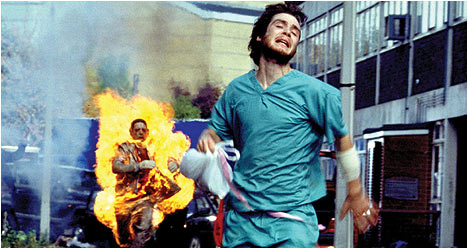
    In the classic post-apocalypse scenario that everyone is familiar with, Jim wakes up from a coma in hospital. We know Jim is a bicycle courier, and he is in a modern (post-2000) world where the infected have taken over the streets. He emerges into the light of day and in a series of classic scenes stumbles through an empty London looking for clues as to what happened. He enters a church and takes altogether too long to figure out what’s going on, and ends up having to flee the scene with a bunch of infected chasing him, until a pair of survivors turn up with a few molotovs and save his bacon.

    What was the key skill Jim needed here? He needed to have attended those early morning media studies classes, so that he could understand the narrative signs of a zombie apocalypse. No amount of gun-toting, pig-farming, deer-hunting experience was going to get him out of this one. What he needed was to know that in a deserted London with signs up at Picadilly Circus looking for lost loved ones who have fled to the country, going into an abandoned church is a bad plan. Similarly, the people who rescued him had a key skill they learnt at too many black block demonstrations – throwing molotov cocktails. And when he started to have his freak out, the woman in the group knew enough about medicine and nutrition to make him aware that he was suffering from his sugar-rich diet.

    These aren’t skills or adaptation tactics one learns on the farm.

    A Statistician in the Wilderness: Experimental Design and Community Survival in a Long-term post-Apocalyptic Scenario

    Suppose that a gang of survivors that includes your humble blogger finds itself needing to carve out a long-term existence in the wilderness, having identified that there is no chance of society as we know it re-forming. Obviously we need to start farming at some point, because while survival hunting might be useful in the short term, it’s unlikely to provide sufficient food for a growing community and anyway, there are zombies out there. So, this community needs an efficient way of learning what farming methods are best within a few seasons, based on what knowledge we have between us. A statistician with training in experimental design is very useful for this sort of enterprise – a single season with a few crop yields will be sufficient to identify the best growth techniques in a well-designed trial, and this is very important for protecting a community long-term against crop failure and the destablizing effects of famine. It’s also essential to enable community growth. So even a skill as apparently useless as statistics can be put to work in the long-term interests of a post-apocalyptic community.

    The Importance of Education for Adaptation

    These examples are both facetious but they show that there is a key skill in surviving a zombie apocalypse – adaptation. And adaptation is facilitated by a wide and advanced education, popular cultural knowledge, exposure to media, and the coherent exchange of specialist skills in a community. In the short term the ability to farm or hunt is irrelevant to survival in a collapsing urban environment – key skills are adaptability, brutality, and knowledge of the urban environment[2]. In the long term survival is best facilitated not by the ability to hunt or grow food, but by the ability to research, learn and adapt.

    If an early group of pre-moderns survived a zombie apocalypse[3] and escaped to the wilderness, they might find themselves at a deserted abbey full of books on farming, the origin of zombies, good herbs to cure disease, local hazards, and the quickest and safest way to the coast, but their illiteracy would render all this information meaningless. Finding good mushrooms would be a process of trial and error, as would building a decent roof. It strikes me that my long-term survival strategy would be:

    • Find a pharmacist
    • Loot a library
    • Start a community based around a source of power, a pharmaceutical manufactory, and a farm

    You can’t do this with a bow and a good knowledge of how to grow potatoes. In adapting to a new world, common sense is nowhere near as useful, I suspect, as the ability to synthesize new information and turn it to advantage, and this is very much a feature of the modern urban world. Why, even looting a library is not an easy job if you have to do it in a very short period of time before the zombies come – that takes organization, planning, and knowledge of how libraries work and how knowledge is accumulated.

    Also, some skills that seem ubiquitous in zombie movies are actually extremely rare and probably more likely to be learnt anew than randomly occur in any group of survivors. The one that springs to mind most readily when watching US movies is gunplay. Not only is this skill extremely rare in the rest of the developed world, but getting guns is difficult and requires research and the ability to move large distances through hostile urban territory to find them. In fact, finding alternatives to guns is probably a much more viable option, and that – again – relies on adaptation. Not to mention that most peoples’ actual training in gunplay doesn’t extend to “using it safely in the presence of your comrades while exploring a deserted warehouse.”[4]

    The Huge Range of Neglected Skills in Modern Life

    I think it’s fashionable in the modern world to suppose that many of our jobs and skills are useless and really just represent the icing on the cake of civilization. I don’t think that’s necessarily the case. Suppose, for example, that you end up in a gang of survivors composed of a weekend warrior paintballer, a retired cop, a housewife and a history teacher – these are hardly the sorts of people who’re going to build the new world, are they? But these people all have skills you might not expect. The weekend warrior might actually be very good at shooting, which is handy; the retired cop would have first aid skills; the housewife might previously have been an urban planner, with knowledge of the sewage system and how to move through the city safely underground; and the history teacher could be the local organizer for the teacher’s union, with a lot of experience of getting disparate groups of people to work together in a common cause. Someone in the group may have studied agriculture at university; the history teacher may know the location of the city’s key commercial food warehouses, which would be an extremely valuable piece of knowledge.

    The Importance of Social Connection

    In fact that last example is probably the most important of all, because the history of zombie attacks tells us that the single most important survival skill is the ability to play well with others, and to make judicious rules about how a group of people is to work together. This is the pre-eminent achievement of the modern urban world – advanced skills in group dynamics, planning, and getting shit done. Surviving in the zombie world is about fast collective decision-making and coordinated action, not individual prowess with knife, stick or gun. In the short term the ability to coordinate a raid on a supermarket to maximize your useful acquisitions in the minimum time, while guarding the exits and maintaining clear communication, is vastly more important than how many zombies you can kill or whether you can catch fish. If you have no-one in that supermarket who can quickly and rapidly tell the difference between antibiotics and antidepressants in the pharmacy counter (or if you send them to the clothing department to get padded jackets instead), you’re fucked – and having a good supply of antibiotics and machetes and nutritious tinned food is probably going to keep your group alive longer than a gun, 7000 rounds of ammo and a fishing line. Anyone who has spent time in a modern company knows how to function as a cog in a larger machine, what part to play and how to play it, and it’s likely that most modern urban dwellers if forced could come up with a decent group response to their plight.

    Conclusion

    Never fear, telephone sanitizers and personal shopping assistants of the world, you have more to fear from the global financial crisis than you do from a zombie apocalypse! Especially if you have done enough team-building exercises with your fellow survivors!

    Addendum

    If you appreciate my thoughts on zombie survival strategies, please consider reading my novella Quarantine Breach, set in the world of 28 Years Later, which is freely available at Royal Road.

    fn1: And I think the classic survivalist scenario always assigns these skills to a man, not a woman

    fn2: All well evidenced on any Friday night in the centre of London!

    fn3: Which seems like an excellent campaign idea!

    fn4: In fact, in this scenario would 15 years’ training in a shooting range be even 10% as effective as 3 weeks playing Time Cop at the local arcade?

  • Recently I have been watching The Walking Dead, a new Zombie apocalypse survival TV show from the US. So far – 5 episodes in – it’s awesome, with all the hallmarks of a good zombie show (zombies, good make up, gore, tension, nowhere to run) and all the hallmarks of a good US TV show (fine plot development, excellent acting, good scripting), and at the moment I’ve already enjoyed more zombie tv (5 hours’ worth, roughly) than I can usually bear. I won’t say more about the TV show yet except that it really is very good and you, gentle reader, should be scaring yourself grey on it as soon as possible.

    This post is more about the sociological implications of zombification, something I don’t usually think about but was brought to contemplate by this essay on zombies as symbol of working class uprising. (I think this article is well worth a read even if you don’t agree with this part of its conclusions – it has some interesting ideas about keeping-up-with-the-jones’s and zombies as an allegory for individualism in modern pop culture that I quite like ). Zombies are rich with symbolism and, like Winnie the Pooh, just begging for analysis from every political and ideological perspective, so it’s no surprise that a socialist would fixate on them as a symbol of bourgeois fears of a working class revolution. I think there are a few flaws in that image, which I will describe in a moment, but the article got me to thinking about the rich symbolism of the modern zombie, and some of the many metaphors they can represent. Let’s go through a few.

    Zombie as Working Class Revolutionary

    This is the idea presented in the linked post, that Zombies represent middle class fears of the working class/ lumpen proles rising up to get them and take their stuff or destroy their lifestyle. Under this metaphor, zombies represent all those huddled faceless masses who are excluded from the tranquil pleasantries of middle class life, and whose exclusion is an essential element of the continuation of middle class life. In the zombie movie they come to take your pleasant life away from you, and you have to fight them off. This is a superficially interesting metaphor but I don’t think it works, because it’s a-cultural and a little bit a-historical. Particularly, the Zombie movie sprang up in 50s/60s America, when the industrial working class were well respected and integrated into American life, and the lumpen proletariat (i.e. the long-term unemployed) didn’t really exist. Had the Zombie sprung up elsewhere, e.g. in 30s Europe, I can see the power of this metaphor, but it didn’t. Furthermore, the linked essay doesn’t seem to take account of the importance of race in America, and given that the Zombie movie originated there, I think it’s important to consider. The main social tension in the US in the 50s was the final destruction of the barriers keeping black Americans out of ordinary life, and there was a strong fear of the loss of the established peaceful order of things. I imagine to many Americans at that time black Americans were faceless masses who threatened them, and the zombie may make the perfect image of the black American they fear – even the name is a caribbean import!

    Which isn’t to say that the original creators of the Zombie (Romero?) were scared of a black uprising. They just read the mood and saw an excellent theme for a story. The zombie has remained an enduring vehicle for expressing certain social fears, and doing so doesn’t mean that we the viewer (or the creator) themselves feel those fears directly.

    Zombies as New Left Demonstrators

    If there was any political movement in the US in the 50s and 60s that could have genuinely stirred mainstream middle-class fear, it was the New Left with its huge anti-Vietnam war demonstrations, marches for equality, desegregation riots, etc. These people actually presented in public for the first time in a generation as a mass of faceless people on TV, confronting out-numbered and beleaguered security forces and all emitting the same senseless, mindless noise (“slogans”). These people didn’t usually carry weapons, but overwhelmed security forces by means of their bare hands and weight of numbers. Worse still, anyone could be infected with this disease – your daughter, your brother, white or black people, they’re all down there at the flower-power sit in. If the earlier Zombie movies represented a fear of any radical movement or revolution, it was surely the New Left, and the New Left was many things but it was not socialist.

    In this sense we can see the survivors as the image of the security state, having to police each other for signs of nascent zombification. In earlier movies the police state was quite benevolent – you had to be bitten by a zombie, and they could wait for you to die before they administered any radical measures. But in the newer versions – particularly 28 Days Later – we see a newer, very post-9/11 (and I would add, very British) form of pre-emptive security. In the early minutes of that movie we see a brief, perhaps 2 second long debate between two survivors, in which one has been bitten and the other one gives him barely a moment to protest before terminating him with extreme prejudice. This is the logic of the modern security state, of control orders and imprisonment without charge. It’s the post-apocalypse-cinema version of executing a Brazilian chap on a train because he might be a terrorist, and getting away with it.

    Reclaiming and Neutralizing Undeath through Zombies

    The earlier Zombie was explicitly Undead – “when hell is full the dead will walk the earth” – but later Zombies have become a biological phenomenon. In later movies – especially 28 Days Later but also The Walking Dead and maybe Biohazard – they are a biological phenomenon, explained through viral studies and, for all that biological phenomena are explicable and potentially curable, infinitely more terrifying than the earlier zombie. The virus is transmitted even through a drop of blood, and in some cases can turn you to a zombie before you even die. Rapid intervention is needed, any form of exposure is not to be trusted, and there is no redemption or salvation. In earlier movies, the infected could be given a period of grace, could even be allowed to die with dignity. Not so anymore, the only solution to the viral zombie is immediate and extreme eradication. This change in the modern Zombie obvious corresponds to the development of modern public health consciousness, particularly the discovery and spread of HIV/AIDS, that most terrifying of infectious diseases. But in transforming the Zombie from undead to biological, we have removed the terror of ghosts, hell and the grave – we have rendered the undead into merely the viral, another form of explicable natural law, a pest that can be controlled. We know we can end the disease, and we know that no viral phenomenon is beyond modern science and public health. The modern zombie transforms our understanding of undeath, from a mysterious curse or magic to a mere biological mistake, easily cured.

    Note also that the 28 Days Later storyline explicitly reflects modern fears about the transmission of disease from animals to humans, and indeed incorporates one of the main suspected causes of HIV into the story.

    Zombies as critique of Urban Planning

    Note that through all the eras of the zombie movie, the prime action tends to take place in a modern urban development of the time. From the suburban house of the 60s, to the shopping mall of the 70s, the pub in Shaun of the Dead, the metropolis and then the military camp in 28 Days Later. These places figure in the consciousness of the time and are incorporated into the movie as a central place of conflict between the main characters, who are aware of their difference from the masses, and the masses themselves. We may be defending some ideal of urban planning (the detached home of the early movies), retreating to the bastion of the modern order because it supplies all our needs (the mall in the 70s movies) or finding ourselves betrayed by the complex urban structures of our modern lives (28 Days Later), but in all cases the latest debates in urban planning are central to the development of the story, at least until it takes on its inevitable survivalist theme. Even survivalism takes on some form relevant to the modern debate about how we are living or should live – the pub in Shaun of the Dead, and the military camp in post-9/11 28 Days Later. Zombies are the ultimate, mindless incursion into our urban planning dreams and nightmares.

    Drawing a long (cross)bow

    These ideas are all silly, of course, or limited in their validity – there is no single rhetorical or metaphorical meaning to a zombie story, and they’re all very easily debated or dismissed. But I think when we watch the movies they invoke a lot of these kinds of themes and the sociological and political commentary makes a welcome undercurrent to what is usually a gripping and powerful story. This is why I think zombie movies have enduring appeal, even when their format is often very similar. It’s the setting and the underlying ideological conflict that makes the otherwise formulaic stories new and interesting. They’re a very versatile blank canvas on which to paint ideological and sociological debates. While blowing brains out.

  • The Daily Mash has responded to claims that The Hobbit is racist in its typical style. Their commentary on alcohol tax increases is also hilarious.

  • Today I had an article published in the British Medical Journal, along with an accompanying editorial[1] and a front page press release (which will be visible for about 3 minutes before the next health care fad overwhelms it). The article itself is an investigation of rates of referral to secondary care (that’s “hospital” to the non-initiated) by General Practitioners (“Doctors” to the non-initiated), which uses GP routine monitoring data to estimate the difference in rates of referral for key conditions by socioeconomic status, age and sex. The key finding is that poorer people tend to be referred less frequently or at longer time intervals than wealthier people, as do the very old, except where strict guidelines exist that restrict GP choice. The implication, of course, is that something happens in the GP consultation that disadvantages poorer or older people.

    The research was conducted in conjunction with a Public Health Trainee and two other academic departments while I was working at the King’s Fund, in London. The statistics are, in my opinion, pretty robust, and the findings pretty stark, and the diseases we considered are interesting for their implications. We looked at referral rates for three conditions:

    • Post Menopausal Bleeding, which is a symptom of serious health conditions and should always be referred to further care
    • Dyspepsia, which is a symptom of illness in people over 55, and for which referral guidelines exist in this age group
    • Hip Pain, which by contrast is generally considered an indicator of osteoarthritis and which has no clear guidelines or medical opinion on what level of referral should be provided

    Our hypothesis was that the existence of guidelines would eliminate referral rate discrepancies (in the case of dyspepsia) and that the vague nature of hip pain science would mean that referral rates would be dependent upon the GP-patient interaction. Our hypothesis got strong statistical confirmation from a very robust dataset. The accompanying editorial attempts to present a theory of how this might occur, because it’s not immediately obvious why. Noone who wrote this paper thinks that GPs are sitting behind their desk concluding that poor people don’t deserve care, and the data don’t tell us why the discrepancy exists. Note that in the case of hip pain the available knowledge is such that we don’t even know what the right referral rate is.

    My personal theory (not necessarily shared by my co-authors, who are quite capable of speaking for themselves) is that poorer patients are less capable of  representing their interests to a better educated and highly respected, wealthy doctor. They don’t express the need for pain relief or advanced care, and they don’t advocate for their own needs. I think there may also be an internalized social view, held by many poor people (deferential toryism) and some doctors that poor people don’t deserve the same quality of life as wealthy people, and should be thankful for what they’ve got. This means that everyone involved in the consultation is not advocating for or not offering the service that should be available. Of course this only happens in some consultations and it happens subtly – it’s not like anyone is thinking “you’re poor, just go home and die already!” or even that the doctor is thinking anything less than that they should provide the best service they can. But there are different cultural expectations of health in different classes, and they create subtle barriers to the best quality of care amongst poor people. I think this is an important example of how culture is as important as simple structural or economic issues in setting the determinants of health inequality.

    Other theories, of course, are welcome. This is hardly settled science, and my job is to do the calculations, not to explain them!

    fn1: incidentally, these articles require you register to read them fully. It’s probably not worth your time…

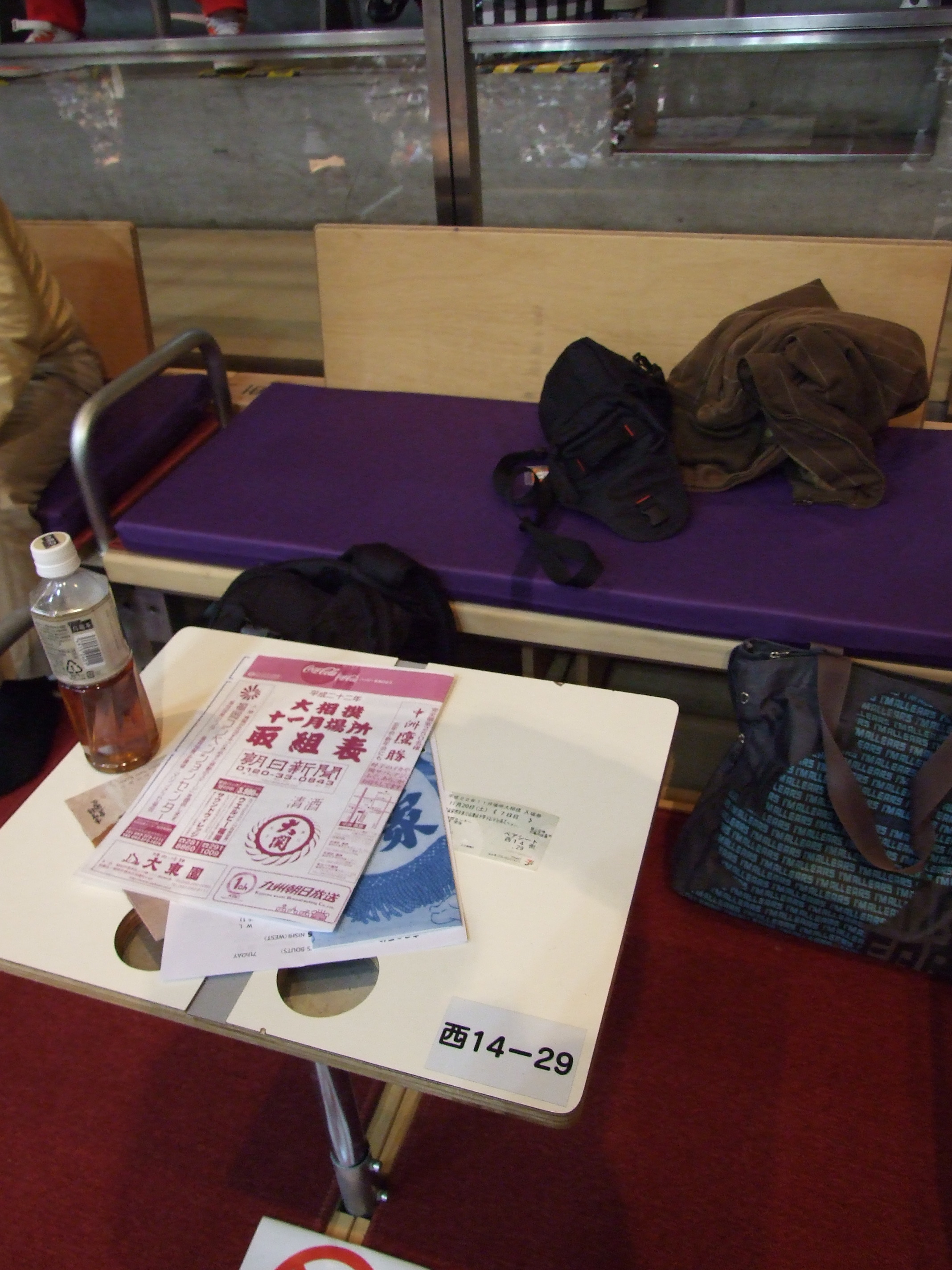
  • On the 20th of November I went with my friend Miss Y and her sister Miss N to view the Grand Sumo Contest in nearby Fukuoka. This event was supposed to be the event when the current grandmaster (Yokozuna), Hakuho, was due to set a world record for consecutive victories; unfortunately he got beaten on the Monday before, so no record viewing. Also, Misses Y and N are teachers at the same Ninja High School, and as you know Ninjas never rest, so they could meet me until 13:30 on the day, which meant we didn’t get to view the full day – we only saw the Makuuchi, the most important Sumo wrestlers, in the last 1.5 hours of the day. Sumo is a bit like a Japanese version of cricket, which means that it is a full-day event where you lounge around, drinking and talking and occasionally noticing that there’s a sport happening in the background. Here is an example of what I mean when I say lounging: Miss Y and I got a “Pair Seat”:

    Special Big Man Viewing seat for normal people

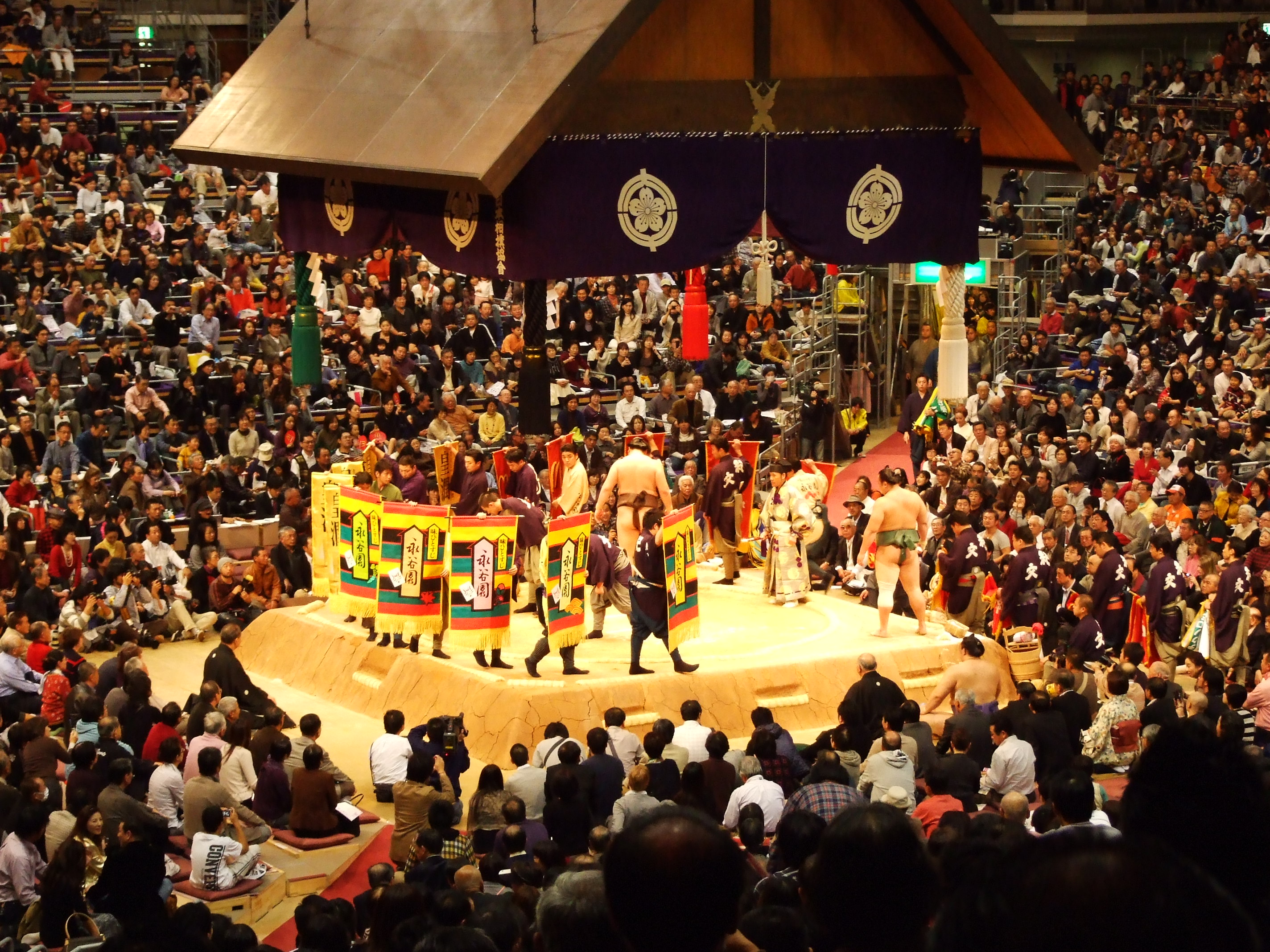
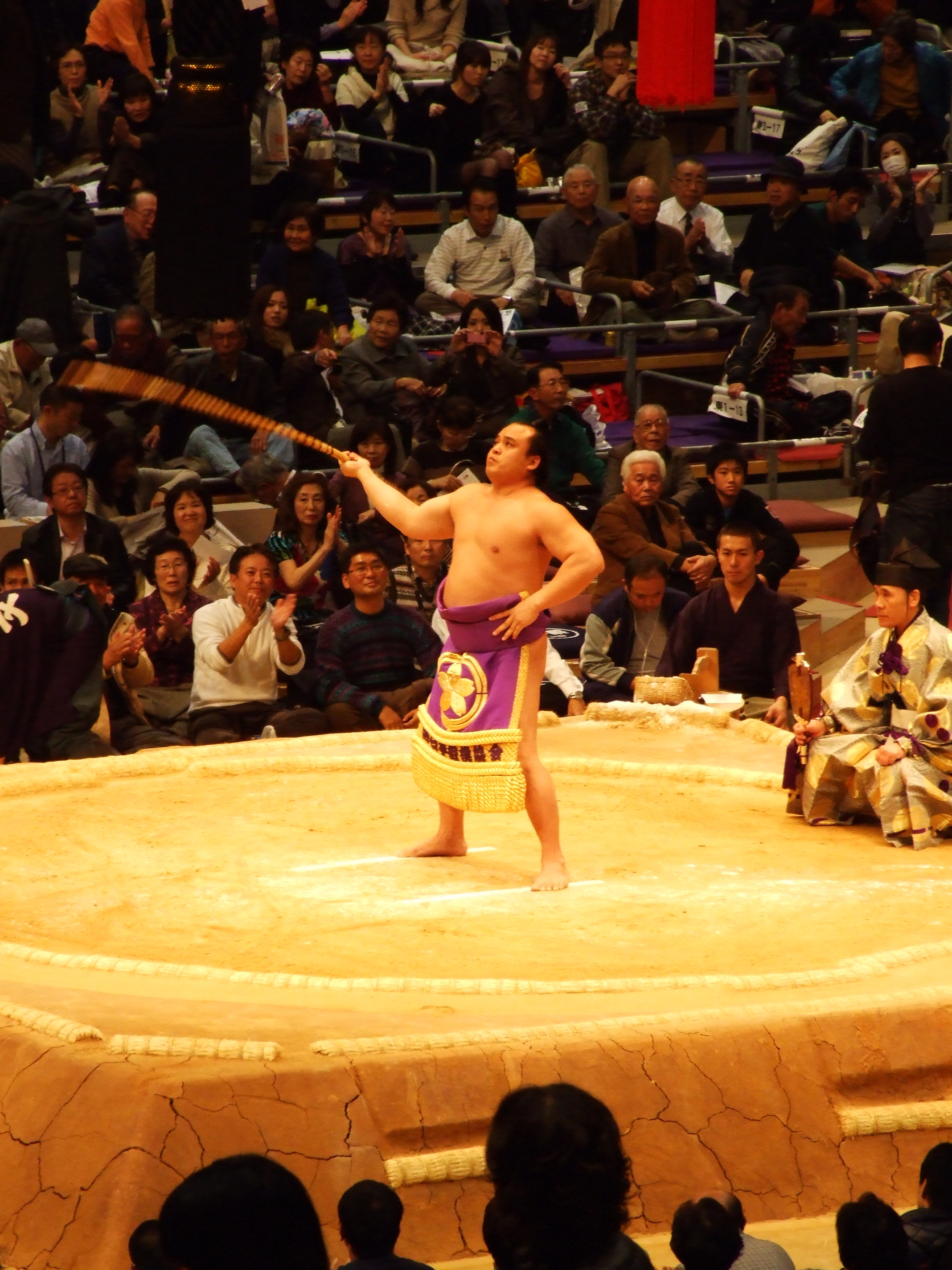
    Had we been here all day then just like in an Aussie cricket day, we could have spent the day drinking beers and enjoying the view. Instead we sat on the edge of our seats while the various wrestlers tried to tear each other apart. Here’s an example of two wrestler’s in preparation for the titanic clash:

    All Ritual and No Trousers…

    For those of my readers who aren’t familiar with Sumo (is there any such person left in the world?[1]), the preparatory rituals often take longer than the actual fight, which typically is resolved within 10-20 seconds of its commencement. Some wrestlers make a big show of the preparation, and the crowd is generally as appreciative of the stand-off before the bout as they are of the actual fight. So you see a lot of salt-throwing and not so much person-throwing.

    There are certain things about Sumo that I find surprising. Here is a short list…

    • Sumo Wrestlers are really big: you get to stand near them at the match (there’s not much security or separation) and they really are big, bigger than the few rugby players I’ve met, giants among men. This is even more striking for Japanese people – I’m small in my own country but big here, and these guys make me feel small.
    • The constant flux: Sumo is a serious business – that ring they’re standing in is a significant religious object, kind of like a shrine, and every aspect of the sport is steeped in ritual. But as they prepare for and conduct the fight, there are constant distracting mundanities happening around them – men cleaning up the salt from the ring, new wrestlers entering the area around the ring, people running by. It’s strange to see this holy activity surrounded by such a buzz of normal life
    • Lack of professional distance: The Sumo wrestlers move around the outside of the hall with almost no separation between themselves and the crowd – you can actually stand right next to them and take photos as they line up, and see them wandering around the halls around the changing rooms. This is quite different to western sport
    • Weakening of the sport: A lot of the victories I saw were oshidashi, that is one person pushing another from the ring. I think this is the easiest way to win a fight and I think it indicates a slow loss of skill in the sport. I think in previous eras there was more agility and skill, and I wonder if the size-related arms race has led to a loss of delicacy and finesse in the sport
    • Intrusion of the everyday: As Hakuho, the grand master, was preparing for his bout lines of men entered the edge of the ring and walked around carrying banners advertising Tea Rice and McDonalds. These men were so numerous and their line so long that they actually interfered with Hakuho’s preparations – he was retreating to the salt bin but had to wait for the advertisers to pass! This happened twice in the run up to his bout. I’m surprised that even though the ring is like a shrine and he is the most revered participant, mere advertising is allowed to intrude on his preparations (see the picture below). I can’t figure this out
    Who said advertising and religion don't mix?

    Sumo is Japan’s national sport, but the top ranks are top-heavy (literally!) with foreigners, but during the day I didn’t get any impression of racist abuse or comments being yelled at the wrestlers. In fact quite a few of the top flight’s most popular members are foreign (e.g. Kotooshu), and my friend Miss Y was recently mortified when a gambling scandal overtook Sumo, but only the Japanese wrestlers were implicated[3]. I don’t think you’d see quite the same attitude in European soccer, though it seems to be common in rugby. For all its many charms, even in NZ rugby is not a religion, though, and if it were I can’t see the English-speaking world being as accommodating of foreign involvement as the Japanese are. But this will never be tested, it’s just supposition on my part.

    I’m generally of the belief that sport is better watched on TV than live, but if you get the chance I do recommend a visit to the Sumo, particularly if you go with some friends and spend the day eating and drinking and making merry while Big Men smash into each other in the far distance. Especially if you like the sport, as I do. But ultimately, like every other sport, Sumo is probably better seen on TV.


    fn1: People unfamiliar with Sumo, that is. I know that there are a few people in outer Mongolia who are as yet unfamiliar with my blog[2]

    fn2: Though in a strange coincidence those people already are familiar with Sumo. Maybe this post will complete my saturation coverage of the globe?

    fn3: I think this is for the simple reason that Yakuza hate foreigners and won’t deal with foreign wrestlers, not any particular moral superiority of the foreigners[4]

    fn4: Though I do think that Sumo is an environment of bullying and abuse that probably encourages only the people with the worst characters to join or stay. So maybe foreign wrestlers raised in foreign sumo schools – e.g. in Mongolia – avoid this culture? I don’t know how they train though, or if they train there or here…

  • 公式観賞です

    2010年11月20日に、福岡での相撲大会を見に行きました。私は、相撲に興味があるが、よく分からない。テレビで何回見た事があるが、文化・規則などが詳しくない。

    行った時に、誘ってくれた友達が当日13:30まで働いていたから最後の2時間だけ見れたが、楽しかったです。だいたい、テレビと同じような感じでした。

    見れば見るほど、いろいろな考えやビックリのことがあった。これで少し説明してみて、友達の意見や反応を集めたい。

    ビックリのは。。。力士の大きさ。大きかった!

    面白いのは。。。試合準備が進むのに、周りにはいろいろな移動がされている。。。例えば、あの塩をボウキで片付ける人が動いたり、力士が来たり、客様が通ったりする。。。静かの周りではない。

    でも、このリングは神殿みたいでしょう?神殿みたいなのに、普通の行動が進む。。。

    ビックリのは、ホールの中で力士が普通の人みたいに散策している。えらい人じゃないみたい。

    ちょっと間違えるかもしれないが、考えは。。。最近の相撲は弱くなっているかな?5割以上の試合は「押し出し」で勝たれたが、「押し出し」は1番技能がいらない勝ち方だと思う。昔は、勝ち方がもう少し多様性があった?

    ビックリのは、白鵬が準備していたときに、たくさん広告を持つ人がリングに入って、かれの準備を邪魔した!彼は2回塩の箱に行ったときに待たないといけなかった!ビックリですよ!横綱なのに広告を持つ人に邪魔された!神殿みたいな所なのに、広告をする人が公式の間に入った。。。

    相撲は日本の国技なのに、外国人の力士が多かった。それはビックリじゃない(数年増えていたからなれている)が、友達を聞いたと、ぐんしゅう達(?日本語変?見る人って意味)が差別を表すことを言わなかった。オーストラリアかイギリスだったら、差別の言葉が多いと思う。それが面白い。珍しいと思う。

    以上の考え以外の意見は。。。相撲が楽しかった!見るチャンスがあったから嬉しい!

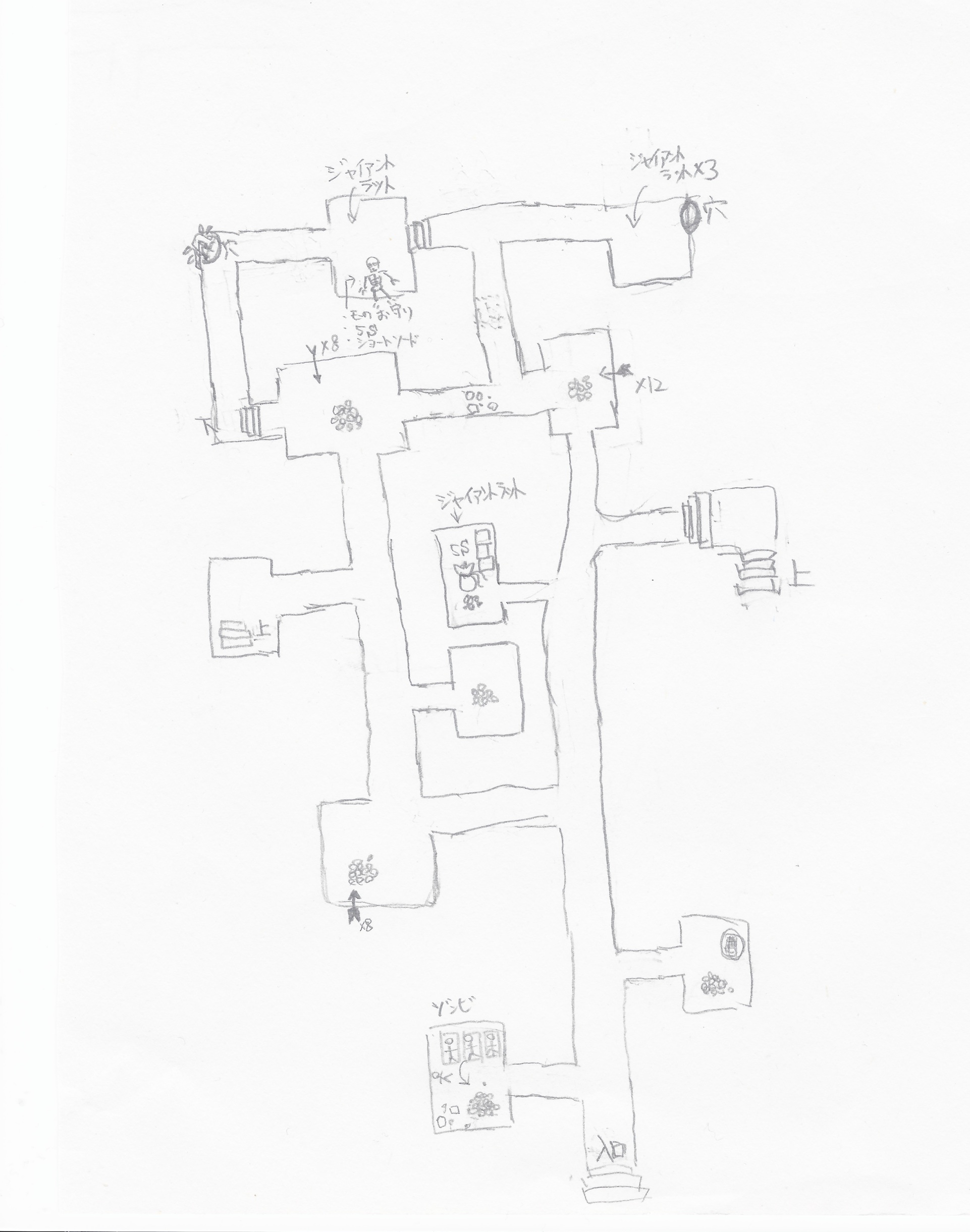
  • Here Be Gianto Ratto

    This picture is a scan of the map my players drew during their latest session, when they entered the wizard’s tomb. A classic dungeon map, but done in Japanese, with rats in silhouette and of course, typical honorifics – “Honourable Talisman of Morr” is written in very small letters near the top of the map, for example. Notice as well that the location of the Giant Rats is noted, but due to the pernicious influence of D&D, they are noted as “Gianto Ratto” rather than the Japanese term, which is “kyodai nezumi.” I think Gianto Ratto sounds very cute.

    The stairs leading up (上) have not been explored, on the assumption that they’re going to go somewhere deadly…

  • (This post written slightly drunk).

    So the UK Government has released data on its accounts, for anyone who likes it to analyze to encourage transparency. This is an excellent idea. Unfortunately, they released it to the Guardian, who claim (rather grandiosely) that they are one of a select group of “data handling specialists” who were given the data to analyse.

    Fuck off.

    The Guardian is staffed with journalists. These are people who couldn’t organize a root in a brothel. They’re idiots, the dumbest slimebags at university. Data handling specialists? Let’s have a look at their special achievements, shall we?

    • First of all they have this charming “graphic” which is actually a cherry-picked wad of shit. It supposedly shows the largest private contractors paid by the UK government and is clearly designed to imply that “Capita” is larger than the Post Office. Only the fine print says that 3.1bn pounds of Capita’s 3.3 bn pound budget is … Teacher pensions. So Capita are being paid 200 million pounds a year to handle 3.1 billion pounds of pension money, a total commission of 6%. I’m pretty sure this is comparable to a low-grade super account, but even if it’s inefficient compared to the banking sector it’s hardly a 3.3bn pound rort, is it?
    • Next we have “the interesting nugget that the Cabinet Office spent £25,000 over the period with DLA Piper, the law firm that employs Miriam González Durántez, Nick Clegg’s wife. The contracts date back to 2008 and the Labour government but it does look a bit uncomfortable.” No, I’m sorry, but if the previous government was paying the wife of the leader of a different party to do some work, it’s not uncomfortable at all. Does the Guardian think that the Labour party was selecting the wife of the leader of its secondary political rival (and one of the main causes of its loss of votes to the left) on the basis of cronyism? And is this somehow meant to reflect in any way on the current government, which has been in power for less than a year? Could we clutch at any more pathetic straws than this?
    • We have outrage at HMRC spending 146,000 pounds on watercoolers. Sounds bad, doesn’t it? but think about that for a moment… HMRC – Her Majesty’s Revenue and Customs – has staff working 8-12 hour shifts at every port and airport in the country, inspecting (in theory!) luggage – these people have to drink. It also runs the tax office. Is it possible that a few of these coolers are set up in customer service areas? Across the country? Possibly, yes, possibly, this bill is quite small given the size of the enterprise and its customer service focus
    • We have the terrible finding that the Equality and Human Rights Commission spent 750 pounds at a bar. A bar! Imagine, if a government agency paid for a party! Staff morale would be raised! More efficient work would be done! Perish the thought…

    The Guardian. Fucking idiots.

  • Last night was the 4th session of our WFRP 3rd Edition campaign, Rats in the Ranks, which is meant to be an urban semi-sandbox but has run into a little bit of trouble: a player strike. Specifically, one of my players, Mr. K, who is responsible for the Soldier (Heinze), has run into a bit of difficulty in his study schedule and can’t play this month. The remaining players refuse to continue with investigations of the main story if he isn’t there, so we have had to switch from a semi-sandbox to a sandbox. Fortunately I have a few adventures ready, and the players are happy to do bit-part sessions for a few sessions while we wait for Mr. K to educate himself. Our justification for this is as follows:

    • In session 3 the players converted a member of the Secret Rat-Catchers Guild to being a spy, and so now they don’t really want to do further investigations until he delivers his first report
    • Heinze has received a request from an old regiment he belonged to, to help them fight a Greenskin incursion in the Southern Grey Mountains, a short journey from Ubersreik, so has headed south for a bit of old-fashioned monster slaying
    • In exchange for Heinze’s time, the regiment have dispatched a newly-minted roadwarden, Birgitta, to help the characters. She’s a 0-Rank NPC road warden, so weaker than Heinze, but will work as a nice meat shield in the adventures to come

    So, with the Roadwarden working alongside them, our characters decided in this session to head off to the wizard’s tomb that they had heard about, for a basic dungeon crawl. They have also come very close to their first career transition, which will probably happen for 2 of them at the beginning of next session, and will happen for the Thief in the following session (he is doing a non-career advance first).

    The Orphan’s Graveyard

    Birgitta had learnt of the location of the tomb, so the PCs headed out of Ubersreik’s Mountain Gate and North into the foothills of the Grey Mountains. After a day’s journey, as sun was setting, they came to the location of the tomb, in an old and long-abandoned cemetery set in a clearing inside a forest. This cemetery was clearly a graveyard for children – all the headstones were tiny, and occasionally carved in forms that suit children. A lot of them were also clearly pauper’s graves, having often nothing more than a birthdate carved on them. After checking the environs for monsters, the PCs entered the graveyard and approached its centre. Being now late Autumn, it was snowing slightly, and with the sun sinking behind the mountains the world was rapidly plunging into shadow lit only by a weak and distant half-moon. The PCs stepped gingerly through the haphazardly-scattered graves, saddened by the spectre of so much senseless death, until they reached the centre of the cemetery, where a large Crypt stood ominously amongst the otherwise innocent graves.

    This crypt was clearly the entry to the wizard’s tomb. The size of a small hovel, it was built of solid stone with a heavy metal door, above which was set a large brass plate. On this plate, the following inscription was written:

    Born of neglect, killed by neglect, they will forever be watchful against neglect. Unloved, never having loved, children of a cold life have a cold fate.

    Entry prohibited!

    I think we all know what’s going to happen in here… nonetheless, the PCs dusted the snow off the door and pushed it inward to reveal a flight of stairs leading down into the unkonwn. They formed up with Birgitta in the lead, and headed down the steps, lanterns lit, as outside the sun disappeared beyond the mountains, and the world plunged into darkness.

    The Orphans

    The stairs ended in a corridor, which ran straight off into the darkness. The walls and floor of the tomb were slightly colder than expected, and in the distance strange, muted sounds could be heard – not unlike the desolate cries of an abandoned child, though faint and soft. The PCs lit a lantern and proceeded carefully, until after a few metres they encountered a corridor branching left. Just ahead, they could see another corridor to the right, and then the main corridor disappeared into the darkness. Following the initiate’s suggestion, they headed left and followed the corridor a short distance to its conclusion at a small, square room. This room was wide enough for 5 or 6 humans to stand in a line inside it, and was old and trashed. On the left hand side of the room were piles of rubbish, and on the right three beds. From amongst the rubbish emerged a tall boy, and from the beds to their right three smaller children stood. All were zombified, ruined and dessicated bodies that bore the marks of their deaths. The three children had died, separately, from animal attack, starvation and being shaken; the taller boy had clearly been stabbed to death, for the weapon that killed him was still embedded in his rotting ribs, and as he charged into the fray he tore it out to attack the characters with.

    So battle was joined, with the three smaller children attacking Suzette the Initiate and the larger boy attacking Birgitta. These children were very weak though, and despite the horror they felt, the PCs killed them all quickly. Unfortunately the children’s unearthly wails and the retort of Birgitta’s blackpowder pistol were sufficient to draw more zombie children from the other room, and the PCs found themselves given barely a moment’s rest (a rally turn!) before the next horde of children was upon them. Trapped now inside the room by the fresh wave of child zombies, the PCs had no choice but to fight to the death, and in this wave there were 9 zombie children.

    I described these children in 3 groups:

    • An older boy who had clearly died of starvation, and was the leader of the group
    • A group of 4 girls, who must have died in an orphanage, who came into the room in a crocodile formation, holding hands in a line and singing a children’s song, their eyes black pits and their faces contorted with hatred
    • A group of 2 boys and 2 girls, all naked and horribly burnt, who must have died in a house fire

    This battle proceeded quickly too, with the leader cut down in a round and Suzette using a wicked spell, Defy Undeath, that made all the children’s actions much more likely to fail. Unfortunately, the one action that didn’t fail was a team attack on Suzette by the burnt orphans, that didn’t do damage but attempted to drag her down and terrify her. The result of this was a huge increase in her stress and fatigue levels, so she became officially strained, all her physical and mental actions became virtually impossible to complete, and incurring even one more point of fatigue or stress would cause her to draw an insanity. Happy days! She tried casting a spell to reduce the fatigue and stress but this failed due to her stressed state (we interpreted this as Morr’s anger at her failure), and basically the remainder of the battle proceeded as if she were hors de combat. Other PCs quickly eliminated the zombie children, though, and they were able to survive the battle relatively undamaged. Suzette then tried first aid on Birgitta, who was injured, but to no avail. At this point the party had explored one room and were already in a sorry state – Birgitta on half hit points, Suzette and Aruson slightly injured, and Suzette desperately wearied and panicky. A decision was made to retreat to the outdoors and camp the night so that Suzette could recover her equilibrium and heal Birgitta.

    Camping and Random Encounters

    I pointed out to the players that camping would involve a risk of random encounters, and came up with a mechanic for handling them (there are no rules for random encounters in the books, and no numbered dice for simple tables). While the players had a quick smoke, I cobbled together two actions:

    • Camp finding, in which the PCs locate a good location for a camp; success in this action improves the establishment of the camp
    • Camp setting, in which the PCs attempt to set up a camp that is invisible to wandering monsters. Success indicates no encounters; big success indicates that the PCs sleep well enough to recover some wounds; failure indicates an encounter with nearby monsters, in this case either a group of zombie children or a giant spider. Banes rolled in this check would improve the wandering monster’s initiative check or even give them a surprise attack (due to the PCs setting up the camp in such a way as to make it easy for the monster to sneak up on the person on watch)

    Fortunately the group contains a wood elf, who not only gets bonuses on nature lore rolls, but also can see in the dark, so these rolls both proceeded well, and in the morning the PCs awoke slightly refreshed. Suzette failed a first aid check on Birgitta, who took a healing draft, and they ventured back into the dungeon.

    Exploration

    The remainder of the session was spent exploring the dungeon and mapping the rooms, preparatory to conflict. Most of the rest of the rooms were either empty or trapped, and all the rooms radiated off of a central corridor running in a square-shaped loop. At the “south” end of the loop was a large room with double entrance doors that they studiously avoided entering; at the north end are stairs going up to some kind of larger room they also avoided; and at the “west” end was an area of rougher tunnels occupied by giant rats. These rats weren’t interested in fighting, and the PCs were able to scare them off while investigating the body of a dead adventurer, on which they found some magic items (that they can’t identify!) and some holy water. There were no other significant monsters in the dungeon and only a total of about 12 rooms. The PCs also found a mysterious silver key, and are now preparing to enter the remaining two larger rooms, where they expect to meet the main denizens of the dungeon – presumably the wizard himself, and some of his nastier servants.

    Conclusion

    Even simple tasks in this dungeon proved challenging for the group, so my prior fears that they have become too powerful were unfounded. The weakest creatures in the dungeon drove them outside for a night of rest, and it’s not clear whether they will actually survive the final two rooms – in fact it might be worth their while to go back into town and try to get the magic items they have identified. However, they probably won’t do this, but will go back in fully healed. Next session at least one of them will be able to start a new career, but this will make little difference to their practical skills at this stage. They’re going to need to be very careful about their adventuring style if they want to return to Ubersreik whole and sane!

  • Meat's back on the menu, girls!!

    I was a big fan of the movie The Descent, which pits a group of young women cavers against a colony of blind flesh-eating proto-humans in a dark and claustrophobic cave nightmare. This is the kind of movie that you really need to pause regularly, and it combines all of our worst fears – claustrophobia, darkness, betrayal, and being eaten alive by grey slimy beastmen – in one compelling package. So I was interested to watch the sequel, which is a slightly Aliens-style re-entry into the darkness. In the sequel the hero of the first movie, Sarah, has somehow survived the original horrors and turns up on a road 2 days after they all entered the original caves. Searchers are out looking for the missing girls but are, of course, looking in the wrong cave system, so aren’t going to find them, let alone carry their shattered remains out. So when the captain of the search crew discovers that Sarah is in a hospital, amnesic and terrified, he decides to get her to help find the other girls. The fact that she rocked up covered in other peoples’ blood and doesn’t remember anything doesn’t deter him, and in fact causes him to make the big mistake of treating the situation like a crime. He basically thinks he needs to rescue the girls from Sarah’s perfidy, or find their bodies and charge her with murder, and this is how he acts through the entire first half of the film.

    A team of cavers is established, and head through an abandoned mineshaft into the caves. From this entry point we realize the provenance of the old caving equipment found in the first story, and discover another emergency exit, but it ain’t going to be no use to our team. By a series of (in some cases slightly disappointing) classic horror movie fuck ups they get lost, separated, and then the beasts in the earth (who I call “the Grey Men”) come to get them. Sarah is with them but nobody trusts her and from the moment they find the first body they think she may be a murderer, or mad. Her memories only come back slowly, as does her sense of survival, and for a short part of the movie she acts distressed and confused, which loses everyone valuable time in dealing with the threat they face. By the time she gets her act together the gore has begun to fly, and the remainder of the movie flows very much like the second half of The Descent – desperately scrabbling to escape a situation that it seems must inexorably drag all the characters to their horrific doom.

    The Descent Part 2 was directed by a different, novice Director, so it doesn’t have quite the brilliance of the first movie, but it maintains much of the same tension and pace. The Crawlers are almost as terrifying, though a tad more monster-like. This time they’re  not terrifying solely by dint of their environment, but incorporate greater strength and power, though not to the extent that they’re a caricature. They’re still easily defeated in one-to-one combat in the light by strong humans, and still depend on terror, surprise and darkness for their victories. The fear is still at a quite intense level, and most of the decisions people make and the split-second acts they take are believable and reasonable. Unlike the first movie it relies on a few classic horror-movie tropes that can frustrate the viewer – the “advance even though there’s a big fat warning staring you in the face” option, especially, I find really frustrating and though this was once okay, in modern horror writing I think it’s a bit weak.

    Although early on the movie goes over the top on the gore scale, in general the gore is at a lower level than in the first movie. Tension is maintained through environment, confusion, and darkness. The characters have a few more gizmos – radio communication, IR scope, etc – that make for some interesting fear-enhancers, and the discovery of the girls’ video camera makes for a really disturbing scene. There’s also a funny moment of Gygaxian Naturalism, as we find out a bit more about how the monsters live in their colony, and are reminded again that we are dealing with a natural, evolved species who are in that place for a reason, not monsters. I thought there was also a hint near the end of a leader-figure amongst the Crawlers, a kind of alpha male, which could make for interesting future movies.

    The ending was a tiny bit confusing – something comes out of left field that really can’t be explained, and is obviously only there to set up a sequel – but the unresolved questions it leaves behind don’t bother me at all, in fact I quite like the possibilities it raised for future movies. In some ways the ending of The Descent Part 2 is even grimmer than the first movie, which is kind of cool. I think though, the way this movie ends won’t be to everyone’s taste – some viewers will think it’s an overdone or preposterous ending, or will just not be able to envisage any kind of explanation for it, so will reject it as farcical. It doesn’t spoil the movie overall though, and right up until literally the last 5-10 seconds the ending makes perfect sense and is perfectly acceptable.

    The acting was generally good, though there were one or two moments that were either ham-fisted or melodramatic, but the cast were generally solid and gave us a believable rendition of the mounting fear. Particularly, early on when the first (environmental) troubles hit the group, and we aren’t yet sure if the Crawlers are even on the scene, the cast do a good job of muted unease and fear, which slowly mounts. It certainly didn’t seem to hamstring the general atmosphere.

    Overall, I think this movie is a good addition to the original, an excellent introduction to a series of movies expanding on the lives, ecology, and horrible habits of the Crawlers, and for most of its length both well-paced and scary. Of course it’s not up to the standard of the original, but I don’t think it lets it down in any way. Well worth seeing if you aren’t a caver.