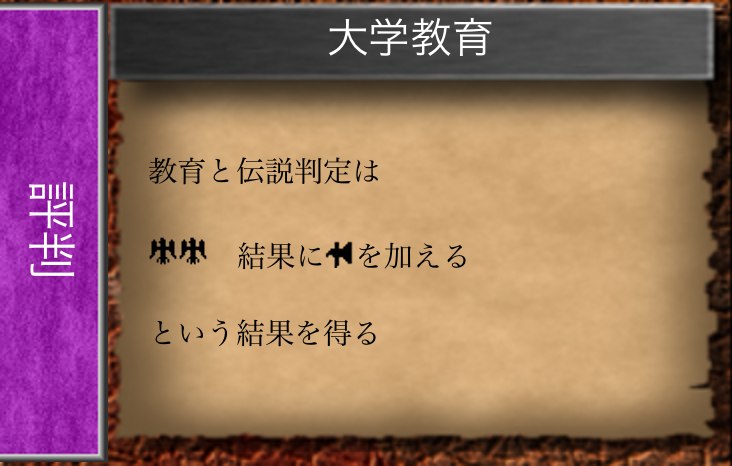
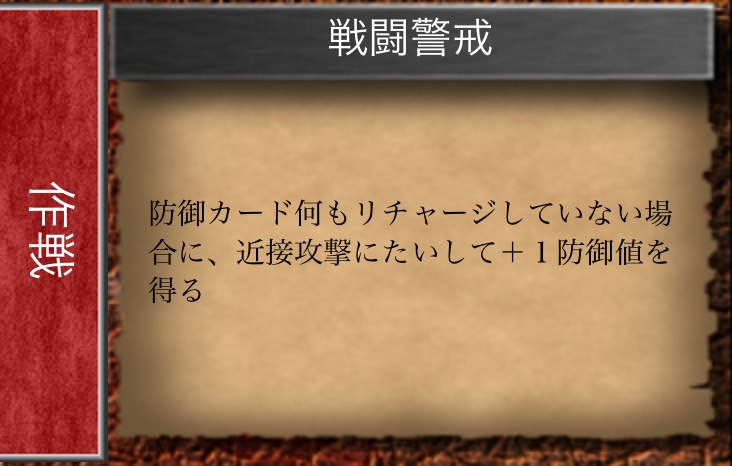
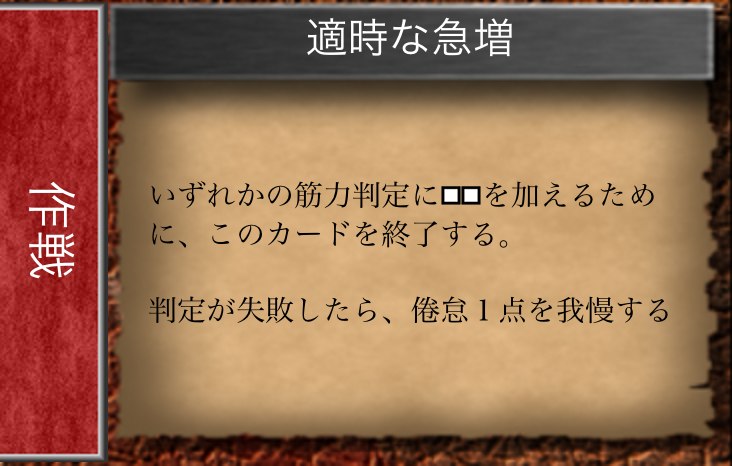
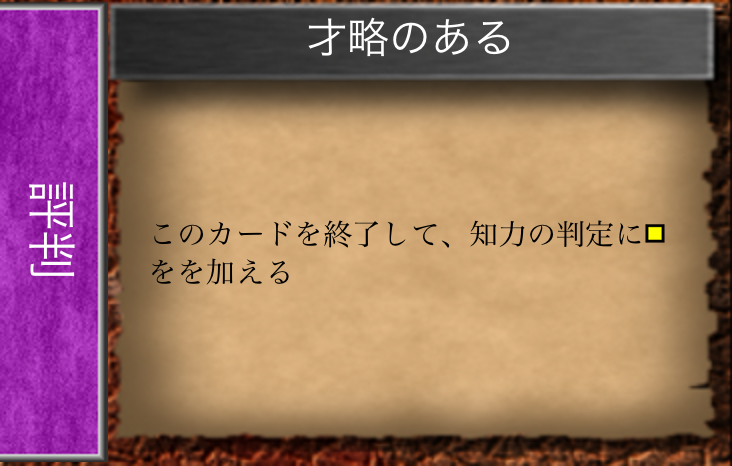
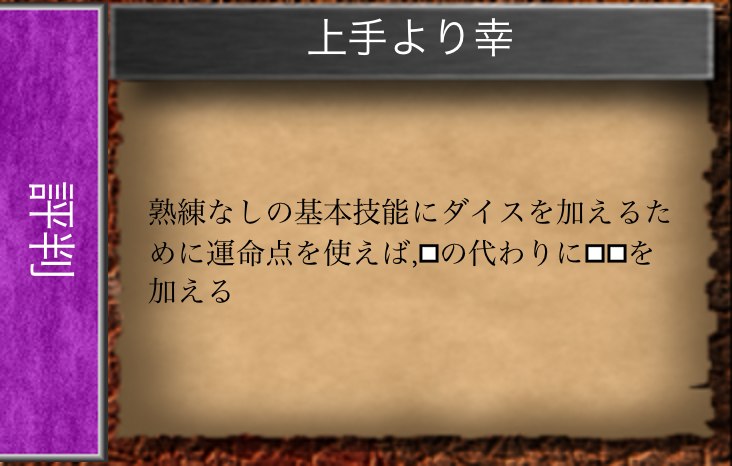
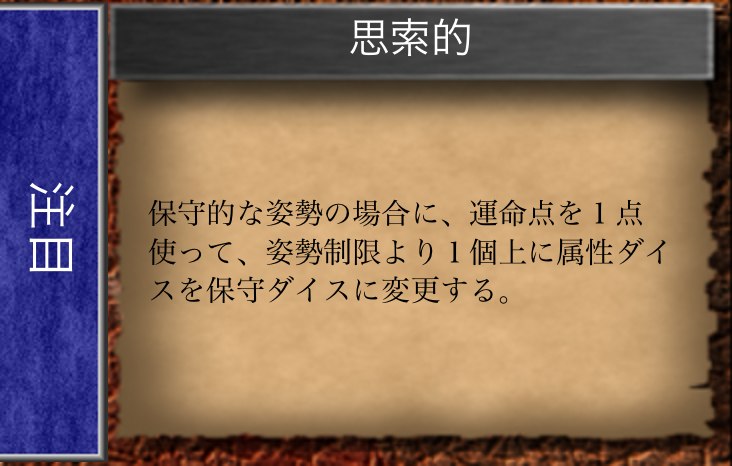
この間翻訳したカードの上に、今日はカードもう6枚翻訳した。このカードはPCもパーティーシートも合う。カードのイメージは以下です。
Compromise and Conceit
Infernal adventuring…
-
-
Reading World War Z has got me thinking about a lot of different things, but the first thing I noticed was the way in which the modern Zombie tale has increasingly become a commentary on (and, generally, an endorsement of) modern public health and disease prevention principles. Of course, public health principles applied in the breach can ultimately lead to a huge dose of fascism, by which I’m not referring to the anti-smoking campaigns of the modern era, but the extremely draconian and almost-never used quarantine and control rules that governments reserve for the most severe disease outbreaks. And we see these being enacted in every zombie tale – or, if they’re not used, the society in question coming to regret it. In fact, the zombie tale can easily be read as a peon to the public health route not taken – on HIV, on SARs, etc.
In an interesting literary parallel, World War Z reminded me of the excellent oral histories of the early years of the HIV epidemic, which show a similar tone to the early parts of the book, with doctors and community activists trying desperately to work out what is happening before a previously unknown disease wipes out a community. Only the transmission method was a little different, though zombification and HIV show similar issues of incubation period and origin. We even have real life examples of HIV consuming societies, and modern history would have been very different if HIV had progressed through the West the way it did in Africa. I can’t believe that the modern resurgence of zombie stories is unrelated to our own recent development of public health consciousness, and a lot of that development stemmed from the HIV epidemic.
-
I devoured this novel in 4 hours on the Beppu-Fukuoka return train, and I thought it was awesome. The book is an Oral History of an international zombie conflict, which starts in China and brings humanity to the edge of extinction. It is written as a series of interviews, which were intended to be incorporated into a UN report on the war against the Zombies but were excised at the last moment. They include interviews with Americans, Brits, Australians, Germans, Iranians, Chinese, Japanese, Indians and South Africans, and really serve to give the sense of a worldwide catastrophe. The book really doesn’t spare the terror either, putting these interviews together in such a way that you really feel like the human race is fighting for survival. The contents are arranged in roughly chronological order, starting from the initial signs of the apocalypse and progressing through the collapse of civil order, the ruin of nations, war against the zombies, and then recovery. It includes lots of post-war analysis, so we have the work of historians to divide the zombie apocalypse into epochs such as “The Great Denial” and “The Panic” and we have the self-serving accounts of the people who ignored the threat, buried it, or looked after themselves at the cost of others. It really is an excellent attempt to map the real failings of modern political and social structures onto a fantastic event, and although it has lots of powerful personal accounts, this social and political critique is where it really stands out. Through the personal accounts of people involved in the disaster, from ordinary housewives right up to an ex chief of staff, it attempts to show how our social and political systems would react to an event of earth-threatening magnitude.
The book avoids becoming a dry and uninteresting description of political events, however, and scatters the accounts liberally with stories from ordinary survivors that have powerful personal appeal. The woman who was taken to the frozen North as a child by her parents, and ended up living on human flesh, and who now spends her days cleaning up the frozen wilderness where she lived during the Panic, is a great example of this. Also the interview with the “feral,” a child who escaped an attack on a church and spent 10 years living by herself from the age of 5, is also a gripping personal tale. The first story, about the Chinese doctor who investigates Patient Zero and then gets a hint from a mate in the ministry of health, and manages to warn his family to leave the country, is a brilliantly understated moment of political suspicion, panic, and medical investigation all in one. These accounts serve to leaven the otherwise quite political text with material that keeps us engaged in the very real personal plight of billions, without making this book another survivalist story.
And something that separates World War Z from other Zombie tales is that it escapes from the survivalist paradigm (mostly), giving us an overview of the global response to a global problem rather than focusing on the tough decisions individuals have to make. In this book we don’t see so much the concerns of a family working out where to go next, as we see the tough decisions of governments who have to choose which city to save and which to damn. The usual survivalist paradigm of zombie tales is turned on its head, with governments deciding to throw some communities to the wolves in order to distract the zombies while they withdraw to safer ground. The decisions of individual survivors are shown to be of limited import compared to the agonizing and terrible decisions that the political leadership have to make in the face of the zombie threat.
The book also draws on some very interesting settings and, I suspect, references some quite obscure real accounts to give interesting and engaging stories. The tale of the man trying to escape India through the ship-breaking yards is a great example of an iconic industrial setting being turned into a nightmare vision of our zombie future. Similarly, the tale of the military dog-handlers, whose dogs are tools in the war against the zombies, is evocative of the little-told story of the dog-handlers in the Vietnam war, depicted in the massively under-rated Australian book Trackers (which I cannot recommend strongly enough).The author (Max Brooks) claims to have done quite a bit of research on real settings and on the culture and science referenced in the book, and it feels authentic at the very least.
The book also creates a really compelling zombie ecology, considering their interaction with the environment in detail and presenting strong evidence for the consequences of zombie infection that it posits. It also shows us some really believable models of government response, from the brutality of the Russians to the pragmatism of South Africa. There are some ideas that aren’t believable and the absence of Africa and the Middle East from the narrative is noticeable, but what we do see in the accounts was surely challenging to fit into the limited text (I read it in 5 hours!) so I’m willing to forgive this. I’m also very impressed by the subtle way of working real political events from the time into the narrative. America is exhausted after a “long brushfire war” that has worn down the American peoples’ support for international intervention, and we get implications that Howard Dean is the vice president, and another black person was passed over for the role because the President is also black. There are implications of a rabid right-wing opposition, possibly Glen Beck-ish, but the actual political parties and even their general political bent is unclear – in fact, if we assume that the Howard Dean figure is democratic then it seems likely that the post-Z-War president who implemented national health care was a Republican. We also see delicate references to important historical figures, including the Queen (choosing to stick it out in Windsor Castle even when her government is fleeing) and Nelson Mandela. And there are some other doozies in this story too, particularly the way in which the nature and origins of the South African plan are revealed to us.
I have two main complaints about this book. First, the narrative voices are quite similar, which undermines the idea that the book is a collection of interviews. Somehow, almost every person seems to have the same tone and voice, even though they come from quite disparate cultures. The only people who truly stand out as having a different narrative voice are the two Japanese interviewees, but these interviewees were my main clues as to another problem the book has – national stereotyping. When I read the Japanese interviews they weren’t talking about the Japan I know, but about a western image of a Japan that doesn’t exist, where the social order and “heirarchies” are perceived from an American perspective as an oppressive class structure, which really isn’t how Japan works. This stereotyping extended to Russia and China, whose response was characterized as unnecessarily brutal and stupid, and suggested the book wasn’t able to stray outside of American stereotypical images of China and Russia deal with social problems – an impression that I think is wrong, at least in the Chinese case, and an impression often encouraged by American politicians and commentators to support the continuing myth that American society is able to solve any problem. These stereotypes of America as international saviour and good guy were also a little bit more pronounced in the story than perhaps was necessary. Apparently America even had more successful survivalists than other countries due to its “culture of individualism.” Please forgive me if I appear a little pro-third world, but I suspect your average kazkhstani Eagle Hunter would crap all over your average American “individualist” in a zombipocalypse.
These minor complaints neither detract from the joy of the book as a whole, nor prevent it from being a significant addition to the general corpus of Zombiepocalypse survival thought. The book certainly supports previous thoughts of mine that pure survival skills are not the key to living through such an event, and that survival depends very much on your social support networks and ability to think fast and adapt. Even the military tactics depicted in the reclamation of America make it clear that individual heroism is irrelevant, and present us with an image of warfare Taylorized to the utmost degree. In war against zombies, the person reloading your clip and the background figure who determines that you need a five minute break are just as important as the person doing the shooting. The dog-handlers are a classic example of how socialization trumps survivalism when the dead rise.
Overall, this is a really thoughtful and though-provoking book, which remains a thoroughly excellent read and a classic piece of science fiction at the same time as giving us a really detailed and exhaustive analysis of the failings of our current governments and society. It is well worth reading if you’re interested in zombies, or politics, and especially if you are interested in both.
-
I started reading World War Z this morning, and so far it’s excellent but the central conceit – that it’s a factual account written in the aftermath of a zombie plague – just doesn’t hold up, because the introduction presents information so implausible that you can’t trust the credibility of the author.
I mean, sure, a worldwide zombie plague I’m onside with, that’s fine. Even the idea that the UN commissioned a post-plague oral history I can tolerate. Israel welcoming back the Palestinian diaspora in a moment of desperation, fine, I can handle that. A social democratic government taking power over the “Llamists” in Tibet, even that I can believe. But the US getting Universal Health Care?
That’s just crazy!
If you want to write a believable account of an apocalypse, you have to take the reader with you, Mr. Brooks…
-
I have a sony PRS-600 eBook reader, and it has two significant problems that have driven me crazy over the last 2 months. I did some online searching for solutions, and found them pretty unsatisfactory, so I’m going to give the workarounds I found by myself, in the hope that other people who stumble on this problem can solve it more quickly than I did.
Unable to Purchase eBooks from Overseas
I bought my eBook reader in the UK and then moved within a month to Japan. When I was first in Japan (early 2009) I could buy eBooks from Borders, Waterstones etc. quite easily. But sometime in the last year the international intellectual property laws changed, and now I can’t buy books from these companies. In fact Waterstones sent me an email telling me this:
Unfortunately whilst you are outside of the UK even with a UK billing address and have a UK registered card we are unable to fulfil your orders.
Waterstone’s is a UK based bookseller and bound to honour the rights agreements of the publishers that supply us. To comply with international publishing rights agreements we have removed the ability for overseas customers to download eBooks from Waterstones.com. We apologise for the inconvenience, and will pass on any comments to the relevant publishers.
That’s right, I can’t buy eBooks from Waterstones even though I have a UK registered credit card, because they check my IP address. Thieving bastards.
My solution: WH Smith online shop still sells to me even though I have a Japan-based billing address for that UK card, and my IP address is Japanese.
The Reader Library Software is Running but the Library is Invisible
This problem is quite prevalent, with many people putting up questions on the internet about it, and is so common that Sony even have it in their Reader Library FAQ. Note how unhelpful their response is. Basically what happens is that your computer thinks the software is running, but you can’t access the library on your computer, so you can’t transfer any new books to your reader. In Apple this leads to a weird situation where you can bring the Reader library software to the foreground but you can’t access anything, and when you hit “quit” nothing happens. Apparently in Windows it appears in your system tray but you can’t view the software. This is apparently so serious a problem that you need to do some kind of significant helpdesk work with Sony (see their very unhelpful FAQ). Reinstalling the software doesn’t help.
Today I downloaded .acsm files for 4 books but when I double click on them the Reader Library does nothing. It used to be that the reader library would import them instantly. I was looking at 25 pounds of unreadable stuff I’d paid for, and no way to get it onto my reader.
The solution is very simple. When you download the .acsm files, rather than saving them somewhere tell your computer to open them with Adobe Digital Editions. They will then be converted into ePub files in the Digital Editions software. Find the location of these files on your hard drive (for my apple it is Users/Documents/Digital Editions) and simply drag and drop them into the external drive representing your reader (I drop them in the drive No Name/Sony Reader/Books)[1]. Then you can access them in your reader.
You shouldn’t have to do a workaround like this for equipment you paid good cash for, but such is the nature of the Sony beast. Don’t even get me started about the time that the Full Metal Alchemist soundtrack arse-fucked my computer with DRM software.
Conclusion
I really really like my eReader, it’s a brilliant idea, and I like being able to take multiple books with me on trips, but the software that drives it is awesomely cumbersome and the book-purchasing process is nasty. Every time I go near an eBook store I feel like a greasy criminal because the strict DRM contains an implicit assumption that I’m a thief. I think Sony are a pack of evil thieving scumbags and I am confident that sometime soon my ability to buy eBooks is going to be cut off entirely, at which point those bastards will have robbed me of my reader. Stupid stupid shits. But for the short term at least I have a workaround, and when Sony finally cut off my supply I suppose I’ll just go back to old-fashioned book-buying and never again buy one of their electronic gizmos. Bastards.
—
fn1: Oh and Sony, wtf is up with your system? When I plug in my Reader I get 3 – count them, three – separate virtual drives appear, and one is called “No Name.” WTF is that?
-

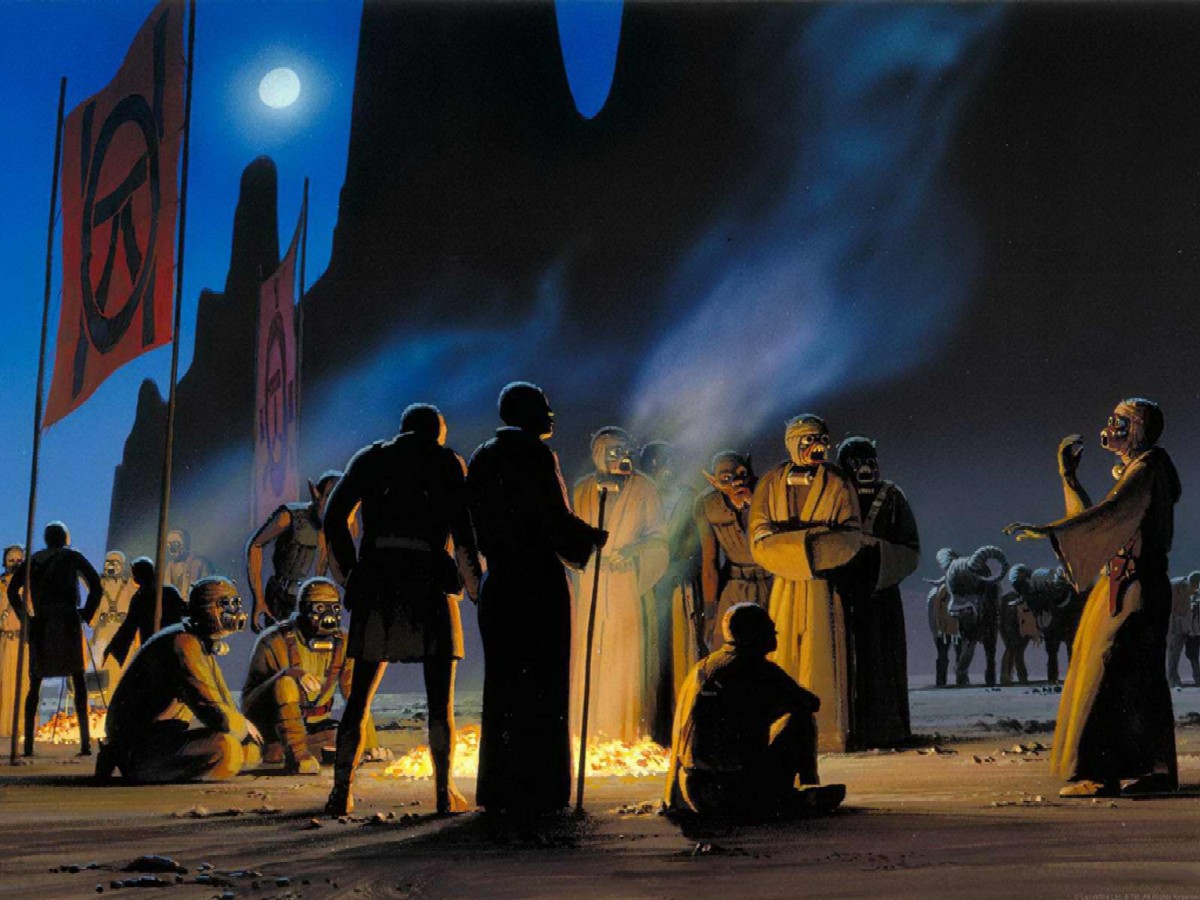
Hey guys, have you heard the one about the Jawa, the Ewok and the Jedi? Using the idea of random character generation for WFRP from the previous post, I came up with this idea for a character created randomly for the Star Wars universe, using the WFRP 3 template. This character is a Tusken Guide, a specialist role for an elite minority of sand people. Every aspect of this character class was generated randomly.
Background
The sand people know the desert and its ways with an intimacy to match the intricate knowledge of an Imperial Courtier, but when it comes to interacting with those who share their world they are as naive and helpless as babies. Prone to respond savagely to that which they do not understand, the Tusken long ago realized the need for a kind of diplomatic caste amongst their tribes. These diplomats are not dispatched to the towns and cities of Tatooine to negotiate treaties and settlements with governments; rather, they visit the markets and bars of Tatooine’s smaller settlements in order to carry out the more basic tasks of trade and news-gathering. Tasks that are basic to the social fabric of other societies are so alien to the wild and savage Tusken that they have developed an elite caste of non-raiders to discharge them. Like bards of ancient legend, they move amongst the towns and cities of the desert world gathering news, selling desert products and buying the kinds of products the Tusken need to make their desert lives easier – firearms, vehicles and very basic droids.
The similarity between Tusken Guides and the bards of interstellar legend are only superficial, however, for though they can interact with non-Tusken, Guides have little empathy with them, and in place of the easy charm of the bards of old they maintain a rigid discipline, the better to prevent their natural scorn for the trappings of civilized life from showing itself. They are neither educated nor naturally suited to the sophistication of Tatooine’s human or Jawa societies; rather, they restrain their natural temper while in the company of such people, and do their best to mimic their ways. This barely-restrained scorn for the softness of non-Tusken often manifests itself in ways that cause the Guide trouble, and of course like all Tusken the Guide must be able to defend itself and act decisively in any physical situation; for this reason the Guide remains a formidable fighter and an imposing physical presence, at least while not amongst its tribemates.
Career Details
Career Attributes: Strength, Willpower
Career Skills: Athletics, Coordination, Weapon Skill, Discipline, Charm
Talent Slots: Focus x2
Career Talent: Dilettante (once per session can use any skill as if it were trained, or employ an advanced skill as if it had been acquired)
Force User: No. Tusken have antibodies to mitachloreans[1], so no Tusken can use the Force.
Notes
I rolled up a character class that has a kind of jack-of-all trades talent but a strong physical/combat focus, and one career skill – charm – that really doesn’t fit the career abilities. Had I rolled a different career talent the two Focus slots would have suggested some kind of monk or ascetic character, but the dilettante doesn’t fit with that. What kind of character is a combat-focussed jack-of-all-trades? A pirate, some kind of bounty hunter, or perhaps a representative of a savage race. Had I rolled up Agility instead of Strength I would have chosen, perhaps, to make this PC a Jawa trader.
Of course the description here doesn’t have to represent a class at all, but could just be a unique character. Then instead of representing this as a caste of Tusken, I could turn it into a famous Tusken outsider, that has taken it upon itself to act as a social bridge between the tribes and the humans on Tatooine. The jack-of-all-trades element could even mean that the Tusken PC is to be found off-world when the adventure starts.
From this point character development would begin, with the assignment of ability scores, etc. I would be treating Fellowship as a dump stat, so even though the PC has charm skill they remain pretty poor at charming people. I wouldn’t be loading up on social or support action cards either…
—
fn1: haha, mitachloreans…
-
NASA today reports the initial results of the Kepler mission, showing that there are potentially millions of habitable planets around stars in the vicinity of Earth. The resulting menagerie of planetary candidates reads like a Traveller or Spacemaster planet generation table – it includes planets bigger than Jupiter, one planet with the density of sytrofoam, and some planets whose moons may hold liquid water. There’s also surely a hat tip to Star Trek in the report:
It’s exploring a new part of phase space, a new part of the universe that could not be explored without this kind of precision, so it’s producing absolutely beautiful data
(my emphasis). Oh, those NASA nerds, how we love them[1].
Something about science fiction that I find continually fascinating is how much of it ceases to be fictitious with the passage of time.
(I think for this post I need to do a hat tip to Larvatus Prodeo, the Australian left-wing blog).
—
fn1: Or is this a real term? If so it’s surely been named after a Star Trek episode anyway.
-
最近、「隊列を乱す者」というキャンペーンの本編を外して、サブシナリオをやっていましたが、3月までWarhammerキャンペーンを終えないといけないからこれから本編に戻ります。時間が過ごしましたから、この投稿であのシナリオの事件の要約をします。
ネズミ捕りの遺体
PC達はウーバーズレイクに行った途中で、ゴブリンに捨てられた人間の遺体を見つけた。この遺体怖いネズミの刺青がついていて、いろな証拠で「ネズミ捕り」だと仮定した。遺体を埋めて、死者のロケットをウーバーズレイクまで持っていた。
混沌絵を渡す
PC達がウーバーズレイクに着いたとたんに、シグマー祭殿に行って、混沌絵をシグマー司祭に渡してあげました。その司祭は「1ヶ月後で、アルトドーフに行くからその時に壊滅方法を調べて、帰れば壊滅する」と伝えてくれた。司祭がアルトドーフから帰るまで、祭殿は混沌絵を扱う。
ウーバーズレイクの操作
PC達は、遺体のロケットを調べて、女の人の絵を見つけた。彼女を探して、遺体の後家だと分かりました。彼女と話したときに、何か怪しい状況でした。ネズミ捕りの奥さんだったのに、たくさんお金を持ったり、広い家に住んだり、町のいいところにいたりしていたから普通のネズミ捕りじゃないと思っていた。
悪いネズミ捕りの組合発見
怪しいから、彼女の家で張り込んでいた。怪しい男性の3人がすぐ来て、彼女と話していた。アルソンが聞いていて、以下の事を発見した:
- 怪しいネズミ捕り組合が存在する
- 遺体の男性はその組合のメンバーだった
- その組合が秘密な組合だし、彼女が秘密にするためにお金をあげた
- 組合はたくさんお金を持っている
どんな組合なのか?
組合操作
PC達が組合メンバを尾行して、すぐ戦闘に絡まれた。組合の2人を捕まえた。それにも、組合の巣を発見した。その巣から秘密のドアで地下通りに入れる。
そして、組合メンバーは彼を救出作戦してみたが、失敗して3人が死んだ。それを見たと、捕まったネズミ捕り1人が情報を知らせた:
- 組合はいる貴族の人の私設組合である
- その貴族の悪い使命をする責任である:スパイ、暗殺など
- 捕まったネズミ捕りの責任は基本的に、下水の警備
- 組合の人数は30人くらい足す数人の上級メンバー
- かれの同僚がシグマー祭殿に入って、何か神格なアイテムを結んだことがある
- PC達が発見した巣から、他の組合の倉庫や巣に行ける。
やっぱり、組合が怪しい。
ネズミ捕りのスパイ
PC達が今まで、組合のメンバーの20%くらい殺したから捕まったメンバーは怖がって、PC達と協力すると約束した。PC達は彼を信用してみて、スパイとして組合に戻らせた。かれは、何か新しいニュースがあったら、PC達と連絡する。その時まで、PC達はサブシナリオをした。
次のセッションの始めに、このスパイはニュースを持って、PC達と連絡する。